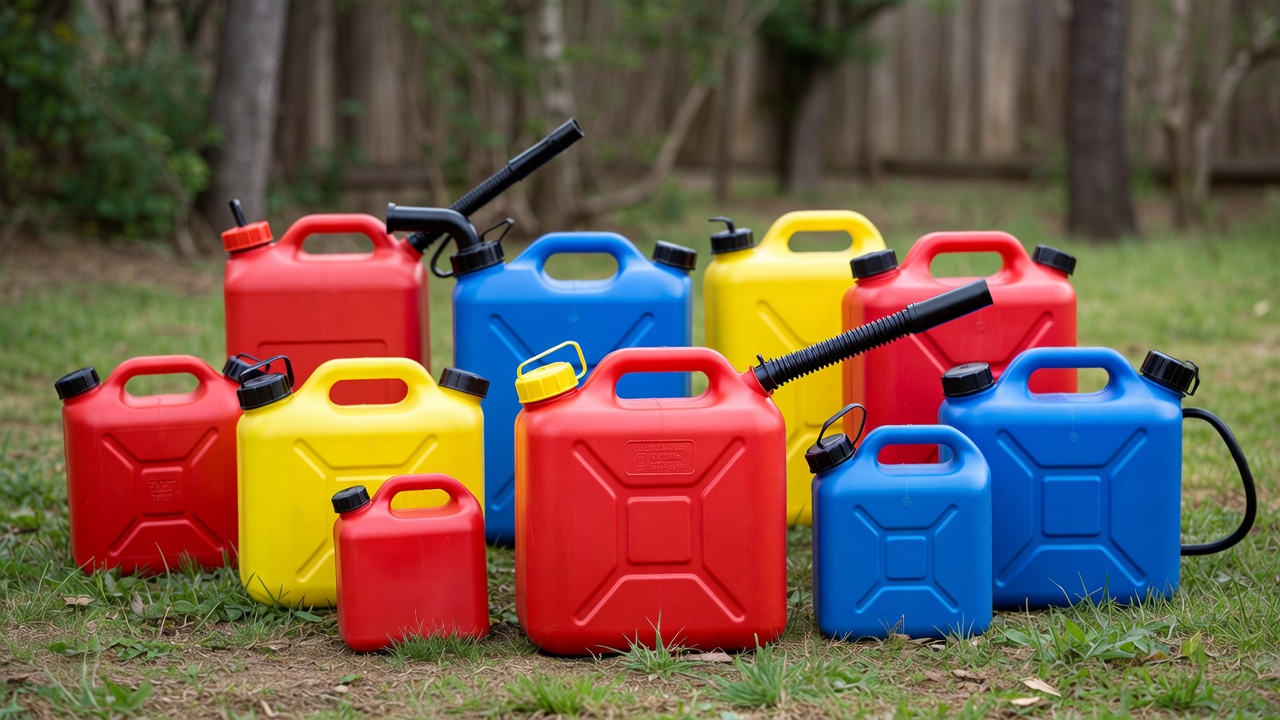
5 Best Gas Can for Lawn Mower In 2026
Keeping your lawn mower fueled up shouldn’t feel like a dangerous juggling act. Yet here we are, wrestling with cheap plastic containers that leak, spill, and make every refueling session feel like a disaster waiting to happen. If you’ve ever ended up with gasoline on your shoes, your garage floor, or anywhere else it shouldn’t be, you know exactly what I’m talking about.
In this article
Finding the best gas can for lawn mower maintenance makes a bigger difference than most people realize. The right fuel container protects your gasoline from contamination, prevents wasteful spills, and keeps you safe while handling flammable liquids. A quality gas can saves time, reduces frustration, and actually pays for itself by not wasting fuel every time you need to refill your equipment.
This guide breaks down five popular gas cans that handle lawn mower fueling in different ways. Some focus on safety features that meet strict industrial standards. Others prioritize spill-proof designs that anyone can use without making a mess. A few offer massive capacity for people with multiple pieces of equipment or large properties to maintain.
Each container reviewed here serves different needs. Whether you need something compact for a small push mower or a heavy-duty tank for commercial landscaping work, this roundup covers practical options with real-world performance details. No fluff, no marketing nonsense—just honest information about what works and what doesn’t.
Eagle 5 Gallon Type I Red Safety Gas Can: Industrial-Grade Protection for Serious Users
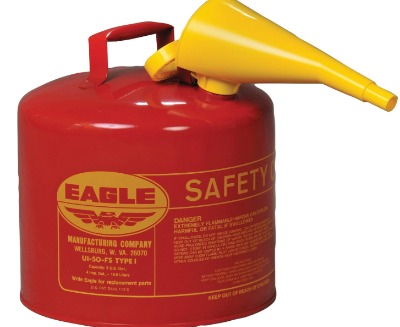
The Eagle UI50FS represents what happens when safety standards actually matter. This metal gas can comes from a company that builds containers for industrial sites where one mistake can shut down operations. The Type I classification means it passed rigorous safety testing that most consumer gas cans never face.
Built from galvanized steel, this container laughs at the abuse that destroys plastic alternatives. The metal construction resists dents, doesn’t crack from UV exposure, and handles temperature swings without warping. Red powder-coated paint makes the container instantly recognizable as gasoline storage, which matters for safety in busy garages or work areas.
What Makes This Can Stand Out
The flame arrester built into this unit stops flames from traveling back into the container if fuel vapors somehow ignite near the opening. That’s not theoretical safety theater—it’s a genuine protection layer that could prevent a catastrophic fire. The self-closing lid snaps shut automatically, which prevents vapor escape and keeps contaminants out of your fuel supply.
The included F-15 funnel screws onto the pour spout and gives you control over fuel flow. You can start and stop pouring precisely, which matters when you’re filling a small lawn mower tank that only holds a gallon or two. The funnel design reduces splash-back and makes aiming into tight filler necks much easier.
Made in the USA, this can meets OSHA and NFPA standards that govern workplace safety. For homeowners, that certification means you’re getting equipment designed to protect people who handle fuel all day, every day. The five-gallon capacity hits a sweet spot—enough to refuel multiple times without constant trips to the gas station, but not so heavy that moving a full container becomes a workout.
Best Situations for This Gas Can
This container shines in situations where safety can’t be compromised. If you store gas in an attached garage near your home’s living space, the flame arrester and self-closing lid provide extra protection. People who work around ignition sources—welding shops, metal fabrication areas, or facilities with open flames—benefit from the industrial-grade safety features.
The rugged steel construction makes this ideal for commercial landscaping crews who transport equipment in trucks and trailers. The can won’t crack if it tips over during transport or gets knocked around in a work vehicle. Contractors who need fuel containers that comply with worksite safety regulations can use this without worrying about citations.
For homeowners with extensive equipment collections—lawn tractors, snow blowers, generators, and other gas-powered tools—the five-gallon size provides enough capacity to keep everything running without excessive storage space. The metal construction also means this can lasts for decades rather than the few years you might get from plastic alternatives.
Real-World Performance Details
In actual use, the metal construction shows its value immediately. The can doesn’t flex or bulge when full, which gives you better control while pouring. The weight of the empty container (around 6 pounds) adds stability, though it does make the total weight significant when filled with 30+ pounds of gasoline.
The funnel attachment takes some practice to use efficiently. You need to tilt the can at the right angle to get steady flow without overflow. Once you figure out the technique, refueling becomes quick and clean. The self-closing lid means you can’t accidentally leave the container open, which prevents evaporation and keeps your fuel fresh longer.
Cleanup is minimal with this design. Since the seal works properly, you won’t have fuel vapor smell lingering in your storage area. The metal surface wipes clean easily if you do get any exterior drips, and it doesn’t absorb odors like plastic can.
Advantages and Limitations
What Works:
- Metal construction outlasts plastic containers by many years
- Flame arrester provides genuine fire safety protection
- Self-closing lid prevents vapor escape and contamination
- Meets industrial safety standards for workplace use
- Made in USA with quality manufacturing
- Five-gallon size balances capacity with portability
- Red color provides instant visual identification
- Handles temperature extremes without degrading
What Could Be Better:
- Heavier than plastic alternatives, especially when full
- Higher upfront cost compared to basic containers
- Metal construction can dent if subjected to serious impacts
- Requires proper pouring technique to avoid spills
- Funnel attachment adds an extra component to manage
- No sight gauge to check fuel level easily
Investment Value
This gas can costs significantly more than basic plastic options, but the price reflects genuine quality. The metal construction means you buy this once rather than replacing cheap containers every few years. For people who value safety and durability, that upfront investment makes financial sense over time.
The safety features provide value that’s hard to quantify. You can’t put a price on preventing a garage fire or avoiding fuel contamination that damages expensive equipment. The container’s compliance with industrial standards means it’s accepted in professional settings where insurance and liability matter.
For casual homeowners with a single push mower, this might be overkill. But for anyone with multiple pieces of equipment, commercial operations, or situations where safety regulations apply, the Eagle UI50FS delivers professional-grade performance that justifies its cost.
NO-SPILL 2-1/2 Gallon Gas Can: Foolproof Design for Easy Fueling
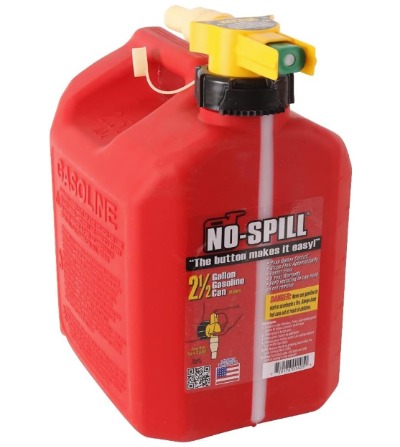
The NO-SPILL gas can tackles the most common complaint about fuel containers—actually managing to pour gasoline where you want it without making a mess. This 2.5-gallon container uses a unique spout design that gives you one-handed control over fuel flow, which changes the entire refueling experience.
Built from high-density polyethylene plastic, this can resists cracking and handles outdoor storage without UV degradation. The smaller capacity makes it light enough to maneuver easily, even when completely full. That’s a big advantage for people who struggle with the weight of five-gallon containers or need to refuel equipment in tight spaces.
Key Design Features
The NO-SPILL system uses a button-activated spout that only flows when you press the valve. Release the button and flow stops immediately—no waiting for drips, no overflow, and no gasoline running down the outside of your mower tank. The spout design creates a clean pour stream that doesn’t glug or splash.
The thumb-activated button sits right where your hand naturally grips the spout, which means you control everything with one hand. Your other hand stays free to hold the equipment stable or position the spout exactly where it needs to go. This makes fueling push mowers, where you’re often holding the machine at an angle, much less awkward.
A solid metal internal spring mechanism drives the valve, not cheap plastic parts that wear out quickly. The 1.25-inch spout opening provides fast flow when you need it but remains controllable. The automatic shutoff valve means you can’t overfill and spill fuel from the mower tank—press the spout against the bottom of the tank and it stops flowing when fuel reaches the opening.
The can includes a dust cap that covers the spout opening during storage, keeping the valve clean and preventing evaporation. The cap stays attached to the container, so you can’t lose it. A large, comfortable grip handle makes carrying the full container easy, and the shape provides stable pouring angles.
Where This Container Excels
This gas can works brilliantly for standard residential lawn care. If you have a push mower with a 1-2 gallon tank, this container provides enough capacity for several refuelings without being unnecessarily large. The 2.5-gallon size means you can refill at gas stations without overfilling or wasting fuel.
People with mobility limitations or grip strength issues benefit from the one-handed operation. You don’t need to support a heavy, awkward container with both hands while trying to aim a flimsy spout. The controlled pour system reduces physical strain and makes fueling accessible for more people.
Homeowners who store gas cans in cars or small storage sheds appreciate the compact size. The container fits in trunks, behind seats in trucks, or on crowded garage shelves without taking up excessive space. For people who take lawn equipment to different properties or vacation homes, the portable size makes transport practical.
The design also suits users who aren’t experienced with handling gasoline. The multiple safety features—controlled spout, automatic shutoff, sealed cap—reduce the chance of accidents. Parents who need to store gas safely around curious kids gain peace of mind from the spill-proof design.
Day-to-Day Usage Experience
Using this can feels different from traditional gas containers. There’s no tipping, gurgling, or guessing when to stop pouring. Press the button, fuel flows cleanly, release the button, flow stops instantly. The lack of spills means no gas smell on your hands, clothes, or garage floor.
The button mechanism requires minimal pressure to activate, but enough resistance that it won’t accidentally trigger. After using it a few times, the operation becomes automatic. You can focus on positioning the spout accurately rather than fighting to control a flood of gasoline.
The 2.5-gallon capacity limits how many times you can refuel before needing a gas station trip. For a typical push mower, that’s 2-3 complete tank fills. If you have multiple pieces of equipment or a large riding mower, you’ll need to refill the container more often than you would with a five-gallon option.
The spout does require occasional cleaning to maintain smooth operation. Gasoline additives and old fuel can leave residue that gums up the valve over time. A quick rinse with fresh fuel or proper cleaning solution keeps everything working smoothly.
Strengths and Weaknesses
What Works:
- Button-controlled spout prevents spills completely
- One-handed operation makes refueling easier
- Automatic shutoff prevents overfilling equipment
- Compact size fits in tight storage spaces
- Light enough for anyone to handle when full
- Attached cap can’t get lost
- Simple design with few parts to break
- High-density plastic resists cracking and UV damage
What Could Be Better:
- Smaller capacity requires more frequent refilling
- Plastic construction isn’t as durable as metal
- Button mechanism can stick if contaminated with old fuel
- Not suitable for commercial use or high-volume needs
- Spout design limits pouring angle options
- No gauge to see remaining fuel level
Cost-Benefit Analysis
This container sits in the middle price range—more expensive than basic plastic jugs but far less than industrial metal cans. The spill-proof design justifies the cost by preventing wasted fuel. Even small spills add up, and gasoline isn’t getting cheaper.
The convenience factor has real value for people who dread refueling because of past messy experiences. Making the job easier and cleaner encourages proper equipment maintenance. When fueling isn’t frustrating, you’re more likely to keep your mower properly maintained.
For most homeowners with standard lawn care needs, this container provides the best balance of features, size, and cost. It solves the spilling problem without requiring industrial-grade equipment. The investment pays off through reduced waste and improved user experience.
Midwest Can Company 5610: Affordable Two-Pack Solution for Multiple Locations
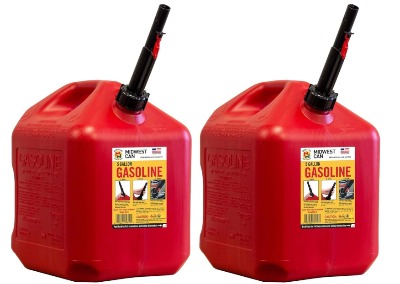
The Midwest Can two-pack offers practical value for people who need fuel containers in multiple places. Each five-gallon can provides substantial capacity, and buying two at once often costs less than purchasing quality containers separately. This makes sense for anyone maintaining property in different locations or managing several types of gas-powered equipment.
These containers use high-density polyethylene construction that meets EPA requirements for fuel storage. The plastic formulation resists cracking from drops and handles outdoor storage conditions. Each can includes a flexspout system that provides better control than old-style rigid spouts.
Design and Build Quality
The flexspout design uses a flexible rubber spout that bends to reach awkward fuel tank openings. Unlike rigid metal spouts that force you to position the entire heavy container at uncomfortable angles, the flexible spout adjusts to meet the tank. This reduces strain and makes fueling easier, especially on equipment with recessed or oddly positioned filler necks.
Each container features a trigger-release pour mechanism. Squeeze the spout base to start fuel flow, release to stop. The system isn’t as sophisticated as the NO-SPILL design but provides better control than simple open-mouth containers. The trigger requires both hands to operate effectively—one supporting the container, one controlling the spout.
The five-gallon capacity of each can provides enough fuel for extensive lawn care sessions. Fill them both and you have ten gallons available, which handles large properties or multiple equipment types without constant refueling trips. The wide base design provides stability and reduces the chance of accidentally knocking over a full container.
A large handle spans the top of each can, providing a comfortable grip point. The handle design distributes weight fairly evenly, though a full five-gallon container still weighs over 30 pounds and requires reasonable strength to lift and pour. Built-in measurement marks on the side help you track fuel levels and mix gas-oil ratios accurately for two-stroke equipment.
Ideal Use Cases
The two-pack format suits property owners with separate locations requiring fuel storage. Keep one can at your primary residence and another at a vacation property, cabin, or rental. This prevents the need to transport gasoline between locations, which comes with safety concerns and sometimes legal restrictions.
People with varied equipment collections benefit from dedicating one container to pure gasoline and another to mixed fuel for two-stroke engines. Color-coding or labeling prevents accidentally using the wrong fuel type. Having separate containers eliminates the need to completely empty and clean a can when switching between fuel types.
Families where multiple people handle lawn care can position containers in convenient locations. One in the garage near the push mower, another in the shed by the riding mower. This reduces the hassle of transporting heavy fuel containers around the property just to refuel different equipment.
Budget-conscious buyers who need multiple containers save money with the two-pack format. The per-unit cost drops compared to buying quality gas cans individually. For commercial operations just starting out or homeowners setting up new properties, this provides affordable, practical fuel storage.
Practical Performance
The flexspout system works reasonably well but has a learning curve. The flexible spout can kink if bent too sharply, which restricts flow. You need to maintain a gradual curve for smooth pouring. Once you understand the technique, refueling goes smoothly, though not as effortlessly as with the NO-SPILL design.
The trigger release provides decent flow control. Fuel doesn’t gush uncontrollably, but it also doesn’t stop instantly when you release the trigger. Expect a brief continuation of flow and plan accordingly to avoid overfilling. This requires paying attention during the final moments of refueling.
The five-gallon capacity means these containers get heavy when full. Lifting a full can from ground level and holding it steady while pouring requires reasonable physical capability. People with back problems or limited strength might struggle with the weight, especially when fueling equipment that requires holding the can at shoulder height.
The plastic construction holds up well to normal use but shows wear faster than metal containers. Expect surface scratching, some color fading over time, and eventual cracking after several years of outdoor storage. These aren’t lifetime containers, but they provide good service for their price point.
Advantages and Drawbacks
What Works:
- Two-pack provides excellent value for the price
- Five-gallon capacity handles multiple refuelings
- Flexspout bends to reach difficult filler necks
- Measurement marks help with fuel mixing
- Wide base provides stable storage
- Meets EPA fuel storage requirements
- Large handle makes carrying comfortable
- Suitable for pure gas or mixed fuel storage
What Could Be Better:
- Heavy when full, requires good physical strength
- Flexspout can kink and restrict flow
- Trigger release doesn’t stop flow instantly
- Plastic construction isn’t as durable as metal
- No flame arrester or advanced safety features
- Spout mechanism can leak if not properly seated
- Fumes may escape if cap isn’t tightened completely
Value Proposition
This two-pack delivers practical functionality at a budget-friendly price point. You get two functional five-gallon gas cans for what some single premium containers cost. For people with straightforward fuel storage needs who don’t require industrial safety features, this represents solid value.
The containers handle basic lawn care fueling without problems. They won’t last as long as metal alternatives or provide the spill-proof convenience of specialized designs, but they work reliably for their intended purpose. The two-pack format adds flexibility that a single container can’t provide.
For people just starting to build equipment collections or those who need backup fuel storage without major investment, these containers make sense. They’re good enough to do the job properly without paying for features you might not need.
Justrite 7250120: Premium Type II Safety Can for Professional Standards
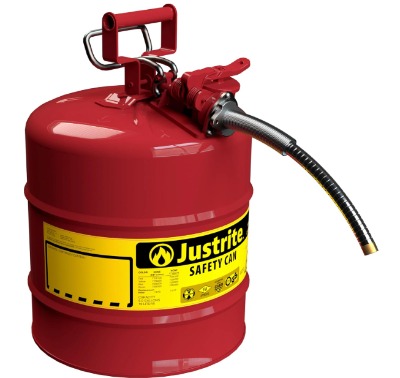
The Justrite Type II safety can brings professional-grade fuel handling to environments where safety can’t be compromised. This five-gallon container meets even stricter standards than Type I cans, adding features specifically designed to vent pressure safely during pouring. For commercial operations and serious safety-conscious users, the Type II classification provides an extra layer of protection.
Built from galvanized steel with powder-coated red paint, this container matches the durability of the Eagle Type I can while adding enhanced ventilation features. The Type II designation means the can includes both a pour spout and a separate vent that remains closed except during active pouring. This design reduces vapor emissions and provides more controlled fuel flow.
Technical Features Explained
The 5/8-inch flexible metal spout provides better reach than rigid spouts while maintaining the durability of metal construction. The flexible section bends to access awkward fuel tank locations without requiring you to tilt the entire heavy container at extreme angles. Metal construction means the spout won’t deteriorate from fuel exposure or environmental conditions.
A spring-loaded cap covers the pour spout when not in use. This cap closes automatically, sealing the container and preventing vapor escape. The separate vent cap includes its own self-closing mechanism. When you start pouring, opening the vent allows air to enter the container, which creates smooth, controlled fuel flow without glugging or pressure buildup.
The flame arrester screen in both the spout and vent openings stops flames from entering the container. This dual-point protection exceeds what many basic gas cans offer. If you somehow encountered an ignition source while handling fuel, the flame arresters work to prevent the container contents from igniting.
The galvanized steel body resists corrosion from fuel exposure and weather conditions. The heavy-gauge construction handles impacts without denting easily. Welded seams mean no weak points where leaks might develop over time. A large, sturdy handle provides secure grip and weight distribution for carrying and pouring.
Best Applications
This container belongs in professional settings where liability and insurance requirements demand certified safety equipment. Commercial landscaping companies, construction sites, maintenance facilities, and any business handling gasoline need containers that meet strict regulatory standards. The Justrite name carries weight with safety inspectors and insurance auditors.
Homeowners with extensive equipment operations—managing large properties, running hobby farms, or maintaining rental properties—benefit from professional-grade reliability. If you depend on equipment working properly and can’t afford downtime from contaminated fuel or damaged containers, this investment makes sense.
The Type II design particularly suits situations involving high-volume fuel handling. If you refuel multiple pieces of equipment daily, the smooth flow control and reduced vapor emissions make the job safer and more efficient. The ventilation system prevents pressure-related spills that can happen with cheaper containers during rapid pouring.
Users storing gas in environments with temperature fluctuations benefit from the ventilation system. The vent allows pressure equalization without leaking fuel, which matters in sheds or outbuildings that heat up during summer days. Pressure buildup in sealed containers can cause leaks or even container failure with lesser designs.
Real-World Usage Insights
Operating this can feels more sophisticated than standard gas containers. Open the vent before pouring and fuel flows smoothly without gurgling or surging. The flexible spout reaches into tight spaces while the ventilation system prevents air lock that causes interrupted flow. Close both caps after use and the container seals completely.
The all-metal construction means excellent durability but significant weight. The empty can weighs substantially more than plastic alternatives. When filled with five gallons of gasoline (over 30 pounds), the total weight exceeds 40 pounds. This requires good physical condition to handle safely, especially when pouring into elevated fuel tanks.
The separate vent adds a step to the pouring process. You must remember to open the vent before pouring and close it afterward. This becomes automatic with practice but represents an extra action compared to simpler designs. The trade-off is smoother fuel flow and reduced vapor emissions.
Maintenance is minimal with this container. The metal construction doesn’t absorb fuel or odors. Occasional inspection of the flame arresters ensures they remain clear of debris. The self-closing caps maintain seals without adjustment. Proper care means this container serves reliably for decades.
Benefits and Limitations
What Works:
- Type II classification meets highest safety standards
- Dual flame arresters provide extra fire protection
- Ventilation system ensures smooth, controlled pouring
- Flexible metal spout reaches difficult locations
- Galvanized steel construction resists corrosion
- Self-closing caps on both spout and vent
- Made in USA with premium manufacturing quality
- Suitable for commercial and professional use
- Reduces vapor emissions during storage and use
What Could Be Better:
- Higher price point than consumer-grade options
- Heavy construction requires good physical strength
- Separate vent adds operational complexity
- Metal can dent under extreme impact
- No volume markings to gauge fuel level
- Requires both hands to operate vent and pour
Investment Justification
The Justrite Type II can costs more than basic containers, sometimes significantly so. That premium buys genuine safety features, commercial-grade durability, and regulatory compliance. For business operations, the cost becomes a reasonable expense that provides insurance against accidents and regulatory violations.
Professional users often find the investment pays for itself through longevity. One Justrite can outlasts multiple cheap plastic containers. The reduced risk of spills and contamination saves money by protecting expensive equipment and preventing wasted fuel. The liability protection from using certified safety equipment has value that’s hard to quantify but very real.
For serious homeowners who view their equipment maintenance as a serious undertaking rather than a casual hobby, this container provides professional-grade capabilities. You’re buying the same equipment professionals trust in demanding commercial environments. That peace of mind and performance has value beyond the price tag.
Upgraded 16 Gallon Gas Tank: Heavy-Duty Storage for Large-Scale Operations
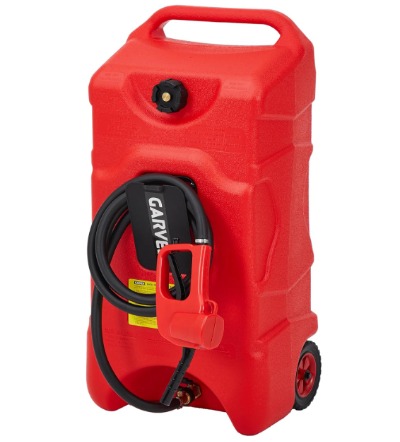
This massive 16-gallon container takes a completely different approach to fuel storage. Rather than a portable can you carry to equipment, this unit serves as a stationary fuel station. The included manual transfer pump and 10-foot hose bring fuel to your equipment instead of moving the container. For operations with multiple pieces of equipment or commercial lawn care businesses, this system changes the entire refueling workflow.
Built as a heavy-duty tank with caster wheels, this unit provides fuel storage capacity equivalent to more than three standard five-gallon cans. The roll-anywhere design means you can position the tank conveniently, then pump fuel directly into equipment without lifting heavy containers. The manual pump creates steady flow without requiring electrical power or batteries.
System Components and Design
The 16-gallon tank uses thick plastic construction designed to handle the substantial weight of a full fuel load. At maximum capacity, you’re dealing with over 100 pounds of gasoline. The reinforced walls prevent bulging and maintain structural integrity. A wide base provides stability and reduces the risk of tipping during movement or pumping operations.
Four caster wheels mount to the base, allowing the full tank to roll across garage floors, shop surfaces, or smooth outdoor areas. Two wheels typically include locks to secure the tank in position during refueling operations. The mobility system eliminates the need to lift and carry fuel containers, which reduces physical strain and injury risk.
The manual transfer pump mounts to the tank and uses a hand-operated lever to move fuel through the hose. The pumping action creates suction that draws gasoline from the tank and pushes it through the delivery hose. This system works without electricity, making it reliable and functional anywhere. The pump mechanism is designed for fuel compatibility and includes seals that resist gasoline degradation.
A 10-foot hose provides substantial reach from the tank location to equipment. This length means you can park the tank in one spot and fuel multiple pieces of equipment without moving the tank between each one. The hose includes a nozzle with a trigger control that starts and stops fuel flow. Some models include an automatic shutoff feature that stops flow when the receiving tank is full.
Optimal Use Scenarios
This system makes sense for commercial landscaping operations maintaining multiple properties daily. Keep the tank filled and pump fuel into mowers, edgers, blowers, and other equipment before starting the workday. The high capacity reduces trips to gas stations, and the pump system makes fueling multiple tools quick and efficient.
Homeowners with extensive properties and varied equipment benefit from the centralized fuel station approach. If you maintain several acres with a riding mower, tractor, ATV, and handheld equipment, this system eliminates the hassle of managing multiple small gas cans. Fill the tank weekly or monthly and pump what you need as equipment requires it.
The wheeled design particularly suits users with mobility limitations or physical conditions that make lifting heavy gas cans difficult or impossible. Roll the tank to where you need it, pump fuel into equipment without lifting, and roll it back to storage. The system accommodates users who want to maintain their own equipment despite physical limitations.
Small engine repair shops and equipment rental businesses find this system invaluable. Keep equipment fueled and ready without dedicating staff time to managing small fuel containers. The pump system allows quick fueling of rental equipment between customer uses. The large capacity reduces the frequency of refilling the main tank.
Operational Experience
Using this system feels more like operating a miniature gas station than handling traditional fuel containers. Roll the tank into position, unlock the pump, insert the hose into your equipment, and pump the lever. Fuel flows steadily and controllably. The nozzle trigger lets you stop instantly, and the automatic shutoff prevents overfilling.
The manual pump requires physical effort. You’re operating a lever repeatedly to move fuel through the system. This isn’t difficult but does require more work than simply tipping a container. The trade-off is no heavy lifting and no awkward pouring angles. For people with strong arms but weak backs, this exchange makes sense.
The 10-foot hose provides good reach but must be managed properly. Coil it neatly after use to prevent kinks and damage. The hose material resists fuel degradation but will eventually crack if left in direct sunlight continuously. Proper storage extends system life significantly.
The large capacity creates a new challenge—keeping fuel fresh. Gasoline degrades over time, especially fuel containing ethanol. If you don’t use all 16 gallons within a few months, you risk storing stale fuel that can damage engines. Users need to match tank capacity to their actual usage rate or plan to add fuel stabilizer for long-term storage.
Pros and Cons
What Works:
- Massive 16-gallon capacity reduces refilling frequency
- Manual pump eliminates heavy lifting
- 10-foot hose provides excellent reach
- Caster wheels make positioning easy
- Suitable for commercial or high-volume residential use
- Pump system works without electricity
- Centralized storage simplifies fuel management
- Reduces physical strain compared to carrying gas cans
What Could Be Better:
- Large size requires significant storage space
- Very heavy when full, difficult to move on rough terrain
- Manual pumping requires repeated physical effort
- Plastic construction not as durable as metal containers
- Large capacity increases risk of storing stale fuel
- Pump mechanism has more parts that can fail
- Hose requires careful storage to prevent damage
- Initial cost is higher than multiple small containers
Value Analysis
This system costs more upfront than buying several standard gas cans. The investment makes sense when you consider the convenience and time savings for high-volume users. Commercial operations can justify the cost through increased efficiency and reduced employee strain. The system pays for itself through time savings and improved workflow.
For residential users, the value depends on usage scale. If you genuinely need 16 gallons of fuel capacity regularly, this system delivers excellent convenience. If you only mow a small lawn occasionally, the investment doesn’t make financial sense. The key is matching the system’s capabilities to your actual needs.
The pump and hose components eventually require replacement. These costs should factor into long-term value calculations. However, the tank itself can last for many years with proper care. The mobile fueling station approach provides unique benefits that justify premium pricing for users who need those capabilities.
Comparison Insights: How These Gas Cans Stack Up Against Each Other
These five options span a wide range of approaches to fuel storage and handling. Understanding how they compare helps match the right container to specific needs and situations.
Capacity and Portability Trade-offs
The NO-SPILL 2.5-gallon can prioritizes portability and ease of handling over capacity. It’s the lightest option when full and easiest to maneuver in tight spaces. This makes sense for users with compact equipment and modest fuel needs. The smaller size becomes a limitation for extensive lawn care or multiple equipment types.
The Eagle, Justrite, and Midwest cans all offer five-gallon capacity, which hits a practical middle ground. You get enough fuel for multiple refuelings without excessive weight. The difference lies in construction—the metal containers (Eagle and Justrite) weigh more empty but offer superior durability. The plastic Midwest cans are lighter but less rugged.
The 16-gallon tank exists in a different category entirely. It’s not about portability—it’s about capacity and convenience through the pump system. This option only makes sense when you have legitimate high-volume needs and dedicated storage space.
Safety Features Comparison
The Justrite Type II can provides the most comprehensive safety features with dual flame arresters, separate ventilation, and self-closing caps on both openings. This represents the highest level of consumer-accessible safety technology. The Eagle Type I can offers similar features with a slightly simpler design, still exceeding typical consumer containers.
The NO-SPILL focuses on a different type of safety—preventing spills and user error through foolproof design. While it doesn’t have flame arresters or metal construction, the controlled pour system dramatically reduces the most common safety issue: gasoline spills.
The Midwest cans provide basic safety compliance but lack advanced features. They meet EPA requirements without exceeding them. For many users, this basic safety level suffices, especially when the cost savings allow buying multiple containers.
The 16-gallon tank includes leak-proof seals and a controlled pump system. The stationary design with wheels actually improves safety by eliminating the need to lift and carry heavy fuel loads. However, the large capacity creates new safety concerns around storing significant gasoline quantities in one location.
Ease of Use Rankings
The NO-SPILL wins hands-down for pure ease of use. The one-handed button control and automatic shutoff make refueling nearly foolproof. Anyone can use this effectively, regardless of experience or physical capability.
The 16-gallon tank with pump system ranks second for ease of use, though in a completely different way. The pump brings fuel to equipment rather than requiring container manipulation. For users with multiple pieces of equipment, this workflow proves remarkably convenient.
The Eagle and Justrite metal cans require more technique to use effectively but provide superior control once you master the method. The learning curve is modest—after a few uses, the process becomes natural. The funnel and spout systems work well but don’t offer the instant gratification of the NO-SPILL design.
The Midwest flexspout cans fall somewhere in the middle. They’re easier than old-style rigid spouts but require more attention than the NO-SPILL design. The trigger control provides decent flow management without being foolproof. These cans work fine but don’t stand out for convenience.
Durability and Longevity Expectations
The Justrite and Eagle metal containers will outlast everything else substantially. Expect 20+ years of service with proper care. The galvanized steel construction resists damage and doesn’t degrade from environmental exposure. These containers represent one-time purchases for most users.
The NO-SPILL offers good durability for a plastic container. The high-density construction resists cracking and handles outdoor storage reasonably well. Expect 5-10 years of reliable service, possibly more with careful use. The button mechanism is the most likely point of eventual failure.
The Midwest cans provide adequate durability at their price point. Plan on 3-7 years depending on usage conditions and storage environment. The plastic will eventually become brittle, and the flexspout components will wear. These are consumable items rather than lifetime investments.
The 16-gallon tank’s durability depends on component quality, which varies between manufacturers. The tank itself should last many years, but the pump mechanism and hose assemblies will require replacement. Budget for maintenance and replacement parts over the system’s lifetime.
Cost-Benefit Assessment Across Options
The Midwest two-pack delivers the best raw value—you get functional five-gallon capacity at the lowest per-container cost. This makes sense for budget-conscious buyers with basic needs.
The NO-SPILL provides excellent value for convenience-focused users. The spill-proof design prevents wasted fuel and reduces frustration. The time and hassle savings justify the moderate price premium over basic containers.
The Eagle Type I can represents good value for safety-conscious users. The industrial-grade construction and safety features provide genuine protection that matters in certain situations. The longevity means the higher upfront cost spreads over many years.
The Justrite Type II can is the premium option with pricing to match. The value proposition works for commercial users and serious homeowners who need regulatory compliance and maximum safety. The cost is harder to justify for casual residential use.
The 16-gallon tank system requires the largest investment but provides unique capabilities unavailable from standard gas cans. The value depends entirely on whether you need those capabilities. For high-volume users, it’s worth every penny. For average homeowners, it’s likely overkill.
Complete Buying Guide: What to Consider Before Purchase
Choosing the best gas can for lawn mower use involves more than picking the biggest or cheapest option. Several factors determine which container works best for your specific situation.
Understanding Safety Certifications
Safety ratings like Type I and Type II indicate containers meet specific testing standards for flame resistance, pressure handling, and vapor control. Type I containers include self-closing lids and pour spouts. Type II containers add separate vent openings for controlled pouring. These certifications matter most for commercial use or situations where local codes specify requirements.
Flame arresters prevent fires from traveling back into containers if fuel vapors ignite externally. This feature appears in industrial-grade containers and provides genuine safety value, not marketing hype. If you store gasoline near potential ignition sources or in attached garages, flame arresters add meaningful protection.
EPA compliance indicates containers meet federal requirements for vapor emissions. All legally sold gas cans should meet these standards. Some states have additional requirements—California, for instance, has strict regulations about fuel container design. Check local requirements before purchasing.
Material Construction Matters
Metal containers offer superior durability and fire resistance. Galvanized steel handles impacts, temperature extremes, and long-term fuel exposure without degrading. The main drawbacks are higher cost and increased weight. Metal makes sense for permanent investments and professional applications.
Plastic containers cost less and weigh significantly less when empty. High-density polyethylene resists cracking and handles outdoor storage reasonably well. However, plastic degrades over time from UV exposure, temperature cycling, and fuel exposure. Plastic suits budget-conscious buyers and those prioritizing light weight.
Some containers combine materials—metal construction with plastic components, or plastic bodies with metal spouts. These hybrid approaches attempt to balance benefits and compromises. Quality varies significantly, so research specific models rather than assuming all hybrids perform similarly.
Capacity Planning
Match container capacity to your actual fuel consumption rate. Too small means constant refilling trips. Too large means storing fuel longer, which increases degradation risk. Gasoline containing ethanol starts degrading within weeks, and even pure gas deteriorates over months.
A typical push mower with a one-gallon tank needs refilling every 1-2 mowing sessions for average lawns. A 2.5-gallon container provides several refuelings. A five-gallon can might last several weeks. Calculate based on your equipment’s tank size and mowing frequency.
For multiple equipment types, consider whether one large container or several smaller ones works better. Multiple smaller cans allow separating regular gasoline from two-stroke premix. However, several large containers become cumbersome to store and manage. Think through your workflow before deciding.
Spout Design Impact
Traditional rigid spouts require tilting the entire container to pour. This works but demands good aim and physical strength. The weight of a full five-gallon can makes maintaining the correct angle for several minutes tiring.
Flexible spouts bend to meet fuel tank openings, reducing the container tilting needed. This makes refueling easier but flexible spouts can kink and restrict flow. Quality varies significantly—cheap flexible spouts crack and leak quickly.
Button-controlled or trigger-release spouts provide flow control. You start and stop pouring precisely rather than relying on tilting alone. This significantly reduces spill risk and makes refueling more precise. These mechanisms add complexity and represent potential failure points.
Pump systems eliminate pouring entirely. You operate a pump to transfer fuel through a hose. This approach works well for high-volume operations and stationary storage. The system requires more maintenance and initial investment but offers convenience for the right applications.
Venting and Vapor Control
Proper venting allows air into containers during pouring, which prevents glugging and creates smooth fuel flow. Containers without venting create vacuum pressure that makes pouring difficult and inconsistent. Some basic containers rely on the pour opening for both fuel exit and air entry, which creates turbulent flow.
Separate vent openings provide controlled air entry. Type II containers feature dedicated vents with self-closing caps. This design improves pour control and reduces vapor emissions during storage. The trade-off is added complexity—you must remember to open the vent before pouring.
Self-closing caps seal containers when not in use. This reduces evaporation, prevents contamination, and contains fuel vapors. Automatic closing means you can’t accidentally leave containers open. This feature adds cost but provides genuine practical benefits.
Storage Requirements
Consider where you’ll store fuel containers. Attached garages near living spaces demand more safety consideration than detached storage buildings. Ventilation in storage areas matters—gasoline vapors can accumulate in enclosed spaces. Fire codes often specify how much gasoline can be stored in residential locations.
Temperature extremes affect both fuel and containers. Direct sunlight degrades plastic and increases vapor pressure inside containers. Freezing temperatures can affect plastic flexibility. Ideal storage keeps containers in moderate temperatures away from direct sun.
Access convenience matters for regular use. Containers stored in hard-to-reach locations become annoying to use, which might discourage proper equipment maintenance. Balance safety considerations with practical accessibility.
State and Local Regulations
Some jurisdictions restrict fuel container types, sizes, or storage locations. California has specific requirements for fuel container spout designs. Some areas limit total fuel storage quantities in residential settings. Fire codes might specify minimum distances between fuel storage and buildings or ignition sources.
Commercial operations face additional regulations. Workplace safety standards often require specific container types and safety features. Insurance policies might mandate certified safety equipment. Check requirements before purchasing if containers will be used in business settings.
Who Should Buy Each Product
Different users have different priorities. Matching gas cans to user profiles ensures satisfaction with purchase decisions.
The Safety-Conscious Homeowner
Users who prioritize safety above all else should consider the Eagle Type I or Justrite Type II metal safety cans. These containers provide industrial-grade protection features that dramatically reduce fire risk. The investment makes sense for people storing fuel in attached garages, near homes, or in situations where the worst-case scenario would be catastrophic.
Safety-focused users typically have families, live in populated areas, or have experienced fuel-related accidents in the past. The flame arresters, self-closing lids, and metal construction provide peace of mind that justifies higher costs. These buyers value knowing they’ve taken every reasonable precaution to protect their property and loved ones.
The Convenience Seeker
Users who value ease of use and spill prevention should look at the NO-SPILL container. The button-controlled spout makes refueling foolproof. This suits people who’ve struggled with traditional gas cans, those with limited physical strength, or anyone tired of dealing with spills and mess.
Convenience-focused users often prioritize time savings and frustration reduction over raw capacity or extreme durability. They’re willing to pay moderate premiums for features that make tasks easier. These buyers maintain standard residential equipment and want fuel handling to be quick and painless.
The Budget-Conscious Property Owner
Users needing basic functionality at minimal cost should consider the Midwest two-pack. These containers provide adequate performance for standard lawn care without premium pricing. The two-pack format offers flexibility for multiple storage locations or fuel types.
Budget-focused buyers typically maintain standard residential properties without extensive equipment collections. They need fuel containers that work reliably without paying for industrial features or high-tech convenience systems. These users prioritize getting the job done over premium features.
The Commercial Operator
Professional landscaping businesses, contractors, and commercial maintenance operations need the Justrite Type II can or similar certified equipment. The regulatory compliance, liability protection, and professional-grade durability justify premium pricing. Insurance requirements often mandate specific safety equipment.
Commercial users face different cost-benefit calculations than homeowners. Downtime from equipment problems costs money. Accidents create liability exposure. Professional-grade equipment prevents problems that could shut down operations or create legal issues. The investment protects business interests beyond simple fuel storage.
The High-Volume User
Property owners maintaining extensive acreage, hobby farms, or multiple properties should consider the 16-gallon tank system. The pump mechanism and massive capacity eliminate constant refueling trips and container management hassles. The convenience justifies the space requirements and investment.
High-volume users have equipment collections that include multiple mowers, tractors, ATVs, and handheld tools. They consume gasoline regularly enough that fuel freshness isn’t a concern. The fueling station approach streamlines their workflow significantly. These buyers need solutions that scale to their operational demands.
The Physically Limited User
Users with mobility limitations, back problems, or grip strength issues should prioritize either the NO-SPILL 2.5-gallon can or the 16-gallon pump system. Both reduce physical demands compared to traditional gas cans. The NO-SPILL offers one-handed operation and light weight. The pump system eliminates lifting entirely.
Accessibility-focused users want to maintain independence with equipment maintenance despite physical limitations. The right fuel container makes the difference between handling lawn care independently or requiring assistance. These buyers prioritize ergonomic design that accommodates their specific needs.
Common Mistakes to Avoid When Buying and Using Gas Cans
Even quality gas cans don’t perform well when used incorrectly. Avoiding common errors ensures safety and satisfaction.
Overbuying Capacity
Many people buy the largest container thinking bigger is always better. Large capacity creates problems when fuel consumption doesn’t match container size. Gasoline degrades over time, especially modern ethanol-blended fuel. Storing fuel for months in oversized containers leads to stale gas that damages engines.
Match capacity to consumption rate. If you refill your mower once weekly, a 2.5 to 5-gallon container works fine. Buying a 16-gallon tank for occasional mowing creates more problems than it solves. Consider how quickly you’ll use stored fuel before capacity becomes a liability.
Ignoring Storage Environment
Leaving gas cans in direct sunlight accelerates plastic degradation and increases vapor pressure inside containers. Storing containers in attached garages without ventilation allows vapor accumulation. Keeping fuel near water heaters, electrical panels, or other ignition sources creates fire hazards.
Plan storage locations before purchasing. Ensure adequate ventilation, protection from sun exposure, and distance from ignition sources. Some containers handle environmental exposure better than others. Metal containers tolerate sun exposure that would destroy plastic alternatives over time.
Neglecting Fuel Freshness
Even the best container can’t prevent gasoline degradation indefinitely. Ethanol-blended fuel starts deteriorating within weeks. Old fuel causes hard starting, rough running, and potential engine damage. Using fuel stabilizer helps but doesn’t eliminate aging effects.
Rotate fuel regularly. Use stored gasoline within a few months, not years. Add fresh fuel to your storage container before it runs completely empty rather than letting partial fills age indefinitely. For seasonal equipment, empty fuel systems before long-term storage or use stabilizer designed for extended storage.
Improper Cleaning Between Fuel Types
Switching between regular gasoline and two-stroke premix without proper cleaning contaminates fuel. Running regular gas in two-stroke engines causes damage. Using oil-mixed fuel in four-stroke engines creates smoke and fouled plugs.
Dedicate containers to specific fuel types or clean thoroughly between uses. Drain containers completely, rinse with fresh fuel, and allow to dry before switching fuel types. For users with both two-stroke and four-stroke equipment, maintaining separate containers prevents expensive mistakes.
Skipping Manual Reading
Gas can designs vary significantly. Operating instructions differ between models. The spout mechanism that works intuitively on one container might require specific technique on another. Assuming all gas cans work the same leads to spills, frustration, and potential safety issues.
Read included instructions before first use. Learn proper opening, pouring, venting, and closing procedures for your specific container. A few minutes spent understanding proper operation prevents messy mistakes and ensures you get the benefits the design provides.
Forcing Incompatible Equipment
Not all gas can spouts fit all equipment fuel tanks. Trying to force mismatched spouts into filler necks causes damage to both the container and equipment. This particularly affects equipment with narrow or recessed filler necks designed for specific pump nozzle sizes.
Check compatibility between your container and equipment before purchase. Some combinations require adapter nozzles or different containers entirely. Small-engine equipment sometimes needs smaller spouts than standard five-gallon cans provide. Verify fit rather than assuming everything works together.
Neglecting Spout Maintenance
Fuel residue accumulates in spouts and valve mechanisms over time. This buildup causes sticking buttons, restricted flow, and eventual failure. Regular cleaning extends container life and maintains proper function.
Flush spouts occasionally with fresh fuel to remove deposits. For containers with mechanical valves or buttons, operate them several times during cleaning to work residue free. Store containers with caps properly closed to prevent contamination. Simple maintenance prevents premature failure.
Final Verdict: Which Gas Can Wins for Different Needs
No single gas can works best for everyone. The right choice depends on specific circumstances, priorities, and usage patterns.
For Ultimate Safety: Justrite Type II
If safety features matter most—commercial requirements, attached garage storage, or simply peace of mind—the Justrite Type II can provides the most comprehensive protection available. The dual flame arresters, separate ventilation system, and Type II certification deliver industrial-grade safety. You’re buying the same equipment professionals trust in demanding work environments. The premium price buys genuine protection and durability that lasts decades.
For Spill-Free Convenience: NO-SPILL
Users who’ve struggled with messy refueling or want foolproof operation should buy the NO-SPILL container. The button-controlled spout makes gasoline handling simple and clean. Anyone can use this effectively, regardless of experience. The moderate price provides excellent value through prevented spills and reduced frustration. For standard residential lawn care, this container offers the best balance of features and usability.
For Budget Value: Midwest Two-Pack
Buyers needing functional containers without premium pricing get solid value from the Midwest two-pack. These cans handle basic fuel storage and pouring adequately. The two-container format provides flexibility for multiple locations or fuel types. They’re not fancy and won’t last forever, but they work reliably enough for straightforward lawn care needs.
For Professional Durability: Eagle Type I
Commercial users and serious homeowners who want professional equipment without Type II complexity should choose the Eagle Type I safety can. The metal construction, flame arrester, and self-closing lid provide substantial safety features. Made-in-USA manufacturing quality ensures long-term reliability. This container serves faithfully in demanding conditions for many years.
For High-Volume Operations: 16-Gallon Tank System
Users with extensive equipment collections or commercial operations that consume significant fuel quantities benefit from the pump tank system. The 16-gallon capacity and manual pump eliminate container management hassles. This system makes sense when you fuel multiple pieces of equipment regularly. The convenience justifies the investment and storage space requirements for operations at this scale.
Conclusion
The best gas can for lawn mower maintenance depends on what matters most to you. Safety-focused users need metal containers with flame arresters and self-closing lids. Convenience seekers benefit from spill-proof button-controlled designs. Budget-conscious buyers find adequate functionality in basic two-pack options. Commercial operators require certified safety equipment. High-volume users gain efficiency from pump systems.
All five reviewed containers solve fuel storage and handling in different ways. The Justrite and Eagle metal safety cans provide industrial-grade protection that prevents worst-case scenarios. The NO-SPILL makes refueling foolproof for anyone. The Midwest cans deliver basic functionality at accessible prices. The pump tank system transforms high-volume fueling workflow.
Quality fuel storage protects expensive equipment, prevents dangerous spills, and makes maintenance easier. The right container for your situation turns a frustrating chore into a quick, simple task. Consider your specific needs—equipment types, property size, storage environment, physical capabilities, and budget constraints. Match those factors to container features rather than simply buying the biggest or cheapest option.
Your lawn mower and other gas-powered equipment deserve clean, fresh fuel delivered safely. A quality gas can makes that happen reliably for years. The investment pays dividends through prevented problems, saved time, and peace of mind. Choose the container that matches your priorities, and fuel handling stops being a frustration you tolerate and becomes a task you hardly notice.

Hi, I’m Mary, the founder of GardenCure.com. I’m passionate about creating healthy, beautiful gardens and well-kept lawns. I share practical experience and trusted advice on garden and lawn gear that truly works. With the support of my dedicated research team, our writers produce honest, in-depth reviews using reliable, authentic sources—helping you choose the right tools with confidence for your outdoor space.