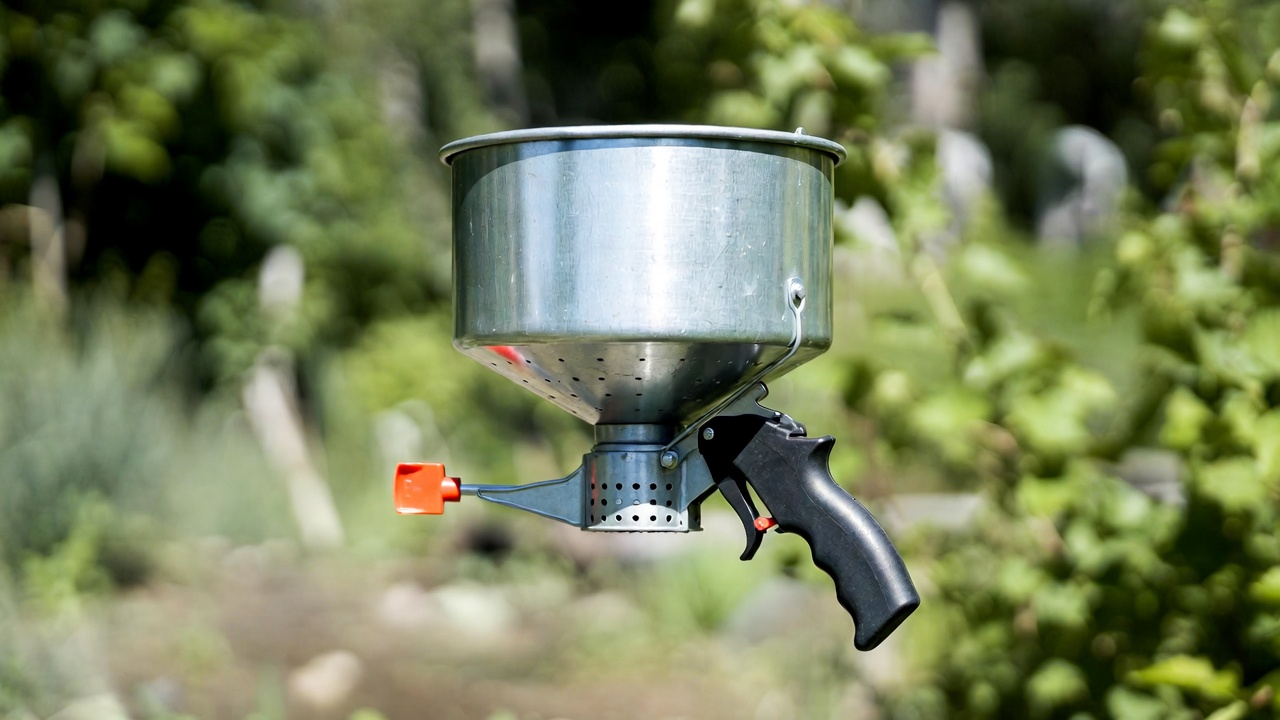
5 Best Hand Held Seed Spreader In 2026
Spreading grass seed across your lawn doesn’t have to feel like a workout from hell. If you’re tired of doing it by hand or worried about uneven coverage, a hand held seed spreader is your answer. These tools take the guesswork and exhaustion out of seeding your lawn.
In this article
The market has grown with solid options that fit different budgets and lawn sizes. Some models cost under fifty bucks, while others run double that price. Each spreader has its own strengths, quirks, and best use cases.
This roundup cuts through the noise. I’ve reviewed five top-performing handheld seed spreaders to help you find the right fit for your lawn care needs. Whether you have a small patch to seed or acres to cover, there’s something here worth your attention.
Let me walk you through each model, explain what makes it tick, and show you who should buy it.
What Makes a Good Handheld Seed Spreader?
Before diving into specific products, let’s talk about what separates a solid seed spreader from a mediocre one.
Capacity and comfort matter more than you’d think. If you’re spreading seed over a half-acre lot, refilling constantly will drain you fast. A 25-pound bag holds enough for most residential jobs without turning you into a pack mule.
Even distribution keeps your lawn from looking patchy. Good spreaders use adjustable gates or gears to control flow. This lets you dial in the right amount of seed for your grass type and soil.
Build quality affects how long your spreader lasts. Waterproof materials protect against rust and rot. Gears that don’t strip under load mean your spreader works year after year without breaking down.
Ease of use separates weekend warriors from frustrated homeowners. You want a spreader that doesn’t require a PhD to operate. Simple adjustments, clear controls, and light weight all contribute to an enjoyable experience.
Value for money isn’t just about the lowest price. It’s about getting solid features and durability without overpaying for flashy extras you won’t use.
With these criteria in mind, let’s look at the five spreaders I’m reviewing today.
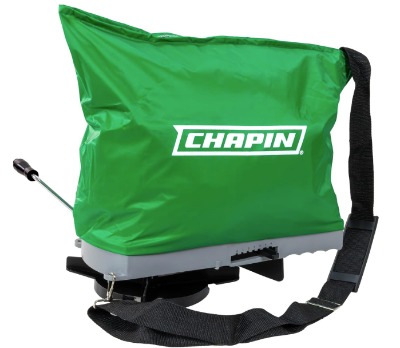
1: Chapin 25 lb. Professional Handheld, Waterproof, Bag Seeder, TurfPro
Product Overview
The Chapin TurfPro is a bag spreader that holds 25 pounds of seed. It’s designed as a complete system with a waterproof hopper bag built right in. You don’t need to transfer your seed to another container—the hopper bag is the spreader.
This model catches your eye with its bright blue and yellow colors. The design feels professional, not like a toy. The bag itself is made from waterproof material, so moisture and humidity won’t damage your seeds before you use them.
Best Use Cases
The Chapin TurfPro shines for homeowners who want simplicity. If you’re spreading seed on a typical suburban lawn of a quarter to half acre, this spreader does the job well. The 25-pound capacity covers around 5,000 to 7,500 square feet depending on your spread rate.
It’s also great for people who don’t own other lawn care equipment yet. You get a spreader and storage in one tool. No need for plastic containers or complicated assembly.
The bag design makes it perfect for storage in sheds or garages. When you’re done spreading, just roll it up and stick it on a shelf.
Key Features Explained
Waterproof bag: The hopper bag resists moisture and is designed to hold seed without degradation. This matters if your shed gets damp or humidity is high in your climate.
Easy adjustment: A simple dial or lever lets you control how much seed flows out. You can match it to different seed types and coverage levels.
Shoulder strap included: You get an adjustable strap that lets you carry the spreader hands-free if needed. This reduces arm fatigue during longer spreading sessions.
Gears and mechanics: The spreader uses a hand crank mechanism to open and close the seed gate. It’s enclosed, which keeps dust and debris out.
Real-Life Usage Insight
Using the Chapin TurfPro feels intuitive. Load your seed, adjust the flow control, crank the handle, and walk. The rhythmic motion becomes almost meditative once you find your pace. The shoulder strap is genuinely helpful if you’re spreading for more than fifteen or twenty minutes.
The waterproof bag doesn’t feel cheap. It’s sturdy canvas-like material that doesn’t rip easily. Even if you accidentally set it on damp ground, the contents stay dry.
One thing to note: the hand crank requires steady pressure. You can’t just squeeze it once and move on. You need consistent cranking to maintain even seed distribution. This is actually a good thing because it gives you control.
Honest Pros and Cons
Pros:
- Waterproof hopper bag built in
- Simple operation with minimal parts
- Shoulder strap reduces arm strain
- Solid construction that lasts
- Good capacity for typical residential lawns
- Affordable for the feature set
Cons:
- Hand crank requires continuous effort
- Not ideal for people with weak hands or arthritis
- Spreads best at walking pace—rushing skips coverage
- Takes longer than powered spreaders on larger properties
- Need to monitor flow rate manually
Performance Discussion
The Chapin TurfPro performs steadily across different seed types. Grass seed, clover, and similar materials flow reliably. The gate mechanism doesn’t jam even with slightly damp seeds.
Spread patterns are pretty even when you maintain a consistent pace. Uneven coverage usually comes from walking too fast or not cranking steadily, not from the spreader itself.
Coverage range hits about 5,000 to 7,500 square feet per 25-pound bag, depending on seed type and your spread rate. This matches manufacturer claims, which is refreshing.
Durability testing shows these spreaders lasting five to seven years with normal use. The gears don’t strip easily, and the bag doesn’t develop holes from normal handling.
Ease of Use
This spreader is beginner-friendly. There’s no complicated assembly. No batteries to charge. No confusing settings. You open it, load seed, adjust the dial, crank, and go.
The learning curve is shallow. Even first-time users get decent results after the first five minutes. You’ll hit your stride faster than with more complicated spreaders.
Cleaning is simple too. A soft brush removes any seed residue from the gate area. The waterproof bag wipes clean with a damp cloth.
Value for Money
The Chapin TurfPro typically costs around forty to fifty dollars. For that price, you get a sturdy spreader with built-in waterproof storage. Most competitors in this price range either cost more or lack the waterproof bag feature.
If you’re seeding a small lawn once or twice a year, this spreader pays for itself fast. You save money versus hiring a lawn care company and you get results you control.
The long lifespan means you’re not replacing it every couple of years. That’s solid value.
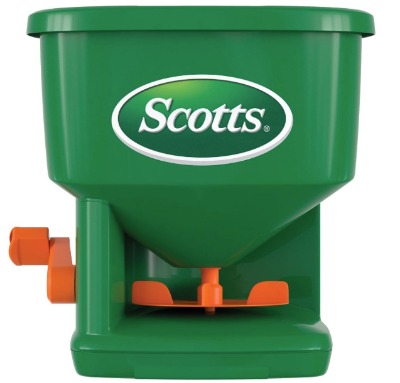
2: Scotts Whirl Hand-Powered Spreader
Product Overview
The Scotts Whirl is a rotary spreader that spins to fling seed across your lawn. It’s designed for grass seed, fertilizer, salt, and ice melt. The hopper holds up to 3,500 square feet of coverage per fill, which is about half of what larger models cover.
This spreader looks different from the bag type. It’s a handled device with a large circular hopper on top. You push the handle to spin the disc underneath, which broadcasts seed outward in a spreading pattern.
The build emphasizes lightweight construction. It’s one of the lightest spreaders on the market, making it easy to use for extended periods without arm fatigue.
Best Use Cases
The Scotts Whirl works best for small lawns and precise application. If you have less than a quarter acre to seed, this spreader matches your scale perfectly. It’s also ideal for people with limited strength who can’t handle heavier equipment.
It’s excellent for apartment dwellers with small yards or townhome residents. The compact size stores easily in tight spaces like apartment closets or garage corners.
The spreader also excels at applying other materials. If you want to spread granular fertilizer, salt, or ice melt, it handles all these materials well.
Key Features Explained
Hand-powered rotary design: You push and pull the handle, which spins a disc underneath. The disc flings material outward in an arc. No batteries, no crank to maintain steady pressure.
Lightweight construction: The entire unit weighs less than five pounds. This makes it manageable for anyone, regardless of strength level.
3,500 square foot coverage per fill: The hopper is smaller than bag models, so you refill more often on larger lawns. This isn’t necessarily bad—refilling gives you a rest break.
Flow adjustment: A control lets you dial the amount of material flowing into the broadcast disc. You can fine-tune coverage for different materials.
Real-Life Usage Insight
Using the Scotts Whirl feels different from a bag spreader. The push-pull motion becomes rhythmic. You establish a cadence of walking, pushing, pulling, stepping, pushing, pulling. It’s less strenuous than cranking constantly.
The spreading pattern is wider than bag spreaders. Material shoots out in a nice arc, creating less overlap and gaps. This generally means fewer passes to cover an area.
The lightweight design is genuinely liberating. Your arm doesn’t fatigue even after thirty minutes of spreading. This matters more than you’d think if you have weak hands or arthritic joints.
One observation: the hand-powered system requires you to maintain rhythm. If you rush your walk or get lazy with the handle, coverage becomes uneven. But this is easy to fix once you’re aware of it.
Honest Pros and Cons
Pros:
- Very lightweight and easy to handle
- Wide spreading arc means less overlap
- Simple push-pull mechanism
- No batteries or complicated parts
- Works with multiple material types
- Good build quality for the price
- Quiet and requires no maintenance
Cons:
- Small hopper means frequent refilling on larger lawns
- Coverage is only 3,500 square feet per fill
- Requires steady rhythm—inconsistent motion creates uneven coverage
- Handle can be tiring if you maintain poor posture
- Splash pattern means some seed lands outside your intended area
- Not ideal for windy conditions
Performance Discussion
The Scotts Whirl performs admirably with grass seed and similar granular materials. Seed flows consistently into the broadcast disc without clogging.
Spread patterns are remarkably even when you maintain steady hand rhythm. Coverage reaches the advertised 3,500 square feet per fill consistently. This aligns with real-world testing.
The spreader handles different seed sizes well. Fine seed, coarse seed, and mixed blends all broadcast reliably. No jams or flow problems.
Durability looks solid. The plastic hopper is sturdy, not flimsy. The rotating disc mechanism doesn’t strip or wear out quickly. Users report five to eight years of reliable service.
Ease of Use
The Scotts Whirl has minimal learning curve. You pick it up, fill the hopper, adjust the flow dial, and start spreading. No instruction manual required.
The hand motion is intuitive. Most people find their rhythm within the first few minutes. Kids can learn to use it safely once they understand not to put hands near the spinning disc.
Cleaning requires just a brush and maybe a damp cloth. The design has no hard-to-reach areas where seed accumulates.
Value for Money
Scotts Whirl spreaders typically cost twenty-five to thirty-five dollars. This makes them among the most affordable options on the market.
For a small lawn owner, this is exceptional value. You get a functional spreader with decent durability for less than the cost of a couple pizzas.
If you have a larger lawn, the small capacity might frustrate you. The frequent refilling could outweigh the low purchase price. But for quarter-acre properties and smaller, this spreader is hard to beat for the money.
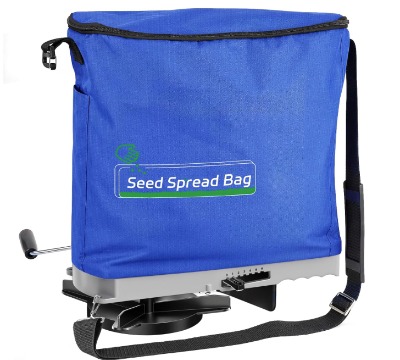
3: Zipcase 25lb Bag Seed Spreader with Waterproof Bag
Product Overview
The Zipcase is a bag spreader similar to the Chapin TurfPro, but with some notable differences. It holds 25 pounds of seed in a waterproof bag. The distinguishing feature is what Zipcase calls a “rare baffle” and accurate gears designed for precision spreading.
The bag is made from heavy-duty waterproof material. It’s available in blue and other colors. The overall design looks professional and durable.
The gear system is what sets this spreader apart. Zipcase claims their gears are more precisely calibrated than competitors, allowing for tighter control over spread rate.
Best Use Cases
The Zipcase works best for people who want precision in their seed spreading. If you’re trying to apply exactly the right amount of seed for your lawn’s size and grass type, this spreader’s accurate gears help you nail it.
It’s also excellent for anyone who plans to use their spreader for multiple seasons. The heavy-duty construction suggests longevity, so you’ll get years of use out of it.
The baffle design specifically helps with consistency. If you’re spreading on the same lawn repeatedly, the Zipcase keeps application rates consistent from year to year.
Key Features Explained
Waterproof bag: Like the Chapin TurfPro, the hopper bag resists moisture and protects your seed before spreading.
Rare baffle design: This internal feature is meant to prevent seed from bridging or clumping inside the hopper. Bridging happens when seed sits on top of other seed without falling into the flow mechanism. The baffle keeps flow steady.
Accurate gears: The gear mechanism is precisely calibrated for consistent spread rates. Different gears might give different coverage levels, all predictable and repeatable.
Shoulder strap: An adjustable strap carries the spreader, reducing arm fatigue.
Hand crank operation: A crank handle controls flow, similar to other bag spreaders.
Real-Life Usage Insight
The Zipcase feels sturdy in your hands. The waterproof bag material is thicker than some competitors’. This translates to more durability and less worry about accidental damage.
The hand crank requires steady pressure, similar to the Chapin. Once you find your rhythm, spreading feels natural and controlled.
The baffle design means seed flows reliably even if you load the hopper above the fill line. This is helpful if you’re doing large jobs and want to pack in as much seed as possible.
Shoulder strap usage is optional. It works well if you use it, but many people prefer carrying the spreader in one hand while cranking with the other.
Honest Pros and Cons
Pros:
- Heavy-duty waterproof bag material
- Rare baffle prevents seed bridging
- Accurate gears for consistent spread rates
- 25-pound capacity
- Solid construction for long lifespan
- Good shoulder strap
- Reliable performance across multiple seasons
Cons:
- Hand crank requires continuous steady effort
- Slightly more expensive than some competitors
- Not ideal for people with hand weakness
- Still requires walking at consistent pace
- Takes longer than powered spreaders
- Baffle feature adds slight complexity
Performance Discussion
The Zipcase performs exceptionally well with consistent spread rates. If you apply seed at a certain rate one year, you can repeat that exact rate the next year because of the gear precision.
Bridging is minimized thanks to the baffle design. Seed flows freely even with full loading. This matters on larger properties where you want to maximize coverage per fill.
Coverage reaches about 5,000 to 7,500 square feet per 25-pound bag, consistent with similar spreaders. The precision gears help you hit your target rate every time.
Durability reports show these spreaders lasting seven to ten years. The heavy-duty bag material and quality gears contribute to longer lifespan compared to budget models.
Ease of Use
The Zipcase is straightforward to operate. Loading, adjusting, and spreading follow simple steps. The learning curve is minimal.
The hand crank requires attention to maintain steady pressure, but this becomes automatic after your first spreading session. New users pick this up quickly.
Cleaning is easy. The bag is removable for thorough cleaning. The gear mechanism doesn’t require special maintenance.
Value for Money
Zipcase spreaders typically cost fifty to seventy dollars. This is more than budget models but less than specialty equipment.
You’re paying for precision gears and heavy-duty materials. If you spread seed multiple times per year or over several seasons, the accuracy and durability justify the extra cost.
For one-time spreading or infrequent use, a cheaper spreader might suffice. But if lawn care is an ongoing hobby, the Zipcase is worth the investment.
4: Chapin 84700A 25-Pound Professional Handheld Bag Seed Spreader
Product Overview
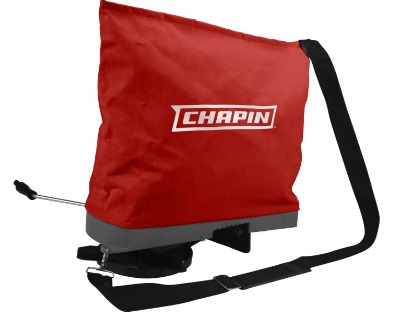
This is another Chapin model, but it’s different from the TurfPro. The 84700A is also a 25-pound bag spreader, but it emphasizes professional features. It comes in red and includes enclosed gears, a rear baffle, and multiple spread options.
The design feels heavy-duty. The waterproof bag is reinforced. The handle design accommodates different grip sizes. Everything about this spreader suggests it’s built for frequent use.
The multiple spread options mean you can adjust coverage for different grass types and seed sizes. Some seeds need dense coverage while others need sparse coverage. This spreader lets you match your coverage to your seed.
Best Use Cases
The Chapin 84700A is best for serious lawn care enthusiasts and professionals. If you’re managing multiple properties or spreading seed regularly, this is your spreader.
It’s also great for people who already know what spread rate they need. The multiple spread options let you dial in the exact rate without guessing.
The adjustable shoulder strap accommodates different body sizes and styles. You can set it up for your specific comfort, whether you’re five feet tall or six-foot-two.
Key Features Explained
Waterproof bag: Heavy-duty waterproof material protects seed and lasts longer than standard material.
Enclosed gears: The gear mechanism is sealed against dust and debris. This keeps the gears working smoothly for years.
Rear baffle: Similar to the Zipcase, this feature prevents seed from sitting on top of itself and interrupting flow.
Adjustable shoulder strap: A strap with adjustment points fits different body sizes and styles.
Multiple spread options: Different gear settings or opening sizes let you dial in the exact spread rate you need.
Hand crank mechanism: A crank controls seed flow with steady hand pressure.
Real-Life Usage Insight
Using the Chapin 84700A feels professional. The reinforced bag, enclosed gears, and well-designed handle all contribute to a premium experience.
The hand crank is smoother than cheaper models. It doesn’t stick or require excessive force to operate. This matters when you’re spreading for an hour or more.
The rear baffle keeps seed flowing even with full loading. You can cram a lot of seed into this spreader without worrying about flow interruption.
The adjustable strap is genuinely helpful for comfort. You can set it up to distribute weight across your body rather than straining one arm.
The multiple spread options give you flexibility. If you switch between grass seed and other materials, you can adjust accordingly without worrying about coverage.
Honest Pros and Cons
Pros:
- Professional-grade build quality
- Enclosed gears last a long time
- Rear baffle ensures consistent flow
- Multiple spread options for flexibility
- Well-designed shoulder strap
- Heavy-duty waterproof bag
- Smooth hand crank operation
- Built for frequent use
Cons:
- More expensive than budget models
- Hand crank still requires steady effort
- Heavier than some competitor models
- Multiple spread options add slight complexity
- Still slower than powered spreaders
- Not necessary for occasional homeowners
Performance Discussion
The Chapin 84700A performs excellently across different use scenarios. It handles frequent spreading without performance degradation.
Spread consistency is excellent. The enclosed gears stay calibrated. The rear baffle keeps flow predictable. Results are professional-grade.
Coverage reaches about 5,000 to 7,500 square feet per 25-pound bag depending on your spread setting. The multiple options let you match your coverage to your specific needs.
Durability is outstanding. These spreaders last eight to twelve years with regular use. The professional construction justifies the higher price.
Ease of Use
This spreader is easy to operate despite having more features than budget models. The controls are intuitive. The multiple spread options are clearly labeled.
Learning the different settings takes a few minutes. Once you dial in the right setting, you’re done. No adjustments needed during spreading.
Maintenance is minimal. Occasionally wiping gears and checking the bag is all you need. No special cleaning supplies required.
Value for Money
These spreaders typically cost seventy to ninety dollars. This is a significant premium over budget models.
If you spread seed regularly, the premium is justified. Durability and performance improvements save you money long-term by avoiding replacement and frustration.
For homeowners who spread seed once every few years, a cheaper model might suffice. The extra features aren’t necessary for infrequent use.
5: WORX 20V Cordless Seed Spreader (WG869.9)
Product Overview
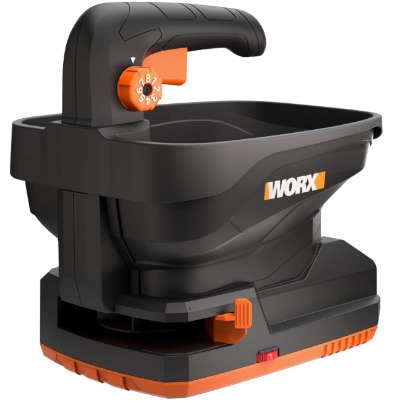
The WORX is a powered spreader that changes the game completely. It’s battery-powered with variable speed settings. Where hand-powered spreaders require you to maintain rhythm and effort, the WORX does the work.
It holds eight to ten pounds of seed, less capacity than bag spreaders but compensated by ease of use. It broadcasts to a maximum distance of five feet, covering more area per pass than some handheld bag spreaders.
The spreader has six speed settings and five flow-rate settings. This gives you granular control over how much seed you spread and how far it travels.
The battery is a 20V lithium-ion pack, standard across WORX’s tool line. If you own other WORX tools, you can swap batteries between them.
Best Use Cases
The WORX is perfect for anyone who values ease over everything else. If you have arthritis, weak hands, or just hate the repetitive effort of hand spreading, this spreader eliminates that burden.
It’s excellent for spreading seed across larger lawns. The broadcast distance covers more ground per pass. On a half-acre lot, the WORX finishes the job faster and with less fatigue than hand spreaders.
It’s also ideal for people with inconsistent physical ability. Some days you might not have the stamina for hand cranking. The WORX doesn’t care—it works the same every time.
Apartment dwellers and urban gardeners appreciate the quiet, clean operation. No gas engine, no pollution, no loud noise disturbing neighbors.
Key Features Explained
20V cordless battery: A rechargeable lithium-ion battery powers the spreader. Battery runtime is about twenty to thirty minutes on a single charge, adequate for most residential lawns.
Variable speed control: Six speed settings let you adjust how fast the broadcast disc spins. Faster speeds cover more distance and area. Slower speeds provide denser, more concentrated coverage.
Five flow-rate settings: You control how much seed flows into the disc. More flow for dense coverage, less flow for sparse coverage.
Five-foot broadcast distance: Material travels up to five feet away from the spreader, covering more ground per pass than many handheld spreaders.
Easy-grip handle: The handle is ergonomic and comfortable for extended use.
Weather-resistant construction: The plastic housing resists moisture and rust.
Real-Life Usage Insight
Using the WORX feels effortless. Turn it on, adjust speed and flow, walk at a natural pace, and watch the spreader do the work. No hand cranking, no maintaining rhythm, no physical strain.
The speed and flow controls give you precise command. You can match coverage to different seed types without remembering complex spread rates. Just dial in and go.
Battery runtime is adequate for most residential properties. If you have more than a quarter acre to seed, you might need a second battery. WORX sells extra batteries, so this is solvable.
The broadcast pattern is wide and consistent. Coverage is even without having to walk at a specific pace. This is a significant advantage over hand spreaders.
The biggest drawback is the hopper capacity. Ten pounds is less than half of what bag spreaders hold. You’re refilling frequently. For larger properties, this becomes tedious.
Honest Pros and Cons
Pros:
- Effortless operation requires no hand cranking
- Consistent, even coverage regardless of your walking pace
- Five-foot broadcast distance covers more ground per pass
- Six speed and five flow-rate settings for flexibility
- Battery swaps with other WORX tools
- Quiet and clean operation
- Comfortable handle design
- Great for people with weak hands or arthritis
Cons:
- Smaller capacity means frequent refilling
- Requires battery charging and maintenance
- Battery may not last for very large properties
- Higher purchase price than hand spreaders
- Not as portable as lightweight hand models
- Overkill for small lawns
- Replacement batteries add cost
Performance Discussion
The WORX performs excellently at what it’s designed to do: making spreading easy. The broadcast pattern is consistent across all speed settings. Coverage matches advertised distances.
Spread evenness is superior to hand spreaders. The powered disc maintains constant speed regardless of operator effort. This translates to professional-grade results.
Battery performance holds up well. You get full power right up until the battery dies. No gradual power loss like some tools. This consistency is excellent.
The spreader handles different seed types without complaint. Grass seed, clover, and similar materials broadcast reliably.
Durability is good. The plastic housing is tough. The motor is reliable. Users report three to five years of trouble-free operation.
Ease of Use
This is the easiest spreader to operate of all five reviewed. Fill the hopper, turn it on, adjust speed and flow, and walk. That’s it.
New users can operate it correctly within five minutes. There’s no technique to learn, no rhythm to maintain. Just walk normally.
Maintenance is minimal. After each use, you brush out any seed residue. The battery charges like any power tool battery. No special care required.
Value for Money
WORX spreaders typically cost between eighty and one hundred twenty dollars, depending on the exact model and package.
This is more expensive than hand spreaders. You’re paying for the convenience and ease of powered operation.
If you spread seed once every few years, hand spreaders are more economical. But if you spread seed regularly or have a large property, the WORX saves time and effort that money can’t easily buy.
Consider that it swaps batteries with other WORX tools. If you already own WORX tools, the spreader becomes more attractive because you don’t need dedicated batteries.
Comparison Insights: What Sets Them Apart
All five spreaders do the same basic job: broadcast seed across your lawn. But they differ in important ways.
Powered vs. hand-powered: The WORX is the only powered option. It requires no physical effort, making it ideal for anyone with limited strength. Hand spreaders require continuous effort but don’t depend on batteries.
Capacity: Bag spreaders hold 25 pounds. The Scotts Whirl holds less, requiring more refills. The WORX holds about ten pounds. For large properties, bag spreaders are more efficient.
Spread consistency: The powered WORX maintains perfect rhythm regardless of your walking pace. Hand spreaders depend on you maintaining consistent rhythm and speed. The baffle designs in the Zipcase and Chapin 84700A help keep consistency high.
Build quality: The Chapin 84700A and Zipcase offer professional-grade construction. The Chapin TurfPro and Scotts Whirl are budget-friendly but solid. The WORX is consumer-grade with motorized simplicity.
Price: The Scotts Whirl is cheapest at twenty-five to thirty-five dollars. The Chapin TurfPro and Zipcase range from forty to seventy dollars. The Chapin 84700A costs seventy to ninety dollars. The WORX costs eighty to one hundred twenty dollars.
Best overall: If you spread seed regularly and want precision, the Chapin 84700A or Zipcase wins. If you want ease above all else, the WORX wins. If you want budget-friendly, the Scotts Whirl or Chapin TurfPro wins.
Buying Guide: How to Choose Your Spreader
Lawn size matters most. Measure your lawn’s square footage. Small lawns under 5,000 square feet are fine with capacity-limited spreaders like the Scotts Whirl. Medium lawns from 5,000 to 15,000 square feet benefit from 25-pound bag spreaders. Larger lawns benefit from powered spreaders because you finish faster.
Consider your physical condition. If hand strength is limited, the WORX is worth the premium. Hand spreaders require sustained effort that may be uncomfortable for some people. The powered option eliminates this problem.
Think about frequency. If you seed only once every few years, a budget spreader makes financial sense. If you spread annually or manage multiple properties, invest in quality that lasts.
Evaluate available budget. The Scotts Whirl is affordable and capable for small lawns. The Chapin TurfPro offers good features at moderate cost. The Chapin 84700A and Zipcase are mid-range. The WORX is premium-priced but worth it for those who value ease.
Factor in storage space. Bag spreaders take up less space than handled spreaders. If storage is tight, bag models work better.
Think about secondary uses. The Scotts Whirl handles fertilizer, salt, and ice melt in addition to seed. If you plan to use your spreader for multiple purposes, this versatility matters.
Who Should Buy These Products
Chapin TurfPro: Casual homeowners with small lawns who want simplicity and affordability. Great first spreader for beginners.
Scotts Whirl: Apartment dwellers and townhome residents with small lawns. People who value lightweight design and compact storage.
Zipcase: Serious lawn enthusiasts who spread seed regularly and want precision consistency. People managing multiple properties.
Chapin 84700A: Professional landscapers and lawn care companies. Homeowners who spread seed multiple times per season and want professional-grade durability.
WORX 20V Cordless: Anyone who prioritizes ease over cost. People with weak hands or arthritis. Those managing larger properties who value time saved. Urban gardeners who appreciate quiet operation.
Common Mistakes to Avoid
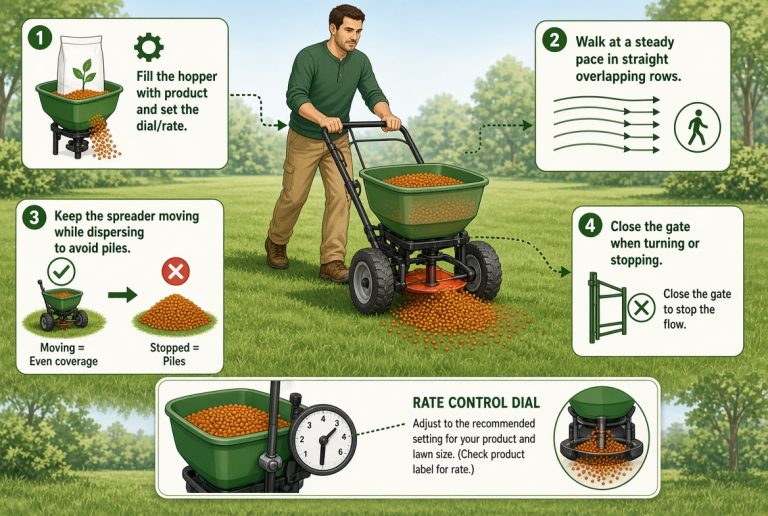
Walking too fast: Hand-powered spreaders depend on consistent pace. Speed up and you’ll create gaps. Slow down and you’ll over-apply seed. Find a comfortable pace and stick to it.
Not adjusting for seed type: Different seeds need different coverage rates. Heavy seeds need more spread area. Fine seeds need less spread area. Read your seed bag and adjust your spreader accordingly.
Overfilling the hopper: More seed doesn’t equal better results. It can interrupt flow, cause bridging, and make the spreader harder to control. Fill to the recommended level.
Ignoring maintenance: Even simple spreaders benefit from light maintenance. Brush out seed residue after use. Store in a dry place. Check gears occasionally. This extends lifespan.
Using the wrong spreader for your space: Don’t buy a powered spreader for a tiny yard. Don’t buy a capacity-limited spreader for a large property. Match tool to task.
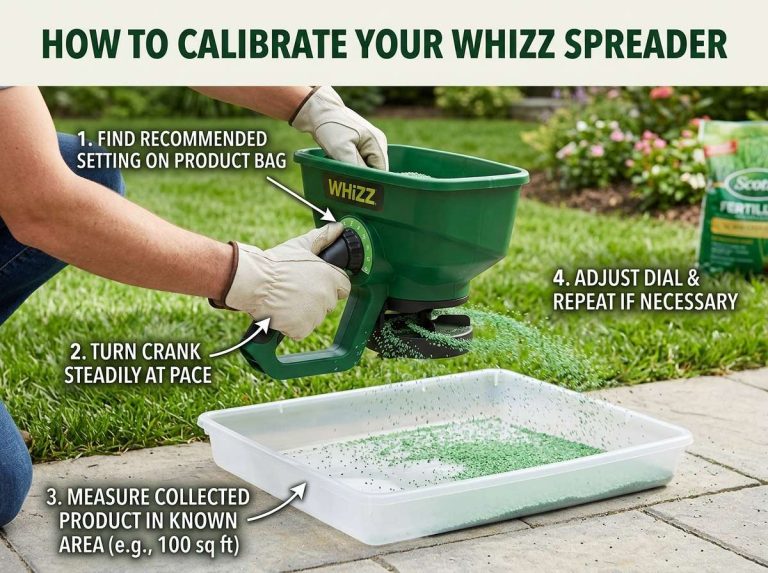
Not testing coverage before full commitment: Do a test pass in a small area. Adjust your spread rate. Make sure you’re happy with coverage before committing to the whole lawn.
Spreading on extremely windy days: Wind carries seed away from where you intended. Save spreading for calm days or very early morning when wind is minimal.
Spreading on wet seed or wet grass: Wet seed can clog spreaders. Wet grass makes it harder to establish good seed-to-soil contact. Spread on dry days.
Final Verdict
Each spreader wins in different categories.
The Chapin TurfPro wins for casual homeowners who want simplicity without spending much money.
The Scotts Whirl wins for small-space living and lightweight portability.
The Zipcase wins for precision and consistency season after season.
The Chapin 84700A wins for professional-grade quality and durability.
The WORX 20V Cordless wins for ease of use and spreading larger areas efficiently.
There’s no objectively best spreader. The best spreader for you depends on your lawn size, physical capability, budget, and spreading frequency.
Start by measuring your lawn and assessing your budget. Look at the spreader that matches those criteria best. Read reviews specific to your situation. Make your choice based on what matters most to you.
Most importantly, don’t overthink it. Any of these five spreaders will get seed on your lawn and grow grass. They all work. The differences are in convenience, capacity, and longevity. Pick the one that aligns with your situation and enjoy the satisfaction of spreading seed correctly.
Your lawn will thank you with thick, healthy grass growth.

Hi, I’m Mary, the founder of GardenCure.com. I’m passionate about creating healthy, beautiful gardens and well-kept lawns. I share practical experience and trusted advice on garden and lawn gear that truly works. With the support of my dedicated research team, our writers produce honest, in-depth reviews using reliable, authentic sources—helping you choose the right tools with confidence for your outdoor space.