How to Care for Zoysia Sod?
You just laid down a fresh patch of zoysia sod, and it looks great. Now comes the part that decides whether that lawn thrives or turns brown. The good news is that zoysia is a tough, friendly grass once it settles in. With the right steps in the first few weeks and a steady routine after that, you can enjoy a thick, green lawn that feels soft under your feet.
In this article
This guide walks you through everything. You will learn how to water, when to mow, how to feed your grass, and how to spot trouble early. No gardening degree needed. Let’s get started.
What Makes Zoysia Grass Special
Zoysia is a warm-season grass. It grows best when the weather is hot and sunny. It forms a dense mat that crowds out weeds, and it handles foot traffic well once it matures. Many homeowners love it because it stays green longer than some other grasses and needs less mowing over time.
Zoysia does have a few quirks, though. It grows slowly at first, and it turns tan or brown when temperatures drop in the fall and winter. That color change is normal. The grass is just resting. Knowing this helps you avoid panic when your lawn looks dull in cold months.
The First Two Weeks Matter Most
Sod is grass that has already grown on a farm and been rolled up for transport. Once it lands in your yard, it has no roots in your soil yet. Those roots are what you need to build. Your main job in the first two weeks is to keep the soil and the sod moist so roots can grow down into the ground.
Water your new sod right after you install it. Then keep watering it several times a day for short periods. In hot weather, you might water two or three times a day. The goal is to keep the top inch of soil damp, never soggy and never bone dry. Puddles mean you are overdoing it, and dusty, crispy edges mean you need more water.
Here is a simple test you can do. Lift a corner of a sod piece gently after about ten days. If you feel some resistance and see small white roots, your grass is taking hold. If it lifts up with no roots attached, keep watering and give it more time.
Stay off the lawn during this stage as much as you can. Walking on fresh sod can push the pieces out of place and damage the new roots. If you must cross the area, use a board or a stepping plank to spread your weight.
Watering Your Zoysia Lawn Long Term
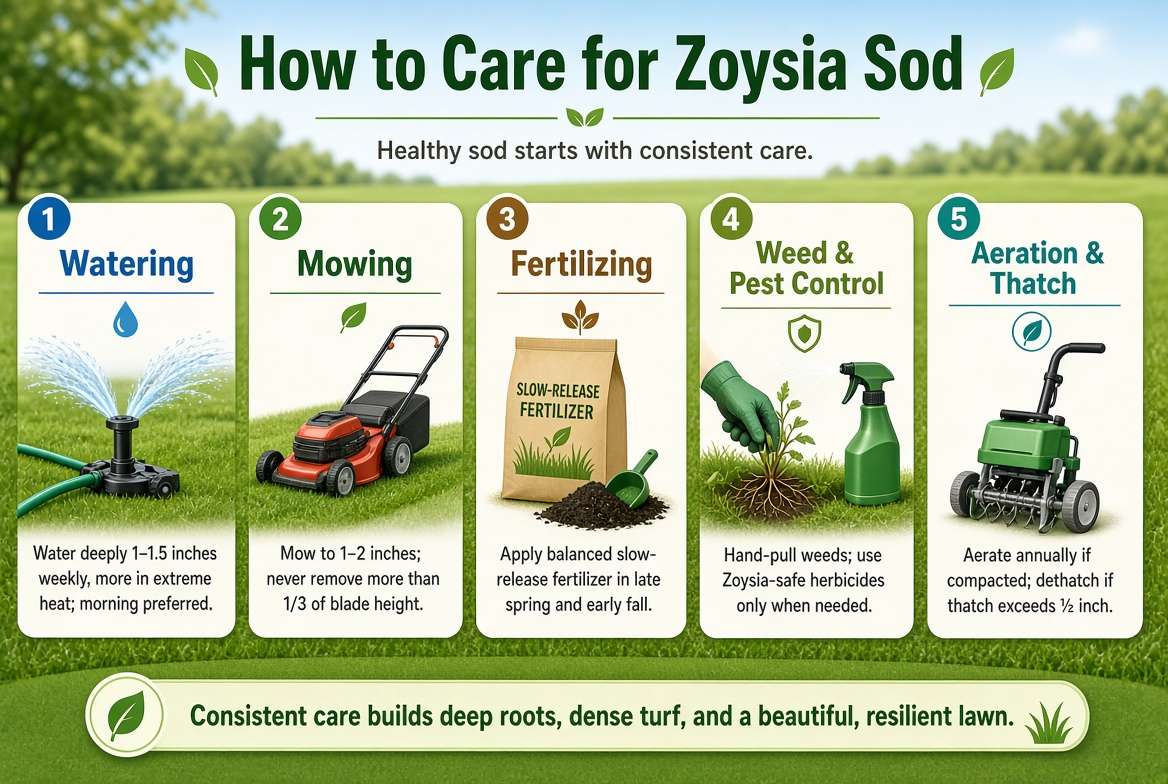
Once your sod has rooted, you can slowly change your watering habits. Instead of short, frequent sprinklings, you want deep, less frequent watering. Deep watering pushes moisture down into the soil and encourages roots to grow deeper. Deep roots help your lawn handle heat and dry spells much better.
A good rule of thumb is to give your lawn about one inch of water per week, including rain. You can check this by placing a empty tuna can or a small cup on the lawn while the sprinklers run. When the container fills to about an inch, you know you have given enough water.
Water early in the morning, ideally before 10 a.m. Morning watering gives the grass time to dry during the day, which helps prevent fungal diseases. Evening watering keeps the blades wet all night, and that invites trouble. Avoid watering in the middle of the afternoon too, since much of the water evaporates before it reaches the roots.
Watch your lawn for signs of thirst. Grass that stays bluish-gray, leaves that fold up, or footprints that stay visible for a long time all mean your lawn needs a drink. Healthy zoysia bounces back quickly after you step on it.
Mowing Zoysia the Right Way
Mowing scares many beginners, but it is simple once you know the basics. Zoysia grows slowly, so you will not need to mow every few days. Most lawns need mowing once every one to two weeks during the growing season.
Keep your mower blade sharp. A dull blade tears the grass tips and leaves them looking ragged and brown. A sharp blade makes a clean cut, and the grass heals fast.
Set your mower to a height between one and two inches. Zoysia looks best around the middle of that range. Never cut more than one third of the blade length at one time. Cutting too much at once, which gardeners call scalping, shocks the grass and opens the door for weeds.
Your first mow should happen only after the sod has rooted well and the grass has grown a bit taller than the height you want. Gently tug on the grass before mowing. If it resists and does not pull up, you can go ahead. Mowing too early can pull the young roots right out of the soil.
Change your mowing direction each time you cut. Going in straight lines every single time can cause the grass to lean and create ruts in the soil. A little variety keeps the lawn standing straight and looking even.
Feeding Your Grass the Right Nutrients
Zoysia needs nutrients to grow thick and green, but it does not need a huge amount. Too much fertilizer can cause more harm than good. It can burn the roots, feed weeds, and create weak growth that is prone to disease.
Wait about four to six weeks after installation before you apply your first fertilizer. This gives the roots time to grow and reduces the risk of burning. When you do feed your lawn, choose a slow-release nitrogen fertilizer labeled for warm-season grass. Slow-release products feed the lawn gradually and reduce the chance of rapid, weak growth.
A soil test is a smart move. Many local extension offices offer low-cost soil tests that show exactly what your soil needs. You might find that your soil already has plenty of certain nutrients, so you can skip them and save money.
Feed zoysia mostly during its active growing season, which usually falls in late spring through late summer. Stop fertilizing in late summer or early fall. Feeding during cold months can push tender new growth that frost damages easily.
Always read the label and follow the spreader settings. Sweep any granules off hard surfaces like sidewalks and driveways so they do not wash into storm drains. Water the lawn lightly after applying fertilizer to help the nutrients soak in.
Dealing with Weeds the Easy Way
A healthy zoysia lawn is your best weed defense. When the grass is thick, weeds have a hard time finding space and sunlight. Still, some weeds will sneak in, especially in the first year while the lawn is filling in.
Pull small weeds by hand when the soil is damp. Pulling works best when you get the whole root, since leftover pieces can grow back. For larger patches, a targeted weed killer can help. Look for products safe for zoysia and read the label carefully. Some weed killers that work well on broadleaf weeds can stress or damage certain grasses, so a quick check goes a long way.
Avoid applying weed control products during the first few weeks after sod installation. The new grass is delicate, and most products need the lawn to be well established before use.
Taking Care of Thatch
Thatch is a layer of dead grass stems, roots, and debris that builds up between the green blades and the soil. A thin layer of thatch, about half an inch or less, is normal and even helpful. It cushions the soil and holds some moisture. A thick layer, however, blocks water and nutrients from reaching the roots.
Zoysia tends to produce a fair amount of thatch, so keep an eye on it. Push a screwdriver or a small garden tool into the lawn. If you hit a spongy, springy layer more than half an inch thick, it is time to dethatch.
Dethatching is best done in late spring or early summer when the grass is actively growing. You can use a dethatching rake for small areas or rent a power dethatcher for larger lawns. Work carefully so you do not tear up healthy grass. Rake up the loose debris and add it to your compost pile.
Aerating for Healthy Roots
Soil can become tight and compacted over time, especially in yards with heavy foot traffic or pets. Compacted soil squeezes out air and water, and roots struggle to breathe and grow. Aeration solves this problem by pulling small plugs of soil out of the lawn.
Aerate your zoysia lawn once a year, ideally in late spring or early summer. Use a core aerator, which removes plugs about two to three inches deep. Spread the plugs back over the lawn or leave them to break down naturally. They will crumble and feed the soil.
Water the lawn a day or two before aerating so the soil is moist but not soggy. Moist soil makes the plugs come out cleanly.
Keeping Pests and Diseases Away
Zoysia handles pests fairly well, but a few troublemakers can cause problems. Grubs are one of the most common. These little white larvae live in the soil and munch on roots. If you see patches of grass that feel loose and pull up like a carpet, grubs may be the reason. Birds and skunks sometimes dig up lawns looking for them.
Chinch bugs and sod webworms can also cause damage, especially during hot, dry weather. Look for brown patches near sunny edges of your lawn. Check the grass closely for tiny insects or silk-like webbing.
Diseases can show up when the lawn stays wet for too long. Brown patch and dollar spot are two common fungal problems. Brown patch shows up as circular brown rings, sometimes with a dark edge. Dollar spot creates small, silver-tan spots about the size of a coin.
Prevention is your best strategy. Water in the morning, mow with a sharp blade, avoid too much nitrogen, and keep thatch under control. A healthy lawn can fight off many problems on its own. If you spot a serious issue, take a sample to your local extension office or a garden center. They can tell you exactly what is happening and recommend a safe treatment.
Protecting Your Lawn from Stress
Zoysia can handle a lot, but it still needs a break now and then. Heavy foot traffic, parked cars, and kids playing sports can wear out thin spots. Try to create paths or use stepping stones in areas people walk often. This keeps the grass healthy and prevents bare patches.
Keep pets in mind too. Dog urine can burn brown spots into the lawn. Rinse these areas with water right after your dog goes. Also, try to give your dog a regular bathroom spot in the yard so the damage stays in one place.
Summer heat and drought put real pressure on any lawn. If you live somewhere with long hot spells, raise your mowing height a little. Taller grass shades the soil and holds moisture better. Water deeply during these stretches, and skip fertilizer until temperatures ease up.
Caring for Zoysia in the Cooler Months
When fall arrives and temperatures start dropping, your zoysia will slow down and eventually turn tan or brown. This is its natural rest period, and it is not a sign that you did something wrong. The roots keep working underground, and the grass will green up again when warm weather returns.
Keep mowing as long as the grass is still growing. Once growth stops, you can stop mowing. Rake up fallen leaves so they do not smother the grass. Avoid heavy traffic on dormant grass, since the blades are brittle and snap easily.
Water less during dormancy. The grass needs much less moisture when it is not actively growing. Just give it a little water if the soil dries out completely for several weeks.
Common Mistakes Beginners Make
Many new lawn owners run into the same problems, so here is a quick list of things to avoid. Overwatering is a top mistake. Soggy soil suffocates roots and invites disease. Mowing too short is another one. Cutting zoysia below one inch weakens the plant and lets weeds move in. Fertilizing too early or too heavily can burn fresh sod and cause rapid, weak growth. Walking on new sod before the roots form can lift the pieces and leave gaps. Finally, ignoring small problems often lets them grow into big ones. A quick look at your lawn each week helps you catch trouble early.
A Simple Weekly Routine
Staying consistent makes lawn care feel easy. During the growing season, you can follow a basic weekly plan. Check your lawn for dry spots and water deeply if needed. Mow once every one to two weeks at the right height with a sharp blade. Walk around the yard and look for weeds, bugs, or brown spots. Pull weeds or spot treat problems right away. Once or twice a season, feed the grass with slow-release fertilizer and aerate the soil. Once a year, check thatch and dethatch if the layer gets thick.
Keep a small notebook or a note on your phone with dates for mowing, feeding, and treatments. This record helps you see patterns and plan ahead for next season.
Final Thoughts
Caring for zoysia sod is easier than it looks. Focus on the basics: water deeply and wisely, mow at the right height with a sharp blade, feed lightly, and watch for trouble early. Give your new lawn time to root, and let it grow into a thick, healthy carpet of green. With steady care, your zoysia will reward you with a beautiful yard that feels great to walk on and looks great all season long.
If you enjoyed this guide, share it with a friend who just laid down new sod. Happy growing, and enjoy your new lawn!

Hi, I’m Mary, the founder of GardenCure.com. I’m passionate about creating healthy, beautiful gardens and well-kept lawns. I share practical experience and trusted advice on garden and lawn gear that truly works. With the support of my dedicated research team, our writers produce honest, in-depth reviews using reliable, authentic sources—helping you choose the right tools with confidence for your outdoor space.