How to Clean Garden Tools?
Your garden tools are some of your best friends when you’re working outside. They dig. They prune. They rake. They cut. But just like any good friend, they need care and attention. Clean tools work better, last longer, and keep your plants healthy. Plus, taking care of your tools is way easier than buying new ones all the time.
In this article
Many people ignore their tools. They leave them dirty after use. They store them without cleaning. That’s when rust starts to form. That’s when handles get weak. That’s when tools stop working the way they should. The good news? Cleaning and maintaining your garden tools is simple. You don’t need fancy tools or expensive products. With just some basic supplies and a little time, you can keep your entire tool collection in great shape.
In this guide, we’ll walk you through everything you need to know about keeping your garden equipment clean and ready to use.
Why Clean Garden Tools Matter So Much
Before we get into the how-to part, let’s talk about why this matters. There are real reasons to keep your tools clean.
Rust Prevention
Rust is the biggest enemy of metal tools. When metal sits in damp soil and then gets left wet, rust forms fast. Once rust starts, it spreads. It eats away at the metal. It makes tools weak and unsafe. A rusty shovel can break when you’re using it. A rusty hoe can snap in half. Clean, dry tools don’t rust.
Disease Control
This is something many home gardeners don’t think about. Dirty tools can spread plant diseases. If you dig in soil that has a sick plant, then use that same tool on healthy plants, you’re spreading the problem. Clean tools protect your garden health. This is super important if you move between different garden beds or different gardens.
Better Performance
A clean tool just works better. A dirty hoe leaves chunks of soil stuck to the blade. This makes it harder to work. A clean hoe glides through soil. A clogged pruner doesn’t cut clean. A clean pruner cuts smoothly. Your hands get less tired when your tools aren’t covered in muck.
Tool Life
Good tools cost money. You want them to last for years and years. Clean tools last longer. Dry tools don’t rust. Tools without caked-on soil don’t wear down as fast. Taking thirty minutes to clean your tools can add years to their life.
What Supplies You Need
The good news is you probably have most of what you need already. You don’t need to buy expensive cleaning kits.
The Basic Toolkit
A bucket is essential. Just a regular five-gallon bucket works fine. You’ll fill it with water and use it for cleaning.
Water is your main cleaning tool. Plain water does most of the work.
A stiff brush or old toothbrush helps get dirt out of tight spots. A wire brush works great for removing rust.
Soap or dish detergent helps cut through grease and stubborn soil. Any kind works.
A rag or old towel dries tools after cleaning.
Sandpaper or steel wool removes light rust.
White vinegar helps with heavier rust spots.
Linseed oil or three-in-one oil protects metal and wood after cleaning.
Optional but Helpful Items
A pressure washer cleans really stubborn dirt fast, but it’s not necessary.
Work gloves keep your hands clean and protected.
An old newspaper or cardboard protects your work area.
A wire wheel attachment on a power drill makes rust removal easier, but a wire brush works fine too.
How to Clean Different Types of Garden Tools
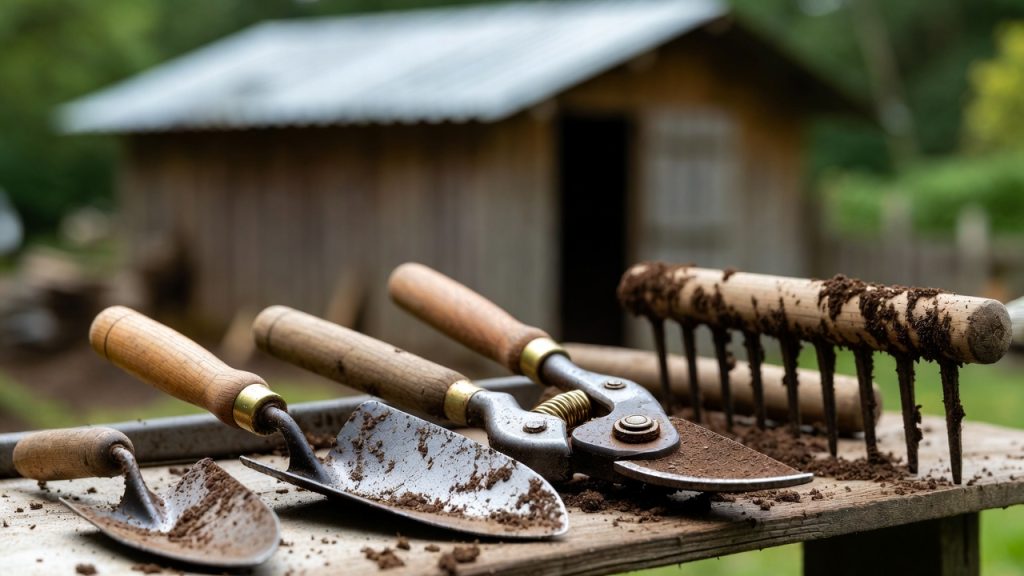
Different tools need slightly different approaches. Let’s go through the main types.
Shovels and Spades
Shovels get the dirtiest. They spend all day in soil.
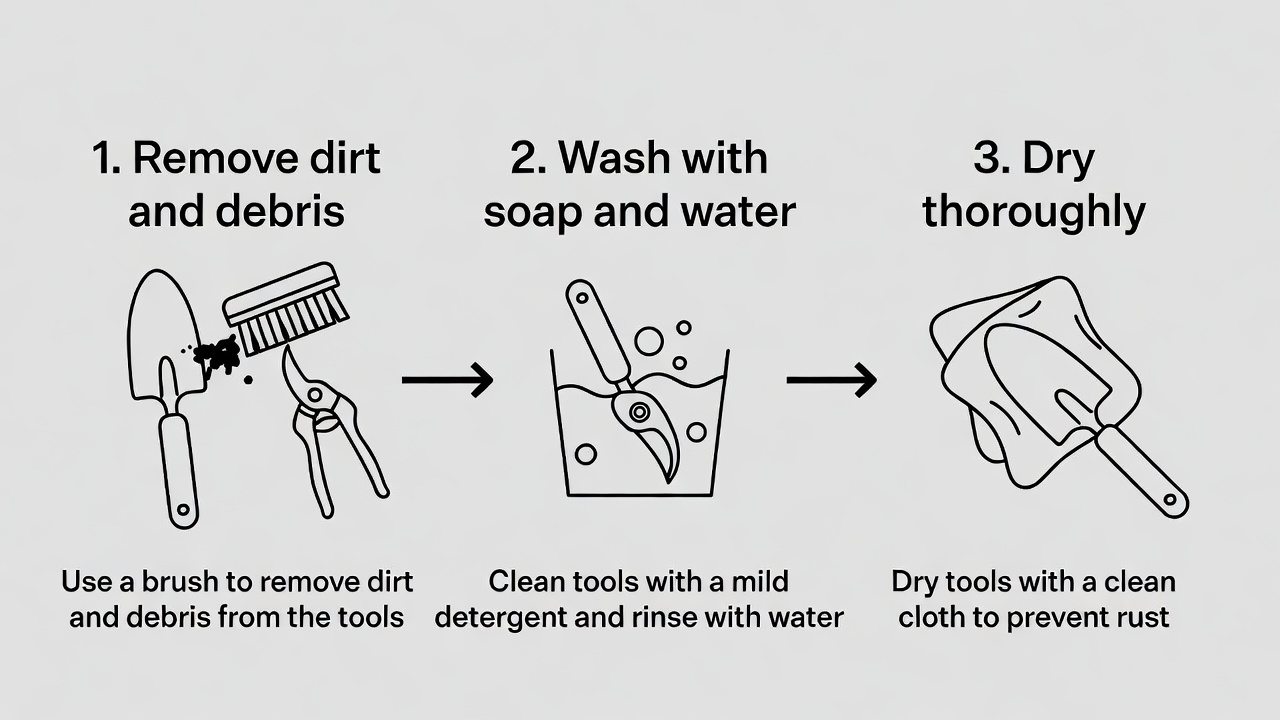
Start by scraping off the big chunks. Use the edge of another tool or a stick to knock off dried mud. This removes most of the soil right away.
Soak the shovel in water for a few minutes. This softens stubborn soil spots. Use your stiff brush to scrub the blade. Get both sides. Pay attention to the edges where soil likes to stick.
Rinse with clean water. Use a hose if you have one.
For the handle, wipe it down with your rag. If it’s really dirty, scrub with the brush. Wood handles might be stained but that’s okay. It doesn’t hurt them.
Dry everything completely. This is important. Use your towel to wipe the whole shovel. Let it sit in the sun if possible.
If you see any rust spots, tackle them now. Wet the spot a little. Scrub with steel wool or sandpaper. The rust should come off. Wipe away the dust.
Once everything is dry, apply a thin coat of oil to the metal parts. This protects against future rust. Wipe off any extra oil with a clean rag.
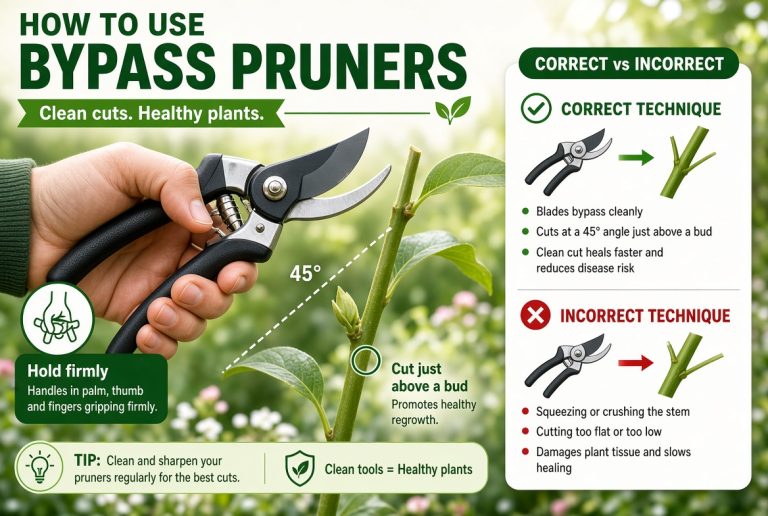
Pruners and Shears
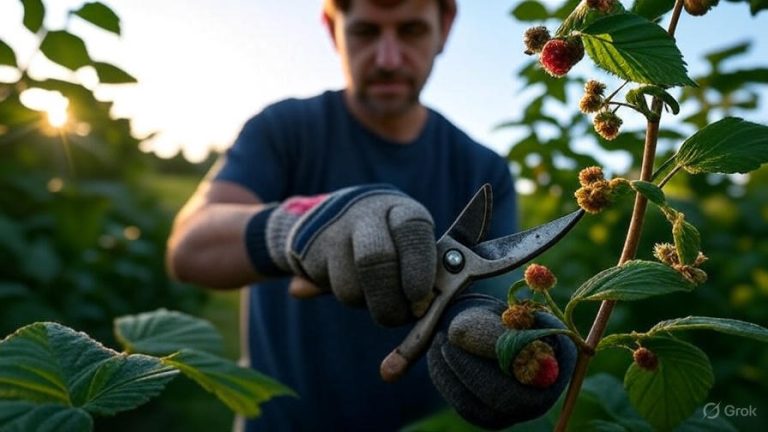
Pruners cut plant stems and branches. They get sticky plant sap on them.
Start by wiping the blades with a dry rag. Get off any loose dirt and dried sap.
Fill your bucket with water and add a tiny bit of dish soap.
Dip the pruners in the soapy water. Open and close them several times. This lets the water get between the blades.
Use your small brush to get into the hinge area. Plant sap loves to build up there.
Rinse with clean water and dry completely.
If you have stubborn sap stuck on, soak the pruners for ten minutes in the soapy water. Then scrub again.
For the metal parts, apply a tiny bit of oil to the hinge and blades. Open and close them a few times so the oil spreads around.
Wipe off extra oil. Dry completely before storing.
Rakes and Hoes
These tools work in soil and grass.
Tap them on the ground to knock off dried soil. Tap hard. You’ll be surprised how much falls off.
Rinse with the hose or in your bucket. Use the brush to scrub the tines or blade.
Dry with your rag.
Check the handle for cracks or splinters. Sand down any rough spots with sandpaper.
Apply oil to the metal parts. Wipe the wood handle with a dry rag.
Axes and Hatchets
Axes need extra care because they’re sharp and powerful.
Wipe the head and handle with a dry rag first.
Fill your bucket with water and dish soap.
Soak for five minutes.
Scrub the whole thing with your brush, paying attention to the handle where you grip it.
Rinse completely.
Dry thoroughly with your rag.
Check the sharp edge. If it looks dull, it still works for chopping wood. If you want it sharp, use a proper axe sharpening stone.
Apply oil to the metal head and a wood conditioner to the handle.
Garden Forks and Pitch Forks
These tools get really caked with soil and plant material.
Tap them to get off loose material.
Soak in soapy water for ten minutes.
Scrub between the tines with your brush.
Rinse well.
Dry completely.
Apply oil to metal, condition the handle.
Dealing with Rust
Rust happens to the best of us. The good news is you can fix it if you catch it early.
Light Surface Rust
This is the early stage. You see a little discoloration but the metal is still solid.
Wet the rusty spot a little.
Use steel wool or medium sandpaper to scrub the rust away.
It takes a bit of elbow grease but it comes off.
Dry the area completely.
Apply oil to protect it.
Moderate Rust
Now you have actual rust forming. The metal looks rough and discolored.
Soak the tool in white vinegar for a few hours. The acid in the vinegar eats away at rust.
Use a wire brush or steel wool to scrub the rusty area. You’ll see the rust come off.
For heavier rust, use a wire wheel on a power drill. This removes rust much faster.
Rinse and dry completely.
Apply oil immediately to prevent new rust.
Heavy Rust
If rust has been sitting for a long time, it’s deep.
Soak in vinegar for several hours or even overnight.
Use a wire brush or wire wheel to remove as much rust as possible.
You might not get it all off, and that’s okay. Some old rust is stubborn.
Once you get the surface clean, apply oil to slow down future rust formation.
If a tool is too far gone, it might be time to replace it. Safety comes first.
Cleaning Tool Handles
Wooden handles need attention too.
Wipe them down after every use with a dry rag. This removes dirt and sweat.
If they get really dirty, soak just the handle in soapy water for a few minutes. Don’t soak the whole tool.
Scrub gently with a soft brush.
Dry completely.
Once a season, apply a wood conditioner or linseed oil. This keeps the wood from cracking and splitting.
Rub it in with a rag. Wipe off any extra.
If you notice splinters, sand them down gently.
If a handle cracks all the way through, it’s time to replace it. You can buy replacement handles and swap them out.
Cleaning Tool Storage Areas
It’s not just about the tools. Where you store them matters too.
Your garden shed or tool storage area should be clean and dry.
Sweep out dirt regularly.
Make sure water doesn’t pool inside. This creates rust.
Use shelves or wall hooks so tools don’t sit on wet ground.
Keep tools off concrete when possible. Concrete holds moisture.
Store pruners with blades pointing down or in a special holder.
Store shovels and rakes with handles up so water doesn’t soak into the wood.
Keep metal tools away from each other if possible. When they touch, they can transfer rust.
Keep tools in a dry area. If your shed gets damp, use a dehumidifier or keep a container of moisture-absorbing material inside.
Seasonal Deep Cleaning
Every few months, do a deeper clean.
For metal tools, apply a fresh coat of oil. This is especially important before winter.
For wooden handles, apply wood conditioner.
Inspect every tool for damage. Look for cracks, bent parts, or broken handles.
Check all the moving parts. Pruner blades. Hinge points. Make sure they move smoothly.
Sharpen tools that need it. Dull hoes and shovels work harder than they need to.
Replace handles that are cracked.
Remove any rust that’s forming.
This seasonal maintenance keeps everything working great and ready for the next gardening season.
Quick Daily Cleaning Tips
You don’t need to do a full cleaning every single day. A quick wipe-down keeps tools fresh between deep cleans.
After each use, tap the tool to get off loose soil.
Wipe the blade or working end with a rag.
Stand it up to let water drain off.
That’s it. This takes two minutes and prevents dirt from building up.
Once a week, do a quick brush with the hose. This keeps soil from hardening on the tools.
Common Mistakes to Avoid
People make certain mistakes over and over.
Don’t leave tools wet. Wet tools rust. Always dry them after cleaning or use.
Don’t store tools in a pile on wet ground. This guarantees rust problems.
Don’t use tools on sick plants without cleaning them first. You’ll spread disease.
Don’t ignore rust. Early rust is easy to remove. Late rust is almost impossible.
Don’t store metal and wood tools pressed against each other. They can transfer damage.
Don’t use pressure washers on wooden handles. High pressure can split the wood.
Don’t forget about the handle. Cracked handles are dangerous.
Making It Easy: A Simple Routine
Keep it simple and you’ll actually do it.
At the end of every gardening day:
- Tap off soil
- Wipe with a dry rag
- Stand up or hang tools
Once a week:
- Brush tools with the hose
- Dry completely
- Apply a tiny bit of oil to metal parts
Once a season:
- Full soap and water cleaning
- Rust removal if needed
- Wood conditioner on handles
- Inspection for damage
This routine takes maybe thirty minutes total for a whole set of tools. That’s way less than it would cost to replace them.
Tools Worth the Investment
Some tools are worth spending time on. Others might need replacement.
If a tool is:
- Bent or broken beyond repair
- Handles are split completely
- Rust has eaten holes through the metal
- Blades are damaged beyond sharpening
It’s time for a new one.
But most tools can last for years with basic cleaning and care.
The Bottom Line
Cleaning garden tools isn’t complicated. It’s not expensive. It just takes a little time and attention.
Your tools will perform better. They’ll last longer. Your plants will be healthier. And you’ll save money by not replacing tools all the time.
Start today. Pick up one tool. Wipe it down. Dry it. Apply some oil. Then put it away properly.
Tomorrow, do another one.
Before you know it, all your tools are clean and ready to work. And you’ll feel so much better knowing your gear is in great shape.
Good tools are an investment in your garden. Take care of them, and they’ll take care of you for years to come.
Now get out there and make those tools shine.
Hi, I’m Mary, the founder of GardenCure.com. I’m passionate about creating healthy, beautiful gardens and well-kept lawns. I share practical experience and trusted advice on garden and lawn gear that truly works. With the support of my dedicated research team, our writers produce honest, in-depth reviews using reliable, authentic sources—helping you choose the right tools with confidence for your outdoor space.