How to Build a Garden Bed?
Want to start growing your own vegetables, herbs, or flowers? Building a garden bed is easier than you think. You don’t need fancy tools or years of experience. Anyone can create a raised garden bed or an in-ground garden in just a few hours. Let’s walk through the whole process together.
In this article
Why Build a Garden Bed?
Before we dive into the how-to, let’s talk about why you should build a garden bed in the first place. Growing plants in a dedicated garden bed gives you so many benefits.
First, you control the soil. Store-bought dirt often has the wrong mix for plants. When you build your own garden bed, you add exactly what your plants need. You pick the soil composition, the nutrients, and everything else.
Second, a garden bed keeps weeds away better than planting straight in the ground. The borders create a barrier. Weeds can’t just spread from the surrounding area as easily. This saves you tons of weeding time later.
Third, a raised garden bed makes gardening easier on your back. You don’t have to bend down as far. This is huge if you have a bad back or knee issues.
Fourth, a contained garden bed looks neat and organized. It makes your yard look intentional. Your garden actually looks like a garden instead of just some random plants scattered around.
Fifth, raised beds warm up faster in spring. Soil in a raised bed heats up quicker than ground-level soil. This means you can plant earlier in the season.
Types of Garden Beds to Build
Not all garden beds are the same. Let’s look at the main options.
Raised Garden Beds
Raised beds sit above the ground. They use wood frames or other materials to hold the soil up. This is the most popular choice for beginners.
Raised beds come in many heights. Some are just 6 inches tall. Others go up to 3 feet. Taller beds are easier on your back. They also drain better. But they cost more money to build.
The classic size is 4 feet wide by 8 feet long by 12 inches tall. This size fits nicely in most yards. It’s also easy to reach the middle from either side without stepping in the bed.
In-Ground Garden Beds
These are simple garden spaces dug directly into the earth. You just remove the grass and weeds, then add soil on top. No frame needed.
In-ground beds cost almost nothing to build. They blend with your landscape naturally. But you have to deal with more weeds. Grass and weeds can creep in from the edges. You also can’t control the soil as easily.
Container Gardens
You can also grow plants in pots and containers. This is great for patios or small spaces. But containers dry out faster. You have to water more often.
Choosing the Right Location
Location matters a lot. Pick the wrong spot and your plants won’t thrive.
Most vegetables need 6 to 8 hours of direct sun daily. Some leafy greens do okay with less. Sun-loving plants like tomatoes and peppers want as much sun as possible. Look at your yard throughout the day. Notice where the sun hits longest.
Avoid spots under trees. Tree roots steal water from your plants. Tree branches block sunlight. Plus, leaves fall everywhere.
Check for water drainage. Don’t put your garden bed where water pools after rain. Your plants will get root rot. Test the drainage by digging a hole, filling it with water, and watching how fast it drains.
Make sure you have access to water. A garden bed close to a hose or water source makes watering easy. Carrying water by hand gets old fast.
Think about wind too. Strong wind dries out soil and damages plants. A spot with a little wind protection is ideal.
Materials You’ll Need to Build Your Garden Bed
Let’s talk about what you actually need to gather.
Wood and Framing
If you’re building a raised bed, you need wood for the frame. Untreated cedar and redwood are best. They rot slowly. Treated wood used to be toxic, but modern treated wood is safe. Avoid old treated wood from before 2004 though.
Avoid railroad ties and old pressure-treated wood. These contain harmful chemicals. You don’t want those near your food.
Wood thickness matters. Use 2-by-10 boards or thicker. Thinner wood warps and breaks easily.
You’ll need corner posts if you’re making a tall bed. These keep the corners sturdy.
Soil and Amendments
This is where most beginners mess up. Don’t fill your raised bed with just dirt from your yard. Mix good soil components.
The best recipe is about 40% compost, 40% topsoil, and 20% coconut coir or peat moss. This mix drains well but holds moisture. It has lots of nutrients too.
High-quality soil costs more upfront. But your plants grow so much better. It’s worth it.
You might also want to add slow-release fertilizer. Follow the package directions for how much to add.
Tools and Hardware
You don’t need many tools. Here’s the basic list:
- A shovel or spade for digging and moving soil
- A level to make sure your bed is even
- A tape measure
- A saw if you’re cutting wood
- Nails or screws to hold the frame together
- A hammer or drill
- Work gloves
- A wheelbarrow to haul soil
You probably have most of these already. If not, they’re cheap to buy or borrow.
Optional Items
A landscape fabric layer stops weeds from coming up through the bottom. It’s not required but it helps a lot. Just make sure to get fabric that lets water through. Don’t use plastic.
Edging or boards around the perimeter look nice. They also stop grass from creeping in.
A drip irrigation system makes watering automatic. This is great if you travel or forget to water. But it’s optional for beginners.
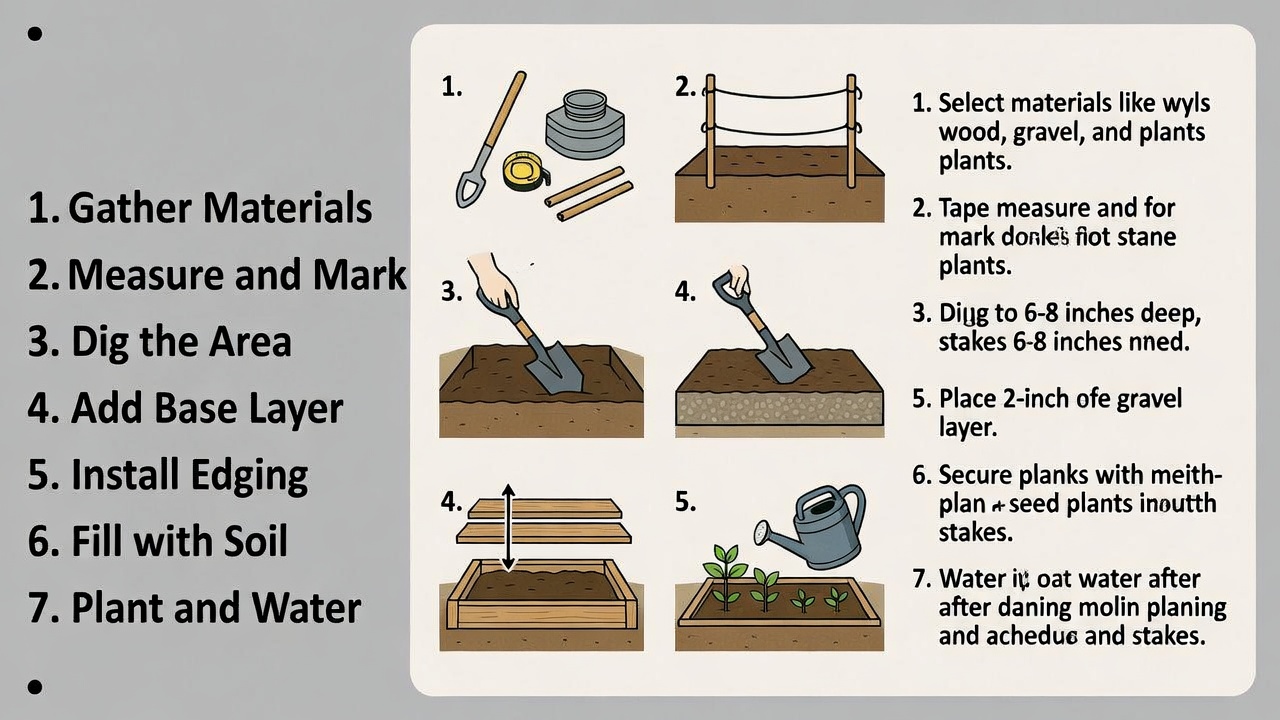
Building Your Raised Garden Bed Step by Step
Okay, let’s build this thing. Here’s how to actually do it.
Step 1: Pick Your Spot and Mark It Out
Walk your yard one more time. Choose the best location based on sun, water, and drainage. Trust your gut.
Use a measuring tape to map out your bed space. Use string or chalk to mark the corners. Make sure it’s a rectangle. Use a level to check too.
The classic 4-by-8 size works great. But you can make it any size you want. Just keep it narrow enough that you can reach the middle from standing on the ground beside it.
Step 2: Remove the Grass and Weeds
Clear away the grass and weeds where your bed will sit. You can pull them by hand if it’s a small area. For bigger areas, use a flat shovel to scrape away the top inch or two.
Dig out any big rocks. Pull any stubborn weeds. You want a clean, flat surface.
Don’t stress about getting it perfect. You just want to clear the major stuff.
Step 3: Build Your Frame
Lay out your wood boards in a rectangle. Use your measurements to make sure the corners are square.
Now you need to connect the corners. There are a few ways to do this.
The simplest way is to use corner posts. These are vertical pieces of wood. Set them at each corner. Then attach the boards to the posts. Use 2-inch screws for this. Screws hold better than nails over time.
If you don’t use posts, you can overlap the corners. Attach one board perpendicular to the adjacent board. Use 3-inch screws on the outside corners.
You can also use metal corner brackets. These slip over the corners and hold the boards tight.
Use a level to make sure your frame is flat. Adjust the boards until they’re level. This matters more than you think. Uneven beds cause water to pool on one side.
Step 4: Line the Bottom (Optional but Recommended)
Lay down landscape fabric on the ground inside your frame. Overlap the pieces by a few inches so weeds can’t squeeze through the cracks.
This step stops weeds from growing up through your bed. It’s especially helpful if you’re building on top of grass or weeds.
Use landscape staples to hold the fabric down. These are like heavy-duty paperclips.
Step 5: Add Your Soil Mix
Now comes the fun part. Fill your bed with soil.
Start with a layer of organic matter on the bottom if you want. This could be compost, shredded leaves, or grass clippings. This helps with drainage and nutrition as it breaks down.
Then add your soil mixture. Combine your compost, topsoil, and peat moss in the ratios we talked about earlier.
Fill the bed almost to the top. Leave about an inch of space so water doesn’t overflow.
Water the soil as you add it. This helps it settle and removes air pockets. The soil level will drop as it settles.
Top it off with more soil after a day or two.
Step 6: Let It Settle
Wait a few days before planting. The soil needs time to settle and compress. This also gives you a chance to water it a few times. The soil will sink a bit more each time.
After it settles, you might need to add more soil to bring it back up to level.
Building an In-Ground Garden Bed
This is simpler than a raised bed. Here’s what to do.
Step 1: Mark Your Bed Area
Use string, chalk, or flour to outline your garden bed. Any shape works. Rectangles are easy. Circles and curves look nice too.
Step 2: Remove Grass and Soil
Cut the grass as short as possible. Then remove the top 2 to 3 inches of grass and weeds. Use a flat spade to slice under the grass. Roll it up and compost it.
You can use the grass layer as the bottom of your bed. Just flip it upside down. The decomposing grass adds nutrients.
Step 3: Add Your Soil
Layer compost and topsoil on top. Aim for 8 to 12 inches total of good soil.
Mix it up with a shovel. You can also let it sit for a week and let rain help mix it.
Step 4: Edge It (Optional)
Add edging around the perimeter. This keeps grass from creeping back in. You can use boards, stones, or plastic edging.
This step isn’t required but it looks nice and saves weeding effort.
Preparing Your Garden Bed for Planting
Your new bed is almost ready. A few more things make a big difference.
Mix in Compost
Fresh soil needs compost. Compost adds nutrients and helps with water holding. Mix in about 2 inches of compost to the top layer before planting.
Test Your Soil
You can get your soil tested at a local extension office. They check nutrients and pH. They’ll tell you what you need to add. This costs just a few dollars.
You can also get simple home test kits. These are cheaper but less accurate.
Add Mulch
After you plant, add mulch on top. Use wood chips, straw, or shredded leaves. Mulch keeps weeds down. It also keeps soil moist and cool.
Leave a little space around each plant. Mulch touching the stem can cause rot.
Set Up Watering
Figure out how you’ll water. A soaker hose works great. It delivers water right to the soil, not the leaves.
A drip irrigation system is even better. You can set it on a timer.
Hand watering works too. Just do it early in the morning. Water at the soil level, not the leaves.
Common Mistakes to Avoid
Learn from others’ mistakes. Here’s what not to do.
Don’t Use Poor Quality Soil
Cheap soil looks the same but doesn’t work as well. Invest in good soil. Your plants will thank you. You’ll waste money on bad soil way more than you’d save upfront.
Don’t Build in Shade
Lots of new gardeners put their bed somewhere convenient instead of somewhere with sun. Then they wonder why nothing grows. Sun is crucial. Pick the sunnier spot.
Don’t Neglect Drainage
Waterlogged soil kills plants. Make sure water drains away. Don’t build in a low spot where water pools.
Don’t Make It Too Wide
If you make your bed wider than 4 or 5 feet, you can’t reach the middle. You end up stepping in it. This compacts the soil. It’s not worth it.
Don’t Skip the Settling Period
Fresh soil settles a lot. Plant too early and your plants sink and tilt. Wait a few days. Let it settle first.
Don’t Use Treated Wood Near Vegetables
Only use untreated cedar, redwood, or composite materials safe for food gardens. Old treated wood has toxic chemicals. Don’t risk it.
Don’t Forget About Weeds
Yes, a garden bed has fewer weeds. But they still happen. Pull them when they’re small. Don’t let them get established.
Best Plants for Your First Garden Bed
Not sure what to plant? Start with easy stuff.
Tomatoes are the most popular. They grow like weeds. Pick cherry tomatoes if you’re a beginner.
Lettuce and spinach are super easy. They grow fast. You can harvest in a few weeks.
Herbs like basil, parsley, and cilantro thrive in garden beds. Plus they smell amazing.
Zucchini and summer squash are hard to kill. They produce tons of food.
Peppers take longer but they’re not difficult.
Radishes grow so fast. Kids love watching them.
Green beans are fun and productive.
Avoid ambitious plants your first season. Skip things like asparagus and artichokes. They need more experience to grow well.
Maintenance Tips for Your Garden Bed
Building the bed is just the start. Here’s how to keep it thriving.
Water Consistently
Most plants need about an inch of water per week. Water deeply and infrequently. This makes roots grow deeper and stronger than shallow, frequent watering.
Water early in the morning. This reduces disease and lets plants drink all day.
Weed Regularly
Pull weeds when they’re small. It only takes a minute. Waiting makes them harder to remove.
Add Compost Each Season
Every spring, add a layer of compost to the top. This replenishes nutrients. It improves soil structure over time.
Rotate Your Plants
Don’t plant the same thing in the same spot year after year. Different plants use different nutrients. Rotating prevents soil depletion and reduces pests.
Watch for Pests
Check your plants regularly. Catch problems early. Most pest issues are easy to fix if you catch them quick.
Keep an Eye on Your Soil
Good soil is the foundation of gardening success. Healthy soil means healthy plants. Pay attention to how your soil looks and feels.
Seasonal Considerations for Your Garden Bed
Your garden bed changes with the seasons.
In spring, refresh the soil and plant warm-weather crops like tomatoes when the frost danger passes.
In summer, water more often. Heat and sun dry things out quick. Mulch helps a lot.
In fall, plant cool-weather crops like lettuce and broccoli. These can handle the cold.
In winter, add compost and organic matter. Let it break down over the cold months. This feeds your spring crops.
Garden Bed Upgrades and Variations
Once you’ve got your basic bed down, you can experiment.
Tiered Beds
Build beds at different heights. Tall beds for things you don’t want to bend for. Lower beds for other plants. This looks interesting and is super functional.
Sunken Beds
Instead of building up, dig down. This works well in hot climates. The sunken soil stays cooler and holds moisture longer.
Mobile Beds
Build raised beds with wheels. Move them around to find the perfect sun. Great for patios.
Keyhole Beds
These are round beds with a path cut out. They look cool and let you access the center easily.
Combination Beds
Mix vegetables, herbs, and flowers. This looks beautiful and attracts beneficial insects.
Budget Breakdown for Building a Garden Bed
Wondering what it actually costs? Here’s a rough breakdown.
A 4-by-8-foot raised bed with 12-inch height costs:
- Wood and hardware: $30 to $50
- Landscape fabric: $10
- Soil (about 32 cubic feet): $40 to $80
- Tools (if you need them): varies
Total: $80 to $140 for a complete raised bed. If you already have tools, it’s much cheaper.
An in-ground bed costs less:
- Soil and compost: $20 to $40
- Edging (optional): $10 to $20
- Tools: $0 if you already have them
Total: $20 to $60 for an in-ground bed.
Both are affordable ways to start gardening.
Troubleshooting Your Garden Bed
Things don’t always go perfectly. Here’s how to fix common issues.
Plants Look Yellowy
Usually this means too much water or not enough nutrients. Check drainage. Maybe add compost.
Plants Grow Slowly
Could be too little sun, poor soil, or not enough water. Check all three.
Lots of Weeds
Pull them more often. Add more mulch. Wait longer before planting if you’re building a new bed.
Soil Compacts
Stop walking on your bed. Make it narrower if you keep stepping in it.
Pests Eating Everything
Check for specific pests. Usually you can hand-pick them. Or spray with appropriate organic pest spray.
Too Muddy
Add mulch to reduce splashing. Maybe your drainage is bad. Amend your soil with perlite or sand.
Conclusion: Your Garden Bed Awaits
You now know everything you need to build a garden bed. Don’t overthink it. Pick a sunny spot. Build your frame. Fill it with good soil. Water and weed. Watch things grow.
The hardest part is just getting started. Once you plant your first seeds and watch them become food, you’ll be hooked. Gardening is one of the most rewarding things you can do.
Start small. You can always expand next season. Build one bed this year. Build three more next year if you want.
Your first garden bed is waiting. Get out there and build it. Your future self will thank you for the fresh vegetables, herbs, and flowers you’ll grow. Let’s get growing!
Hi, I’m Mary, the founder of GardenCure.com. I’m passionate about creating healthy, beautiful gardens and well-kept lawns. I share practical experience and trusted advice on garden and lawn gear that truly works. With the support of my dedicated research team, our writers produce honest, in-depth reviews using reliable, authentic sources—helping you choose the right tools with confidence for your outdoor space.