5 Best 50 ft Garden Hose In 2026
You need a garden hose that actually works. Not one that kinks every five feet. Not one that bursts after two weeks. Not one that’s so heavy you need a workout just to drag it across the lawn.
In this article
A 50-foot garden hose hits the sweet spot for most homeowners. It’s long enough to reach most areas of an average yard without being so long that you’re wrestling with excess hose piled up near the spigot. But here’s the problem: walk into any hardware store or scroll through online listings, and you’ll find hundreds of options. They all claim to be the best. They all promise durability. They all say they won’t kink.
So which ones actually deliver?
I’ve looked at five popular 50-foot garden hoses that keep showing up in people’s carts. These aren’t random picks. They represent different approaches to solving the same problem: getting water from point A to point B without making you want to throw the hose in the trash.
Some are lightweight. Some are built like tanks. Some expand and contract. Each has trade-offs. By the end of this article, you’ll know exactly which hose matches your needs, your budget, and how you actually use a hose in real life.
Let’s get into it.
Product Reviews
1. Flexzilla Garden Hose 5/8 in. x 50 ft.
What This Hose Is All About
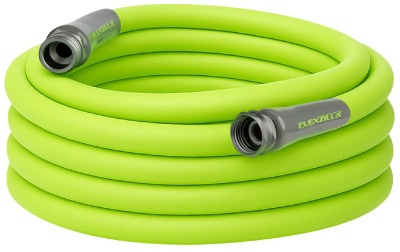
The Flexzilla brings something different to your typical garden hose experience. It’s made from a hybrid polymer material that stays flexible even when temperatures drop. That bright green color isn’t just for show—it makes the hose easy to spot in the grass so you don’t run it over with the lawnmower.
This hose weighs considerably less than traditional rubber hoses. The outer material resists abrasion, and the connections are aluminum, which won’t rust like brass sometimes does. The hose comes with a drinking water safe rating, so you can use it to fill kiddie pools or dog bowls without worry.
Where This Hose Shines
The Flexzilla works great for people who move their hose around frequently. If you’re the type who waters multiple garden beds, washes the car, then sprays off the deck all in one session, you’ll appreciate how this hose doesn’t fight you.
It’s excellent in cold weather climates. While other hoses turn into stiff pipes when temperatures drop, the Flexzilla maintains its flexibility. You can still coil it up in late fall without feeling like you’re bending rebar.
This hose also suits older users or anyone with joint issues. The light weight means less strain on shoulders and back when you’re pulling it across the yard.
Breaking Down the Key Features
The hybrid polymer construction is the star here. This material flexibly adapts to temperature changes. Traditional rubber and vinyl hoses get stiff in cold weather and can crack. The Flexzilla stays pliable.
The hose diameter is 5/8 inch, which is standard for residential use. This size provides good water flow for most tasks without requiring excessive water pressure.
Those aluminum fittings resist corrosion better than traditional materials. They also stay cool to the touch, even sitting in direct sunlight all day. Ever grabbed a brass fitting that’s been baking in the sun? It’s not pleasant.
The leak-free connections use O-rings that create a tight seal. These O-rings can be replaced if they wear out over time, which extends the hose’s life.
How It Performs in Real-World Use
You’ll notice the flexibility immediately. The hose lays flat without memory coil, which means it doesn’t try to curl back up after you unroll it. This makes it easier to position exactly where you need it.
Water flow is consistent and strong. The hose doesn’t restrict flow the way some lightweight hoses do. You get solid pressure at the nozzle end.
The hose does kink occasionally, but it’s easy to unkink with a simple shake or by walking toward the kink. It doesn’t develop those stubborn permanent kinks that completely stop water flow.
Dragging the hose over concrete, gravel, or rough surfaces doesn’t immediately shred the outer layer. The material holds up to regular wear and tear.
The Good and the Not-So-Good
Pros:
- Extremely flexible in all weather conditions
- Light enough to move around without strain
- Aluminum fittings won’t rust
- Highly visible color prevents accidental damage
- Doesn’t develop memory coil
- Drinking water safe
- Good abrasion resistance
Cons:
- More expensive than basic vinyl hoses
- Can kink under certain conditions, though less than traditional hoses
- The bright green might not appeal to everyone aesthetically
- Fittings can cross-thread if you’re not careful during installation
Performance Deep Dive
Water pressure remains steady throughout the length of the hose. You won’t notice a significant drop in pressure at the 50-foot mark compared to the spigot end.
The hose maintains its shape well. After a season of use, it doesn’t develop weak spots or bulges that indicate internal breakdown. The outer layer doesn’t crack or peel under normal UV exposure.
In freezing conditions, you still need to drain the hose to prevent damage. But unlike traditional hoses, you can actually manipulate the Flexzilla when it’s cold outside. This makes fall cleanup much easier.
The hose handles being run over by a wheelbarrow or accidentally stepped on without immediately developing leaks. It’s not indestructible, but it’s tougher than it looks.
Ease of Use
This hose is genuinely easy to use. The lightweight design means you’re not exhausted after watering the garden. Coiling it up for storage takes minimal effort.
The fittings attach smoothly to spigots and nozzles. The aluminum threads are well-machined and don’t catch or bind during installation.
One tip: don’t overtighten the connections. Hand-tight is sufficient with the O-rings creating the seal. Overtightening can actually damage the threads.
Value Assessment
The Flexzilla costs more than budget hoses, but it typically lasts several seasons with regular use. If you price it out per year of service, it becomes more economical than buying cheap hoses that fail annually.
The real value is in the user experience. If you use your hose frequently, the ease of handling justifies the extra cost. If you only water occasionally, a less expensive option might make more sense.
2. DEWALT Professional Grade Heavy Duty Garden Hose 50 Feet x 5/8 Inch
What Makes This Hose Different
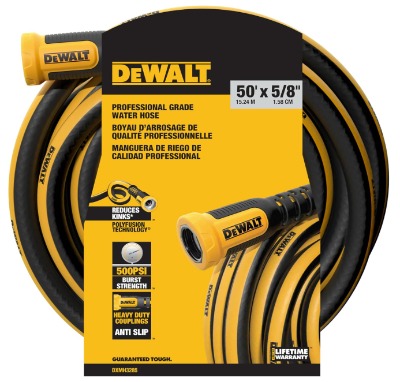
The DEWALT hose is built for job sites but works equally well in residential settings. It features a reinforced rubber construction with a kink-resistant design. The outer layer uses an abrasion-resistant material that can handle rough treatment.
This hose comes with crush-resistant anodized aluminum fittings. The bright yellow stripe isn’t just DEWALT branding—it serves as a visual indicator in grass or on job sites. The hose includes a protective sleeve near the fittings to prevent wear at these stress points.
Ideal Use Scenarios
This hose suits people who need something nearly indestructible. If you run your hose over rough terrain, drag it across gravel driveways, or use it around construction areas, the DEWALT can handle it.
It’s excellent for heavy-duty tasks like power washing prep work, filling large containers, or commercial landscaping. The professional-grade construction means it won’t fail when you’re in the middle of a big project.
Homeowners with large properties appreciate the durability. If you’re constantly moving the hose long distances and can’t baby it, this hose forgives rough handling.
Feature Breakdown in Plain English
The reinforced rubber construction uses multiple layers. The inner tube carries the water. The reinforcement layer adds strength and kink resistance. The outer cover protects everything from UV rays and abrasion.
That crush-resistant fitting design means you can drive over the connection point with a car, and it won’t deform. This is legitimately useful when you forget to move the hose before pulling out of the driveway.
The protective collar near the fittings prevents the hose from bending sharply at this common failure point. Many hoses develop leaks right where the hose meets the fitting. This design addresses that weak spot.
The yellow stripe creates high visibility. You’re less likely to run it over with equipment or trip over it in the yard.
Real-World Performance Notes
This hose is noticeably heavier than lightweight options. It feels substantial in your hands. Some people appreciate the solid feel. Others find it tiring to move around.
The hose resists kinking better than standard rubber hoses. It can still kink if you create a tight loop, but it takes more effort to make it happen. A gentle shake usually resolves any kinks that do form.
Water flow is excellent. The thick walls don’t collapse under pressure, so you get consistent flow even with high-pressure sprayers attached.
The hose becomes stiffer in cold weather, like all rubber hoses. It’s still usable, but you’ll notice reduced flexibility compared to summer use.
Honest Pros and Cons
Pros:
- Extremely durable construction
- Crush-resistant fittings actually work as advertised
- Excellent kink resistance
- High water flow capacity
- Can handle rough treatment and abuse
- Professional-grade quality
- Protective collars extend hose life
Cons:
- Heavier than lightweight alternatives
- More expensive than consumer-grade hoses
- Stiffens in cold weather
- Requires more effort to coil and store
- Overkill for light residential use
Performance Analysis
The DEWALT hose maintains its structural integrity over time. After months of use, it doesn’t develop soft spots or bulges. The fittings remain tight and leak-free.
The hose handles high water pressure without issue. If you use pressure washer attachments or high-output sprinklers, the hose won’t burst or develop weak spots.
Abrasion resistance is genuinely impressive. Dragging it across concrete repeatedly doesn’t wear through the outer layer quickly. You can slide it over sharp edges without immediately cutting into the material.
The hose does retain some memory of how it was coiled. When you unroll it, it might try to curl slightly, but it’s not as bad as cheap vinyl hoses that spring back into coils.
User-Friendliness
The weight is the main consideration. If you have a small yard and move the hose frequently, the extra pounds add up. For larger properties where the hose stays in position longer, the weight matters less.
The fittings are easy to grip and turn. The anodized aluminum doesn’t get slippery when wet. The threads engage smoothly without cross-threading issues.
Storage requires a sturdy hose reel or hanger. This isn’t a hose you casually drape over a fence post. It needs proper support due to its weight.
Value Proposition
The DEWALT hose represents an investment in long-term durability. It costs more upfront but typically outlasts cheaper hoses by a significant margin.
For professional use, the value is clear. The hose pays for itself by not failing mid-job. For homeowners, the value depends on usage patterns. Heavy users get their money’s worth. Occasional users might find the cost hard to justify.
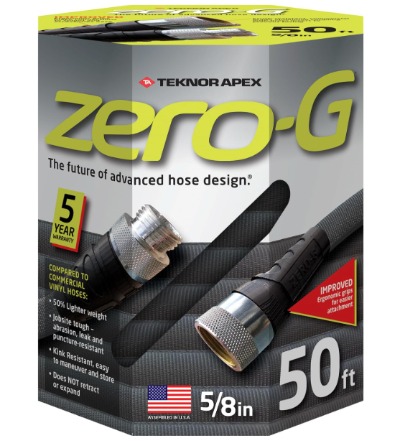
3. zero-G 4001-50 Lightweight, Ultra Flexible, Durable, Kink-Free Garden Hose
Understanding This Unique Design
The zero-G hose uses a completely different approach to garden hose design. It’s made from woven fiber materials rather than rubber or vinyl. This construction method creates an extremely lightweight hose that weighs about half what traditional hoses weigh.
The hose lies completely flat when not in use. It doesn’t have the typical round profile of standard hoses. When water flows through it, the hose expands to its full diameter. When you turn off the water, it collapses back down.
The fittings are nickel-plated brass, which resists corrosion. The hose comes in black, which might not be ideal for visibility but does hide dirt and wear better than lighter colors.
Best Applications
This hose excels for people who struggle with heavy hoses. If you have mobility issues, arthritis, or just find regular hoses exhausting to move around, the zero-G changes the game.
It’s perfect for balcony or patio container gardens where you need to store the hose in a small space. The flat design means it takes up minimal room.
The lightweight construction makes it ideal for elderly users or anyone who wants to reduce physical strain during yard work. You can manage this hose with one hand easily.
Key Features Explained Simply
The woven fiber construction is the defining feature. Imagine a fire hose design scaled down for garden use. The fibers provide strength without adding weight.
The flat design when empty means you can fold the hose like a ribbon. This makes storage incredibly space-efficient. You can hang it on a small hook or tuck it into a narrow cabinet.
When pressurized, the hose expands to a full 5/8-inch diameter. The fiber weave contains the water pressure without ballooning or developing weak spots.
The nickel-plated brass fittings won’t rust, but they need gentle handling. Cross-threading is possible if you’re not careful during installation.
How It Actually Works in Practice
The light weight is immediately noticeable. You can carry the hose with barely any effort. Moving it around the yard feels effortless compared to traditional hoses.
The hose truly doesn’t kink. The fiber construction prevents the traditional kinking mechanism. You can loop it, twist it, and step on it—water keeps flowing.
There’s a slight delay when you first turn on the water. The hose needs a second to expand to full size. This isn’t a problem, just something to expect.
The hose doesn’t have much memory. It lays where you put it without trying to curl back up. This makes positioning it around plants and obstacles easier.
Balanced Pros and Cons
Pros:
- Extremely lightweight (weighs about 50% less than rubber hoses)
- Truly kink-free design
- Compact storage when flat
- Easy to maneuver and position
- Good water flow when fully expanded
- Less strain on spigots and connections
- Durable fiber construction
Cons:
- Visible fiber wear over time on rough surfaces
- Can’t handle being run over by vehicles
- More expensive than basic hoses
- The flat design might feel strange initially
- Fittings require careful handling
- Not ideal for cold weather use
Performance in Detail
Water pressure and flow are good once the hose fully expands. There’s no noticeable restriction compared to traditional hoses.
The fiber outer layer does show wear on rough surfaces. If you drag it across concrete repeatedly, you’ll see the fibers fuzz slightly. This is cosmetic initially but could eventually affect durability.
The hose handles UV exposure well. The material doesn’t crack or become brittle from sun exposure the way vinyl does.
In cold weather, the hose becomes less flexible but remains usable. You need to drain it completely in freezing conditions, just like any hose.
The zero-G doesn’t develop bulges or weak spots in the walls. The fiber construction distributes pressure evenly along the entire length.
Ease of Use Evaluation
This is one of the easiest hoses to use physically. The light weight eliminates strain. You can pull it across the yard without building up shoulder fatigue.
Coiling for storage is simple. You can fold it, roll it loosely, or hang it on a hook without needing a heavy-duty reel.
The hose works well with all standard attachments. Sprayers, sprinklers, and nozzles attach normally. The brass fittings provide a reliable connection point.
One learning curve: you need to let the hose fully expand before expecting maximum flow. If you turn on the water and immediately expect full pressure, there’s a brief lag.
Value Consideration
The zero-G costs more than basic vinyl hoses but less than premium rubber options. The value proposition centers on the user experience.
If reduced weight and easy handling matter to you, the cost is justified. The hose typically lasts several seasons with normal use, making the per-year cost reasonable.
For users who don’t struggle with traditional hose weight, the premium might be harder to justify. But for those who find regular hoses physically challenging, this hose is worth every penny.
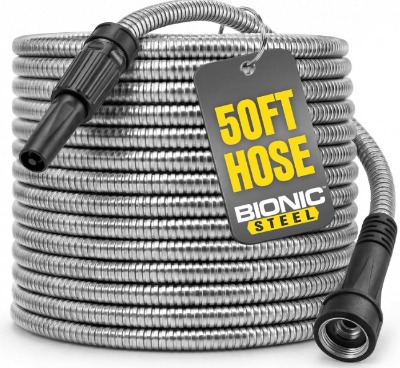
4. BIONIC STEEL 50 Ft Metal Garden Hose with Sprayer Nozzle
What Sets This Hose Apart
The BIONIC STEEL takes a radically different approach: it’s made of stainless steel. The hose consists of interlocking stainless steel segments with an inner rubber tube that carries the water. The outer steel layer provides protection and prevents kinking through its mechanical design.
This hose comes with a spray nozzle included. The stainless steel construction means it can handle extreme conditions that would destroy traditional hoses. It’s rated for 500 PSI, which is significantly higher than most garden hoses need but provides a huge safety margin.
The hose weighs more than lightweight options but less than heavy-duty rubber hoses. The steel construction gives it a unique feel and appearance.
Where This Hose Makes Sense
The BIONIC STEEL is ideal for harsh environments. If you have dogs that chew hoses, this solves that problem permanently. The steel construction resists sharp teeth.
It works great in areas with thorny plants or sharp obstacles. Rose bushes, cacti, and rough terrain don’t damage the outer layer.
This hose suits users who want something nearly indestructible. If you’re tired of replacing hoses and want to buy once and be done, the metal construction delivers.
The high pressure rating makes it suitable for use with pressure washers and high-output sprayers. The hose won’t burst under demanding conditions.
Feature Details Made Simple
The stainless steel outer layer consists of interlocking segments. These segments can flex and bend but resist kinking through their mechanical design. It’s similar to how a metal watch band moves.
The inner rubber tube is protected from UV damage, punctures, and abrasion by the steel outer layer. This dramatically extends the hose’s life.
The 500 PSI rating means the hose can handle nearly any residential or light commercial application. Standard hoses typically burst around 200-250 PSI.
The included spray nozzle features multiple spray patterns. It’s made from metal to match the hose’s durability.
The fittings are solid brass with a crush-resistant design. You can drive over them without damage.
Real-Life Usage Experience
The hose feels substantial and well-made. The metal construction provides a quality feel that’s missing from plastic hoses.
The hose truly doesn’t kink. The interlocking steel segments prevent the mechanism that causes kinking in traditional hoses. You can bend it sharply, and water continues flowing.
The steel can get hot in direct sunlight. If the hose sits in the sun all day, the metal absorbs heat. This can make the initial water flow warm until the hose cools.
The hose doesn’t tangle easily. The weight and rigidity prevent the light tangling that happens with flexible hoses.
Dragging the hose over any surface—concrete, gravel, rocks, wood—doesn’t damage it. The steel outer layer is essentially impervious to abrasion.
Truthful Pros and Cons
Pros:
- Virtually indestructible construction
- Completely kink-proof design
- Resists chewing from animals
- Can handle extreme pressure
- Excellent for rough terrain
- Won’t crack, split, or burst
- Includes spray nozzle
- Lifetime of use for most people
Cons:
- Heavier than lightweight hoses
- Gets hot in direct sun
- More expensive than traditional hoses
- Can scratch surfaces if dragged carelessly
- Not as flexible as rubber or hybrid hoses
- Initial warm water flow on hot days
- Harder to coil tightly
Performance Deep Dive
Water flow through the BIONIC STEEL is excellent. The inner diameter maintains full water pressure throughout the hose length.
The hose handles being left outside in all weather conditions. Rain, snow, sun, and ice don’t degrade the stainless steel. You can leave it connected year-round in moderate climates.
The hose doesn’t develop leaks at stress points. There’s no material that can crack or split. The most likely failure point would be the fittings, which are also highly durable.
The interlocking steel segments remain flexible even after years of use. They don’t rust or corrode, maintaining smooth operation indefinitely.
The hose works flawlessly with high-pressure sprayers. The construction easily handles the increased pressure without ballooning or failing.
User Experience
The hose is moderately easy to use. It’s not as effortless as ultra-lightweight options, but it’s not as cumbersome as heavy rubber hoses.
Coiling requires a bit more effort due to the hose’s natural rigidity. It doesn’t coil as tightly as flexible hoses. A wall mount or large hose reel works better than trying to make a tight coil.
The fittings attach easily to spigots and nozzles. The brass threads are well-made and engage smoothly.
The included spray nozzle works well. The metal construction matches the hose’s durability. The spray patterns are adjustable and provide good coverage.
Value Analysis
The BIONIC STEEL is a significant investment upfront. It costs more than most traditional hoses. However, it may be the last hose you ever buy.
The durability factor is key to the value proposition. If you typically replace hoses every few years, the BIONIC STEEL pays for itself over time.
For users with specific needs—dog owners, commercial landscapers, or people with challenging terrain—the specialized benefits justify the cost.
For basic residential use, the cost might exceed what’s necessary. But if you value durability and don’t want to think about hose replacement, it’s worth it.
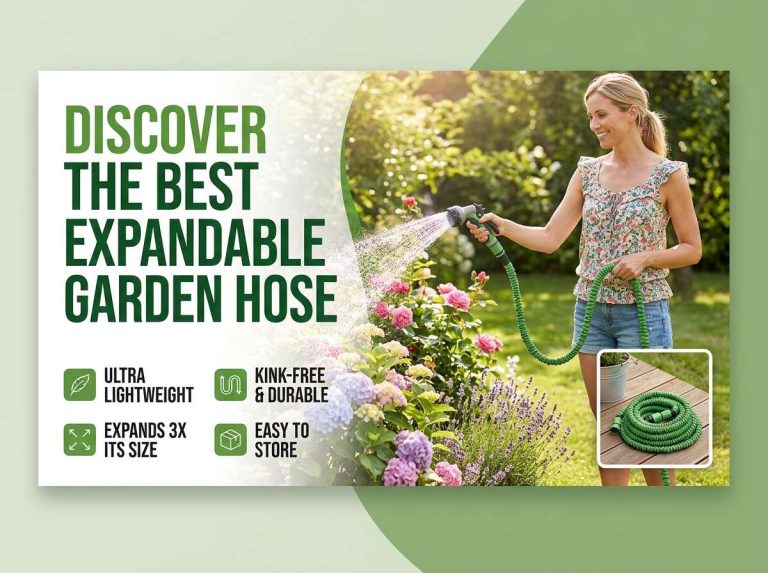
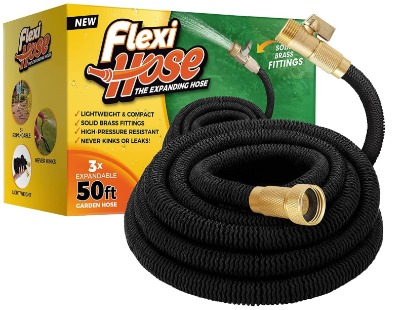
5. Flexi Hose Lightweight Expandable Garden Hose, 50FT
How This Hose Works
The Flexi Hose uses expandable technology. It starts at about 17 feet when empty and expands to 50 feet when you turn on the water. The design uses a double latex core covered by a protective fabric sleeve.
The hose features solid brass fittings at both ends. The 3/4-inch fittings are standard for garden hose connections. The fabric sleeve protects the expanding inner core from punctures and UV damage.
When you turn off the water, the hose automatically contracts back to its compact size. This makes storage incredibly easy compared to traditional hoses.
Ideal Situations for This Hose
The Flexi Hose works great for people with limited storage space. If you live in an apartment with a small balcony or have a tiny shed, the compact storage size is a huge advantage.
It’s perfect for users who find heavy hoses difficult to manage. The expanded hose is very light, and the contracted hose weighs almost nothing.
This hose suits occasional users who water container gardens or wash cars a few times a month. The easy storage encourages you to put it away properly after each use.
The expandable design is excellent for RV owners or people who need a portable hose. It packs down small for travel.
Features Broken Down
The double latex core provides the expansion mechanism. When water pressure fills the inner tubes, they expand to full length. When pressure drops, they contract.
The protective fabric sleeve prevents abrasion, punctures, and UV damage to the latex core. This outer layer comes in various colors and adds minimal weight.
The solid brass fittings resist corrosion and provide leak-free connections. They’re designed to handle the stress of repeated expansion and contraction.
The hose doesn’t kink because there’s no rigid material to create kinks. The flexible latex simply bends without restricting water flow.
The lightweight design when contracted makes the hose easy to carry and store. You can hang it on a small hook or toss it in a container.
Practical Performance Notes
The expansion happens quickly. Turn on the water, and the hose grows to full length in seconds. It’s actually quite satisfying to watch initially.
Water flow is good but not exceptional. The expanding nature means the hose diameter varies slightly along its length. You get adequate pressure for most tasks.
The hose is genuinely kink-free. The soft latex construction can’t form traditional kinks. Water flows regardless of how the hose is positioned.
The fabric sleeve shows wear in high-stress areas. Where the hose bends repeatedly or rubs against rough surfaces, the fabric can fray over time.
The latex core can fail if the hose is overfilled or used with excessive pressure. Once the latex tears, the hose is basically done.
Honest Advantages and Disadvantages
Pros:
- Extremely compact storage
- Very lightweight
- Expands and contracts automatically
- No kinking possible
- Easy to carry and move
- Great for small spaces
- Brass fittings resist corrosion
- Good for occasional use
Cons:
- Less durable than traditional hoses
- Can’t be dragged over rough surfaces
- Latex core can fail
- Not suitable for high-pressure applications
- Fabric sleeve frays with heavy use
- Needs to be drained and stored properly
- Won’t last as long as rubber or hybrid hoses
- Temperature sensitive
Performance Examination
The Flexi Hose delivers adequate performance for light to moderate use. It’s not designed for all-day commercial applications or rough handling.
Water pressure is sufficient for watering plants, washing cars, and filling pools. It’s not ideal for pressure washer attachments or high-volume applications.
The hose expansion is reliable when the product is new. Over time and with repeated use, the latex can lose some elasticity. The hose might not contract as fully as it initially did.
UV exposure affects the latex core over time. Even with the protective sleeve, prolonged sun exposure degrades the latex. Storing the hose out of direct sun when not in use extends its life.
The hose doesn’t handle being left full of water for extended periods. The constant pressure can weaken the latex. It’s best to drain it after each use.
Ease of Use
This is one of the easiest hoses to use and store. The light weight means anyone can handle it. The automatic contraction eliminates the need for manual coiling.
The brass fittings attach easily to spigots and nozzles. They seal well and don’t leak when properly connected.
One caution: don’t turn on the water to full blast immediately. Let the pressure build gradually to allow the hose to expand smoothly. Sudden high pressure can stress the latex.
After use, disconnect the hose and let it drain completely. Then let it contract before storing. This process adds a step compared to traditional hoses but takes only a minute.
Value Perspective
The Flexi Hose is moderately priced. It costs more than basic vinyl hoses but less than premium rubber or metal options.
The value depends on your expectations. If you want an easy-to-store, lightweight hose for occasional use, the value is excellent. If you need a workhorse hose for daily heavy use, the value diminishes.
The hose typically lasts one to three seasons depending on usage intensity and storage practices. This lifespan is shorter than premium hoses but acceptable given the price and convenience benefits.
For urban dwellers with small spaces or people who prioritize easy storage, the Flexi Hose offers good value. For those needing maximum durability, other options provide better long-term value.
Comparison Insights
Let’s look at how these hoses stack up against each other in categories that matter for real-world use.
Weight and Handling
From lightest to heaviest: The zero-G wins the lightweight category, weighing about half what traditional hoses weigh. The Flexi Hose when contracted is also extremely light. The Flexzilla is moderately light and easy to move. The BIONIC STEEL is medium weight. The DEWALT is the heaviest due to its reinforced rubber construction.
If ease of movement is your priority, the zero-G or Flexi Hose makes the most sense. If you don’t mind a bit of extra weight for increased durability, the DEWALT or BIONIC STEEL delivers.
Durability and Longevity
The BIONIC STEEL leads in pure durability. The stainless steel construction is nearly indestructible. The DEWALT comes second with its professional-grade rubber construction. The Flexzilla offers good durability with its hybrid polymer design.
The zero-G is durable but shows visible wear on rough surfaces. The Flexi Hose is the least durable due to its expandable latex core, which is sensitive to punctures and UV damage.
For buy-it-for-life durability, the BIONIC STEEL wins. For professional-grade durability at a lower price, the DEWALT is the choice.
Kink Resistance
The BIONIC STEEL is completely kink-proof due to its mechanical design. The zero-G is also essentially kink-free because of its fiber construction. The Flexi Hose can’t kink because the soft latex simply bends.
The Flexzilla resists kinking well but can kink under extreme conditions. The DEWALT has good kink resistance but isn’t kink-proof.
If you’re frustrated with kinking hoses, the BIONIC STEEL or zero-G eliminates the problem entirely.
Storage Space
The Flexi Hose wins for compact storage, contracting to about one-third its full length. The zero-G lays flat and can be folded compactly. The Flexzilla coils easily and stores relatively compactly.
The DEWALT and BIONIC STEEL take up the most storage space due to their weight and natural rigidity.
For small sheds, apartment balconies, or limited storage, the Flexi Hose or zero-G makes the most sense.
Temperature Performance
The Flexzilla maintains flexibility in cold weather better than any other option. It stays usable even when temperatures drop significantly.
The zero-G works in moderate cold but becomes stiffer in freezing conditions. The Flexi Hose is temperature-sensitive and should be stored indoors in cold climates.
The DEWALT and BIONIC STEEL both stiffen in cold weather but remain usable. The BIONIC STEEL’s metal construction makes it workable in various temperatures, though the metal itself gets very cold.
Water Flow and Pressure
The DEWALT and BIONIC STEEL provide the best water flow and can handle high pressure. Both are suitable for pressure washer attachments.
The Flexzilla offers excellent flow for standard applications. The zero-G provides good flow once fully expanded.
The Flexi Hose has adequate flow for basic tasks but isn’t ideal for high-pressure applications.
Price Point
From least to most expensive (generally): Basic pricing varies, but typically the order is Flexi Hose, zero-G, Flexzilla, DEWALT, and BIONIC STEEL as the most expensive.
However, when you factor in longevity, the cost per year of use changes significantly. The BIONIC STEEL might cost the most upfront but could last decades. The Flexi Hose costs less initially but might need replacement more frequently.
Best for Specific Needs
For elderly users or those with mobility issues: zero-G or Flexi Hose For professional landscapers: DEWALT For maximum durability: BIONIC STEEL For cold weather climates: Flexzilla For small storage spaces: Flexi Hose For dog owners: BIONIC STEEL For all-around versatility: Flexzilla
Buying Guide: What to Look For
Hose Material Matters
The material determines weight, flexibility, durability, and price. Rubber hoses are durable but heavy. Vinyl hoses are cheap but crack easily. Hybrid polymer hoses balance flexibility and durability. Stainless steel hoses are nearly indestructible but less flexible. Expandable hoses are lightweight but less durable.
Think about how you’ll use the hose. For frequent heavy use, invest in durable materials. For occasional light use, cheaper materials might suffice.
Diameter Affects Flow
Most residential hoses are 5/8 inch in diameter. This size provides good water flow for typical tasks. Some cheaper hoses are 1/2 inch, which restricts flow noticeably.
Avoid 1/2-inch hoses unless you have specific reasons for lower flow. The 5/8-inch standard works well for nearly every residential application.
Fitting Quality Counts
Brass fittings resist corrosion and last longer than plastic. Aluminum fittings are lightweight and won’t rust. Nickel-plated brass combines corrosion resistance with attractive appearance.
Avoid hoses with plastic fittings. They crack easily and don’t seal reliably. The few dollars saved isn’t worth the frustration.
Pressure Rating
Look for burst pressure ratings. Standard hoses should handle at least 200 PSI. Higher ratings provide a safety margin and indicate better construction.
If you plan to use pressure washer attachments, look for hoses rated 400 PSI or higher. Regular garden tasks don’t need extreme pressure ratings, but higher ratings indicate stronger construction.
Flexibility in Cold Weather
If you live in a climate with cold winters, check how the hose performs in low temperatures. Rubber and vinyl hoses stiffen significantly. Hybrid polymer hoses maintain flexibility better.
This matters if you need to put the hose away in late fall or use it in early spring when temperatures are still low.
Kink Resistance
No hose is truly kink-proof except mechanical designs like the BIONIC STEEL. But some resist kinking better than others.
Look for reinforced construction, which helps prevent kinking. Thicker walls generally resist kinking better than thin walls.
UV Resistance
If your hose stays outside in the sun, UV resistance matters. UV exposure degrades materials over time, causing cracking and brittleness.
Look for hoses specifically marketed as UV-resistant. Darker colors generally hide UV damage better than light colors, though they don’t prevent it.
Warranty and Guarantees
A good warranty indicates manufacturer confidence in their product. Look for warranties of at least one year, preferably longer.
Some hoses come with lifetime warranties, though these often have conditions. Read the fine print to understand what’s actually covered.
Weight Considerations
Heavy hoses provide durability but require more effort to move. Light hoses are easy to handle but might sacrifice durability.
Consider your physical capabilities honestly. If a heavy hose will discourage you from watering your garden, the durability doesn’t matter.
Storage Method
Think about how you’ll store the hose. If you have a hose reel, most hoses work fine. If you’ll hang it on a hook, lighter hoses are easier. If you have limited space, expandable or flat hoses save room.
Match the hose to your storage situation. A great hose that doesn’t fit your storage setup will frustrate you.
Intended Use Frequency
Daily use demands durable construction. Occasional use can get by with lighter-duty hoses.
Be honest about usage. If you water daily during growing season, invest in quality. If you use the hose monthly, basic quality suffices.
Who Should Buy These Hoses
The Flexzilla is For:
People who use their hose regularly and want easy handling. Homeowners in cold climates who need year-round flexibility. Those willing to pay extra for user experience improvements. Anyone who moves the hose frequently around the yard.
This hose suits the active gardener who’s out there several times a week. It’s for people who value tools that don’t fight them.
The DEWALT is For:
Professional landscapers and contractors. Homeowners with large properties and demanding tasks. People who are rough on equipment and need something that can take abuse. Those who use pressure washers or high-volume sprayers.
This hose is for the person who needs professional-grade equipment and uses it hard enough to justify the cost.
The zero-G is For:
Elderly users or those with limited strength. People with mobility issues or arthritis. Homeowners with small storage spaces. Those who prioritize easy handling above all else.
This hose is perfect for someone who finds traditional hoses physically challenging. It’s for the person who wants watering the garden to be effortless.
The BIONIC STEEL is For:
Dog owners whose pets destroy regular hoses. Commercial users who need maximum durability. People with rough terrain and sharp obstacles. Those who want to buy once and never replace the hose.
This hose suits anyone who’s frustrated with constantly replacing damaged hoses. It’s for the person who values indestructibility over flexibility.
The Flexi Hose is For:
Apartment dwellers with limited storage. Occasional users who water small areas. RV owners who need a portable hose. People who prioritize easy storage over maximum durability.
This hose works for the urban gardener with a balcony or small patio. It’s for someone who uses a hose occasionally and wants it out of the way when not in use.
Common Mistakes to Avoid
Leaving Hoses Pressurized
Many people leave hoses connected to the spigot with the water on. This keeps the hose under constant pressure, which weakens the walls over time. It can cause bulges, leaks, or bursts.
Turn off the water at the spigot when you’re done. This simple step dramatically extends hose life.
Improper Winter Storage
Water left in hoses during freezing weather expands and damages the hose from the inside. This causes cracks and leaks that might not appear until spring.
Drain hoses completely before the first freeze. Store them in a shed or garage if possible. If leaving hoses outside, make sure they’re completely empty.
Dragging Hoses Over Sharp Edges
Pulling hoses around fence corners, over concrete edges, or across sharp rocks creates weak spots. The constant abrasion wears through the outer layer.
Walk the hose around obstacles rather than dragging it over them. Take a few extra steps to protect your investment.
Using the Wrong Hose for the Job
Using a lightweight expandable hose with a pressure washer will destroy it. Using a heavy professional hose for occasional light watering is overkill and frustrating.
Match the hose to the application. Don’t use tools beyond their design limits.
Overtightening Connections
People often crank down hose connections as tight as possible, thinking this prevents leaks. Overtightening damages threads and crushes O-rings, actually creating leak points.
Hand-tight is sufficient for most connections. If it leaks, check the O-ring rather than tightening more.
Ignoring Kinks
Letting hoses remain kinked during use restricts water flow and creates stress points. These spots develop leaks over time.
Unkink hoses immediately. Don’t let them sit kinked even when not in use.
Running Over Hoses
Driving over hoses with cars or lawn mowers damages even durable hoses. The weight crushes the hose, weakening the walls.
Always move hoses out of vehicle paths. The minute it takes to reposition the hose saves replacing it.
Coiling Too Tightly
Forcing hoses into tight coils creates memory issues and stress. The hose wants to stay coiled and fights you when you unroll it.
Use larger diameter coils. Let the hose guide the coil size rather than forcing it smaller.
Storing Hoses Full of Water
Water sitting in hoses encourages mold and mildew growth. It also keeps pressure on the walls, contributing to early failure.
Drain hoses after each use. This takes just a moment and prevents multiple problems.
Buying Based on Price Alone
The cheapest hose seems like a bargain until it fails after one season. You end up buying multiple cheap hoses instead of one quality hose.
Consider cost per year of use rather than initial price. A more expensive hose that lasts five years costs less per year than a cheap hose replaced annually.
Mixing Incompatible Attachments
Using attachments with different thread sizes or types requires adapters. Skipping the adapter and forcing connections damages threads.
Use proper adapters when needed. They cost a few dollars and prevent damage to both the hose and attachments.
Neglecting Maintenance
Hoses need simple maintenance like checking O-rings and cleaning fittings. Neglecting this leads to preventable leaks and failures.
Inspect hoses at the start of each season. Replace worn O-rings and clean out debris from fittings.
Final Verdict
After looking at these five hoses in detail, here’s the bottom line.
Overall Best Choice: Flexzilla Garden Hose
The Flexzilla offers the best combination of flexibility, durability, and user experience for most homeowners. It’s not the cheapest, and it’s not the most durable, but it hits the sweet spot. The hybrid polymer construction maintains flexibility in all weather while providing good abrasion resistance. It’s light enough to handle easily but substantial enough to feel quality.
This hose works for the widest range of users and applications. It handles typical residential tasks without frustration. The drinking water safe rating adds versatility. The highly visible color prevents accidental damage.
The price is fair for what you get. Most users will get several seasons of reliable service, making the per-year cost reasonable.
Best Value: zero-G Lightweight Hose
For people who prioritize easy handling and have normal use patterns, the zero-G delivers excellent value. The weight reduction is genuinely significant. If you’ve struggled with heavy hoses, this changes your experience completely.
The fiber construction provides good durability for typical residential use. It won’t survive commercial abuse, but it handles regular homeowner tasks well. The flat storage design is genuinely useful for people with limited space.
The price is reasonable for the benefits provided. The ease of use encourages proper storage, which extends the hose’s life.
Best for Heavy Use: DEWALT Professional Grade
If you need a hose that can take abuse, the DEWALT is worth the investment. The professional-grade construction survives rough handling that would destroy lighter hoses.
The crush-resistant fittings actually work. The reinforced construction handles high pressure and heavy use. This hose suits commercial users and homeowners with demanding applications.
The higher price buys genuine durability. For users who are hard on equipment, the DEWALT outlasts cheaper alternatives by a wide margin.
Most Durable: BIONIC STEEL Metal Hose
For maximum longevity, the BIONIC STEEL is unmatched. The stainless steel construction is virtually indestructible. This might legitimately be the last hose you ever buy.
The kink-proof design works perfectly. The hose handles extreme conditions without damage. Dog owners and commercial users get particular value from the indestructibility.
The high price is the main barrier. But if you calculate cost over the hose’s potential lifespan, the value becomes clear. This is the “buy once, cry once” option.
Best for Storage: Flexi Hose Expandable
For compact storage and occasional use, the Flexi Hose excels. The expansion and contraction mechanism works well. The light weight when contracted makes storage effortless.
This hose suits urban dwellers, RV owners, and anyone with limited storage space. It’s perfect for occasional use where easy storage encourages proper care.
The durability limitations are real. This isn’t a daily-use commercial hose. But for its intended purpose—light to moderate occasional use with easy storage—it performs well at a fair price.
Choosing Your Hose
Your ideal hose depends on your specific situation. Here’s a quick decision guide:
If you have mobility issues or limited strength: zero-G If you use the hose daily for various tasks: Flexzilla
If you need professional-grade durability: DEWALT If you want maximum longevity and have dogs: BIONIC STEEL If you have limited storage space and use the hose occasionally: Flexi Hose
All five hoses solve the same basic problem—getting water from the spigot to where you need it. But they do it in different ways with different trade-offs.
The worst choice is a cheap hose that fails quickly and frustrates you constantly. Any of these five options is better than that. They’re all legitimate products that deliver on their promises within their design parameters.
Think about your actual use patterns, storage situation, and budget. Be honest about what matters most to you. The perfect hose on paper means nothing if it doesn’t fit how you actually use a hose.
A 50-foot garden hose is a simple tool. But getting the right one makes yard work less frustrating and more enjoyable. Whether you choose lightweight flexibility, professional durability, or compact storage, there’s an option here that fits.
The right hose for you is the one you’ll use without frustration and store properly when done. That’s the hose worth buying.

Hi, I’m Mary, the founder of GardenCure.com. I’m passionate about creating healthy, beautiful gardens and well-kept lawns. I share practical experience and trusted advice on garden and lawn gear that truly works. With the support of my dedicated research team, our writers produce honest, in-depth reviews using reliable, authentic sources—helping you choose the right tools with confidence for your outdoor space.