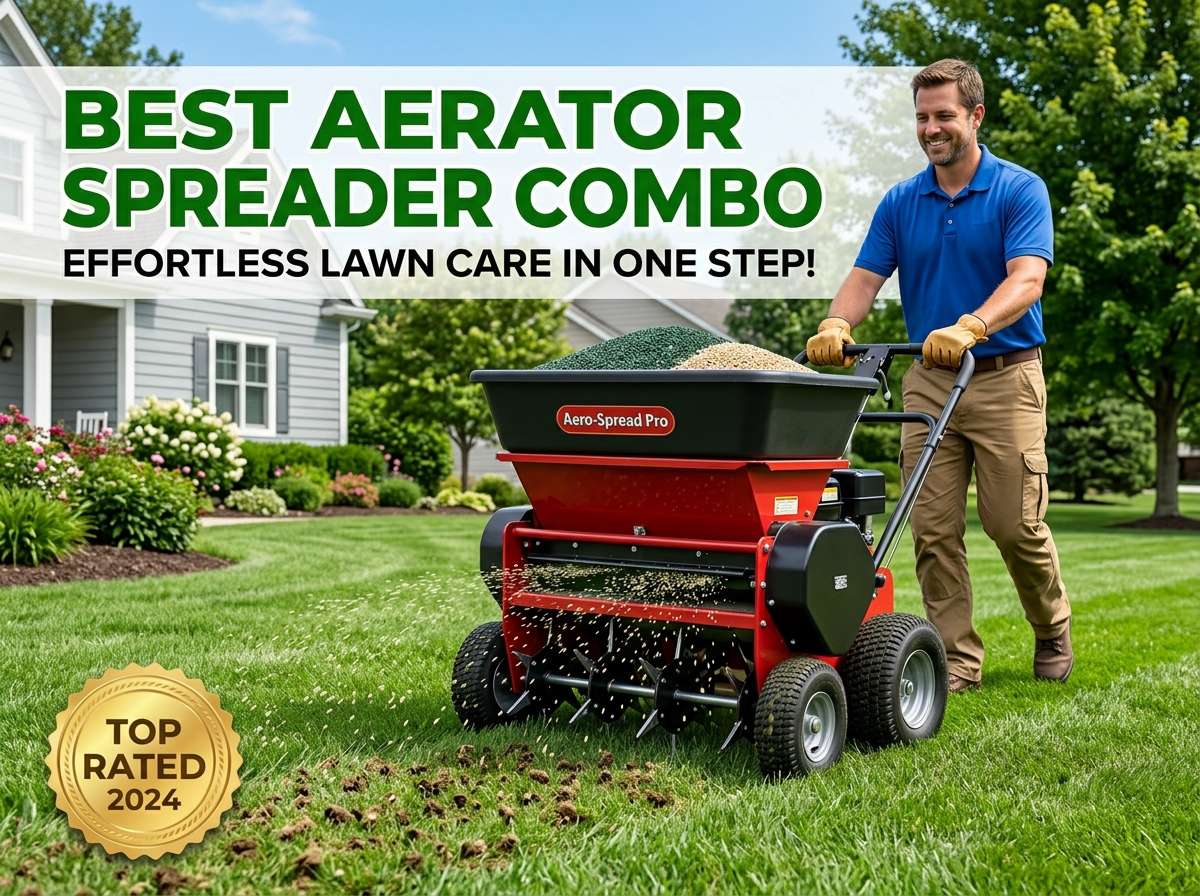
4 Best Aerator Spreader Combo In 2026
Your lawn deserves better than just water and hope. If you’ve been struggling with compacted soil, patchy grass, or uneven fertilizer distribution, it’s time to think about getting serious with an aerator spreader combo. These amazing machines do the heavy lifting that makes grass actually thrive, and today we’re diving deep into the best options on the market.
In this article
What Makes a Great Aerator Spreader Combo?
Before we jump into the specific products, let’s talk about what separates a good lawn tool from a game-changer. An aerator spreader combo is basically two machines in one. The aerating side punches holes in your soil to relieve compaction and improve oxygen flow to your grass roots. The spreading side drops seeds, fertilizer, or lime evenly across your lawn. When you combine these functions, you save tons of time and effort.
The best combo machines share some key qualities. They need solid construction that won’t fall apart after one season. The spreading mechanism should be reliable and accurate. The aerating spikes need to actually penetrate tough soil without requiring you to break your back. Ease of assembly matters too since nobody wants to spend their weekend wrestling with bolts and brackets. And here’s the thing that really matters: the machine has to feel stable when you’re towing it, easy to control, and simple to maintain.
Brinly Tow Behind Combination Aerator Spreader with Weight Tray, 40-Inch
Product Overview
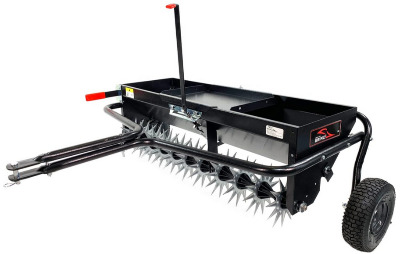
The Brinly combo aerator spreader is the kind of machine that just works. This 40-inch wide unit sits right in the sweet spot for most residential lawns. It’s compact enough to maneuver around trees and flower beds but wide enough to cover ground faster than smaller options.
What you’re getting here is a straightforward piece of equipment. Brinly focused on making a machine that does both jobs well without any unnecessary bells and whistles. The weight tray is a thoughtful addition that lets you adjust how deep the spikes penetrate your soil. This matters more than you might think, especially if you’re dealing with different soil conditions across your property.
Design and Build Quality
This unit features a flat-black powder-coated finish that looks industrial and rugged. The frame is solid steel that won’t bend or twist under normal operating conditions. The 40-inch working width means you’ll cover about 2,400 square feet per hour, depending on your towing speed. That’s a reasonable pace that keeps you from spending all day in the yard.
The weight tray sits at the back and can hold up to 75 pounds of additional weight. This is seriously useful. In spring when your soil is softer, you might not need the extra weight. But in summer when everything is baked hard, those extra pounds make a real difference in spike penetration.
Key Features Explained
The spreader hopper holds about 100 pounds of seed or fertilizer. The opening is wide enough that you won’t constantly be refilling, and the broadcast pattern spreads material in a nice even arc. The control lever is easy to reach and intuitive to use.
The aerating tines come in two styles on this machine. You get spiking tines for regular aeration and also some solid tines that help level out the spikes’ effects. This combination actually does a better job than spikes alone because it creates a more uniform surface as you go.
The hitch assembly is universal, fitting most lawn tractors and ATVs without any adapters or modifications. That’s important because you’re not going to buy a whole new tractor just to use a spreader. The setup takes about 45 minutes if you’re not in a huge rush.
Best Use Cases
This machine shines if you have a lawn between a quarter acre and an acre. It’s the Goldilocks zone where it’s too much work to do by hand but not so big that you’d benefit from a professional-sized unit. It works great for spring seeding, fall aeration, and fertilizer application across a single growing season.
The weight tray makes it particularly good for folks who need flexibility. Maybe you have clay soil that gets hard as concrete in summer. The extra weight helps punch through. Or maybe you’re spreading lime or slow-release fertilizer that needs to sit in the soil to work properly. The aeration helps it absorb faster.
Real-Life Usage Insights
In actual use, people appreciate how straightforward this machine is. There’s no complicated electronics to break down. You attach it, load your material, and go. The turning radius is tight enough that you can work around standard residential obstacles. The 40-inch width means you can still navigate through most gates and fence openings, which matters if your lawn has multiple sections.
The hopper doesn’t clog easily, even with heavier materials. The tines work consistently across the full width. You don’t get the problem where the center doesn’t aerate as well as the sides. Everything happens at basically the same depth and intensity.
One thing users consistently mention is how the weight tray actually changes the game. Without it, you’re relying entirely on the machine’s weight to push tines down. With it, you get genuine depth in hard soil. Most people end up using it about 60 percent of the time depending on their soil and the season.
Honest Pros and Cons
The big pros are obvious: dual functionality means one machine does two jobs, the build is solid, and it’s reasonably priced for what you get. The hopper capacity keeps you from constant refilling. The weight tray gives you real control over how deep you’re working. Parts are available and replacements are inexpensive.
The cons are worth mentioning too. This machine is manual, meaning you control the spreading and aeration by tractor movement and lever adjustments. There’s no automatic shutoff, so you need to pay attention. The tines can get packed with soil in certain conditions, requiring occasional cleaning. If you’re working on a lawn bigger than an acre, the 40-inch width means longer passes and more passes overall.
Performance and Durability
Out of the box, this machine performs consistently. The spikes penetrate reliably and the spreader disperses material evenly. The frames hold up to multiple seasons of regular use. The main wear points are the tines, which do eventually wear down and might need replacement after several seasons depending on your soil type. Replacement sets are affordable enough that it’s not a big deal.
The powder coating protects against rust reasonably well, though like any metal equipment that sits outside, you’ll want to clean it off after use and store it under cover.
Ease of Use
Getting the Brinly hooked up takes about 45 minutes the first time. The second time is faster because you remember where everything goes. Operation is intuitive. Load the hopper, connect the hitch, adjust the weight tray for your conditions, and you’re ready. The control lever for material flow is responsive without being jumpy.
Maintenance is simple. Rinse off the hopper after spreading, make sure you don’t leave material sitting in it for extended periods, and check the hitch connections before each use.
Value for Money
At its price point, this machine offers genuine value. You’re getting two functioning devices in one unit. The build quality means it should last years. The parts are reasonably priced if something does need replacing. For someone with a residential property looking to tackle lawn aeration and seeding on their own, this hits a nice balance between affordable and capable.
Suchtale Upgrade 40-Inch Tow Behind Spike Seeder Combination Spreader
Product Overview
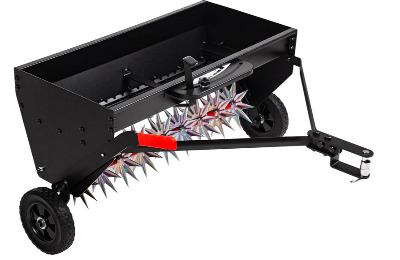
The Suchtale is a different approach to the combo problem. This machine emphasizes the spiker and seeder functions slightly more than the spreading function. It’s also a 40-inch unit, making it directly comparable to the Brinly, but the engineering is distinctly different.
The spike seeder approach is interesting. Instead of just punching holes, this machine actually tries to place seeds into those holes. That’s theoretically more efficient because your seeds go directly into aerated soil rather than sitting on top. The reality is a bit more nuanced, but the concept is solid.
Design and Build Quality
Suchtale chose a slightly different material mix. The frame combines steel with some reinforced polymer components. This actually helps because the polymer elements don’t rust and reduce the overall weight slightly. The 40-inch width is the same as Brinly, so ground coverage is similar.
The hopper design is more squared off than Brinly’s, which actually gives you slightly more capacity in the same footprint. This model can hold about 120 pounds of material, a nice step up. The tines are slightly more aggressive, with a mixture of spiking and cultivating tines that create a rougher surface than the Brinly produces.
Key Features Explained
The main differentiator is the seeding mechanism. Instead of just broadcasting material everywhere, this machine tries to direct seeds into the aerated holes. The theory is that more seeds end up where they should rather than washing away or sitting on hard ground. In practice, this works better with grass seed than with heavier materials like fertilizer.
The control system is more advanced than basic models. You get variable-speed control for the spreader, which helps you adjust your application rate depending on what you’re using. This is genuinely handy if you’re switching between different products.
The hitch is still universal, so no compatibility issues. The setup is similar to other units, maybe 45 minutes.
Best Use Cases
This machine really shines if you’re primarily focused on overseeding and grass establishment. The spike seeder mechanism is more effective for grass seed than for other materials. It’s great for spring renovation work where you’re trying to establish new grass in thin or damaged areas. The variable-speed control is valuable if you’re also using it for fertilizer, because you can dial in the right application rate for different products.
It works well for folks who want to combine aeration and seeding in a single pass, which saves time and effort compared to doing them separately.
Real-Life Usage Insights
People using this machine report good seed establishment when they’re using it for its primary purpose. The spike seeder does seem to get seeds into the ground better than pure broadcasting. The hopper capacity of 120 pounds means fewer refills on larger properties.
The variable-speed control is appreciated, though some users initially find it a bit touchy. Once you get the hang of it, though, it gives you precision you don’t get with simpler machines.
The more aggressive tines create a rougher seedbed, which some consider an advantage for establishing new grass. Others think it looks messier than it actually is. It depends on your expectations.
Honest Pros and Cons
The big advantage is the spike seeder mechanism. If your main goal is grass establishment, this machine does that well. The higher hopper capacity is nice. The variable-speed control lets you dial in exactly what you need. The materials used resist rust better than pure steel.
The downsides are worth understanding. The spike seeder mechanism is more complicated, which means more things that could potentially break. Parts for the seeder mechanism might be harder to find than basic spreader parts. If you’re mainly doing fertilizer or lime, you might not appreciate the extra complexity. The slightly more aggressive tines are good for seeding but might be overkill if you’re just aerating for compaction relief.
Performance and Durability
This machine performs well at its intended purpose. Spike seeder performance is good. The hopper is durable. The tines stay sharp for multiple seasons. The variable-speed mechanism is reliable, though like anything with moving parts, it needs occasional cleaning to work smoothly.
The material mix of steel and polymer actually helps with longevity. Less rust means less deterioration over time.
Ease of Use
Setup is similar to the Brinly, around 45 minutes. Operation is straightforward, though you need to learn how to adjust the variable-speed control. The control is intuitive once you understand how it works. There’s a learning curve that takes maybe one or two uses to flatten out.
Maintenance is simple. Clean the hopper after use, keep the moving parts of the spreader mechanism clean, and store it covered.
Value for Money
For someone committed to grass establishment and overseeding, this machine offers good value. You’re paying more than the basic Brinly, but you’re getting more sophisticated equipment that’s better suited for seeding work. If your primary use is fertilizer and general aeration, you might be overpaying for features you don’t need.
Agri-Fab 45-0299 48-Inch Tow Behind Lawn Plug Aerator
Product Overview
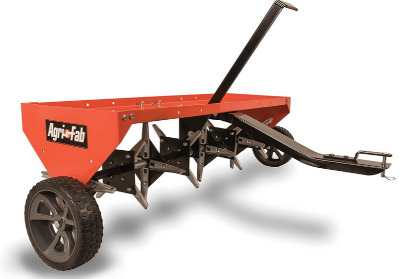
The Agri-Fab represents a different direction from the combo approach. This is a plug aerator, not a spike aerator, and it doesn’t have integrated spreading. But because it’s a plug aerator, it does something spike machines can’t: it actually removes plugs of soil rather than just poking holes.
Why does that matter? Spike aeration compresses soil around the hole. Plug aeration removes soil, which relieves compaction more completely. It’s more effective, but it’s also more work. The Agri-Fab is for people who want serious aeration results.
Design and Build Quality
This is a built-to-last piece of equipment. The 48-inch width is slightly wider than the combo units, giving you better ground coverage. The frame is heavy-gauge steel with minimal plastic components. The whole thing just feels solid and purposeful.
The plug drums are the heart of the machine. These rotate and punch plugs out of the soil. The design is proven and reliable. The plugs are about 3 inches long and 2 inches in diameter, which is the right size for effective aeration without tearing up your lawn too badly.
Key Features Explained
The main feature is the plug mechanism itself. As you move forward, the drums rotate and pull plugs of soil out of the ground. These plugs are left on your lawn where they break down and return nutrients. It’s more effective aeration than spiking.
The unit has a simple depth control that lets you adjust how deep the plugs go. This matters because your goal is typically around 2 to 3 inches deep. Too shallow and you’re not really relieving compaction. Too deep and you’re tearing up your turf.
The hitch is universal, and the 48-inch width gives you noticeably faster coverage than the 40-inch combos.
Best Use Cases
Get this machine if your main goal is serious soil aeration. It’s perfect for lawns with heavy clay soil or areas with serious compaction problems. It’s ideal if you’re bringing a neglected lawn back to life, because plug aeration makes a bigger difference than spiking in those situations.
It’s also good if you have the ability to let the plugs sit and break down naturally. Most people leave them on the lawn for a week or two after aeration, then run the mower over them. It’s not pretty, but it works.
Real-Life Usage Insights
People who use this machine are consistently impressed by the results. You can actually see the difference in your lawn’s response when you use real plug aeration compared to spiking. Water penetration improves noticeably. Grass roots develop better. The overall health improvement is genuine.
The machine is straightforward to operate. Hook it up, adjust the depth, and drive forward. There’s almost no learning curve.
Honest Pros and Cons
The big advantage is results. Plug aeration is legitimately more effective than spiking. The 48-inch width covers ground faster. The build quality is excellent. The machine is simple and reliable.
The main downside is that it’s aeration only. If you want to seed or spread fertilizer, you’re doing that in a separate pass. That’s more work overall. The plugs left on your lawn look messy for a week or two, though they do break down. If you have a very fine ornamental lawn, the temporary mess might bother you.
Performance and Durability
This machine is a workhorse. The plug drums are the critical component, and they’re built strong. The frame doesn’t flex or bounce. Everything works consistently. The adjustable depth control is reliable.
Durability is excellent. These machines regularly last 10+ years of regular home use.
Ease of Use
This is about as simple as lawn equipment gets. Attach, adjust depth, and operate. Setup takes 30 minutes. Operation is intuitive. Cleanup is just rinsing off soil.
Value for Money
This machine is more expensive than the combo units, but you’re getting specialized equipment that does one job extremely well. If aeration is your main concern, the investment is worth it. If you also want spreading functionality, you’re buying this and then buying or renting a spreader separately, which costs more overall.
VEVOR Tow Behind Lawn Spreader with Aeration Spikes, 32-Inch
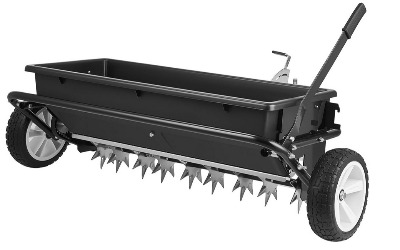
Product Overview
The VEVOR is the entry point into combo machines. The 32-inch width is smaller than the other options, making it more maneuverable but covering ground slower. The price is noticeably lower, appealing to people just starting their lawn journey or working with smaller properties.
This machine keeps things simple. You get spike aeration and broadcast spreading in one package. Nothing fancy, just basic functionality executed well.
Design and Build Quality
The frame is steel with a powder-coat finish. The overall construction is simpler than the larger units, with fewer components. This means less can go wrong, which is actually a good thing for someone new to this type of equipment.
The 32-inch width is manageable in tight spaces. The machine is lighter than the larger options, which means it puts less wear on your tractor and is easier to move around if you’re not towing it.
The hopper capacity is about 100 pounds, same as some larger units despite the smaller width. That’s actually decent.
Key Features Explained
The spreading mechanism is straightforward broadcast design. You control the flow with a simple lever. The tines are your basic spike style that punches holes in the soil. Nothing complicated, but it all works.
The universal hitch fits standard equipment. The tire size is 10 inches, which is reasonable for lawn use.
Best Use Cases
This is your machine if you have a smaller property, under a quarter acre. It’s perfect for someone new to lawn equipment who wants to try out aeration and seeding without a huge investment. It’s also great if you have tight spaces and narrow gates, because the 32-inch width gives you access.
It works well for apartment dwellers or people with modest home yards who want to upgrade their lawn game without going crazy expensive.
Real-Life Usage Insights
Users report that this machine does exactly what you’d expect from an entry-level option. It aerates, it spreads, and it doesn’t cost much money. The spreading is consistent. The aeration works fine in normal soil conditions. The machine is reliable for home use.
People generally don’t expect professional results, and they’re not disappointed because that’s not what they’re buying.
Honest Pros and Cons
The big advantages are price and maneuverability. You can fit this through smaller gates. The lower cost makes it accessible. The basic design means fewer parts to maintain. It works fine for its intended use.
The limitations are real though. The 32-inch width means more passes to cover the same ground. It takes longer to complete projects. The hopper capacity, while reasonable, gets emptied faster than larger machines because you’re making more passes. If your soil is very hard or compacted, the lighter machine might not penetrate as deeply.
Performance and Durability
For home use on normal soil, this machine performs fine. The tines work adequately. The spreader works reliably. The frame is sturdy enough for the lighter duty.
Durability is decent for a lower-cost option. It won’t last as long as heavier machines under heavy use, but for normal home use, it should run for several seasons without major issues.
Ease of Use
Setup is simple, maybe 30 minutes. Operation is straightforward. The controls are intuitive. Maintenance is basic.
Value for Money
For the price, you get genuine value. It does the job for small properties. If you’re going to work a quarter-acre or less, this is a smart choice that keeps your investment low while giving you real functionality.
Comparing the Options: Side-by-Side Breakdown
Now that we’ve looked at each machine individually, let’s think about them relative to each other because that’s how you actually make a decision.
Size and Ground Coverage
The 40-inch combos (Brinly and Suchtale) represent the sweet spot for most residential properties. They’re wide enough to cover ground efficiently but narrow enough to fit through gates and maneuver around obstacles. The VEVOR at 32 inches is noticeably slower but fits tight spaces. The Agri-Fab at 48 inches covers the most ground per pass but is harder to maneuver.
If you have property between a quarter and one acre, go with the 40-inch options. Less than a quarter acre, the VEVOR makes sense. More than an acre, start looking at the Agri-Fab or considering multiple passes with the 40-inch machines.
Function and Specialty
The Brinly and Suchtale both do aeration and spreading in one pass. The main difference is that Suchtale’s spike seeder approach favors grass establishment while Brinly’s approach is more flexible for various materials. The Agri-Fab does only aeration but does it better than any spike aeration option. The VEVOR does both functions but with less sophistication.
If your primary goal is grass establishment, the Suchtale’s spike seeder makes sense. If you’re spreading various materials, the Brinly is more flexible. If you want the most effective aeration, the Agri-Fab is the way to go.
Price and Budget
The VEVOR is the cheapest option, making it accessible for casual lawn care. The Brinly represents middle-ground pricing. The Suchtale costs a bit more than Brinly. The Agri-Fab is the most expensive because it’s specialized equipment doing one job extremely well.
Budget obviously matters, but don’t let it be the only factor. A slightly more expensive machine that does what you need is better than a cheap machine that frustrates you.
Build Quality and Durability
All of these machines are built to last at least several seasons with normal use. The Agri-Fab has the reputation for longest lifespan. The Brinly is solid and reliable. The Suchtale’s material mix actually helps with rust resistance. The VEVOR is adequate for its price range.
Ease of Use and Maintenance
All of them are relatively straightforward to operate. The Agri-Fab is probably the simplest. The VEVOR requires the least maintenance because it has fewer components. The Brinly and Suchtale are comparable in complexity and ease of use.
The Buying Guide: How to Choose the Right One
Let’s get practical. How do you actually decide which machine is right for your situation?
Step One: Assess Your Property Size
Measure your lawn or at least estimate it. Quarter acre or less? The VEVOR works fine. Between a quarter and one acre? The 40-inch combos are ideal. Over an acre? Consider the Agri-Fab or be ready to make multiple passes with a smaller machine.
Step Two: Identify Your Primary Goal
Are you mainly trying to aerate compacted soil? The Agri-Fab is the answer. Are you trying to overseed and establish new grass? The Suchtale works great. Do you want flexibility to spread various materials? The Brinly is your best bet. Just starting out and wanting to try it all without spending too much? The VEVOR.
Step Three: Check Your Equipment Compatibility
All of these have universal hitches, but make sure your tractor or ATV can actually tow them safely. Check your owner’s manual for towing capacity. These machines aren’t light, and you don’t want to overload your equipment.
Step Four: Think About Soil Conditions
Heavy clay or seriously compacted soil? You’ll want either plug aeration (Agri-Fab) or the weight tray option (Brinly). Normal soil conditions? All of these work fine.
Step Five: Consider Your Time and Effort
Are you willing to make multiple passes with a smaller machine? That’s more work but costs less. Do you want to cover everything in one pass? That requires a larger machine. How much setup and maintenance are you willing to do? Simpler machines are easier but might take longer to complete projects.
Step Six: Look at Long-Term Plans
Is this a one-time project or are you planning to do this regularly? If it’s a one-time fix, renting might make more sense. If you’re planning to use it regularly, buying is the right move.
Who Should Buy These Products
Let’s be direct about what type of person each machine is right for.
The Brinly 40-Inch Combo is perfect for:
- Homeowners with a quarter to one acre lawn
- People who want flexibility to spread different materials
- Anyone with a reasonable budget who wants solid functionality
- People who appreciate simplicity and reliability
- Those dealing with moderately compacted soil
The Suchtale 40-Inch Combo works best for:
- People focused on grass establishment and overseeding
- Homeowners with a quarter to one acre lawn
- Those wanting more advanced control features
- People who prioritize seed placement over pure broadcasting
- Anyone willing to spend a bit more for specialized functionality
The Agri-Fab 48-Inch Plug Aerator suits:
- People with serious compaction problems
- Homeowners wanting the most effective aeration available
- Those with one to two acre properties
- People bringing neglected lawns back to life
- Anyone who doesn’t need spreading functionality
The VEVOR 32-Inch Combo is right for:
- Budget-conscious buyers just starting their lawn journey
- People with properties smaller than a quarter acre
- Homeowners with tight spaces and narrow gates
- Those wanting to try lawn equipment before investing more
- Casual lawn caretakers doing occasional maintenance
Common Mistakes to Avoid
People make predictable mistakes when choosing and using these machines. Learning from them saves you frustration and money.
Mistake One: Buying Too Much Machine
A lot of people buy a huge machine for a small property because they think bigger is always better. Then they struggle to maneuver it and spend more than they needed to. Right-size your machine to your property. The VEVOR and 40-inch combos cover most residential needs.
Mistake Two: Not Checking Soil Conditions First
If you have seriously compacted soil and buy a spike aerator, you might be disappointed by the results. Test your soil compaction first. If it’s really bad, save up for plug aeration. If it’s moderate, spike aeration works fine.
Mistake Three: Skipping Equipment Maintenance
Clean your spreader hopper after use. Don’t let material sit in it for weeks. Rinse the whole machine off periodically. Store it covered. These simple steps extend the life of your equipment significantly.
Mistake Four: Using Wrong Materials
Don’t try to spread heavy gravel or rocks with these machines. Don’t overfill hoppers and cause jamming. Use materials the machine is designed for. Seeds, fertilizer, lime, and similar products work well. Everything else is asking for trouble.
Mistake Five: Ignoring Seasonal Timing
Aeration works best at specific times. Spring or fall for cool-season grasses. Late spring or early summer for warm-season grasses. Doing it at the wrong time still aerates, but you won’t see the benefits you’re expecting.
Mistake Six: Not Adjusting for Soil Type
If your soil is hard, use the weight tray or get plug aeration. If your soil is already loose, you might not need heavy equipment. Match your approach to your actual conditions, not some generic idea of what your lawn needs.
Mistake Seven: Expecting Instant Results
Aeration doesn’t instantly fix a lawn. It starts a process. You’ll see improvements over weeks and months, not immediately. Be patient and give the lawn time to respond.
Deep Dive: Aeration Methods Explained
Understanding the difference between spike and plug aeration really matters because it affects which machine you choose.
Spike aeration pokes holes in the soil. The spikes push down, the ground moves around the spike, the spike comes out, and you’ve got a hole. The problem is that all that movement compresses soil around the hole. It’s like pushing a thumbtack into clay. You get a hole, but the surrounding area gets packed.
Plug aeration removes cores of soil. Think of it like a golf course hole cutter. It pulls actual soil out, leaving a cavity. This relieves compaction more effectively because there’s actual space created. Plug aeration is more effective but also more aggressive.
For most home lawns with moderate compaction, spike aeration with a weight tray gives decent results. For serious compaction or clay-heavy soil, plug aeration is worth the extra investment.
Spreading Strategies and Best Practices
Okay, so you’ve got your combo machine or your aerator. How do you actually use it effectively?
For aeration, make passes in different directions if possible. Aerate north-south, then east-west. This gives more even coverage and hits any missed spots. Go slowly enough that the machine is actually doing its job, but fast enough that you’re making progress.
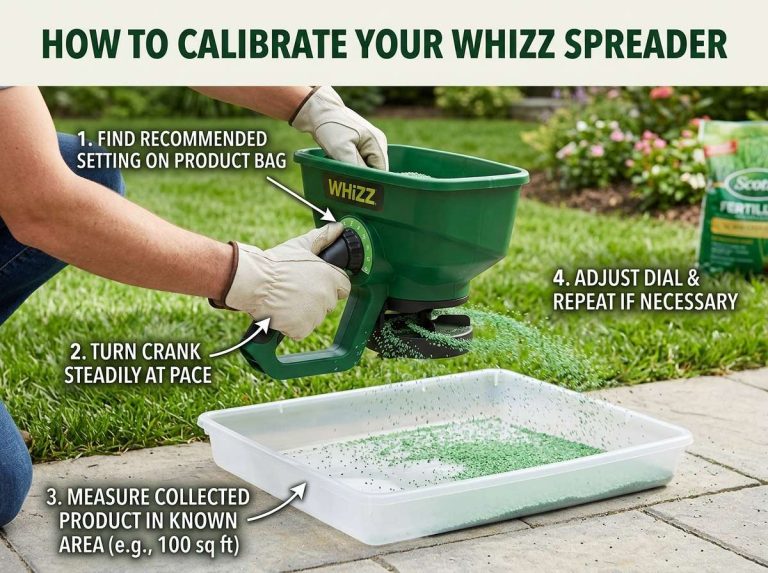
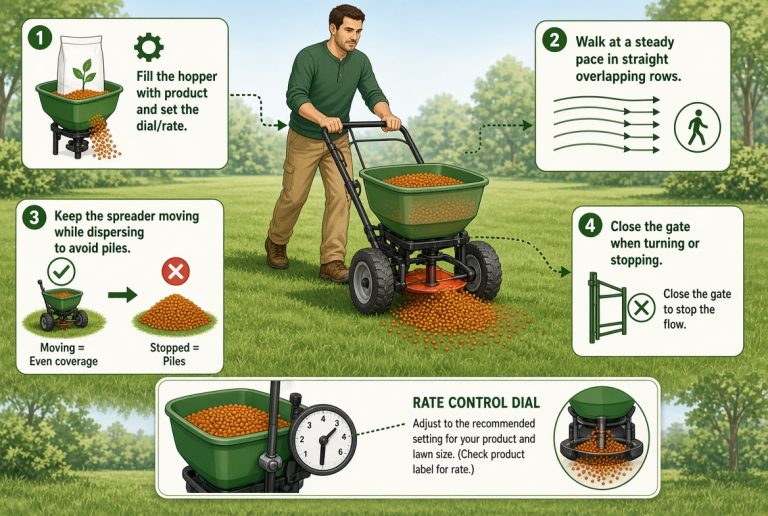
For spreading, match your application rate to your product. Heavy fertilizer spreads differently than light grass seed. The adjustable speed on some models helps with this. Do your first pass lightly and increase if you’re not covering adequately.
For best results with a combo machine, do your aeration passes, then let them sit for a day, then spread. This gives the aeration time to settle and creates a better seedbed.
Maintenance and Care for Longevity
These machines aren’t maintenance-free, but they’re not high-maintenance either.
After every use, hose off the machine to remove soil and debris. Let it dry before storing. Check the hitch connections before each use. Look at the tines occasionally and replace them if they’re significantly worn. The hopper should never sit with material in it for extended periods.
Before storing for the off-season, clean everything thoroughly, let it dry completely, and store it covered. A simple tarp over a corner of your garage is sufficient.
Grease points should be lubricated according to the manual. This is usually once per season at minimum, more if you’re using the machine frequently.
Parts availability is good for Brinly and Agri-Fab. Replacement tines, hoses, and general wear items are available online and at farm supply stores. Suchtale and VEVOR parts are available through their online retailers, though sometimes with longer shipping times.
Seasonal Use Guide
Different seasons call for different approaches.
Spring is prime time for aeration and overseeding for cool-season grass lovers. This is when you want that spike seeder (Suchtale) working hard. Aerating in spring when soil is moist helps your tines penetrate better.
Summer is for maintenance. Light aeration if soil is compacted, fertilizer spreads for maintenance feeding. The plug aerator (Agri-Fab) is less ideal in summer because you don’t want to tear up established grass.
Fall is another prime aeration season for cool-season grasses. Aerate, then overseed. The machines get a lot of use in fall.
Winter, your equipment sits idle. This is your maintenance time. Clean, inspect, lubricate, store.
Real-World Scenarios and What Machine Works
Let’s imagine some specific situations and figure out what makes sense.
Scenario One: New homeowner with a quarter-acre lawn that looks neglected. Budget is modest. You want to fix it up and maintain it going forward.
Answer: Start with the VEVOR for affordability, or jump to the Brinly if you can stretch the budget slightly. Both do aeration and spreading in one pass. The VEVOR works fine for a quarter acre if you don’t mind multiple passes. The Brinly covers ground faster.
Scenario Two: Suburban homeowner with three-quarters of an acre, heavy clay soil, and a serious compaction problem.
Answer: If budget allows, the Agri-Fab plug aerator is your best bet. Plug aeration handles clay better than spiking. If you need a combo, get the Brinly with weight tray. The weight helps penetrate clay.
Scenario Three: Apartment dweller with a small yard, limited storage, tight budget.
Answer: Rent instead of buying. The VEVOR is the smallest option, but honestly, for very small properties, rental is smarter than owning.
Scenario Four: Serious lawn enthusiast with one acre and a vision of a beautiful established lawn.
Answer: Buy the Suchtale for focused grass establishment, plus invest in a quality fertilizer spreader separately. Or buy the Brinly for flexibility. If aeration is your main goal, the Agri-Fab.
The Final Verdict
Here’s the honest truth: all of these machines work. They do what they’re designed to do. The question is which one matches your specific situation.
If you have one simple choice to make and want the most versatile option that works for most residential properties, pick the Brinly 40-inch combo. It does both jobs adequately, it’s priced reasonably, and it handles a wide range of materials and conditions. It’s the machine that creates the fewest regrets.
If you’re really focused on grass establishment and seeding, the Suchtale makes sense. The spike seeder mechanism gives you an advantage in placing seed into prepared soil.
If you have serious compaction issues and aeration is your main goal, the Agri-Fab is worth every penny. Plug aeration produces noticeably better results than spiking.
If you’re budget-conscious, new to this type of equipment, or working with a small property, the VEVOR gets the job done without breaking the bank.
The most important thing is actually using whatever you choose. The best machine in the world sitting in your garage unused doesn’t help your lawn. Pick something, commit to using it, and you’ll see results.
Your grass will thank you. That bare patch will fill in. The thin areas will thicken up. Your overall lawn health will improve noticeably. It takes effort, but these machines make that effort manageable.
Now it’s time to stop reading about lawn care and actually start doing it. Get outside, assess your property, figure out what your grass really needs, and pick the machine that matches that need. Your lawn is waiting for you to help it become what it could be.

Hi, I’m Mary, the founder of GardenCure.com. I’m passionate about creating healthy, beautiful gardens and well-kept lawns. I share practical experience and trusted advice on garden and lawn gear that truly works. With the support of my dedicated research team, our writers produce honest, in-depth reviews using reliable, authentic sources—helping you choose the right tools with confidence for your outdoor space.