
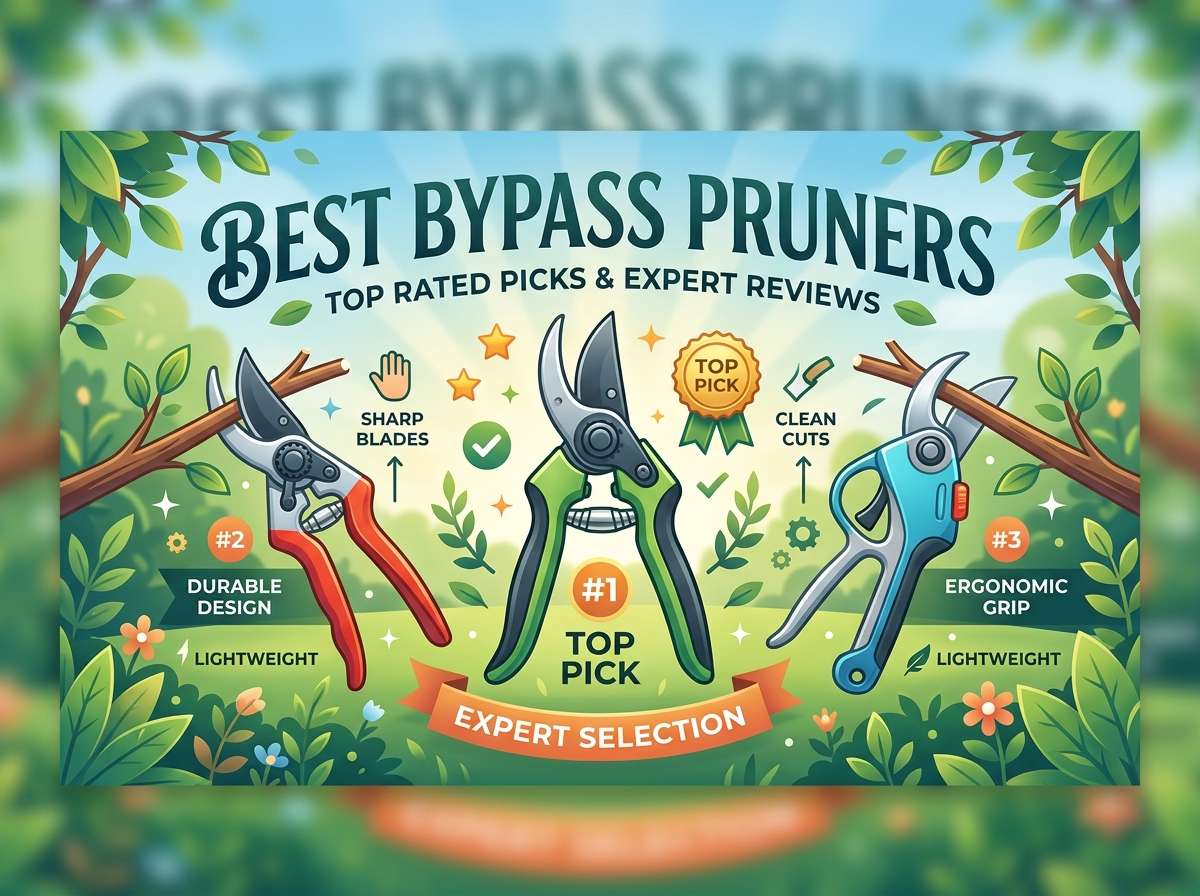
5 Best Bypass Pruners In 2026
If you spend any time at all in your yard, you already know that a dull, cheap pair of shears can turn a fun afternoon of trimming into a sore-handed chore. Bypass pruners are the workhorse tool of any garden shed, and the right pair makes clean cuts that keep your plants healthy while saving your wrist from strain. The wrong pair, on the other hand, crushes stems, jams on thick branches, and leaves you with blisters.
In this article
In this roundup, we’re taking a close look at five popular bypass pruners that keep showing up on best-seller lists: the Haus & Garten ClassicPRO, the Corona BP 3180D, the Kimura 8″ Pro, the Kynup Heavy Duty Pruning Shears, and the gonicc GPPS-1002. Each one has its own strengths, and none of them is perfect for every single gardener, so we’ll walk through what each one does well, where it falls short, and who it actually fits best.
By the end, you’ll have a clear picture of which pruner matches your hands, your garden, and your budget, plus a simple buying guide, common mistakes to steer clear of, and a final verdict to help you decide fast.
What Are Bypass Pruners and Why They Matter
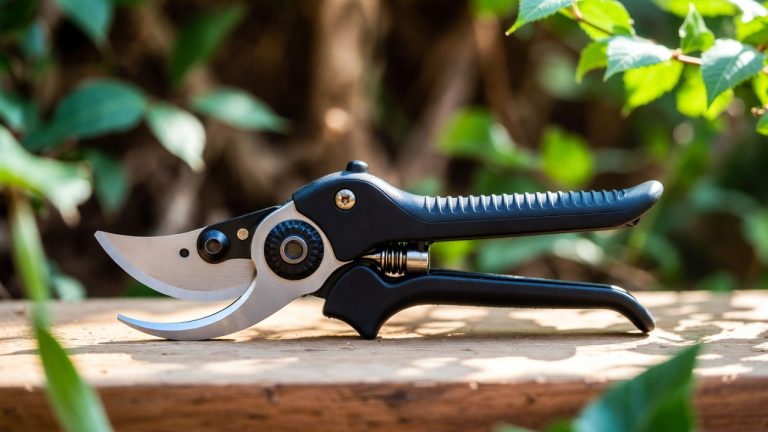
Bypass pruners work like a pair of scissors. One curved blade slides past a second blade (called the hook) to make a clean, sharp cut through live stems, branches, and green wood. This scissor-style action is different from anvil pruners, which use a single blade that closes down onto a flat surface, kind of like a knife hitting a cutting board. Anvil pruners tend to crush softer stems, so most gardeners reach for bypass pruners when working with living plants, flowers, roses, and fruit trees.
A good bypass pruner gives you a close, precise cut that heals quickly and doesn’t leave a ragged wound on the plant. That matters a lot if you care about plant health, because a torn or crushed stem is more likely to attract disease or pests. Sharp bypass blades reduce that risk and make every cut smoother and faster.
Cutting capacity is another term you’ll see a lot in this guide. It refers to the thickest branch diameter a pruner can handle without straining the mechanism. Most home-garden bypass pruners top out around 3/4 inch to 1 inch. Anything thicker than that usually calls for loppers or a small pruning saw instead.
Quick Comparison Table
| Product | Cut Capacity | Blade Material | Handle Type | Best For |
|---|---|---|---|---|
| Haus & Garten ClassicPRO 8.5″ | Up to 1″ | Titanium-coated high-carbon steel | Aluminum, cushioned grip | Seniors, arthritis-friendly use, general garden work |
| Corona BP 3180D | 1″ | Forged high-carbon steel | Steel with non-slip grip | Larger hands, heavy daily use, orchard work |
| Kimura 8″ Pro | Up to 1″ (25mm) | SK5 Japanese steel | Aluminum with PVC coating | Precision cuts, roses, hedges, everyday pruning |
| Kynup Pruning Shears | Up to 1″ | SK5 steel | Aviation-grade aluminum | Left- or right-handed use, budget-conscious buyers |
| gonicc GPPS-1002 | Up to 3/4″ | SK-5 steel (polished) | Aluminum + PVC | Light to medium trimming, deadheading, bonsai care |
Now let’s break each one down properly.
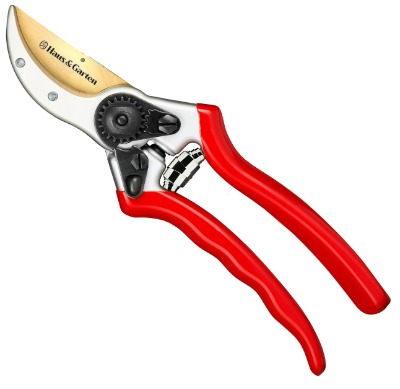
1. Haus & Garten ClassicPRO 8.5″ Titanium Bypass Pruning Shears
Product Description
The ClassicPRO from Haus & Garten is an 8.5-inch bypass pruner built around a high-carbon steel blade with a titanium coating. The idea behind the coating is simple: it cuts down on friction while the blade slides through stems, and it adds a layer of protection against rust. The handles are made from anodized aluminum, wrapped in cushioned, non-slip grips that are designed to reduce hand fatigue during longer sessions in the garden.
This model markets itself toward everyday gardeners rather than commercial landscapers, and the design backs that up. It’s lightweight, it’s easy to open and close, and the grip is shaped to sit comfortably even in smaller hands.
Best Use Cases
This pruner shines on everyday tasks like deadheading flowers, trimming roses, shaping small shrubs, and cutting stems up to about an inch thick. It’s a solid all-purpose pick for container gardens, flower beds, and light branch work around the yard.
Key Features Explained Simply
- Titanium-coated blade: Reduces friction so the blade glides through plant material instead of dragging or sticking.
- Anodized aluminum handles: Light in the hand, which helps if you’re pruning for more than a few minutes at a time.
- Shock-absorbing pads: Built into the handle to soften the impact each time the blades close, which takes some pressure off your joints.
- Adjustable design: The pivot can be tightened or loosened depending on how firm you want the cutting action to feel.
- Lifetime warranty: Backed by the maker in case the blade or handle fails under normal use.
Real-Life Usage Insight
For someone tending a small flower garden or a patio full of potted plants, this pruner feels right at home. The lighter weight means you can snip away at spent blooms for twenty minutes without your hand cramping up. Gardeners with arthritis or smaller hands tend to appreciate the cushioned grip and lower squeeze effort compared to bulkier forged-steel models.
Pros and Cons
Pros:
- Comfortable for smaller and weaker hands
- Rust-resistant coating helps in humid climates
- Lightweight, so it doesn’t tire your wrist quickly
- Backed by a lifetime warranty
Cons:
- The aluminum handle isn’t quite as tough as forged steel under heavy daily abuse
- Titanium coating can wear down faster than solid steel over years of use
- Not the best choice for thick, woody branches close to the 1-inch limit
Performance Discussion
On soft green stems and small branches, the blade slices cleanly with very little effort. Push it toward the top of its 1-inch capacity on woodier material, and you’ll notice you need a firmer squeeze, which is normal for a pruner in this weight class. It’s not built to compete with forged commercial tools, but for general garden maintenance, it holds its edge reasonably well between sharpenings.
Ease of Use
This is one of the easier pruners in the group to operate one-handed. The spring action pops the blades back open smoothly after each cut, and the safety lock is simple to engage with a thumb push.
Value for Money
Given the cushioned grip, rust protection, and lifetime warranty, this pruner sits in a fair price range for a mid-tier tool. It won’t outlast a premium forged pruner used daily on a farm, but for home use, it delivers solid value.
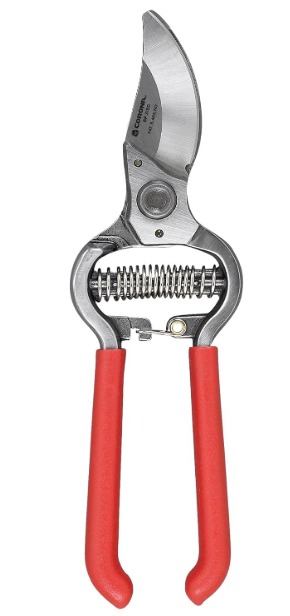
2. Corona BP 3180D Forged Classic Bypass Pruner
Product Description
Corona has been making garden tools for a long time, and the BP 3180D is one of their most recognizable pruners. It’s built with a forged steel body, which means the blade and handle are shaped from compressed steel rather than stamped from a flat sheet. That forging process packs the steel molecules tighter, giving the tool extra strength and a blade that holds its edge longer between sharpenings. The pruner offers a 1-inch cutting capacity and measures about 8-3/4 inches long, with a bright red finish that’s easy to spot in the grass.
Best Use Cases
This one is built for people who prune a lot, from a home orchard to a large rose garden to regular yard maintenance across the growing season. The forged construction makes it a strong pick for anyone who wants a tool that can handle daily use without wearing out fast.
Key Features Explained Simply
- MAXFORGED steel blade: A dense, hard-wearing steel that resists chipping and keeps its sharp edge longer than typical stamped blades.
- Slant-ground hook and blade: Hand-matched to each other for a tight, precise cut every time.
- Self-cleaning sap groove: A small channel along the blade that lets sap run off instead of building up and gumming the mechanism.
- Wire-cutting notch: A small built-in notch near the pivot for snipping garden wire or twine without dulling the main blade.
- Replaceable blade: When the cutting edge finally wears out, you can swap in a new blade instead of buying a whole new pruner.
Real-Life Usage Insight
Anyone who has trimmed fifty rose bushes in an afternoon knows how much a tool’s weight and grip matter by the end of the job. The BP 3180D leans a bit heavier than the aluminum-handled options in this list, and that weight actually helps power through denser wood near its 1-inch limit. Folks with larger hands tend to find the grip especially comfortable, since the handle spread is a touch wider than some competitors.
Pros and Cons
Pros:
- Forged steel construction built to last for years
- Replaceable blade extends the life of the whole tool
- Sap groove keeps the mechanism from gumming up
- Comfortable non-slip grip for extended sessions
Cons:
- Heavier than aluminum-handled competitors, which some smaller hands may notice
- No titanium or PTFE coating, so it needs occasional oiling to prevent rust
- Handle spacing runs a little large for very small hands
Performance Discussion
This pruner performs best on woody stems and thicker branches, where the forged steel really earns its keep. The bypass action stays smooth even after repeated heavy use, and the blade keeps a working edge through a full pruning season before it needs a touch-up. It’s a dependable pick if you want a tool that feels like it’s built for the long haul rather than light occasional use.
Ease of Use
The pivot bolt is self-aligning, so the blades stay in sync cut after cut without loosening up the way cheaper pruners sometimes do. The safety catch is straightforward, though the overall grip size may feel a touch bulky if your hands run small.
Value for Money
Considering the forged steel build, replaceable blade, and reputation for durability, this pruner offers strong long-term value. You’re paying a bit more upfront for a tool that’s designed to be repaired and sharpened rather than replaced.
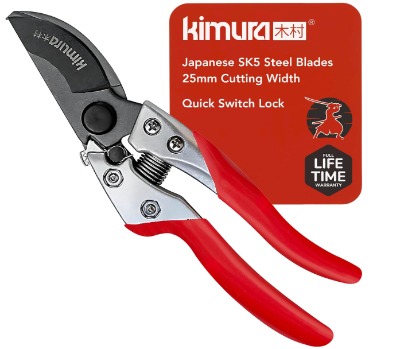
3. Kimura 8″ Pro Bypass Pruning Shears
Product Description
The Kimura 8″ Pro brings Japanese SK5 steel into the mix. SK5 is a high-carbon steel often used in cutting tools because it takes a very sharp edge and holds it well. Kimura’s blades are heat-treated to around 60 HRC, a hardness rating that puts them on the tougher end for garden shears, which explains why this pruner needs sharpening less often than softer steel options. The handles are lightweight aluminum wrapped in a non-slip PVC coating, and the blade carries a PTFE coating to help it glide through plant material without sap sticking to it.
Best Use Cases
This is a great fit for gardeners who care about precision, from shaping roses to trimming hedges to working on bonsai and other detailed pruning jobs where a clean, exact cut matters more than raw cutting power.
Key Features Explained Simply
- SK5 Japanese steel, 60 HRC: A hard, sharp steel that keeps its edge through repeated use.
- PTFE-coated blade: Cuts down on sap buildup and rust, so cleanup is easier.
- Non-slip PVC handles: Aluminum core wrapped in a soft, grippy coating that’s easy on the hands, including for people managing arthritis or carpal tunnel discomfort.
- Ambidextrous design: Works comfortably for both right- and left-handed gardeners.
- Safety lock: Opens with a light squeeze and locks shut with a simple thumb push.
Real-Life Usage Insight
For detailed pruning tasks like shaping a rose bush or trimming a hedge into a tidy line, the sharpness of the SK5 blade really stands out. The cuts come out clean, without the slight crushing you sometimes get from softer blades. Gardeners who prune often throughout the season tend to notice they’re not reaching for a sharpening stone nearly as often as with cheaper steel.
Pros and Cons
Pros:
- Very sharp, long-lasting SK5 steel edge
- Comfortable grip that suits smaller or sensitive hands
- Works equally well for left- and right-handed users
- PTFE coating keeps sap and rust from building up
Cons:
- Aluminum handles aren’t quite as rugged as forged steel for heavy daily commercial use
- Premium steel comes with a slightly higher price tag than basic models
- Best suited to branches at or under its 1-inch capacity rather than pushing past it
Performance Discussion
Where this pruner really performs is in the quality of the cut itself. The sharp SK5 edge slices through stems with very little resistance, which reduces plant stress and helps wounds heal faster. On branches near the top of its capacity, it still manages clean cuts, though you’ll feel a bit more resistance than on thinner material, which is normal for any bypass pruner in this size class.
Ease of Use
The light squeeze needed to open the safety lock and the smooth spring action make this an easy pruner to use for long stretches. It’s a comfortable pick for anyone who prunes often and wants to avoid hand fatigue.
Value for Money
Given the quality of the SK5 steel and the comfort of the handle design, this pruner delivers strong value for gardeners who prioritize a sharp, precise cut over raw toughness. It’s a smart pick if you tend delicate plants as much as sturdier shrubs.
4. Kynup Pruning Shears, Heavy Duty with SK5 Japanese Steel
Product Description
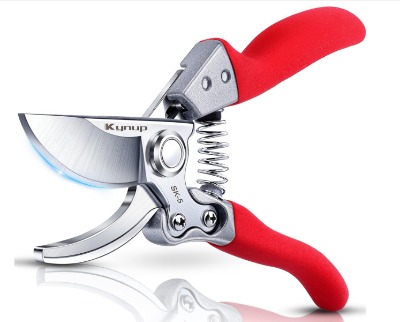
Kynup’s pruning shears also use SK5 steel for the blade, paired with aviation-grade aluminum handles designed to keep the overall weight down. The handle shape is symmetrical, which means it fits comfortably for left-handed and right-handed gardeners alike, and the safety lock is placed so it can be reached easily from either side. Kynup markets this pruner toward everyday gardeners who want a heavy-duty feel without paying a premium price.
Best Use Cases
This pruner works well for general yard maintenance, trimming shrubs, cutting back perennials, and handling stems up to an inch thick. It’s a practical choice for anyone who wants dependable performance without spending a lot.
Key Features Explained Simply
- SK5 high-carbon steel blade: Stays sharp longer than standard steel and resists dulling from regular use.
- Non-stick coating: Helps prevent rust and stops sticky plant sap from gumming up the blades.
- Ergonomic non-slip handle: A built-in spring cushions the closing motion, which the maker says can reduce hand strain during long sessions.
- Symmetrical, ambidextrous grip: Works the same in your left hand or your right hand.
- Secure safety lock: Easy to engage and release, even for gardeners managing weaker grip strength.
Real-Life Usage Insight
For left-handed gardeners especially, this pruner solves a common annoyance. A lot of pruners are subtly built with right-handed users in mind, and switching to a left hand can make the blade angle feel awkward. Kynup’s symmetrical design avoids that problem entirely, which makes it a comfortable pick for households where more than one person shares the same tool.
Pros and Cons
Pros:
- Comfortable for both left- and right-handed gardeners
- SK5 steel blade holds an edge well for the price point
- Lightweight aluminum handle reduces hand fatigue
- Budget-friendly compared to premium forged options
Cons:
- Handle coating and finish don’t feel quite as refined as pricier competitors
- Not intended for branches that push past the 1-inch capacity
- Long-term durability under heavy commercial use hasn’t been proven the way older, established brands have
Performance Discussion
On everyday garden material, the blade cuts cleanly and the spring-loaded return keeps up a good pace if you’re working through a lot of stems in one sitting. It performs comparably to other SK5-steel pruners in this list, though the overall fit and finish feels a step below the Kimura and Corona in terms of long-term polish.
Ease of Use
The lightweight build and ambidextrous handle make this one of the more approachable pruners here, especially for beginners or gardeners who haven’t settled on a dominant-hand tool preference yet.
Value for Money
For the price, this pruner packs in a lot of the same core features you’d find in pricier SK5-steel models, which makes it a strong budget pick, especially if left-hand compatibility matters to you.
5. gonicc 8″ Professional Sharp Bypass Pruning Shears (GPPS-1002)
Product Description
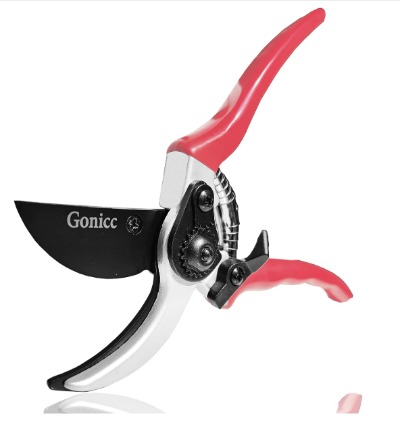
The gonicc GPPS-1002 is a drop-forged bypass pruner with an SK-5 steel blade finished using what the maker calls Ultra-fine Polishing Technology. The handles combine aluminum with a PVC coating for grip, and the whole tool is built with a sap groove to keep the mechanism from gumming up during long pruning sessions. This model is rated for branches up to about 3/4 inch in diameter, which is slightly lower than the 1-inch capacity found on most of the other pruners in this roundup.
Best Use Cases
This pruner fits best with lighter pruning jobs: deadheading flowers, shaping smaller shrubs, trimming annuals and vegetables, and detail work on bonsai trees. It’s not the pick you want for thicker woody branches, but for everyday light-duty trimming, it gets the job done.
Key Features Explained Simply
- SK-5 steel blade with polishing finish: Delivers a smooth, sharp edge suited for detailed cuts.
- Drop-forged body: Adds strength to the handle and blade assembly compared to simpler stamped designs.
- Sap groove: Channels sticky plant sap away from the blade so it doesn’t stick mid-cut.
- Non-slip handle: Designed to stay lightweight and comfortable through repeated use.
- Lifetime warranty: Covers the tool against manufacturing defects.
Real-Life Usage Insight
For deadheading a flower bed or trimming small tomato plants, this pruner does the job without much fuss. It’s light in the hand and easy to carry around during a quick round of light maintenance. Where it starts to struggle is on branches approaching the top of its capacity or slightly beyond, where some users have found the cut takes more effort than expected on woodier stems.
Pros and Cons
Pros:
- Light and easy to handle for extended light-duty sessions
- Sap groove keeps the blade cleaner during use
- Reasonably priced compared to premium SK5-steel competitors
- Lifetime warranty adds peace of mind
Cons:
- Lower cutting capacity than most other pruners in this list, around 3/4 inch versus 1 inch
- Some users report it struggles once branches get close to or past that 3/4-inch mark
- Blade hardness rating is a bit softer than the Kimura’s, so it may need sharpening a touch more often
Performance Discussion
On soft stems and small branches, the blade cuts smoothly and cleanly, and the sap groove noticeably helps keep things from getting sticky mid-job. Push it toward thicker material, though, and the smaller cutting capacity becomes the limiting factor. This is a pruner best suited to detail work rather than heavier branch cutting.
Ease of Use
Lightweight and simple to operate, this pruner is comfortable for quick trimming sessions, though the smaller cutting capacity means you’ll want a different tool on hand for anything thicker.
Value for Money
At its price point, this pruner offers a fair deal for light gardening tasks, though gardeners who regularly deal with thicker stems may find better value in one of the 1-inch capacity options above.
Side-by-Side Comparison Insights
Looking at all five pruners together, a few patterns stand out.
On raw cutting capacity, four of the five tools (Haus & Garten, Corona, Kimura, and Kynup) handle branches up to 1 inch thick, while the gonicc GPPS-1002 tops out closer to 3/4 inch. If you often deal with woodier growth, that half-inch difference actually matters quite a bit.
On blade material, the Corona leans on forged high-carbon steel built for toughness, while the Kimura and Kynup both use SK5 Japanese steel known for holding a sharp edge. The Haus & Garten uses a titanium coating over high-carbon steel, aiming for a balance of sharpness and rust resistance. The gonicc also uses SK5 steel, but at a slightly softer hardness rating than the Kimura.
On comfort, the Haus & Garten, Kimura, and Kynup all lean toward lighter aluminum handles designed with smaller or weaker hands in mind. The Corona, with its steel build, runs heavier and fits larger hands more naturally. If hand fatigue or arthritis is a concern, the lighter three tend to be the more forgiving picks.
On durability for heavy use, the Corona stands out thanks to its forged construction and replaceable blade, which makes it a strong option for anyone pruning daily across a large property. The others are better suited to regular home garden maintenance rather than commercial-level daily wear.
Buying Guide: What to Look for in a Bypass Pruner
Cutting Capacity
Check the maximum branch diameter listed for the tool and compare it honestly against what you actually prune. If you regularly cut branches close to an inch thick, don’t settle for a pruner rated at 3/4 inch, since you’ll end up straining the mechanism and getting a rougher cut.
Blade Material and Hardness
High-carbon steel, forged steel, and SK5 steel all show up often in bypass pruners, and each brings something different to the table. Forged steel tends to be tougher for heavy daily use, while SK5 steel usually holds a sharper edge for longer between sharpenings. A titanium or PTFE coating adds rust resistance and reduces friction, which is handy if you live somewhere humid or work in wet soil often.
Handle Material and Grip
Aluminum handles keep the tool light, which reduces hand fatigue over a long pruning session. Steel handles add weight but also add strength, which some gardeners prefer for heavier branches. A cushioned, non-slip coating on the grip makes a real difference if you have arthritis, carpal tunnel, or simply spend hours at a time in the garden.
Hand Size and Dominant Hand
Pruners aren’t one-size-fits-all. Some models run larger and suit bigger hands better, while others are built compact for smaller grips. If you’re left-handed, look specifically for an ambidextrous or symmetrical design, since a right-handed-biased blade angle can make cuts feel awkward and less precise.
Maintenance Features
A sap groove keeps sticky residue from building up mid-job, and a replaceable blade extends the life of the whole tool once the edge finally wears down. These small design details add up over months and years of regular use.
Safety Lock
Every pruner in this list includes a safety lock to keep the blades closed during storage or transport. Test how easy the lock is to engage and release with one hand, since a stiff or awkward lock becomes annoying fast if you’re using the tool daily.
Warranty
A lifetime warranty is a good sign that the manufacturer stands behind the build quality. It won’t guarantee perfection, but it does give you some recourse if the blade or pivot fails under normal use.
Who Should Buy These Pruners
Home gardeners with flower beds and small shrubs will likely be happiest with the Haus & Garten ClassicPRO or the gonicc GPPS-1002, since both are lightweight and suited to lighter, more frequent trimming.
Gardeners with arthritis, carpal tunnel, or smaller hands should look closely at the Haus & Garten ClassicPRO or the Kimura 8″ Pro, both of which are built with cushioned, non-slip grips and a lighter overall feel.
Left-handed gardeners will get the most comfortable fit from the Kynup, thanks to its symmetrical, ambidextrous handle design, though the Kimura also works well for both hands.
People with a larger property, an orchard, or daily pruning demands are better served by the Corona BP 3180D, since its forged steel construction and replaceable blade are built for sustained heavy use.
Gardeners who prioritize precision, like rose growers or bonsai hobbyists, should lean toward the Kimura 8″ Pro, since its sharp SK5 steel edge delivers cleaner, more exact cuts.
Budget-conscious buyers who still want a dependable SK5-steel blade will find the Kynup a solid middle ground between price and performance.
Common Mistakes to Avoid When Buying or Using Bypass Pruners
Ignoring cutting capacity. Buying a pruner rated for 3/4 inch and then trying to force it through 1-inch branches strains the mechanism, dulls the blade faster, and can even bend the tool.
Skipping regular cleaning. Sap and plant residue build up on the blade over time, which slows the cutting action and can encourage rust. A quick wipe after each session keeps the tool performing well for years.
Letting the blade go dull. A dull blade crushes stems instead of slicing them cleanly, which stresses the plant and slows healing. Sharpening the blade every so often, or as soon as you notice more resistance during cuts, keeps your pruning healthy for the plant.
Using the wrong tool for the job. Bypass pruners are meant for live, green wood. Trying to cut dead, dry branches with a bypass pruner can chip the blade, since anvil pruners are actually the better tool for that job.
Overlooking hand fit. A pruner that’s too big or too small for your hand will tire you out fast and lead to less precise cuts. Try to match the handle size and grip style to your own hand before committing to a purchase.
Forgetting to oil the pivot. Even coated blades benefit from an occasional drop of oil at the pivot point, which keeps the action smooth and prevents squeaking or stiffness over time.
Storing pruners unlocked. Leaving the blades open in a tool bag or drawer is a quick way to dull the edge or hurt yourself reaching in. Get in the habit of locking the blades shut after every use.
Final Verdict
All five of these bypass pruners get the basic job done, but they each carry a slightly different personality once you actually use them.
If comfort and light weight matter most to you, especially if you deal with hand fatigue or arthritis, the Haus & Garten ClassicPRO and the Kimura 8″ Pro are the two standout picks. The Kimura edges ahead if sharpness and precision are your top priority, thanks to its SK5 steel blade and ambidextrous design.
If you need a tool built to survive daily heavy use across a bigger property or an orchard, the Corona BP 3180D is the clear choice, thanks to its forged steel build and replaceable blade.
If you’re watching your budget but still want reliable SK5 steel performance, especially as a left-handed gardener, the Kynup Pruning Shears offer a smart, practical balance.
And if your pruning needs lean toward lighter, more delicate work like deadheading flowers or shaping bonsai, the gonicc GPPS-1002 handles that niche well, even with its smaller cutting capacity.
There’s no single “best” pruner that fits every gardener perfectly, but matching your hand size, your typical branch thickness, and how often you prune against this list should point you toward the right pick fast. Take care of whichever one you choose, keep the blade sharp and clean, and it’ll reward you with years of easy, healthy cuts in the garden.

Hi, I’m Mary, the founder of GardenCure.com. I’m passionate about creating healthy, beautiful gardens and well-kept lawns. I share practical experience and trusted advice on garden and lawn gear that truly works. With the support of my dedicated research team, our writers produce honest, in-depth reviews using reliable, authentic sources—helping you choose the right tools with confidence for your outdoor space.
One Comment