5 Best Herbicide to Kill Crabgrass In 2026
Crabgrass is one of those weeds that shows up out of nowhere and takes over your lawn before you even notice it. One week your yard looks clean, and the next week you spot those wide, pale green blades spreading out like a spider across your grass. If you have ever pulled crabgrass by hand only to see it come right back a few weeks later, you already know that hand-pulling is not a real fix.
In this article
This is where a good herbicide comes in. The right product can knock out crabgrass fast, stop it from coming back, and protect the rest of your lawn while doing it. But here is the catch: not every herbicide works the same way, and using the wrong one on the wrong grass type can actually damage your lawn instead of saving it.
In this roundup, I am going to walk you through five of the most talked-about crabgrass herbicides on the market right now. I will break down what each one does, how it works, who it is best for, and where it falls short. No hype, no fake claims, just a straight, honest look so you can pick the one that fits your yard and your situation.
Let’s get into it.
Why Crabgrass Is So Hard to Control
Before jumping into the reviews, it helps to know why crabgrass gives so many homeowners a headache. Crabgrass is an annual grassy weed, meaning it grows from seed every season, spreads fast in hot weather, and drops thousands of new seeds before it dies off. Those seeds sit in the soil and wait for the right warm, moist conditions to sprout again. That is why a lawn can look crabgrass-free one season and then get hit hard again later.
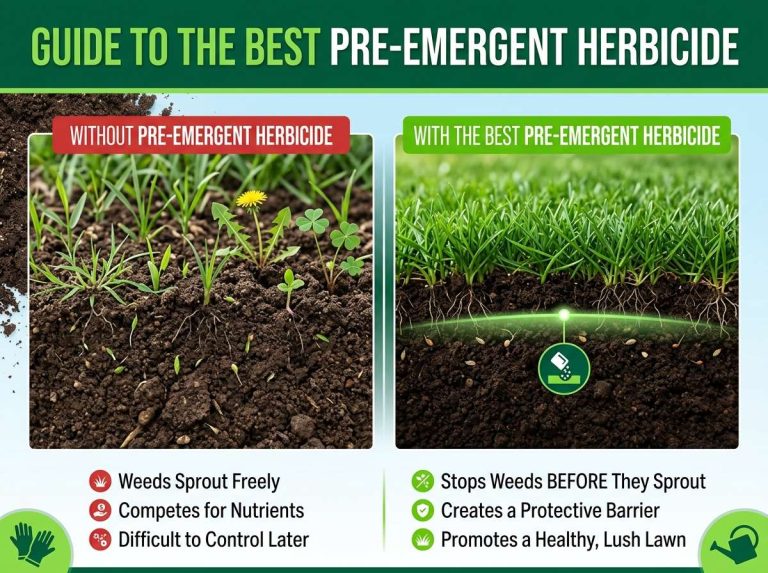
There are two main ways to fight it: pre-emergent control, which stops the seeds from germinating in the first place, and post-emergent control, which kills the plant after it has already sprouted. Most of the products in this list are post-emergent herbicides, meaning they are made to kill crabgrass that has already popped up in your lawn.
Knowing this difference matters a lot, because timing changes everything. Spray too early or too late, and you might waste money on a product that never gets a fair chance to work.
How I Judged These Products
To keep this review fair and useful, each herbicide was looked at based on a few key things:
- Active ingredient and how it works on crabgrass and other weeds
- Speed of results and how long the effects last
- Safety for lawn grass, since some herbicides can hurt certain turf types
- Ease of mixing and application, especially for beginners
- Value for money, meaning how much lawn area you actually get treated per bottle
- Real-world usage patterns based on how these products typically perform in home lawns
With that out of the way, let’s break down each product one by one.
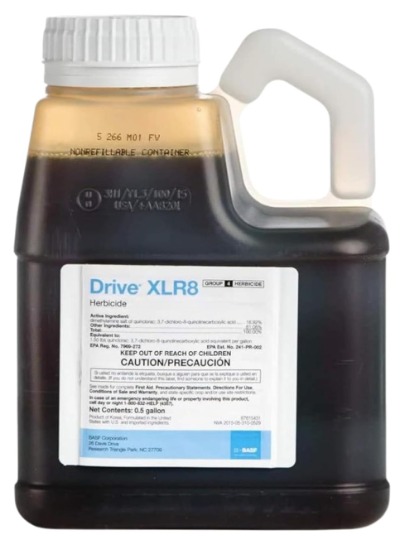
1. BASF Drive XLR8 Crabgrass Killer for Lawn & Turf (64 oz Concentrate)
Product Overview
BASF Drive XLR8 is one of the most well-known names when it comes to killing crabgrass in home lawns. The active ingredient is Quinclorac, a selective herbicide that targets grassy weeds like crabgrass along with several broadleaf weeds, while leaving most common lawn grasses unharmed when used correctly. This is a concentrate, so you mix it with water in a sprayer rather than using it straight out of the bottle.
The “XLR8” part of the name hints at speed. This formula is built with a surfactant system designed to help the herbicide get absorbed into the plant faster than older Quinclorac products, which can mean quicker visible results.
Best Use Cases
This product works best on established lawns with grass types like Kentucky bluegrass, tall fescue, perennial ryegrass, and some warm-season grasses like Bermuda and zoysia (always check the label for your exact grass type before spraying). It is built for post-emergent crabgrass that has already sprouted and is visible in the lawn, along with some other grassy and broadleaf weeds growing alongside it.
It is a solid pick for homeowners dealing with a moderate to heavy crabgrass problem who want a product with a track record and a residual effect that keeps working for weeks after the first application.
Key Features Explained Simply
- Active Ingredient: Quinclorac – this compound messes with the plant’s natural growth hormones, causing the crabgrass to twist, curl, and eventually die off over a period of days to weeks.
- 30-Day Residual – after you spray, the product keeps working in the soil for about a month, which helps catch new crabgrass sprouts during that window.
- Concentrate Formula – you dilute this with water, so one bottle stretches across a large area, which is great for bigger yards.
- Grassy and Broadleaf Control – along with crabgrass, it also handles certain broadleaf weeds like clover and dandelion, so you are not just buying a one-trick product.
Real-Life Usage Insight
People treating a lawn with scattered patches of crabgrass across the yard often see the weed start to yellow and curl within about a week, with fuller die-off taking two to three weeks depending on the size and maturity of the crabgrass. Bigger, more mature crabgrass clumps usually need a second treatment spaced a few weeks apart, since older plants are tougher to kill in one shot.
Mixing is simple once you know the ratio, but this is a concentrate, so accurate measuring really matters. Too little and it will not do much; too much and you risk stressing your lawn grass, especially in hot weather.
Pros
- Strong track record with a well-known active ingredient
- Works on both crabgrass and several broadleaf weeds
- Long residual activity helps catch new sprouts
- Concentrate form means good coverage per bottle
- Safe for many common lawn grass types when label directions are followed
Cons
- Requires a sprayer and accurate mixing, which adds a small learning curve
- Not safe for all warm-season grasses, so you must check the label first
- Can take a couple of weeks for full results on mature crabgrass
- Spraying during high heat can stress certain lawns
Performance and Ease of Use
Performance-wise, Quinclorac has been a trusted crabgrass fighter for a long time, and this fast-acting version adds a nice speed boost compared to older formulas. Ease of use is medium: you need a pump sprayer and some patience to get the dilution ratio right, but once you have that down, spraying a lawn takes maybe twenty to thirty minutes for an average yard.
Value for Money
Since this comes in a large concentrate bottle, the cost per treated square foot works out pretty reasonable, especially for bigger properties. If you have a decent-sized yard and expect to deal with crabgrass more than once a season, this bottle can last through multiple applications, making it a smart long-term buy.
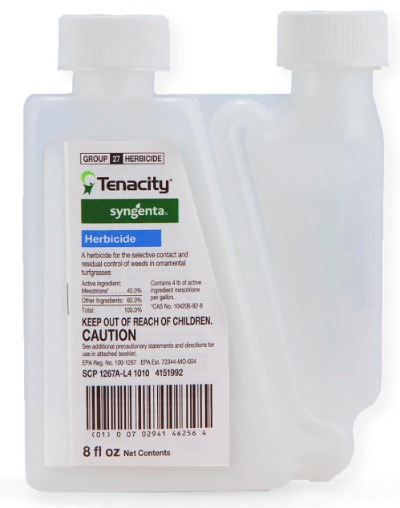
2. Tenacity Turf Herbicide (8 oz)
Product Overview
Tenacity is a bit different from a typical crabgrass-only herbicide. Its active ingredient is Mesotrione, which works by blocking a plant process needed for making chlorophyll. Instead of turning weeds brown right away, Tenacity causes treated weeds (including crabgrass) to turn white or bleached-looking before they die off. This white-out effect is actually a helpful visual cue that the product is doing its job.
Tenacity is popular with both pre-emergent and post-emergent uses, and it also has a reputation for being safe on new grass seedlings, which makes it a favorite during lawn renovation projects.
Best Use Cases
Tenacity shines in situations where you are seeding a new lawn or overseeding an existing one and want a broad-spectrum weed control option that will not harm the new grass coming in. It also works well as a post-emergent option on established cool-season lawns dealing with crabgrass, nutsedge, foxtail, and a long list of other grassy and broadleaf weeds.
If your main goal is starting a new lawn from seed while also controlling weeds during that fragile growth stage, Tenacity is one of the few products built to do both at once.
Key Features Explained Simply
- Active Ingredient: Mesotrione – originally developed from a natural compound found in a certain wildflower, this ingredient blocks pigment formation in weeds, causing that signature white bleaching effect.
- Wide Weed Control Range – beyond crabgrass, it handles nutsedge, foxtail, clover, dandelion, and more.
- Seedling Safe – one of the few herbicides labeled safe for use around new grass seedlings of several cool-season types.
- Small Bottle, Big Dilution – 8 ounces sounds tiny, but because the mixing ratio is very diluted, it treats a surprisingly large area.
Real-Life Usage Insight
When applied to actively growing crabgrass, you typically start noticing that white or bleached look within a few days, with full die-off taking one to three weeks. Multiple applications spaced a couple weeks apart are often needed for tougher, more mature crabgrass or heavier infestations, which is standard for this type of herbicide.
One thing worth knowing upfront is that Tenacity can cause temporary lightening on some lawn grasses too, not just the weeds, especially cool-season types like fescue. This fades over time as the grass recovers, but it can look alarming if you are not expecting it.
Pros
- Safe to use around new grass seedlings during lawn renovation
- Controls a wide range of grassy and broadleaf weeds, not just crabgrass
- Small bottle goes a long way due to low dilution rate
- Visible bleaching effect makes it easy to track progress
- Works well as part of both pre-emergent and post-emergent strategies
Cons
- Can cause temporary whitening on desirable lawn grass, which some people find worrying
- Not labeled for all grass types, especially many warm-season lawns
- Needs a surfactant added separately in many cases for best results
- Full results take longer to show compared to some faster-acting options
Performance and Ease of Use
Performance is strong, especially for renovation projects where killing weeds without hurting new seedlings is the priority. Ease of use is moderate since you need to measure small amounts precisely and sometimes add a separate surfactant, which adds an extra step compared to simpler ready-to-use products.
Value for Money
Even though the price per ounce looks high at first glance, the extremely low dilution rate stretches this bottle much further than its size suggests. For lawn renovation projects or smaller yards needing multiple applications across a season, this ends up being a fair value pick.
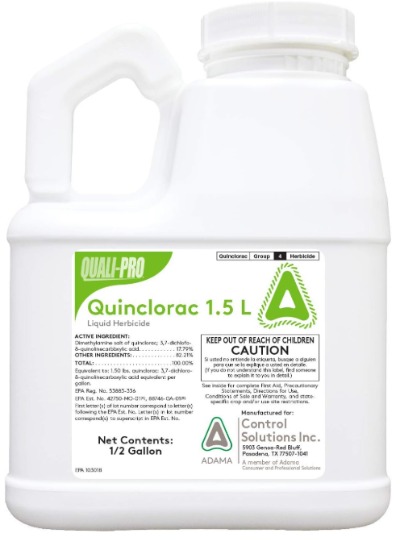
3. Quinclorac 1.5 L (1/2 gal) – Compare to Drive XLR8
Product Overview
This product is a generic version built around the same active ingredient as name-brand Quinclorac herbicides. It is marketed as a direct comparison to Drive XLR8, meaning it uses the same core chemistry to target crabgrass and other grassy and broadleaf weeds, just packaged under a different label and often at a lower price point.
Since Quinclorac has been on the market for a long time and is a proven crabgrass killer, generic versions like this one give homeowners a way to get similar weed control without paying for brand-name packaging.
Best Use Cases
This is a great fit for anyone comfortable doing a bit of research on mixing ratios and label directions who wants strong crabgrass control without spending extra on brand recognition. It works well on established lawns dealing with post-emergent crabgrass along with several other common grassy and broadleaf weeds.
Larger yards or properties where cost per gallon really adds up over time will benefit the most from buying this in bulk.
Key Features Explained Simply
- Same Active Ingredient as Name-Brand Options – Quinclorac works the same way no matter which bottle it comes in, disrupting weed growth hormones until the plant dies off.
- Large 1.5 Liter Size – a half gallon of concentrate covers a large amount of lawn area once diluted.
- Budget-Friendly Positioning – generally priced lower than name-brand versions while using the same core chemistry.
- Broad Weed Control – handles crabgrass along with other common lawn weeds like foxtail and certain broadleaf types.
Real-Life Usage Insight
Results tend to closely match other Quinclorac-based products since the active ingredient does the heavy lifting either way. You can typically expect crabgrass to start yellowing and curling within a week or so, with more complete die-off over the following two to three weeks. Since this is a generic product, label clarity and mixing instructions can sometimes be less detailed than name-brand competitors, so a little extra care during setup pays off.
Pros
- Same active ingredient as trusted name-brand crabgrass killers
- Larger bottle size often means a lower price per treated area
- Effective against crabgrass and several other common weeds
- Good option for budget-conscious buyers with bigger lawns
Cons
- Label instructions may be less detailed or user-friendly than name-brand versions
- Brand reputation and customer support may not match bigger companies
- Still requires careful mixing and a sprayer, same as other concentrates
- Packaging and formula consistency can vary between batches
Performance and Ease of Use
Since the active ingredient is identical to well-known Quinclorac products, performance is generally on par with them. Ease of use is about the same too, since you are still measuring and mixing a concentrate. The main difference is really about brand trust and label clarity rather than actual weed-killing power.
Value for Money
This is where the product really stands out. Getting the same active ingredient at a lower price per ounce makes it a smart pick for anyone managing a larger property or multiple lawns who wants to stretch their weed control budget further without giving up effectiveness.
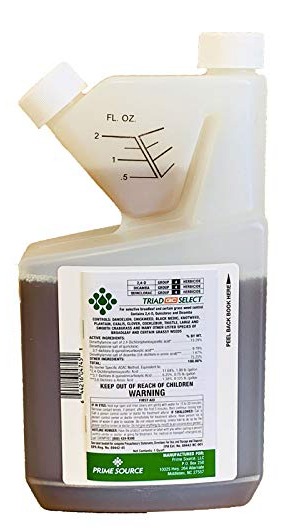
4. Select Source Triad QC Select – 3-Way Herbicide with Quinclorac (Quart)
Product Overview
Triad QC Select is a three-way herbicide, meaning it combines three different active ingredients into one formula to widen the range of weeds it controls. Quinclorac is included for crabgrass and grassy weed control, while the other two active ingredients target a broad list of broadleaf weeds like dandelion and clover. This combo approach makes it more of an all-in-one lawn weed solution rather than a crabgrass-only product.
Best Use Cases
This product is built for homeowners dealing with a mixed weed problem, not just crabgrass. If your lawn has crabgrass growing alongside dandelions, clover, plantain, or other common broadleaf invaders, this three-way combo saves you from buying and mixing separate products for each weed type.
It is also a good fit for anyone who wants fewer trips to the shed and fewer bottles to manage, since one tank mix handles multiple weed categories at once.
Key Features Explained Simply
- Three Active Ingredients in One – Quinclorac handles grassy weeds like crabgrass, while the other two ingredients target broadleaf weeds, giving you wider coverage from a single product.
- Quart Size – a middle-ground size that fits medium to large lawns without needing to buy a huge jug.
- Wide Weed List – controls dandelion, clover, crabgrass, and a long list of other grassy and broadleaf weeds commonly found in home lawns.
- Tank-Mix Friendly – designed for use in a standard pump or backpack sprayer, similar to other concentrate herbicides on this list.
Real-Life Usage Insight
Because this product handles both grassy and broadleaf weeds, it tends to get used on lawns with a wider variety of weed problems rather than a crabgrass-only issue. Results on crabgrass follow a similar timeline to other Quinclorac products, with visible curling and yellowing within a week or two. The broadleaf weeds mixed in usually respond a bit differently, often wilting and dying off within one to two weeks depending on the specific weed and how established it is.
Since three active ingredients are working together, it is extra important to follow label rates closely rather than guessing, since combo products can be less forgiving of mixing mistakes than single-ingredient herbicides.
Pros
- Handles both grassy weeds like crabgrass and a wide range of broadleaf weeds in one product
- Saves time and money compared to buying separate herbicides for each weed type
- Quart size works well for medium to large lawns
- Good option for lawns with a mixed weed problem rather than just crabgrass
Cons
- More active ingredients mean more label restrictions to check before spraying
- Not ideal if crabgrass is truly your only weed concern, since you are paying for broader coverage you may not need
- Mixing accuracy matters even more with a multi-ingredient formula
- May have more grass type restrictions due to the combination of ingredients
Performance and Ease of Use
Performance is strong for anyone dealing with a mixed bag of lawn weeds, since it essentially covers more ground than a single-ingredient product. Ease of use is similar to other concentrates on this list, requiring a sprayer and careful measuring, though the combo nature means double-checking your specific grass type against the label is extra important here.
Value for Money
If your lawn genuinely has multiple weed types growing together, this product offers real value since you are not buying three separate herbicides. But if crabgrass is your only real problem, a single-ingredient Quinclorac product might be a more cost-effective and simpler choice.
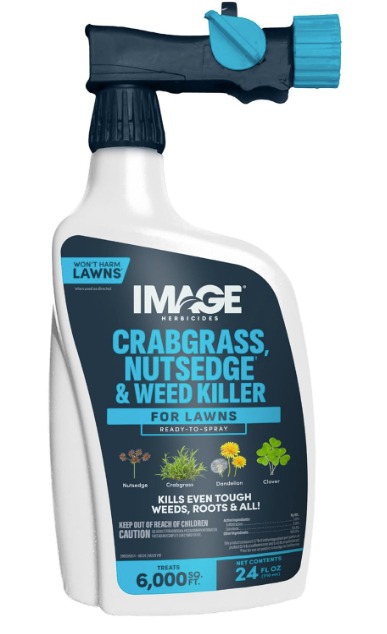
5. Image Herbicide Crabgrass, Nutsedge, & Weed Killer for Lawns (24 fl oz)
Product Overview
Image Herbicide takes a different chemical approach compared to the Quinclorac-based products above. It is often built around active ingredients from the sulfonylurea or similar herbicide family (always check the specific label on the bottle you buy, since formulations can vary), and it is well known for tackling nutsedge in addition to crabgrass, which is a weed type that many other lawn herbicides struggle to control.
Best Use Cases
This product is a strong pick for lawns dealing with nutsedge alongside crabgrass, since nutsedge is notoriously hard to kill with standard grassy weed herbicides. It works well on southern and warm-season lawns in particular, where nutsedge tends to be a bigger, more persistent problem compared to cooler regions.
If your yard has that tall, light green, triangular-stemmed weed popping up faster than your regular grass (a classic sign of nutsedge) alongside crabgrass, this combo product covers both problems at once.
Key Features Explained Simply
- Dual Weed Targeting – built to handle both crabgrass and nutsedge, two very different but equally annoying lawn weeds.
- 24 fl oz Bottle – a solid middle-size option that balances coverage area with a reasonable price point.
- Warm-Season Lawn Compatibility – often labeled for use on southern grass types, though checking your specific grass against the label is still a must.
- Broad Label Coverage – in addition to crabgrass and nutsedge, many versions also list additional grassy and broadleaf weeds on the label.
Real-Life Usage Insight
Nutsedge is a slow weed to kill compared to crabgrass, so patience matters here. While crabgrass often starts showing visible decline within one to two weeks, nutsedge can take several weeks and sometimes more than one application spread across a season to fully knock back, since it grows from underground tubers that can regrow if not fully controlled.
For lawns with a heavier nutsedge presence, treating early in its growth cycle tends to give better long-term results than waiting until it has fully matured and spread its underground root system.
Pros
- One of the few products that effectively targets both crabgrass and nutsedge
- Good fit for warm-season and southern lawns where nutsedge is common
- Reasonable bottle size for the price
- Broad weed control beyond just the two main target weeds
Cons
- Nutsedge control takes patience and sometimes repeat applications
- May have more restrictions on which lawn grass types it is safe for
- Not the fastest-acting option if crabgrass is your only concern
- Requires careful label reading since formulations and active ingredients can vary by region
Performance and Ease of Use
Performance is excellent specifically for the crabgrass-plus-nutsedge combo problem, which is a real gap that many other herbicides do not fill well. Ease of use is standard for a concentrate herbicide, needing a sprayer and accurate dilution, with the main extra step being patience for the nutsedge portion of the job.
Value for Money
For lawns with both crabgrass and nutsedge, this product delivers strong value since it solves two problems with one bottle instead of needing two separate herbicides. If nutsedge is not an issue for your lawn, a straightforward Quinclorac product might serve you better and cost less.
Comparison Insights: How These Five Stack Up
Now that we have gone through each product individually, let’s line them up side by side to see where each one really stands out.
On raw crabgrass-killing speed, the Quinclorac-based products (BASF Drive XLR8, the generic Quinclorac option, and Triad QC Select) tend to show visible results a bit faster than Tenacity or Image Herbicide, since Quinclorac’s growth-hormone disruption effect is generally quick to show visible curling and yellowing.
On safety for new grass seedlings, Tenacity stands alone as the go-to option, since it is one of the few herbicides labeled safe around new turf during establishment.
On handling multiple weed types beyond crabgrass, Triad QC Select wins for broadleaf weed coverage, while Image Herbicide wins specifically for nutsedge control, a weed type the other four products are not built to handle well.
On value for money per treated area, the generic Quinclorac option and BASF Drive XLR8 both offer strong coverage per dollar thanks to their concentrate format and larger bottle sizes, while Tenacity’s small bottle stretches further than expected due to its low dilution rate.
On ease of use for total beginners, all five require a sprayer and some mixing know-how, so none of these are truly “point and shoot” simple, but BASF Drive XLR8 tends to have the clearest, most beginner-friendly label instructions of the bunch.
Buying Guide: What to Look at Before You Buy
Picking the right herbicide comes down to a few practical factors rather than just grabbing whatever has the most reviews. Here is what actually matters:
1. Know Your Grass Type First
This is the single biggest factor. Every herbicide on this list has a list of grass types it is safe for and a list of grass types it can damage. Spraying the wrong product on the wrong turf can leave you with dead patches that take longer to fix than the original crabgrass problem. Always match the product label against your specific lawn grass before buying.
2. Figure Out What Weeds You Actually Have
If crabgrass is truly your only issue, a straightforward single-ingredient Quinclorac product keeps things simple and often costs less. If you are dealing with a mix of crabgrass and broadleaf weeds, a combo product like Triad QC Select saves time. If nutsedge is part of the picture, Image Herbicide becomes the more logical pick.
3. Think About Timing
Post-emergent herbicides work best on young, actively growing crabgrass rather than old, mature plants that have already gone to seed. Spraying too late in the season, once crabgrass has hardened off, usually means weaker results and a higher chance you will need a second round.
4. Consider Bottle Size Against Lawn Size
Concentrate ratios matter a lot here. A small bottle with a very low dilution rate, like Tenacity, can treat more area than its size suggests, while a larger bottle with a higher dilution rate, like the bulk Quinclorac option, makes more sense for bigger properties needing several treatments across a season.
5. Check the Weather Before Spraying
Herbicides generally work best when applied on a calm, dry day without rain in the forecast for at least a day afterward, and not during extreme heat, which can stress both weeds and your lawn grass at the same time.
Who Should Buy These Products
- Homeowners with an established lawn and scattered crabgrass patches should look at BASF Drive XLR8 or the generic Quinclorac option for straightforward, proven control.
- Anyone renovating a lawn or overseeding new grass should lean toward Tenacity, since it is one of the few options safe around young seedlings.
- People dealing with a mixed weed problem, including dandelions and clover alongside crabgrass, will get the most value from Triad QC Select.
- Southern lawn owners battling both crabgrass and nutsedge should prioritize Image Herbicide for its dual-weed targeting.
- Budget-focused buyers managing larger properties will likely get the best cost-per-square-foot from the bulk generic Quinclorac bottle.
Common Mistakes to Avoid
Even a great herbicide will underperform if it is used the wrong way. Here are the most common slip-ups people make:
Skipping the grass type check. Every product on this list has restrictions on which lawns it is safe for. Spraying without checking this first is the number one cause of lawn damage complaints.
Mixing the wrong ratio. Too weak, and the crabgrass barely notices. Too strong, and you risk burning your lawn along with the weeds. Always measure carefully rather than eyeballing it.
Spraying during the wrong weather. Rain right after application can wash the product away before it gets absorbed, while extreme heat can stress the lawn and reduce effectiveness at the same time.
Expecting instant results. Most of these herbicides take days to weeks to show full results, especially on mature crabgrass or tough weeds like nutsedge. Judging a product as a failure after just two or three days is a common but unfair mistake.
Not following up when needed. Larger, more established crabgrass patches often need a second application a few weeks after the first. Stopping after one round when the label suggests a follow-up leaves the job half-finished.
Ignoring pre-emergent strategy for next season. Post-emergent herbicides deal with the crabgrass you can already see, but pairing them with a pre-emergent treatment earlier in the growing season is the real key to keeping crabgrass from coming back year after year.
Spraying too close to newly seeded grass without checking the label. Aside from Tenacity in specific situations, most herbicides on this list can harm very young grass seedlings, so timing around any recent overseeding matters a lot.
Final Verdict
All five of these herbicides get the job done in their own lane, so the real question is not which one is “best” overall, but which one fits your specific lawn situation.
If you want a trusted, proven crabgrass killer with a strong residual effect and clear instructions, BASF Drive XLR8 is the safest all-around pick for most established lawns.
If you are renovating your lawn or dealing with new grass seedlings, Tenacity is genuinely in a category of its own for seedling-safe weed control.
If your budget matters more than brand name and you have a bigger lawn to treat, the generic Quinclorac 1.5 L option delivers the same core chemistry at a friendlier price.
If your yard has a mix of crabgrass, dandelions, and clover, Triad QC Select saves you from juggling multiple bottles.
And if nutsedge is creeping in alongside your crabgrass, Image Herbicide is built specifically for that double trouble.
No single product here is a magic fix, and none of them will work well if sprayed on the wrong grass type or at the wrong time. But armed with the breakdown above, you now have a clear, honest picture of what each one brings to the table, so you can pick the one that actually matches your lawn instead of guessing and hoping for the best.

Hi, I’m Mary, the founder of GardenCure.com. I’m passionate about creating healthy, beautiful gardens and well-kept lawns. I share practical experience and trusted advice on garden and lawn gear that truly works. With the support of my dedicated research team, our writers produce honest, in-depth reviews using reliable, authentic sources—helping you choose the right tools with confidence for your outdoor space.