5 Best Seedling Heat Mat In 2026
If your seeds are taking forever to pop up, or your germination rate feels more like a coin flip, the problem might not be your soil or your seeds at all. It could just be the temperature. Seeds need warmth to wake up, and most homes and garages sit a little too cool for fast, even sprouting. That’s where a seedling heat mat comes in.
In this article
A good heat mat sits under your seed tray and gently warms the soil from below. This wakes up seeds faster, helps roots grow stronger, and can turn a slow, uneven germination into a tray full of healthy little sprouts within days instead of weeks. But not every heat mat on the market is built the same way, and some run hotter or cooler than they should, which can actually hurt your seedlings instead of helping them.
In this guide, we’re breaking down five of the most talked-about seedling heat mats out there. We’ll walk through what each one does well, where it falls short, who it’s best suited for, and how much value you actually get for your money. By the end, you’ll know exactly which mat fits your setup, your budget, and your growing goals.
Why a Seedling Heat Mat Actually Matters
Before we jump into the reviews, let’s talk about why this small piece of gear makes such a big difference.
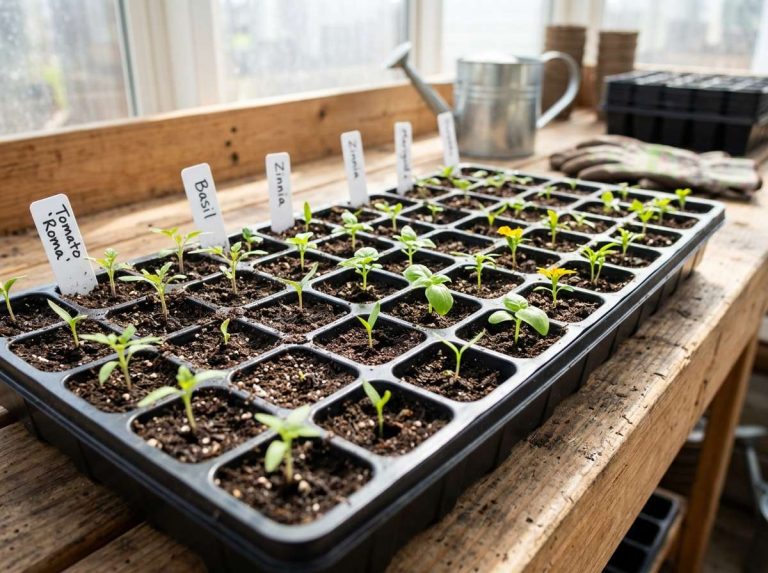
Most seeds germinate best when the soil sits somewhere between 65°F and 85°F, depending on the plant. Tomatoes, peppers, and other warm-season crops especially love the higher end of that range. Without extra heat, a cool basement or drafty windowsill can keep soil temperature well below what seeds want, and germination slows down or stalls completely.
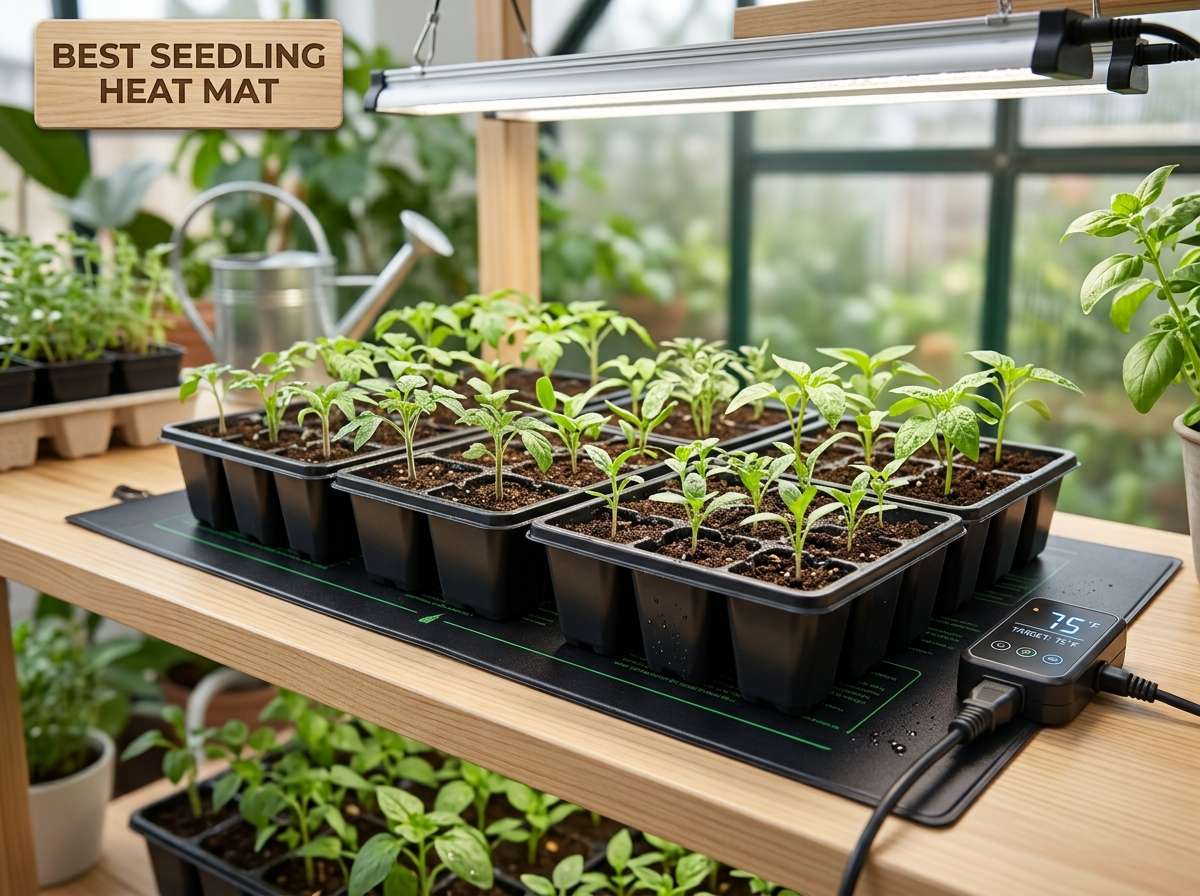
A heat mat fixes this by warming the root zone directly, rather than heating the whole room. This is more efficient, more consistent, and a lot cheaper than cranking up your thermostat. Gardeners who start seeds indoors, run small greenhouses, or grow hydroponically all rely on these mats to get a head start on the season and keep their success rate high.
Now let’s get into the actual products.
How We Compared These Heat Mats
Each mat in this list was judged on a few practical things that matter to everyday gardeners: how evenly it heats, how safe and durable it is, how easy it is to set up and use, if it includes a thermostat or requires a separate one, and how much value it offers for the price. We also looked closely at build quality, since a heat mat sits near water and soil constantly, so waterproofing and certification matter a lot here.
Quick Comparison Table
| Product | Size | Thermostat Included | Certification | Best For |
|---|---|---|---|---|
| VIVOSUN Seedling Heat Mat | 10″ x 20.75″ | No | UL & MET | Budget-friendly single-tray setups |
| BN-LINK Heat Mat (2 Pack) | 10″ x 20.75″ (x2) | No | ETL | Multi-tray growers on a budget |
| Heat Mat with Built-in Controller (2 Pack) | 10″ x 20.75″ (x2) | Yes | Not specified | Hands-off temperature control |
| GOLOPET Heat Mat with Thermostat (2 Pack) | 10″ x 20.75″ (x2) | Yes | Dual MET & UL | Precision growers, delicate seeds |
| LOCONHA Seedling Heat Mat | 10″ x 20.75″ | No | Not specified | Small-space, single-tray starters |
Now let’s break each one down in detail.
1. VIVOSUN Durable Waterproof Seedling Heat Mat
Product Description
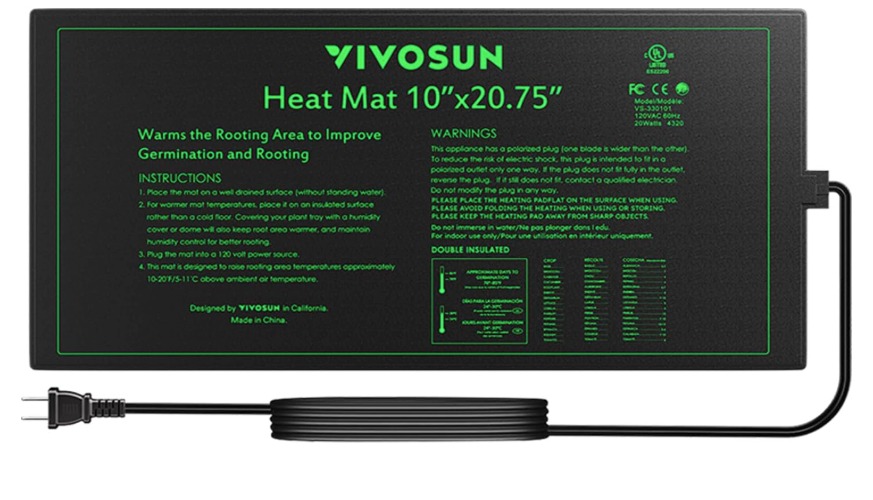
The VIVOSUN heat mat is a straightforward, no-frills warming pad built for a single standard seed tray. It measures 10 inches by 20.75 inches, which fits a standard 1020 tray perfectly. It’s UL and MET certified, meaning it has passed safety testing for electrical products, so you don’t need to worry about it being some sketchy off-brand heating pad.
Best Use Cases
This mat works great for beginners who just want to start one tray of seeds without overcomplicating things. It’s also a solid pick for anyone growing in a garage, shed, or basement where the ambient temperature runs cool and a small, steady heat boost is all that’s needed.
Key Features Explained Simply
The mat uses a thin, flexible heating element sandwiched between waterproof layers, so spills and splashes from watering won’t damage it. It plugs straight into a standard outlet and warms up gradually, raising soil temperature roughly 10 to 20 degrees above the room’s ambient temperature. There’s no built-in thermostat, so the mat runs at a fixed output the entire time it’s plugged in.
Real-Life Usage Insight
For gardeners starting peppers or tomatoes indoors in a cooler room, this mat brings soil temperature into a range that speeds up sprouting noticeably compared to no heat at all. Because there’s no thermostat, it works best in rooms that already sit close to a comfortable range, rather than truly cold spaces where the mat would need to work overtime.
Pros
- Simple, reliable, and easy to set up right out of the box
- Waterproof design holds up well to regular watering routines
- UL and MET certification gives peace of mind on safety
- Affordable price point for a single-tray mat
- Thin and flexible, so it fits under trays without adding bulk
Cons
- No thermostat, so you can’t fine-tune the exact temperature
- Only fits one standard tray, so it’s not ideal for larger setups
- Runs continuously at the same output, which can lead to overheating in warmer rooms if left unmonitored
Performance Discussion
In everyday use, this mat does what it promises: steady, even background heat. It won’t blast your seedlings with intense warmth, but it consistently nudges the soil into a friendlier germination zone. The lack of a thermostat means you’ll want to check soil temperature with a simple thermometer now and then, especially if your grow space temperature shifts throughout the day.
Ease of Use
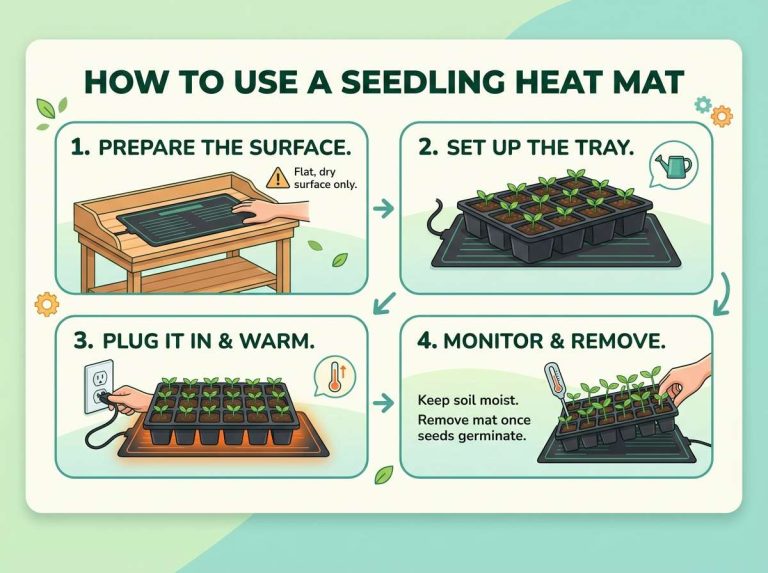
Setup takes about a minute. Lay it on a flat, dry surface, place your tray on top, and plug it in. There are no dials, no settings, and no learning curve, which makes it a great entry point for someone trying heat mats for the first time.
Value for Money
Given the certification, waterproofing, and reliable heat output, this mat offers strong value for a single-tray setup. It’s not the cheapest option out there, but the safety certifications justify the price for anyone who wants a trustworthy product without extra bells and whistles.
2. BN-LINK Durable Seedling Heat Mat (2 Pack)
Product Description
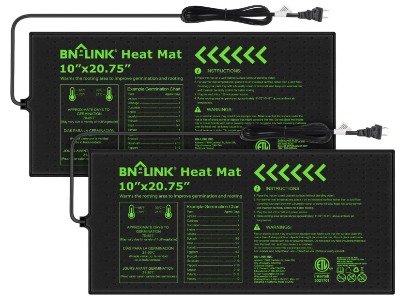
BN-LINK’s heat mat comes as a two-pack, giving you double the coverage for the price of running two separate trays. Each mat measures the same standard 10 by 20.75 inches and carries ETL certification, another recognized safety mark for electrical devices sold in North America.
Best Use Cases
This is a great pick for anyone running more than one seed tray at a time, like gardeners starting a full vegetable garden’s worth of seedlings, or small-scale growers who need consistent heat across multiple trays without buying mats one at a time.
Key Features Explained Simply
Like most basic heat mats, this one uses a waterproof heating element that warms the tray from below at a fixed output. Because you get two mats, you can place them side by side or in different rooms, which adds flexibility that single mats don’t offer.
Real-Life Usage Insight
Gardeners juggling multiple trays of different plant varieties often find that buying mats individually gets expensive fast. A two-pack like this solves that problem in one purchase, and having two mats also means you can run a backup if one ever needs troubleshooting, without leaving any tray without heat.
Pros
- Two mats included, so it’s great value for multi-tray growers
- ETL certified for electrical safety
- Waterproof build handles regular watering without issue
- Flexible placement since you get two separate units
- Fixed, steady heat output that’s easy to predict
Cons
- No thermostat included, so temperature isn’t adjustable
- Two mats draw more power than a single mat, which may matter for those on a tight circuit
- Like most non-thermostat mats, it needs occasional temperature checks in warmer rooms
Performance Discussion
Both mats in the pack heat evenly and consistently, and the shared design language with other budget mats on the market means you know what you’re getting. If you’re running trays in a slightly chilly room, this pair does a solid job of narrowing that temperature gap. In warmer spaces, keep an eye on soil temperature so it doesn’t creep too high, since there is no automatic shutoff or control here.
Ease of Use
Setup is identical to a single mat, just doubled. Lay each one flat, place your trays, and plug them in. No assembly, no confusing instructions, and no thermostat to program.
Value for Money
This is one of the better deals on this list purely because you’re getting two functional, certified heat mats for a price that’s often close to what a single premium mat costs elsewhere. For growers scaling up beyond one tray, this is hard to beat on cost efficiency.
3. Seedling Heat Mat with Built-in Temperature Controller (2 Pack)
Product Description
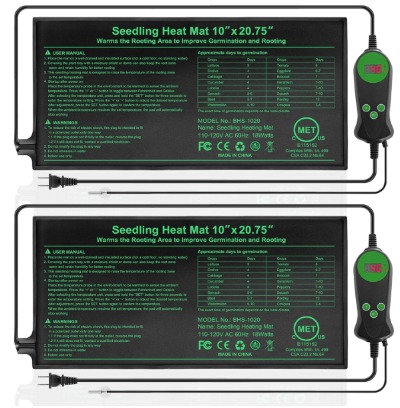
This option steps things up by pairing two heat mats with a built-in thermostat controller and temperature probe. Instead of running at a fixed output, this system lets you set a target temperature, and the mat adjusts itself to maintain that level automatically.
Best Use Cases
This is ideal for growers who are starting more delicate or fussy seeds that need a tighter temperature range, like certain herbs or specialty vegetables. It also suits anyone growing in a room where temperatures swing throughout the day, since the thermostat compensates for those changes automatically.
Key Features Explained Simply
The temperature probe sits in the soil or growing medium and constantly reads the current temperature. The controller compares that reading to your target setting and turns the heating element on or off as needed to stay close to that number. This means you’re not guessing anymore. You set a number, and the system handles the rest.
Real-Life Usage Insight
For someone starting seeds that are particular about temperature, like certain pepper varieties that germinate best in a narrow warm range, this kind of active control noticeably improves consistency compared to a fixed-output mat. It also reduces the risk of accidentally cooking your seedlings in a warm room, since the thermostat shuts things off once the target is reached.
Pros
- Built-in thermostat allows precise, hands-off temperature control
- Two mats included for multi-tray setups
- Reduces risk of overheating compared to fixed-output mats
- Great for temperature-sensitive seeds and varieties
- Automatic adjustment saves you from manually monitoring soil heat
Cons
- Slightly more complex setup than basic mats, since you need to place and calibrate the probe
- Higher price point than non-thermostat options
- The controller adds another part that could potentially fail over time, unlike simpler single-piece designs
Performance Discussion
The active temperature control genuinely makes a difference for consistency. Rather than a static warm surface, you get a system that responds to the actual conditions in your grow space. This is especially useful for anyone starting seeds in a garage or shed where daytime and nighttime temperatures shift a lot.
Ease of Use
There’s a small learning curve compared to a plug-and-go mat, since you’ll need to insert the probe into the soil and set your target temperature on the controller. Once that’s done, though, it runs on its own without needing constant attention.
Value for Money
For growers who value precision and want to avoid the guesswork, this pack earns its higher price tag. Two mats plus a genuine thermostat system is a strong deal for anyone serious about consistent germination results.
4. GOLOPET Seedling Heat Mat with Thermostat (2 Pack)
Product Description
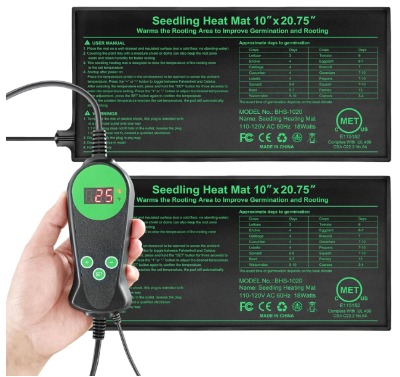
GOLOPET’s offering is similar in concept to the built-in controller mat above, pairing two heat mats with a thermostat and a temperature probe. What sets it apart is dual certification from both MET and UL, giving it strong safety credentials alongside its precision heating features.
Best Use Cases
This is a strong pick for gardeners who want both safety certification and active temperature control in one package. It suits growers running multiple trays who don’t want to babysit the temperature constantly, as well as anyone who prioritizes buying certified electrical products for peace of mind.
Key Features Explained Simply
The included temperature probe monitors the soil and feeds that data to the thermostat, which then automatically maintains your chosen temperature by cycling the heating element on and off. This keeps the soil in a steady, predictable range without you having to check on it every hour.
Real-Life Usage Insight
Growers running a mixed tray setup, like starting flowers alongside vegetables that need slightly different warmth levels, benefit from being able to dial in a specific target rather than relying on a one-size-fits-all fixed mat. The dual certification also adds confidence for anyone who’s cautious about running electrical heating devices unattended for long stretches, such as overnight.
Pros
- Dual MET and UL certification for strong safety assurance
- Automatic temperature maintenance through the built-in thermostat
- Two mats included, useful for larger seed-starting operations
- Probe-based monitoring keeps readings accurate to the actual soil condition
- Reduces the chance of both underheating and overheating
Cons
- Costs more than basic fixed-output mats
- Requires a bit more setup time to position the probe correctly
- Two units and a thermostat system mean more components that could need troubleshooting down the line
Performance Discussion
This mat performs reliably in day-to-day use, holding a steady soil temperature even as room conditions shift. The dual certification also suggests a strong attention to build quality and safety standards, which matters given that these mats often run for extended stretches while you’re not directly watching them.
Ease of Use
Once the probe is placed and the target temperature is set, the system runs itself. The initial setup takes a little longer than a basic mat, but it’s still approachable for most home gardeners after a quick read of the included instructions.
Value for Money
Considering you get two certified mats with active thermostat control, this is a solid investment for anyone planning to start seeds regularly across multiple seasons. The upfront cost is higher, but the added safety certification and precision control make it a smart long-term buy.
5. LOCONHA Seedling Heat Mat
Product Description
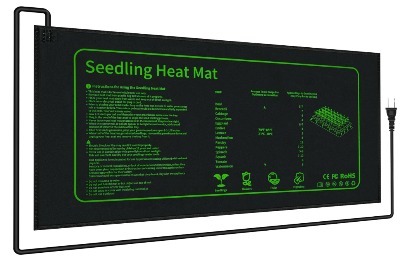
The LOCONHA mat is a single, no-thermostat heat mat sized for one standard 10 by 20.75 inch tray. It’s built as a simple, budget-friendly option for gardeners who just need reliable warmth under one tray without extra features.
Best Use Cases
This mat suits anyone with a small growing space, like a windowsill setup or a single shelf on a grow rack, who only needs to heat one tray at a time. It’s also a good starter option for someone testing out heat mats for the first time before committing to a bigger multi-mat system.
Key Features Explained Simply
The mat’s waterproof surface handles regular watering without trouble, and it plugs directly into an outlet to begin warming immediately. Like other fixed-output mats, it doesn’t include a thermostat, so it runs continuously at its built-in warming level.
Real-Life Usage Insight
For gardeners with just a tray or two on a small shelf, this mat gets the job done without taking up extra space or adding complexity. It’s a practical pick for someone who wants to dip a toe into using heat mats without spending a lot upfront.
Pros
- Affordable, straightforward single-tray option
- Waterproof and built to handle typical watering habits
- Compact and lightweight, easy to store when not in use
- No setup complexity at all, just plug it in
- Good fit for small grow spaces
Cons
- No thermostat, so temperature isn’t adjustable
- Single mat only, which limits it for larger seed-starting projects
- Certification details are less clearly documented compared to some competitors
Performance Discussion
This mat delivers steady, dependable warmth for a single tray, and most users starting common vegetables or flowers will find the heat output sufficient to speed up germination in a cooler room. As with any fixed-output mat, keep it away from spaces that already run warm, since there’s no automatic temperature regulation.
Ease of Use
There’s nothing to configure here. Set it on a flat surface, place your tray on top, plug it in, and you’re set. This simplicity makes it especially appealing for first-time buyers who don’t want to deal with settings or controllers.
Value for Money
For the price, this mat covers the basics well. It’s a sensible pick for small-scale or beginner growers who mainly care about getting a warm, even surface under their tray without paying extra for features they may not need yet.
Comparison Insights
Looking at all five mats side by side, a clear pattern shows up. The VIVOSUN, BN-LINK, and LOCONHA mats all share a similar approach: simple, fixed-output heating without a thermostat, aimed at gardeners who want reliable warmth without extra complexity. Among these three, BN-LINK stands out for offering two mats in one purchase, giving it an edge in value for anyone running more than one tray.
On the other end, the built-in controller mat and the GOLOPET mat both bring active thermostat control into the mix, which suits growers who want precision and hands-off operation. GOLOPET edges ahead slightly here thanks to its dual MET and UL certification, which adds an extra layer of safety assurance compared to a less clearly certified competitor.
If certification matters most to you, VIVOSUN and GOLOPET both carry recognized safety marks, UL and MET respectively, which can be a deciding factor for cautious buyers. If your main priority is running several trays cheaply, BN-LINK’s two-pack is tough to beat on price per mat.
Buying Guide: What to Look for in a Seedling Heat Mat
Size and Tray Compatibility
Most standard seed trays measure 10 by 20.75 inches, and all five mats reviewed here match that size. Before buying, double check the size of your own trays so the mat lines up properly and heats the full tray evenly, rather than leaving cold spots at the edges.
Thermostat vs Fixed Output
A fixed-output mat is simpler and cheaper, and works fine for most common vegetables and flowers in moderately cool rooms. A thermostat-equipped mat costs more but gives you precise control, which really pays off if you’re germinating temperature-sensitive seeds or growing in a room with big temperature swings between day and night.
Certification and Safety
Look for recognized safety marks like UL, ETL, or MET. These indicate the product passed independent safety testing for things like electrical shock and fire hazards. Since these mats often run for many hours, sometimes overnight, safety certification isn’t a small detail, it’s genuinely important.
Waterproofing
Seed trays get watered often, and spills happen. A waterproof mat surface protects the internal heating element from moisture damage, which extends the life of the product and keeps things safe around water and electricity.
Number of Mats Needed
Think about how many trays you’ll realistically run at once. If you’re only starting a handful of plants, one mat is plenty. If you’re planning a full vegetable garden or running a small greenhouse operation, a two-pack saves money compared to buying single mats separately.
Power Draw and Outlet Access
Multiple mats running at once draw more electricity, so make sure your outlets and circuits can handle the load, especially if you’re also running grow lights or fans in the same space.
Who Should Buy These Products
Beginner gardeners starting their first few trays of seeds indoors will likely be happiest with a simple, fixed-output mat like the VIVOSUN or LOCONHA, since these are easy to use and budget-friendly. Gardeners scaling up to multiple trays, like those planning a full backyard vegetable garden, should lean toward the BN-LINK two-pack for the best value across multiple trays. Growers who want precise, consistent temperatures, especially for finicky or temperature-sensitive seeds, will get more benefit from the thermostat-controlled options, either the built-in controller mat or the GOLOPET pack. Anyone running a small greenhouse or hydroponic setup year-round will also benefit from thermostat control, since it adjusts automatically as ambient conditions shift through the seasons.
Common Mistakes to Avoid When Using a Seedling Heat Mat
One common mistake is leaving a fixed-output mat running in an already warm room without checking soil temperature, which can push the soil too hot for healthy root development. Another mistake is placing trays directly on the mat without any barrier, which sometimes works fine but can also lead to uneven moisture buildup depending on your tray design. Some growers also forget to remove the mat once seedlings have sprouted and developed a few true leaves, when the extra bottom heat usually isn’t needed anymore. Skipping a simple soil thermometer is another common oversight, since without one, you’re really just guessing if the mat is doing its job effectively. Finally, running mats on flammable surfaces or covering them with heavy fabric can trap heat and pose a safety risk, so always follow the placement instructions that come with your specific mat.
Frequently Asked Questions About Seedling Heat Mats
How long should I leave a heat mat running?
Most gardeners keep the mat running from the moment seeds are planted until sprouts show a couple of true leaves. After that point, the extra bottom heat isn’t doing much, and it’s usually fine to unplug the mat and let the seedlings grow at normal room temperature. Leaving it on longer than needed won’t always cause harm, but it does use extra electricity for little added benefit.
Can a heat mat overheat my seedlings?
Yes, this can happen with fixed-output mats in a room that already runs warm, since there’s nothing regulating the output. That’s why checking soil temperature with a simple probe thermometer is such a good habit, especially in the first few days after setting up a new tray. A thermostat-equipped mat largely removes this risk since it shuts off automatically once the target temperature is reached.
Do I need a humidity dome along with a heat mat?
A humidity dome and a heat mat work well together but solve different problems. The dome traps moisture near the soil surface so it doesn’t dry out too fast, while the mat warms the root zone from below. Using both together often gives the fastest, most even germination results, particularly for slow-to-sprout seeds.
Is a thermostat really necessary for most home gardeners?
Not always. Plenty of common vegetables and flowers germinate just fine on a basic fixed-output mat, especially in a room that sits at a moderate temperature already. A thermostat becomes more valuable when you’re growing temperature-sensitive varieties, running trays in a space with big temperature swings, or simply want less guesswork and more consistency across every batch of seeds.
Can I use a seedling heat mat for hydroponic systems too?
Yes, all five mats reviewed here work for hydroponic setups as well as traditional soil trays, since the goal is the same either way: keeping the root zone warm enough to support healthy growth. Just make sure the mat’s waterproof rating matches the amount of moisture exposure your specific hydroponic setup involves.
Will a heat mat work on a cold concrete floor or in an unheated garage?
It can help, but a single mat may struggle to fully overcome extreme cold on its own. In very cold spaces, pairing the mat with a humidity dome and keeping the tray off the bare floor, such as on a shelf or small stand, helps trap more of the generated heat where your seeds actually need it.
Final Verdict
All five of these seedling heat mats do their core job well: warming soil to speed up germination and support stronger early growth. If you want something simple, reliable, and budget-friendly for a single tray, the VIVOSUN or LOCONHA mats are both solid, no-fuss choices. If you’re running multiple trays and want the best value per mat, the BN-LINK two-pack is hard to beat. For gardeners who want precise, automatic temperature control and don’t mind paying a bit more, both the built-in controller mat and the GOLOPET two-pack deliver strong, consistent performance, with GOLOPET having a slight edge thanks to its dual safety certification.
At the end of the day, the best seedling heat mat for you comes down to how many trays you’re running, how much control you want over temperature, and how much you’re willing to spend. Any of these five options will genuinely help you get faster, healthier seedlings compared to skipping bottom heat altogether.

Hi, I’m Mary, the founder of GardenCure.com. I’m passionate about creating healthy, beautiful gardens and well-kept lawns. I share practical experience and trusted advice on garden and lawn gear that truly works. With the support of my dedicated research team, our writers produce honest, in-depth reviews using reliable, authentic sources—helping you choose the right tools with confidence for your outdoor space.