
5 Best Garden Tool for Weeding In 2026
Weeds are the enemy of every gardener. They pop up overnight, steal nutrients from your plants, and make your garden look messy. But here’s the good news: you don’t need to spend hours on your knees pulling weeds by hand anymore.
In this article
The right weeding tool can save your back, your knees, and hours of your time. After looking at dozens of options, I’ve found five tools that stand out from the crowd. Each one tackles weeds differently, so you can pick the one that fits your garden and your body best.
This guide breaks down everything you need to know about these five weeding tools. You’ll learn what makes each one special, where it works best, and which one might be perfect for your yard.
Why Your Weeding Tool Matters More Than You Think
Most people grab whatever tool is cheap or close by. Then they wonder why their back hurts or why weeds keep coming back.
A good weeding tool does three important things. First, it removes the entire root so weeds don’t grow back next week. Second, it lets you work comfortably without pain. Third, it makes the job faster so you can enjoy your garden instead of fighting weeds all day.
The tools in this review each solve these problems in different ways. Some let you stand up straight. Others give you precision control. A few work fast over large areas. By the end of this article, you’ll know exactly which tool matches your needs.
Product Reviews: The Five Best Garden Tools for Weeding
1. Fiskars Ergo Weeder Tool – The Precision Hand Tool
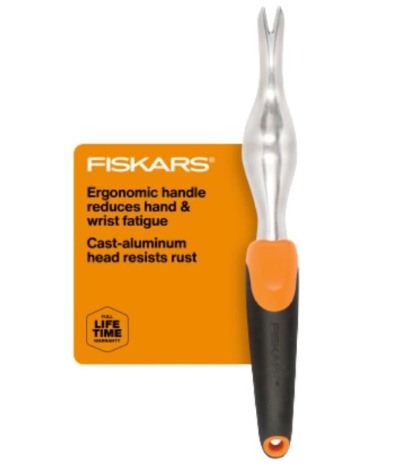
The Fiskars Ergo Weeder is a handheld tool designed for close-up weed work. It looks like a small spade with a forked end and a chunky handle that fits nicely in your palm.
This tool shines when you need to get weeds out from tight spots. Think about the dandelions growing between your flowers or the thistles sneaking up near your tomato plants. The Fiskars tool lets you dig down and pop out the entire root without disturbing nearby plants.
Best Use Cases
Use this tool when you’re working in flower beds, around vegetables, or in any area where you need accuracy. It’s perfect for gardeners who have specific problem weeds rather than a whole lawn full of them. If you like getting down close to your plants and taking your time, this tool will become your favorite.
Key Features Explained Simply
The ergonomic handle is the star feature here. It’s shaped to fit your hand naturally, which means less strain on your wrist and fingers. The cast-aluminum head won’t rust or bend, even if you hit rocks. The forked tip has a sharp edge that cuts through soil easily and grabs roots firmly.
The hanging hole at the end of the handle is a small but smart touch. You can hang it on a hook in your shed so it’s always ready to grab.
Real-Life Usage Insight
When you use this tool, you’ll notice how smoothly it slides into the soil. The weight feels solid but not heavy. You push it down next to the weed, tilt it back like a lever, and the weed pops out with its root attached.
For really stubborn weeds with deep taproots, you might need to wiggle the tool a bit or make a second insertion. But for most common garden weeds, one good push and pull does the job.
Honest Pros and Cons
Pros:
- Comfortable grip reduces hand fatigue
- Durable construction lasts for years
- Works great in tight spaces between plants
- Sharp forked tip gets deep roots
- Easy to clean and store
Cons:
- Requires bending or kneeling to use
- Not practical for large areas
- Can be slow if you have lots of weeds
- Handle may feel too thick for small hands
Performance Discussion
This tool performs exactly as advertised. It removes weeds completely, including the roots, which means they won’t come back quickly. The ergonomic design really does make a difference during longer weeding sessions. You can work for 20 or 30 minutes without your hand cramping up.
The durability is impressive. The metal head won’t rust even if you leave it outside overnight by accident. The handle material holds up well to sun and rain.
Ease of Use
If you’re comfortable kneeling or sitting while you garden, this tool is very easy to use. The motion is simple and natural. Even beginners can master it in minutes.
The only challenge is that you do need to get down to ground level. For people with back or knee issues, this might not be the best choice.
Value for Money
At its price point, the Fiskars Ergo Weeder offers excellent value. It’s built to last, works well, and costs less than many similar tools. You’re paying for quality materials and smart design, not just a brand name.
For gardeners who work primarily in beds and borders, this tool will pay for itself quickly by making weeding faster and easier.
2. Grampa’s Weeder – The Stand-Up Root Puller
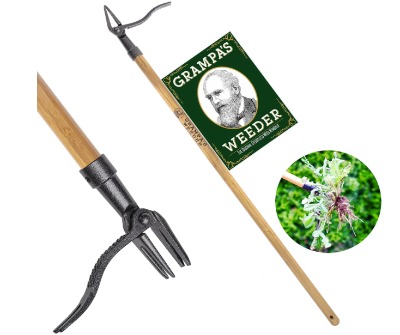
Grampa’s Weeder is a long-handled tool that lets you pull weeds while standing completely upright. It features a real bamboo handle and a four-claw steel head that grabs weeds from below.
This tool changes the game for people who can’t bend easily. You step on a footplate, the claws grab the weed underground, then you pull back on the handle. The weed comes out root and all, and an ejector plate pushes it off so you don’t touch it.
Best Use Cases
This tool works best on lawns and open areas where weeds are spread out. It’s perfect for dandelions, thistles, and other weeds with single taproots. If you have back pain, knee problems, or just don’t want to bend over hundreds of times, this is your tool.
Large yards with scattered weeds are ideal for Grampa’s Weeder. It’s less useful in crowded flower beds where the long handle becomes awkward.
Key Features Explained Simply
The bamboo handle is naturally strong and lightweight. It feels good in your hands and doesn’t get as hot as metal in the sun. The four-claw design is clever – the claws dig down around the weed’s root, then clamp onto it from all sides.
The foot pedal gives you leverage. You push down with your foot while pulling back on the handle, using your body weight instead of just arm strength. The ejector mechanism is a simple plate that slides down when you pull back, pushing the weed off the claws.
Real-Life Usage Insight
Using this tool feels satisfying. You position it over a weed, step down firmly, and pull back. There’s a moment of resistance, then the weed pops free. You release the handle, and the weed drops to the ground.
The motion becomes rhythmic once you get the hang of it. You can clear a dozen dandelions in just a few minutes. The key is positioning the claws directly over the center of the weed.
Honest Pros and Cons
Pros:
- Completely eliminates bending and kneeling
- Removes entire root systems effectively
- Bamboo handle is eco-friendly and durable
- Works quickly once you learn the technique
- Good exercise without strain
Cons:
- Doesn’t work well in hard, compacted soil
- Can be tricky in rocky areas
- Not suitable for tiny weeds or ground covers
- Takes up storage space due to length
- Requires some strength to operate
Performance Discussion
Grampa’s Weeder performs excellently on the right weeds in the right conditions. In soft to medium soil, it pulls dandelions and similar weeds with impressive efficiency. The root removal is thorough, which means weeds don’t return quickly.
In very hard or clay soil, you might need to water the area first or wait until after rain. The claws can struggle to penetrate deeply packed earth. Rocky soil can also cause problems if the claws hit stones.
The bamboo handle holds up well over time. It’s less likely to splinter than cheaper wooden handles and won’t rust like metal.
Ease of Use
The learning curve is short. After pulling five or ten weeds, most people have the motion down. The stand-up design is genuinely comfortable, and you can work for long periods without back or knee pain.
The main trick is getting the claws positioned correctly. If you’re slightly off-center, the weed might break instead of coming out whole. But with a little practice, your accuracy improves quickly.
Value for Money
This tool costs more than a basic hand weeder, but it delivers real benefits for the price. If you have chronic pain or mobility issues, it’s worth every penny. Even if you’re healthy, the convenience and speed make it a smart investment for larger properties.
The quality construction means you’ll use this tool for many years, which spreads the cost out nicely.
3. 60-Inch 2-in-1 Weed Puller and Garden Hoe
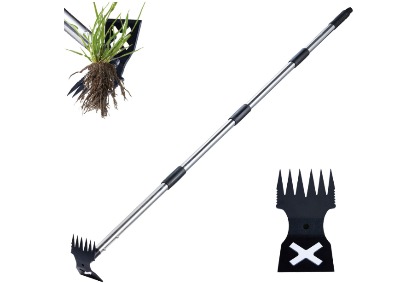
This tool combines two functions in one long-handled implement. One end has a weed puller mechanism, and the other end has a hoe blade. At 60 inches long, it’s designed for stand-up use.
The versatility is the main selling point. You can pull individual weeds, then flip it around and scrape away small weeds over larger areas. For gardeners who want one tool that handles multiple tasks, this is worth considering.
Best Use Cases
Use this tool when you have mixed weeding needs. Maybe you have some stubborn dandelions that need pulling, plus patches of small weeds that need scraping. The hoe end works well for cultivating soil between rows in vegetable gardens too.
It’s great for people who don’t want to own multiple tools or who have limited storage space. One tool, two jobs, less clutter.
Key Features Explained Simply
The weed puller end works similarly to other stand-up pullers. You step on a mechanism, it grabs the weed, and you pull it out. The design is straightforward and functional.
The hoe end is a flat blade that you push or pull through the top layer of soil. This cuts off small weeds at the root and loosens the soil surface. The 60-inch handle keeps you upright for both functions.
The construction is heavy-duty steel, built to handle tough use. The handle is powder-coated to resist rust and provide a good grip.
Real-Life Usage Insight
In practice, this tool works well for both jobs, though it doesn’t excel at either one like specialized tools do. The weed puller gets most weeds out, but very deep roots sometimes break. The hoe does a fine job of surface weeding and cultivation.
The weight is noticeable. It’s heavier than tools with just one function. After using it for a while, your arms will feel it. But the trade-off is getting two tools in one.
Switching between ends is quick. You just flip it around. For a mixed weeding session, this convenience is genuinely helpful.
Honest Pros and Cons
Pros:
- Two tools in one saves money and space
- Long handle prevents bending
- Heavy-duty construction is sturdy
- Hoe function works well for small weeds
- Good for vegetable garden maintenance
Cons:
- Heavier than single-function tools
- Weed puller isn’t as effective on very deep roots
- Length can be awkward in tight spaces
- More expensive than basic hoes
- May be too long for shorter users
Performance Discussion
The performance is solid for both functions, though specialized tools do each job slightly better. The weed puller handles dandelions and similar weeds adequately in normal soil. It struggles more than dedicated pullers in hard ground.
The hoe performs well for its intended purpose. It cuts through surface weeds efficiently and helps you maintain clean garden rows. The blade stays sharp reasonably well, though it will need occasional sharpening like any hoe.
The durability seems good based on the construction quality. The steel won’t rust easily, and the connections between parts are secure.
Ease of Use
Both functions are easy to learn. The weed puller takes a few tries to get the motion right, but it’s not complicated. The hoe is as simple as any garden hoe – you just push or pull it through the soil.
The weight is the main ease-of-use concern. Some users, especially those with less upper body strength, might find it tiring for extended use.
Value for Money
The value depends on whether you actually need both functions. If you do, this tool offers decent savings compared to buying a stand-up weeder and a separate hoe. You also save storage space.
If you only need one function most of the time, you’d be better off with a specialized tool that does that job better and weighs less.
4. Portable Garden Weeder with Rubber Handle
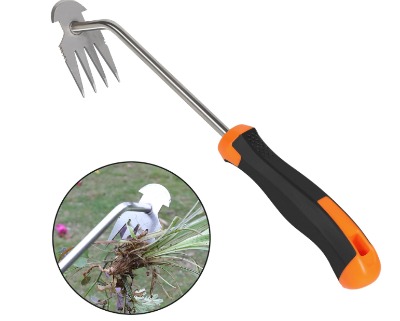
This is a compact, handheld weeding tool designed for portability and precision. It features a rubber grip handle and a forked or serrated blade (designs vary slightly) for digging out weeds.
The tool is marketed as a newer design with improved ergonomics. It’s small enough to carry in a garden bucket or apron pocket, which makes it handy for quick weeding sessions.
Best Use Cases
This tool is ideal for container gardens, raised beds, and small flower borders. It’s perfect for gardeners who do frequent, short weeding sessions rather than long, intensive ones. If you like to walk through your garden each morning and pull a few weeds here and there, this tool fits that style.
It’s also good for elderly gardeners or anyone who wants a lightweight tool that doesn’t strain the hands.
Key Features Explained Simply
The rubber handle is the standout feature. It provides cushioning and grip, even when wet. This reduces hand fatigue and prevents blisters during repeated use.
The blade design varies by exact model, but most versions have a forked or serrated edge that digs into soil and grabs weed roots. The compact size makes it easy to work in crowded areas without bumping into plants.
Some versions include a small saw-tooth edge for cutting through tougher roots or breaking up soil clumps.
Real-Life Usage Insight
When you use this tool, the first thing you notice is how light it feels. It’s easy to maneuver and control precisely. You can slip it between plants easily and dig out weeds without disturbing anything else.
The rubber handle really does make a difference in comfort. Your hand doesn’t get sore as quickly as with hard plastic handles.
The small size is both a benefit and a limitation. It’s great for detailed work but not efficient for clearing large areas.
Honest Pros and Cons
Pros:
- Very comfortable rubber grip
- Lightweight and easy to control
- Perfect for tight spaces
- Portable enough to carry anywhere
- Affordable price point
Cons:
- Too small for big weeding jobs
- Requires bending or kneeling
- Not suitable for deep-rooted weeds
- Durability varies by exact model
- Can be slow in open areas
Performance Discussion
For its intended use – small-scale, precise weeding – this tool performs well. It removes shallow-rooted weeds effectively and works nicely around delicate plants. The blade cuts through soft soil easily.
For deeper roots or tough weeds, it lacks the strength and leverage of larger tools. You might need to dig around the weed multiple times or wiggle the tool significantly.
Durability is the question mark with this tool. The lower price point usually means lighter-gauge metal that may bend if forced. The rubber handle holds up reasonably well but may degrade faster than hard plastic in strong sunlight.
Ease of Use
This tool is extremely easy to use. There’s no learning curve at all. You just push it into the soil next to the weed and pry it out. Even children can use it safely and effectively.
The lightweight design means less fatigue, though you still need to bend down to use it.
Value for Money
At its budget-friendly price, this tool offers good value for casual gardeners. It’s not built for professional use or heavy-duty work, but it doesn’t claim to be. For someone who needs a simple, comfortable weeding tool for light work, it’s a smart purchase.
Don’t expect it to last as long as more expensive tools, but it should serve you well for several seasons of normal use.
5. DonSail Adjustable Scuffle Hoe – The Loop Stirrup Design
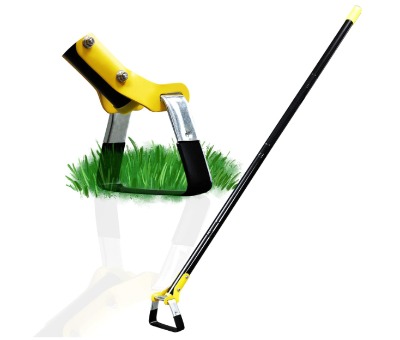
The DonSail scuffle hoe is a different type of weeding tool. Instead of pulling individual weeds, it uses a loop blade that you push and pull through the soil just below the surface. This cuts weeds off at the root level.
The adjustable handle extends from 30 to 61 inches, so users of different heights can find a comfortable working position. The loop stirrup design is a classic approach to weeding that’s been used for decades.
Best Use Cases
This tool excels at maintaining vegetable gardens, clearing pathways, and weeding between rows of plants. It’s perfect for areas where you have many small weeds rather than a few big ones. If you need to clear weeds from a large area quickly, this tool works faster than individual weed pullers.
Gardeners with vegetable plots or large flower beds will get the most use from this tool.
Key Features Explained Simply
The stirrup or loop blade is shaped like a triangle or diamond. As you push it forward or pull it back, both edges cut weeds just below the soil surface. This severs the weed from its root without digging deep holes.
The adjustable handle is a practical feature. Shorter people can use it at 30 inches, while taller people can extend it to 61 inches. This customization helps prevent back strain.
The heavy-duty construction means it can handle regular use without bending or breaking. The blade stays sharp through many weeding sessions.
Real-Life Usage Insight
Using a scuffle hoe has a different rhythm than other weeding tools. You walk slowly forward or backward, pushing and pulling the blade through the top layer of soil. The motion is smooth and almost meditative once you get into it.
The blade glides under small weeds and severs them cleanly. You can cover a lot of ground quickly – much faster than pulling individual weeds. The cut weeds dry out on the surface and die within a day or two.
The adjustable handle takes just a minute to set to your height. Once it’s adjusted, the tool feels natural to use.
Honest Pros and Cons
Pros:
- Covers large areas very quickly
- Adjustable handle fits different heights
- Stand-up operation saves your back
- Works well between garden rows
- Effective on many small weeds at once
Cons:
- Doesn’t remove roots completely
- Not good for big, established weeds
- Ineffective on weeds with deep taproots
- Requires relatively clear working space
- Weeds may regrow faster than with root removal
Performance Discussion
The scuffle hoe performs its specific job very well. It’s not designed to pull out entire roots, so you can’t judge it by that standard. What it does is quickly clear small weeds from large areas, and at that task, it excels.
The blade cuts cleanly and doesn’t clog up with soil. You can work for extended periods without stopping to clean it. The cutting edges stay sharp through normal use, though they will eventually need sharpening like any blade.
Because this tool cuts weeds rather than removing roots, some weeds will regrow. But regular use – once a week or so – keeps weeds from getting established. It’s a maintenance tool more than a heavy-duty weed removal tool.
Ease of Use
The scuffle hoe is easy to use once you understand the push-pull motion. There’s no heavy lifting or pulling involved. The work is more about steady movement than strength.
The adjustable handle makes it comfortable for almost anyone. You’re not bending or straining your back at all.
The main skill is learning to keep the blade just below the surface. If you dig too deep, you’re working harder than necessary. If you’re too shallow, you miss the weed roots.
Value for Money
This tool offers strong value if you have the right type of weeding needs. For vegetable gardeners and anyone maintaining larger planted areas, it saves time and effort. The adjustable feature and heavy-duty construction add to the value.
If your main problem is big weeds with deep roots, this isn’t the right tool and wouldn’t be good value. But for its intended purpose, it’s priced fairly for the quality you get.
Comparing the Five Tools: Which One Wins?
Each of these tools wins in different categories. There’s no single best tool for everyone because people have different gardens, different physical abilities, and different weeding challenges.
The Fiskars Ergo Weeder wins for precision and control. If you need to work carefully around prized plants, this is your top choice. It’s also the most affordable option on this list.
Grampa’s Weeder wins for back-friendly operation and complete root removal. If pulling entire dandelions without bending is your priority, this tool delivers. It’s the best choice for people with mobility limitations.
The 2-in-1 Weed Puller and Hoe wins for versatility. If you want one tool that handles multiple jobs and you have the strength to use a heavier implement, this makes sense. It saves money and storage space.
The Portable Garden Weeder wins for comfort and portability. If you do light weeding in containers or small beds and want the most comfortable grip, this is it. It’s perfect for quick, frequent weeding sessions.
The DonSail Scuffle Hoe wins for speed and efficiency over large areas. If you maintain vegetable rows or large beds and want to clear small weeds fast, this tool is unmatched. It’s the best maintenance tool on this list.
Your choice depends on matching these strengths to your specific situation.
Buying Guide: How to Pick Your Perfect Weeding Tool
Before you buy any weeding tool, ask yourself these questions:
What type of weeds do you fight most often? Big dandelions with deep taproots need different tools than small, shallow-rooted weeds. Know your enemy.
How much area do you need to cover? A small flower bed needs different tools than a half-acre lawn. Scale matters.
What’s your physical situation? Back problems, knee issues, or limited strength all affect which tool will work best for you. Be honest about your capabilities.
Where are your weeds growing? Open lawn, crowded flower beds, vegetable rows, and pathways all favor different tool types.
How often will you weed? Daily light maintenance suggests different tools than monthly heavy-duty sessions.
Once you’ve answered these questions, you can narrow down your choices quickly.
For precision work in flower beds: Pick a handheld tool like the Fiskars or Portable Weeder.
For stand-up operation on lawns: Pick Grampa’s Weeder or the 2-in-1 tool.
For fast maintenance of large areas: Pick the scuffle hoe.
For maximum versatility: Pick the 2-in-1 tool.
For tightest budget: Pick the Portable Weeder or Fiskars tool.
Also consider the soil type in your garden. Clay soil and rocky soil are harder on tools and harder to work. Sandy or loamy soil is easier. Very hard soil might need pre-watering before any tool works well.
Think about storage too. Long-handled tools need more space. If your shed is crowded, compact tools make more sense.
Finally, consider your gardening style. Do you like working close to your plants, hands in the dirt? Or do you prefer standing back and working efficiently? Your personality matters as much as your practical needs.
Who Should Buy These Products?
The Fiskars Ergo Weeder is perfect for:
- Container gardeners
- People with small to medium flower beds
- Gardeners who enjoy detailed, careful work
- Anyone comfortable kneeling or sitting while gardening
- Beginners who want a reliable basic tool
Grampa’s Weeder is perfect for:
- People with back or knee pain
- Homeowners with lawns full of dandelions
- Gardeners who refuse to bend while working
- Anyone with larger properties to maintain
- People who want complete weed removal
The 2-in-1 Weed Puller and Hoe is perfect for:
- Vegetable gardeners who need multiple functions
- People with limited storage space
- Homeowners who want one tool for most jobs
- Gardeners willing to handle a heavier tool
- Those who like stand-up operation
The Portable Garden Weeder is perfect for:
- Elderly gardeners who want lightweight tools
- People with small gardens or containers
- Casual gardeners who weed frequently but lightly
- Anyone on a tight budget
- Gardeners who prioritize hand comfort
The DonSail Scuffle Hoe is perfect for:
- Vegetable gardeners with row plantings
- People maintaining large planted areas
- Gardeners who prefer prevention over cure
- Those willing to weed regularly for best results
- Anyone who values speed and efficiency
Don’t buy a stand-up tool if you have a tiny garden where a hand tool works fine. Don’t buy a hand tool if bending hurts your back. Match the tool to your real situation, not to what seems cool or what someone else recommends.
Common Mistakes to Avoid When Weeding
Even with the right tool, people make mistakes that create extra work or damage their gardens.
Mistake 1: Weeding at the wrong time. The best time to weed is after rain or watering when soil is moist but not soggy. Dry, hard soil makes any tool work harder. Muddy soil makes tools stick and clog.
Mistake 2: Letting weeds get too big. Small weeds are easier to remove than established ones. Weed regularly instead of waiting until your garden is overrun.
Mistake 3: Not removing the whole root. If you cut off the top but leave the root, many weeds will grow back. Use a tool that gets the root or weed frequently enough that regrowth doesn’t matter.
Mistake 4: Disturbing too much soil. Digging huge holes around every weed damages nearby plant roots and brings dormant weed seeds to the surface. Use the right-sized tool for the weed.
Mistake 5: Working too fast with precision tools. Hand weeders and individual pullers work best when used carefully. Rushing leads to broken weeds and missed roots.
Mistake 6: Working too slow with maintenance tools. Scuffle hoes and similar tools work best with steady, rhythmic motion. Overthinking each weed wastes time.
Mistake 7: Using the wrong tool for the situation. A scuffle hoe in a crowded flower bed is frustrating. A hand weeder on a weed-filled lawn is exhausting. Use the right tool for the job.
Mistake 8: Not maintaining your tools. Clean your tools after use. Sharpen blades when needed. Oil moving parts. Proper maintenance makes tools work better and last longer.
Mistake 9: Buying on price alone. The cheapest tool often creates the most frustration. A good tool that fits your needs saves time and pain, making it worth the investment.
Mistake 10: Ignoring your body’s signals. If your back hurts, stop and switch to a stand-up tool. If your hands cramp, take breaks or get a tool with better ergonomics. Garden smart, not hard.
Final Verdict: The Best Garden Tool for Weeding
After reviewing all five tools, here’s my honest take:
For most gardeners with mixed needs, Grampa’s Weeder offers the best combination of effectiveness, comfort, and ease of use. It removes weeds completely, saves your back, and works quickly enough for regular lawn and garden maintenance. The bamboo construction is quality material that lasts. Yes, it costs more than basic tools, but the back-saving benefits and root removal make it worth the price for anyone with a yard to maintain.
However, the “best” tool really depends on your specific situation:
If you have mostly flower beds and small gardens, the Fiskars Ergo Weeder gives you precision and value at a lower price. It’s the smart choice for detail-oriented gardening.
If you have large vegetable gardens or extensive planted areas, the DonSail Scuffle Hoe will save you the most time. It’s the efficiency champion.
If you’re on a tight budget or have very light weeding needs, the Portable Garden Weeder gets the job done without breaking the bank.
If you want maximum versatility and don’t mind a heavier tool, the 2-in-1 Weed Puller and Hoe gives you options.
The key is being honest about what you need. Don’t buy a tool because it sounds impressive. Buy the tool that matches your garden, your body, and your weeding style.
Whatever tool you pick, use it regularly. Weeds are easier to control when you tackle them often. A few minutes of weeding each week beats hours of battle once a month.
Your garden deserves attention, but you deserve comfort and efficiency while giving that attention. The right weeding tool makes gardening more enjoyable instead of a painful chore.
Take a good look at your garden. Think about what hurts when you weed. Consider how much time you have. Then pick the tool that solves your biggest problem. That’s the best garden tool for weeding in your specific world.
Happy gardening, and may your weeds be few and easy to pull!
Hi, I’m Mary, the founder of GardenCure.com. I’m passionate about creating healthy, beautiful gardens and well-kept lawns. I share practical experience and trusted advice on garden and lawn gear that truly works. With the support of my dedicated research team, our writers produce honest, in-depth reviews using reliable, authentic sources—helping you choose the right tools with confidence for your outdoor space.