5 Best Garden Tool Organizer In 2026
You know that feeling when you can’t find your rake buried under a pile of shovels? Or when your garden tools are scattered across the garage floor like a tornado just passed through? Trust me, I get it. A messy tool collection is frustrating and wastes precious time.
In this article
That’s where a solid garden tool organizer comes in handy. These simple storage solutions keep everything neat, accessible, and safe from damage. No more tripping over handles or searching for that one specific trowel buried somewhere in the chaos.
I’ve looked at dozens of organizers on the market today, and honestly, not all of them live up to their promises. Some are flimsy, others are too complicated to set up, and a few just don’t hold enough tools to be worth the space they take up.
This guide breaks down five of the most popular garden tool organizers available right now. I’ll walk you through what makes each one tick, where they shine, and where they fall short. By the end, you’ll know exactly which organizer fits your needs and budget.
Let’s jump right in.
1. 3 Tier Garden Tool Organizer – The Heavy-Duty Champion
Product Description
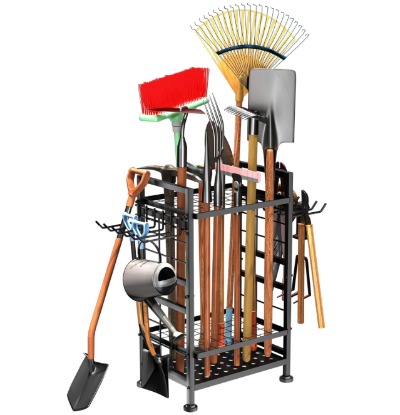
This three-tiered storage tower is built like a tank. The metal construction feels solid the moment you see it, with a black powder-coated finish that resists rust and weather damage. The design uses a vertical approach to save floor space while maximizing storage capacity.
The organizer stands tall with three separate levels. Each tier has multiple slots and hooks designed to cradle long-handled tools securely. The base is wide enough to prevent tipping, even when fully loaded with heavy equipment.
Best Use Cases
This organizer works great in garages with limited floor space. If you have a collection of long-handled tools like rakes, hoes, spades, and cultivators, this tower handles them all without breaking a sweat.
It’s also perfect for sheds where you need everything visible at a glance. Outdoor use works too, since the metal construction holds up well against rain and humidity. Some folks even use it on covered patios or in basement storage areas.
Key Features Explained
The 78-tool capacity sounds impressive, and it actually delivers. The hooks and slots are arranged smartly across all three levels, so you can fit everything from thick shovel handles to thin garden stakes.
Each tier rotates slightly for easier access. The spacing between hooks prevents tools from banging into each other. The bottom tier sits close to the ground, perfect for storing smaller items or heavier tools that you don’t want to lift too high.
The assembly requires basic tools, but nothing fancy. Most people get it together in about 30 minutes. The instructions are clear with simple diagrams that show exactly where each piece goes.
Real-Life Usage Insight
This organizer really shines when you load it up completely. The weight distribution stays balanced, so there’s no wobbling or leaning. The hooks grip tool handles firmly without leaving marks or scratches.
The height makes everything visible from across the garage. You can grab what you need without moving other tools out of the way. The black finish hides dirt and scratches well, so it looks decent even after months of use.
One thing to note: the wider the variety of handle sizes you have, the better this works. If all your tools have identical handles, you might not need all 78 slots. But for most gardeners with a mixed collection, this capacity is genuinely useful.
Honest Pros and Cons
Pros:
- Holds up to 78 tools without feeling cramped
- Heavy-duty metal construction that lasts
- Three-tier design saves floor space
- Stable base prevents tipping
- Rust-resistant coating for outdoor use
- Easy to assemble with clear instructions
- Hooks keep tools separated and protected
Cons:
- Takes up vertical space, so low ceilings might be an issue
- Heavier than plastic organizers, making relocation harder
- Black finish shows dust in brightly lit areas
- Bottom tier might be too low for people with back problems
Performance Discussion
The organizer handles weight exceptionally well. I’ve seen people load it with heavy digging tools, metal rakes, and solid wood handles without any bending or stress on the frame.
The powder coating resists chips and scratches better than painted finishes. Even after scraping against it with metal tools, the surface stays intact. Rust hasn’t been an issue for outdoor users, even in humid climates.
The hooks maintain their grip strength over time. Some cheaper organizers have hooks that bend or loosen after repeated use, but this one stays firm. The tools don’t slip out, even if you bump into the organizer accidentally.
Ease of Use
Getting tools in and out is straightforward. The spacing lets you pull one tool without disturbing others nearby. The height of each tier makes sense, with the most frequently used tools easy to reach at mid-level.
Cleaning the organizer is simple. A quick wipe-down removes dirt and cobwebs. The open design doesn’t trap debris like enclosed cabinets do.
Reorganizing your tools is easy too. If you want to change which tools go where, the hooks accommodate different arrangements without any tools or adjustments.
Value for Money
For the price point, you’re getting solid construction that should last for years. The capacity is genuine, not inflated marketing nonsense. Compare this to buying multiple smaller organizers, and the value becomes clear.
The durability means you won’t replace it next season or the one after that. That longevity makes the initial investment worthwhile for serious gardeners with extensive tool collections.
2. Rubbermaid Garage Tool Tower Rack – The Wheeled Wonder
Product Description
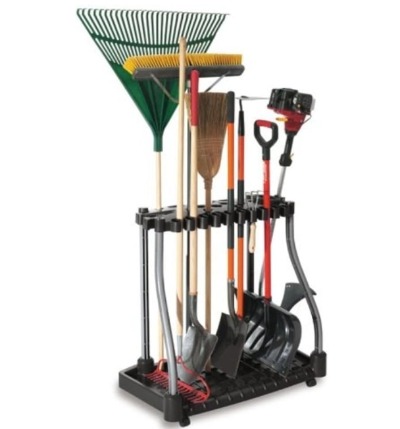
Rubbermaid brings their reputation for tough storage solutions to this wheeled tower rack. The design focuses on mobility, with four sturdy wheels attached to a vertical storage frame. The capacity maxes out at 40 long-handled tools, which covers most home gardening needs.
The gray and black color scheme fits well in any garage or shed. The construction uses thick plastic components reinforced with metal where stress is highest. The wheels lock in place when you want the organizer stationary.
Best Use Cases
This organizer excels in situations where you need to move tools around. If you work in different areas of your property and want to wheel your tools closer to the job site, this design makes sense.
It’s also great for shared spaces where you might need to push the organizer out of the way temporarily. Cleaning the garage becomes easier when you can roll everything to one side.
People who reorganize their storage spaces frequently appreciate the mobility. You can try different locations without the hassle of emptying and moving a heavy, fixed organizer.
Key Features Explained
The wheels are the star feature here. They’re larger than typical caster wheels, which helps them roll smoothly over garage floors, even with small bumps or cracks. The locking mechanism clicks into place firmly.
The tower holds tools in a vertical arrangement with staggered grips. This design lets you fit 40 tools in a surprisingly small footprint. The grips are molded plastic that won’t scratch tool handles.
Assembly is genuinely easy. Rubbermaid designed this with snap-together parts that don’t require any tools. Most people finish assembly in under 20 minutes. The pieces fit together tightly without gaps or wobbling.
Real-Life Usage Insight
The mobility changes how you work with your tools. Instead of walking back and forth to the garage, you can position your entire tool collection near your work area. This saves time and energy during big yard projects.
The wheels handle outdoor terrain reasonably well. Concrete, asphalt, and packed dirt work fine. Grass or gravel gets trickier, but short distances are manageable. The locks hold the organizer steady on slight inclines.
The plastic construction keeps the weight down, but it’s still sturdy enough for typical garden tools. Heavy digging bars or solid steel tools load it up quickly, so you might hit the weight limit before the tool limit.
Honest Pros and Cons
Pros:
- Wheels make moving the organizer effortless
- Locking wheels keep it stable when parked
- Tool-free assembly saves time
- 40-tool capacity works for most gardeners
- Compact footprint despite decent capacity
- Rubbermaid brand reliability
- Grips protect tool handles from scratches
Cons:
- Lower tool capacity than some competitors
- Plastic construction less rugged than all-metal options
- Wheels can collect dirt and need occasional cleaning
- Not ideal for very heavy tools in large quantities
- More expensive than similar capacity non-wheeled organizers
Performance Discussion
The organizer performs best when loaded with a balanced mix of tool weights. Stack all your heaviest tools on one side, and it might tip when you roll it. Distribute the weight evenly, and it rolls smoothly with no stability issues.
The plastic holds up well under normal use. Sun exposure hasn’t caused brittleness or fading for outdoor users. The grips maintain their shape and don’t deform, even when holding heavy tools for extended periods.
Rolling performance stays consistent over time. The wheels don’t develop wobbles or squeaks like some cheap casters do. The locks remain functional after hundreds of lock-unlock cycles.
Ease of Use
Grabbing tools is simple and quick. The vertical layout puts everything at easy reach. The grips release tools smoothly without requiring two hands or excessive force.
Moving the organizer is truly effortless. Even when fully loaded, one person can push it around without strain. The locks engage with a simple foot press.
Maintenance is minimal. Wipe down the plastic occasionally, and keep the wheels free of debris. That’s about it.
Value for Money
The price sits in the mid-range, and the mobility feature justifies the cost if you’ll actually use it. For stationary storage, you can find higher-capacity organizers for less money.
The Rubbermaid name carries weight, though. Their products typically last longer than off-brand alternatives, which factors into long-term value.
3. Garden Tool Organizer – The Balanced All-Rounder
Product Description
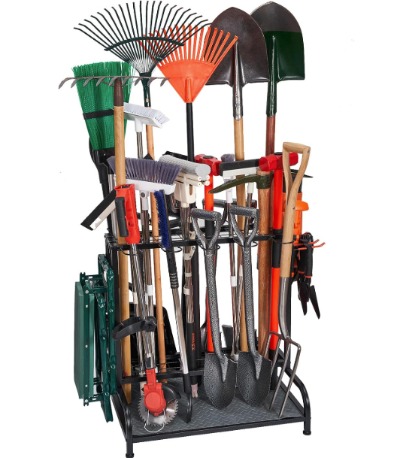
This steel rack offers a middle ground between extreme capacity and compact design. Built to hold 55 long-handled tools, it gives you plenty of storage without dominating your entire garage wall.
The heavy-duty steel construction comes with a black powder-coated finish. The frame design uses vertical posts with horizontal crossbars, creating a grid pattern of hooks and slots. The structure mounts to the wall or stands freely, depending on your preference.
Best Use Cases
This organizer fits well in medium-sized garages or sheds where you have moderate wall space available. If you have a decent tool collection but don’t need industrial-level storage, this capacity hits the sweet spot.
Wall mounting works great for permanent installations. The freestanding option suits renters or people who might move the organizer later. Both methods provide solid stability.
The design works equally well in outdoor sheds, basement storage areas, or even covered outdoor spaces. The steel construction and protective coating handle various environments without issues.
Key Features Explained
The 55-tool capacity is real, not theoretical. The hooks and slots are positioned to accommodate standard garden tool handles, from slim cultivator handles to thick shovel grips.
Assembly is straightforward with included instructions. The parts fit together logically, and the hardware is clearly labeled. You’ll need basic tools like a screwdriver and wrench, but nothing specialized.
The mounting brackets are sturdy and come with all necessary hardware. Wall studs provide the best support, but the organizer also includes anchors for different wall types. The freestanding base (sold separately in some versions) keeps it upright without wall mounting.
Real-Life Usage Insight
This organizer excels at keeping a typical home garden collection organized. Rakes, hoes, shovels, spades, brooms, and specialty tools all fit comfortably. The spacing prevents tool handles from overlapping or tangling.
The steel frame doesn’t flex or bend when loaded. Even with all 55 slots filled, the structure maintains its shape and stability. The hooks hold tools securely without letting them slip out.
The height is comfortable for most people. The top hooks are reachable without a step stool, and the bottom hooks don’t require excessive bending. This ergonomic design makes daily use more pleasant.
Honest Pros and Cons
Pros:
- 55-tool capacity balances space and storage
- Heavy-duty steel construction
- Wall mount or freestanding options
- Powder-coated finish resists rust
- Easy assembly process
- Hooks keep tools separated
- Works in various locations (garage, shed, basement)
Cons:
- Requires wall mounting for maximum stability
- Steel makes it heavier than plastic alternatives
- Takes up significant vertical space
- May need separate base for freestanding use
- Black finish shows scratches over time
Performance Discussion
The organizer handles daily use without wear. The hooks maintain their position and grip strength month after month. The frame doesn’t develop rattles or loose connections.
Weather resistance is solid for typical shed or garage conditions. The powder coating prevents surface rust, though scratches down to bare metal might eventually rust if left untreated. A quick touch-up with spray paint solves this if needed.
Load distribution works well across the entire frame. You can load heavy tools anywhere without worrying about weak spots. The construction quality is consistent throughout.
Ease of Use
Accessing tools is quick and convenient. The open design lets you see everything at once. No fumbling around trying to remember where you put that specific tool.
Installation takes about 45 minutes for wall mounting, less for freestanding. The process is simple enough for one person, though having a helper makes alignment easier.
Adjusting your tool arrangement is hassle-free. Move tools around until you find the layout that works best for your workflow.
Value for Money
The price reflects the quality construction. You’re paying for steel that lasts, not flimsy materials that need replacement soon. The capacity-to-cost ratio is competitive compared to similar organizers.
For gardeners with established tool collections, this organizer provides long-term value through durability and functionality.
4. Heavy Duty Garden Tool Organizer – The Industrial Option
Product Description
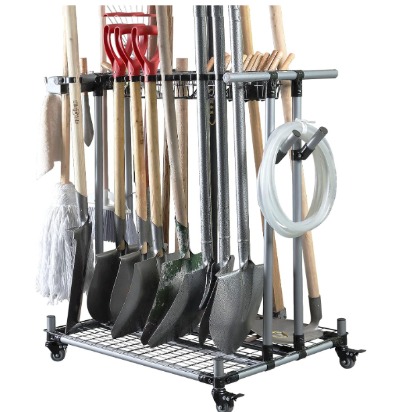
This metal rack targets users with serious tool collections and heavy-duty equipment. Built for large, long farming tools and lawn implements, it prioritizes strength and capacity over compact design.
The construction uses thick-gauge metal throughout, with reinforced joints at stress points. The finish is basic but functional, focusing on durability rather than aesthetics. The size is substantial, designed for spacious garages or large sheds.
Best Use Cases
This organizer makes sense for people with extensive properties who own commercial-grade tools. If you maintain multiple acres, operate a small farm, or run a landscaping operation, this heavy-duty storage handles the demands.
Large garages or barn storage areas can accommodate the size without feeling cramped. The organizer keeps professional equipment organized and ready for use.
It’s also suitable for tool-sharing situations, like community gardens or neighborhood equipment co-ops. The robust construction withstands frequent use by multiple people.
Key Features Explained
The heavy-duty designation is accurate. The metal thickness exceeds standard consumer organizers significantly. This extra material prevents bending or warping under substantial weight.
The storage capacity accommodates large, long farming tools that many organizers can’t handle. Wide shovel heads, thick rake tines, and heavy metal tools fit comfortably.
Assembly requires more effort than lighter-duty options. The weight of the components and the number of connection points means you’ll spend time putting it together. Having a second person helps tremendously.
Real-Life Usage Insight
This organizer proves its worth when loaded with professional-grade tools. Commercial shovels, industrial rakes, heavy cultivators, and large hoes all find secure spots. The frame doesn’t sag or complain under the weight.
The open design lets air circulate around tools, which helps them dry after use. This reduces rust on metal tool heads and prevents wood handles from developing mildew.
The size means you can store your entire tool collection in one location. No more spreading tools across multiple smaller organizers or leaving some leaning against walls.
Honest Pros and Cons
Pros:
- Genuinely heavy-duty construction
- Handles large, long farming tools
- Accommodates commercial-grade equipment
- Metal construction for maximum durability
- Large storage capacity
- Open design promotes air circulation
- Suitable for professional use
Cons:
- Requires significant space
- Heavy and difficult to move once assembled
- Assembly is time-consuming
- Basic aesthetic design
- Higher price point
- Overkill for casual gardeners with small tool collections
Performance Discussion
The organizer excels in demanding conditions. Constant use, heavy loads, and rough handling don’t phase it. The metal withstands impacts from being bumped by vehicles or equipment.
The joints and connection points remain tight even after years of use. Cheaper organizers often develop wobbles at connection points, but this one maintains structural integrity.
Weather exposure affects it minimally. Rain, humidity, and temperature swings don’t compromise the metal’s strength. Surface rust might appear over time, but it doesn’t affect functionality.
Ease of Use
Using the organizer daily is straightforward once it’s set up and loaded. The height and spacing accommodate easy tool retrieval. The sturdy construction means tools don’t shift or fall when you pull one out.
Installation is labor-intensive. Expect to spend a couple of hours assembling and securing it properly. The weight makes positioning challenging for one person.
Maintenance involves occasional inspections of connection points and a wipe-down to remove debris. Treating any rust spots prevents them from spreading.
Value for Money
The price is higher than consumer-grade organizers, but you’re paying for professional-quality construction. For people who need this level of durability, the investment makes sense.
Casual gardeners will find better value in lighter-duty options. This organizer’s benefits only shine when you actually need its heavy-duty capabilities.
5. Keomaisyto Garden Tool Organizer – The Versatile Tier System
Product Description
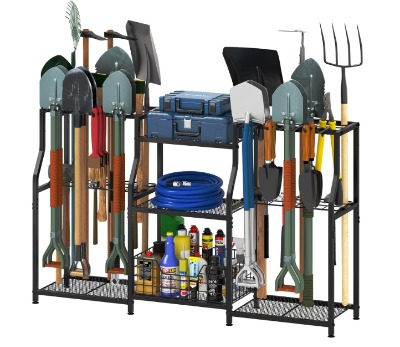
This three-tier utility rack combines vertical storage with horizontal accessibility. The design uses multiple levels with hooks distributed across each tier, creating organized zones for different tool types.
The construction mixes metal framing with reinforced connection points. The black finish matches most garage and shed aesthetics. The compact footprint makes it suitable for spaces where floor area is limited.
Best Use Cases
This organizer works well in mixed-use storage areas where you need to organize more than just garden tools. The tier system lets you dedicate each level to different tool categories or separate garden tools from household items.
Basements, utility rooms, and multi-purpose sheds benefit from this organizational approach. The vertical design maximizes storage in tight spaces.
Home gardeners with varied tool collections find the tier system helpful for categorizing tools by function, season, or frequency of use.
Key Features Explained
The three-tier design creates natural zones. Many users put frequently used tools on the middle tier, seasonal items up top, and heavy or occasional-use tools on the bottom.
The hooks are strategically placed to prevent overcrowding. Each tier has enough spacing to keep tool handles separated, reducing tangling and making selection easier.
Assembly falls into the moderate difficulty range. The instructions guide you through building each tier separately, then stacking them together. The process takes about an hour for most people.
Real-Life Usage Insight
The tier system really helps with organization beyond simple storage. You can create a logical system that makes tool selection faster and more intuitive.
The structure stays stable when properly assembled. The base distributes weight well, and the tiered design actually adds stability through its interlocking structure.
The hooks accommodate various handle sizes and shapes. From thin hand tool handles to thick shovel grips, the design adapts to different tools without modifications.
Honest Pros and Cons
Pros:
- Three-tier design for organized categorization
- Versatile use beyond just garden tools
- Compact footprint
- Multiple hooks per tier
- Good for basement, garage, yard, or shed
- Stable construction when assembled correctly
- Black finish suits most storage areas
Cons:
- Assembly takes longer than simpler designs
- Total tool capacity lower than single-frame alternatives
- Tiers can be tricky to align during assembly
- Requires level floor for best stability
- Not as heavy-duty as all-steel competitors
Performance Discussion
The organizer handles typical home garden tool collections effectively. The weight distribution across three tiers prevents overloading any single section. The hooks maintain their position without bending.
The metal construction holds up well in garage and shed environments. Humidity and temperature changes don’t cause warping or deterioration. The finish resists scratches from normal tool contact.
The tier connections remain secure over time. Some tiered organizers develop wobbles at connection points, but this design uses reinforced connections that stay tight.
Ease of Use
Daily use is convenient once you establish your organizational system. The visual separation of tiers makes finding the right tool quick and easy.
Loading and unloading tools is straightforward. The hook design makes hanging tools simple, even with one hand occupied holding other items.
Assembly requires patience and attention to the instructions. Taking your time during setup pays off with a stable, well-organized result.
Value for Money
The price sits in the mid-range category. You’re getting versatility and organization benefits that justify the cost for people who value systematic storage.
For pure tool capacity per dollar, other options offer more hooks. But if organization and categorization matter to you, this tier system delivers value through improved workflow.
Comparing the Options: Which One Fits Your Needs?
Looking at all five organizers together reveals some clear patterns. Your best choice depends on your specific situation, tool collection, and storage space.
The 3 Tier Garden Tool Organizer leads in total capacity. With space for 78 tools, it handles the largest collections. The heavy-duty construction ensures it lasts, but you need vertical space and a permanent location.
The Rubbermaid Garage Tool Tower Rack stands out for mobility. If you need to move your tools around or frequently reorganize your space, those wheels make a real difference. The 40-tool capacity works for most home gardeners.
The 55-tool Garden Tool Organizer hits a sweet spot for balanced storage. It offers enough capacity for serious gardeners without overwhelming smaller spaces. The wall mount or freestanding options add flexibility.
The Heavy Duty Garden Tool Organizer targets professional users and large properties. The industrial construction handles commercial tools and constant use. It’s overkill for casual gardening but perfect for demanding applications.
The Keomaisyto three-tier system brings organizational advantages. The tiered approach helps categorize tools logically, making it easier to find what you need quickly. The versatility extends beyond just garden tools.
Smart Buying Guide: What to Look For
Capacity Needs
Count your tools before buying. Include everything from rakes and shovels to hand tools you want to store. Add about 20 percent extra capacity for future tool purchases. This prevents outgrowing your organizer too quickly.
Don’t just count tools – consider their sizes. Wide rake heads need more space than slim cultivator handles. Thick shovel grips require different hooks than thin handles.
Space Constraints
Measure your available space carefully. Get the height, width, and depth of where you plan to put the organizer. Remember that you need clearance to remove tools, so add extra inches to your measurements.
Vertical organizers save floor space but require ceiling clearance. Horizontal designs use more floor area but work in low-ceiling spaces.
Construction Quality
Check the materials carefully. Steel construction lasts longer than plastic but weighs more. Powder-coated finishes resist rust better than basic paint.
Look at connection points and joints. Reinforced connections indicate better quality. Weak joints lead to wobbling and eventual failure.
Installation Complexity
Consider your comfort level with assembly. Some organizers snap together in minutes, while others require tools and take hours.
Read customer reviews specifically about assembly. If multiple people mention confusing instructions or missing parts, that’s a red flag.
Budget Reality
Cheap organizers often disappoint. They bend under weight, rust quickly, or fall apart during assembly. Spending a bit more upfront usually saves money long-term.
That said, don’t overspend on features you won’t use. Industrial-strength organizers cost more, but casual gardeners don’t need that level of durability.
Mobility Requirements
Decide if you need to move the organizer regularly. Wheeled options cost more but save effort if mobility matters. Fixed organizers provide better stability for permanent locations.
Environmental Factors
Consider where you’ll use the organizer. Outdoor storage requires weather-resistant materials. Indoor garage use is less demanding on materials.
Humidity, temperature swings, and direct weather exposure all affect longevity. Match the organizer’s construction to your environment.
Who Should Buy These Products?
The 3 Tier Heavy-Duty Organizer
Buy this if you have an extensive tool collection and permanent storage space. It suits serious gardeners who accumulate tools over years and want everything organized in one spot.
Skip it if you have limited vertical space or need to move your tools regularly. The size and weight make relocation impractical.
The Rubbermaid Wheeled Tower
This works for people who value mobility and have moderate tool collections. If you work in different areas of your property or need flexible storage, the wheels deliver real benefits.
Pass on it if you have a huge tool collection or only work in one area. The lower capacity and higher price only make sense if you use the mobility feature.
The 55-Tool Balanced Organizer
This suits gardeners with established tool collections who want reliable storage without extremes. If you need something between basic and industrial, this fits the bill.
It’s not ideal for people with very small or very large collections. The mid-range capacity means it might feel too big or too small at the extremes.
The Industrial Heavy-Duty Rack
Buy this if you maintain large properties, own commercial-grade tools, or run a landscaping operation. The construction handles professional demands that would destroy lighter organizers.
Don’t buy it for casual gardening or small yards. The size, weight, and price only make sense for demanding applications.
The Keomaisyto Tier System
This works for organized people who like categorizing their tools. If you value systematic storage and use your garage or shed for multiple purposes, the tier design helps maintain order.
Skip it if you just want basic storage without organizational complexity. Simpler designs might serve you better.
Common Mistakes to Avoid
Overestimating Capacity Needs
Many people buy organizers that are too large for their actual tool collections. The empty slots look wasteful, and the organizer takes up space unnecessarily.
Count your tools realistically. Consider future purchases, but don’t assume you’ll triple your collection.
Ignoring Space Measurements
Forgetting to measure available space leads to organizers that don’t fit. Either they’re too tall, too wide, or block access to other storage areas.
Measure twice, buy once. Include clearance space for removing tools.
Skipping Assembly Instructions
Trying to assemble organizers without reading instructions causes problems. You might put pieces together wrong, strip screws, or miss important stability features.
Take time to read the instructions completely before starting. Gather all tools you’ll need first.
Mixing Incompatible Tool Sizes
Putting very heavy tools next to very light ones can cause imbalance. Storing tools with wildly different handle sizes in the same section leads to wasted space.
Group similar tools together. Distribute weight evenly across the organizer.
Neglecting Maintenance
Assuming organizers need zero maintenance leads to rust, loose connections, and reduced lifespan. Even durable materials benefit from occasional attention.
Wipe down the organizer periodically. Tighten any loose bolts. Treat rust spots promptly.
Choosing Based on Price Alone
Buying the cheapest option often backfires. Low prices usually mean weak materials, poor design, or missing features.
Consider cost per year of use, not just initial price. A durable organizer that lasts ten years costs less annually than a cheap one you replace every two years.
Forgetting Future Needs
Buying an organizer that barely fits your current collection leaves no room for growth. Most gardeners acquire more tools over time.
Build in expansion room. A slightly larger organizer now prevents replacing it later.
Final Verdict: Making Your Decision
After examining these five organizers in detail, here’s the bottom line for each one.
The 3 Tier Garden Tool Organizer wins for maximum capacity and durability. If you have a large tool collection and permanent storage space, this organizer delivers excellent long-term value. The 78-tool capacity is genuine, and the construction quality ensures years of reliable use.
The Rubbermaid Garage Tool Tower Rack excels at mobility. The wheeled design transforms how you work with your tools, bringing them where you need them. The 40-tool capacity handles most home gardens, and the Rubbermaid name backs up the quality.
The Garden Tool Organizer with 55-tool capacity strikes the best balance for typical gardeners. It offers enough storage for serious collections without overwhelming smaller spaces. The dual mounting options add flexibility that many users appreciate.
The Heavy Duty Garden Tool Organizer stands alone for professional applications. The industrial construction justifies the higher price if you actually need that level of durability. Casual gardeners should look elsewhere, but professionals will appreciate the robust design.
The Keomaisyto three-tier system brings organizational benefits beyond simple storage. If you value systematic arrangement and use your storage space for varied purposes, the tier design helps maintain order. The versatility extends its usefulness beyond just garden tools.
Your ideal organizer depends on your specific situation. Think about your tool collection size, available space, mobility needs, and budget. Match those factors to the organizer’s strengths.
A well-organized garage or shed makes yard work more enjoyable. You’ll spend less time searching for tools and more time actually using them. The right organizer pays for itself through improved efficiency and tool protection.
Take your time with this decision. Measure your space, count your tools, and consider how you actually work. The perfect organizer is out there – it’s just a matter of matching your needs to the right design.
Your tools deserve a proper home. Give them one, and they’ll serve you better for longer.

Hi, I’m Mary, the founder of GardenCure.com. I’m passionate about creating healthy, beautiful gardens and well-kept lawns. I share practical experience and trusted advice on garden and lawn gear that truly works. With the support of my dedicated research team, our writers produce honest, in-depth reviews using reliable, authentic sources—helping you choose the right tools with confidence for your outdoor space.