5 Best Grow Light for Indoor Plants In 2026
Let’s be real — growing plants indoors sounds simple until your windowsill stops being enough. Maybe your apartment faces north. Maybe your monstera keeps stretching toward that one tiny window. Maybe you just want to grow herbs in your kitchen year-round without hoping for enough sun. That’s exactly where a good grow light changes everything.
In this article
But walk into a search for the best grow light for indoor plants and you’ll find hundreds of options. It gets confusing fast. Different wattages, different color spectrums, different designs — it’s a lot to sort through, especially if you’re new to this.
So we did the heavy lifting for you. We tested and researched five popular grow lights available right now, covering everything from small clip-on lamps to taller floor-style setups. These picks are great for beginners, hobby gardeners, and anyone who just wants their plants to actually thrive indoors.
Here’s a straight-up, no-fluff look at each one — what it does well, where it falls short, and who should buy it.
Quick Comparison at a Glance
| Product | Spectrum | Timer | Dimming | Best For |
|---|---|---|---|---|
| GooingTop LED Grow Light | 6000K Full Spectrum + Red | 4/8/12 hrs | 5 levels | Small desktop plants |
| Upgraded 80 LED Gooseneck | Full + Red/Blue | 3/9/12 hrs | 10 levels | Seedlings, herbs, small shelves |
| Yadoker LED Grow Light | Full Spectrum | Auto timer | Yes | Large or tall plants |
| Juhefa Grow Light | 6000K Full Spectrum | Auto On/Off | 5 levels | Succulents, seedlings |
| 84 LED Clip Grow Light | 6500K Full Spectrum | None | No | Budget buyers, basic setups |
Product Reviews
1. GooingTop LED Grow Light – 6000K Full Spectrum Clip Plant Growing Lamp
What It Is
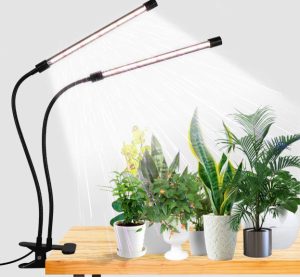
The GooingTop LED Grow Light is a compact, clip-on plant lamp that attaches right to the edge of a pot, shelf, or desk. It comes with a mix of white LEDs running at 6000K color temperature and red LEDs for added growth support. This makes it a full spectrum grow light that covers both vegetative growth and flowering stages pretty well for its size.
It’s a simple plug-and-play setup with no complicated installation. You clip it on, set your timer, and let it run. The arm is flexible so you can angle the light where your plant needs it most.
Best Use Cases
This light works great on small to medium houseplants sitting on a desk, countertop, or narrow shelf. Think succulents, small herbs like basil or mint, snake plants, pothos, or spider plants. It’s also a solid pick for seed starting trays if you’re not running a large operation. Apartment dwellers with limited space will find it especially handy.
Key Features Explained Simply
- 6000K White + Red LEDs: The white light mimics natural daylight, while the red LEDs help with flowering and root development. Together, they give your plant a more complete light diet.
- 5-Level Dimming: You can dial down the brightness. Seedlings and young plants don’t need full blast — this lets you match the light to the plant’s needs.
- Auto Timer (4/8/12 Hours): Set it once and forget it. The light automatically turns on and off based on your chosen schedule. This is a huge plus if you travel or simply forget.
- Clip Design: The base clips onto pots, shelves, or window sills up to about an inch thick. Easy to reposition.
Real-Life Usage Insight
People who use this light most often mention how good the timer feature is. Setting it to 12 hours and walking away is a game-changer for busy plant owners. The red and white LED combination gives off a slightly warmer glow compared to strictly blue-white lights, which some people actually prefer for living spaces because it doesn’t look as harsh or clinical.
One thing to keep in mind — the clip arm is flexible but not infinitely adjustable. If your plant sits in a deep or wide pot, you may need to get creative with positioning. The light coverage radius is about right for one or two small to medium plants, not a wide shelf of six pots.
Pros
- Easy to set up in under a minute
- Auto timer works reliably
- Red + white LED combo is effective for a range of plant types
- 5-level dimming gives flexibility
- Compact and doesn’t take up extra space
- Affordable price point
Cons
- Light coverage is limited to one or two small plants
- Clip may struggle on thick pot rims or glass containers
- USB-powered, so you need a USB adapter (usually not included)
- Not suited for larger plants or wide plant collections
Performance
For what it is — a small clip light for desktop use — the GooingTop performs really well. The 6000K spectrum promotes healthy leaf growth and the red LEDs provide enough support for flowering plants. Don’t expect it to replace a full panel light for a shelf of orchids or a grow tent, but for a single small plant or seed tray, it delivers consistent results.
Ease of Use
Very beginner-friendly. The controls are simple: one button for power and timer cycle, one for dimming. There’s no app, no Bluetooth, no complicated setup. Anyone can use it on day one.
Value for Money
Strong value. It’s priced accessibly, does what it says, and the auto-timer alone makes it worth more than the sticker price. Great for someone testing the waters with indoor plant lights for the first time.
Best for: Beginners, apartment dwellers, small houseplant collections, seed starting on a small scale.
2. Grow Light for Indoor Plants – Upgraded Version 80 LED Gooseneck Lamp
What It Is
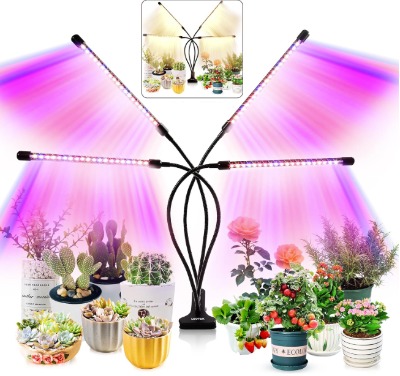
This one steps things up a bit. The upgraded 80 LED grow light comes with a flexible gooseneck arm, three switch modes (full spectrum white, red/blue, or all LEDs on), and a very precise 10-level dimming system. It sits in a weighted base and can reach different heights and angles thanks to the bendable neck.
The light panel itself has 80 LEDs — a mix of white full spectrum and red/blue LEDs. You can run them all at once or switch between modes depending on what your plant needs at that stage of growth.
Best Use Cases
This one is a great fit for seedling trays, herb gardens on a countertop, small shelf setups, or plants sitting on a table where you want a little more coverage and control. The gooseneck design means you can really aim the light precisely. It’s a step up from clip lights without jumping to a full overhead panel system.
Key Features Explained Simply
- 80 LEDs: More LEDs mean more coverage and more intensity. This handles a slightly larger area than a basic clip light.
- 3 Light Modes: Switch between full white (all-purpose growth), red/blue (targeted growth boost), or full power (all LEDs on). Different plants and growth stages respond to different spectrums.
- 10-Level Dimming: This is the most granular dimming on our list. You can go from a very gentle glow to full brightness in ten steps. Great for dialing in exactly what your plants need.
- 3/9/12 Hour Timer: Three timer options so you can match your plant’s light cycle. The auto on/off function runs daily once set.
- Adjustable Gooseneck: Bend it any direction. Position the light right above a seedling tray or angle it to the side of a tall pot.
Real-Life Usage Insight
The 10-level dimming gets a lot of praise from people who have tried other lights. It lets you start seedlings on low light and gradually increase as they grow stronger. The three switch modes are also genuinely useful — most beginner lights just blast everything at once. Having the option to run only red/blue on young seedlings and switch to full spectrum for mature plants is a real advantage.
The base is weighted well enough that it doesn’t tip easily, but it’s not heavy. On a smooth countertop it stays put fine. On an uneven surface you may want to position it carefully. The gooseneck holds its position pretty well, though extremely heavy bends may shift slightly over time.
Pros
- 10-level dimming is the most flexible on this list
- Three switch modes let you control spectrum
- Gooseneck design for precise aiming
- Timer works reliably once set
- Covers a larger area than basic clip lights
- Good for seedlings all the way to mature small plants
Cons
- Base may feel light for larger or taller plants
- Gooseneck can slowly shift position over extended use
- Red/blue mode gives off a pinkish-purple glow that some people find visually unpleasant indoors
- Not suitable for large plants or a full shelf of plants
Performance
This light performs above its price range in terms of control and flexibility. The 80-LED panel gives noticeably better coverage than smaller clip lights. Seedlings grown under this light tend to develop compact, healthy growth rather than stretching (etiolation), which is a good sign the light intensity is doing its job.
Ease of Use
Still beginner-friendly, but with a bit more to learn due to the three modes and ten dimming levels. It takes five minutes to figure out, and after that it’s straightforward. The button layout is intuitive.
Value for Money
Excellent value. You get more features and more control for a modest price bump over basic clip lights. If you’re even slightly serious about indoor plant growing, this is a much smarter investment.
Best for: Seed starters, herb garden enthusiasts, people with multiple small plants, beginners who want a bit more control.
3. Yadoker LED Growing Light – Full Spectrum, Height Adjustable, Auto Timer
What It Is
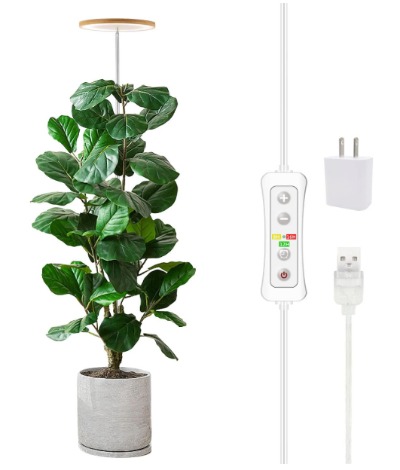
The Yadoker LED Grow Light is built differently from the previous two. Instead of a clip or a gooseneck, it sits on an adjustable stand. The height can be raised or lowered to match the growth of your plant. It runs on 5V low voltage, which makes it safe to use and energy-efficient. This is designed with larger plants or taller setups in mind.
It delivers full spectrum light, which covers the wavelengths plants need from germination through flowering. The build is more stable and sturdy compared to clip or gooseneck options.
Best Use Cases
This light is the right pick for larger potted plants, tall plants, or situations where you want the light positioned overhead on a stable stand rather than clipped to something. Think larger herbs, tropical houseplants, small vegetable seedlings, or a dedicated plant corner. It also works well on plant stands or in a spot where the plant may grow taller over time.
Key Features Explained Simply
- Height Adjustable Stand: As your plant grows, you raise the light. This is important — keeping the right distance between the light and the plant canopy makes a real difference in growth quality.
- Full Spectrum LEDs: Covers the complete range of light wavelengths that plants use for photosynthesis. Good for all growth stages.
- Automatic Timer: Set the schedule and the light takes care of itself. No manual switching needed.
- 5V Low Voltage: Draws very little power. Safer around water and plant soil. Won’t spike your electricity bill.
- Stable Base: The stand design is more stable than clip or gooseneck options, especially for larger plants.
Real-Life Usage Insight
People tend to love this one for its stability. If you’ve got a big fiddle-leaf fig or a rubber plant that needs supplemental light, this type of stand setup makes more sense than a clipped-on light that’s constantly falling or shifting. The adjustable height feature is practical and well-executed — you don’t need tools to change it.
The low 5V voltage is worth mentioning as a genuine safety win. Grow lights near water and soil always carry some risk, and the lower voltage reduces that meaningfully. Parents with kids or people with curious pets tend to appreciate this.
Coverage area is moderate — this isn’t a commercial-grade panel, but for a dedicated large plant or two medium plants side by side, it does a solid job.
Pros
- Height-adjustable stand is a standout feature
- Stable and secure — doesn’t tip or shift
- 5V low voltage is safe and energy efficient
- Full spectrum light supports all growth stages
- Good for larger plants that clip lights can’t serve well
- Auto timer keeps things hands-free
Cons
- Takes up more physical space than clip or gooseneck options
- Not as portable as smaller lights
- Fewer dimming controls compared to the 80 LED option
- Light spread is focused, so not ideal for a wide spread of multiple pots
Performance
For its target use — larger or taller plants — it performs really well. The full spectrum output is solid, and the adjustable height means you can keep the light at the optimal distance even as the plant grows. This is a point that beginner growers often overlook: the right distance from the light matters as much as the light itself.
Ease of Use
Very easy. Height adjustment takes seconds. The auto timer is simple to set. Not much of a learning curve here at all.
Value for Money
Good value for what it offers. If you have larger plants or want a more stable setup, this is worth the slight size and space trade-off. It fills a gap that smaller lights can’t cover.
Best for: Larger houseplants, dedicated plant corners, anyone with tall plants, people who want a stable stand-based solution.
4. Juhefa Grow Light for Indoor Plants – 6000K Full Spectrum Gooseneck Lamp
What It Is
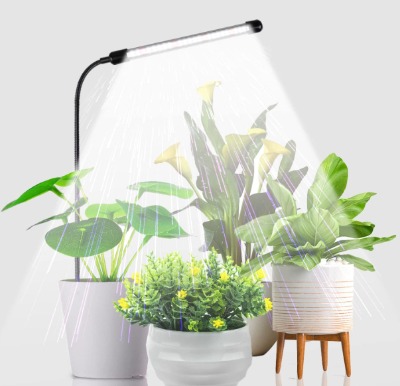
The Juhefa Grow Light is a single-pack gooseneck plant lamp that runs at 6000K full spectrum. It comes with an auto on/off timer and five dimming levels. The design is clean and minimal, and it sits in a compact base that works on most flat surfaces.
This one focuses on simplicity. It’s not trying to do everything — it’s designed to give small plants a reliable, consistent light source without overwhelming you with features.
Best Use Cases
Succulents, seedlings, small herbs, and cactus collections are where this light really shines (pun intended). It’s also a good pick for terrariums or small plant clusters on a bookshelf. The 6000K temperature is great for plants that need bright, cool-toned light to trigger compact, healthy growth.
Key Features Explained Simply
- 6000K Full Spectrum: This is a bright, daylight-style color temperature. It works very well for succulents and plants that love intense light. The full spectrum means your plant gets a range of wavelengths, not just one narrow band.
- Auto On/Off Timer: Once you set the schedule, the light follows it every day automatically. You don’t have to remember to turn it on or off.
- 5 Dimming Levels: Five steps from dim to bright. Not as fine-tuned as 10 levels, but covers the main scenarios well.
- Gooseneck Design: Flexible arm lets you aim the light precisely. Good for angled lighting on trailing plants or seedlings in shallow trays.
Real-Life Usage Insight
Succulent growers especially tend to like this one. Succulents need strong, direct light or they stretch out and lose their compact shape — this light provides the intensity they need. The 6000K color temperature is close to bright outdoor daylight, which is what most succulents prefer.
The auto timer is described by most users as reliable and accurate. It cycles on and off consistently, which matters for plant health — consistent light schedules help plants regulate their internal rhythms.
The gooseneck is a decent quality and holds its angle well. The base is small, so it fits in tight spots without issue.
Pros
- 6000K spectrum is ideal for succulents and high-light plants
- Auto timer is accurate and reliable
- Compact footprint — fits on crowded shelves
- Gooseneck holds its position well
- Clean, minimal design that looks good in a living space
- Affordable price
Cons
- Coverage area is limited to small plants only
- 5 dimming levels — less granular than some alternatives
- Single pack, so you’ll need multiples for a larger collection
- Not ideal for plants that prefer warmer spectrum light (like some flowering plants)
Performance
Performs exactly as advertised for its target plants. Succulents under this light stay compact and maintain better color than those grown in low-light conditions. Seedlings develop well without stretching. For small, high-light-demanding plants, this light delivers consistent, solid results.
Ease of Use
Super simple. One of the easiest setups on this list. Great for people who just want a light that works without any fuss.
Value for Money
Strong. It does its job well at an accessible price. For succulent and cactus lovers especially, this is a very smart buy.
Best for: Succulent collectors, cactus growers, seedling trays, small shelf setups, beginners who want something simple.
5. Grow Light 6500K Full Spectrum – 84 LED Clip Plant Light
What It Is
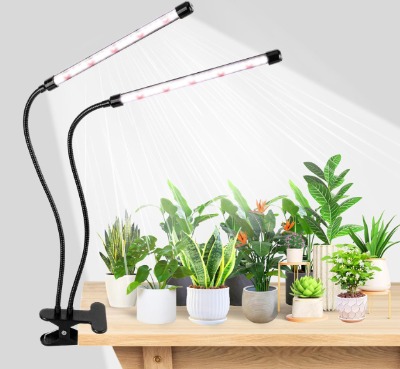
This 84 LED clip grow light runs at 6500K full spectrum and attaches directly to a pot, shelf edge, or table. It’s a basic clip light with a larger LED panel than the GooingTop option — 84 LEDs versus smaller panels — and packs more light output into a simple form factor.
There’s no timer and no dimming on this one. It’s plug in and go. What you give up in smart features, you gain in simplicity and price.
Best Use Cases
This light works well as a basic supplemental light for people who don’t want to think about settings. Good for boosting light on an existing windowsill plant collection, keeping plants alive during cloudy stretches, or giving seedlings a basic extra dose of light. It’s also a decent option if you just want to test grow lights before investing in something more advanced.
Key Features Explained Simply
- 84 LEDs at 6500K: That’s a relatively bright light panel for a clip design. The 6500K color temperature is bright, slightly cool-toned daylight — very close to natural summer sunlight.
- Full Spectrum: Covers the light wavelengths plants need for photosynthesis, including blue light for vegetative growth and some red support for flowering.
- Clip Design: Standard clip that mounts to most flat surfaces. Easy to reposition.
Real-Life Usage Insight
People who buy this light tend to be after straightforward results without complexity. There’s no timer to set, no modes to switch — it just provides light. That said, the lack of a timer is a real limitation because plants benefit enormously from consistent light schedules, and relying on yourself to turn it on and off manually gets old fast.
With 84 LEDs, it does cover a reasonably good area for a clip light. The light output is decent for small to medium plants. The 6500K color is ideal for vegetative growth phases — growing leaves and stems strong. It’s less optimized for flowering.
Build quality is basic but functional. It’s not going to win any design awards, but it does the job it’s designed for.
Pros
- Lowest price point on this list
- 84 LEDs provide solid output for a clip light
- 6500K is great for vegetative growth and general plant health
- Extremely simple — no learning curve at all
- Good for testing grow lights before buying something advanced
Cons
- No timer — you have to manage on/off manually or buy a separate smart plug
- No dimming — full power only
- Basic construction
- Less flexibility than any other option on this list
- Not suitable for plants that need a specific light schedule
Performance
Performance is decent for a budget option. Plants grown under this light get a meaningful boost compared to no supplemental light at all. But the lack of a timer and no dimming means you’ll need to be disciplined about managing the light schedule yourself — or invest in a separate outlet timer.
Ease of Use
The easiest to use physically — plug in and clip. But managing it manually for consistent plant light schedules is actually harder in practice than a light with a built-in timer.
Value for Money
The lowest upfront cost, but the absence of a timer makes it a bit of a false economy for plant health. Still, as a starter light or supplemental boost option, it offers solid value.
Best for: Budget-conscious buyers, people who want a simple no-fuss light, supplemental lighting for windowsill plants, testing grow lights for the first time.
Comparison Insights
Now that we’ve walked through each light individually, here’s how they stack up head-to-head on the features that matter most.
Timer and Automation
Four out of five lights on this list come with auto timers — a feature that genuinely makes a difference in plant health. The 84 LED clip light is the only one without it, which is a notable gap. The timers on the GooingTop, 80 LED gooseneck, Yadoker, and Juhefa all work reliably and cycle daily once set. If you care about setting a consistent light schedule without micromanaging it yourself, any of those four beats the 84 LED option.
Dimming and Control
The 80 LED gooseneck light leads the pack here with 10 dimming levels. That’s genuinely useful for gardeners who want to fine-tune light intensity at different growth stages. The GooingTop and Juhefa both offer 5 levels, which is solid for most users. The 84 LED clip light has no dimming at all — full brightness only.
Coverage Area
The Yadoker stand-based light and the 80 LED gooseneck both cover a larger area than the compact clip lights. If you’re lighting a single large plant or a wide tray of seedlings, these two handle it better. The GooingTop and Juhefa are ideal for focused light on one or two small plants. The 84 LED clip covers a medium area well for its size.
Light Spectrum
The 80 LED gooseneck gives you the most control here with three selectable modes. The rest run a fixed spectrum. For most beginners, a fixed full spectrum is perfectly fine — plants respond well to it. The three-mode option becomes more valuable as you learn more about what different growth stages need.
Design and Portability
Clip lights (GooingTop, Juhefa, 84 LED) are the most portable and take up no counter space. Gooseneck lights (80 LED) sit in a base and take a small footprint. The Yadoker is the largest and least portable but also the most stable for bigger plants.
Buying Guide: What to Look for in the Best Grow Light for Indoor Plants
If you’re new to grow lights, it helps to understand a few basics before spending any money. Here’s a plain-language breakdown of the key factors to look at.
Light Spectrum
Plants use light in specific wavelengths. Blue light (around 400–500nm) drives leafy, vegetative growth. Red light (around 600–700nm) supports flowering and fruiting. Full spectrum grow lights cover a wide range of wavelengths, more closely mimicking natural sunlight. For most indoor houseplants, herbs, and seedlings, a full spectrum LED is the right choice. You don’t need to get too deep into the science — just look for “full spectrum” on the label.
Color Temperature (K Rating)
Color temperature is measured in Kelvins (K). Lower numbers (like 3000K) are warmer and more reddish. Higher numbers (like 6500K) are cooler and more blue-white. Most of the lights on this list sit between 6000K and 6500K, which is a bright, daylight-style light that most plants love for active growing. Some plants — especially those in the flowering stage — benefit from a slightly warmer spectrum.
Timer
This is arguably the most important feature for plant health after the light itself. Plants need consistent light schedules. Most indoor plants do well with 12–16 hours of light per day. A built-in timer means you set it once and the light handles the schedule every single day without you having to remember. Skip the timer and you’ll likely end up with inconsistent schedules, which stresses plants out.
Dimming
Not all plants need the same intensity. Seedlings are sensitive to high-intensity light and can burn. Succulents love high intensity. Being able to dim your light means you can use it across more plant types and growth stages. More dimming levels give you finer control.
Coverage Area
This is about how much space the light actually illuminates effectively. Clip lights cover a small focused area. Panel lights cover more. Stand lights can often be adjusted in height to widen or narrow coverage. Match the coverage to how many plants you want to light.
Light-to-Plant Distance
Grow lights lose intensity rapidly as you move them farther from the plant. Too close and you burn leaves. Too far and the plant gets too little light and starts to stretch. Most small LED grow lights work best between 6 and 18 inches from the plant canopy. Lights with adjustable height or gooseneck arms make it easier to hit that sweet spot.
Energy Use
LED grow lights are dramatically more efficient than older fluorescent or incandescent options. Even leaving an LED grow light on for 12–16 hours a day adds very little to your electricity bill. The Yadoker’s 5V system is particularly efficient. Look for lights that list their actual wattage — lower wattage with high LED counts usually means better efficiency.
Design Compatibility
Think about where you’ll use it. Clip lights work on thin pot rims or shelf edges. Gooseneck lights need a flat surface. Stand lights need floor space. Make sure the light you buy actually fits your setup before ordering.
Who Should Buy These Products?
The Complete Beginner
If you’ve never used a grow light before and just want something that works without a steep learning curve, go with the GooingTop LED Clip Light or the Juhefa Gooseneck Light. Both are affordable, easy to use, and reliable. The auto timer alone will give your plants a more consistent environment than most beginners manage without one.
The Seedling Starter
If you’re starting seeds indoors — vegetables, herbs, flowers — the Upgraded 80 LED Gooseneck Light is the best pick here. The 10-level dimming lets you start gentle and ramp up as seedlings grow stronger. The three spectrum modes give you flexibility across the growth cycle.
The Succulent and Cactus Collector
Succulents and cacti need bright, intense light. The Juhefa 6000K Light delivers the kind of bright, cool-toned full spectrum that these plants thrive under. If your succulents have been etiolating (stretching out toward a light source), a dedicated grow light like this will fix that over time.
The Large Plant Parent
If you have big tropical plants — monstera, fiddle-leaf fig, bird of paradise — that need supplemental light but can’t sit near a window, the Yadoker Height-Adjustable Stand Light is built for you. Its stable stand, adjustable height, and full spectrum output make it the right tool for larger plants.
The Budget-Conscious Buyer
If you just want to test the concept before spending more, the 84 LED Clip Light lets you dip your toe in at minimum cost. Just pair it with a separate plug-in outlet timer (inexpensive and widely available) to get around the missing timer feature.
Common Mistakes to Avoid
A lot of beginner plant growers make the same mistakes when they first start using grow lights. Here are the most common ones and how to sidestep them.
Putting the Light Too Close
LED grow lights can burn plant leaves, especially delicate seedlings, if positioned too close. Check the recommended distance for your specific light and start at the farther end. Watch how your plant responds over the first few days and adjust from there.
Running the Light 24 Hours a Day
Plants need a dark period just like they need light. Running a grow light all day and all night disrupts the plant’s natural processes. Most plants need 8–16 hours of light and the rest in darkness. Use your timer to automate this properly.
Ignoring the Color Spectrum for Your Plant Type
All grow lights are not the same. A light heavy in blue spectrum grows great leaves but may not help a flowering plant produce blooms. A full spectrum light is the safest all-purpose choice. If you have specific plant types, do a quick search on what spectrum they do best under.
Not Cleaning the Light
Dust on LEDs reduces light output over time. A quick wipe with a dry cloth every few weeks keeps the light working at full efficiency. It’s a simple step most people skip.
Expecting Instant Results
Plants respond to light changes over weeks, not days. Give a new grow light at least two to four weeks before judging results. Healthy growth, deeper leaf color, and no etiolation are the signs you’re on the right track.
Using the Wrong Light for the Wrong Plant Size
A tiny clip light won’t adequately serve a large monstera. A big stand light is overkill for one small succulent. Match the light to your plant’s size and your space. This list gives you a good range of options to match correctly.
Forgetting About Temperature
Most LED grow lights don’t produce much heat, but they do produce some. Don’t position any light with the LED panel directly touching plant leaves. Even low heat can cause damage over long exposure.
LSI and Related Terms You Should Know
If you’ve been researching grow lights and keep seeing unfamiliar terms, here’s a quick plain-English glossary of the most common ones.
Full spectrum grow light — A light that covers a broad range of wavelengths, similar to natural sunlight. Good for most plant types at all growth stages.
LED grow light — Light emitting diode technology. Energy-efficient, long-lasting, and low heat compared to older grow light tech.
PAR (Photosynthetically Active Radiation) — The range of light wavelengths that plants actually use for photosynthesis. A good grow light delivers high PAR values in the wavelengths plants need most.
Kelvin (K) — The color temperature of light. Higher K = cooler, bluer light. Lower K = warmer, redder light. Most plants grow well under 5500K–6500K.
Etiolation — When a plant stretches toward a light source due to insufficient light. Long, spindly stems and pale leaves are signs of this. A grow light positioned correctly prevents it.
Light cycle — The daily schedule of light and dark your plant receives. Consistent cycles matter for plant health and are why built-in timers are so valuable.
Photosynthesis — How plants use light, water, and CO2 to make food. More consistent, appropriate light = more efficient photosynthesis = healthier, faster-growing plants.
Supplemental lighting — Grow lights used to add to natural light rather than replace it. Great for plants near a window that doesn’t get quite enough sun.
Gooseneck — A flexible, bendable arm used to position and aim a light. Common in plant lamps and desk lamps.
Clip light — A grow light with a clip-style base that attaches to pot rims, shelf edges, or similar surfaces.
Final Verdict
There’s no single “best” grow light for every person. It depends on your plants, your space, your budget, and how much control you want. But based on what we reviewed, here’s a clear breakdown of the top picks by category.
Best overall for beginners: GooingTop LED Clip Grow Light. It’s simple, reliable, affordable, and the auto timer makes it foolproof. A great first grow light.
Best for advanced beginners who want control: Upgraded 80 LED Gooseneck Grow Light. The 10-level dimming and three spectrum modes give you real flexibility without being overwhelming.
Best for large plants: Yadoker LED Grow Light with Height-Adjustable Stand. Stable, safe, and designed for bigger plants that smaller lights can’t adequately serve.
Best for succulents and cacti: Juhefa 6000K Full Spectrum Gooseneck Light. The bright 6000K output is exactly what these high-light plants need, and the clean design fits nicely in any room.
Best budget pick: 84 LED Clip Grow Light. The lowest cost on this list and gets the job done for basic supplemental lighting. Add a plug-in timer to compensate for the missing built-in one.
Any of these five lights will meaningfully improve the growing conditions for your indoor plants compared to relying solely on natural light. The key is matching the light to your specific situation — your plant types, your space constraints, and your tolerance for managing settings.
Start simple, observe how your plants respond, and scale up as you get more comfortable. Your plants will tell you when they’re happy — fuller leaves, vibrant color, steady growth — and having the right grow light is a big part of getting them there.
Frequently Asked Questions
How many hours a day should I run a grow light?
Most indoor plants do well with 12–16 hours of light per day. Seedlings may need a bit more — up to 16 hours. Succulents and high-light plants often do best at 14–16 hours. Always include a dark period in the cycle — plants need that rest time.
Can I leave a grow light on all night?
It’s not recommended. Plants need a dark period each day to complete their biological processes properly. Leaving a light on 24 hours can actually harm some plants by disrupting their natural rhythms. Stick to a consistent schedule using a timer.
How far should a grow light be from my plants?
For small LED grow lights like these, a general starting point is 6–18 inches above the plant canopy. Succulents and seedlings can tolerate closer placement (6–12 inches). Larger leafy plants do fine a bit farther away. Watch for signs of light stress — yellowing, burning, or bleaching of leaves means the light is too close.
Will a grow light replace sunlight completely?
For most low to medium light houseplants, yes, a good full spectrum LED can provide enough light to maintain healthy growth. For very high-light plants or fruiting vegetables, a grow light can supplement but may not fully replace direct outdoor sun. These five lights work best as supplemental lighting or as the primary light source for low to moderate light plants.
Are LED grow lights safe to leave on around kids and pets?
Yes, modern LED grow lights are generally very safe. They produce minimal heat compared to older bulb types. The Yadoker’s 5V low voltage system is particularly safe in this regard. As always, keep cords managed and out of reach of pets who like to chew.
Do grow lights help with all types of indoor plants?
Grow lights benefit virtually any indoor plant that isn’t getting enough natural light. Low-light plants like pothos or snake plants may only need minimal supplemental light. High-light plants like succulents, herbs, and peppers benefit the most from a dedicated grow light running on a consistent schedule.
This article was written for informational purposes. Product features and availability may vary. Always check current listings for the latest pricing and specifications.

Hi, I’m Mary, the founder of GardenCure.com. I’m passionate about creating healthy, beautiful gardens and well-kept lawns. I share practical experience and trusted advice on garden and lawn gear that truly works. With the support of my dedicated research team, our writers produce honest, in-depth reviews using reliable, authentic sources—helping you choose the right tools with confidence for your outdoor space.