5 Best Indoor Greenhouse In 2026
Growing plants inside your house sounds simple until you actually try it without the right setup. Seeds dry out, seedlings stretch toward a window and grow weak, and the temperature swings mess with germination. An indoor greenhouse fixes most of these problems in one shot. It gives your plants a small, controlled space with steady warmth, the right light, and enough humidity to keep tiny roots happy.
In this article
In this guide, we’re going to look closely at five indoor greenhouse kits that show up again and again in grow rooms, apartments, garages, and spare corners of a kitchen. Some come with grow lights built right in, some are more of a bare-bones shelf and cover combo, and a couple sit somewhere in the middle. We’ll walk through what each one does well, where it falls short, who it actually fits, and how much value you get for the money.
By the end, you’ll know exactly which pick suits your space, your budget, and the type of plants you want to grow, no matter if that’s leafy greens, seed trays, herbs, or seedlings you plan to move outside later.
Why an Indoor Greenhouse Makes Sense
Before we get into the reviews, it helps to know why people bother with an indoor greenhouse setup at all instead of just placing pots on a windowsill.
A windowsill gives you light from one direction only, and that light changes with the weather, the angle of the sun, and how clean your glass is. Plants grown this way often lean, stretch, and grow unevenly. An indoor greenhouse with a grow light removes that guesswork. The light sits directly above the plants, at a fixed distance, for a fixed number of hours a day, so growth stays even and predictable.
The clear plastic cover on most of these units also traps warmth and moisture, mimicking a real greenhouse on a tiny scale. This matters a lot during germination, since seeds need steady warmth and humidity to sprout well. Once seedlings are strong enough, growers usually pull back the cover or move plants to a bigger space.
These setups also save floor space. Because they’re vertical, with multiple shelves stacked on a frame, you get several growing levels in the footprint of a small bookshelf. That’s a big deal for apartments, garages, or basements where floor space is tight but ceiling height isn’t.
How We Reviewed These Products
Each pick below was compared using public product listings, manufacturer specs, and common feedback patterns from buyers to give a realistic, balanced picture. We looked at build quality, light output and spectrum, ease of assembly, how well the tent or cover holds heat and humidity, and what kind of grower each unit actually suits. No exaggerated claims, no guessing at numbers that aren’t published, just a straightforward look at what you’re actually getting.
1. Barrina LP750 Indoor Greenhouse with Grow Light
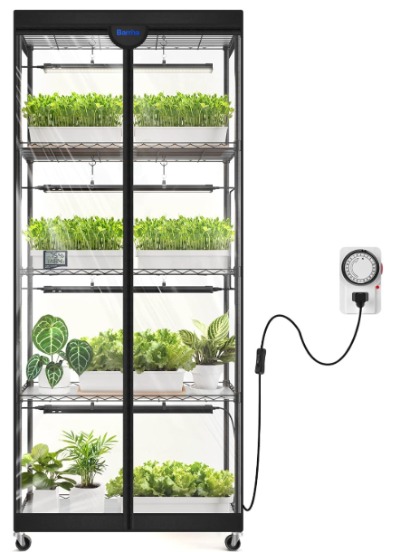
Size: 29.5 x 13.8 x 70.9 inches | Tiers: 5 | Light: 140W TX-S35, 2FT, 5000K full spectrum
Product Description
The Barrina LP750 is a tall, five-shelf grow tent setup built for people who want a serious amount of growing space without needing a whole spare room. It comes with a full spectrum 5000K grow light rated at 140 watts, a zippered tent cover to lock in humidity, plus a built-in timer and thermometer so you’re not guessing at conditions inside the tent.
Standing at nearly six feet tall, this is one of the taller options in this roundup, which means it needs a room with decent ceiling clearance. The frame is metal, the shelves are wire racks, and the whole thing zips shut with a clear PVC cover that keeps warm air and moisture from escaping.
Key Features Explained Simply
- 5000K full spectrum light: this color temperature mimics daylight, which supports both leafy growth and general plant health from seed to small plant stage.
- Built-in timer: you set your light schedule once, and it repeats automatically each day, so you don’t need to switch lights on and off by hand.
- Thermometer and hygrometer: lets you check the temperature and humidity inside the tent at a glance, instead of guessing.
- Zippered tent cover: keeps warmth in during colder months and stops drafts from messing with young seedlings.
- 5 tiers of shelving: gives you room to grow several trays of seedlings or small pots at different growth stages at the same time.
Best Use Cases
This tent fits well for gardeners who start a lot of seeds each season, herb growers who want a steady year-round supply, and anyone growing microgreens who needs a controlled, warm environment. It also suits people who want to start vegetable seedlings early before transplanting them outside once it warms up.
Real-Life Usage Insight
Setting this up usually takes a good hour or two since it has several shelves, poles, and a zippered cover to fit into place. Once it’s built though, most owners find it easy to live with day to day. The timer takes the guesswork out of lighting schedules, and the thermometer helps you notice if a room is running too cold or too warm for whatever you’re growing.
Because of its height, it works best in a garage, basement, spare room, or a corner with tall ceilings. In a smaller apartment bedroom, it can feel like a big piece of furniture, so it’s worth measuring your space carefully before ordering.
Pros and Cons
Pros:
- Tall design gives lots of vertical growing room
- Full spectrum light suits many plant types, not just one category
- Built-in timer and thermometer add real convenience
- Sturdy metal frame holds up well over repeated use
Cons:
- Takes up a fair amount of vertical space, not ideal for low-ceiling rooms
- Assembly takes longer than smaller, simpler units
- Only one grow light bar per tier level, so light spread can thin out toward the edges of wider trays
Performance and Ease of Use
The light output does a solid job supporting germination and early vegetative growth. Because the light sits close to the plants on each shelf, seedlings tend to grow compact rather than leggy, which is exactly what you want at this stage. The zippered cover holds humidity well, which speeds up germination for slower seeds.
Day-to-day use is simple once it’s built. You mostly just water your trays, check the thermometer occasionally, and let the timer handle the lighting. The main learning curve is during setup, not during regular use.
Value for Money
Given the height, five shelves, and the included timer and thermometer, this unit offers strong value for anyone who plans to use most or all of the tiers regularly. If you only need one or two shelves of growing space, a smaller unit might make more financial sense, but for serious hobby growers, this is a solid long-term investment.
2. Bstrip Indoor Greenhouse with Grow Light
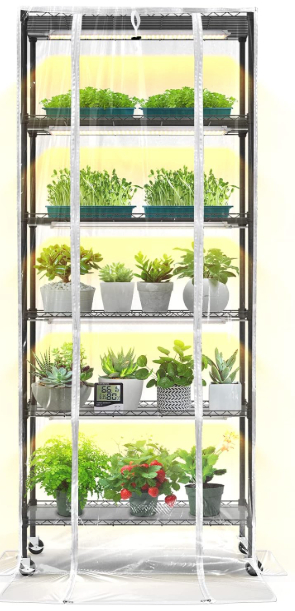
Size: 29.5″L x 13.8″W x 71″H | Tiers: 6 | Lights: 5 pack, 150W total, full spectrum with 3 color modes
Product Description
The Bstrip setup is a DIY-style plant shelf with a cover, built around six tiers and five separate grow lights rated at 150 watts combined. What sets this one apart is the 3 color mode feature on each light bar, letting you switch between spectrum settings depending on the growth stage you’re pushing, like germination, leafy growth, or flowering.
It’s similar in overall footprint to the Barrina model, standing at 71 inches tall, but it packs one extra tier into a nearly identical frame size, which means slightly tighter spacing between shelves.
Key Features Explained Simply
- 3 color mode lights: switch between different light settings depending on your plant’s growth stage, without buying separate bulbs.
- 6 tiers: more shelf levels than most competitors in this size range, giving extra room to spread out trays.
- DIY-style shelf design: the frame and cover are simple to customize, remove, or rearrange based on what you’re growing.
- 150W combined lighting: spread across five separate light bars rather than one central light, giving more even coverage across each shelf.
Best Use Cases
This unit works well for growers who want flexibility across different plant stages, since the adjustable color modes let you use one setup for germination, leafy growth, and even light flowering without extra equipment. It also suits people short on horizontal space but not vertical space, since six tiers packed into a narrow footprint make good use of tight rooms.
Real-Life Usage Insight
Because there are five separate light bars instead of one big fixture, setup involves a bit more wiring and connecting than single-light tents. It’s not overly complex, but it does take a little patience the first time you assemble it. Once running, having color mode control gives you flexibility that fixed-spectrum lights don’t offer.
The tighter shelf spacing, since there’s one extra tier packed into a similar height as other five-tier units, means taller plants can bump against the shelf above fairly quickly. This setup fits shorter plants and trays better than tall, leggy growth.
Pros and Cons
Pros:
- Adjustable color modes add real flexibility for different growth stages
- Six tiers give more growing space than most similarly sized units
- Combined 150W output is strong for the price point
- DIY shelf style makes it easy to adjust and personalize
Cons:
- Tighter vertical spacing between shelves due to the extra tier
- Multiple light bars mean more cords and connections to manage
- Cover material feels lighter than some competitors, so it needs gentle handling
Performance and Ease of Use
The color mode switching is genuinely useful if you grow more than one type of plant or move plants through different growth stages often. Light coverage across each shelf is even, thanks to the five separate bars rather than one central strip. That said, if you’re growing anything taller than a typical seedling tray, the tighter shelf spacing can become a real limitation.
Daily use is straightforward: pick your light mode, set your schedule, and let it run. The learning curve is a little higher than single-mode units, but not by much.
Value for Money
With six tiers and adjustable lighting modes packed into a similar price range as other multi-tier units, this is one of the better value options here, especially for growers who want flexibility over a fixed setup. Just keep the tighter spacing in mind if you’re planning to grow anything with height.
3. JESLED Indoor Greenhouse with Grow Light
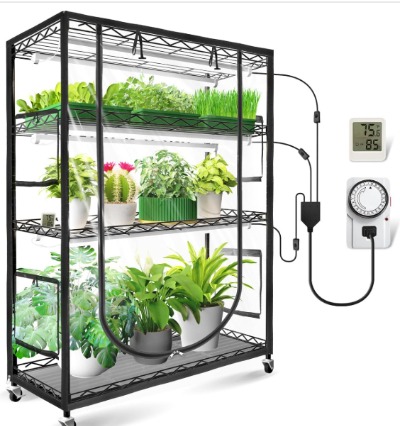
Size: 35.4 x 13.8 x 59 inches | Light: 3FT full spectrum 5000K LED with tiered lighting control
Product Description
The JESLED unit takes a different approach with its shorter, wider frame at 59 inches tall and 35.4 inches long. Instead of packing in as many tiers as possible, it focuses on tiered lighting control, meaning you can adjust or control light output separately for different shelf levels. It includes a built-in timer and a thermo-hygrometer for tracking both temperature and humidity.
This lower height makes it a strong fit for rooms with shorter ceilings, or for anyone who doesn’t want a tower-like structure dominating a room.
Key Features Explained Simply
- Tiered lighting control: lets you manage light settings per shelf rather than treating the whole unit as one fixed setup.
- 3FT full spectrum LED at 5000K: wider light bars than some competitors, giving more even coverage across longer trays.
- Thermo-hygrometer included: tracks both temperature and moisture levels together in one small display.
- Shorter overall height: fits more easily into rooms with standard or lower ceilings.
Best Use Cases
This one suits growers with limited ceiling height, people who want more horizontal shelf space rather than height, and anyone growing multiple plant types at once who wants control over lighting per shelf rather than one blanket setting for the whole tower.
Real-Life Usage Insight
Because it’s shorter and wider, this unit feels less like a tower and more like a compact grow shelf, which some buyers find easier to fit into a spare room corner or closet space. The tiered lighting control is a nice touch if you’re running different plants at different growth stages on separate shelves, since you’re not locked into identical settings across every level.
Assembly is generally reported as simpler than taller units, mainly because there are fewer shelves and less overall structure to put together.
Pros and Cons
Pros:
- Shorter design fits rooms with lower ceilings easily
- Tiered lighting control gives more flexibility per shelf
- Wider 3FT light bars cover trays evenly
- Thermo-hygrometer combo saves you from buying separate tools
Cons:
- Fewer total tiers than taller competitors, so less overall growing space
- Not ideal if you specifically want maximum vertical capacity
- Wider footprint takes up more floor space than narrower towers
Performance and Ease of Use
Light spread across each shelf is consistent thanks to the wider bars, and the ability to control lighting per tier is genuinely handy for growers juggling different plants or growth stages. Germination and early growth both benefit from the steady 5000K spectrum, and the built-in thermo-hygrometer takes the guesswork out of monitoring your environment.
Setup and daily operation are both fairly beginner-friendly, with fewer parts to manage compared to six-tier towers.
Value for Money
For growers who care more about lighting control and a shorter footprint than about squeezing in the maximum number of tiers, this unit delivers solid value. It’s a smart pick for anyone working with limited ceiling height or wanting more shelf-level customization.
4. Pure Garden 4 Tier Mini Greenhouse
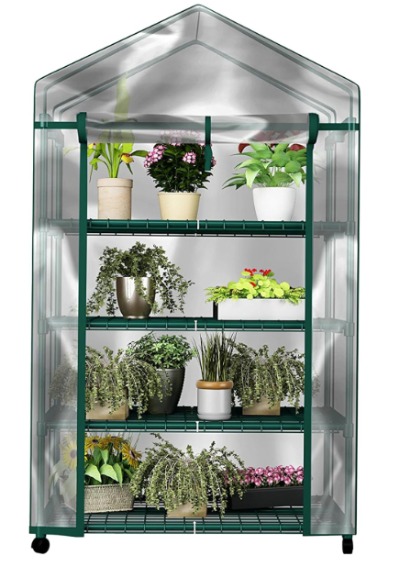
Type: Portable greenhouse with locking wheels and PVC cover, indoor or outdoor use
Product Description
This one stands apart from the rest of the list because it doesn’t come with a grow light at all. It’s a simple, four-tier shelf unit wrapped in a clear PVC cover, built to work indoors or outdoors thanks to its locking wheels and portable frame. It’s a straightforward option for people who already have a light source, like a sunny patio, balcony, or window, and just need shelter and structure for their plants.
Key Features Explained Simply
- Locking wheels: lets you roll the whole unit around and lock it in place once you find the right spot.
- PVC cover: shields plants from wind, light frost, and pests while letting sunlight through.
- 4 tier shelving: enough room for several trays or small pots without taking up a lot of floor space.
- Indoor or outdoor use: flexible enough to move between a garage, patio, or spare room depending on the season.
Best Use Cases
This unit fits people who already get good natural light in their space, like a bright patio, balcony, or sunroom, and just need a portable shelter for seedlings, herbs, or potted plants. It also works well as a transition space for hardening off seedlings before moving them permanently outside.
Real-Life Usage Insight
Since it has no grow light, results depend heavily on where you place it. In a spot with strong natural light, it works well as a lightweight greenhouse that protects plants from wind and temperature swings. In a dim room without much sunlight, plants will likely stretch and grow weak, since there’s no artificial light source to make up the difference.
The locking wheels are a genuinely useful touch, letting you chase the sun across a patio through the day or roll the whole thing indoors if a storm rolls in.
Pros and Cons
Pros:
- Portable and easy to move thanks to locking wheels
- Works both indoors and outdoors, giving real seasonal flexibility
- Lightweight and simple to set up
- Lower price point since there’s no grow light included
Cons:
- No grow light means you’re fully dependent on natural sunlight
- PVC cover isn’t as heavy-duty as tent-style covers on other units
- Less suited to low-light rooms or year-round indoor growing
Performance and Ease of Use
Performance here really comes down to placement. In good natural light, it does exactly what a basic greenhouse should: it holds warmth, blocks wind, and keeps a steady environment for your plants. Without strong light, though, this unit simply can’t produce the same results as the grow-light models on this list, since there’s no artificial supplement to lean on.
Setup is quick and beginner-friendly, and the rolling wheels make daily use simple, especially if you like adjusting placement based on the weather.
Value for Money
For people with a bright spot already available, this is a budget-friendly option that skips the cost of a built-in light. If your space doesn’t get much natural sun, you’ll likely need to pair it with a separate grow light to get similar results to the other units on this list.
5. Indoor Greenhouse with 4 Pack 36W Grow Lights
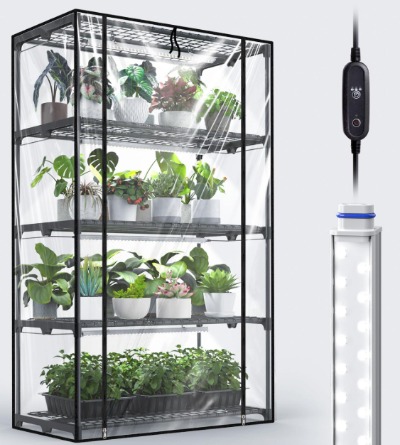
Size: 17.7″W x 29.5″L x 59″H | Lights: 4 pack, 36W each
Product Description
This is the most compact grow-light unit in this roundup, standing at 59 inches tall with a narrower 17.7 inch width. It comes with four separate 36-watt grow lights, giving you individual control over each shelf’s lighting rather than one shared light source for the whole unit.
Its smaller footprint makes it a strong fit for tight spaces like a closet corner, small bedroom, or narrow hallway nook.
Key Features Explained Simply
- 4 pack of 36W grow lights: one light per shelf, so each tier gets its own dedicated light source.
- Compact width: at under 18 inches wide, it fits into narrower spaces than most other units here.
- Shorter height: easier to fit under standard ceilings compared to the taller Barrina and Bstrip towers.
Best Use Cases
This unit fits small apartments, dorm rooms, or any space where floor and width are both limited. It also works well for growers who want separate light control per shelf without needing a large investment.
Real-Life Usage Insight
Because each shelf gets its own dedicated light, you can turn off unused tiers if you’re not growing on every level, which saves a bit on energy use compared to units with one shared light bar running the whole tower at once. The narrower width does mean smaller trays or pots are a better fit than wide trays that might hang over the shelf edges.
Setup is quick thanks to the smaller size and fewer overall parts. This tends to be one of the easier units on this list to assemble start to finish.
Pros and Cons
Pros:
- Compact size fits small rooms and narrow spaces easily
- Individual lights per shelf give more control and flexibility
- Simple, quick assembly
- More affordable entry point for grow-light setups
Cons:
- Narrower shelves limit the size of trays or pots you can use
- Lower combined wattage than larger multi-tier units
- Less overall growing capacity due to the smaller footprint
Performance and Ease of Use
For a compact, budget-friendly setup, the light output does a reasonable job supporting seed starting and early seedling growth. It won’t match the total light coverage of the larger 140W or 150W units, but for smaller trays and lower-light-demand plants, it holds its own.
Daily use is simple, and the individual per-shelf lights make it easy to manage energy use based on which tiers you’re actually growing on.
Value for Money
This is a solid entry-level pick for anyone short on space or budget who still wants dedicated grow lights rather than relying on natural sunlight. It won’t replace a larger tower for serious growers, but for smaller-scale indoor growing, it’s a reasonable and affordable choice.
Comparison Insights
Looking at these five side by side, a few patterns stand out. The Barrina and Bstrip units are the tallest and most tier-heavy, making them best for growers who want maximum vertical capacity and don’t mind a taller footprint in the room. Between the two, Bstrip’s adjustable color modes give it an edge in flexibility, while Barrina’s slightly roomier shelf spacing suits taller plants better.
The JESLED strikes a middle ground, trading some vertical tiers for a shorter frame and smarter tiered lighting control, which makes it a strong option for lower-ceiling rooms or growers who want shelf-by-shelf control.
The Pure Garden mini greenhouse stands apart because it skips the grow light entirely. It’s the most budget-friendly and flexible in terms of indoor-outdoor use, but its results depend heavily on how much natural light your space actually gets.
The compact 4 pack 36W unit is the smallest and most beginner-friendly pick here, well suited to small rooms and modest growing goals rather than large-scale indoor gardening.
Buying Guide: What to Look For
Light Spectrum and Wattage
Full spectrum lights around the 5000K range tend to support a wide variety of plants through different growth stages. Higher wattage generally means stronger output, but it also means higher energy use, so match the wattage to how much you actually plan to grow.
Number of Tiers and Shelf Spacing
More tiers give you more growing space, but tighter spacing between shelves can limit taller plants. If you plan to grow anything beyond small seedlings or short herbs, check the shelf spacing carefully rather than just counting tiers.
Height and Footprint
Measure your ceiling height and floor space before ordering. Taller towers offer more capacity but need real vertical clearance, while shorter, wider units fit better in rooms with lower ceilings.
Timer and Monitoring Tools
A built-in timer removes the hassle of manually switching lights on and off every day. A thermometer or thermo-hygrometer helps you catch problems early, like a room running too cold or too humid for healthy germination.
Cover Quality
The tent or PVC cover affects how well warmth and humidity stay trapped inside. Heavier, zippered covers tend to hold conditions steadier than lighter, simpler covers, which matters most during the germination stage.
Do You Even Need a Grow Light
If your space already gets strong, consistent natural sunlight, a simple shelf-and-cover unit without a grow light can save money. In a dim room, artificial light isn’t optional if you want steady, healthy growth.
Who Should Buy These Products
Beginners who are just starting to grow seeds indoors will likely do best with a simpler, shorter unit like the JESLED or the compact 36W setup, since they’re easier to assemble and manage day to day.
Serious hobby growers who want to run several trays at once through different growth stages will get more out of taller, multi-tier units like the Barrina or Bstrip, especially if they value the added flexibility of adjustable color modes.
People with a bright patio, balcony, or sunroom, and who want a portable, lower-cost setup, are a good match for the Pure Garden mini greenhouse, as long as they’re comfortable relying on natural light instead of an artificial source.
Renters or apartment dwellers with limited floor space but decent ceiling height often do well with narrower towers, while those in rooms with lower ceilings should lean toward shorter, wider designs.
Common Mistakes to Avoid
Ignoring shelf spacing. A unit with more tiers isn’t automatically better if the spacing between shelves is too tight for your plants to grow properly without hitting the light above.
Skipping the timer setting. Leaving lights on around the clock or forgetting to set a schedule can stress plants just as much as too little light.
Placing the unit somewhere with poor airflow. Trapped humidity without any air movement can lead to mold or mildew, especially inside zippered tent covers.
Overcrowding shelves. Packing too many trays onto one shelf blocks light from reaching plants at the edges evenly.
Not measuring your space first. Taller towers need real ceiling clearance, and wider units need enough floor space, so it pays to measure before ordering rather than after.
Assuming all grow lights work the same. Wattage and spectrum both matter, and a lower wattage light spread across a wide shelf may leave some areas under-lit compared to a smaller, more concentrated light source.
Final Verdict
There’s no single winner for every situation here, since each of these five units serves a slightly different type of grower. If you want the most growing capacity and don’t mind a taller structure, the Barrina LP750 and Bstrip units both deliver strong results, with Bstrip edging ahead on flexibility thanks to its adjustable color modes.
If ceiling height is tight or you want smarter control over lighting per shelf, the JESLED model is a smart middle-ground pick. For anyone who already gets solid natural light and wants a portable, budget-friendly option, the Pure Garden mini greenhouse covers that need well, as long as you understand it depends on your room’s sunlight rather than built-in lighting.
For smaller spaces or first-time growers testing the waters before committing to a bigger setup, the compact 4 pack 36W unit offers an affordable, simple way to get started without a big investment.
Whatever you land on, the real key is matching the unit’s size, lighting, and tier spacing to your actual growing goals rather than picking based on tier count alone. A smaller, well-suited setup will almost always outperform a bigger unit that doesn’t fit your space or your plants.
Hi, I’m Mary, the founder of GardenCure.com. I’m passionate about creating healthy, beautiful gardens and well-kept lawns. I share practical experience and trusted advice on garden and lawn gear that truly works. With the support of my dedicated research team, our writers produce honest, in-depth reviews using reliable, authentic sources—helping you choose the right tools with confidence for your outdoor space.