5 Best Seed Starting Trays In 2026
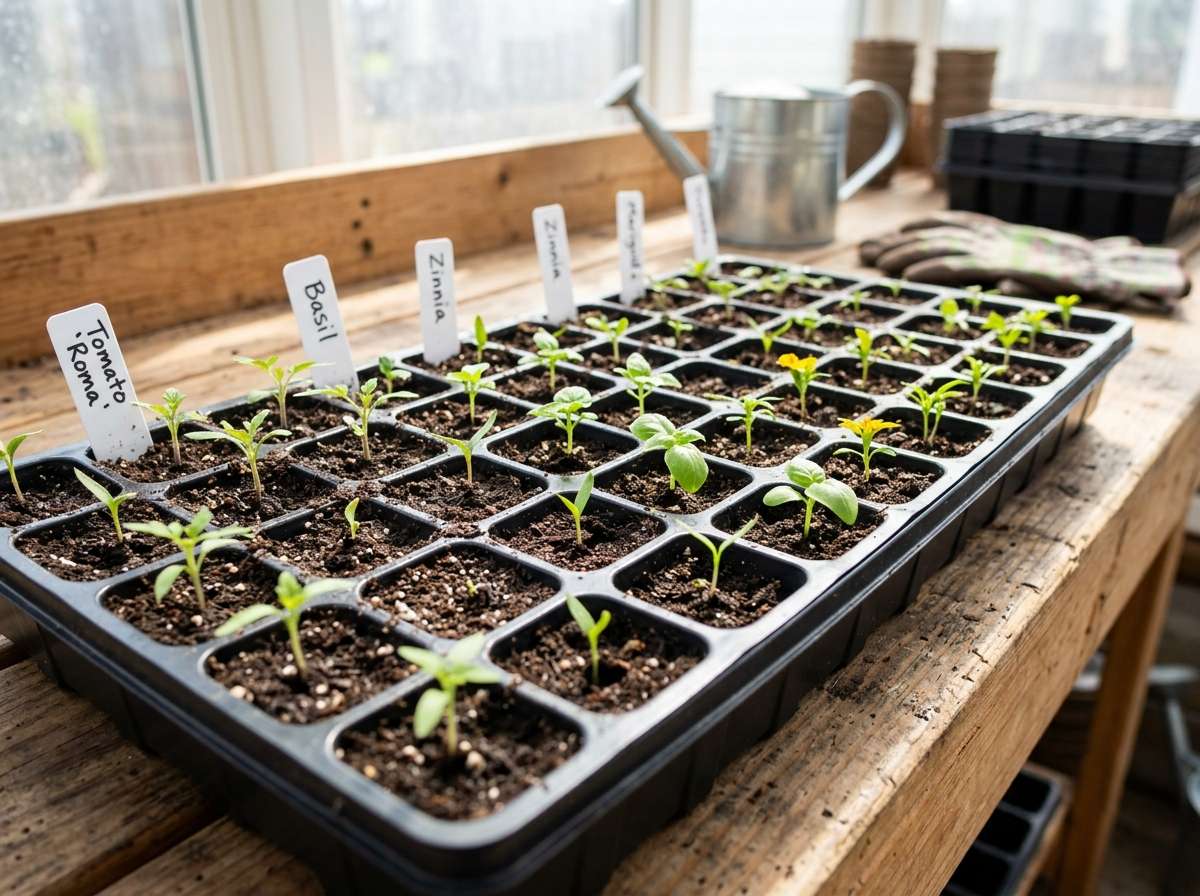
Starting plants from seeds is one of the most rewarding parts of gardening. There’s something special about watching tiny seeds transform into healthy seedlings right in your own home. But here’s the thing – you need the right tools to make it work. That’s where seed starting trays come in.
In this article
If you’re new to indoor gardening or plant propagation, you might feel overwhelmed by all the options available. Do you need a fancy system? How many cells should your tray have? Should you get humidity domes? These questions pop up for everyone who’s serious about growing plants from seeds.
I’ve tested out several popular seed starting trays to help you find exactly what works best for your gardening goals. This guide breaks down five excellent options that range from simple and affordable to comprehensive systems with all the bells and whistles. By the time you finish reading, you’ll know exactly which tray makes sense for your space and budget.
What Makes a Good Seed Starting Tray?
Before we jump into the specific products, let’s talk about what actually matters when you’re picking out seed starting containers. A good tray should:
Keep moisture consistent – Your seeds need steady moisture levels without getting waterlogged. The tray material and drainage design make a huge difference here.
Support proper air circulation – Seedlings that get air flow develop stronger stems and resist diseases better. Vented humidity domes help create the right environment.
Be durable enough for reuse – Most gardeners use their trays year after year. Cheap plastic that cracks after one season wastes your money.
Give you enough space – The number of cells matters. Too few and you’re limited in what you can grow. Too many and you might end up with way more seedlings than you need.
Easy to fill and manage – You’ll be working with these trays regularly during the growing season. Complicated designs just add frustration.
Fit your germination setup – Think about your grow lights, shelves, and available space before you buy.
Now let’s look at five different options that really deliver on these basics.
Product Reviews: Top Seed Starting Trays Tested
1. Burpee SuperSeed Seed Starting Tray – The Classic Choice
Product Overview
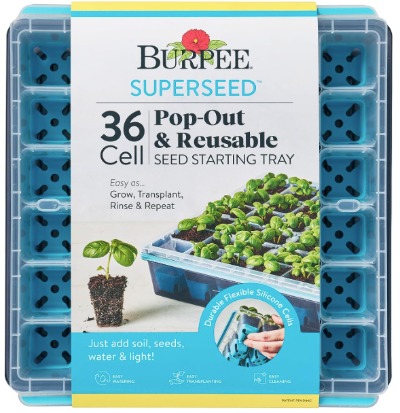
The Burpee SuperSeed tray is a straightforward, no-fuss option that’s been around for years. This 36-cell reusable tray is made from sturdy plastic and comes ready to use for starting vegetable, flower, and herb seeds. It’s designed to work as part of a seed starting system, though you can use it on its own as well.
Best Use Cases
This tray shines when you want to keep things simple. It’s perfect for someone starting their first seed trays or a gardener who only needs to start a modest number of plants. The 36-cell setup gives you flexibility without overwhelming you with seedlings. Herb gardeners particularly love this tray because you rarely need dozens of herb plants all at once.
Key Features Explained Simply
The tray holds 36 individual cells in a compact footprint. Each cell has enough space for a seedling to develop a strong root system before transplanting. The plastic construction is rigid enough to handle water and soil without flexing or tipping over. The tray also features a simple design that’s easy to clean between growing seasons.
Real-Life Usage Insight
When you fill this tray with seed starting mix and water it properly, the cells drain well without becoming soggy. The size feels just right for most indoor gardening setups – not too bulky, but substantial enough that you feel like you’re actually growing something meaningful. People working with limited shelf space really appreciate how much it fits into a standard 1020 tray space.
Honest Pros and Cons
Pros:
- Compact size fits easily on shelves or under grow lights
- Durable plastic holds up well over multiple seasons
- 36 cells is the right amount for home gardeners
- Simple design means fewer things to break
- Works great for vegetables, herbs, and flowers
- Affordable price point
Cons:
- Doesn’t come with a humidity dome (though they’re sold separately)
- Smaller cell size might not work well if you want extra-large transplants
- No drainage holes in the base (depends on your setup)
- You’ll need to monitor watering closely since there’s no built-in moisture retention system
Performance Discussion
In real growing conditions, this tray performs exactly as expected. Germination rates are solid when you keep the soil moist but not waterlogged. The plastic doesn’t warp when exposed to moisture and light over weeks of use. Seedlings grown in these trays develop at normal speed and transplant smoothly into larger containers or garden beds.
Ease of Use
This is about as easy as it gets. Fill the cells with seed starting mix, plant your seeds, water gently, and watch them grow. You can mist them daily to keep moisture up, or cover the tray loosely with plastic wrap to create a humid environment. The tray sits flat and stable on any surface. Cleanup is simple – just rinse and dry between seasons.
Value for Money
For the price, this tray delivers solid performance. You’re getting a tool that will last for years without paying premium prices. It’s an excellent investment if you’re just starting to explore seed starting.
2. Gardzen 5-Set Seed Starter Tray Kits – The Complete System
Product Overview
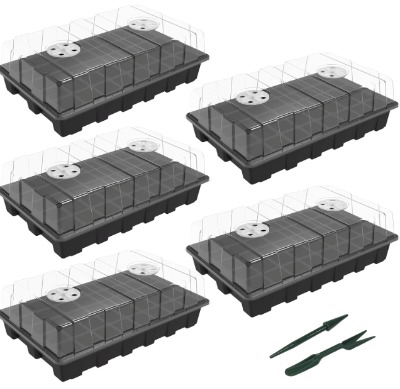
The Gardzen kit is a game-changer if you want everything bundled together. You get five complete trays with humidity vented domes and bases, giving you a total of 200 cells to work with. This is the type of system that lets you run a serious seed starting operation without buying pieces separately.
Best Use Cases
This kit is ideal for gardeners who want to start lots of plants or run multiple crop cycles. If you’re growing vegetables for the whole family, starting flowers for your landscape, and propagating herbs all at the same time, this system gives you the capacity. It’s also great for community gardeners or anyone who shares seedlings with friends and family.
Key Features Explained Simply
Each tray holds 40 cells – perfect for starting substantial numbers of the same plant. The humidity vented domes are key here. These aren’t solid plastic covers that trap too much moisture. Instead, they have adjustable vents that let you control the growing environment. You crack them open to increase air flow or close them to boost humidity. This design keeps seedlings healthy while they’re getting established.
The bases are solid, and the whole system stacks together nicely for storage. You get trays and domes all in one purchase, so there’s no hunting for compatible pieces.
Real-Life Usage Insight
When you set up this system, you immediately notice how well-designed it is for beginners. The vented domes actually work – they don’t create a stagnant environment or cause damping off disease. You can see your seedlings clearly through the transparent domes, so you know when they need water without having to remove the covering. The 40-cell capacity means you’re starting enough plants to make a real impact in your garden without going overboard.
Honest Pros and Cons
Pros:
- Comes with everything you need to get started
- Five trays give you 200 total cells for flexibility
- Vented humidity domes included – no extra purchases needed
- Domes are adjustable, not sealed solid
- Great for succession planting throughout the season
- Solid plastic construction resists warping
- Bases prevent water from leaking onto shelves
- Much cheaper than buying each component separately
Cons:
- Takes up more storage space when not in use
- Larger footprint requires more shelf or table space
- Five trays might be overkill if you only grow a few plants
- Domes can be finicky about staying seated properly if trays aren’t perfectly level
Performance Discussion
This system really delivers. Germination rates are consistently high because the vented domes create an ideal microclimate. Seedlings develop evenly across all cells. The included bases prevent water from running everywhere, which is huge if you’re starting seeds on shelves. Over an entire growing season, you’ll appreciate having extra trays so you can start new batches while your first batch is still germinating.
Ease of Use
Setup is straightforward – stack the bases, place the trays, fill with soil, plant seeds, water, and cover with domes. The vents are simple to adjust. Most people figure out the right humidity level within a few days. Cleaning is easy, and the whole kit disassembles for storage.
Value for Money
When you break down the cost per tray and factor in the included domes and bases, this kit offers excellent value. You’re getting a complete seed starting system for less than you’d pay buying individual components separately. It’s a smart investment if you’re serious about growing from seeds.
3. 10×20 Inch Black Plastic Propagation Trays – The Budget-Friendly Option
Product Overview
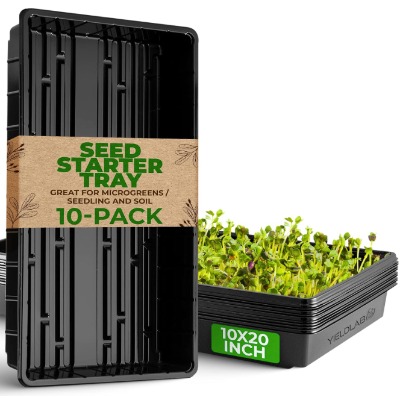
These 10×20 inch propagation trays are the workhorses of seed starting. You get a ten-pack of simple, no-frills black plastic trays designed to handle whatever you throw at them. No fancy features, no domes, just solid plastic trays that do their job well.
Best Use Cases
These trays excel when you need serious capacity and durability. They’re perfect for starting microgreens, which requires different trays than traditional seed starting. They also work great for soil propagation when you use them with separate humidity covers or in shelving units that have built-in humidity. Commercial growers and serious home gardeners love these trays because they’re indestructible and stackable.
Key Features Explained Simply
The 10×20 inch size is the standard for commercial growing operations, which means it’s designed for heavy use. There’s no complexity here – it’s just a sturdy plastic tray with a solid bottom and sides. No drainage holes come pre-drilled, which actually gives you flexibility. You can add holes if you want drainage, or leave them solid for certain types of growing.
Black plastic absorbs heat from grow lights, which can actually help with germination in some situations. The trays are lightweight enough to handle easily but thick enough to resist cracking.
Real-Life Usage Insight
People use these trays in creative ways. Some fill them with seed starting mix for traditional propagation. Others use them as water reservoirs for hydroponic systems. The solid bottom means they’re excellent for microgreens, where you want to pack the soil more densely. The black color makes it easy to see moisture levels in the soil.
Honest Pros and Cons
Pros:
- Incredibly affordable per tray
- Ten-pack means you have options
- Industrial-grade durability
- Standard size fits in most growing spaces
- Black plastic doesn’t degrade in sunlight
- No drainage holes to worry about (you control this)
- Stackable for storage
- Perfect for microgreens and sprouts
Cons:
- No domes or covers included
- No individual cells – you’ll need to divide space yourself or use soil blocks
- Solid bottoms can trap water if you overwater
- Black color absorbs heat (good for some situations, not ideal for others)
- Very basic – nothing fancy about them
- You’re responsible for creating humidity control
- Better for serious growers than casual gardeners
Performance Discussion
These trays perform flawlessly if you understand what they’re designed for. They’re not meant to replace cell-based systems – they’re for different growing methods. When used correctly, they support excellent germination rates and healthy growth. The durability is exceptional. People report using the same trays for 10+ years without significant degradation.
Ease of Use
There’s not much to learn. Fill with soil, plant seeds or microgreens, water, and manage moisture. That’s it. The challenge is managing humidity and moisture without built-in systems, but most gardeners quickly figure out how to rig covers or use them in humidity-controlled environments.
Value for Money
The price per tray is so low that you’re almost getting them free when you buy the ten-pack. If you need serious capacity and don’t mind being hands-on with your setup, this is the most budget-friendly option. Over time, the durability means you’re not buying new trays constantly.
4. The Hydroponic City Seed Starter Trays – The Comprehensive System
Product Overview
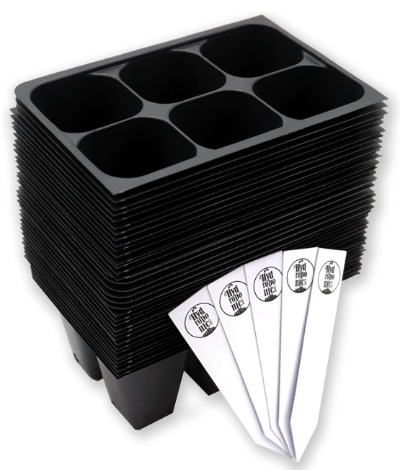
This system takes a different approach with 36 mini trays, each containing 6 cells, for a total of 216 cells. You also get plant stakes for marking what you’ve planted. The design is specifically engineered for seedling production, whether you’re growing hydroponically or in traditional soil.
Best Use Cases
This system is perfect for gardeners who want tons of variety or produce enough seedlings to share. If you like growing many different types of vegetables, herbs, and flowers, having 216 cells gives you the ultimate flexibility. It’s also ideal for starting multiple successions of the same crop throughout the season. The plant stakes help you stay organized with so many trays.
Key Features Explained Simply
Each mini tray holds 6 cells, and you get 36 of these trays. This design is brilliant because you can keep compatible crops together. All your tomato seeds in two trays, peppers in three trays, herbs in four trays, and so on. The small tray size makes them easy to move individually, and they don’t take up tons of space while keeping options open.
The trays themselves are made from durable plastic that handles repeated filling and cleaning. The included plant stakes are useful for keeping track of what you’ve planted, which becomes crucial when you have this many seedlings.
Real-Life Usage Insight
Working with 36 trays might sound chaotic, but it’s actually really organized. You can start one tray of tomatoes and another tray of peppers on the same day but keep them separate for different watering or light schedules if needed. The smaller tray footprint means you can fit these under standard grow lights without taking up your whole house.
People who use this system report that the individual trays make it easy to move seedlings that are ready for different conditions. You’re not locked into treating 40 seedlings exactly the same way.
Honest Pros and Cons
Pros:
- Massive capacity at 216 cells
- Individual trays are easy to move and manage
- Plant stakes included for organization
- Cells are sized well for proper seedling development
- Durable plastic construction
- Great for trying lots of varieties
- Small tray format is easy to fit into spaces
- Perfect for succession planting
Cons:
- Takes up significant storage space
- Managing 36 individual trays requires organization
- Humidity domes not included (though the design works with general covers)
- 6 cells per tray might feel like an odd size if you want large batches
- No bases included, so water management is your responsibility
- More complex than single tray systems
- Plant stakes are minimal – you might want extras
Performance Discussion
This system performs excellently for organized growers. Germination rates are high across all 216 cells when you maintain consistent moisture and temperature. The modular design means you can focus resources (light, water, heat) on trays that need it most. Seedlings grow strong because the cell size provides ample space for root development.
Ease of Use
There’s a learning curve with managing 36 trays, but once you get the hang of it, it’s very manageable. Many growers create a simple spreadsheet tracking what’s in which trays and when they were planted. The stakes help, though you’ll probably develop your own labeling system. Watering is straightforward once you establish a routine.
Value for Money
For the number of cells you get, the price is competitive. You’re paying for capacity and organization options. If you’re serious about seed starting and want flexibility, this system justifies its cost through the sheer volume of seedlings you can produce.
5. Mr. Pen Seed Starter Tray Kits – The Balanced Option
Product Overview
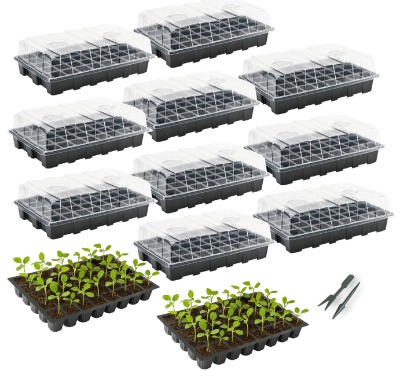
The Mr. Pen kit offers a sweet spot between capacity and simplicity. You get 10 trays with vented humidity domes and bases, totaling 400 cells. Each individual tray holds 40 cells. This is a comprehensive system that gives you serious growing power without overwhelming complexity.
Best Use Cases
This kit is ideal for dedicated home gardeners, community gardeners, or anyone running a small plant propagation operation. If you want to start vegetables for a family garden, produce flowers for landscaping, and grow some herbs all in one season, this gives you the capacity. The 10-tray setup also lets you start different crops at different times, which extends your harvest window.
Key Features Explained Simply
Ten matching trays mean consistency across your entire system. Each comes with a vented humidity dome and a base. The design is focused and practical – you get what you need without extra complexity. The 40-cell size is the standard for commercial propagation, so it’s proven to work well.
The vented domes are the same design as smaller systems but scaled appropriately for each tray. Bases are solid and prevent water from running everywhere. When you stack everything, you’ve got a professional-looking propagation setup.
Real-Life Usage Insight
Setting up this kit is refreshingly straightforward. You unpack ten trays and ten domes, get organized on your shelves or table, and you’re ready to start seeds. The system feels substantial – you’re clearly set up to grow real quantities of plants. People report feeling like they’ve upgraded from casual gardening to serious production when they start using this system.
The 400 total cells means you’re never short on space for your seedlings, even if you’re starting ambitious numbers.
Honest Pros and Cons
Pros:
- 400 total cells give you maximum flexibility
- Vented humidity domes included on all trays
- Bases included prevent water damage
- Consistent design across all 10 trays
- Excellent price point for the included components
- 40-cell tray size is proven and effective
- Stackable and organized
- Great for serious gardeners
Cons:
- Requires significant storage space
- 10 trays might be overkill for casual gardeners
- Managing 10 trays requires staying organized
- Takes time to fill and water all trays regularly
- Bases and domes add to storage footprint
- Steep learning curve if you’re brand new to seed starting
Performance Discussion
This system performs at a professional level. Germination rates are consistently excellent. The vented domes create ideal growing conditions without requiring fussy adjustments. You can run multiple crop cycles through a season by staggering when you plant different trays. Seedlings develop strong, healthy growth across all 400 cells.
Ease of Use
Once you get your system organized, using it is straightforward. Fill trays, plant seeds, water, adjust dome vents as seedlings develop. Most people develop a routine and stick with it. The real advantage is that all trays work identically, so you don’t have to remember different procedures for different components.
Value for Money
Breaking down the cost per cell and considering all the included components (domes and bases), this kit offers excellent value. You’re getting more than double the cells of smaller systems for a price increase that’s much lower than proportional. If you’re committed to seed starting, this kit pays for itself quickly.
Comparing All Five Systems: What Matters?
Let’s organize these options so you can compare them easily:
| Feature | Burpee | Gardzen | Plastic Trays | Hydroponic City | Mr. Pen |
|---|---|---|---|---|---|
| Total Cells | 36 | 200 | Flexible | 216 | 400 |
| Cells Per Tray | 36 | 40 | N/A | 6 | 40 |
| Number of Trays | 1 | 5 | 10 | 36 | 10 |
| Humidity Domes | No | Yes | No | No | Yes |
| Bases Included | No | Yes | No | No | Yes |
| Best for | Beginners | Active Gardeners | Microgreens | Variety Lovers | Serious Growers |
| Price Tier | Budget | Mid | Very Budget | Mid | Mid-High |
Cell Count Reality: How many cells do you actually need? Most home gardeners do fine with 100-200 cells. That’s enough for a productive vegetable garden plus flowers and herbs. The Mr. Pen system (400 cells) is overkill unless you’re sharing seedlings or planning to fill a huge garden.
Dome and Base Considerations: Systems that include domes and bases cost more upfront but save you money overall. You’re paying for convenience and proven components that work together.
Space Requirements: Bigger systems need more room. Before you commit to 400 cells, make sure you actually have shelf space available. An overcrowded setup creates environmental stress.
Flexibility vs. Simplicity: Single-tray systems like Burpee are simple but limiting. Multi-tray systems like Mr. Pen and Gardzen give you flexibility but require more management.
Complete Buying Guide for Seed Starting Trays
Step 1: Assess Your Growing Goals
What do you actually want to grow? If you’re starting a few tomato and pepper plants plus some herbs, the Burpee tray handles that easily. If you want to grow vegetables for a large family garden plus flowers plus share with friends, you need something bigger.
Step 2: Measure Your Space
Go look at where you’ll actually put these trays. Under a shelf? On a table? In a closet? Measure the width and depth available. The standard 10×20 inch dimension is pretty universal, so most trays fit that footprint.
Step 3: Consider Your Growing Method
Are you filling individual cells with soil? Growing microgreens in a flat tray? Running a hydroponic system? Some trays work better for specific methods. The solid plastic propagation trays work great for microgreens. Cell trays work best for traditional soil-based seed starting.
Step 4: Factor in Budget
Seed starting systems range from budget-friendly to mid-range. There’s no need to spend hundreds of dollars. Even the most comprehensive systems cost less than 50 dollars. Decide what’s reasonable for your situation.
Step 5: Check Humidity Control
If you’re new to seed starting, a system with included humidity domes and vents (like Gardzen or Mr. Pen) simplifies things tremendously. You’re paying more upfront but getting proven components that work together.
Step 6: Think Long-Term
Plan to use these trays for years, not just one season. Buy something durable enough to handle repeated use, filling, watering, and cleaning. The plastic quality matters.
Step 7: Start With What You Need, Not Everything
It’s tempting to buy the biggest system available, but many gardeners end up with more trays than they actually use. Start with one system, see how it works for you, then add more next year if you want to expand.
Who Should Buy Each System?
The Burpee SuperSeed Tray is perfect for:
- First-time seed starters who want to dip their toes in
- Gardeners with limited space
- Herb gardeners who never need tons of plants
- People who already have humidity domes and bases from other sources
- Budget shoppers who want just one quality tray
The Gardzen 5-Set Kit is perfect for:
- Home gardeners ready to go all-in on seed starting
- People who like having everything included
- Gardeners who want flexibility with 5 separate trays
- Community gardeners sharing seedlings
- Anyone who prefers organized, matched components
The Plastic Propagation Trays are perfect for:
- Microgreens enthusiasts
- Serious commercial or semi-commercial growers
- People who already have humidity control systems
- Gardeners willing to DIY their setup
- Those who want maximum budget savings
The Hydroponic City System is perfect for:
- Gardeners who love variety and want to try many plant types
- People who like lots of individual flexibility with small trays
- Those who want to organize by crop type
- Gardeners starting multiple successions through the season
- Anyone who shares seedlings and needs exceptional capacity
The Mr. Pen Kit is perfect for:
- Serious home gardeners with ambitious growing plans
- Community gardeners operating at scale
- People who want a complete, professional system
- Gardeners who don’t mind managing multiple trays
- Those committed to seed starting as a main gardening focus
Common Mistakes to Avoid With Seed Starting Trays
Mistake #1: Overwatering
This kills more seedlings than anything else. The soil should be moist but not soggy. When seedlings are small, they don’t need tons of water. A light misting often works better than full watering. Let the surface dry slightly between waterings.
Mistake #2: Giving Up on Humidity Control
You can’t just fill a tray with soil and ignore humidity. Seedlings need consistently moist soil and humid air. If you don’t use domes or covers, you’ll spend all your time misting. Invest in humidity covers, even simple plastic wrap, to keep conditions stable.
Mistake #3: Planting Too Early
Starting seeds too early means seedlings get leggy and stressed before it’s time to transplant them outside. Check your frost dates and work backward to figure out when to plant. Most seeds should start 6-8 weeks before your last frost date.
Mistake #4: Ignoring Light Requirements
Seedlings stretch and weaken without proper light. If you’re growing on a windowsill, rotate trays regularly. Better yet, invest in grow lights positioned a few inches above seedlings. This makes a dramatic difference in seedling quality.
Mistake #5: Letting Seedlings Get Too Big
If seedlings stay in starter trays too long, they become root-bound and stressed. The goal is to transplant them to larger containers before they outgrow the cells. This usually happens when seedlings develop their first true leaves.
Mistake #6: Not Hardening Off
When seedlings are ready to go outside, they need a gradual transition. Taking them straight from a protected indoor environment to full sun and wind kills them fast. Spend about a week gradually exposing them to outdoor conditions.
Mistake #7: Reusing Contaminated Soil
Old seed starting soil can carry disease. Use fresh, sterile seed starting mix each time. Don’t just top off old soil with new soil – it doesn’t work.
Mistake #8: Overcrowding Trays
Too many trays crammed together creates poor air circulation and humidity problems. Give your system some breathing room. Seedlings need air flow to develop strong stems.
Mistake #9: Forgetting to Label
You think you’ll remember what you planted where. You won’t. Use the plant stakes included in some kits or grab some popsicle sticks and markers. Label everything the day you plant.
Mistake #10: Choosing the Wrong Size Cells
Cells that are too large waste soil and space. Cells that are too small root-bound seedlings. The 40-cell tray is the standard for good reason – it’s the Goldilocks of cell sizes.
Final Verdict: Which Seed Starting Tray Should You Buy?
Okay, let’s wrap this up with clear recommendations:
Best Overall System: Mr. Pen 10-Pack Seed Starter Kit
If you’re buying one system and want to make it count, go with Mr. Pen. You get 400 cells, all the domes and bases you need, superior organization, and proven performance. Yes, it’s the most expensive option, but you’re getting the most complete system. The price per cell is competitive, and you’re set up for serious seed starting for years.
Best Budget Option: Burpee SuperSeed 36-Cell Tray
If you want to keep things simple and save money, Burpee delivers. One tray, 36 cells, quality plastic, and a price that won’t hurt. It won’t blow your mind, but it does the job for casual gardeners or beginners testing the waters.
Best Complete Kit for Most Gardeners: Gardzen 5-Set
This hits the sweet spot between capacity and price. Five trays with 200 total cells gives you flexibility without overwhelming you. The included domes and bases mean you’re ready to go. It’s the Goldilocks option – not too much, not too little, just right for active home gardeners.
Best for Serious Capacity: Hydroponic City 36-Tray System
If you want maximum flexibility and love variety, those 36 small trays with 216 cells let you start tons of different plants and keep them organized. It’s a system for gardeners who get excited about propagation as much as harvesting.
Best for Microgreens and Flexibility: 10×20 Plastic Propagation Trays
These black plastic trays are workhorses for specific tasks. If microgreens are your thing or you need serious durability on a budget, grab a ten-pack. They’ll outlast you and your gardening ambitions.
The Reality of Seed Starting Success
Here’s what you need to understand: the tray itself isn’t the biggest factor in your success. What matters most is consistent moisture, proper light, adequate warmth, and good air circulation. A $20 tray with great management beats an expensive kit with neglect.
That said, buying the right system makes management easier. When you have humidity domes that work, proper bases that prevent water damage, and a size that matches your ambitions, you’re setting yourself up for success. You’re removing obstacles so you can focus on the actual growing.
Start with seeds because they’re fun. Watching something grow from a tiny seed to a strong seedling is genuinely exciting. The right tray system removes friction from that process, letting you enjoy the whole journey.
Bottom line: Pick a system that matches your space, budget, and growing goals. All five options reviewed here are solid performers. You can’t really make a bad choice – just make sure you pick something and start growing. The worst thing you can do is spend months researching and never actually plant any seeds.
Go grab your trays, fill them with quality seed starting mix, plant some seeds, and get growing. By next season, you’ll have the experience to know if you want to expand or simplify. That’s how real gardeners learn.
Now get out there and start something green.

Hi, I’m Mary, the founder of GardenCure.com. I’m passionate about creating healthy, beautiful gardens and well-kept lawns. I share practical experience and trusted advice on garden and lawn gear that truly works. With the support of my dedicated research team, our writers produce honest, in-depth reviews using reliable, authentic sources—helping you choose the right tools with confidence for your outdoor space.