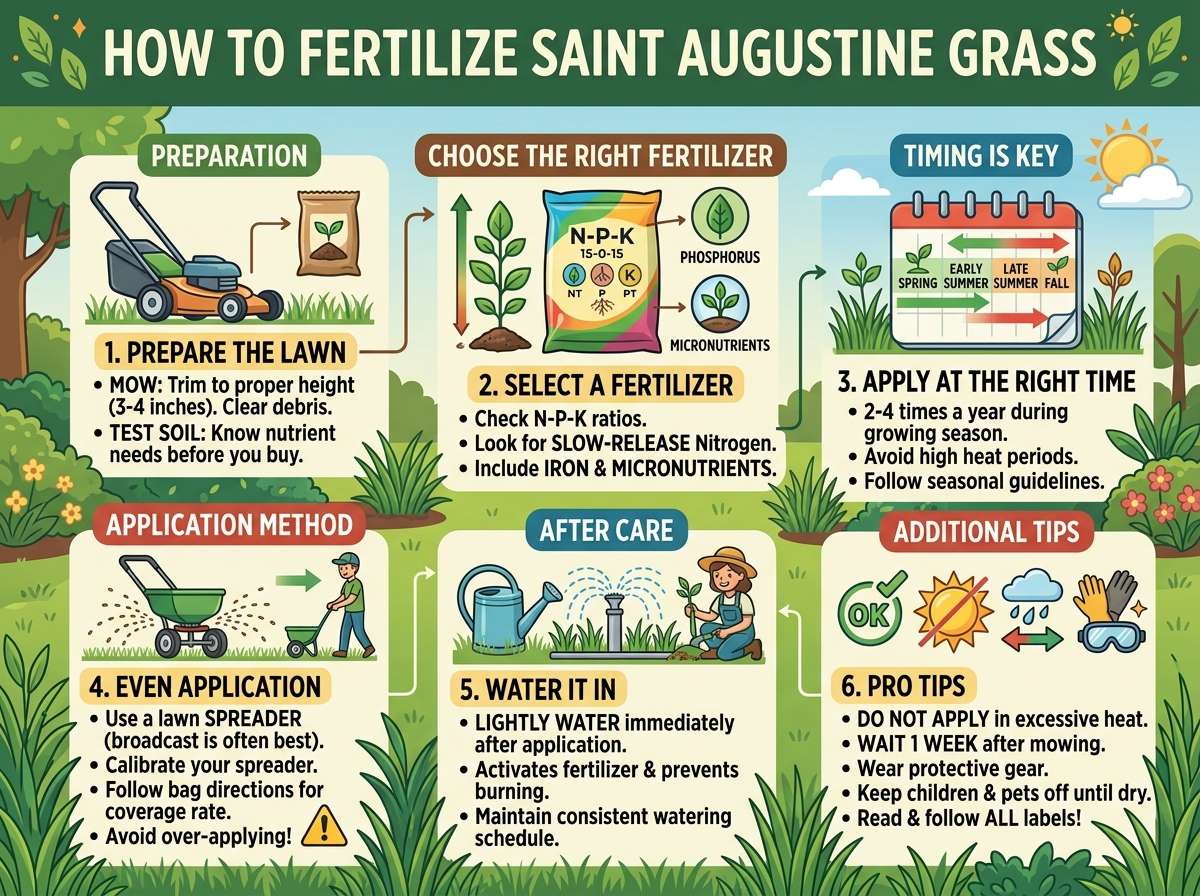
How to Fertilize Saint Augustine Grass?
If you own a lawn covered with lush, thick Saint Augustine grass, you already know it’s one of the best turfgrass types around. This warm-season grass looks gorgeous and feels fantastic under your feet. But here’s the thing: keeping it healthy and vibrant requires proper feeding. That’s where fertilizing comes in. In this guide, I’ll walk you through everything you need to know about fertilizing Saint Augustine grass, from the basics to advanced tips that’ll make your lawn the envy of your neighborhood.
In this article
What Makes Saint Augustine Grass Special
Before we jump into the fertilizing part, let’s talk about why Saint Augustine grass is so popular. This warm-season grass thrives in hot climates and handles shade like a champ. It spreads through thick, creeping stems called stolons, which fill in bare spots and create a dense carpet of green. Because of how it grows, Saint Augustine grass has different nutritional needs than other lawn types.
The grass gets its name from Saint Augustine, Florida, where it was first brought from the Caribbean. It loves humidity, tolerates salty soil, and bounces back quickly from foot traffic. That resilience is great, but it also means you need to feed it right to keep it looking its best.
Why Your Saint Augustine Grass Needs Fertilizer
Your lawn pulls nutrients from the soil. Over time, those nutrients get used up. Rain washes some away. Grass clippings return some nutrients, but not enough to keep your lawn thriving year-round. This is where fertilizer steps in.
Fertilizer acts like vitamins for your grass. It provides the three main nutrients that grass needs to grow: nitrogen, phosphorus, and potassium. You’ve probably seen these listed on fertilizer bags as NPK numbers, like 15-5-10. That means 15% nitrogen, 5% phosphorus, and 10% potassium.
Nitrogen makes grass green and helps it grow thick and lush. Phosphorus builds strong roots, which helps grass survive stress. Potassium strengthens the overall plant and helps it fight disease and drought. Without proper fertilizing, your Saint Augustine grass will slowly decline. You’ll notice it getting thin, developing bare spots, and turning pale instead of that rich green color.
Understanding NPK Ratios for Saint Augustine Grass
When you walk into a garden center or shop online for grass fertilizer, you’ll see different NPK ratios. Not all of them work equally well for Saint Augustine grass.
Saint Augustine grass does best with fertilizers that have higher nitrogen content. A ratio like 16-4-8 or 15-5-10 works great for this grass type. The high nitrogen feeds leaf growth and that dense, green coverage you want. The lower phosphorus and potassium numbers make sense because Saint Augustine grass doesn’t need as much of those nutrients as it needs nitrogen.
You’ll also find fertilizers labeled specifically for Saint Augustine grass or warm-season grasses. These already have the right balance mixed in, so you don’t have to guess. That’s often the easiest route for beginners who just want simple, reliable results.
Stay away from fertilizers made for cool-season grasses. These have different ratios and won’t give your Saint Augustine grass what it really needs. You might see green growth at first, but the grass won’t be as healthy long-term.
Timing: When to Feed Your Lawn
The timing of your fertilizer applications matters just as much as what you use. Saint Augustine grass is a warm-season grass, so it wakes up and grows actively when temperatures warm up.
Start your fertilizing routine in late spring. Don’t jump the gun too early in spring. If you fertilize when the grass is still mostly dormant, you’ll waste nutrients and money. Wait until you see new green growth and the grass is actively spreading.
During the peak growing season, you should fertilize every 6 to 8 weeks. This keeps your grass fed consistently as it grows at its fastest rate. You’ll typically apply fertilizer 3 to 4 times through the active growing season.
Cut back on fertilizing as fall arrives. Your Saint Augustine grass naturally slows down its growth as temperatures drop. You can apply one last light feeding in early fall, but stop heavy fertilizing after that. Your grass is preparing to go dormant for cooler months, and too much nitrogen then can make it more prone to disease.
Don’t fertilize in winter. The grass isn’t growing, so it can’t use the nutrients. That fertilizer will just sit there and potentially damage the soil or wash away.
Types of Fertilizers Available
You have several options when it comes to fertilizer types. Each has pros and cons, so let’s break them down.
Granular Fertilizers
Granular fertilizers come as small pellets. You spread them across your lawn using a spreader, and they slowly release nutrients as they break down. These are popular because they’re affordable, easy to apply, and long-lasting. One application can feed your grass for several weeks.
Granular fertilizers come in two main styles: quick-release and slow-release. Quick-release fertilizers feed your grass fast, delivering nutrients within days. Slow-release fertilizers work gradually over weeks or months. Slow-release options are often better for Saint Augustine grass because they provide steady nutrition without shocking the system.
Liquid Fertilizers
Liquid fertilizers spray on using a hose-end sprayer or a pump sprayer. They get absorbed quickly by the grass blades and roots, so you see results within days. Liquid fertilizers are great if your lawn needs a quick nutritional boost.
The downside is that you need to apply liquid fertilizers more often. They don’t last as long as granular types, so you’ll be treating your lawn more frequently. They also cost more per application than granules.
Organic Fertilizers
Organic fertilizers come from natural sources like animal manure, plant materials, or mineral deposits. They release nutrients slowly as soil microbes break them down. This slow release is great for Saint Augustine grass because it prevents nutrient burn and creates a healthier soil ecosystem.
Organic options take longer to show results than synthetic fertilizers, but they build better soil long-term. They also smell less pleasant, and spreads less evenly across your lawn.
Synthetic Fertilizers
Synthetic fertilizers are manufactured and contain concentrated nutrients. They work fast and spread evenly. You can find them in both granular and liquid forms. Most lawn owners find synthetics easiest to apply and most cost-effective.
The trade-off is that they don’t improve your soil as much as organic types. Heavy reliance on synthetics over years can make your soil less healthy. The best approach is often a mix: use synthetic fertilizers for regular feeding and throw in an organic application a couple times yearly to build soil quality.
How to Apply Fertilizer to Saint Augustine Grass
Getting the application right matters. Even the best fertilizer won’t help if you apply it wrong.
Step 1: Prepare Your Lawn
Before you fertilize, mow your grass to about 2.5 to 3 inches tall. This is the ideal height for Saint Augustine grass. Cutting it this short helps the fertilizer reach the soil and base of the grass plants. Don’t cut it shorter than this, though, because you’ll stress the grass and leave it vulnerable to disease and heat damage.
Water your lawn lightly a day before fertilizing. You want the soil moist, not soggy. Moist soil helps the fertilizer dissolve and move into the root zone. If you fertilize on completely dry soil, the nutrients won’t absorb as well.
Step 2: Choose the Right Spreader
For granular fertilizers, you need a spreader. Broadcast spreaders throw the fertilizer in a wide pattern, covering lots of ground quickly. They’re great for large lawns. Drop spreaders deliver fertilizer in a straight line as you walk, giving you more control. Drop spreaders work better for small spaces or areas near beds where you don’t want fertilizer.
Set your spreader to the right setting for your fertilizer. Check the bag for the recommended setting. Too high, and you’ll waste product and potentially burn your grass with excess nutrients. Too low, and your lawn won’t get enough feeding.
Step 3: Apply the Fertilizer
Walk at a steady pace across your lawn, covering each area evenly. Overlap your passes slightly to avoid missing strips. Start with the edges and work your way across in straight lines, like you’re mowing.
Try to apply the same amount of fertilizer to the entire lawn. Don’t dump extra in one spot. Uneven application means some areas get too much nutrition while others get too little.
Step 4: Water After Applying
This is crucial. After you finish spreading the fertilizer, water your lawn thoroughly. The water activates the fertilizer and helps it move into the soil. Watering also prevents fertilizer burn, which can happen if granules sit on dry grass too long.
If you’re using liquid fertilizer, you’ll usually spray it directly and don’t need to water immediately after. Still, a light watering a few hours later helps the nutrients get deep into the root zone.
Best Practices for Fertilizing Saint Augustine Grass
Now that you know the basics, let’s talk about the habits that separate beautiful lawns from average ones.
Start Light
If you’re new to fertilizing, start with one application and see how your lawn responds. You can always add more feedings later if needed. It’s easier to feed more than to fix a lawn you’ve over-fed.
Track Your Applications
Write down when you fertilize and what product you used. Keep notes on how your lawn looks before and after. This record helps you dial in the perfect routine for your specific lawn. Every lawn is different because soil, sun exposure, and water availability vary.
Don’t Fertilize Right After Heavy Rain
If your area gets heavy rain, wait a few days before fertilizing. Heavy rain will wash granular fertilizer off the grass before it dissolves and absorbs. Wait until the lawn dries out a bit.
Avoid Fertilizing New Grass
If you’ve just installed Saint Augustine sod or planted sprigs, hold off on heavy fertilizing for the first month. New grass is stressed from the transplant and needs time to establish. A light application of a balanced fertilizer after 3 to 4 weeks is fine, but aggressive feeding too early can damage new growth.
Use Slow-Release Products
Slow-release fertilizers give better results for most home lawns. They feed your grass steadily without shocking the system. Look for products with the word “slow-release” or check if more than half of the nitrogen is in a slow-release form.
Fertilizing Schedule Throughout the Growing Season
Here’s a practical schedule you can follow:
Late Spring (first application): Apply a fertilizer with a ratio like 15-5-10 or 16-4-8. This gets your Saint Augustine grass off to a strong start as it wakes up and grows actively.
Early Summer (second application): About 6 to 8 weeks after your first application, apply fertilizer again. Your grass is growing hard now and has used up the nutrients from the first feeding.
Mid-Summer (third application): Apply another round of fertilizer. Watch your lawn during this hot time. If it starts looking stressed or thin, a fertilizer boost helps it recover.
Late Summer to Early Fall (fourth application): Apply one more feeding as growth naturally slows. Use a slightly lower nitrogen product, something like 12-4-8, to start preparing the grass for dormancy.
Fall and Winter: Stop fertilizing. Your grass isn’t growing, and feeding it now does more harm than good.
This 4-application schedule works great for most Saint Augustine lawns. If your lawn is in shade or has poor soil, you might feed it 5 times during the season. If your lawn is healthy and established, 3 times might be enough.
Common Fertilizing Mistakes to Avoid
Learning from others’ mistakes saves you time and money.
Over-Fertilizing
The biggest mistake lawn owners make is feeding their grass too much. They think more fertilizer means greener grass, so they apply it every month or use double the recommended amount. This backfires. Over-fed grass grows too fast, becomes thick and weak, and develops disease easily. It also requires more frequent mowing.
Follow the label directions. If it says apply every 6 weeks, don’t do it every 4 weeks. Your lawn will be happier and healthier with moderate feeding.
Using the Wrong Ratio
Using a cool-season grass fertilizer on Saint Augustine grass won’t give good results. The NPK ratio is wrong for warm-season grasses. Always pick a product labeled for warm-season grasses or Saint Augustine specifically.
Fertilizing During Drought
If your area is experiencing drought and your lawn is stressed, fertilizing can make things worse. Hold off on feeding until normal rainfall returns or you can water regularly. Stressed grass can’t use nutrients effectively, and feeding stressed grass often damages it.
Applying to Wet Grass
Never spread granular fertilizer on wet grass. The granules stick to the wet blades instead of falling to the soil. This causes uneven coverage and wasted fertilizer. Wait until the morning dew dries or the grass is dry after watering.
Ignoring Soil Testing
Your soil might already have plenty of some nutrients. A soil test tells you exactly what your lawn needs. Applying fertilizer for nutrients your soil already has is wasteful and can create imbalances. You can get an inexpensive soil test from your local extension office.
Reading and Understanding Fertilizer Labels
Fertilizer bags contain important information. Let’s decode what you’re looking at.
The three bold numbers are the NPK ratio. A product labeled 15-5-10 contains 15% nitrogen, 5% phosphorus, and 10% potassium by weight.
Look for “slow-release” or “controlled-release” on the label. This means the nutrients release gradually. The label should tell you the percentage of slow-release nitrogen. Aim for products where at least 50% of the nitrogen is slow-release.
Check the application rate. This tells you how much product to apply per 1,000 square feet of lawn. Using the right amount is essential for good results.
The label also lists other nutrients and micronutrients like iron, magnesium, and zinc. These aren’t required in large amounts, but they help your grass look its best. Iron, for example, makes grass deeper green.
Special Situations and Adjustments
Different lawn situations call for different approaches.
Lawns with Poor Drainage
If your lawn stays wet after rain and develops disease easily, your soil probably drains poorly. Use lighter, more frequent fertilizer applications instead of heavy ones. This prevents nutrient buildup that makes soggy soil worse.
Shady Areas
Grass growing in shade doesn’t grow as fast as grass in full sun. Shade-grown Saint Augustine grass needs less fertilizer. Cut your normal application amount by about 25% in shady areas. Watch the grass, and adjust if it looks hungry.
Newly Sodded Lawns
New sod is already well-fertilized when you install it. Wait about 30 to 45 days before your first fertilizer application. After that, follow the normal schedule. Water the new sod regularly while it establishes.
Damaged or Disease-Infected Lawns
If your lawn has suffered from disease, insects, or drought, let it recover before aggressive fertilizing. A light application of balanced fertilizer helps recovery, but heavy feeding can set back struggling grass. Once new growth appears and looks healthy, return to normal feeding.
The Connection Between Fertilizing and Other Lawn Care
Fertilizing works best when combined with proper watering and mowing.
Watering and Fertilizing
Saint Augustine grass needs regular water, especially during the growing season. Water deeply and infrequently, aiming for about 1 inch per week. Fertilizer works best on well-watered lawns because the nutrients need water to move through the soil and roots. A dry lawn won’t benefit much from fertilizing.
Mowing Height
Keep your Saint Augustine grass between 2.5 and 3.5 inches tall. Never cut it shorter than 2 inches. Proper mowing height helps the grass stay thick and healthy, which makes fertilizer more effective. Short grass is weak grass that struggles to use nutrients.
Thatch Management
Thatch is a layer of dead grass, stems, and roots that builds up on your soil. Too much thatch (more than 0.5 inches) prevents water and nutrients from reaching the roots. If you have excessive thatch, dethatch your lawn before fertilizing. Fertilizer won’t help if nutrients can’t reach the roots.
Cost-Effective Fertilizing Tips
You don’t need to spend a fortune on lawn fertilizer. Here’s how to do it smart.
Buy Granular Products
Granular fertilizers cost less per application than liquid types. You get more value for your money. For a budget-conscious lawn owner, granulars are the way to go.
Watch for Sales
Garden centers and online retailers often put fertilizer on sale. Buy when prices are low. Fertilizer stores well in a dry place, so stocking up before peak season saves money.
Use Mulching Mowers
A mulching mower chops grass clippings finely and leaves them on the lawn. These clippings decompose and return nutrients to the soil. This reduces your fertilizer needs by 15% to 25%. It’s free, natural feeding for your lawn.
Get a Soil Test
A soil test costs $10 to $20 but saves money long-term. You’ll know exactly what nutrients your lawn needs and won’t waste money on unnecessary feeding.
Compare Price Per Thousand
Don’t just look at the bag price. Calculate the cost per 1,000 square feet of lawn. A $15 bag that covers 10,000 square feet costs $1.50 per thousand. A $10 bag that covers 5,000 square feet costs $2 per thousand. The cheaper bag is actually more expensive to use.
Getting Professional Help
If all this seems overwhelming, that’s okay. Professional lawn care companies handle fertilizing all the time. They know the right products, timing, and amounts for your specific lawn.
Professional services cost more than DIY fertilizing, but they save you time and ensure excellent results. They also have experience troubleshooting lawn problems you might not recognize.
If you go the professional route, ask questions about what products they use and why. A good lawn company will explain their approach and answer your questions.
Signs Your Lawn Needs More Fertilizer
Watch your lawn for clues that it’s hungry.
Pale green or yellowish grass signals nitrogen deficiency. The newest growth at the tips turns yellow first. If you see this, your grass needs feeding.
Slow growth or thin, sparse areas indicate nutrient problems. Healthy Saint Augustine grass fills in bare spots quickly through stolon growth. Slow spread means it’s not well-fed.
Overall weak appearance, increased disease susceptibility, or poor recovery from stress all point to inadequate nutrition. Once you start a proper fertilizing routine, you’ll be amazed at the difference.
The Bottom Line
Fertilizing Saint Augustine grass isn’t complicated. Feed it the right products at the right times, and your lawn will thrive. Start with a quality granular fertilizer designed for warm-season grasses. Apply it every 6 to 8 weeks during the growing season, and water after each application. Track what you do and watch your lawn’s response.
With consistent, proper fertilizing, your Saint Augustine grass will develop that thick, lush green appearance that makes you proud. You’ll mow less often, fight fewer weeds and diseases, and enjoy a lawn that’s the highlight of your property. The effort you put in now pays dividends in a beautiful yard that lasts for years.
Get started this season. Your Saint Augustine grass is counting on you.

Hi, I’m Mary, the founder of GardenCure.com. I’m passionate about creating healthy, beautiful gardens and well-kept lawns. I share practical experience and trusted advice on garden and lawn gear that truly works. With the support of my dedicated research team, our writers produce honest, in-depth reviews using reliable, authentic sources—helping you choose the right tools with confidence for your outdoor space.