How to Use a Plant Humidifier?
If your houseplants keep getting crispy leaf tips or droopy leaves even though you water them on time, dry air might be the real problem. Many indoor plants come from warm, damp places like rainforests. Your living room air is often way drier than what they need. That’s where a plant humidifier steps in. It adds moisture back into the air so your green friends feel right at home.
In this article
This guide walks you through everything you need to know about using a plant humidifier the right way. We’ll cover what it does, how to set it up, where to place it, how to keep it clean, and how to avoid common mistakes. By the end, you’ll feel confident using one like a pro, even if this is your first time.
What Is a Plant Humidifier and Why Does It Matter
A plant humidifier is a small device that releases water vapor or fine mist into the air around your plants. It raises the humidity level in a room or a specific plant zone, which helps leaves stay soft, green, and healthy.
Most homes have humidity levels between 30 and 40 percent, especially when the heater or air conditioner runs a lot. Tropical plants like monstera, calathea, ferns, and orchids usually want humidity levels between 50 and 70 percent. That gap can cause brown edges, curling leaves, slow growth, and pest problems like spider mites, which love dry conditions.
A humidifier closes that gap. It’s not just a nice extra tool, it’s often the missing piece that turns a struggling plant into a thriving one.
Signs Your Plants Need More Humidity
Before you plug in a humidifier, it helps to know if your plants actually need one. Look out for these signs:
- Brown, crispy tips on the leaves
- Leaf edges that curl inward or look wrinkled
- Slow or stalled growth during warm months
- Yellowing leaves that fall off with no clear reason
- Flower buds that dry up and drop before opening
- New leaves coming in smaller than older ones
If you spot two or more of these signs, dry air is likely part of the issue. A humidifier can help fix it fast, often within a couple of weeks.
Types of Plant Humidifiers You Can Use
There are a few common types, and each works a bit differently.
Ultrasonic humidifiers use a vibrating disc to break water into a fine, cool mist. These are quiet, affordable, and popular for home plant care. They work well for small to medium rooms.
Evaporative humidifiers pull air through a wet wick or filter, letting water evaporate naturally into the room. They’re a bit noisier but tend to be low maintenance and hard to overdo.
Steam humidifiers heat water to create warm vapor. They kill more bacteria in the water but use more electricity and can be riskier around curious pets or kids because the water gets hot.
Cool mist humidifiers are a favorite for plant lovers since they don’t raise the room temperature and are gentle on delicate leaves nearby.
For most beginners, an ultrasonic cool mist humidifier is the easiest starting point. It’s simple to use, quiet, and budget-friendly.
How to Set Up Your Plant Humidifier the Right Way
Setting one up isn’t hard, but a few small details make a big difference in how well it works.
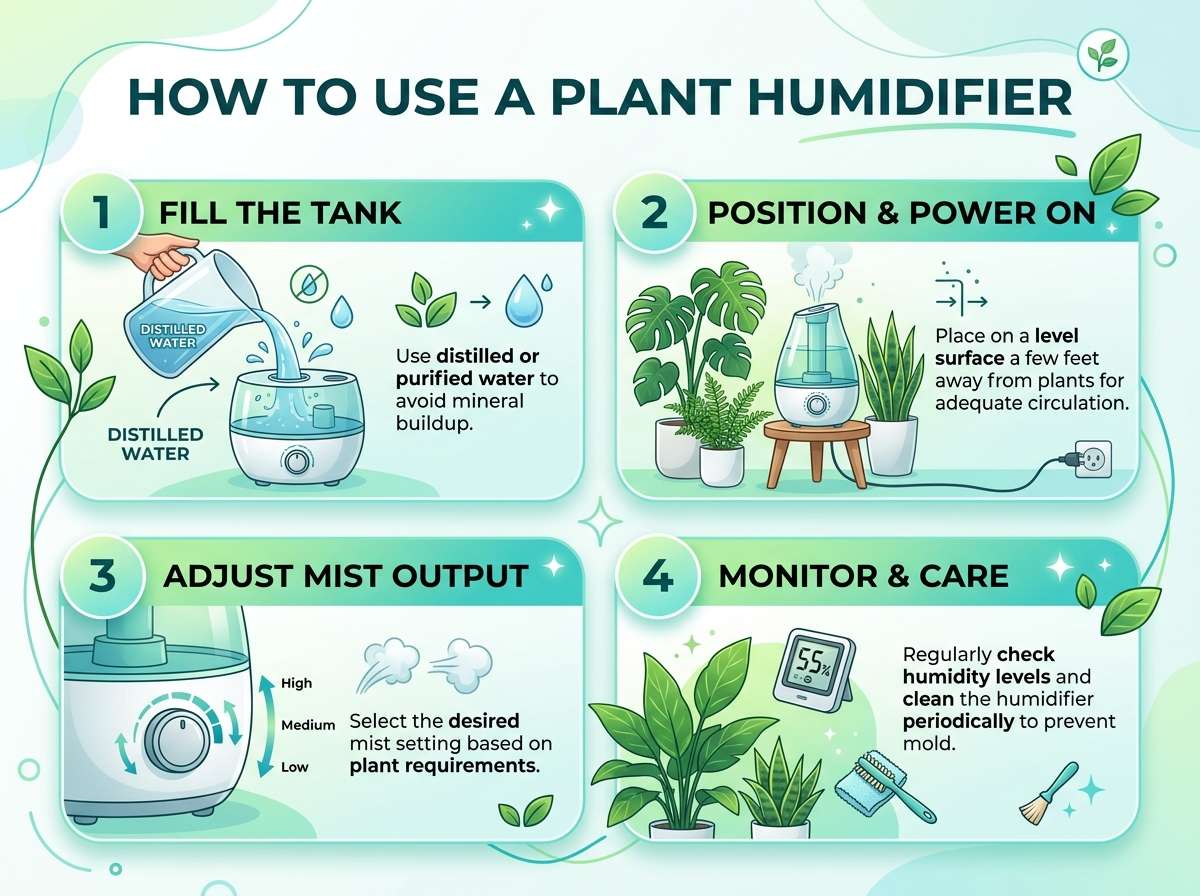
Step 1: Pick the Right Spot
Place the humidifier near the plants that need it most, but not directly touching the leaves. A distance of one to two feet away is ideal. Too close, and water droplets can sit on the leaves and cause fungal spots or mold.
Group plants that love humidity together in one corner or shelf. This creates a mini humid zone, so the humidifier doesn’t have to work as hard to cover the whole room.
Step 2: Fill It with the Right Water
Tap water works for most humidifiers, but it can leave white mineral dust on leaves and furniture over time, especially with ultrasonic models. Distilled water or filtered water is a smarter option because it’s free of minerals that build up and clog the machine.
If your tap water is hard (has lots of minerals), always lean toward filtered or distilled water for a cleaner mist and longer machine life.
Step 3: Turn It On and Set the Level
Most humidifiers come with a dial or digital display to control mist output. Start on a low or medium setting first. You can always turn it up if the air still feels dry. Running it on high all day, every day, isn’t usually necessary and can lead to soggy soil or mold on nearby surfaces.
Many newer models come with a built-in hygrometer (a humidity sensor) that auto-adjusts the mist level to hit a target percentage, usually around 50 to 60 percent for tropical plants. This takes the guesswork out completely.
Step 4: Decide How Long to Run It
Running the humidifier for 6 to 10 hours a day, especially during dry seasons or when the heater is on, works well for most homes. Some people run it only during the day, others let it run overnight too. There’s no single right answer, it depends on your home’s natural humidity and your plant’s needs.
A cheap humidity gauge (called a hygrometer) placed near your plants helps you track the actual moisture level in the air, so you’re not just guessing.
Best Placement Tips for Maximum Benefit
Placement really does change how well a humidifier performs. Here are some smart tips:
- Keep the humidifier at plant height or slightly above so mist settles down naturally instead of just rising to the ceiling.
- Avoid placing it directly on the same shelf as electronics, wood furniture, or anything that could get water damage.
- Group plants closer together to trap humidity between their leaves, almost like a mini greenhouse effect.
- Keep windows and doors closed nearby so the moist air doesn’t just escape the room.
- Rotate the humidifier’s spot every so often if you have plants scattered around different rooms.
If you have a large plant collection spread across a big space, a bigger humidifier or two smaller units placed strategically works better than one small machine trying to cover everything.
How Much Humidity Do Different Plants Actually Need
Not every plant wants the same amount of moisture in the air. Here’s a quick breakdown:
High humidity lovers (60-80 percent): Ferns, calathea, orchids, alocasia, prayer plants, and anthurium. These plants come from very humid natural environments and show stress fast when the air is too dry.
Medium humidity plants (40-60 percent): Monstera, philodendron, pothos, peace lily, and most common houseplants. These are more flexible but still appreciate extra moisture, especially during dry seasons.
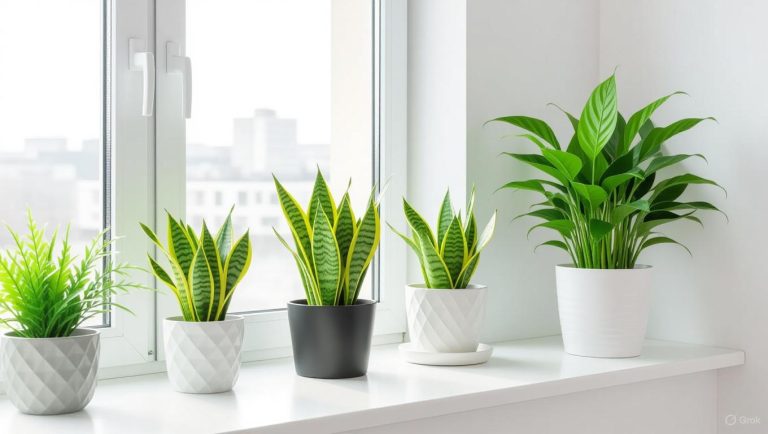
Low humidity tolerant plants (below 40 percent): Succulents, cacti, snake plants, and ZZ plants. These plants actually prefer drier air and can suffer from too much moisture, so they don’t need to sit near the humidifier at all.
Knowing this helps you decide where to place your humidifier so you’re helping the plants that need it without accidentally harming the ones that don’t.
Common Mistakes to Avoid
Even a simple tool like a humidifier can cause problems if used the wrong way. Here are mistakes beginners often make:
Running it too close to leaves. Direct mist sitting on leaves for hours can lead to fungal spots, especially on plants with fuzzy or thin leaves like African violets.
Forgetting to clean it. Stagnant water inside a humidifier tank grows bacteria and mold fast, sometimes within just a few days. This mold can then get blown into the air along with the mist, which isn’t good for you or your plants.
Using hard tap water constantly. This causes a white dusty film (called mineral scale) to coat leaves, blocking light absorption and clogging the humidifier’s internal parts.
Overdoing the humidity. Too much moisture in an enclosed space encourages mold growth on soil, walls, and furniture, and can attract gnats and other pests.
Ignoring airflow. Stagnant, overly humid air without any air movement invites fungal issues. Adding a small fan nearby to gently circulate air can prevent this without lowering humidity too much.
Placing it near wood furniture or electronics. Constant mist exposure can warp wood or damage electronic devices over time.
How to Clean and Maintain Your Humidifier
Cleaning your humidifier regularly keeps it working well and keeps mold from spreading into your air. Follow these simple steps:
- Unplug the unit and empty any leftover water from the tank.
- Rinse the tank with clean water to remove loose debris.
- Mix a solution of water and white vinegar (about one part vinegar to two parts water) and let it sit in the tank for 20 to 30 minutes to break down mineral buildup and bacteria.
- Use a soft brush or cloth to scrub the inside, especially around the mist nozzle and sensor area.
- Rinse thoroughly several times to remove all vinegar smell.
- Wipe dry and let it air out before refilling.
Do this deep clean once a week if you use the humidifier daily, or every couple of weeks for lighter use. Change the water daily too, don’t let old water sit in the tank for multiple days since that speeds up bacteria growth.
Alternative Ways to Boost Humidity Without a Machine
If you’re not ready to buy a humidifier yet, or just want to add extra moisture between uses, try these natural tricks:
- Pebble trays: Fill a shallow tray with small pebbles and water, then set your plant pot on top (not touching the water directly). As the water evaporates, it raises humidity right around the leaves.
- Grouping plants: Plants naturally release moisture through their leaves in a process called transpiration. Grouping them together creates a shared humid pocket.
- Misting with a spray bottle: This gives a short-term humidity boost, though it fades fast and needs repeating often.
- Bathroom placement: Bathrooms with showers naturally stay more humid, making them a great spot for moisture-loving plants like ferns.
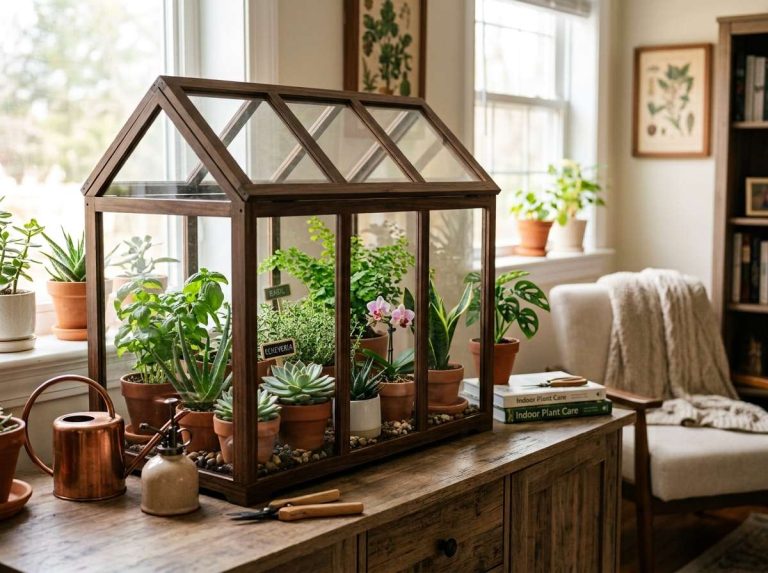
- Terrariums or cloches: Covering a plant partly or fully with a glass container traps moisture inside, creating a self-contained humid environment.
These methods work as helpful extras, but a proper humidifier still gives the most steady, reliable results, especially in dry climates or during cold months when indoor heating dries out the air fast.
Signs Your Humidifier Setup Is Working
After adding a humidifier to your plant routine, watch for these positive changes over the following weeks:
- New leaves unfurl smoothly without getting stuck or torn
- Leaf tips stop turning brown or crispy
- Overall leaf color looks richer and more vibrant
- Growth speeds up during the plant’s active growing period
- Fewer pest issues, since dry air often invites spider mites and thrips
If you notice mold on the soil surface or a musty smell in the room, that’s a sign the humidity is too high or airflow is too low. Simply dial back the mist output or add a small fan to keep air moving.
Final Thoughts
Using a plant humidifier isn’t complicated once you understand the basics. Fill it with clean water, place it a little distance away from your leafy friends, set the mist level to a comfortable range, and keep it clean on a regular schedule. Pay attention to your specific plants since tropical types crave much more moisture than desert plants like cacti and succulents.
Give it a couple of weeks and you’ll likely see fewer brown tips, faster growth, and greener, happier leaves all around. A humidifier is a small investment that can make a huge difference for plant lovers dealing with dry indoor air, especially in air-conditioned or heated homes where natural humidity tends to drop low.
Start simple, watch how your plants respond, and adjust the settings as you go. Your plants will show you exactly what they need if you pay close attention.

Hi, I’m Mary, the founder of GardenCure.com. I’m passionate about creating healthy, beautiful gardens and well-kept lawns. I share practical experience and trusted advice on garden and lawn gear that truly works. With the support of my dedicated research team, our writers produce honest, in-depth reviews using reliable, authentic sources—helping you choose the right tools with confidence for your outdoor space.