How to Use Bypass Pruners?
If you love working in your garden, you already know that the right tool can make a huge difference. One tool that every gardener needs is a bypass pruner. It’s a small hand tool, but it does a big job. It helps you trim branches, cut stems, and keep your plants healthy and neat.
In this article
In this guide, we will walk through everything you need to know about bypass pruners. We will cover what they are, how they work, how to hold them, how to make clean cuts, and how to keep them sharp for years of use. By the end, you will feel confident picking up a pair and using them like a pro.
What Is a Bypass Pruner?
A bypass pruner is a hand tool with two curved blades that slide past each other, just like scissors. One blade is sharp and does the cutting. The other blade acts as a support and holds the branch steady while the sharp blade slices through it.
This scissor-like action gives you a clean, smooth cut. That is why bypass pruners are the top pick for cutting live branches, soft stems, and green growth. Gardeners, farmers, and landscapers all reach for this tool because it protects the plant tissue and helps the plant heal faster after a cut.
Bypass pruners are different from anvil pruners, which use a single sharp blade that closes onto a flat surface, kind of like a knife hitting a cutting board. Anvil pruners work well on dry or dead wood, but they tend to crush soft stems. Bypass pruners, on the other hand, are gentle on living plants because of their scissor action.
Why Bypass Pruners Matter for Plant Health
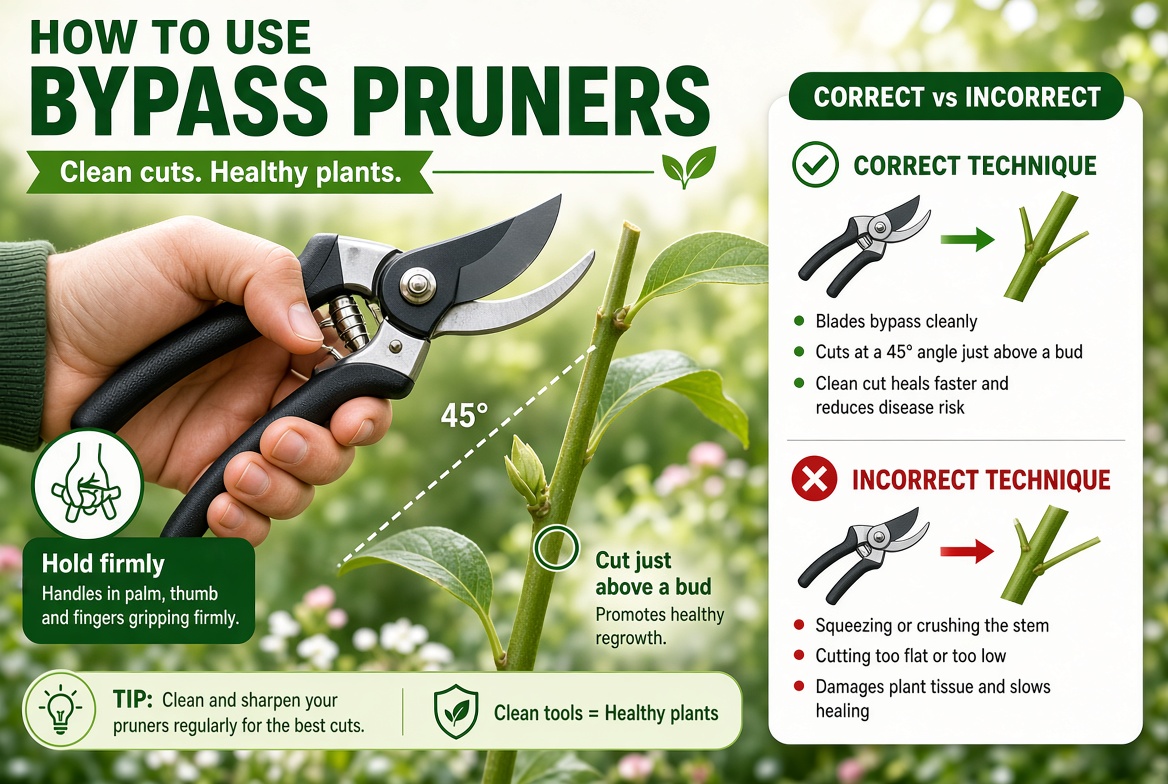
A clean cut heals faster than a rough or crushed cut. When you use a bypass pruner correctly, the wound on the plant is smooth and small. This lowers the risk of disease, pests, and rot getting into the plant. A crushed or torn cut leaves a bigger opening, and that opening can invite trouble.
So if you care about your roses, fruit trees, shrubs, or vegetable plants, using a bypass pruner the right way is one of the best habits you can build.
The Main Parts of a Bypass Pruner
Before you start cutting, it helps to know the parts of your tool. Here is a quick rundown:
- Cutting blade: The sharp, curved blade that slices through the branch.
- Hook blade or anvil support: The lower blade that holds the branch steady.
- Handles: The grips you hold in your hand.
- Spring: Pushes the handles back open after each cut.
- Locking mechanism: A safety latch that keeps the blades closed when not in use.
- Sap groove: A small channel that stops sticky sap from building up on the blade.
Knowing these parts helps you spot wear and tear early, and it also helps when it is time to clean or sharpen your tool.
How to Hold Bypass Pruners the Right Way
Good grip and posture make cutting easier and safer. Here is how to hold your pruners properly:
- Place your thumb and fingers on the handles, with your palm wrapped around comfortably.
- Keep your wrist straight instead of bent, so you don’t strain it.
- Grip firmly but not too tight, since a relaxed grip gives you better control.
- Position the sharp blade on top of the branch and the hook blade underneath.
This last point matters a lot. If you flip the tool around, the hook blade ends up on top and can crush the bark instead of cutting cleanly.
Step-by-Step: How to Use Bypass Pruners
Now let’s get into the actual cutting process. Follow these steps for smooth, healthy cuts every time.
Step 1: Check the Branch
Look at the branch you want to cut. Check its thickness and see if it fits within the pruner’s cutting capacity, usually printed on the tool or in its manual. Most bypass pruners handle branches up to around three-quarters of an inch thick. Going beyond that limit can damage the blades or strain your hand.
Step 2: Find the Right Spot to Cut
For most plants, the ideal spot is just above a bud, node, or joint where a new branch can grow. Cutting too close can hurt the bud, and cutting too far leaves a stub that can rot.
Step 3: Position the Blade
Place the sharp blade close to the part of the plant you want to keep, and let the hook blade rest on the side that will be removed. This way, the sharp edge does the clean cutting work near the living tissue.
Step 4: Make the Cut in One Smooth Motion
Squeeze the handles firmly and steadily. Avoid sawing back and forth, since that tears the bark instead of slicing it. A single, confident squeeze gives you the cleanest result.
Step 5: Angle Your Cut
For most stems, a slight angle, around forty-five degrees, helps water drain off the cut surface instead of pooling on it. This small trick reduces the chance of rot and fungal issues.
Step 6: Release and Move On
Let the spring open the handles again, then move to the next branch. Keep your pace steady rather than rushed, so each cut stays clean.
What You Can Cut With Bypass Pruners
Bypass pruners are best for live, green, and soft wood. Here are some common jobs they handle well:
- Trimming rose bushes and flowering shrubs
- Shaping small trees and hedges
- Cutting fresh herbs and vegetable stems
- Harvesting fruit from trees or vines
- Deadheading flowers to encourage new blooms
- Removing thin suckers and water sprouts from fruit trees
For thick, dry, or dead wood, a pair of loppers or a pruning saw usually works better than bypass pruners, since forcing a small blade through hard wood can bend or dull it quickly.
Common Mistakes to Avoid
Even experienced gardeners slip up sometimes. Here are a few mistakes worth watching for:
Using a dull blade. A dull blade crushes stems instead of slicing them. Sharpen your tool regularly to keep cuts clean.
Cutting branches too thick for the tool. Forcing a branch that’s too big can bend the blade or throw off the alignment.
Holding the pruner upside down. This flips which blade does the cutting and often leads to a rough, torn cut.
Skipping cleaning between plants. Dirty blades can spread disease from one plant to another. A quick wipe with rubbing alcohol between different plants keeps things safe.
Forcing a stuck cut. If the blades get stuck halfway through a branch, stop and reposition rather than forcing them, since forcing can snap the blade or hurt your wrist.
How to Keep Your Bypass Pruners Sharp
A sharp blade is the secret to clean cuts and a healthy garden. Here’s a simple routine to keep your tool in top shape.
Cleaning First
Before sharpening, wipe off dirt, sap, and plant residue with a cloth. A mix of warm water and mild soap works fine for general grime. For sticky sap, rubbing alcohol or a bit of vegetable oil on a rag does the trick.
Sharpening the Blade
- Open the pruner fully so you have clear access to the blade.
- Hold a sharpening stone or file at the same angle as the blade’s existing bevel, usually around twenty degrees.
- Move the stone across the blade in one direction, away from the edge, several times.
- Flip the tool and lightly smooth the flat back side to remove any burr.
- Wipe the blade clean once you finish.
Doing this every few weeks during heavy gardening season keeps your tool cutting smoothly.
Oiling the Joint
A drop of light machine oil on the pivot joint keeps the blades moving freely and stops rust from forming. Open and close the handles a few times after oiling to work it in.
Disinfecting Between Plants
If you’re moving from a sick plant to a healthy one, disinfecting your pruner stops the spread of disease. Dip the blades in rubbing alcohol, or wipe them thoroughly, then let them air dry for a minute before the next cut. This one small habit can save an entire garden bed from an outbreak.
Storing Your Bypass Pruners
Store your tool in a dry spot, away from moisture that causes rust. Many gardeners keep a leather sheath or plastic cover over the blades. Always close and lock the pruner before storing it, both for blade protection and for safety around kids or pets.
Safety Tips Every Gardener Should Know
- Always cut away from your body, never toward it.
- Wear gardening gloves to protect your hands from thorns and sharp edges.
- Keep the locking latch engaged when the tool isn’t in use.
- Store pruners out of reach of children.
- Never try to cut wire, metal, or anything the tool wasn’t built for, since this can chip or bend the blade.
Signs It’s Time to Replace Your Pruners
Even with great care, tools wear out eventually. Watch for these signs:
- The blade stays dull even after sharpening
- Rust has spread deep into the metal
- The spring no longer pushes the handles open
- The blades wobble or no longer align properly
- The handles crack or feel loose
If you spot two or more of these signs, it’s probably time for a new pair.
Bypass Pruners vs Anvil Pruners: A Quick Comparison
Many beginners wonder how bypass pruners compare to anvil pruners. Here’s a simple breakdown:
| Feature | Bypass Pruners | Anvil Pruners |
|---|---|---|
| Cutting style | Scissor-like, blade slides past a hook | Blade closes onto a flat surface |
| Best for | Live, green, soft stems | Dead or dry wood |
| Cut quality on live plants | Clean and precise | Can crush the stem |
| Common use | Roses, shrubs, herbs, fruit harvesting | Deadwood removal, thick branches |
For most everyday garden work, bypass pruners are the go-to tool, and many gardeners keep both types on hand for different jobs.
Tips for Beginners
If you’re new to gardening, here are a few extra pointers to build good habits early:
- Practice on a few extra twigs before working on your favorite plants, just to get a feel for the pressure needed.
- Start with smaller branches until you get comfortable with the motion.
- Keep your pruner within reach in a garden apron or tool belt, so it’s always handy.
- Watch how the cut looks after each snip. A smooth cut means you’re doing it right; a torn or ragged cut means it’s time to check your blade or your angle.
- Take breaks if your hand feels tired, since a firm grip over a long session can strain your wrist.
Frequently Asked Questions
Can bypass pruners cut thick branches? They work best on branches under an inch thick. For anything bigger, a lopper or pruning saw is a safer bet.
How often should I sharpen my pruners? For regular gardeners, sharpening every few weeks during active growing season keeps the blade in great shape. Light users might only need to sharpen once or twice a season.
Do bypass pruners work on flowers? Yes, they’re perfect for deadheading flowers and trimming soft flower stems.
What’s the best way to clean sap off the blade? A rag with a bit of rubbing alcohol or vegetable oil removes sap quickly without damaging the metal.
Is it normal for the blades to feel stiff at first? A little stiffness on a brand-new tool is normal. A drop of oil on the pivot point usually loosens it up after a few uses.
Final Thoughts
Bypass pruners are one of the simplest yet most useful tools a gardener can own. Once you know how to hold them, where to cut, and how to keep the blade sharp and clean, you’ll notice a real difference in how your plants grow back after each trim. Healthy cuts lead to healthy plants, and healthy plants lead to a garden you’ll be proud of.
Take a little time each season to clean, oil, and sharpen your tool, and it will serve you well for years. With practice, using bypass pruners becomes second nature, and your garden will thank you for it with fuller blooms, stronger branches, and better fruit.

Hi, I’m Mary, the founder of GardenCure.com. I’m passionate about creating healthy, beautiful gardens and well-kept lawns. I share practical experience and trusted advice on garden and lawn gear that truly works. With the support of my dedicated research team, our writers produce honest, in-depth reviews using reliable, authentic sources—helping you choose the right tools with confidence for your outdoor space.