How to Kill Weeds Without Killing Grass?
If you love a green, thick lawn but hate the ugly weeds popping up all over it, you are not alone. Weeds are sneaky. They grow fast, steal water and food from your grass, and make your yard look messy even after you just mowed it. The tricky part is getting rid of them without hurting the grass you worked so hard to grow.
In this article
The good news is that it can be done. You just need the right plan, the right products, and a little patience. This guide walks you through everything you need to know in plain, simple language, so even if you have never touched a bottle of weed killer in your life, you will feel ready to take action today.
Why Weeds Show Up in the First Place
Before you fight weeds, it helps to know why they grow in your lawn to begin with. Weeds are opportunists. They love bare spots, thin patches, compacted soil, and lawns that are stressed out from heat, drought, or bad mowing habits. A weak lawn is basically an open invitation for weeds like dandelions, clover, crabgrass, and creeping charlie to move in and take over.
So the real secret to weed control is not just spraying chemicals. It is building a lawn that is so healthy and thick that weeds simply cannot find room to grow. Keep that idea in mind as you read through the rest of this article, because it changes everything about how you approach weed control.
Know Your Enemy: Types of Lawn Weeds
Not all weeds are the same, and knowing which kind you are dealing with helps you pick the right treatment.
Broadleaf weeds have wide leaves and often flower. Dandelions, clover, plantain, and chickweed fall into this group. These are usually the easiest to target because most weed killers are made to attack broadleaf plants while leaving grass alone.
Grassy weeds look like grass but behave badly. Crabgrass and foxtail are common examples. These are harder to control because they share so many traits with your lawn grass, so you need special products made just for this job.
Sedges look like grass too, but they have triangle-shaped stems instead of round ones. Nutsedge is the most common troublemaker in this category, and it needs its own specific treatment to go away for good.
Once you figure out what type of weed you are dealing with, you can move on to picking a treatment that gets rid of it safely.
The Big Secret: Selective Herbicides
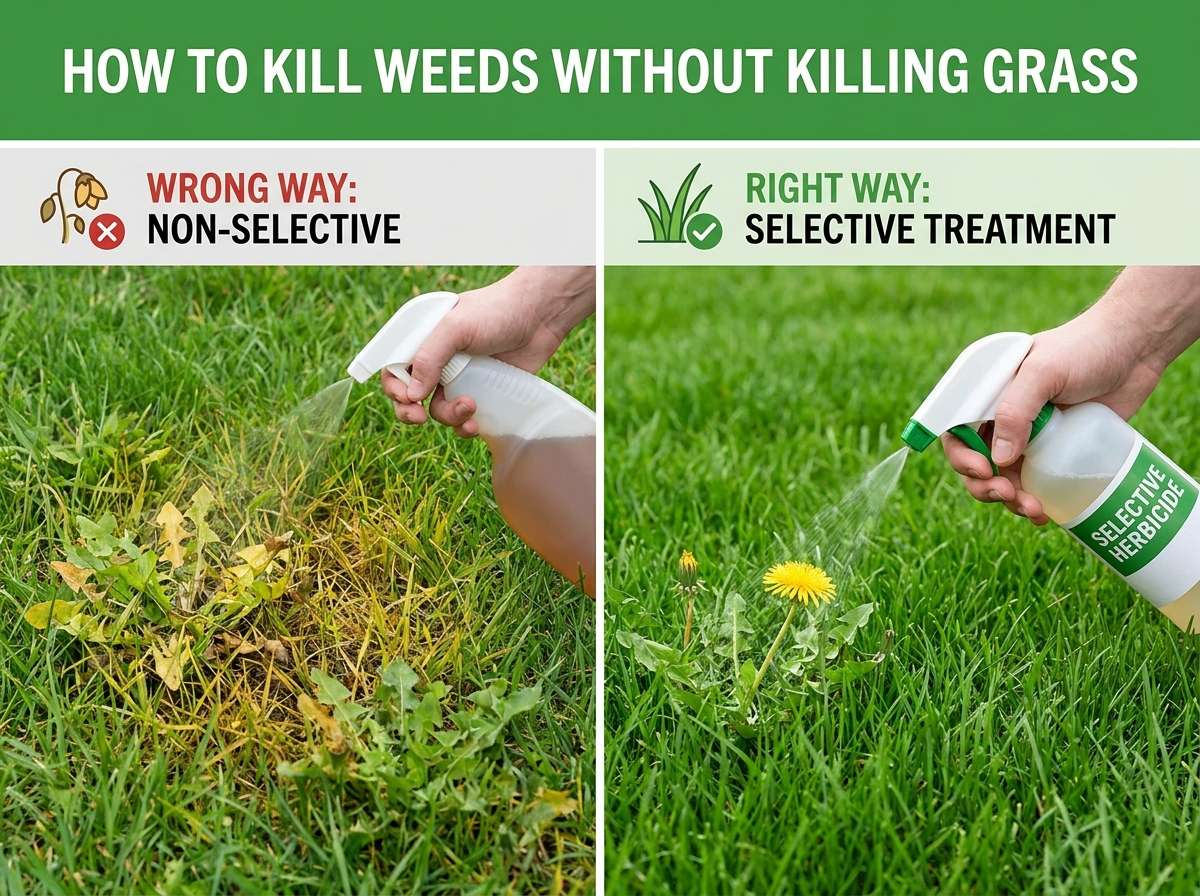
The main tool that lets you kill weeds without harming grass is something called a selective herbicide. Unlike a general weed killer that wipes out every green plant it touches, a selective herbicide is designed to target specific plant types while leaving others untouched.
Most selective herbicides made for lawns are built to attack broadleaf weeds only. They interfere with how those plants grow, causing them to twist, curl, and die within a week or two, while your grass keeps growing like nothing happened. This works because grass and broadleaf plants absorb and process chemicals in different ways.
When you shop for a product, look at the label closely. It should say it is safe for the type of grass you have, such as bermuda, fescue, zoysia, or bluegrass. Some herbicides are too harsh for certain grass types, so this step matters a lot.
Read the Label Every Single Time
This part sounds boring, but skipping it is the number one reason people accidentally kill their own grass. Every lawn product comes with instructions that tell you:
- Which grass types it is safe for
- How much product to use per square foot
- The best temperature range for spraying
- How long to wait before watering or mowing
- Whether kids or pets need to stay off the lawn for a while
Following these directions closely protects your lawn and keeps your family safe too. Using more product than the label says will not kill weeds faster. It just increases the chance of damaging your grass and wasting money.
Timing Matters More Than You Think
One of the biggest mistakes people make is spraying weed killer at the wrong time. Timing plays a huge role in how well a product works and how safe it is for your grass.
Spring is a great time to stop weeds before they even start, using a pre-emergent herbicide that creates a barrier in the soil to block weed seeds from sprouting.
Early summer, once weeds are actively growing, is the best window for post-emergent treatments that kill weeds already showing up in your yard.
Fall is another smart time to treat broadleaf weeds, since many plants are pulling nutrients down into their roots to prepare for cooler weather, so the herbicide gets carried down with it and kills the weed from the roots up.
Try to avoid spraying during extreme heat or drought, since stressed grass is more likely to get damaged by chemical treatments. Also skip spraying right before rain, since the product can wash away before it even has a chance to work.
Spot Treat Instead of Blanket Spraying
If your lawn only has a handful of weeds scattered here and there, there’s no need to spray the whole yard. Spot treating means you only apply weed killer directly onto the weeds themselves, using a small handheld sprayer or a squeeze bottle with a targeted nozzle.
This method saves money, cuts down on chemical use, and lowers the risk of grass damage since you are not covering healthy areas that do not need treatment. It works best for lawns with light to moderate weed problems rather than yards that are completely overrun.
Pulling Weeds by Hand
Sometimes the simplest method really is the best one, especially for small lawns or gardens where you want to avoid chemicals altogether. Pulling weeds by hand works great for young weeds with shallow roots.
The trick is to pull weeds right after it rains or after you water your lawn, since damp soil makes it much easier to remove the entire root system. If you leave even a small piece of root behind, many weeds like dandelions will simply grow right back.
Use a weeding tool with a forked tip to get deep under stubborn roots without disturbing too much of the surrounding grass. This method takes more time and effort, but it is completely safe for your lawn and does not involve any chemicals at all.
Try Natural and Organic Options
If you prefer to stay away from synthetic chemicals, there are natural alternatives that can help control weeds while keeping your lawn intact.
Corn gluten meal acts as a natural pre-emergent, stopping weed seeds from sprouting while also feeding your lawn with nitrogen. It needs to go down before weed seeds germinate to work properly.
Vinegar-based sprays can kill small weeds on contact, though they tend to work better on driveways, sidewalks, and garden beds rather than inside your actual lawn, since vinegar does not know the difference between a weed and grass.
Boiling water is another old-school trick for weeds growing in cracks and edges, but again, this method should be kept away from your lawn since it kills anything it touches.
Natural methods usually take more repeat treatments compared to chemical herbicides, but many homeowners like them because they are gentler on pets, kids, and the environment overall.
Build a Lawn That Weeds Can’t Compete With
As mentioned earlier, the strongest defense against weeds is a healthy, thick lawn. Here is how to build one that naturally crowds out weeds over time.
Mow at the Right Height
Cutting your grass too short is one of the fastest ways to invite weeds in. Short grass lets sunlight reach the soil, giving weed seeds the light they need to sprout. Set your mower blade higher, letting grass grow to a taller, fuller height, since taller grass shades the soil and blocks weeds from getting the light they crave.
Water Deeply, Not Often
Light, frequent watering trains grass roots to stay near the surface, making your lawn weaker overall. Instead, water deeply but less often, encouraging roots to grow down deep into the soil where they can find moisture even during dry spells. Deep roots create a stronger, thicker lawn that naturally resists weeds.
Feed Your Lawn on a Schedule
Grass needs regular feeding just like any other living thing. A well-fed lawn grows thick and full, leaving little room for weeds to squeeze in. Use a fertilizer made for your specific grass type and follow a consistent feeding schedule throughout the growing season.
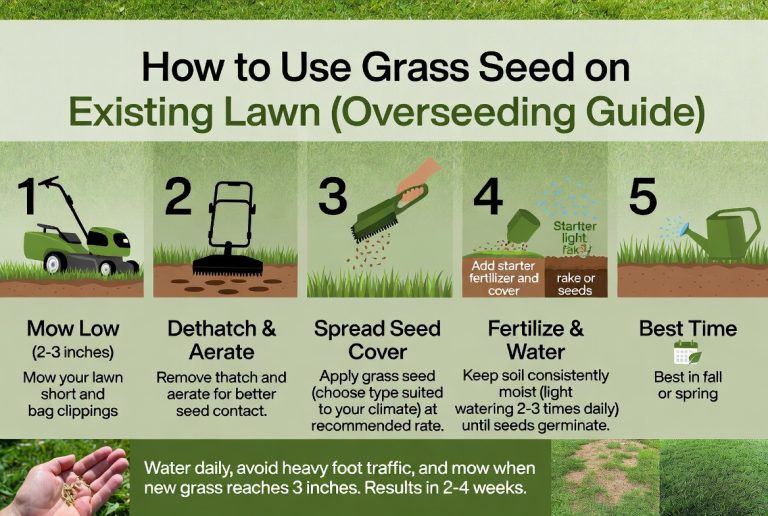
Overseed Bare Patches
Bare or thin spots are basically an open door for weeds. Toss down grass seed in these areas regularly to fill them in before weeds get the chance to move in first. Thick, full coverage is one of the best natural weed blockers around.
Fix Compacted Soil
Compacted soil struggles to let water, air, and nutrients reach grass roots, weakening your lawn over time. Aerating your soil, which just means poking small holes through it, helps loosen things up so your grass can grow stronger roots and fight off weeds naturally.
Common Mistakes to Avoid
Even with good intentions, small mistakes can end up hurting your lawn instead of helping it.
Spraying on a windy day can cause herbicide to drift onto flower beds, vegetable gardens, or your neighbor’s yard, causing damage far beyond your intended target.
Mixing products incorrectly by using too much or combining chemicals that do not mix well together can burn your grass or make the treatment less effective overall.
Ignoring the weather forecast and spraying right before heavy rain washes the product away before it gets a chance to work into the weed.
Treating the whole lawn when only a few areas need attention wastes product and increases the risk of harming healthy grass unnecessarily.
Skipping a patch test before trying a new product on your whole lawn can lead to unpleasant surprises, so always test a small area first and wait a few days to check for any bad reactions.
Aftercare: What to Do Once Weeds Are Gone
Killing the weeds is only half the job. Keeping them from coming back takes a bit of ongoing care.
Once dead weeds turn brown and dry out, pull them up or rake them away to clear space for new grass to fill in. Reseed any bare spots left behind right away, since empty soil is basically an invitation for the next round of weeds to move in.
Keep following a solid mowing, watering, and feeding routine, since a strong lawn is always your best long-term defense. Many homeowners find that after one or two seasons of consistent care, they need far less weed treatment overall because their grass has simply gotten too thick and healthy for weeds to compete with.
Quick Recap
Getting rid of weeds without harming your grass really comes down to a few simple ideas working together. Use selective herbicides made for your specific grass type, spray at the right time of year, and always follow label directions closely. Pull small weeds by hand when you can, spot treat instead of covering the whole lawn, and consider natural options if you want to avoid chemicals.
Most importantly, focus on building a thick, healthy lawn through proper mowing, watering, feeding, and overseeding. A strong lawn does most of the weed-fighting work on its own by leaving no room for unwanted plants to grow.
With a little patience and the right approach, you can enjoy a lawn that is green, thick, and weed-free, all without putting your grass at risk. Your yard did not become weedy overnight, so give your new routine some time to work, and you will start noticing a real difference within just a few weeks.

Hi, I’m Mary, the founder of GardenCure.com. I’m passionate about creating healthy, beautiful gardens and well-kept lawns. I share practical experience and trusted advice on garden and lawn gear that truly works. With the support of my dedicated research team, our writers produce honest, in-depth reviews using reliable, authentic sources—helping you choose the right tools with confidence for your outdoor space.