5 Best Container for Orchids In 2026
Growing beautiful orchids starts with the right container. Many beginners struggle to keep their orchids healthy because they use the wrong type of pot. The container you choose directly affects root health, water drainage, and air circulation.
In this article
This guide walks you through the top orchid containers available right now. Each option has been carefully examined to help you make the best choice for your plants.
Why Your Orchid Container Matters
Orchids are different from typical houseplants. Their roots need air to breathe and hate sitting in water. Wild orchids grow on trees, with their roots exposed to air and rain. Your container needs to mimic these natural conditions.
A proper orchid planter provides three essential features. First, it must have drainage holes to prevent water from pooling at the bottom. Second, the material should allow air to reach the roots. Third, the container needs to be the right size – not too big or too small for your plant.
Root rot is the number one killer of indoor orchids. This happens when roots stay wet for too long. The right pot with adequate ventilation prevents this problem and keeps your orchids thriving.
Top 5 Orchid Containers Reviewed
1. HOLANHING Orchid Pot Set – Best Value Multi-Size Pack
Product Overview
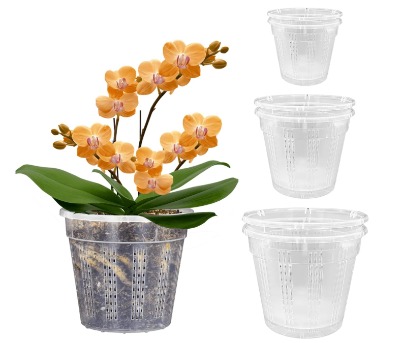
The HOLANHING set comes with six pots in three different sizes. You get two pots each in 4.3-inch, 5.5-inch, and 6.1-inch dimensions. This variety makes the set perfect for orchid enthusiasts with multiple plants at different growth stages.
Each pot features dozens of small holes throughout the sides and bottom. These openings create excellent airflow around the root system. The clear plastic construction lets you monitor root health without removing the plant from its container.
Detailed Features
The pots are made from durable, BPA-free plastic that resists cracking. Unlike ceramic containers, these lightweight planters won’t break if dropped. The slots around the sides measure approximately 0.3 inches wide, providing optimal air circulation without losing growing medium.
Each container has a slightly tapered design. This shape makes repotting easier since you can slide the root ball out without damage. The bottom features a raised platform with drainage holes that keeps roots from sitting directly in water.
Pros:
- Multiple sizes included in one purchase
- Transparent material allows easy root monitoring
- Lightweight and unbreakable plastic construction
- Extensive ventilation holes throughout
- Budget-friendly option for multiple plants
- Easy to clean and reuse
Cons:
- Some users may prefer opaque containers
- No drainage trays included
- Plastic appearance may not suit all décor styles
Best For: Orchid collectors who need various pot sizes and want to observe root development closely.
2. Grdthzey 6 Inch Round Ceramic Orchid Pot – Best for Home Décor
Product Overview
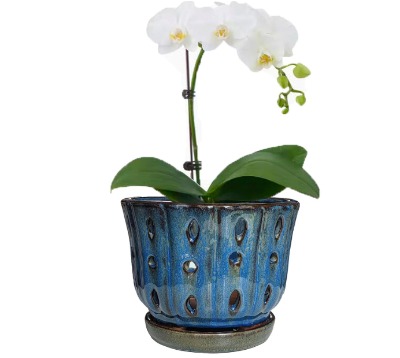
This ceramic planter brings elegance to orchid care. The deep blue glaze catches the eye and complements any interior design. At 6 inches in diameter, this pot suits mature phalaenopsis orchids and other medium-sized varieties.
The ceramic construction provides stability for top-heavy plants. Heavier containers prevent tipping, which is common with tall orchid flower spikes. The pot features strategically placed drainage holes to maintain healthy moisture levels.
Detailed Features
The glazed ceramic exterior is smooth and easy to wipe clean. Unlike porous terracotta, this glazed finish doesn’t allow water to seep through the sides. The pot stands approximately 5 inches tall, giving roots plenty of vertical space.
Four drainage holes in the bottom allow excess water to escape. The holes measure about 0.5 inches in diameter – large enough for drainage but small enough to retain bark mix. The interior is unglazed, which helps prevent root slipping.
The dark blue color adds a sophisticated touch to your plant display. The pot is substantial enough to sit on outdoor patios without blowing over in the wind.
Pros:
- Beautiful ceramic construction enhances home décor
- Heavy base prevents tipping
- Suitable for indoor and outdoor use
- Easy to clean glazed surface
- Good drainage hole placement
- Professional appearance
Cons:
- Heavier than plastic options
- Can break if dropped
- Limited to one size
- No included saucer
Best For: Those who prioritize appearance and want a decorative container that looks as good as their orchid blooms.
3. REMIAWY 6 Pack Clear Orchid Pots – Best for Air Circulation
Product Overview
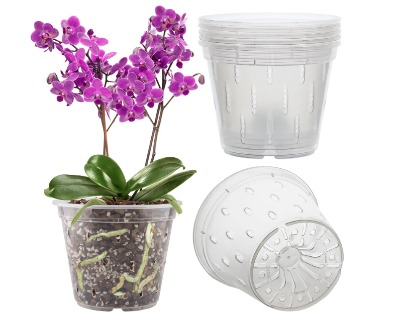
The REMIAWY set includes six identical 5.5-inch clear pots. Each container features an impressive ventilation system with multiple slots around the entire perimeter. This design creates optimal airflow that keeps roots healthy and prevents fungal growth.
The transparent plastic lets light reach the roots, which benefits orchids since their roots can photosynthesize. You can easily check moisture levels and see when roots need more room to grow.
Detailed Features
Each pot has vertical slots running from top to bottom on all sides. These slots measure approximately 0.4 inches wide and are spaced evenly around the circumference. The bottom contains circular drainage holes arranged in a grid pattern.
The clear plastic is thick enough to provide structure but thin enough to remain flexible. This flexibility helps when removing root-bound plants during repotting. The rim features a smooth rolled edge that won’t damage delicate roots.
At 5.5 inches in diameter and 5 inches tall, these pots work well for standard phalaenopsis orchids and similar sized plants. The uniform sizing makes it easy to create a cohesive display with multiple orchids.
Pros:
- Excellent ventilation system
- Clear material for root observation
- Comes in a six-pack for value
- Flexible plastic aids in repotting
- Allows light to reach photosynthetic roots
- Consistent sizing for display uniformity
Cons:
- No color variety available
- Requires separate drainage trays
- May show mineral deposits over time
- Uniform size limits versatility
Best For: Serious orchid growers who need multiple pots with superior air circulation and root visibility.
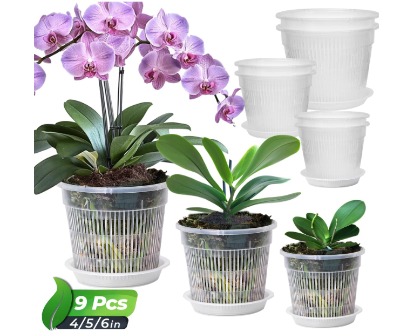
4. T4U Orchid Pot 9 Pack with Saucers – Best Complete System
Product Overview
The T4U set stands out by including matching saucers with every pot. This nine-piece collection contains three pots each in 4.3-inch, 5.5-inch, and 6.3-inch sizes. Each pot comes with its own clear saucer to catch excess water and protect your furniture.
This comprehensive set serves multiple orchids at various growth stages. The inclusion of saucers eliminates the need for separate purchases and ensures proper water management.
Detailed Features
Each pot features a mesh-like ventilation system with vertical and horizontal slots. This grid pattern creates numerous air pockets around the root ball. The clear plastic construction combines visibility with durability.
The saucers fit snugly under each pot size. They have raised ridges on the bottom that elevate the pot slightly, allowing air to circulate beneath. The saucers are deep enough to hold water runoff without overflowing during normal watering.
The pots have reinforced rims that maintain their shape even when handled frequently. Small feet on the pot bottom create additional space between the drainage holes and the saucer. This gap prevents roots from wicking up standing water.
All three sizes use the same design language, creating a coordinated look. The largest 6.3-inch pot can accommodate substantial orchids or those due for upsizing.
Pros:
- Includes matching saucers for every pot
- Three different sizes in one set
- Prevents furniture damage from water
- Extensive ventilation throughout
- Raised design promotes air circulation
- Clear material for monitoring
- Great value with nine total pieces
Cons:
- Takes up more storage space with saucers
- All pots are clear plastic only
- May be more than needed for single-plant owners
- Saucers can crack if mishandled
Best For: Orchid enthusiasts who want a complete, ready-to-use system with everything needed for proper drainage and display.
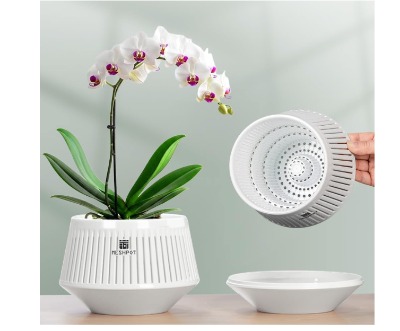
5. Meshpot 5 Inch Orchid Planter Set – Best for Root Health
Product Overview
Meshpot delivers a specialized container designed specifically for orchid root health. This two-pack includes 5-inch white pots with innovative air-pruning technology. Each container comes with a matching saucer in a clean, modern design.
The air-pruning feature encourages roots to develop naturally. When roots reach the ventilated sides, they stop growing outward and branch instead. This creates a denser, healthier root system.
Detailed Features
The mesh-style sides feature a honeycomb pattern of holes. This pattern maximizes airflow while preventing growing medium from spilling out. The holes are smaller than many competitors, striking a balance between ventilation and medium retention.
The white color reflects light rather than absorbing it. This helps prevent the growing medium from overheating in sunny locations. White also matches various décor styles and looks clean and professional.
Each pot has internal ridges that guide roots away from the sides. These ridges work with the air holes to promote the air-pruning effect. The bottom features a raised platform that keeps the root mass elevated above any collected water.
The included saucers have a lip that prevents water from spilling over the edge. They’re slightly translucent, allowing you to see when water has accumulated. The saucers are sturdy enough to support the pot without flexing.
Pros:
- Air-pruning technology promotes healthy root growth
- White color prevents overheating
- Includes well-designed saucers
- Excellent balance of ventilation and medium retention
- Modern, clean appearance
- Suitable for indoor and outdoor use
- Internal ridges guide root development
Cons:
- Limited to one size option
- Only comes in white color
- Two-pack may not be enough for large collections
- Higher price point per pot
Best For: Growers focused on maximizing root health and willing to invest in specialized containers with advanced features.
Complete Buying Guide for Orchid Containers
Understanding Drainage Requirements
Proper drainage is non-negotiable for orchid containers. Water must flow freely through the pot to prevent root rot. Look for containers with multiple drainage holes rather than just one central opening.
The size and placement of drainage holes affect how quickly water exits. Larger holes drain faster but may allow fine potting mix to wash out. Smaller, more numerous holes provide better medium retention while still allowing adequate drainage.
Side ventilation holes serve a different purpose than bottom drainage. While bottom holes remove excess water, side holes allow air to circulate around the entire root system. The best orchid pots combine both types of openings.
Material Considerations
Plastic Pots
Plastic containers dominate the orchid market for good reason. They’re lightweight, affordable, and available in clear options for root monitoring. Plastic doesn’t absorb water, so the potting medium dries evenly based on air circulation and temperature.
Clear plastic has a special advantage. Orchid roots photosynthesize, meaning they use light to produce energy. Transparent containers allow light to reach more root surface area. You can also see root color, which indicates health status.
Colored plastic pots work well too. White reflects heat and stays cooler in sunny spots. Dark colors absorb heat, which can benefit orchids in cooler environments. Plastic containers are durable and last for many seasons with proper care.
Ceramic Pots
Ceramic and glazed clay containers offer aesthetic appeal. They’re heavier, providing stability for tall orchids with large flower spikes. Ceramic pots come in beautiful colors and finishes that enhance your home décor.
The main drawback is opacity. You can’t see roots or check moisture levels without removing the plant. Ceramic also retains cold temperatures longer, which can slow root growth in cool seasons.
Glazed ceramic doesn’t breathe like unglazed terracotta. This means less water evaporation through the sides. For orchids, this is actually beneficial since it gives you more control over watering schedules.
Terracotta Pots
Unglazed terracotta is porous and breathes. Water evaporates through the pot sides, helping prevent overwatering. This can be helpful for beginners who tend to water too frequently.
The downside is that terracotta dries out quickly. Orchids in terracotta pots may need more frequent watering. The porous surface also collects mineral deposits and algae growth, requiring more maintenance.
Terracotta is heavy and fragile. A dropped pot will shatter, potentially damaging your orchid. The natural brown color is attractive but limits decorating options.
Size Selection Guide
Orchid pots should be snug, not spacious. Orchids actually prefer being slightly root-bound. Too much space encourages the potting medium to stay wet longer, increasing rot risk.
Measure your orchid’s root ball at its widest point. Choose a pot that’s only 1-2 inches larger in diameter. This gives roots room to grow for the next couple of seasons without excess space.
Height matters too. Most orchids have shallow root systems. A pot that’s twice as wide as it is tall suits most species. Deeper pots hold more moisture at the bottom, where roots may not reach.
When upsizing during repotting, go up only one pot size. Jumping from a 4-inch to a 7-inch pot creates problems. The extra potting medium stays wet and can suffocate roots.
Ventilation and Air Flow
Air circulation around roots prevents disease and encourages healthy growth. Stagnant, humid conditions inside a pot create perfect environments for fungal infections and bacterial problems.
Look for pots with holes on the sides, not just the bottom. Side ventilation allows air to flow through the entire root zone. This constant air movement keeps roots dry between waterings.
The number of ventilation holes matters. More openings generally mean better airflow. However, too many large holes cause potting medium to fall out. The ideal pot balances air circulation with medium retention.
Slot-style openings work differently than round holes. Slots provide elongated openings that allow excellent airflow. They’re less likely to let bark chips escape compared to large round holes.
Saucer Importance
Saucers protect surfaces from water damage and give you feedback about drainage. A full saucer indicates excess watering or poor drainage. An empty saucer means water is flowing through properly.
Never let orchids sit in standing water in their saucers. After watering, empty any collected water within 30 minutes. Roots that touch standing water will rot quickly.
Some saucers have ridges or feet that elevate the pot. This design is superior because it creates an air gap between the pot bottom and collected water. Even if you forget to empty the saucer immediately, roots stay safe.
Clear saucers show water accumulation easily. Colored or opaque saucers hide water, making it easy to forget about drainage. Transparent options give you visual reminders to check drainage regularly.
Special Features to Consider
Clear vs Opaque
Transparent containers let you monitor root health without disturbing the plant. Healthy orchid roots appear white or light green at the tips. Brown or black roots indicate problems that need attention.
Clear pots also show moisture levels in the potting medium. You can see wet bark versus dry bark, taking the guesswork out of watering schedules. This visibility is especially valuable for beginners learning orchid care.
Opaque pots have aesthetic advantages. They hide potting medium and create a cleaner look. Some growers use a decorative outer pot to combine function with beauty. The orchid grows in a clear plastic pot placed inside an attractive ceramic cover.
Hanging Options
Some orchid containers include built-in hangers or hook attachment points. Hanging pots work well for cascade orchids and species that naturally grow downward. They also save counter and shelf space.
Hanging containers need extra attention to drainage. Water must not accumulate in the bottom where you can’t see it. Look for hanging pots with extensive bottom drainage and possibly a built-in reservoir system.
Double Pot Systems
Some containers use a two-pot system. The orchid grows in an inner nursery pot with ventilation. This sits inside an outer decorative pot called a cachepot. This arrangement combines function with beauty.
Double pot systems require careful watering. Remove the inner pot to water, then let it drain completely before returning it to the cachepot. Water trapped between the two pots causes root rot.
Maintenance and Care Tips
Cleaning Your Orchid Containers
Orchid pots need regular cleaning to prevent disease and mineral buildup. Salt deposits from fertilizer and water accumulate on pot surfaces over time. These deposits can harm roots and look unsightly.
Clean empty pots before reusing them for repotting. Soak them in a solution of one part bleach to nine parts water for 10 minutes. This kills any bacteria, fungi, or pests hiding in the pot material.
Scrub pots with a brush to remove stubborn deposits. Old toothbrushes work perfectly for getting into ventilation holes. Rinse thoroughly after cleaning to remove all bleach residue.
For pots with plants still growing, wipe down the exterior monthly. Use a damp cloth to remove dust and mineral deposits. This maintenance keeps pots looking good and prevents buildup from blocking ventilation holes.
When to Replace Containers
Plastic pots eventually become brittle and crack. UV exposure from sunlight speeds up this degradation. Replace plastic containers when you notice cracks, chips, or stress marks.
Ceramic pots last longer but can develop hairline cracks. These tiny cracks may not be visible but can harbor bacteria. If an orchid repeatedly develops problems in the same ceramic pot, consider replacing the container.
Most quality orchid pots last several seasons with proper care. Plan to replace plastic containers every 3-5 seasons. Ceramic pots can last indefinitely if handled carefully and cleaned regularly.
Seasonal Considerations
Pot material affects temperature. In hot climates, white or light-colored pots stay cooler than dark containers. This protects roots from overheating during summer months.
During winter, ceramic pots can get cold on windowsills. This cold transfers to roots and slows growth. Consider moving orchids in ceramic pots away from cold glass or switching to plastic containers for winter.
Ventilation needs change with seasons. In humid summer weather, maximum airflow prevents fungal problems. During dry winters, excessive ventilation can dry out roots too quickly. Some growers adjust pot types seasonally to match environmental conditions.
Common Mistakes to Avoid
Pot Size Errors
The most frequent mistake is choosing oversized containers. Beginning orchid growers often think bigger is better. In reality, too much space leads to constantly wet potting medium and root rot.
Small pots seem cruel but are actually healthier for orchids. Roots that fill a container stay drier and receive more air circulation. Don’t upsize until roots are actually growing out of drainage holes.
Drainage Problems
Using pots without drainage holes guarantees failure. Some decorative containers lack holes because they’re designed as cachepots, not growing containers. Always ensure water has somewhere to go.
Blocked drainage holes cause the same problems as no holes at all. Check that holes aren’t covered by saucers or surfaces. Bark pieces can also plug holes over time. Clear any blockages immediately.
Material Mismatches
Orchids and potting medium need to match the container. Fast-draining medium like large bark chips requires different containers than moisture-retentive sphagnum moss.
Beginners sometimes use moisture-retentive medium in poorly ventilated pots. This combination creates constantly wet conditions. Match your potting medium to your container’s drainage capacity.
Ignoring Root Health
Clear pots provide valuable information that many growers ignore. Check roots regularly through transparent sides. Healthy roots are firm and white or light green. Mushy brown roots need immediate attention.
Acting on early warning signs prevents serious problems. If roots look unhealthy, remove the plant and inspect the root system. Trim dead roots and adjust your watering schedule or container type.
Frequently Asked Questions
How often should orchids be repotted?
Most orchids need repotting every 1-2 growing seasons. Repot when the potting medium breaks down and becomes compacted, or when roots grow extensively outside the pot. Spring is usually the best time for repotting.
Can orchids grow in glass containers?
Glass containers without drainage holes are problematic. Water accumulates at the bottom with no escape route. If you want to use glass, drill drainage holes or use it as a decorative outer pot with a proper orchid container inside.
Do orchids need clear pots?
Orchids don’t require clear pots but benefit from them. Clear containers let you monitor root health and moisture levels easily. Opaque pots work fine if you’re experienced enough to judge watering needs without visual cues.
What size pot does a phalaenopsis orchid need?
Standard phalaenopsis orchids typically thrive in 4 to 6-inch diameter pots. Choose based on root mass size, not plant height. The pot should be snug around roots with just 1-2 inches of extra space.
Should orchid pots have saucers?
Saucers protect furniture but aren’t essential for plant health. If you use saucers, empty them promptly after watering. Never allow orchids to sit in standing water for extended periods.
Can I use regular potting soil in orchid containers?
Never use regular potting soil for orchids. Standard soil stays too wet and suffocates orchid roots. Use specialized orchid potting mix made from bark, perlite, and similar ingredients that drain quickly and allow airflow.
Final Recommendations
After extensive research and comparison, here are the top picks for different needs:
Overall Best Value: The HOLANHING 6-Pack Set wins for versatility and affordability. Multiple sizes accommodate different orchids, and the transparent design lets you monitor plant health. This set gives you everything needed to start or expand an orchid collection without breaking the budget.
Best Premium Choice: The T4U 9-Pack with Saucers offers the most complete system. Included saucers protect surfaces while multiple sizes handle any orchid. The extra investment pays off in convenience and functionality.
Best for Beginners: The Meshpot 5-Inch Set combines simplicity with specialized features. Air-pruning technology helps new growers develop healthy plants while the white color and included saucers keep everything neat and manageable.
Best Decorative Option: The Grdthzey Ceramic Pot elevates any space with its beautiful dark blue finish. While more expensive and heavier, this pot makes a statement and works perfectly for featured orchids in prominent locations.
Best for Serious Collectors: The REMIAWY 6-Pack provides maximum ventilation and root visibility. Serious growers who want optimal conditions and need multiple pots appreciate the superior airflow design.
Conclusion
The right orchid container transforms plant health and simplifies care. Proper drainage, adequate ventilation, and appropriate sizing create conditions where orchids thrive naturally. Each product reviewed here offers specific advantages depending on your priorities.
Whether you value affordability, appearance, or specialized features, there’s an ideal container for your orchids. Start with the fundamentals – drainage holes, breathable sides, and correct sizing. From there, choose based on your aesthetic preferences and growing conditions.
Investing in quality orchid containers pays dividends through healthier plants, more blooms, and easier maintenance. Your orchids will reward good container choices with vigorous growth and stunning flowers that last for months.
The containers featured in this guide represent the best available options. Each has been evaluated for quality, functionality, and value. Choose confidently knowing that any of these options will support your orchids’ needs and help them flourish in your care.
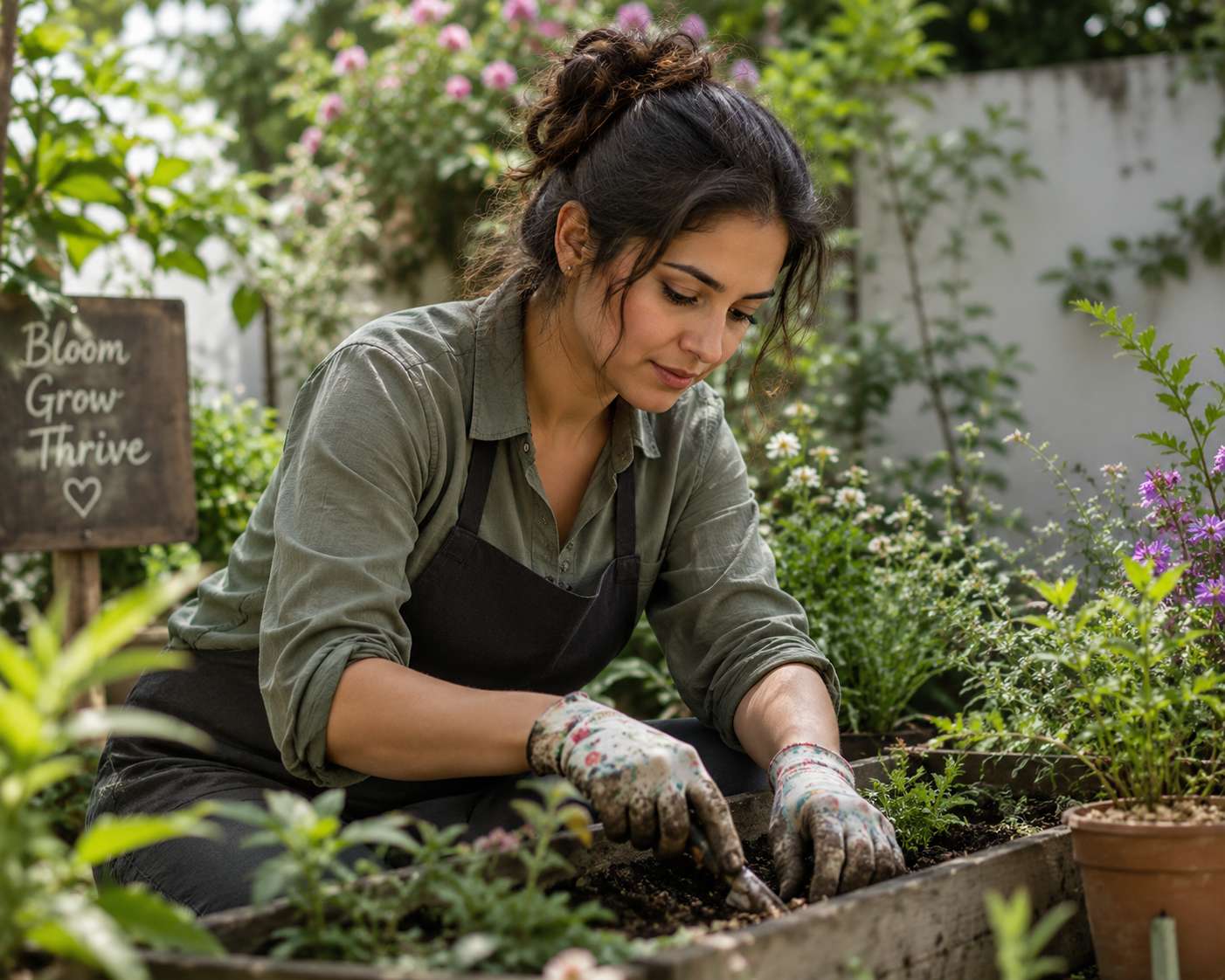
Hi, I’m Mary, the founder of GardenCure.com. I’m passionate about creating healthy, beautiful gardens and well-kept lawns. I share practical experience and trusted advice on garden and lawn gear that truly works. With the support of my dedicated research team, our writers produce honest, in-depth reviews using reliable, authentic sources—helping you choose the right tools with confidence for your outdoor space.