How to Apply Scott’s Weed and Feed?
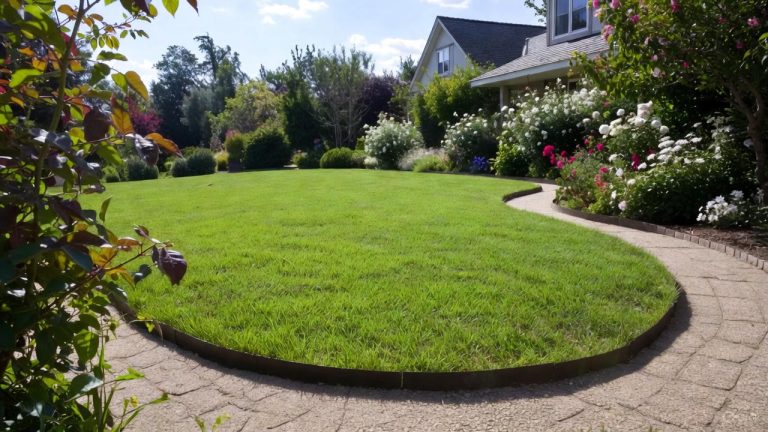
Your lawn can look amazing. It really can. You don’t need to be a lawn expert or hire someone expensive to get grass that looks healthy and green. The secret? Scott’s Weed and Feed.
In this article
This two-in-one product feeds your grass while killing weeds at the same time. It sounds almost too good to be true, but it actually works. Thousands of homeowners use it every single season. Let me walk you through everything you need to know to use it the right way.
What Is Scott’s Weed and Feed, Anyway?
Scott’s Weed and Feed is a lawn treatment product that combines two essential lawn care tasks into one. You get fertilizer mixed together with herbicide. The fertilizer helps your grass grow thick and strong. The herbicide kills broadleaf weeds that make your lawn look messy and patchy.
The product comes as granules. You spread these tiny pellets across your lawn using a spreader. When you water your lawn or when rain falls, the granules break down and start working. The fertilizer releases nutrients into the soil. The weed killer gets absorbed by weed leaves and stems.
This combination approach saves you time and money. You don’t have to buy separate products. You don’t have to apply treatments on two different days. One application does it all.
Why Use Weed and Feed Instead of Other Products?
Some people use only fertilizer. Some use only herbicide. But combining both makes real sense for most homeowners.
Weeds compete with your grass for water, nutrients, and sunlight. Even a healthy lawn will have weeds pop up. These unwanted plants spread fast and make your grass look bad. If you only fertilize without dealing with weeds, you’re actually feeding the weeds too. They grow even thicker and faster.
Grass alone also needs food to survive. Without nutrients, grass gets thin and weak. Thin grass invites more weeds to move in. So the real solution is to feed your grass while killing weeds at the same time. That’s where Scott’s Weed and Feed shines.
The product targets common lawn weeds like dandelions, clover, chickweed, and plantain. It doesn’t harm your grass when you use it correctly. Your grass stays safe because the weed killer only works on broadleaf plants. Your lawn grass is a narrow-leafed plant, so it’s protected.
When Should You Apply Scott’s Weed and Feed?
Timing matters. A lot.
The best time to apply weed and feed is during spring and fall. In spring, apply it after the last frost has passed and when daytime temperatures stay above 60 degrees. Your grass wakes up from winter and starts growing. Weeds emerge at the same time. This is the perfect moment to treat both problems together.
Fall is another great time. Summer heat stresses grass. Weeds can take over during hot months. When cool weather arrives in fall, apply weed and feed again. Your grass recovers and fills in. Weeds die back as temperatures drop.
Avoid applying during the hot summer months. Heat stress is hard on both your grass and the product itself. The weed killer doesn’t work as well in extreme heat. Your grass is also vulnerable to damage during hot weather.
Don’t apply during winter either. Grass is dormant. Weeds aren’t growing much. The treatment won’t be effective because there’s not enough plant activity happening.
The magic window is when both your grass and weeds are actively growing. That’s spring and fall. Apply every 4 to 6 weeks during these seasons if your weed problem is bad. Most homeowners apply once or twice per season and see great results.
Getting Your Lawn Ready Before Application
Preparation is key. Don’t just grab the spreader and start walking around.
First, mow your lawn. Cut the grass short, about 2.5 inches. A neat, short lawn allows the granules to reach the soil better. Tall grass blocks the treatment from working properly. Mow before application, not after.
Next, water your lawn the day before application. Moist soil helps the product work better. The granules will stick to wet weed leaves. The herbicide penetrates weeds more effectively. Don’t soak your lawn though. Just give it a normal watering.
Check your spreader. Do you have a drop spreader or a broadcast spreader? Both work fine. Make sure the spreader is clean and working properly. A broken spreader applies product unevenly. That causes patchy results.
Look at the weather forecast. You want dry conditions for at least 24 hours after application. If rain falls too soon, the product might wash off before it works. In fact, you’ll want light rain within 24-48 hours after applying. This helps activate the granules and work the product into the soil.
Avoid applying before expected rain within a few hours. But rain within 24 hours is actually helpful. Just not immediately.
How to Calculate How Much Product You Need
Scott’s Weed and Feed comes in bags sized for different lawn areas. Check the packaging. It tells you how many square feet each bag treats.
Measure your lawn. Walk it off if you’re not sure of the exact size. Most residential lawns run between 5,000 and 20,000 square feet. Some are bigger, some are smaller.
Do a quick calculation. Divide your lawn’s square footage by the coverage area on the bag. That tells you how many bags you need. For example, if your lawn is 10,000 square feet and each bag covers 5,000 square feet, you need 2 bags.
Buy one extra bag just in case. You might need to make a second application. You might have calculation errors. That extra bag is never wasted.
Using the Right Spreader for Best Results
Your spreader is crucial. It controls how evenly the product gets distributed. Uneven application creates patchy results.
A drop spreader releases product straight down as you walk. This works best for small, rectangular lawns. Drop spreaders are very precise. You control exactly where the product lands. They’re easier for beginners to use.
A broadcast spreader throws product out to the sides as you walk. This covers more ground faster. It works great for large, open lawns. Broadcast spreaders create better coverage for bigger areas. They’re more efficient but require a slightly steadier hand.
Whichever spreader you use, set it to the right setting. The packaging tells you the correct spreader setting for Scott’s products. If your spreader has numbers, find the number that matches. Don’t guess. Wrong settings cause under or over application.
Test the spreader in an empty driveway first. Push it and watch how much product comes out. Make sure it’s flowing correctly. Adjust if needed before you start your lawn.
Step-by-Step: How to Apply Scott’s Weed and Feed
Now comes the fun part. Here’s exactly what to do.
Step 1: Load Your Spreader
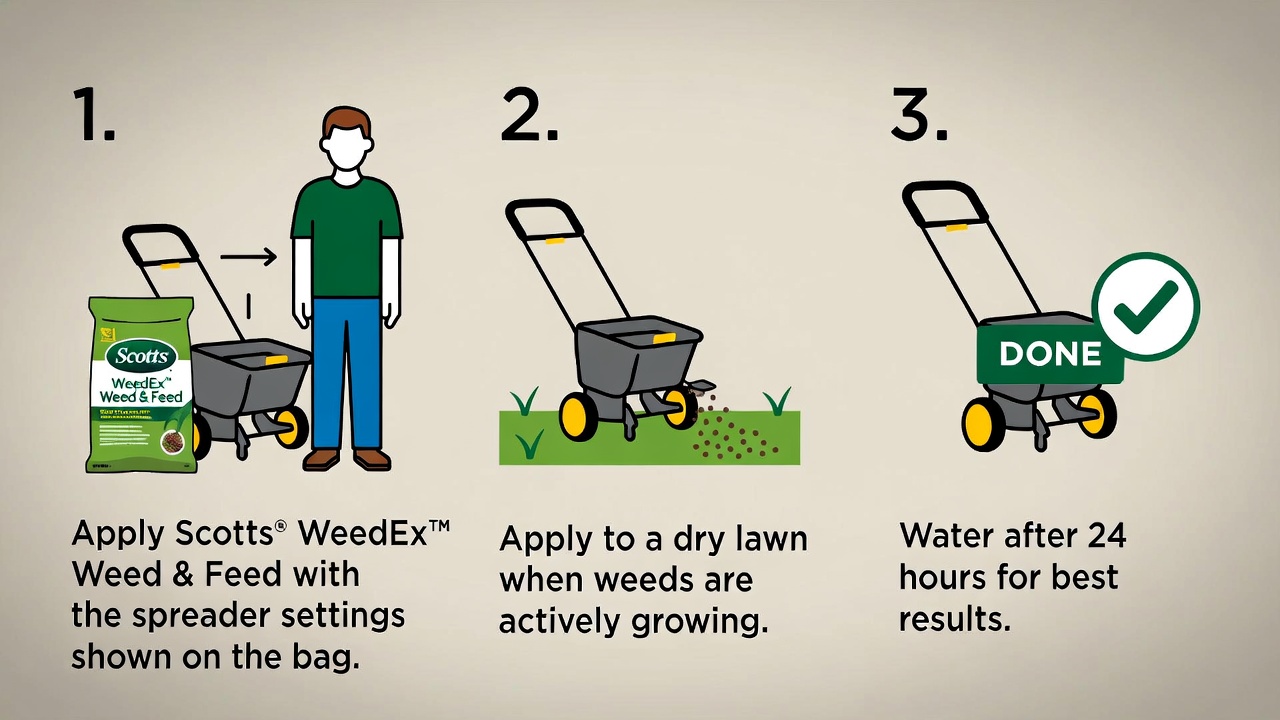
Pour the Scott’s Weed and Feed granules into your spreader. Fill it to the recommended level. Don’t overfill. Overfilled spreaders tend to dump product all at once instead of spreading evenly.
Step 2: Mark Your Starting Point
Start at one corner of your lawn. This gives you a clear reference point.
Step 3: Walk the Perimeter First
Walk around the edges of your lawn. Keep the spreader open. This creates a border. Your equipment works best at the edges. This also keeps you from missing corner spots.
Step 4: Apply in Straight Lines
Now walk across your lawn in straight, parallel lines. Think of mowing a lawn, but with the spreader. Walk at a steady, even pace. Fast walking means less product. Slow walking means more product. Keep your speed consistent.
Overlap your lines slightly. About 2 feet of overlap works well. This prevents bare stripes where you didn’t apply product.
Keep the spreader at the same height throughout. Don’t adjust it up or down as you walk. Consistent height means consistent coverage.
Step 5: Avoid Walking on Already Treated Areas
Once you’ve treated an area, stay off it for a bit. Walking on treated grass doesn’t ruin anything, but it compacts the soil and disrupts the granules.
Step 6: Check for Missed Spots
When you finish, walk your lawn and look for gaps. Did you miss any areas? Do a second pass over spots that look thin. It’s better to do a little double coverage than to miss spots.
Step 7: Water Your Lawn
After you finish applying, water your lawn. Use a regular sprinkler or garden hose. Water thoroughly but don’t create puddles. This helps the granules break down and start working. The product needs moisture to activate.
Water lightly for about 15-20 minutes. This is usually 0.5 inches of water. Not too much, just enough to activate the granules.
What to Expect After Application
The results don’t happen overnight. But you will see changes.
Within the first week, you might notice the granules breaking down on your lawn. The grass might look a bit dull. This is normal. The product is working.
After 7-10 days, you’ll start seeing weeds wilt. They’ll look droopy and unhealthy. Their leaves might turn brown around the edges. This is the herbicide doing its job. The weeds aren’t dead yet, but they’re dying.
By 2-3 weeks, dead weeds will be obvious. They look brown and dead. You can pull them out easily. Many will have already fallen apart.
Your grass will start looking greener after about 3-4 weeks. The fertilizer feeds your grass and stimulates new growth. Grass blades become thicker and darker green. The lawn fills in where weeds died.
Full results take about 4-6 weeks to show completely. Don’t expect perfection on day one. Good lawn care is a gradual process.
Safety Tips When Using Weed and Feed
Safety comes first. Even though Scott’s Weed and Feed is designed for homeowner use, follow these precautions.
Wear Protective Gear
Wear long pants and a long-sleeved shirt when applying. Wear shoes that cover your feet. You don’t need a hazmat suit. Just regular outdoor clothes. This prevents granules from touching your skin directly.
Keep Kids and Pets Away
Apply when kids and pets aren’t around. Keep them indoors or at a neighbor’s place while you apply. Don’t let them back on the treated lawn for at least 24-48 hours. Read the package for exact pet safety instructions. Some families prefer to keep pets away for 72 hours.
Don’t Eat or Drink While Applying
Don’t have snacks or drinks while spreading. Don’t smoke. Wash your hands thoroughly after you finish. Don’t touch your face while applying.
Keep Away from Desirable Plants
The herbicide kills broadleaf plants. Your lawn grass is safe, but ornamental plants might not be. Flowers and shrubs with broad leaves could be harmed. Keep the spreader away from garden beds and flower areas.
Store It Safely
Keep Scott’s Weed and Feed in a cool, dry place. Store it where kids and pets can’t reach it. Keep the bag sealed. Don’t transfer it to other containers. The original packaging includes important safety information.
Common Mistakes to Avoid
Even simple products can go wrong if used incorrectly. Here are mistakes people make.
Applying in Wrong Weather
Don’t apply right before a rainstorm. Don’t apply in extreme heat. Don’t apply when it’s too cold. Check the forecast. Pick a clear day when temperatures are moderate.
Using the Wrong Spreader Setting
Read the bag. Find your spreader model. Use the exact recommended setting. Guessing causes problems. Too much product can burn grass. Too little means weeds survive.
Walking at Different Speeds
Keep your pace steady. Changing speed means uneven coverage. Practice your walking rhythm before you start. Some people even count steps to maintain consistent pace.
Forgetting to Water
The product needs moisture to work. If you don’t water after applying, the granules sit on your lawn doing nothing. Water is essential.
Applying in Summer
Summer heat reduces the product’s effectiveness. It’s hard on your grass too. Save application for spring and fall. Summer isn’t the right time.
Applying When Grass Is Wet
Apply to dry grass, but the soil should be moist. Wet grass with standing water is too wet. Wait for grass to dry but apply soon after natural rain or watering.
Frequently Asked Questions
How long does it take to see results?
You’ll see weed damage in 1-2 weeks. Full results take 4-6 weeks. Be patient. Lawn care isn’t instant.
Can I apply it more than twice a season?
Yes. If weeds keep coming back, apply every 4-6 weeks during spring and fall. Don’t apply more than once monthly though. Too frequent application can stress your grass.
What if it rains right after I apply?
A little rain is actually good. If it rains within 24-48 hours, that helps activate the product. If it rains immediately, within 1-2 hours, reapply after it dries.
Will it kill my flowers and shrubs?
Broadleaf weeds get hurt, so broad-leafed ornamental plants might be affected too. Keep it away from gardens and flower beds. Only apply it to your lawn grass area.
Is it safe for pets after it dries?
Yes. Once it dries completely and rain activates it into the soil, pets are safe. Follow the package instructions for your specific situation. When in doubt, keep pets away for 48-72 hours.
Can I apply it to a brand new lawn?
Wait until your new lawn is established and has been mowed at least 3-4 times. Young grass is delicate. Newly seeded grass especially needs time to develop before herbicide application.
What if I accidentally apply too much?
Don’t panic. Extra granules usually cause no serious harm. The grass might look stressed for a bit. Water thoroughly to help flush excess product into the soil. The lawn usually recovers fine.
Do I need a professional to apply it?
Nope. Homeowners apply this all the time successfully. Follow the directions and you’ll be fine. Professional lawn care companies use similar products. You’re doing the same thing they do.
Aftercare: What to Do Once You’ve Applied
Application is just part of the story. The weeks after matter too.
Continue regular lawn maintenance. Mow your lawn as needed. Don’t skip normal watering. The product works best when your lawn is healthy overall.
Watch for dead weeds. After they’re clearly dead, pull them out or let them decompose naturally. Your choice.
Notice where new growth happens. Fill in sparse areas with grass seed if needed. A thick lawn prevents future weed problems.
Plan your next application. In 4-6 weeks, if weeds appear again, apply another round. Many people apply in mid-spring and again in early fall. That schedule works great for most lawns.
How Often Should You Apply Weed and Feed?
One application isn’t always permanent. Most people apply 1-2 times per season.
Light weed problems need just one application per season. Spring application covers weeds popping up from dormancy. That’s often enough.
Heavy weed problems need more treatment. Apply in spring and again in fall. Some years might need a third application in mid-summer if weeds return aggressively.
Most homeowners apply once in spring and once in fall. This maintains good weed control without overdoing it. You’re treating weeds when they’re most active.
Don’t fall into the trap of constant application. More isn’t always better. Too much treatment can stress your grass unnecessarily. Once or twice a season is standard and effective.
The Bottom Line
Scott’s Weed and Feed is a practical, effective solution for keeping your lawn healthy and weed-free. It’s affordable. It’s easy to use. It’s designed specifically for homeowner use, not just professional landscapers.
Your lawn will look better after just one application. With regular proper use, you’ll have thick, green grass that you’re genuinely proud of. You don’t need expensive services. You don’t need complicated equipment. You just need this product and a spreader.
Apply it when it’s time. Follow the simple steps. Keep your lawn mowed and watered. Let the product work. In a few weeks, you’ll see the transformation.
A beautiful lawn is absolutely within your reach. Scott’s Weed and Feed makes it simple. Start with one bag, apply it properly, and watch your lawn improve. You’ve got this.
Remember: Always read the label and follow all instructions included on the Scott’s Weed and Feed packaging. Lawn conditions vary by location and climate. Adjust your approach based on your specific situation. When in doubt, contact the manufacturer’s customer service line. They’re helpful and answer questions quickly.
Your lawn is about to get a lot better. Time to get started.

Hi, I’m Mary, the founder of GardenCure.com. I’m passionate about creating healthy, beautiful gardens and well-kept lawns. I share practical experience and trusted advice on garden and lawn gear that truly works. With the support of my dedicated research team, our writers produce honest, in-depth reviews using reliable, authentic sources—helping you choose the right tools with confidence for your outdoor space.