How to Control Lawn Fungus?
Your lawn was looking great. You were proud of those green blades. Then one day, you noticed brown patches. Weird spots appeared. Your grass looked sick. You might have a fungal problem on your hands.
In this article
Don’t panic. Lawn fungus is one of the most common issues homeowners face. The good news? You can fix it. You can get your grass back to looking amazing. This guide will teach you everything you need to know about fighting lawn fungus and keeping your yard healthy.
What Is Lawn Fungus Anyway?
Lawn fungus isn’t some weird invader from outer space. It’s actually all around you. Fungi are living organisms in the soil. They’re normally harmless. But sometimes conditions get perfect for them to grow out of control.
Think of fungal spores like seeds. They float through the air. They land in your lawn. When the conditions are right, they grow. They spread. They multiply like crazy.
Fungi need three things to thrive:
- Moisture on the grass blades
- Warm or humid air
- Weak grass that can’t fight back
When all three conditions meet, you get fungal infections. Your beautiful lawn starts to suffer. Brown patches form. The grass dies. It gets ugly fast.
The key to control is breaking this cycle. You need to change the conditions that let fungi win.
Spotting the Signs of Lawn Fungus
You need to catch fungal problems early. The sooner you act, the easier control becomes.
Here are the main signs your grass has a fungal issue:
Brown patches or circles: These spots often have a darker ring around the edge. The center might look dead. The outer ring might still be growing. This is classic fungal behavior.
Yellow spots: Grass might turn yellow instead of brown. It looks like your lawn lost its color. The edges of these spots often fade into healthy green grass.
White powder or coating: Run your hand over affected areas. You might feel a white or grayish powder. This is spores. This means active fungal growth is happening.
Wilting grass: The grass droops even when the soil is wet. Normally, wilting means you need water. But with fungus, the grass wilts because the roots are damaged.
Thread-like growth: In early morning, you might see thin, thread-like webbing on the grass. This is mycelium. It’s the fungal structure spreading through your lawn.
Smell: Lawn fungus sometimes smells bad. Not always, but fungal areas can have an odd odor.
Common Types of Lawn Fungus
Different fungi cause different problems. Knowing what you’re dealing with helps you fight it better.
Brown Patch (Rhizoctonia) This is the most common lawn fungus. You’ll see large brown circles. They can grow to several feet across. The ring around the edge is often darker. Brown patch loves heat and humidity. It thrives when nighttime temperatures stay warm.
Dollar Spot These are small circles. They’re about the size of a silver dollar coin. Hence the name. Dollar spot loves cool, wet mornings. It spreads fast in spring and fall.
Powdery Mildew This fungus makes your grass look like it’s covered in powder. It usually hits weak, shaded areas. It doesn’t kill the grass directly. But it weakens it over time.
Leaf Spot You’ll see small spots on individual blades. The spots are tan or brown. They have dark edges. Leaf spot germs live in your soil.
Rust Your grass gets an orange or rust-colored powder on the blades. It looks like actual rust. It rubs off on your hands. Rust weakens grass but rarely kills it completely.
Fairy Ring These form perfect circles of dead grass. Inside or outside the circle, you might see extra green growth. Some fairy rings appear as dark arcs. They’re caused by soil fungi that live deep underground.
Each of these needs slightly different care. But the basic control methods work for all of them.
Why Your Lawn Gets Fungus
Fungal infections don’t just happen for no reason. Something in your lawn’s environment is inviting them in.
Too much water: Overwatering is the number one cause of lawn fungus. Wet grass stays wet. Fungi love it. Water less often. But water deeply. This encourages deep root growth.
Poor drainage: If water sits on your lawn, fungi will throw a party. Check your soil. Heavy clay soil holds too much water. Add compost to improve drainage. Consider creating drainage channels in low spots.
Humid air: Fungal spores love moisture. High humidity lets them germinate. Good air circulation helps. Trim trees. Remove branches hanging over the lawn. Thin out dense shrubs.
Weak grass: Healthy, strong grass resists fungal infection. Weak grass falls victim easily. Grass gets weak from poor maintenance. Bad soil. Wrong mowing techniques. Nutrient deficiencies.
Thatch buildup: Thatch is dead grass and organic matter. It builds up on top of the soil. Fungi love it. They use it as a home base. De-thatch your lawn to reduce this problem.
Wrong grass type: Some grass varieties are more prone to fungus. Cool-season grasses struggle in heat and humidity. Warm-season grasses have different weak spots. Choose varieties suited to your climate.
Poor air flow: Shade. Dense planting. Crowded conditions. All these reduce air movement. Stagnant air keeps moisture on the grass. Fungi multiply.
Excessive nitrogen: Too much nitrogen fertilizer makes soft, tender grass. Fungi eat this stuff up. Balance your fertilizer. Don’t overfeed your lawn.
Immediate Steps to Take
If you spot fungus, act fast. Quick action stops it from spreading.
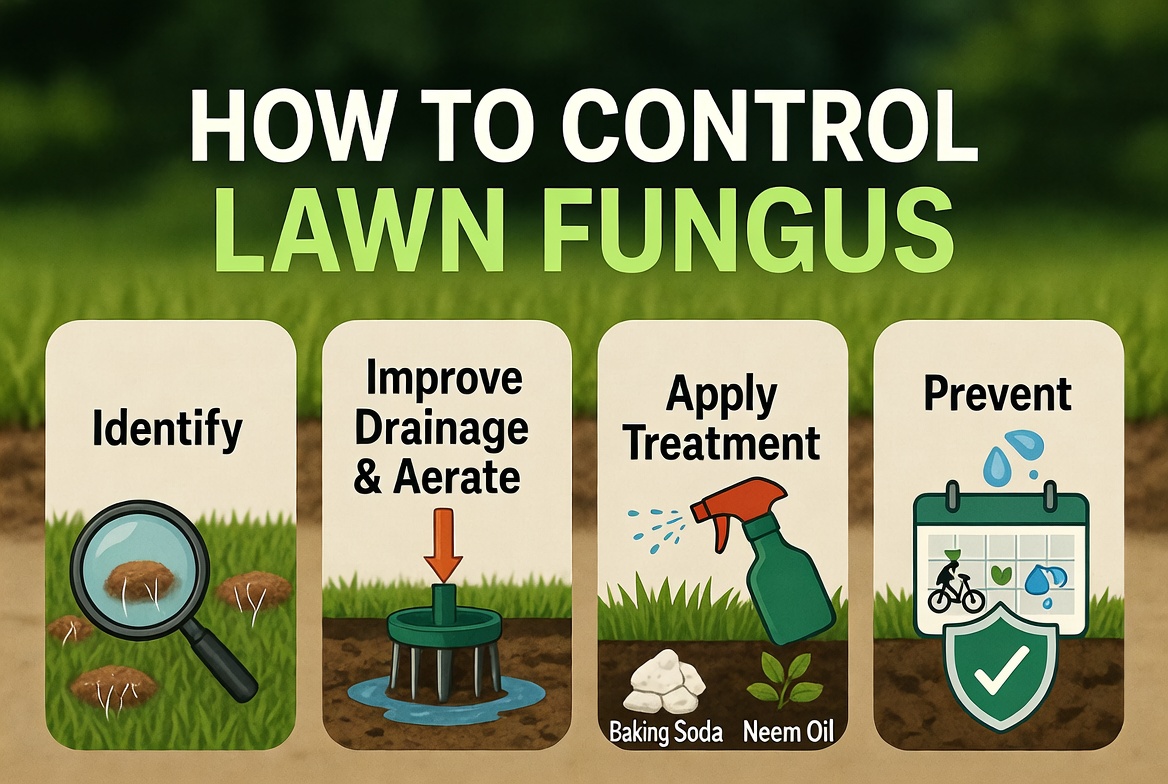
Stop watering This is your first move. Wet grass feeds fungus. Turn off the sprinkler. Skip the watering. Let the soil dry out. This kills the conditions fungi need. Wait until the soil is dry before watering again. Even then, water less frequently.
Mow carefully Keep your grass cut at the right height. Not too short. Not too long. Short grass is weak grass. Weak grass can’t fight fungus. Cut to about 3 to 4 inches tall. This lets the grass stay thick and healthy. Sterilize your mower after each use if the fungus is active. Spores can travel on the mower blade.
Improve air circulation Prune low branches. Thin shrubs. Remove anything blocking air flow. Stagnant air is fungal air. Moving air is healthy air.
Remove debris Fallen leaves. Grass clippings. Branches. Anything sitting on the lawn can trap moisture. Rake it away. Compost it. Keep the lawn clean.
Avoid traffic Don’t walk through affected areas. Don’t let kids play there. Foot traffic spreads spores. It damages grass that’s fighting infection.
Long-Term Fungus Control Strategies
Quick fixes help. But real control comes from changing your lawn habits.
Water wisely This is huge. Most people water wrong. They water every day. They water a little bit. This keeps the soil surface wet. Fungi love this.
Instead, water deeply but less often. Water for 30 to 45 minutes. But only once or twice a week. This soaks deep into the soil. The surface dries faster. Deep watering also encourages deep root growth. Stronger roots mean stronger grass.
Water in the early morning. Not at night. Nighttime watering leaves the grass wet all night. That’s fungal paradise. Morning watering lets the sun dry everything off.
Fertilize correctly Your lawn needs nutrients. But the wrong fertilizer makes problems worse. Use a balanced fertilizer. Look for equal numbers like 10-10-10. This feeds your grass without pushing too much soft growth.
Have your soil tested. Most soils are missing something. A soil test tells you exactly what your grass needs. Then you feed it right.
Split fertilizer applications. Don’t dump it all on at once. Spread it over the year. This keeps growth steady. No sudden soft, tender shoots.
Dethatch your lawn Thatch is your enemy. It traps moisture. It harbors fungi. It gets worse over time.
De-thatching removes this layer. You can do it with a rake for small areas. For larger lawns, rent a de-thatching machine. Spring is the best time. Do it once a year if thatch is heavy. Once every two to three years if it’s light.
Aerate your soil Your soil gets compacted. Compressed soil means poor drainage. It means weak roots. It means fungal problems.
Aeration punches holes in the soil. This opens up space for air and water to move. Roots go deeper. Fungi have a harder time surviving.
Rent an aerator. Use it in spring or fall. Walk it slowly over your entire lawn. The holes will be small and visible for a day or two. Don’t worry. They close up on their own as the grass grows.
Overseed weak areas Thin grass invites fungal problems. Thick, dense grass fights them off.
After aeration, overseed. This adds new grass seed to your lawn. Choose a good quality seed. Use seed suited to your area. Spread it evenly. Keep the area moist until it germinates. You’ll have thicker grass. Thicker grass wins against fungus.
Improve drainage Standing water is a fungus welcome mat. Fix drainage problems.
Fill in low spots. Regrade the lawn if needed. Add compost to clay soils. This opens up the soil. Water moves through faster.
Create drainage paths if water pools. Sometimes a simple swale guides water away from the problem area.
Using Fungicides When Needed
Sometimes you need extra help. Fungicides can stop fungal spread.
Organic fungicides These come from natural sources. Sulfur is popular. It disrupts fungal cell walls. Neem oil comes from the neem tree. It affects fungal reproduction. Copper fungicides have been used for hundreds of years. They’re proven to work.
Apply organic fungicides early in the problem. They work better on young infections. Follow all label directions. Reapply as needed. Most need repeated applications every 7 to 10 days.
Chemical fungicides These are synthetic. They’re often stronger than organic options. Brands like azoxystrobin and propiconazole work fast.
Chemical fungicides prevent fungal growth. Some kill existing fungus. Use them when organic options don’t work. Follow label directions carefully. Apply at the right temperature. Some don’t work in extreme heat.
When to use fungicides Don’t use them as your first move. Try water management first. Try improving air flow. These work great and cost nothing.
Use fungicides when the problem is spreading fast. Use them when you’ve made other improvements but still have trouble. Use them when the fungus covers a large area.
Most fungicides work best on young infections. Start early if you use them.
Seasonal Fungal Problems
Different seasons bring different fungi.
Spring fungus Cool weather. High moisture. These conditions create dollar spot and leaf spot. Keep air circulation good. Don’t overwater. Use fungicides early if needed.
Summer fungus Heat and humidity. This is brown patch season. This is rust season. Keep your lawn well-watered but not soggy. Increase mowing height. Reduce nitrogen. The heat will eventually kill most summer fungi.
Fall fungus Cool nights. Wet conditions. Fungi come back. Snow mold can hit in winter. Keep the lawn healthy. Don’t fertilize late. Rake leaves. Good fall care sets up a healthy spring.
Preventing Fungus in the First Place
Prevention is way easier than treatment. Build a healthy lawn and fungus struggles.
Choose the right grass Talk to your local extension office. Ask what grasses thrive in your area. Some types are naturally fungus-resistant. Planting the right varieties prevents problems before they start.
Maintain proper soil health Healthy soil grows healthy grass. Have your soil tested. Add compost annually. This feeds beneficial organisms. These organisms fight fungal pathogens.
Never skip lawn maintenance Mow regularly. Aerate yearly. Overseed. Fertilize properly. De-thatch as needed. These aren’t optional. They’re the foundation of a healthy lawn.
Space out your plants Don’t crowd shrubs and plants. Dense landscaping traps moisture. Give plants space. Let air flow. Sun exposure helps too.
Watch the weather You can’t control rain. But you can control your watering response. If it rains a lot, skip your scheduled watering. Let the excess water drain before you add more.
Keep equipment clean Fungal spores travel on tools and mower blades. After mowing affected areas, clean your mower. Disinfect it. Bleach water works great. This stops spreading spores to healthy areas.
Recognizing When to Call a Professional
Some problems go beyond home care. Know when to bring in the experts.
Call a professional if:
- The fungus covers more than 30% of your lawn
- You’ve tried multiple control methods and nothing works
- You’re not sure what type of fungus you have
- The problem keeps coming back year after year
- You have limited time to manage it yourself
- You want professional disease identification
A lawn care professional can identify the exact fungal problem. They have commercial-grade fungicides. They know the best treatment schedules. They can recommend custom solutions for your property.
Common Mistakes to Avoid
Learn from others’ mistakes. Don’t make these yourself.
Overwatering: The number one mistake. People water too often. They panic and water more. This makes fungus worse. Water less. Let soil dry between waterings.
Cutting too short: Short grass is weak grass. Fungi love weak targets. Keep your grass tall. 3 to 4 inches minimum.
Ignoring the problem: Don’t hope fungus goes away. It spreads. It gets worse. Act fast when you spot it.
Using too much nitrogen: This creates soft, tender growth. Fungi eat this up. Use balanced fertilizer.
Not improving drainage: If water sits on your lawn, fungus thrives. Fix drainage issues. This is fundamental.
Applying fungicide wrong: Read the label. Apply at the right temperature. Use the right rate. Improper application wastes money and doesn’t work.
Replanting without fixing the problem: If you just put in new seed without improving conditions, the fungus will attack the new grass too. Fix the environment first.
Quick Reference: Your Fungus Control Checklist
Here’s a simple checklist. Use it to fight fungus.
Immediate actions:
- Stop watering or reduce watering
- Raise mower height to 3-4 inches
- Clear debris from affected areas
- Improve air circulation around lawn
- Stop walking on infected spots
This week:
- Have soil tested if you haven’t already
- Clean and disinfect lawn equipment
- Rake out thatch if it’s heavy
- Trim overhanging branches
- Rake out fallen leaves
This month:
- Apply organic fungicide if needed
- Aerate your lawn
- Overseed thin areas
- Adjust watering schedule
- Review fertilizer plan
This season:
- Plan drainage improvements
- Consider replanting with resistant varieties
- Establish regular maintenance routine
- Watch for new fungal spots
- Keep lawn healthy
Real Talk: Patience Wins
Fungal control takes time. You won’t see results overnight. But stick with it. Your lawn will recover.
Improve your watering. Boost air circulation. Feed your grass right. The lawn responds. The fungus fades. New healthy grass grows in.
Some areas might take weeks to fully recover. Some take months. But if you stay consistent, you’ll win.
Your lawn is more resilient than you think. It wants to be healthy. Just give it the conditions it needs.
Final Thoughts
Lawn fungus is frustrating. But it’s not permanent. It’s not unbeatable. Countless homeowners have fought it. They’ve won. You will too.
Start by fixing the basics. Stop overwatering. Improve drainage. Let air flow. These simple changes kill fungal conditions. Then add the other improvements. Your lawn will bounce back.
Don’t beat yourself up if you’ve been watering wrong. Most people have. Now you know better. Change your habits. Your grass will thank you.
The path forward is clear. You’ve got this. Your beautiful, green, fungus-free lawn is waiting. Go make it happen

Hi, I’m Mary, the founder of GardenCure.com. I’m passionate about creating healthy, beautiful gardens and well-kept lawns. I share practical experience and trusted advice on garden and lawn gear that truly works. With the support of my dedicated research team, our writers produce honest, in-depth reviews using reliable, authentic sources—helping you choose the right tools with confidence for your outdoor space.