How to Plant an Avocado Seed?
So you just ate a delicious avocado, and you’re staring at that big pit wondering if you can actually grow an avocado tree from it. The answer is yes! You absolutely can. Growing an avocado plant from seed is one of the easiest and most rewarding gardening projects for beginners. Not only is it fun and cost-effective, but you’ll also feel amazing watching your avocado seed transform into a living, growing plant right in your home.
In this article
This guide walks you through every step of the process. Whether you’re a total beginner or someone who just wants a quick refresh, you’ll find all the information you need to successfully grow an avocado tree from seed.
Why Grow an Avocado Plant from Seed?
Growing an avocado plant from a seed is incredibly appealing for several reasons. First, it costs you almost nothing since you’re using a seed you’d normally throw away. Second, it’s a fun hands-on project that takes minimal effort. Third, you get to watch the entire growth process from start to finish, which is genuinely fascinating. Finally, having a homegrown avocado plant adds a nice tropical touch to your living space.
Keep in mind that growing an avocado tree from seed takes patience. The tree won’t produce fruit right away like a store-bought tree might. But for the sake of experience and learning, the journey is totally worth it. Plus, you’ll develop a connection to your plant that makes it extra special.
What You’ll Need Before You Start
Before you get going with your avocado seed planting project, gather your supplies. You don’t need much, which is part of what makes this project so easy.
The Avocado Seed: This is the obvious starting point. Any ripe avocado will give you a viable seed. The pit you scoop out of your fresh avocado is ready to go. Just make sure the avocado itself was ripe when you ate it for the best results.
Clean Water: You’ll need water for the avocado seed sprouting process. Tap water works fine, though filtered or distilled water is even better if you have it on hand.
Toothpicks: Grab three or four toothpicks. These will serve as supports that hold your seed in place over water. They’re essential for the germination method most people use.
A Clear Glass or Container: Use something transparent so you can see the root development happening below the surface. A clear glass, jar, or any clear plastic container works perfectly. The size doesn’t matter too much, but something with a wider opening makes handling easier.
Potting Soil: When your avocado seed sprouts roots, you’ll need soil to plant it in. Use quality potting soil designed for houseplants. Avoid garden soil, which tends to compact too much for container growing.
A Small Pot with Drainage Holes: Once your seed develops roots and starts sprouting a stem, you’ll plant it in a small pot. Make sure the pot has drainage holes at the bottom so water can escape.
Optional but Helpful: A spray bottle for misting, plant fertilizer for later, and a sunny window are all helpful additions.
How to Extract Your Avocado Seed
Before you can plant your avocado seed, you need to get it out of the avocado carefully.
Slice your ripe avocado lengthwise around the pit. Gently twist the two halves apart. Now you have the pit stuck in one half. Take a sharp knife and carefully tap the blade into the pit. You want the knife to stick into the seed without going all the way through. Then twist the knife handle gently to lift the pit out of the fruit.
Be super careful during this step. The knife is sharp, and avocado pits are slippery. If you’re nervous about using a knife, you can also scoop the pit out with a sturdy spoon. It takes a bit longer, but it’s safer.
Once the pit is out, rinse it under cool running water to remove any avocado flesh clinging to the surface. Use your fingers to gently rub off any remaining bits. A clean seed germinates better than a dirty one. Pat it dry with a soft cloth when you’re done.
Now you’re ready to move on to the actual seed starting process.
The Water Suspension Method: The Most Popular Way to Sprout Your Avocado Seed
The most common way people grow avocado plants from seed is the water suspension method. This technique is simple, lets you watch the action happen, and works really well.
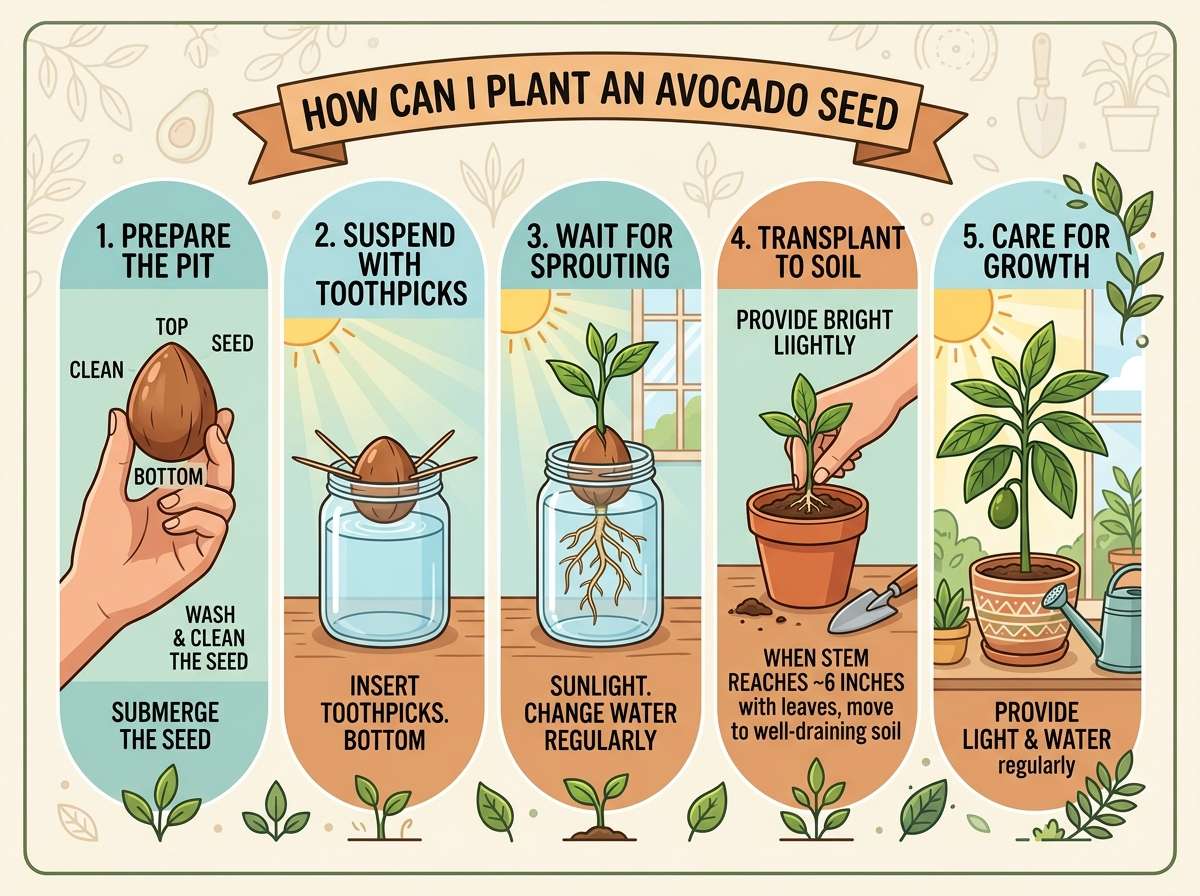
Step One: Insert the Toothpicks
Hold your clean, dry avocado pit. You’ll notice it’s wider in the middle and comes to more of a point at the top and bottom. The rounder bottom end is where roots will emerge, and the top is where the stem will grow.
Push three or four toothpicks into the sides of the seed. Insert them about one-third of the way down from what will be the top. The toothpicks should go in at a slight downward angle toward the rooted end. These will rest on the rim of your glass and suspend the seed partially in water.
Don’t force the toothpicks in too aggressively. The seed can crack, which isn’t fatal, but it’s better to avoid it. Gentle pressure works fine. If you have trouble, you can soften the seed first by soaking it in warm water for a few minutes.
Step Two: Set Up Your Water Container
Fill your clear glass or container with room-temperature water. Leave about an inch of space at the top. The water level should reach about halfway up the seed when you rest it on the toothpicks.
Step Three: Suspend the Seed
Balance the seed on the toothpicks so it rests in the water. The bottom half of the seed should be submerged. The top half stays dry and exposed to air. This setup mimics natural conditions where a seed is half in soil and half exposed.
Place your container in a warm spot with indirect light. A windowsill is perfect, but make sure the seed isn’t in direct harsh sunlight, which can dry it out too quickly. Room temperature between 65 and 75 degrees is ideal.
Step Four: Change the Water Regularly
This is crucial. Change the water every few days to prevent rot and keep it fresh and oxygenated. Every three to five days, carefully pour out the old water and refill with fresh water. This simple step makes a huge difference in success rates.
You might notice brown or white stuff forming on the seed. A little white fuzz is normal mold that won’t hurt anything. However, if you see excessive mold or the seed starts to smell bad, change the water more frequently and make sure you’re using clean water.
What to Expect During the Sprouting Phase
Patience is your friend here. Avocado seeds take time to germinate. Don’t expect action overnight. Most seeds start showing signs of life within two to four weeks, but some take longer. This is completely normal.
The first sign you’ll see is usually a small crack appearing on the top of the seed. This is the stem starting to push its way out. At the same time, roots are developing at the bottom, though you might not see them right away since they’re underwater.
Keep doing your water changes. Keep watching. One day you’ll notice a tiny white root poking out the bottom. That’s exciting! Continue changing the water regularly. The root will get longer and longer, and eventually, you might see multiple roots developing.
Then, the real magic happens. A small green sprout emerges from the top of the seed. At first, it’s just a tiny nub. It grows into a little stem with the first leaves wrapped around it like a little package. Those first leaves will slowly unfold, revealing true leaves underneath.
The entire process from the first crack to having a sprouted seed ready to plant might take anywhere from three to eight weeks. Some seeds are faster. Some are slower. This variation is natural.
Caring for Your Sprouting Avocado Seed
While your seed is doing its thing in water, basic care is simple.
Keep the water fresh by changing it regularly. Keep the temperature stable and warm. Avoid placing it near heating vents or cold drafts. Move it away from direct afternoon sun if it seems to be drying out too fast.
Don’t move your container around too much once the root and stem start growing. The root is fragile at first, and you want to minimize disturbance.
Some people add a single drop of liquid fertilizer to the water once roots are visible. This is optional but can give your baby plant a little nutrition boost. One drop in a full glass of water is all you need if you decide to do this.
When Is Your Seed Ready to Plant in Soil?
You need to know when your avocado seed has developed enough to transition into soil. Planting too early means the roots might not sustain the plant. Planting too late means the roots might get tangled or root-bound in the small amount of water.
Wait until your seed has several roots that are at least an inch or two long. On the top, wait until you have a stem that’s grown at least an inch or two tall with visible leaves. The roots should look healthy and white or light-colored. Brown or mushy roots mean something went wrong, but healthy roots are firm and white.
Once you have these signs, your seed is ready for soil.
Planting Your Sprouted Seed in Soil
Now comes the transition from water to soil. This is important because how you do this affects whether your plant keeps thriving.
Get Your Pot Ready
Fill a small pot with moist potting soil. The pot should be about four to six inches across, with drainage holes. Moisten the soil ahead of time by watering it lightly. You want it damp but not soggy.
Plant Your Seed
Make a small hole in the center of the soil, roughly the same depth as the length of your seed. Gently remove your seed from the water by carefully lifting it from the toothpicks. This is delicate work, so be patient and gentle.
Place the seed in the hole with the root end down and the sprouted stem end pointing up. Cover the seed partially with soil, leaving the top part still exposed, similar to how it was in water. You want the stem and first leaves above the soil line, but the bottom half of the seed buried in soil.
Pat the soil gently around the seed. Don’t pack it down hard. The soil should hold the seed in place but remain loose and airy.
Water Carefully
Water the soil gently until it’s moist but not waterlogged. Good drainage is important. If water sits on top of the soil or pools around the seed, you’re overwatering.
Creating the Perfect Home for Your Growing Avocado Plant
After planting in soil, your avocado plant needs proper conditions to grow strong.
Light
Place your potted avocado plant in a spot with bright, indirect light. A window facing south or west is ideal. Avocado plants love light and will stretch and reach toward the light source. If your plant starts looking tall and skinny with lots of space between leaves, it’s probably not getting enough light. Move it closer to a window or consider a grow light.
Direct afternoon sun can sometimes scorch young leaves, especially if the plant has been indoors. If you see brown patches on the leaves, move it back a bit from the window.
Temperature and Humidity
Avocado plants like warmth. Keep the temperature between 60 and 85 degrees. They can tolerate slightly cooler temperatures but struggle if it’s too cold. Avoid placing your plant near cold drafts, open windows during cool weather, or heating vents.
Humidity is nice but not essential for indoor avocado plants. If your home is very dry, misting the leaves occasionally with a spray bottle helps. Don’t mist so much that water puddles on the leaves and soil.
Watering Schedule
Water your avocado plant when the top inch of soil feels dry to the touch. Stick your finger in the soil to check. If it feels moist, wait a few more days. If it’s dry, water until water drains from the bottom holes.
Avocado plants dislike having wet feet. Waterlogging causes root rot, which is fatal. It’s better to underwater slightly than to overwater. The plant will tell you if it’s thirsty by looking a bit droopy, and it will bounce back quickly after you water.
In the growing season, you might water once a week. In cooler months, water less frequently, maybe every ten to fourteen days.
Watching Your Avocado Plant Grow Tall
As your avocado plant grows, it will get taller. Young avocado plants grow quickly when conditions are right. It’s thrilling to watch new leaves unfold every week or two.
However, if your plant grows very tall and skinny without many side branches, it’s because of insufficient light. A tall, spindly avocado plant isn’t ideal. The solution is better light or pinching off the top of the main stem.
Pruning and Pinching
When your avocado plant is about six to eight inches tall, you can pinch off the very top. This sounds scary, but it’s actually helpful. Pinching off the top encourages the plant to branch out sideways instead of just growing straight up. This creates a bushier, more attractive plant shape.
Use your thumb and finger to pinch off the top quarter inch of the stem. It doesn’t hurt the plant. Within a few weeks, the plant will send out side shoots from below where you pinched it. These become side branches.
Once those side branches are a few inches long, you can pinch those too if you want an even bushier plant. This creates a nice compact shape rather than a single tall stem.
Feeding Your Growing Avocado Plant
Young avocado plants growing in containers benefit from occasional feeding. Potting soil has some nutrients, but they get used up over time.
Start feeding your plant once it’s been in soil for a few months and is growing actively. Use a balanced liquid fertilizer made for houseplants, diluted according to the package directions. Feed every four to six weeks during the active growing season.
In winter, when growth slows, you can skip fertilizing or do it less often. There’s no need to feed a plant that’s not actively growing much.
Don’t overfeed. More fertilizer isn’t better. Excess fertilizer can actually harm your plant by building up salts in the soil. Follow the label directions, and you’ll be fine.
Common Problems and Solutions
Even with good care, sometimes issues pop up. Here are the most common ones and how to fix them.
Yellowing Leaves
If the lower leaves turn yellow and drop off, it’s usually normal as the plant grows and old leaves age out. However, if lots of leaves throughout the plant are turning yellow, it might mean overwatering or nutrient deficiency. Check your watering frequency. Make sure you’re only watering when the top inch of soil is dry.
Brown Leaf Tips
Brown, crispy tips on leaves usually mean the air is too dry or you’re underwatering. Mist the plant more often or water more consistently. Also check that you’re using filtered water if your tap water is very high in minerals.
Droopy Plant
A droopy avocado plant usually means it’s thirsty. Check the soil moisture. If it’s dry, water thoroughly. The plant should perk up within a few hours. If the soil is wet and the plant is still droopy, root rot might be happening. Let the soil dry out completely before watering again, and consider repotting into fresh soil.
Pests
Indoor avocado plants sometimes get spider mites or scale insects. These are rare but possible. If you notice tiny webs on the undersides of leaves or small brown bumps on the stems, spray the plant with neem oil or insecticidal soap according to the product directions. Most indoor avocado plants stay pest-free with good air circulation.
Slow Growth or No Growth
If your plant isn’t growing, it usually lacks enough light. Move it to a brighter location. Cold temperatures also slow growth. Keep your plant in a warm room. If it’s a very young plant that just got potted, it might be adjusting. Give it time.
Repotting as Your Plant Grows
As your avocado plant grows bigger, it will eventually outgrow its pot. When roots start poking out the drainage holes or the soil dries out super quickly after watering, it’s time to repot.
Choose a pot that’s one to two inches larger in diameter than the current one. Use fresh potting soil. Gently remove the plant from the old pot and loosen the roots slightly before placing it in the new pot. Water well after repotting.
You can repot in spring or summer when the plant is actively growing. Repotting in fall or winter is usually not ideal.
How Long Before Your Avocado Plant Produces Fruit?
Here’s the honest truth: an avocado plant grown from seed takes a very long time to produce fruit. Some plants fruit within five to seven years with ideal conditions. Others take ten, twelve, or even more years. Some never produce fruit indoors.
This is because avocado trees grown from seed can take many years to reach maturity and develop the flowers that turn into fruit. Additionally, indoor conditions are quite different from outdoor tropical climates where avocados naturally grow.
However, the plant itself is still beautiful and enjoyable. Many people grow avocado plants simply for the foliage and the satisfaction of having grown it from a seed. The fruit possibility is a bonus, not the main goal.
Tips for Better Success
Here are some final tips that increase your chances of success.
Use a fresh seed from a ripe avocado. Older seeds have lower germination rates.
Keep your water fresh during the sprouting phase. This is one of the most important factors.
Make sure your sprouted plant gets enough light. This prevents spindly growth and keeps the plant healthy.
Water based on soil moisture, not on a schedule. Every plant in every home needs slightly different watering frequency.
Be patient. Avocado plants grow on their own timeline. Pushing too hard doesn’t speed them up.
Keep the temperature stable and warm. Avoid cold drafts and temperature swings.
Don’t be afraid to pinch and prune. The plant is tougher than it looks, and pruning creates a better shape.
Don’t overfertilize. Less is more when it comes to feeding houseplants.
Enjoying Your Homegrown Avocado Plant
Growing an avocado plant from seed is genuinely rewarding. You start with something you were about to throw away and turn it into a living plant. You watch the entire process unfold, from the first crack in the seed to new leaves unfurling every week.
Your plant becomes part of your home. It cleans the air, adds greenery to your space, and gives you something living to care for. Even if it never produces fruit, your avocado plant is still a success.
The skills you learn growing this avocado plant from seed apply to other plants too. Once you’ve successfully sprouted and grown an avocado seed, you’ll feel more confident tackling other indoor plants.
So grab an avocado seed, get your supplies ready, and get started. Your journey as a plant parent is about to begin. Happy growing!
Final Thoughts on Avocado Seed Planting
Growing an avocado tree from a seed is one of the most accessible plant projects out there. You need minimal supplies. You need minimal experience. You just need patience and basic care. Thousands of people have successfully grown avocado plants from seeds, and so can you.
Remember that every plant is different. Your avocado seed might sprout faster or slower than someone else’s. Your plant might grow more or less quickly. That’s totally normal and fine. Each plant is unique, just like each person is unique.
The time you spend waiting for your seed to sprout is time to learn more about plants. The weeks you spend watching your plant grow are chances to build your plant care skills. By the time your avocado plant is large and established, you’ll have learned so much.
Enjoy the process. Enjoy watching something grow from basically nothing. Enjoy being a plant parent to your avocado plant. That’s what growing plants is all about.
Hi, I’m Mary, the founder of GardenCure.com. I’m passionate about creating healthy, beautiful gardens and well-kept lawns. I share practical experience and trusted advice on garden and lawn gear that truly works. With the support of my dedicated research team, our writers produce honest, in-depth reviews using reliable, authentic sources—helping you choose the right tools with confidence for your outdoor space.