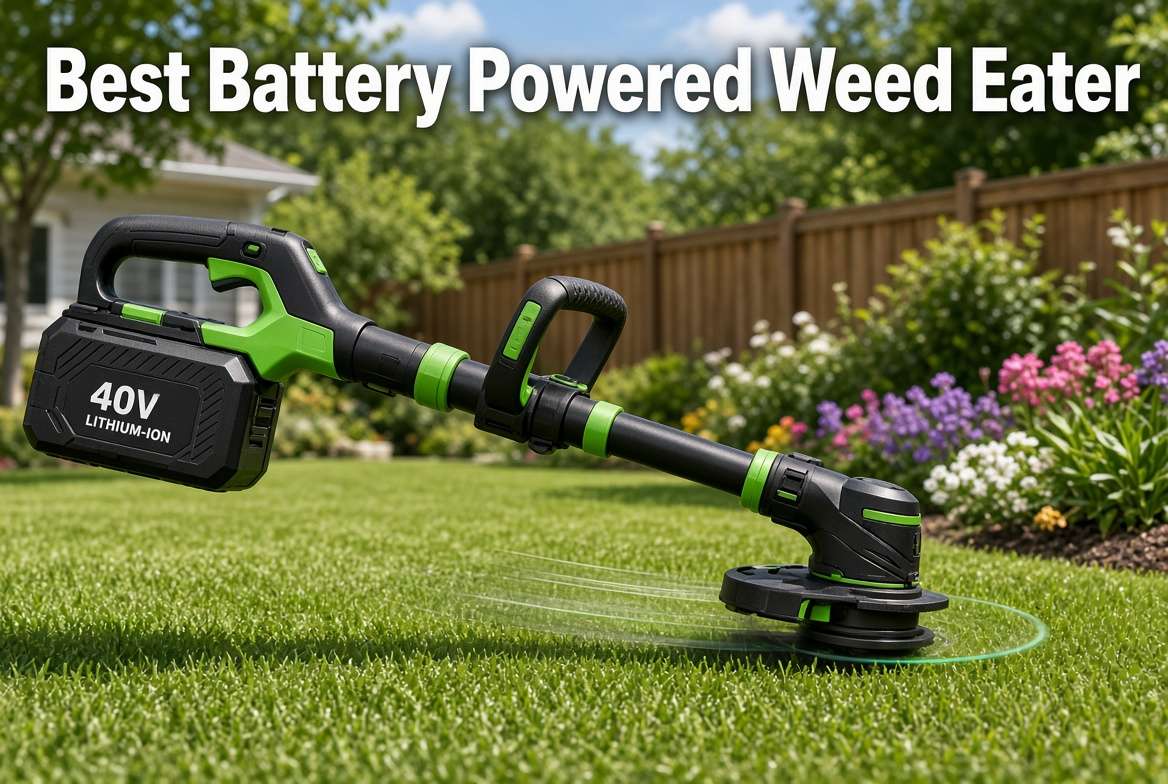
5 Best Battery Powered Weed Eater In 2026
If your gas trimmer smells bad, starts hard, and leaves your hands buzzing, you’re not alone. A lot of homeowners are switching to battery powered weed eaters because they start with one pull of a trigger, run clean, and don’t fill your garage with fumes. But not every cordless trimmer is built the same way, and the wrong pick can leave you with weak cutting power or a battery that dies halfway through the yard.
In this article
This roundup walks through five battery powered string trimmers that cover different budgets and needs, from light touch-up jobs around flower beds to heavy-duty overgrown lots. Each review breaks down what the trimmer does well, where it falls short, and who it actually fits. By the end, you’ll know exactly which one matches your yard size, your grip strength, and your wallet.
Battery powered trimmers have come a long way from the weak, underpowered tools they used to be. Motors got stronger, batteries got lighter, and runtimes stretched out to cover full-size yards without a mid-job recharge. Still, the market is packed with options that all claim to be the best, and specs on a product page don’t always tell you how a trimmer actually feels in your hands after twenty minutes of real use. That’s the gap this roundup tries to close.
Below, you’ll find a full breakdown of five cordless trimmers, from light entry-level picks to a genuine heavy-duty option built for tough jobs. Each section covers what the tool does, who it’s built for, and where it might disappoint you. There’s also a buying guide near the end that walks through the specs that actually matter, plus a list of common mistakes people make when shopping for a cordless trimmer.
Let’s get into it.
Quick Look: Battery Powered Weed Eaters Compared
| Product | Voltage | Cutting Width | Best For |
|---|---|---|---|
| WORX WG163 | 20V | 12″ | Small to medium yards, tight edges |
| BLACK+DECKER LST300 | 20V MAX | 12″ | Beginners, light yard work |
| 21V Cordless Weed Wacker | 21V | 12″ | Budget-conscious buyers, small lots |
| 60V Brushless Trimmer (17″ Swath) | 60V | 17″ | Large properties, thick weeds, pro-level power |
| Basic Electric Weed Wacker Eater | Entry-level battery | 10″-12″ | Casual, occasional trimming |
Now let’s break each one down in detail.
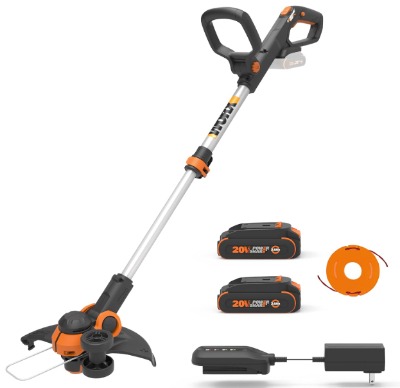
1. WORX 20V 12″ 2-in-1 Cordless String Trimmer & Electric Lawn Edger (WG163)
Product Description
The WORX WG163 is a lightweight cordless trimmer built around a 20V battery system. It’s a 2-in-1 tool, meaning you can flip the head and use it as an edger for clean lines along driveways and sidewalks without needing a second tool. The cutting swath sits at 12 inches, which is a solid middle ground for suburban yards.
Best Use Cases
This trimmer shines in small to medium yards with grass, light weeds, and garden borders. It’s also a great pick if you want one tool that handles both trimming and edging, since switching between the two takes just a few seconds without any extra parts.
Key Features Explained Simply
- Command Feed line system: instead of bumping the head on the ground to release more line, you just press a button and pull. This saves your knees and your patience.
- Adjustable height and angle: the shaft telescopes and the head pivots, so tall folks and short folks can both find a comfortable working position.
- 2-in-1 design: rotate the head 90 degrees and it becomes an edger, so you get two garden tools in one purchase.
Real-Life Usage Insight
For a typical quarter-acre lot with grass borders, garden beds, and a driveway edge, this trimmer covers the job in one battery charge without much strain on the arms. The line feed button is a nice touch when you’re mid-job and don’t want to stop and fumble with the head.
Pros
- Easy line feed with a simple button press
- Comfortable, adjustable design fits different heights
- Doubles as an edger, saving you a second purchase
- Light enough for extended use without arm fatigue
Cons
- Battery life is on the shorter side for larger properties
- Not powerful enough for thick brush or overgrown weeds
- Plastic build feels a bit less rugged than pricier models
Performance Discussion
The motor handles regular grass and thin weeds without trouble, but it slows down noticeably in dense patches. This is a trimmer built for maintenance, not for reclaiming a jungle. If your yard gets regular mowing and you just need touch-ups, it keeps up fine.
Ease of Use
Setup takes only a few minutes out of the box. The trigger is simple, the head swap for edging is tool-free, and the whole unit stays balanced in one hand. Beginners will find this one approachable right away.
Value for Money
Given the 2-in-1 function and the ease of the line feed system, this trimmer offers strong value for anyone with a small to medium lawn. It’s not the most powerful option here, but it does its job reliably and keeps costs reasonable.
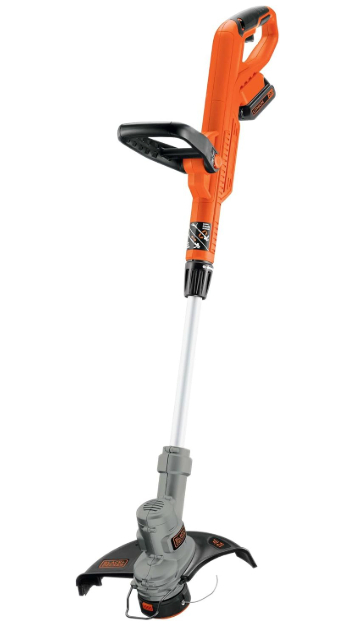
2. BLACK+DECKER 20V MAX String Trimmer and Edger 2 in 1 (LST300)
Product Description
The BLACK+DECKER LST300 is another 20V cordless trimmer with a 12-inch steel deck and a 2-in-1 trimmer-edger design. It comes with the battery and charger included, so there’s nothing extra to buy before you can start using it. This model also markets a reduced vibration design, aimed at making longer sessions more comfortable on the hands.
Best Use Cases
This one fits well for beginners or casual users who want a plug-and-play kind of experience. Light yard maintenance, trimming around fences, and cleaning up driveway edges are where it performs best.
Key Features Explained Simply
- Auto Spool Feed: the line feeds out automatically as needed, so you never have to stop and manually adjust it.
- Steel deck: adds a bit of durability compared to an all-plastic housing, especially around the cutting area where debris and rocks tend to hit.
- Reduced vibration: the handle and motor mount are designed to soften the shake you’d normally feel, which matters if you have wrist or hand sensitivity.
Real-Life Usage Insight
The auto feed system is genuinely handy for anyone who hates dealing with manual bump-feed heads. You just trim, and the line keeps itself at the right length without extra steps. For a beginner who doesn’t want to think too much about trimmer maintenance, this removes a common headache.
Pros
- Battery and charger included right in the box
- Auto spool feed removes manual line adjustment
- Reduced vibration makes longer sessions easier on hands
- Steel deck adds some extra durability
Cons
- 12-inch cutting width means more passes on bigger yards
- Runtime is limited on a single charge for larger jobs
- Auto feed can occasionally release more line than needed, leading to some waste
Performance Discussion
For everyday lawn upkeep, the motor keeps a steady pace and doesn’t bog down easily on regular grass. Like most 20V trimmers, it’s not designed for thick brush or heavy overgrowth, but for typical suburban lawn care, it holds up well.
Ease of Use
This is about as beginner-friendly as cordless trimmers get. There’s no line-tapping technique to learn, no separate battery purchase needed, and the reduced vibration design makes it comfortable even for first-time users.
Value for Money
With the battery and charger bundled in, plus the auto feed convenience, this trimmer delivers good value for anyone starting out with cordless yard tools. It won’t handle heavy-duty jobs, but for light maintenance, the price feels fair.
3. 12″ 21V Weed Wacker Cordless, 2 in 1 String Trimmer and Edger
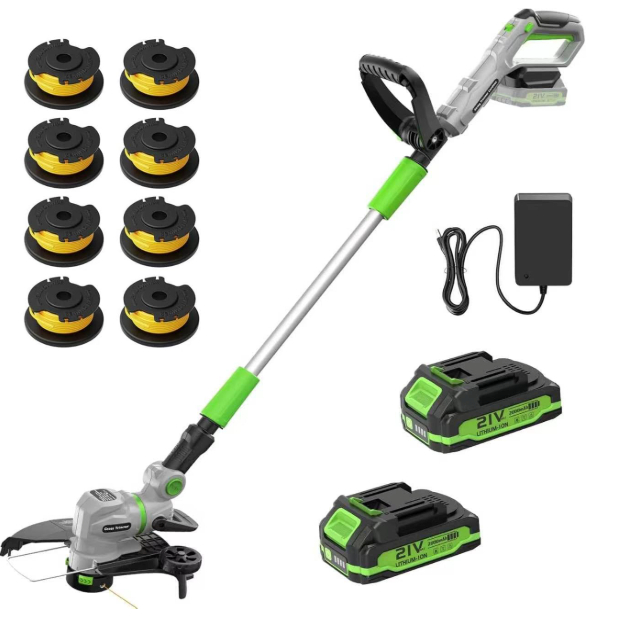
Product Description
This budget-friendly cordless trimmer runs on a 21V battery and offers the same 2-in-1 trimmer-and-edger setup found in pricier models. It’s built for buyers who want cordless convenience without spending a lot upfront, with a 12-inch cutting width that suits smaller properties.
Best Use Cases
This trimmer works best for small yards, apartment patios with garden strips, or occasional touch-up trimming rather than full lawn coverage. It’s also a reasonable backup tool if you already own a mower and just need something for edges and tight corners.
Key Features Explained Simply
- 21V battery system: slightly higher voltage than the standard 20V class, though real-world power depends heavily on the battery’s amp-hour rating, not just voltage alone.
- 2-in-1 head: swap between trimming mode and edging mode without extra tools.
- Lightweight frame: built to be easy to carry and maneuver around obstacles like flower pots and fence posts.
Real-Life Usage Insight
For small patches of grass and light weeds, this trimmer gets the job done without fuss. It’s not going to power through thick, tangled growth, but for keeping a small yard tidy between mows, it’s a practical, low-cost option.
Pros
- Affordable entry point into cordless trimming
- Lightweight and easy to carry around the yard
- 2-in-1 function adds versatility for the price
- Good option for small spaces or occasional use
Cons
- Battery capacity and runtime tend to be modest
- Cutting power drops off with thicker weeds or tall grass
- Build quality feels less rugged than name-brand competitors
Performance Discussion
Voltage numbers can be misleading if you only look at the battery’s rated volts. This trimmer performs fine on soft grass and thin weeds, but heavier vegetation will slow the motor down and may require you to go over the same spot more than once.
Ease of Use
The lightweight design makes it simple for almost anyone to handle, including those who might struggle with heavier gas trimmers. Assembly and battery swaps are straightforward, with no complicated steps.
Value for Money
If your budget is tight and your yard is small, this trimmer offers a fair trade-off between price and performance. It’s not built for demanding jobs, but for basic upkeep, it gets the work done without a big price tag.
4. 60V Cordless String Trimmer with 5.0Ah Battery & Fast Charger (1200W Brushless Motor, 17″ Cutting Swath)
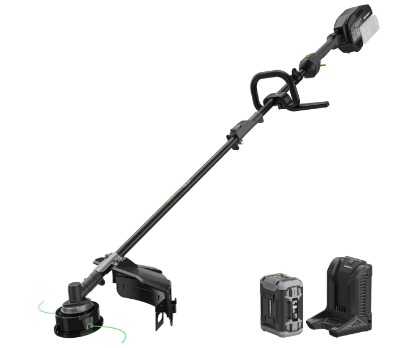
Product Description
This is the heavy hitter of the group. With a 60V battery system, a 1200W brushless motor, and a wide 17-inch cutting swath, this trimmer is built for bigger properties and tougher vegetation. It also includes dual speed settings (6100/4600 RPM) and a runtime rated around 54 minutes on a full charge, along with a fast charger to cut down downtime. The power head is also compatible with other attachments, which adds flexibility if you want to expand into a multi-tool system later.
Best Use Cases
This trimmer fits large yards, rural properties, overgrown lots, and anyone dealing with thick weeds or tall grass on a regular basis. If you’ve been frustrated by underpowered trimmers stalling out in heavy growth, this is built to solve that problem.
Key Features Explained Simply
- Brushless motor: runs cooler and lasts longer than traditional brushed motors, while also pulling more power from the same battery charge.
- Dual speed settings: switch to the lower RPM for delicate trimming around flower beds, or bump up to the higher RPM for cutting through thick brush.
- 17-inch cutting swath: covers more ground per pass, which cuts down total trimming time on larger lawns.
- Fast charger: gets you back to work quicker instead of waiting hours for a full charge.
- Power head compatibility: lets you attach other tool heads down the line, turning this into a multi-purpose yard system rather than a single-use trimmer.
Real-Life Usage Insight
On larger properties with mixed terrain, tall grass, and stubborn weeds along fence lines, this trimmer keeps a steady cutting pace without bogging down. The wider swath means fewer passes, and the dual speed setting lets you slow down for precision work near delicate plants.
Pros
- Strong brushless motor handles thick weeds and tall grass with ease
- Wide 17-inch cutting swath covers ground quickly
- Dual speed control adds precision for different tasks
- Fast charger reduces downtime between sessions
- Power head system adds future flexibility
Cons
- Heavier than smaller 20V models, which may tire out some users over long sessions
- Higher price point compared to entry-level trimmers
- Overkill for small, tidy yards that don’t need this much power
Performance Discussion
This is where the difference between voltage classes really shows up. The 1200W brushless motor combined with the 60V battery gives noticeably more torque than the 20V options above, meaning it won’t stall in thick patches the way lighter trimmers can. The rated 54-minute runtime is also generous for a battery trimmer, letting you cover more ground before needing a recharge.
Ease of Use
The extra power and weight mean this trimmer takes a bit more effort to maneuver than the lighter models, especially for smaller users or those with less upper body strength. That said, the dual speed dial and straightforward controls keep the learning curve low despite the added power.
Value for Money
For anyone with a large yard or tough vegetation, the price makes sense given the performance boost. Buyers with small, easy-to-manage lawns probably don’t need this much trimmer, but for demanding jobs, it saves time and frustration compared to underpowered alternatives.
5. Electric Weed Wacker Eater Cordless Battery Powered String Trimmer
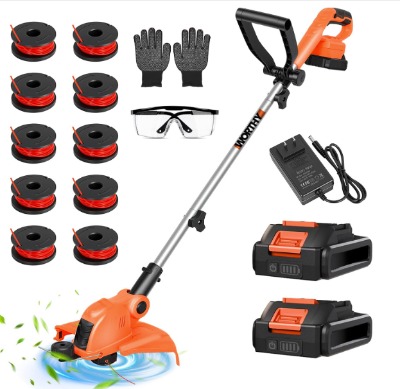
Product Description
This is a straightforward, no-frills cordless trimmer aimed at casual users who need something simple for occasional yard cleanup. It skips the extra features found in pricier models and focuses on the basics: cordless convenience, a lightweight body, and enough power for light trimming tasks.
Best Use Cases
This trimmer suits renters, apartment dwellers with small garden patches, or homeowners who only need a trimmer a few times a season for light touch-ups. It’s also a reasonable pick as a backup tool kept in the garage for quick jobs.
Key Features Explained Simply
- Cordless, battery powered design: no cords to trip over, no gas to mix, and no pull cord to fight with.
- Lightweight build: easy to store and easy to carry, especially for users who don’t want a bulky, heavy tool.
- Simple trigger controls: no complicated settings, just squeeze and go.
Real-Life Usage Insight
For small, quick jobs like trimming around a mailbox post or cleaning up a short garden edge, this trimmer works fine and doesn’t require much setup time. It’s not meant for extended sessions or dense growth, but for light, occasional use, it covers the basics.
Pros
- Simple, beginner-friendly operation
- Lightweight and easy to store
- Lower price point than premium trimmers
- No gas, no cords, no complicated maintenance
Cons
- Limited power for thick weeds or tall grass
- Shorter runtime compared to higher-voltage models
- Fewer extra features like auto feed or edging mode
Performance Discussion
This trimmer handles light grass and thin weeds without much issue, but it will struggle if you push it into thicker, overgrown areas. It’s built for maintenance-level trimming rather than tackling neglected yard sections.
Ease of Use
There’s very little to learn here. It’s about as simple as cordless trimmers get, which makes it a solid pick for first-time buyers who just want something easy to grab and use without reading a manual first.
Value for Money
For occasional, light-duty use, this trimmer offers a low-cost way to get into cordless yard tools. Buyers with bigger yards or thicker growth will likely outgrow it quickly, but as a simple backup or starter tool, it does the job.
Comparison Insights: How These Battery Powered Weed Eaters Stack Up
Looking at all five side by side, a clear pattern shows up: voltage and motor design matter more than the number printed on the battery. The 60V brushless model pulls ahead in raw cutting power and swath width, making it the clear pick for anyone dealing with tough vegetation or bigger properties. The three 20V-to-21V class trimmers (WORX, BLACK+DECKER, and the budget 21V option) are much closer to each other in real-world performance, with differences coming down to small conveniences like auto feed, edging capability, and vibration control rather than raw power.
The basic electric trimmer sits at the entry level, trading power and features for a lower price and simpler operation. It’s a fine choice for light, occasional use but won’t keep pace with the others on tougher jobs.
Cutting width also plays a bigger role than most buyers expect. A wider swath, like the 17-inch cut on the 60V model, means fewer passes across the yard, which adds up to real time savings on larger properties. On small lots, though, a narrower 10-to-12-inch swath is often easier to maneuver around tight corners, garden beds, and obstacles.
Line feed systems are another area worth paying attention to. Auto feed (BLACK+DECKER) and button-activated feed (WORX) both beat manual bump-feed heads for convenience, especially during longer sessions.
Noise level is worth a quick mention too, even though none of these listings advertise exact decibel numbers. As a general rule, battery powered trimmers run much quieter than gas models across the board, and the smaller 20V-class motors tend to run a touch quieter than the larger brushless 60V unit, simply because more power usually means more motor noise. If you live close to neighbors or like to trim early in the morning, this is a small but real factor.
Battery charging speed is another point of difference. The 60V trimmer’s fast charger cuts downtime significantly, which matters more on bigger properties where you might need a second charge mid-job. The smaller 20V trimmers usually take longer to charge, but since their runtime already suits smaller yards, this rarely becomes a real problem in practice.
Buying Guide: How to Pick the Right Battery Powered Weed Eater
Match Power to Your Yard Type
Small, well-maintained lawns don’t need a heavy-duty motor. A 20V trimmer handles light grass and thin weeds just fine. Larger properties, overgrown patches, or thick brush call for higher voltage and a stronger motor, like the 60V brushless option in this list.
Check the Battery’s Amp-Hour Rating, Not Just Voltage
Voltage alone doesn’t tell the full story. A higher amp-hour (Ah) rating means longer runtime on a single charge, so it’s worth checking that number alongside voltage when comparing trimmers.
Think About Cutting Width
Wider cutting swaths cover more ground per pass, saving time on bigger lawns. Narrower swaths offer better control in tight spaces, gardens, and around obstacles.
Consider Line Feed Type
Bump-feed heads require tapping the trimmer on the ground to release more line, which can slow you down. Auto feed and button-activated feed systems save time and reduce interruptions during a trimming session.
Weigh the Tool Before You Buy
Heavier trimmers with bigger batteries and stronger motors can tire out your arms over longer sessions. If you have limited upper body strength or plan to trim for extended periods, a lighter model may serve you better even if it means slightly less power.
Look at 2-in-1 Functionality
A trimmer that also works as an edger saves you from buying a separate tool. This is especially useful for driveway and sidewalk borders where a clean, defined edge matters.
Battery Compatibility Across Tools
Many brands design their batteries to work across a whole line of yard tools, from blowers to hedge trimmers. If you already own other cordless tools from a brand, sticking with the same battery platform can save money down the road.
Who Should Buy These Products
Small yard owners and beginners will likely be happiest with the WORX WG163 or BLACK+DECKER LST300, both of which balance ease of use with enough power for regular maintenance.
Budget-conscious buyers with small spaces should look at the 21V cordless option, which trims costs without completely sacrificing function for light jobs.
Large property owners and anyone facing thick, overgrown vegetation will get the most benefit from the 60V brushless trimmer, thanks to its stronger motor, wider swath, and longer runtime.
Renters, apartment dwellers, or casual users who only need occasional light trimming can save money with the basic electric trimmer, as long as expectations stay realistic about its limited power.
Common Mistakes to Avoid
Buying based on voltage alone. A higher voltage number doesn’t automatically mean better performance. Amp-hour rating, motor type, and build quality all factor into real-world cutting power.
Ignoring runtime needs. If your yard takes 45 minutes to trim and your battery only lasts 20, you’ll end up frustrated mid-job. Match battery runtime to the size of your property before buying.
Skipping the weight test. A trimmer that feels light in a store display can feel very different after 20 minutes of continuous use. Consider your own strength and stamina, not just the spec sheet.
Overbuying for a small yard. A heavy-duty 60V trimmer is overkill for a small, tidy lawn and adds unnecessary weight and cost. Match the tool to the actual job.
Underbuying for tough conditions. On the flip side, a basic entry-level trimmer will struggle and burn out faster if it’s constantly pushed into thick brush or overgrown weeds it wasn’t built for.
Forgetting about line replacement costs. Some trimmers use proprietary line cartridges that cost more to replace, while others accept standard trimmer line you can buy anywhere. It’s worth checking this before you commit to a brand.
Neglecting battery storage. Leaving lithium-ion batteries fully charged or fully drained for long stretches can shorten their lifespan. Storing them at a partial charge in a cool, dry spot helps them last longer.
Frequently Asked Questions
How long does a battery powered weed eater last on one charge? Runtime varies a lot by voltage and battery size. Smaller 20V trimmers usually run for 20 to 30 minutes per charge, while higher-voltage models with bigger batteries, like the 60V option here, can stretch closer to 50 minutes or more.
Can a cordless trimmer handle thick weeds and overgrown patches? It depends on the motor. Lighter 20V trimmers tend to slow down or stall in thick growth, while stronger brushless motors, like the 1200W unit in the 60V model, push through heavier vegetation with far less strain.
Do these trimmers work as edgers too? Several of the models in this list, including the WORX WG163, the BLACK+DECKER LST300, and the 21V budget option, offer a 2-in-1 design that switches between trimming and edging without needing a separate tool.
Is a higher voltage always better? Not necessarily. Voltage affects potential power, but actual performance also depends on amp-hour rating, motor design, and cutting swath. A small yard rarely needs the extra power a high-voltage trimmer offers, so match the tool to the job rather than chasing the highest number.
How do I make the battery last longer over time? Avoid leaving lithium-ion batteries at a full charge or a completely dead charge for long stretches. Store them at a partial charge in a cool, dry place, and avoid direct sun or extreme heat when the tool isn’t in use.
Final Verdict
There’s no single best battery powered weed eater for everyone, since the right pick depends entirely on your yard size and the toughness of what you’re cutting. For most homeowners with a standard suburban lawn, the WORX WG163 and BLACK+DECKER LST300 offer the best mix of convenience, comfort, and price, with each one bringing a slightly different edge, WORX with its button line feed, BLACK+DECKER with its auto feed and reduced vibration handle.
If your budget is the main concern and your yard stays small, the 21V cordless trimmer gets the basics done without a big spend. For a simple, occasional-use tool, the basic electric trimmer covers light jobs without extra bells and whistles.
For anyone dealing with a large property, thick weeds, or overgrown patches, the 60V brushless trimmer with the 17-inch swath stands out as the strongest performer here, backed by real power, a wider cutting path, and a longer runtime that keeps pace with demanding jobs.
Match the tool to your yard, not the other way around, and you’ll end up with a trimmer that actually makes yard work easier instead of another tool gathering dust in the garage.

Hi, I’m Mary, the founder of GardenCure.com. I’m passionate about creating healthy, beautiful gardens and well-kept lawns. I share practical experience and trusted advice on garden and lawn gear that truly works. With the support of my dedicated research team, our writers produce honest, in-depth reviews using reliable, authentic sources—helping you choose the right tools with confidence for your outdoor space.