
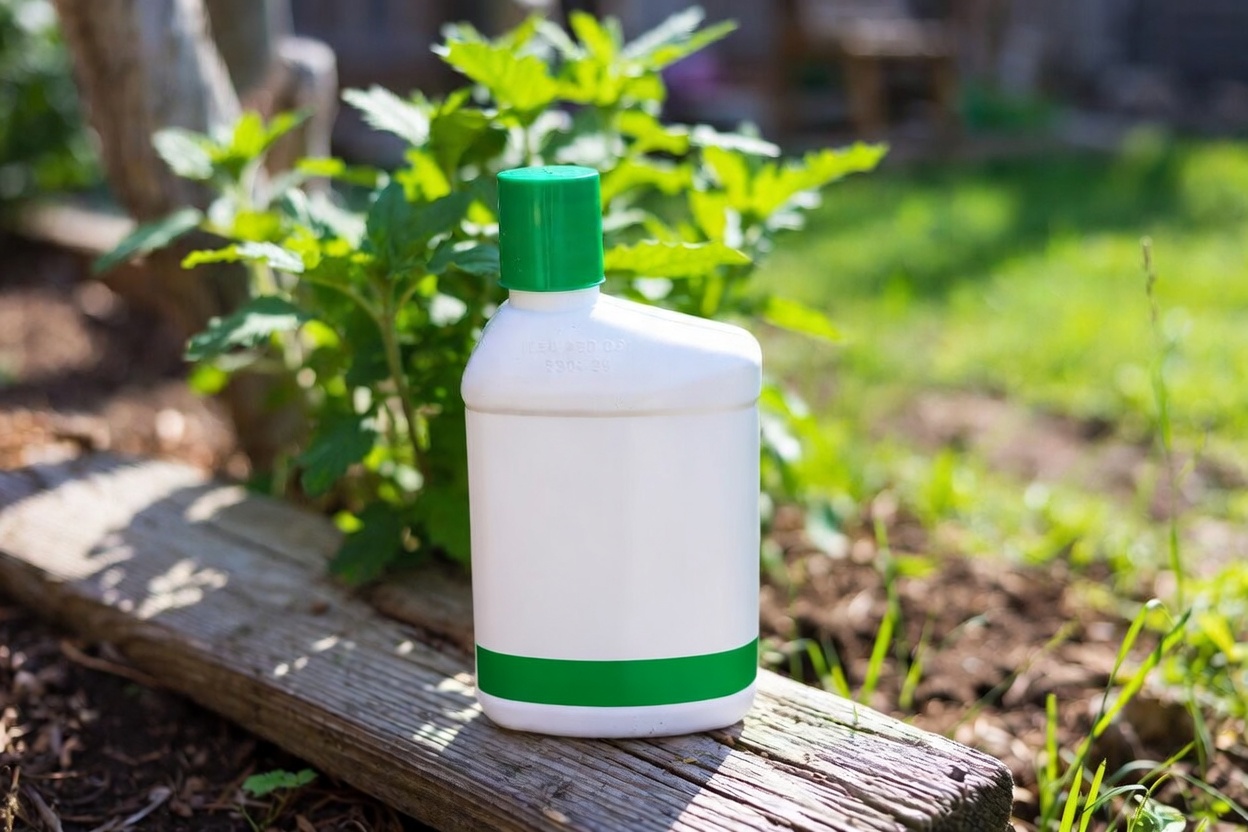
5 Best Brush and Weed Killer In 2026
If weeds and wild brush are taking over your yard, you already know how frustrating it gets. You pull one plant out, and two more show up the next week. Roots go deep. Vines wrap around fences. Poison ivy spreads across your garden beds without asking. At some point, manual removal just stops working.
In this article
That’s where a good brush and weed killer makes a real difference.
But here’s the problem — the market is packed with options. Some products work in hours. Others take weeks. Some kill roots completely. Others only take care of what’s above ground. And some are safe to use near certain plants, while others will wipe out everything in a wide radius.
This article breaks it all down for you.
We reviewed five of the most popular brush and weed killers available today. These include ready-to-use sprays, concentrated formulas, and long-term prevention products. Each review covers what the product does, how well it works, how easy it is to use, and whether it’s worth the price.
By the end, you’ll know exactly which product fits your yard situation — and which ones to skip.
Let’s get into it.
Why You Need the Right Brush Killer (And What to Look For)
Not all weed killers are the same. A basic lawn weed spray might handle dandelions just fine. But if you’re dealing with poison ivy, wild blackberry, kudzu, or thick woody brush, you need something with more power.
Here are a few things worth keeping in mind as you shop:
Contact vs. Systemic killers — Contact killers damage whatever they touch on the surface. Systemic killers get absorbed by the plant and travel all the way to the root. For tough brush, systemic action is almost always necessary. If you only kill the top, the roots will send up new growth.
Ready-to-use vs. concentrate — Ready-to-use products come pre-mixed and go straight into the sprayer. Concentrates need to be diluted with water first. Concentrates are usually cheaper per square foot but need a bit more effort to set up.
Residual activity — Some weed killers only work on existing plants. Others stay active in the soil and prevent new seeds from sprouting for weeks or even months. This is useful along driveways, fence lines, or areas where you never want anything growing.
Rainfast time — After you spray, rain can wash away the product before it fully absorbs. Rainfast time tells you how long you need to wait. Shorter is better if you live somewhere with unpredictable weather.
Targeted vs. non-selective — Targeted products kill specific weed types and leave nearby grass or ornamentals alone. Non-selective products kill most plants they touch. If you’re spraying near a flower bed or lawn, pay close attention to this.
Now let’s look at the five products.
Product Reviews: Best Brush and Weed Killers Tested
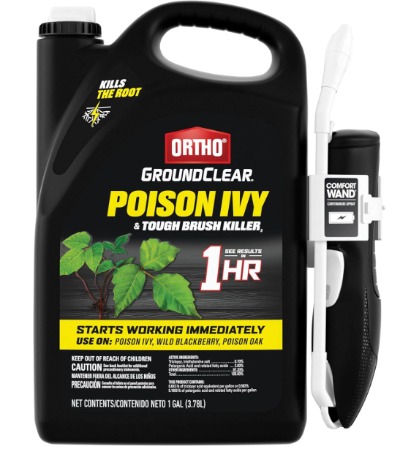
1. Ortho GroundClear Poison Ivy and Tough Brush Killer with Comfort Wand — Ready-To-Use, 1 Gallon
What Is This Product?
The Ortho GroundClear Poison Ivy and Tough Brush Killer is a ready-to-use spray that targets some of the most stubborn plants around — poison ivy, poison oak, blackberry, kudzu, brambles, and other tough brush. It comes in a 1-gallon bottle with a built-in Comfort Wand, which is a long, trigger-style sprayer attached to the bottle.
This is a contact-plus-systemic formula. It starts attacking the plant fast and is designed to show visible results in just one hour. That quick turnaround is one of its biggest selling points.
Who Is It Best For?
This product fits people who:
- Are dealing with poison ivy or poison oak and want to avoid physical contact with the plants
- Want a no-mix, grab-and-go solution
- Need something that works fast
- Are treating small-to-medium sized areas like a garden border, fence line, or overgrown corner
It’s not the most cost-effective pick for large open areas, but for targeted spot treatment, it’s very practical.
Key Features
- Ready-to-use formula — No mixing needed. Open the bottle, flip out the wand, and start spraying.
- Results in 1 hour — Visible wilting or color change can appear within the first hour of application.
- Comfort Wand design — The built-in extended wand keeps your hand away from the plant. This matters especially when dealing with poison ivy.
- Works on 60+ types of weeds and brush — It’s listed as effective on a wide variety of plants, including wild vines and woody stems.
- Systemic action — The active ingredient moves through the plant’s vascular system to reach the roots.
Real-Life Usage Insight
Poison ivy is no joke. The oil from those leaves — urushiol — sticks to skin, clothing, tools, and even pet fur. The Comfort Wand helps because it puts some distance between you and the plant. You don’t have to crouch down and get up close to spray a patch near the ground.
For patches growing along a wooden fence or climbing up a tree trunk, the wand’s reach makes it easier to spray without leaning in. Users report that visible results appear quickly, often showing yellowing or wilting within a few hours. Full kill down to the root can take several days, especially for large-rooted vines.
One thing to keep in mind: because this is a ready-to-use product, you get exactly what’s in the bottle. Once it’s gone, you buy another gallon. For very large infestations, this can get expensive compared to a concentrated formula.
Pros
- No mixing required — saves time and effort
- Comfort Wand design reduces spray drift and keeps you away from plants like poison ivy
- Fast initial results, often within 1 hour
- Effective on a wide range of tough weeds and brush
- Good for spot treatment and precision spraying
- Available at most hardware and garden stores
Cons
- More expensive per square foot than concentrated products
- One gallon may not be enough for large areas
- Systemic action works well, but re-spraying may be needed for very established root systems
- Not meant for use on or near desirable plants
Performance
Ortho GroundClear performs well on leafy vines and plants with moderate stem thickness. It excels as a spot treatment rather than a broadcast solution. Users dealing with small-to-medium poison ivy patches consistently report positive results. For older, deeply rooted brush, a second application is sometimes needed about two weeks after the first.
Ease of Use
This is probably the easiest product to use on this list. No mixing, no measuring, no separate sprayer needed. Flip the wand out, aim, and spray. That simplicity is a genuine advantage for beginners or anyone who just wants to get the job done quickly.
Value for Money
For the convenience factor, the price is reasonable. But if you’re treating a large area, the cost adds up fast. Better for targeted use than covering huge sections of land.
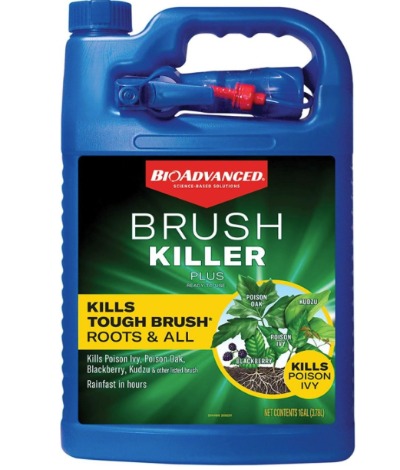
2. BioAdvanced Brush Killer Plus Spray — Kills Tough Brush, 1 Gallon Bottle
What Is This Product?
BioAdvanced Brush Killer Plus is a ready-to-use herbicide designed specifically for woody brush, vines, and hard-to-kill weeds. It handles plants like poison ivy, poison oak, kudzu, wild blackberry, and Virginia creeper. It comes in a 1-gallon spray bottle and uses a systemic formula that moves from the leaves down to the root system.
Compared to the Ortho product, BioAdvanced takes a bit longer to show results — visible changes appear within 1 to 6 weeks rather than within an hour. But the tradeoff is often deeper, more thorough root kill.
Who Is It Best For?
This product fits people who:
- Are dealing with medium to large brush infestations
- Can wait a few weeks for results and want thorough root kill
- Are treating woody or deeply rooted plants
- Prefer a ready-to-use option but need coverage across a wider area
Key Features
- Kills tough brush including poison ivy and kudzu — Formulated specifically for woody and vine-type plants
- Rainproof in 4 hours — Solid rainfast time, giving you a good window after application
- Visible results in 1 to 6 weeks — Slower visible impact, but the systemic action is working below the surface
- Systemic formula — Absorbed through leaves and transported to the roots
- Ready-to-use — No measuring or mixing required
Real-Life Usage Insight
BioAdvanced Brush Killer Plus uses triclopyr as its active ingredient, which is well-known in the weed control world for being particularly effective on woody plants and vines. Triclopyr mimics natural plant hormones and causes uncontrolled growth that eventually kills the plant, including its root system.
The slower visible result timeline can be misleading. You might spray on a Monday and see no real change for the first week. But underground, the compound is moving through the vascular system. By week two or three, the browning and dying start to show. For thick-stemmed plants or older woody brush, this delayed action is actually a sign that the chemical is doing its job thoroughly.
For poison ivy specifically, users appreciate that they don’t need to physically cut or remove the plant first. Spray it as-is, and let the product work. Over time, even the root mass degrades.
This product works better when temperatures are mild and the plant is actively growing. Dormant plants in cold weather won’t absorb the chemical as well.
Pros
- Strong systemic action using triclopyr
- Rainproof in just 4 hours — practical in wet climates
- Thorough root kill when given adequate time
- Works well on truly woody brush, not just leafy weeds
- Ready-to-use format — no mixing required
- Handles a wide variety of vine and brush types
Cons
- Results can take up to 6 weeks — not ideal if you need fast visible results
- Ready-to-use format limits coverage per dollar compared to concentrates
- Needs warm temperatures and actively growing plants for best effectiveness
- May need reapplication on very established, multi-decade-old roots
Performance
BioAdvanced really earns its name on thick brush. While it won’t give you the dramatic visual of a wilting plant within an hour, it consistently delivers thorough kill when used correctly. Patches of wild blackberry and kudzu that have been growing for years respond well to this product when applied during the growing season.
For particularly stubborn areas, a second application about a month after the first can seal the deal.
Ease of Use
Like the Ortho, this is a grab-and-go product. No mixing required. The spray bottle format is easy to aim at specific plants. Some users prefer attaching it to a garden hose applicator for larger areas, but the built-in sprayer works fine for most jobs.
Value for Money
The BioAdvanced product gives solid value for medium-sized jobs. If you’re treating a thick brushy area where you want deep root kill and don’t need instant results, this is a smart choice. For very large properties, a concentrate would be more economical.
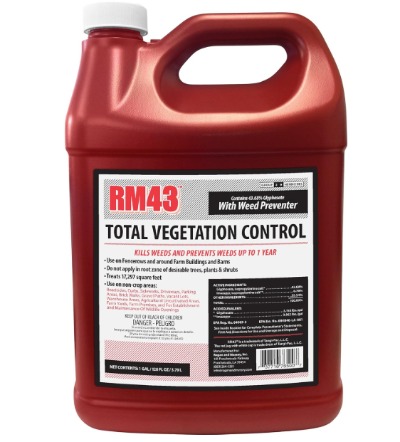
3. RM43 Concentrated Extended Control Weed Killer
What Is This Product?
RM43 is a concentrated herbicide with a dual-action formula. It combines glyphosate (the active ingredient in Roundup) with imazapyr, which provides extended soil residual activity. That combination means RM43 doesn’t just kill what’s growing — it also prevents new plants from sprouting in the same area for months.
This product is sold as a concentrate that you dilute with water before applying. One 32 oz or larger bottle can treat a significant area, making it one of the most economical options on this list.
Who Is It Best For?
RM43 is built for:
- Fence lines, gravel driveways, gravel paths, parking areas, and anywhere you never want plant growth
- Large infestations that would burn through a ready-to-use product fast
- Long-term control in non-vegetated areas
- Users who are comfortable mixing a concentrate and using a pump sprayer
Important: Because of the imazapyr, RM43 is a total vegetation killer with long soil activity. Do not use it near garden beds, near trees you want to keep, near a lawn, or in areas where you plan to plant anything in the near future. It is not for selective use.
Key Features
- Dual-action formula — Glyphosate kills existing plants; imazapyr prevents new growth in the soil
- Up to 1 year of residual control — Soil stays active for extended periods after treatment
- Kills over 150 types of weeds and brush — Covers an extremely wide range of plants
- Concentrated formula — Dilute with water to cover large areas economically
- Non-selective — Kills all plant types it reaches
Real-Life Usage Insight
RM43 is the go-to for anyone who wants a completely bare, weed-free zone that stays that way. Gravel driveways are a classic use case. Once you apply RM43 to a gravel path, you typically won’t see green shoots pushing through for months — sometimes closer to a full growing season.
The mixing ratio matters. RM43 has different dilution rates depending on the job. For general weed control, the mix is lighter. For harder-to-kill brush, you increase the concentration. Always read the label carefully and use the correct ratio for your target plants.
Users who apply RM43 to fence lines report dramatically less maintenance needed afterward. Instead of trimming or pulling weeds from around fence posts every few weeks, they spray once and check back occasionally. The long-lasting soil activity does the ongoing work.
One thing to watch carefully: runoff. Because imazapyr is highly active in soil, it can move with rainwater and affect desirable plants or garden areas nearby. Apply carefully, avoid spraying before heavy rain, and keep it away from any areas you want to keep green.
Pros
- Extremely economical — concentrate covers large areas
- Dual-action formula provides both knockdown and prevention
- Very long residual control, up to a year in some conditions
- Works on an enormous variety of weeds, grasses, and brush
- Great for permanent no-grow zones like gravel areas and fence lines
- Cost-effective for large properties
Cons
- Not safe to use near lawns, ornamentals, vegetable gardens, or trees
- Requires mixing and a separate sprayer
- Residual activity means the area won’t support plant growth for a long time — including intentional planting
- Can move through soil and affect unintended areas if used near garden beds
- Not for use near water sources
Performance
RM43 performs exactly as advertised for non-vegetated areas. For gravel driveways, bare-ground fence lines, utility corridors, and rocky patches, it’s one of the most reliable options on the market. The combination of glyphosate and imazapyr creates a powerful one-two punch — immediate kill plus long-lasting soil barrier.
For general brush kill in areas where future planting is planned, this is not the right product. But for permanent control zones, it’s hard to beat.
Ease of Use
There’s a learning curve here compared to the ready-to-use products. You need a pump sprayer, you need to measure and mix the concentrate, and you need to know the right dilution ratio for your situation. That said, once you get the hang of it, it’s not complicated. The label provides clear instructions.
Value for Money
For large-scale applications, RM43 offers some of the best value on this list. A single bottle, when diluted properly, can treat a very large area. If you’re maintaining long stretches of fence line or a large gravel driveway, the per-square-foot cost is significantly lower than any ready-to-use spray.
4. Roundup Poison Ivy Plus Tough Brush Killer Concentrate — 32 fl. oz.
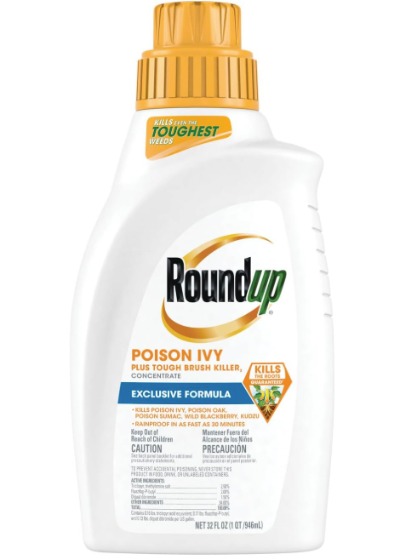
What Is This Product?
This Roundup concentrate is designed specifically for poison ivy, poison oak, and woody brush. It comes in a 32 oz bottle that you dilute with water and apply with a pump sprayer or garden sprayer. The formula uses glyphosate plus additional active ingredients to tackle tough, deep-rooted plants.
Roundup is one of the most recognized names in weed control, and this product is built for harder jobs than their standard lawn weed killer.
Who Is It Best For?
This product is a good fit for:
- Homeowners dealing with poison ivy or poison oak infestations
- People who have tried lighter products without success on tough brush
- Those treating medium-to-large areas where a ready-to-use spray would run out fast
- Users who are comfortable with basic mixing and sprayer setup
Key Features
- Concentrate formula — Mix with water before use; one bottle covers a large area
- Targets poison ivy and tough brush specifically — Formula optimized for the most resistant plant types
- Visible results in hours — Faster visible response than some competing brush killers
- Systemic action — Moves from leaves to roots for complete plant kill
- Works on 100+ types of weeds and brush — Wide plant coverage
Real-Life Usage Insight
Roundup’s reputation is built on glyphosate, which has decades of use in professional and residential settings. This concentrate version brings that same active ingredient in a higher ratio, paired with a surfactant system that helps it stick to waxy leaves — which is important when dealing with plants like poison ivy that can be hard for herbicide to penetrate.
Users often mix this product and store mixed solution in a pump sprayer for multi-day projects. A single mix can treat a large brushy area, then the sprayer can be used again the next day on another section without needing to remix.
For areas with heavy brush where you’ve tried other products before, bumping up the concentration (within the label’s recommended range) can make a significant difference. Roundup concentrates give you some flexibility to dial up the strength for harder jobs.
Visible results typically start appearing within hours — yellowing, wilting, or browning — which gives you confidence that the product is working. Full root kill takes additional time, often a week or more for deeply rooted plants.
Pros
- Trusted brand with decades of proven track record
- Concentrate format provides excellent coverage per dollar
- Faster visible results compared to many other brush killers
- Works on an extensive list of weed and brush types
- Flexible mixing ratios allow for stronger applications on tough cases
- Widely available at major retailers
Cons
- Requires mixing and a pump sprayer — not as grab-and-go as ready-to-use options
- Non-selective in dense brush situations — spray drift can affect nearby desirable plants
- Glyphosate is effective but requires careful handling and proper PPE
- May need reapplication for very old, deeply embedded root systems
- Results on woody stems can be slower than results on leafy plants
Performance
Roundup concentrate performs well across a wide variety of plant types. It excels on poison ivy and similar leafy, vine-type plants. For thick woody stems, it works but may need a second application or a higher concentration mix. Users who apply it properly and give it enough time rarely report disappointment.
The key is coverage. You need to spray enough product to fully coat the leaves without so much that it puddles and drips off. A light but thorough coat gives the best absorption.
Ease of Use
Moderate. If you’ve used a pump sprayer before, this is straightforward. If you’ve never mixed a concentrate, read the label first and follow the ratio instructions carefully. The spray itself is easy to apply. The pre-mixing step adds maybe 5 minutes of prep before you get started.
Value for Money
Good value for medium-to-large areas. A 32 oz concentrate, when diluted properly, covers more ground than a 1-gallon ready-to-use bottle in most cases. For regular maintenance of a brushy area, the cost savings over time add up.
5. Roundup Dual Action 365 Weed & Grass Killer Plus 12 Month Preventer with Comfort Wand — 1 Gallon
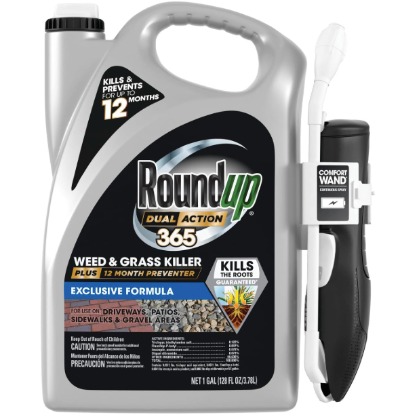
What Is This Product?
Roundup Dual Action 365 is a ready-to-use product that does two things at once — it kills existing weeds and grass, and it prevents new ones from sprouting for up to 12 months. It comes with the Comfort Wand design for easy application straight from the bottle, and it covers both broadleaf weeds, grassy weeds, and brush.
This is the most prevention-focused product on this list. It’s in the same extended-control category as RM43, but in a ready-to-use format and packaged with the user-friendly Comfort Wand.
Who Is It Best For?
This product works well for:
- Driveways, sidewalks, gravel paths, and pavement cracks
- Areas around landscape rocks or decorative gravel
- Fence lines and property edges where you want year-long weed control
- Users who want prevention without the mixing and concentration math of RM43
- Those treating an area where no future planting is planned
Like RM43, this is a non-selective total vegetation killer. Keep it away from lawns, flower beds, vegetable gardens, and trees.
Key Features
- Kills AND prevents for up to 12 months — Dual action in one application
- Comfort Wand included — Long extended wand keeps hands away from the plant, great for tight spaces
- Ready-to-use formula — No mixing required
- Non-selective — Kills all plants it contacts
- Fast knockdown plus residual activity — Both immediate and long-term results in one product
Real-Life Usage Insight
The Roundup 365 fills a real gap in the market. A lot of prevention products require extra steps or extra purchases. This one bundles the kill-and-prevent action into a ready-to-use bottle with a wand.
It’s particularly well-suited for the areas around your home that you just want to stay bare and tidy year-round — the strip between the sidewalk and street, the gravel beside the garage, the base of a fence, the cracks in a concrete patio. You spray once at the start of the season, and you can mostly forget about those spots for months.
Users who apply this to driveways report that weeds don’t push through gravel or cracks for most of the season. Some report needing a light touchup mid-season in heavily rainy areas where the product may leach away faster. In drier climates, a single application often holds for the full year.
The Comfort Wand is a genuine quality-of-life feature. It lets you walk along a fence line and spray with minimal effort, and the extended reach means you don’t have to bend over repeatedly or kneel down to reach weeds in cracks.
Pros
- Excellent for long-term, low-maintenance control of driveways, paths, and bare areas
- Ready-to-use — no measuring or mixing required
- Comfort Wand makes application fast and easy across long stretches
- Up to 12 months of prevention reduces how often you need to treat
- Trusted Roundup brand quality
- One-and-done treatment for most applications
Cons
- Non-selective — cannot be used near plants you want to keep
- Ready-to-use format means higher cost per square foot compared to concentrates
- Not suitable for use near garden beds, lawn areas, or trees
- In heavy rain areas, soil residual may not last the full 12 months
- Once applied, the treated area cannot support plant growth for a long time
Performance
Roundup 365 performs consistently on driveways, gravel areas, and pavement. It knocks down existing weeds fast and then keeps working in the soil. For low-effort, recurring maintenance of weed-prone hard surfaces, it’s one of the most practical tools available.
It’s not a brush killer in the traditional sense — it won’t take down thick woody vines as effectively as the other products here. But for weeds, grass, and light brush in non-planting zones, it does the job with minimal effort.
Ease of Use
This is one of the easiest products to use. Ready-to-use, no setup, Comfort Wand attached. Walk and spray. That’s it. The 1-gallon container has good ergonomics for most users, and the wand design reduces hand fatigue on longer sessions.
Value for Money
Higher cost per square foot than concentrates, but the value comes from the dual action — killing plus preventing in a single application. If you compare the cost of treating an area twice a year with a basic weed killer versus once a year with Roundup 365, the economics can actually favor the 365 formula.
Head-to-Head Comparison: Which One Wins at What?
Let’s put all five products side by side to make things easier.
| Product | Format | Speed | Root Kill | Prevention | Best For |
|---|---|---|---|---|---|
| Ortho GroundClear | Ready-to-Use | 1 hour visible | Yes | No | Poison ivy spot treatment |
| BioAdvanced Brush Killer | Ready-to-Use | 1–6 weeks | Yes (deep) | No | Woody brush, thorough kill |
| RM43 | Concentrate | Days | Yes | Up to 1 year | Driveways, fence lines, large areas |
| Roundup Concentrate | Concentrate | Hours | Yes | No | Brush kill over medium-large areas |
| Roundup 365 | Ready-to-Use | Days | Yes | Up to 12 months | Low-maintenance bare zone control |
Fastest results: Ortho GroundClear — shows visible wilting within 1 hour Best for woody/deep roots: BioAdvanced Brush Killer Plus Best for large areas on a budget: RM43 Concentrated Best balance of speed and coverage: Roundup Poison Ivy Plus Concentrate Best for long-term prevention: Roundup Dual Action 365
Buying Guide: How to Pick the Right Brush Killer
There’s no single best brush and weed killer that works perfectly for every yard situation. The right choice depends on what you’re dealing with and what outcome you want. Here’s a simple way to narrow it down.
Look at What You’re Killing
If you’re targeting poison ivy or poison oak specifically, go with Ortho GroundClear or BioAdvanced Brush Killer Plus. Both are designed with those plants in mind. The Ortho gives faster visual results, BioAdvanced goes deeper over time.
If you’re dealing with a mixed area of weeds, grass, and brush, the Roundup Concentrate or Roundup 365 give you broad-spectrum control.
If you want to clear and then prevent anything from growing back for months, RM43 or Roundup 365 are your best options.
Think About the Size of the Area
Small patches and spot treatments: Ready-to-use products like Ortho GroundClear or BioAdvanced are perfect. No setup, just spray.
Medium to large areas: Concentrate products like RM43 or Roundup Concentrate stretch your dollar much further.
Long strips like fence lines or driveways: Roundup 365 with the Comfort Wand or RM43 both handle this well.
Consider What’s Nearby
If you have a garden, lawn, or trees nearby, avoid RM43 and Roundup 365 in those zones. These products have soil residual activity that can move with water and harm plants you want to keep.
For areas near a lawn edge, Roundup Concentrate or BioAdvanced let you be a bit more precise without leaving long-lasting soil effects.
Think About Your Comfort Level
Don’t want to measure or mix anything? Stick to ready-to-use products: Ortho, BioAdvanced, or Roundup 365.
Comfortable with a pump sprayer and basic measuring? Concentrates like RM43 and Roundup Concentrate give you more control and better economics.
Look at the Timeline
Need results fast? Ortho GroundClear is the speed winner at 1 hour for visible results.
Can wait a few weeks for deeper kill? BioAdvanced is worth the patience.
Want to spray and then not worry about it for most of the season? Roundup 365 or RM43 reduce future maintenance significantly.
Who Should Buy These Products?
Homeowners with poison ivy problems — Go with Ortho GroundClear for speed, or BioAdvanced Brush Killer for a thorough root kill on older, established patches.
People with large overgrown properties — RM43 Concentrated is built for this. One bottle covers a lot of ground when diluted properly.
Driveway and hardscape maintenance — Roundup 365 is designed exactly for this. Spray once and dramatically cut down on how many times you need to revisit those areas.
Budget-conscious homeowners treating medium areas — Roundup Poison Ivy Plus Concentrate gives broad coverage at a lower per-square-foot cost than any ready-to-use option.
Beginners who want easy application — Ortho GroundClear with the Comfort Wand or Roundup 365 are the most beginner-friendly. No measuring, no mixing, and the wand handles the spraying easily.
Those dealing with vine overgrowth and climbing weeds — BioAdvanced is especially effective on climbing vines and plants with woody stems, thanks to its triclopyr-based formula.
Common Mistakes to Avoid When Using Brush and Weed Killers
Even a good product can fail if it’s used the wrong way. Here are the most frequent mistakes people make — and how to avoid them.
Spraying in Bad Weather
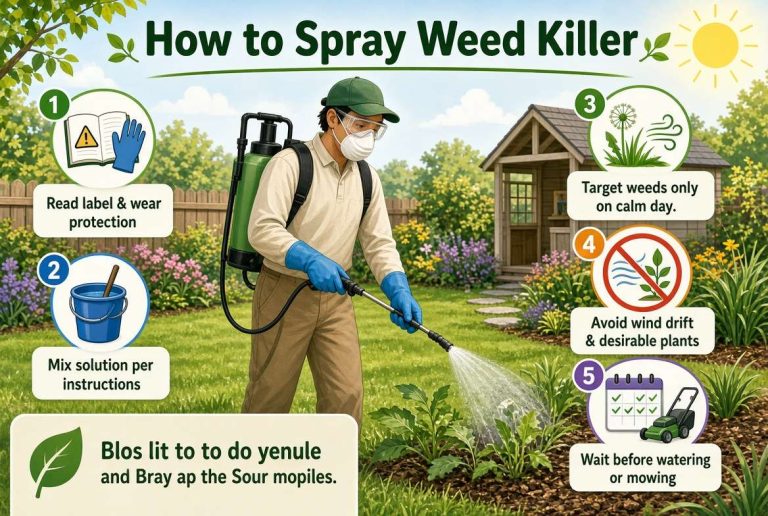
High wind spreads spray drift onto plants you don’t want to kill. Rain within a few hours of spraying washes the chemical off before it can absorb. Heat above 90°F can evaporate the product too quickly. Aim for calm, dry days with moderate temperatures for best results.
Not Wearing Protective Gear
These are chemical herbicides. At a minimum, wear gloves, long sleeves, and closed-toe shoes. For products like RM43 or glyphosate concentrates, eye protection is a smart addition. If you’re spraying poison ivy, protect your face too — disturbing the plant releases oil particles that can irritate your eyes and skin.
Expecting One Spray to Do Everything
Deeply rooted plants, especially ones that have been growing for years, may not die completely after one application. A follow-up spray after two to four weeks is often part of the process. Don’t assume the product failed — give it time and be ready to apply again.
Using a Prevention Product in the Wrong Area
RM43 and Roundup 365 prevent plant growth in treated soil for months. Using either of these in a garden bed or near a lawn will harm your grass and plants. These products are strictly for permanent no-grow zones.
Mixing the Wrong Concentration
With concentrate products, too little active ingredient means poor results. Too much means you’re wasting money and potentially causing faster runoff. Read the label, use a measuring cup, and follow the recommended ratios.
Spraying Dormant Plants
Herbicides are absorbed through active leaf tissue. Plants that are dormant in fall or winter, or plants that are already heavily damaged, won’t absorb systemic killers effectively. Spray during the active growing season for the best results.
Forgetting About Pets and Kids
After spraying, keep children and pets off the treated area until the product has fully dried. Some products need even longer before they’re safe to walk through. Check the label for specific re-entry intervals and take them seriously.
Tips for Getting Better Results
A few extra habits can make a noticeable difference in how well these products perform.
Spray to wet coverage — You want the leaf surface to look wet, not dripping. Full coverage without runoff is the goal.
Cut back very thick stems first — For woody brush that’s too dense to spray thoroughly, cutting it back and then treating the fresh stumps or new growth can increase absorption. Some people apply concentrate directly to freshly cut stems.
Don’t disturb the treated plant right away — Let the product do its work. Mowing, cutting, or pulling treated plants in the first week can interrupt the systemic action before it reaches the roots.
Do a second pass if needed — Especially for mature brush with thick root systems. Two lighter applications spaced a few weeks apart often outperform one heavy application.
Check soil pH and moisture — Overly dry or compacted soil can reduce how well systemic herbicides move through roots. Lightly watering around (not on) the plant a day or two before spraying can help.
Final Verdict: The Best Brush and Weed Killer for Your Yard
After looking at all five products, there’s no single winner that beats every other option in every situation. But here’s a clear summary of what we’d recommend for each scenario:
Best overall for poison ivy and tough vines: BioAdvanced Brush Killer Plus Spray. The triclopyr formula is specifically built for this type of plant, and the deep root kill reduces the chance of regrowth.
Best for fast visible results: Ortho GroundClear Poison Ivy and Tough Brush Killer with Comfort Wand. Nothing on this list shows results faster than 1 hour. If you need quick reassurance, this delivers.
Best for large areas and cost-conscious buyers: RM43 Concentrated Extended Control. One bottle dilutes into a large amount of usable spray, and the year-long residual activity makes it highly economical over time for permanent no-grow zones.
Best for a balanced solution across brush types: Roundup Poison Ivy Plus Tough Brush Killer Concentrate. Flexible, proven, and effective on a very wide range of plants. Good for medium-to-large brushy areas.
Best for low-maintenance year-round control of driveways and hard surfaces: Roundup Dual Action 365 with Comfort Wand. Kill it, prevent it, and don’t worry about it again for most of the season. This is the most hands-off solution in the bunch.
Whatever you’re dealing with — whether it’s a corner of your yard eaten up by poison ivy or a gravel driveway that turns green every spring — there’s a product on this list that fits the job. Match the product to the situation, follow the label instructions, and you’ll see real results.
Frequently Asked Questions
Can I use any of these products near my vegetable garden? No. All five products are non-selective herbicides that will harm or kill vegetables, flowers, and desirable plants. Keep them away from any area where you grow food or ornamentals.
How long should I wait before replanting an area I’ve treated? It depends on the product. Glyphosate-only products (like the Roundup concentrate) break down in soil within weeks, so replanting a few weeks after treatment is generally possible. Products with imazapyr (like RM43) have much longer soil residual and may prevent plant growth for many months.
Is it safe to spray near a pond or stream? None of these products are labeled for use near water. Glyphosate and imazapyr can both harm aquatic plants and wildlife. Keep all applications well away from any water source.
Do I need a permit to use these products? For residential use as directed on the label, no permit is typically needed. These are all consumer products available without a license. Commercial or large-scale agricultural use may have different rules depending on location.
What’s the difference between brush killer and regular weed killer? Regular weed killers target common broadleaf weeds like dandelions or clover. Brush killers use higher concentrations and different active ingredients (like triclopyr) that work on woody stems, deep roots, and vines that standard weed killers can’t reliably kill.

Hi, I’m Mary, the founder of GardenCure.com. I’m passionate about creating healthy, beautiful gardens and well-kept lawns. I share practical experience and trusted advice on garden and lawn gear that truly works. With the support of my dedicated research team, our writers produce honest, in-depth reviews using reliable, authentic sources—helping you choose the right tools with confidence for your outdoor space.

One Comment