5 Best Herbicide for Dandelions In 2026
Dandelions are one of those weeds that seem to show up overnight and take over a lawn in days. One week your yard looks fine, and the next it’s covered in yellow flowers and fluffy seed heads that blow into every corner of your grass. If you’ve pulled them by hand and watched them come right back, you already know the roots go deep and snap off easily, leaving enough behind to grow a brand new plant.
In this article
That’s where a good herbicide comes in. The right product can knock out dandelions down to the root, stop new ones from popping up, and leave your grass looking better than before. But with so many weed killers on shelves, it’s hard to know which one actually works and which one is just a bottle of marketing promises.
In this roundup, I’m going through five herbicides that gardeners and lawn owners reach for again and again when dandelions take over. I’ll break down how each one works, who it’s best for, what real use tends to look like, and where each product falls short. By the end, you’ll have a clear idea of which weed killer fits your lawn, your budget, and how much effort you want to put in.
Here’s a quick look at the five products before we get into the details:
- Ortho WeedClear Weed Killer for Lawns with Comfort Wand, 1 gal.
- Scotts Weed Control for Lawns, 14 lbs.
- Atticus Torocity Mesotrione Herbicide (8oz)
- Sunday Dandelion Doom, Iron-Based Weed & Moss Killer, 32oz 2-Pack
- Southern Ag Amine 2,4-D Weed Killer, 32oz
Quick Comparison Table
| Product | Formula Type | Active Ingredient | Best For | Kid/Pet Friendly After Drying |
|---|---|---|---|---|
| Ortho WeedClear with Comfort Wand | Ready-to-use liquid | 2,4-D + Dicamba + MCPP | Spot treating a small to medium lawn | Yes, once dry |
| Scotts Weed Control for Lawns | Granular | Multiple synthetic herbicides | Whole-lawn, spreader application | Yes, once dry and watered in per label |
| Atticus Torocity | Concentrate liquid | Mesotrione 40% | New lawns, overseeding, tough weeds | Yes, once dry |
| Sunday Dandelion Doom | Ready-to-use liquid | Iron HEDTA | Homes with pets and kids, organic-leaning yards | Yes, faster than synthetic options |
| Southern Ag Amine 2,4-D | Concentrate liquid | 2,4-D | Large lawns on a budget | Yes, once dry |
Now let’s dig into each one.
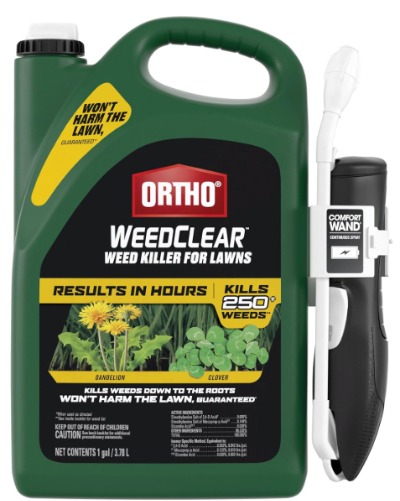
1. Ortho WeedClear Weed Killer for Lawns with Comfort Wand, 1 gal.
Product Description
Ortho WeedClear is a ready-to-use liquid herbicide that comes with a built-in wand sprayer attached right to the jug. You don’t mix anything, you don’t fill a separate sprayer, and you don’t guess at ratios. You screw the wand on, flip the switch, and start walking your lawn. It’s built for people who want to treat dandelions and other broadleaf weeds without turning it into a science project.
The formula combines a few active ingredients that work together to attack weeds from different angles, which helps it take down tougher weeds like dandelions, clover, and creeping charlie, not just the easy ones.
Best Use Cases
This product shines on lawns where dandelions are scattered here and there rather than covering the whole yard. If you’re walking around spot-treating patches near the driveway, along the fence line, or in random clumps across the grass, the wand makes this fast and painless. It also works well for renters or first-time lawn owners who don’t want to buy a separate pump sprayer.
Key Features Explained Simply
- Comfort wand applicator: The wand has a trigger and a wide spray pattern, so you cover more ground with less arm fatigue compared to a hand pump sprayer.
- Rainproof formula: Once the product dries on the leaf, rain won’t wash it away, so a surprise shower doesn’t undo your work.
- Multiple active ingredients: Instead of relying on one chemical, this blend hits weeds through more than one pathway, which helps against weeds that shrug off single-ingredient products.
- No mixing required: Everything is pre-measured inside the jug, so there’s no risk of getting the ratio wrong.
Real-Life Usage Insight
Lawn owners who use this product often report that dandelions start to curl and wilt within a day or two, with full browning and death happening over the course of a week or so. The wand does tend to use product quickly if you hold the trigger down while walking rather than pulsing it on each weed, so a gallon covers less ground than the label numbers might suggest if you’re not careful with your technique. Spraying on a calm, dry day with no rain in the forecast for at least a few hours gives the best results.
Pros
- Zero mixing or measuring needed
- Wand makes spot treating fast and comfortable
- Works on dandelions plus a wide range of other broadleaf weeds
- Rainproof once dry
- Great for beginners
Cons
- Not ideal for treating a large lawn from edge to edge, since it’s built for spot use
- The wand can waste product if you spray too heavily
- Won’t kill grassy weeds, since it’s designed to spare turfgrass
- Can drift onto flower beds or vegetable gardens if you’re not careful on windy days
Performance Discussion
For scattered dandelions, this product performs close to what the label promises. The blended active ingredients tend to outperform single-ingredient sprays on stubborn weeds with deep taproots, since dandelions can survive a weak single hit but struggle against a combined attack. Full lawns thick with weeds may need a second round a few weeks later, since one pass rarely gets every seed hiding in the soil.
Ease of Use
This is about as simple as herbicide application gets. There’s no sprayer to clean, no concentrate to measure, and no guesswork. Even someone who has never touched a weed killer before can walk out, spray, and walk back inside within minutes.
Value for Money
The convenience comes at a slightly higher price per treated square foot compared to concentrates you mix yourself. For small to medium lawns or occasional spot treatments, the time saved is worth the extra cost. For larger properties, you’ll burn through bottles fast and the price adds up.
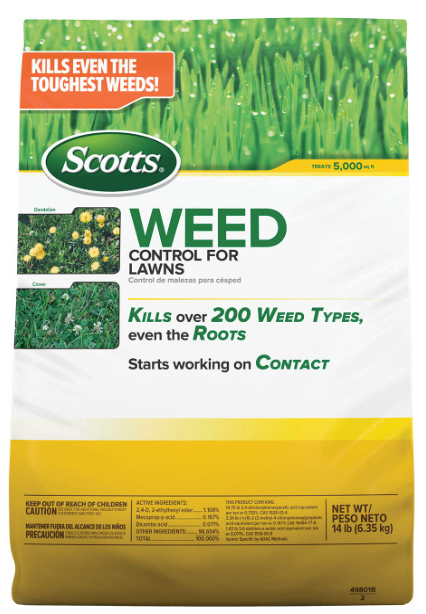
2. Scotts Weed Control for Lawns, 14 lbs.
Product Description
Scotts Weed Control for Lawns is a granular herbicide, meaning it comes as small pellets rather than a liquid. You load it into a broadcast or drop spreader and walk it across your entire lawn the same way you’d apply fertilizer. It’s built for people who want to treat their whole yard in one pass rather than chase individual weeds.
The granules are coated with active herbicide ingredients that release once they touch moisture, either from dew, watering, or light rain, and get absorbed through the weed’s leaves.
Best Use Cases
This product makes the most sense for lawns with dandelions spread across a large area rather than a few isolated patches. If your whole yard has a scattered weed problem and you’d rather treat everything at once instead of hunting down each dandelion, granular control saves a lot of time. It also pairs naturally with a normal lawn care routine, since spreading granules feels a lot like spreading fertilizer.
Key Features Explained Simply
- Spreader application: You use the same equipment you already own for fertilizing, so there’s no new tool to buy.
- Covers large areas quickly: A 14 lb bag can treat a good-sized lawn in one pass, much faster than spot spraying every weed by hand.
- Works on a broad range of broadleaf weeds: Beyond dandelions, it targets clover, chickweed, and other common lawn invaders.
- Needs moisture to activate: The granules rely on dew or light watering to stick to weed leaves and start working.
Real-Life Usage Insight
The biggest thing people notice with granular weed killers is timing. Applying it to a dry lawn with no dew and no rain in the forecast can leave the granules sitting on the surface without doing much, since they need moisture to activate and stick to the leaf surface. Early morning application, when dew is still on the grass, tends to give noticeably better results than a bone-dry afternoon spray. Results usually show up slower than a liquid spray, often taking one to two weeks before dandelions visibly die back.
Pros
- Treats an entire lawn in one pass
- Uses equipment most lawn owners already have
- Good for lawns with a widespread weed problem rather than a few patches
- Less physical effort than walking with a sprayer
- Long shelf life if stored in a dry place
Cons
- Needs the right moisture conditions to work well
- Slower visible results compared to liquid sprays
- Harder to target specific patches without treating the whole yard
- Spreader settings can be tricky to dial in for beginners, leading to uneven coverage
Performance Discussion
When applied under the right conditions, meaning a lawn with morning dew or a light watering right after application, this product does a solid job knocking down widespread dandelion populations. The tradeoff is patience, since granular herbicides work on a slower timeline than a direct liquid spray hitting the leaf right away. Skipping the moisture step is the single biggest reason people feel let down by granular weed killers, so following the watering instructions on the bag matters more than almost anything else.
Ease of Use
If you already fertilize your own lawn, this will feel familiar. The learning curve is mostly about spreader settings and moisture timing rather than the application itself. For someone who has never used a spreader, there’s a small adjustment period to get even coverage without stripes or gaps.
Value for Money
For larger lawns, the cost per square foot tends to beat ready-to-use liquid sprays by a good margin. A single bag stretches across a lot of ground, making this one of the more budget-friendly options for whole-yard weed control.
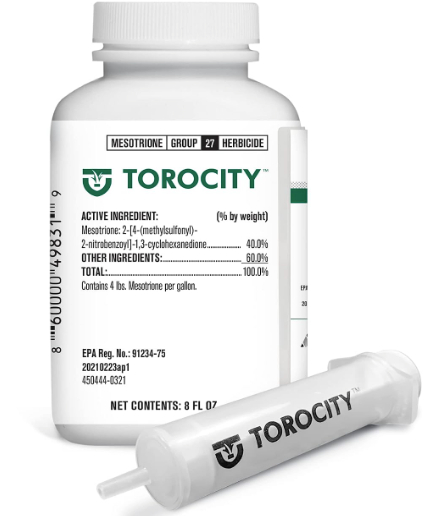
3. Atticus Torocity Mesotrione Herbicide (8oz)
Product Description
Torocity is a concentrate liquid herbicide built around mesotrione, the same active ingredient found in Tenacity, a product well known among lawn care enthusiasts. Mesotrione works differently than older weed killers like 2,4-D. Instead of just burning the weed, it blocks a process the plant needs to produce a certain pigment, so treated weeds often turn white or bleached before they die off. It’s sold as a concentrate, so you mix it with water in a pump sprayer rather than spraying it straight from the bottle.
This product controls both weeds that are already growing and weeds that haven’t sprouted yet, which makes it a favorite among people renovating a lawn or overseeding.
Best Use Cases
Torocity fits best for lawn owners dealing with a tough or established weed problem, especially anyone planning to reseed or renovate their lawn, since it’s labeled safe to use around the time of new grass seed. It also works well for people who want one product that handles both existing dandelions and weeds that haven’t emerged yet from the soil.
Key Features Explained Simply
- Mesotrione active ingredient at 40%: A strong concentration that goes a long way, since you’re diluting it before use.
- Dual action control: Handles weeds already growing in the lawn as well as weeds that haven’t sprouted, giving longer-lasting protection.
- Bleaching effect: Treated weeds turn white or pale before dying, which is a visible sign the product is working, though it can look alarming to first-time users who aren’t expecting it.
- Safe around new grass seed: Many popular grass types can be seeded at or near the time of application, a big advantage for lawn renovation projects.
Real-Life Usage Insight
The bleaching effect surprises a lot of first-time users, since dandelions and other weeds can turn stark white within days of treatment before they eventually shrivel and die. This is completely normal and part of how mesotrione works. Because this is a concentrate, correctly measuring the dose and mixing it evenly in a sprayer makes a real difference in results. People who eyeball the mix without measuring tend to get patchy or slower results.
Pros
- Handles tough, established weeds along with weeds not yet sprouted
- Safe to use around new grass seed for many turf types, great for renovation projects
- A small bottle covers a large area since it’s a strong concentrate
- Visible bleaching effect confirms the product is working
- Trusted generic alternative to a well-known name-brand herbicide
Cons
- Requires mixing and a pump sprayer, so it’s not beginner-friendly out of the box
- The white bleaching look can worry people who aren’t familiar with how it works
- Not labeled for every grass type, so checking compatibility with your lawn first matters
- Slower to show full results compared to fast-acting sprays
Performance Discussion
Among the five products here, Torocity is arguably the most powerful option for lawns with a serious or long-standing dandelion problem, especially ones mixed with other stubborn broadleaf and grassy weeds. The dual pre- and post-emergent action means it keeps working in the soil after the initial spray, catching new weed seeds as they try to sprout. This makes it a strong choice for anyone tired of treating the same patches over and over.
Ease of Use
This is the least beginner-friendly product on the list simply because it requires mixing with water and applying through a pump sprayer, along with reading the label closely for the correct dilution rate and grass type compatibility. It’s not difficult once you’ve done it a time or two, but it’s a step up in effort compared to a ready-to-use spray.
Value for Money
Considering how far a small bottle stretches once diluted, and the combined pre- and post-emergent action, this product delivers strong value for anyone treating a larger area or dealing with a recurring weed problem. The upfront cost looks higher on the shelf, but the cost per treated square foot ends up quite competitive.
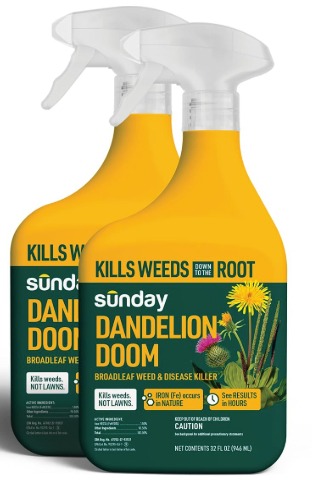
4. Sunday Dandelion Doom, Iron-Based Weed & Moss Killer, 32oz 2-Pack
Product Description
Sunday Dandelion Doom takes a different approach from the other products on this list. Instead of a synthetic herbicide like 2,4-D or mesotrione, it uses chelated iron, specifically Iron HEDTA, as its active ingredient. Broadleaf weeds absorb iron much faster than turfgrass does, and that flood of iron causes the weed’s cells to break down rapidly, leading to quick wilting and blackening. It comes ready to use in a spray bottle, no mixing needed, and this listing includes two 32oz bottles.
Because it relies on iron rather than a traditional synthetic herbicide, it’s often marketed toward households that want a gentler option around kids, pets, and gardens.
Best Use Cases
This product is a strong pick for homes with pets or young kids who spend a lot of time on the lawn, since the shorter caution period and iron-based formula feel less harsh than traditional synthetic sprays. It also suits anyone who wants visible results fast, since wilting can show up within hours rather than days.
Key Features Explained Simply
- Iron HEDTA active ingredient: A mineral-based approach rather than a traditional synthetic herbicide.
- Fast visible results: Weeds often start browning and shriveling within hours of application, one of the quickest turnarounds among common lawn products.
- Also targets moss: Beyond dandelions, this product handles moss, which is a bonus for shaded or damp lawns dealing with both problems.
- Greens up the lawn: Since iron is also a micronutrient grass uses, some users notice their turf looking a bit greener after treatment, as a side benefit alongside the weed control.
Real-Life Usage Insight
The speed of this product is what stands out most in real use. Where synthetic sprays often take a few days to show visible wilting, iron-based treatments can show blackened, shriveled dandelions within a matter of hours on a sunny day. That said, iron-based herbicides sometimes need repeat treatments spaced a few weeks apart for full root kill on established, deep-rooted dandelions, since the mechanism is a bit different from systemic herbicides that travel down into the root. A temporary darkening of the grass around treated spots is normal and usually fades within a few days.
Pros
- Fast visible results, often within hours
- Gentler profile that appeals to pet and kid-friendly households
- Also controls moss, a bonus for shaded or damp areas
- Ready to use, no mixing needed
- Comes as a two-pack, giving good coverage for the price
Cons
- May need more frequent reapplication than systemic herbicides for full root kill
- Temporary darkening of surrounding grass can look alarming at first
- Iron staining is possible on concrete, pavers, or siding if oversprayed
- Not as strong against very established, deep-rooted dandelion infestations in a single application
Performance Discussion
For visible, fast results and a gentler chemical profile, this product performs well, especially on younger or moderately established dandelions. Deep-rooted, older dandelions sometimes bounce back and need a second or third treatment spaced a few weeks apart to fully finish the job, since iron works more on contact than by traveling deep into the root system the way some synthetic herbicides do.
Ease of Use
This is one of the easiest products on the list to use. It comes ready to spray, requires no mixing, and the fast results mean you know within the same day if it’s working. The main thing to watch is overspray near hard surfaces, since iron can leave rust-colored stains that are tough to remove.
Value for Money
With two 32oz bottles included, this pack offers solid coverage for the price, especially for anyone spot-treating rather than covering a huge lawn. Given the speed of results and the gentler profile, many buyers feel it’s worth the price even though pure synthetic concentrates can be cheaper per ounce.
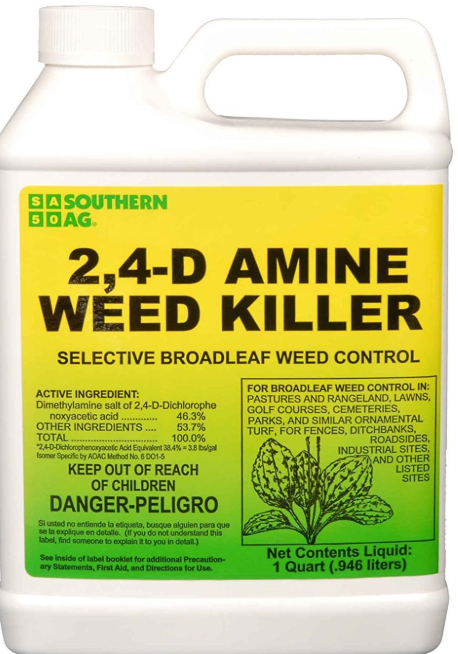
5. Southern Ag Amine 2,4-D Weed Killer, 32oz
Product Description
Southern Ag Amine 2,4-D is a straightforward concentrate built around 2,4-D, one of the oldest and most widely used broadleaf herbicides around. It’s been a go-to choice for farms, lawns, and pastures for decades because it’s affordable, effective, and simple. This is a concentrate, so you mix a small amount with water in a pump sprayer before applying it to your lawn.
Unlike some of the multi-ingredient blends on this list, this product relies on a single active ingredient, which keeps the cost low and the formula simple.
Best Use Cases
This product is best suited for larger properties, farms, or lawns where cost per treated area matters most. If you’re treating a big yard, a pasture, or a large area with a heavy dandelion population and want to stretch your budget as far as possible, this concentrate is hard to beat.
Key Features Explained Simply
- 2,4-D active ingredient: A proven, well-studied herbicide that’s been controlling broadleaf weeds like dandelions for a very long time.
- Highly concentrated: A little goes a long way, since you’re mixing small amounts per gallon of water.
- Selective on grass: Formulated to control broadleaf weeds without harming most common turfgrass types when used as directed.
- Simple, single-ingredient formula: No blended chemicals, just a reliable, well-understood active ingredient.
Real-Life Usage Insight
Because this is a concentrate with just one active ingredient, getting the mix ratio right matters a lot. Too weak and dandelions barely notice it, too strong and you risk stressing or damaging your turf, especially in hot weather. Applying it during mild temperatures, avoiding mowing for a day or two before and after spraying, and spraying on a calm day all make a noticeable difference in how well it performs. Results usually show up within a few days to a week, with dandelions curling, twisting, and browning as the herbicide moves through the plant.
Pros
- Very affordable per treated square foot
- Long track record of reliable weed control
- Concentrate stretches a long way, great for large properties
- Simple, single-ingredient formula that’s easy to understand
- Works on a wide range of common broadleaf weeds, not just dandelions
Cons
- Requires mixing and a separate sprayer, no ready-to-use option here
- Stronger odor compared to some newer formulas
- Can stress grass if applied incorrectly or during extreme heat
- Not something to use near flower beds, vegetable gardens, or trees without real care, since 2,4-D can drift and harm sensitive plants
Performance Discussion
For pure dandelion control at a low price, 2,4-D remains one of the most dependable choices around, and this product performs true to that reputation when mixed and applied correctly. It’s a systemic herbicide, meaning it travels down into the root system rather than just burning the leaf, which is exactly what you want against a plant known for its deep taproot. The tradeoff is that it demands a bit more care and attention to mixing instructions compared to some of the more forgiving blends on this list.
Ease of Use
This is a step up in effort from a ready-to-use spray, since you need a pump sprayer and have to measure and mix the concentrate with water. Once you’ve mixed a batch or two, the process becomes second nature, but it’s not the fastest option for someone who just wants to spray and walk away.
Value for Money
Dollar for dollar, this is likely the best value option on the list for anyone treating a large area. The low cost per gallon of finished spray makes it a favorite for people managing bigger lawns, farms, or properties where buying multiple ready-to-use bottles would get expensive fast.
Comparison Insights
Looking at all five products side by side, a few clear patterns show up.
Speed of results: Sunday Dandelion Doom wins this category by a wide margin, often showing visible wilting within hours thanks to its iron-based formula. Ortho WeedClear and Southern Ag Amine 2,4-D both show results within a few days. Scotts granular and Torocity tend to take longer, closer to a week or more, since granules need moisture to activate and mesotrione’s bleaching process takes time to fully play out.
Ease of use: Ortho WeedClear and Sunday Dandelion Doom are the easiest, since both come ready to use with no mixing. Scotts is nearly as easy if you already own a spreader. Torocity and Southern Ag Amine both require mixing with a pump sprayer, adding a small extra step for anyone new to lawn care.
Coverage area: Scotts and Southern Ag Amine 2,4-D are built for treating large lawns efficiently, while Ortho WeedClear and Sunday Dandelion Doom lean toward spot treatment on smaller patches. Torocity sits somewhere in between, since a small concentrate bottle stretches across a good amount of lawn once mixed.
Pet and kid friendliness: Sunday Dandelion Doom often gets picked by households with pets and young children thanks to its iron-based, non-synthetic formula and shorter wait time before the area is safe to use again. All the other products are safe once fully dry and label directions are followed, but Sunday leans furthest toward a gentler profile.
Budget: Southern Ag Amine 2,4-D offers the lowest cost per treated square foot, closely followed by Scotts granular for large areas. Torocity and Ortho WeedClear sit in the middle, and Sunday Dandelion Doom tends to cost more per ounce given its convenience and faster action.
Buying Guide
A few things matter more than brand names when you’re picking a dandelion killer.
Think about lawn size first. A small yard with a handful of scattered dandelions doesn’t need a big bag of granules or a bottle of concentrate. A ready-to-use spray like Ortho WeedClear or Sunday Dandelion Doom gets the job done without waste. A large lawn with weeds spread throughout benefits more from a granular product or a concentrate that stretches your budget further.
Check your grass type. Most broadleaf herbicides are labeled safe for common turf types like Kentucky bluegrass, fescue, and ryegrass, but some formulas aren’t suited for certain warm-season grasses like St. Augustine. Always check the label against your specific grass before buying, since applying the wrong product can damage your lawn instead of helping it.
Decide how fast you need results. If you want to see dandelions dying within hours, an iron-based product wins here. If you’re okay waiting a few days to a week and want longer-lasting control that also stops new weeds from sprouting, a systemic or pre-emergent option like Torocity makes more sense.
Factor in pets and kids. If your lawn gets heavy foot traffic from children or pets right after treatment, an iron-based herbicide with a shorter caution period is worth the extra cost. Otherwise, just follow the label’s drying time for any product and you’ll be fine.
Look at application method. Ready-to-use sprays need no equipment beyond the bottle itself. Granular products need a spreader. Concentrates need a pump sprayer and a bit of patience for mixing. Pick based on what you already own or are willing to buy.
Don’t ignore the weather. Most herbicides work best when applied on a calm, dry day with temperatures in a moderate range, generally avoiding extreme heat or an upcoming rainstorm. Spraying into windy conditions risks drift onto plants you don’t want to harm, and rain right after application can wash away a liquid product before it has time to work.
Who Should Buy These Products
Ortho WeedClear suits anyone with a smaller lawn who wants a grab-and-go solution with zero setup. It’s a great starter product for first-time homeowners.
Scotts Weed Control fits people who already fertilize their own lawn and want to fold weed control into that same routine, especially on a mid-size to large property.
Atticus Torocity is best for lawn care enthusiasts, anyone renovating or overseeding a lawn, or someone dealing with a stubborn, long-standing dandelion problem that keeps coming back.
Sunday Dandelion Doom makes the most sense for households with pets, young kids, or anyone who wants a gentler approach without giving up fast, visible results.
Southern Ag Amine 2,4-D is the pick for large properties, farms, or anyone managing a big lawn on a tight budget who doesn’t mind mixing their own sprayer batches.
Common Mistakes to Avoid
Spraying right before rain. Liquid herbicides need time to dry and get absorbed into the leaf. Rain within a few hours can wash the product away before it has a chance to work, wasting your time and money.
Mowing too soon before or after treatment. Cutting the grass removes leaf surface the herbicide needs to work through. Most labels recommend waiting a couple of days on either side of mowing and spraying.
Ignoring the label’s mixing ratio. With concentrates like Torocity and Southern Ag Amine, eyeballing the mix instead of measuring leads to weak results or, on the other end, grass damage from an overly strong mix.
Treating on a windy day. Drift is a real problem, especially with 2,4-D based products, since it can travel onto nearby flower beds, vegetable gardens, or a neighbor’s yard and cause damage to sensitive plants.
Expecting instant, permanent results from one application. Dandelions have deep taproots, and a single treatment doesn’t always finish the job on well-established plants. Following up a few weeks later on any regrowth gives far better long-term control than giving up after one round.
Using the wrong product for your grass type. Applying a formula not labeled for your specific turf can stress or kill your grass right along with the weeds. Always match the product to your lawn before spraying.
Skipping the moisture step with granular products. Scotts and other granular herbicides rely on dew or light watering to activate. Spreading granules on a bone-dry lawn with no plan to water it in leads to disappointing results.
Final Verdict
There’s no single best herbicide for dandelions that fits every yard, since the right pick really comes down to your lawn size, how fast you want results, and how much effort you’re willing to put into mixing and applying.
If you want the simplest possible experience with solid results on scattered weeds, Ortho WeedClear with Comfort Wand is hard to beat. If you’re already spreading fertilizer and want to fold weed control into that same routine across a bigger lawn, Scotts Weed Control gets the job done. For lawn renovations, overseeding projects, or a tough weed problem that keeps returning, Atticus Torocity offers the most complete, long-lasting control. If pets, kids, or a gentler approach matter most to you, Sunday Dandelion Doom delivers fast results without the harsher synthetic profile. And if you’re managing a large property on a budget, Southern Ag Amine 2,4-D remains one of the most cost-effective, reliable options around.
Whatever you land on, remember that dandelions rarely die from a single spray session. Give each product the conditions it needs to work, follow up on any regrowth, and pair your herbicide with good lawn care habits like proper mowing height and regular fertilizing. A thick, healthy lawn naturally crowds out weeds better than any bottle ever could, and the right herbicide just gives that process a head start.

Hi, I’m Mary, the founder of GardenCure.com. I’m passionate about creating healthy, beautiful gardens and well-kept lawns. I share practical experience and trusted advice on garden and lawn gear that truly works. With the support of my dedicated research team, our writers produce honest, in-depth reviews using reliable, authentic sources—helping you choose the right tools with confidence for your outdoor space.