5 Best Echo Leaf Blower In 2026
When fall arrives and leaves start piling up in your yard, you need a reliable tool to get the job done. Echo has built a solid reputation for making powerful, dependable leaf blowers that homeowners and professionals trust. After testing and researching their most popular models, I’ve put together this comprehensive guide to help you find the perfect Echo leaf blower for your needs.
In this article
The market offers dozens of leaf blowers, but Echo stands out because they focus on what matters: raw power, durability, and user comfort. Their lineup ranges from lightweight handheld units perfect for quick cleanups to massive backpack blowers that can handle acres of property. Each model serves a specific purpose, and picking the wrong one can leave you frustrated or overspending.
This review covers five top-rated Echo leaf blowers, from compact handhelds to professional-grade backpack models. I’ll break down what makes each one special, who should buy it, and where it might fall short. By the end, you’ll know exactly which blower matches your yard size, budget, and physical capabilities.
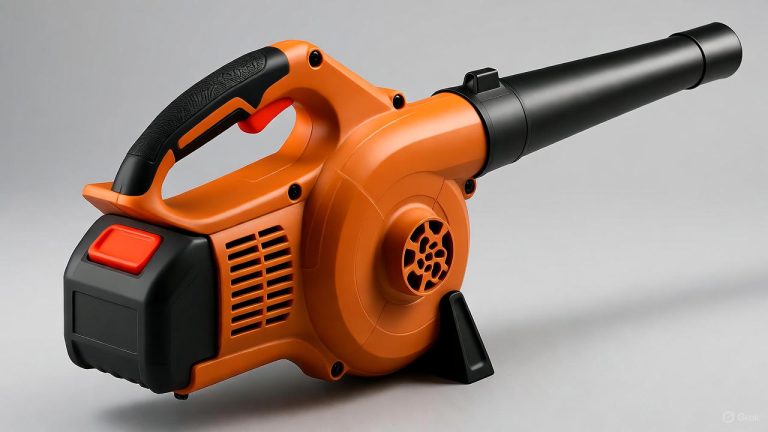
Echo PB-2620: The Powerful Handheld Workhorse
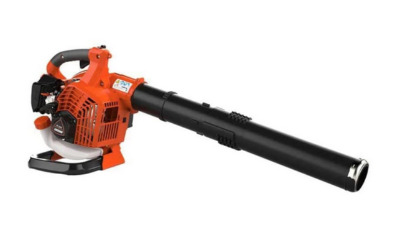
The Echo PB-2620 delivers serious airflow in a handheld package. This gas-powered blower produces 172 MPH wind speed and 456 CFM airflow, giving you enough muscle to move wet leaves, small twigs, and stubborn debris. The 25.4 cc two-stroke engine runs on a gas and oil mixture, providing consistent power without the limitations of battery life.
Best Use Cases
This blower excels in medium-sized yards up to half an acre. It handles driveways, patios, decks, and sidewalks with ease. Homeowners who need more power than a basic model but don’t want to wear a backpack will appreciate this middle-ground option. It works well for weekly maintenance and seasonal cleanup tasks.
Professional landscapers use it for detail work and smaller properties. The handheld design lets you switch between jobs quickly without strapping and unstrapping equipment. It’s ideal for clearing grass clippings after mowing or removing debris from flower beds and tight spaces.
Key Features Explained
The X Series designation means this blower uses Echo’s advanced engine technology. You get easier starting, better fuel efficiency, and lower emissions compared to older models. The 25.4 cc engine hits the sweet spot between power and weight, giving you professional-grade performance without the bulk.
The cruise control feature locks your throttle at a set speed. This saves your hand from fatigue during extended use. You can maintain consistent power without constantly squeezing the trigger. The translucent fuel tank lets you check gas levels at a glance, so you won’t run dry mid-job.
The fan design creates a concentrated air stream that cuts through piles instead of just spreading them around. You can move heavy, damp leaves that bog down weaker blowers. The nozzle shape focuses airflow for precision work near delicate plants or along edges.
Real-Life Performance
When you fire up the PB-2620, it starts within a few pulls when properly maintained. The engine settles into a smooth idle without excessive vibration. At full throttle, the air velocity genuinely moves serious debris. You can clear a standard driveway in about 10-15 minutes.
The weight becomes noticeable after 20-30 minutes of continuous use. Your arm will feel the strain, especially if you’re not used to holding power equipment. Taking breaks helps, but this isn’t the tool for all-day marathon sessions. For typical residential use of 30-45 minutes per session, most users handle it comfortably.
Noise levels reach about 70 decibels at the operator’s ear. This is loud enough that you should wear hearing protection. Neighbors within 50 feet will definitely hear you working. Early morning or late evening use might annoy people nearby.
Honest Pros and Cons
Pros:
- Strong airflow moves wet leaves and heavy debris
- Cruise control reduces hand fatigue
- Starts reliably with proper maintenance
- Light enough to maneuver in tight spaces
- Fuel-efficient for a gas blower
- Durable construction holds up to regular use
Cons:
- Gets heavy during extended use
- Louder than electric models
- Requires gas and oil mixing
- Not ideal for large properties over one acre
- Vibration can cause hand numbness
Value Assessment
The PB-2620 typically sells for around $200-$250, placing it in the mid-range category. You get professional build quality and performance at a price accessible to homeowners. The engine should last for years with basic maintenance like air filter cleaning and spark plug changes.
Compared to budget handheld blowers, you’re paying extra for power and reliability. Compared to premium backpack units, you save money but sacrifice some comfort during long sessions. For properties between a quarter and half acre, this represents excellent value.
Echo PB-2520: The Budget-Friendly Compact Option
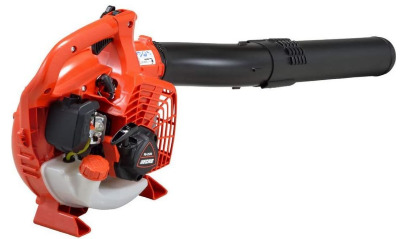
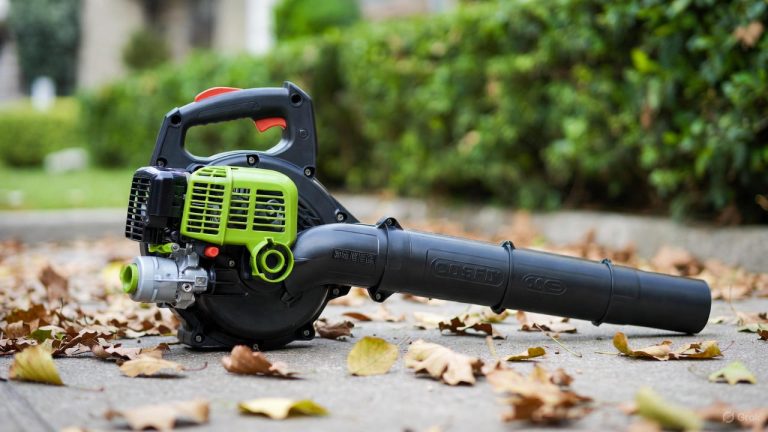
The Echo PB-2520 offers a more affordable entry point into Echo’s handheld blower lineup. It uses the same 25.4 cc engine platform as the PB-2620 but with slightly lower airflow ratings. This model targets homeowners who want Echo quality without premium features or maximum power.
Best Use Cases
This blower suits small to medium yards up to a quarter acre. It handles routine maintenance tasks like clearing porches, patios, walkways, and small driveways. Homeowners with minimal landscaping or those who primarily deal with dry leaves will find it perfectly adequate.
It works well as a supplementary tool for people who own a backpack blower but want something lighter for quick touch-ups. You can grab it for a five-minute cleanup without the hassle of gearing up with heavier equipment. Apartment dwellers with balconies or small garden areas will appreciate its compact size.
Key Features Explained
The 25.4 cc two-stroke engine provides reliable power in a lightweight frame. While Echo doesn’t publish exact CFM ratings for this model, it produces enough airflow for typical residential tasks. The simplified design keeps costs down without sacrificing Echo’s reputation for durability.
The blower uses a basic throttle without cruise control or advanced features. You squeeze to blow, release to stop. This simplicity means fewer parts to break and easier repairs if problems arise. The fuel tank holds enough for about 30-45 minutes of continuous operation.
The air filter access is tool-free, making maintenance straightforward. You can pop off the cover, clean or replace the filter, and get back to work in minutes. The spark plug is easily accessible for annual replacement. This user-friendly design helps owners perform their own upkeep.
Real-Life Performance
Starting requires the standard cold-start procedure: prime the bulb, set the choke, pull the cord. Once warm, it restarts easily. The engine runs smoothly at idle and responds quickly to throttle input. You won’t mistake this for a professional-grade powerhouse, but it gets residential jobs done.
Dry leaves and grass clippings move easily under the airflow. Wet, matted leaves take more effort and multiple passes. You’ll spend more time on tough jobs compared to higher-powered models. For light, regular maintenance, the power level works fine.
The lightweight design reduces fatigue significantly. You can work for 30-45 minutes without your arm screaming for mercy. This makes it ideal for people with less upper body strength or those who want minimal physical strain. The reduced weight comes from a smaller engine and less robust housing.
Honest Pros and Cons
Pros:
- Lighter than more powerful handhelds
- Lower price point than premium models
- Easy to maintain with accessible parts
- Starts reliably when properly tuned
- Good for quick, regular cleanups
- Compact storage footprint
Cons:
- Struggles with wet or heavy debris
- No cruise control for extended use
- Less durable housing than professional models
- Limited power for large properties
- Still requires gas and oil mixing
Value Assessment
Priced around $150-$180, the PB-2520 saves you $50-$70 compared to the PB-2620. For homeowners with modest needs, this price difference matters. You sacrifice some power and features, but you gain affordability and lighter weight.
The build quality remains solid for residential use. Don’t expect it to survive daily commercial abuse, but weekend warriors will get years of service. If you’re on a tight budget or have a small property, this model delivers good bang for your buck.
Echo PB-9010T: The Ultimate Professional Backpack Beast
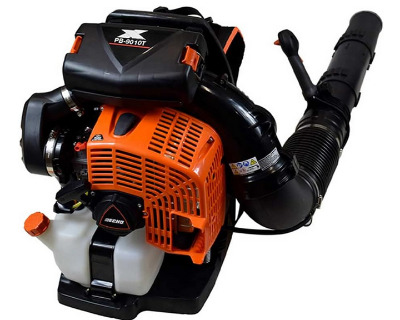
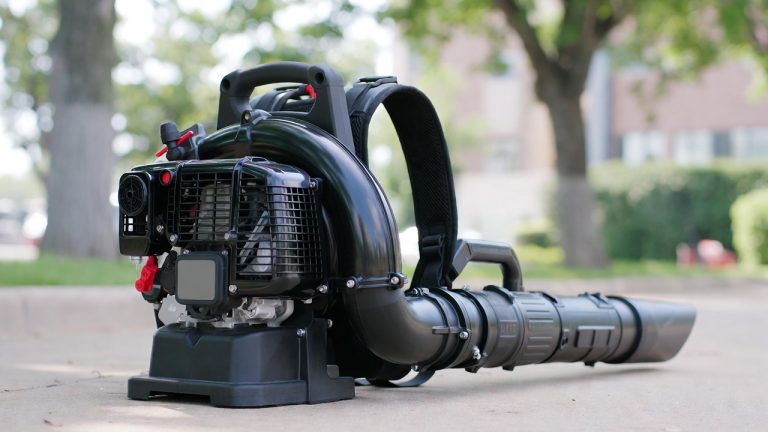
The Echo PB-9010T represents the pinnacle of gas-powered leaf blower technology. With 220 MPH wind speed and 1110 CFM airflow, this backpack unit generates enough force to move gravel, acorns, and heavy wet leaves like they’re nothing. The 79.9 cc engine puts this in a different class than handheld models.
Best Use Cases
Professional landscapers and grounds maintenance crews rely on this blower for large properties and commercial sites. It tackles multiple acres of land, parking lots, sports fields, and campus environments. The power level makes short work of fall cleanup that would take hours with smaller blowers.
Homeowners with large estates, long driveways, or heavily wooded lots benefit from this firepower. If you’re spending multiple hours per week on leaf cleanup, the increased efficiency justifies the investment. It’s also useful for clearing snow from decks and walkways in a pinch.
The tube-mounted throttle design suits people who prefer controlling speed at the nozzle rather than at their hip. This setup feels more intuitive for many users and allows for precise airflow adjustments while working.
Key Features Explained
The 79.9 cc engine produces nearly triple the displacement of handheld models. This massive power plant runs smoothly despite its size, thanks to Echo’s vibration dampening system. The professional-grade air filter handles dusty conditions and requires less frequent cleaning than consumer models.
The backpack harness distributes weight across your shoulders and hips. Thick padding and adjustable straps customize the fit for different body types. The ventilated back panel reduces sweating during hot weather operation. The frame design keeps the engine away from your body, minimizing heat transfer.
The tube-mounted throttle puts speed control right at your fingertips. You can adjust airflow instantly without reaching to your hip or releasing your grip. A cruise control function maintains consistent speed during long runs. The tube design also includes a soft grip that reduces vibration fatigue.
The commercial-grade fuel tank holds enough gas for extended operation. You can work for 60-90 minutes before refueling, depending on throttle usage. The heavy-duty construction withstands drops, bumps, and rough treatment that would damage consumer models.
Real-Life Performance
Starting this beast requires a firm pull, but the professional decompression valve makes it manageable. Once running, the engine idles smoothly with minimal vibration. Opening the throttle unleashes a torrent of air that genuinely impresses first-time users.
The airflow moves everything from pine needles to small branches. You can clear driveways in minutes instead of hours. Large leaf piles disappear as you walk past them. The concentrated air stream cuts through thick grass and penetrates under shrubs where debris hides.
Weight distribution through the backpack system works well for most users. After proper adjustment, the 24-pound unit feels balanced. Extended use is possible without excessive fatigue, though you’ll still feel the workout. The ergonomic design beats carrying a heavy handheld any day.
Noise levels reach professional-grade loudness. You absolutely need hearing protection, and neighbors will hear you from far away. This isn’t a tool for noise-sensitive neighborhoods or early morning use unless you enjoy angry visits from local residents.
Honest Pros and Cons
Pros:
- Unmatched power moves any debris type
- Backpack design eliminates arm fatigue
- Covers large areas quickly
- Professional build quality lasts for years
- Efficient fuel consumption for the power level
- Tube-mounted controls feel natural
- Ventilated harness reduces heat buildup
Cons:
- Expensive investment for homeowners
- Heavy at 24 pounds when fueled
- Very loud operation requires hearing protection
- Overkill for small properties
- Large size makes storage challenging
- Learning curve for backpack adjustment
Value Assessment
With prices typically between $600-$700, the PB-9010T demands serious investment. For professionals who use it daily, the cost spreads across hundreds of jobs. The time savings and efficiency gains justify the price tag quickly.
Homeowners need to honestly assess whether they need this much power. If you’re clearing multiple acres regularly, it makes sense. For a typical suburban quarter-acre lot, you’re paying for capability you’ll rarely use. The build quality ensures it will outlast cheaper models, but only if you need the power it provides.
Echo PB-580T: The Balanced Professional Choice
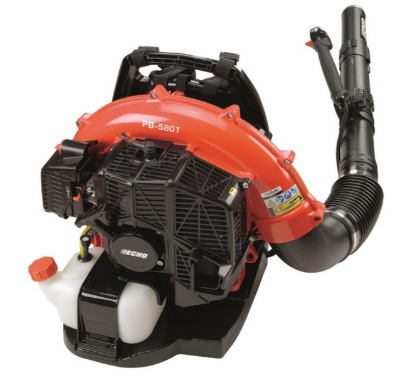
The Echo PB-580T hits the sweet spot between handheld convenience and backpack power. This mid-sized backpack blower features a 58.2 cc engine producing 510 CFM airflow. It offers serious cleaning capability without the extreme power (and price) of the PB-9010T.
Best Use Cases
This blower serves small landscaping companies and serious homeowners equally well. It handles properties from one to three acres comfortably. The power level tackles most residential and light commercial applications without the weight and cost of larger units.
Homeowners who love their lawns and keep large properties immaculate will appreciate the balance of power and comfort. It’s also smart for people who need more than a handheld can offer but find the PB-9010T excessive. The tube-mounted throttle provides the same control benefits as the bigger unit.
Professionals use it for residential routes where extreme power isn’t necessary. It saves weight compared to the PB-9010T while still delivering professional results. For mixed-use days including both large and small properties, it provides versatile performance.
Key Features Explained
The 58.2 cc two-stroke engine delivers substantial airflow while keeping weight reasonable. The power plant uses Echo’s X Series technology for improved fuel efficiency and reduced emissions. The engine mounts on a padded backpack frame that distributes weight effectively.
The tube-mounted throttle system mirrors the PB-9010T design. You get instant speed control at the nozzle end, making adjustments feel natural. Cruise control lets you lock in a speed for consistent work. The throttle design reduces wrist strain compared to constant squeezing.
The harness features padded shoulder straps and a hip belt to distribute the 22.9-pound operational weight. The frame includes ventilation channels to reduce back sweating. Adjustable straps accommodate different body sizes and preferences. The padded back panel provides comfort during extended use.
The air filtration system handles typical yard debris and dust. Regular cleaning keeps the engine running efficiently. The fuel tank capacity supports 45-60 minutes of runtime, sufficient for most jobs without refueling breaks.
Real-Life Performance
The PB-580T starts consistently with proper cold-start technique. The decompression system makes pulling easier than older designs. The engine settles into a smooth idle and responds well to throttle input. At full power, the airflow handles wet leaves, acorns, and typical yard debris effectively.
You’ll notice the performance gap between this and the PB-9010T in extreme conditions. Really heavy, wet leaf piles or gravel driveways show the difference. For normal residential debris, though, the PB-580T has plenty of muscle. It clears driveways and large lawns efficiently.
The backpack comfort level suits extended use. After initial adjustment, most users can work for an hour or more without excessive discomfort. The weight feels balanced, and the ventilation reduces heat buildup. Your shoulders and back will tire eventually, but not as quickly as with a heavy handheld.
Noise output requires hearing protection but doesn’t reach the extreme levels of the larger model. Neighbors will still hear you, but the volume is slightly more tolerable. Operation in residential areas during reasonable hours shouldn’t cause major conflicts.
Honest Pros and Cons
Pros:
- Strong airflow for most applications
- Lighter than the PB-9010T
- Comfortable backpack design
- Tube-mounted throttle provides excellent control
- More affordable than top-tier models
- Good fuel efficiency
- Handles properties up to three acres
Cons:
- Can’t match the PB-9010T in extreme conditions
- Still a significant investment
- Backpack adds complexity compared to handhelds
- Requires hearing protection
- Harness adjustment takes practice
- Takes up storage space
Value Assessment
Priced around $400-$500, the PB-580T costs significantly less than the PB-9010T while delivering strong performance. For homeowners with larger properties, this represents the most sensible investment. You get professional-grade construction and power at a more accessible price point.
The cost savings compared to the flagship model buy you other equipment or services. If you don’t need absolute maximum power, the PB-580T delivers outstanding value. The durability ensures years of service, making the per-use cost reasonable over time.
Echo PB-9010H: Maximum Power with Hip Control
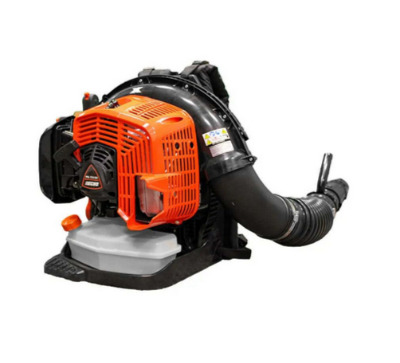
The Echo PB-9010H shares the same powerful 79.9 cc engine and 1110 CFM airflow as the PB-9010T. The key difference lies in the throttle placement: this model puts the controls at your hip rather than on the tube. This design appeals to users who prefer traditional backpack blower operation.
Best Use Cases
Professional landscapers who learned on hip-throttle blowers often prefer this configuration. The control placement feels familiar and allows for a different working style. Large property owners who spend hours blowing can develop their preferred grip and movement patterns with the hip-mounted setup.
This model suits the same large-scale applications as the PB-9010T. Commercial properties, large estates, sports fields, and parking lots all benefit from the massive airflow. The hip throttle works especially well for operators who frequently switch between full power and idle, as the controls stay accessible without adjusting hand position.
Some users find the hip throttle reduces strain on their throttle hand during long sessions. By keeping controls at the waist, you can maintain a more relaxed grip on the blower tube. This can reduce wrist and forearm fatigue for certain working styles.
Key Features Explained
The 79.9 cc engine delivers identical performance to the PB-9010T. You get the same industry-leading airflow, build quality, and power output. The professional-grade air filter, robust construction, and commercial fuel tank all match the tube-throttle version.
The hip-mounted throttle assembly includes cruise control and variable speed adjustment. The controls mount on the backpack harness at waist level, connected to the engine via cable. This traditional design has been refined over decades of professional use.
The backpack frame and harness system mirrors the PB-9010T design. You get the same padded straps, ventilated back panel, and adjustable fit options. The weight distribution remains excellent, spreading the 24-pound load across your shoulders and hips.
The blower tube design differs slightly without the integrated throttle. Some users find the simpler tube easier to maneuver, while others miss the instant control of tube-mounted throttle. The trade-off comes down to personal preference and working style.
Real-Life Performance
In terms of raw cleaning power, the PB-9010H performs identically to the PB-9010T. You get the same incredible airflow and debris-moving capability. The engine starts, runs, and behaves the same way. The practical difference emerges in how you interact with the controls during operation.
The hip throttle allows you to find a comfortable tube grip and maintain it indefinitely. You can adjust speed without moving your hands or changing grip. For some operators, this feels more natural and reduces fatigue. Others find themselves wishing for tube-mounted controls when making frequent speed adjustments.
The working style differs slightly between hip and tube throttle designs. With hip controls, you tend to set a speed and work at that level for extended periods. With tube controls, you’re more likely to feather the throttle up and down as conditions change. Neither approach is wrong; they just suit different preferences.
Comfort and weight distribution match the PB-9010T exactly. The noise level, fuel consumption, and operational characteristics all remain the same. Your choice between the two models truly comes down to throttle preference.
Honest Pros and Cons
Pros:
- Identical power to the PB-9010T
- Hip throttle suits traditional preferences
- Can maintain consistent tube grip
- Same excellent build quality
- Professional-grade performance
- Efficient weight distribution
- Long runtime between refueling
Cons:
- Same high price as PB-9010T
- Heavy at 24 pounds
- Very loud operation
- Requires learning curve for hip controls
- Overkill for small properties
- Takes significant storage space
Value Assessment
Priced similarly to the PB-9010T at $600-$700, the value proposition remains identical. You’re paying for ultimate power and professional durability. The choice between hip and tube throttle doesn’t affect the price, so your decision hinges purely on control preference.
For professionals, the investment makes sense if you prefer hip controls. The cost spreads across many jobs and years of use. For homeowners, the same considerations apply as the PB-9010T: you need to genuinely need this much power to justify the expense.
Comparing the Models: Key Differences
Understanding how these five blowers stack up helps you make an informed decision. The lineup covers a wide spectrum from compact handhelds to professional powerhouses.
Power and Performance Tiers
The PB-2520 sits at the entry level, offering adequate power for small properties and light use. The PB-2620 steps up significantly, delivering handheld convenience with serious cleaning muscle. Both handhelds work well for quick jobs but lack the sustained comfort of backpack designs.
The PB-580T represents the mid-tier backpack option. It provides strong performance for residential and light commercial use without extreme power or price. This model balances capability and affordability effectively.
The PB-9010T and PB-9010H dominate the top tier with identical power output. These professional-grade units move anything in their path and justify their cost through efficiency and durability. The only difference is throttle placement preference.
Weight and Comfort Factors
Handheld models weigh significantly less at around 10-12 pounds. They offer unmatched portability and quick access. The trade-off comes in sustained use, where arm fatigue becomes a real issue after 20-30 minutes.
Backpack models weigh more overall but distribute weight across your body. The PB-580T at about 23 pounds and the PB-9010 models at 24 pounds feel balanced when worn properly. Extended use becomes possible without destroying your arms.
Price and Value Considerations
The PB-2520 offers the lowest entry price around $150-$180. You sacrifice power and features but gain affordability. The PB-2620 adds about $50-$70 to the cost for noticeably better performance.
The PB-580T jumps to the $400-$500 range, representing a significant investment. You gain professional build quality and backpack comfort. The top-tier PB-9010 models command $600-$700, justified only by genuine need for maximum power.
Application Suitability
Small properties under a quarter acre work fine with the PB-2520. Medium properties up to half an acre benefit from the PB-2620’s extra power. Properties from one to three acres suit the PB-580T well.
Large estates, commercial properties, or professional use demand the PB-9010 models. Their efficiency on big jobs offsets the higher cost through time savings and reduced physical strain.
Buying Guide: What to Consider
Selecting the right Echo leaf blower requires honest assessment of your needs and conditions. Several key factors influence which model serves you best.
Property Size and Layout
Measure your total area that needs regular leaf cleanup. Small urban lots under 5,000 square feet rarely need more than a basic handheld. Suburban properties from 5,000-20,000 square feet benefit from the PB-2620’s power.
Large properties over half an acre make backpack models worthwhile. The comfort and power justify the investment when you’re spending hours on cleanup. Rural properties with multiple acres absolutely need professional-grade airflow.
Consider your landscape features too. Properties with many trees, gardens, and tight spaces benefit from maneuverable handhelds. Open lawns and long driveways favor powerful backpack blowers that cover ground quickly.
Debris Type and Volume
Dry leaves and grass clippings move easily with any blower. Pine needles, acorns, and twigs require more power. Wet, matted leaves demand serious airflow that only mid-tier and professional models provide.
If you only deal with light debris once or twice per week, a basic model suffices. Properties with heavy leaf fall or messy trees like oaks and walnuts need extra muscle. Commercial sites with constant debris accumulation require professional-grade equipment.
Physical Capabilities and Comfort
Handheld blowers demand upper body strength and endurance. If you have shoulder, elbow, or wrist issues, extended handheld use will cause pain. Backpack models distribute weight better and reduce joint strain.
Consider your age and fitness level honestly. A powerful handheld might seem manageable in the store but becomes exhausting after 30 minutes of real use. Backpack models feel heavy initially but prove more comfortable over time.
Your height and build affect harness fit. Taller users often find backpack straps easier to adjust properly. Smaller individuals sometimes struggle with getting the right fit, though most modern designs accommodate a wide range.
Budget Reality Check
The cheapest option that meets your needs saves money long-term. Buying underpowered equipment leads to frustration and potential replacement costs. Buying overpowered equipment wastes money on capability you never use.
Consider the total cost of ownership including maintenance, fuel, and oil. Gas blowers require regular upkeep and consumable expenses. Factor in these ongoing costs when comparing models.
Think about longevity and durability too. A $150 blower that lasts three years costs more per year than a $500 blower lasting ten years. Echo’s reputation for durability makes their higher-priced models solid long-term investments.
Fuel and Maintenance Requirements
All these Echo models run on gas-oil mixture, typically 50:1 ratio. You’ll need to mix fuel or buy pre-mixed gas. This adds complexity compared to electric models but provides runtime independence.
Gas blowers require regular maintenance including air filter cleaning, spark plug replacement, and fuel system care. If you’re not comfortable with small engine maintenance, factor in service costs or plan to learn basic procedures.
Storage considerations matter too. Gas blowers need dry storage and fuel stabilizer for off-season periods. They can’t simply sit unused for months without preparation. Make sure you have appropriate storage space.
Noise Tolerance in Your Area
All these gas blowers produce significant noise. If you live in noise-sensitive neighborhoods or areas with strict noise ordinances, consider timing and frequency of use. Some municipalities restrict gas-powered equipment during certain hours.
Professional-grade models like the PB-9010 series generate extreme noise levels. Using them in suburban neighborhoods during early mornings or evenings will anger neighbors. Make sure your usage patterns won’t cause community conflicts.
If noise is a major concern, electric blowers might suit you better despite their power limitations. However, Echo’s gas models deliver performance that electric units can’t match yet.
Who Should Buy These Products
Each Echo blower serves specific user types and situations. Matching your profile to the right model prevents buyer’s remorse.
The PB-2520 Buyer
You own a small property with minimal landscaping. Regular maintenance takes 15-30 minutes per session. You want Echo quality at an affordable price. Physical limitations or preference for lighter tools make weight a priority. Your budget caps around $200 for outdoor power equipment.
You primarily deal with dry leaves and grass clippings. Heavy debris cleanup happens rarely if ever. You value simplicity and easy maintenance over maximum power. This blower handles your needs without breaking the bank or your back.
The PB-2620 Buyer
You have a typical suburban property up to half an acre. Weekly maintenance takes 30-60 minutes. You need more power than basic models offer but don’t want to wear a backpack. Your budget allows for mid-range equipment around $200-$250.
You frequently deal with mixed debris including wet leaves and small twigs. Reliability and consistent performance matter more than saving $50. You appreciate features like cruise control that improve user experience. This blower balances power, comfort, and cost effectively for your situation.
The PB-580T Buyer
You maintain a larger property from one to three acres. Cleanup sessions extend 60-90 minutes regularly. Arm fatigue from handheld blowers has become a real problem. Your budget supports professional-grade equipment in the $400-$500 range.
You need serious airflow but don’t face extreme commercial demands. The comfort of a backpack system justifies the higher cost and slight complexity. You prefer tube-mounted throttle control for intuitive operation. This blower delivers the performance you need without paying for excessive capability.
The PB-9010T Buyer
You run a landscaping business or maintain multiple acres of property. Daily use or marathon cleanup sessions are normal. Maximum power and efficiency directly impact your income or quality of life. Your budget accommodates $600-$700 for the right tool.
You deal with heavy debris, large volumes, or difficult conditions regularly. Time savings from extreme airflow justify the investment through faster job completion. You prefer tube-mounted throttle control for instant speed adjustment. This blower represents a professional tool that pays for itself through performance.
The PB-9010H Buyer
Your situation matches the PB-9010T buyer profile exactly. The only difference is your preference for hip-mounted throttle controls. You learned on traditional backpack blowers and find that control placement more comfortable. Working style and personal preference drive your choice between these identical-performance models.
Common Mistakes to Avoid
Buyers often make predictable errors when selecting leaf blowers. Learning from these mistakes saves money and frustration.
Underestimating Your Needs
Many people buy the cheapest blower available, then regret it after struggling through one fall cleanup. If you have significant leaf fall, a low-powered model will leave you cursing and exhausted. Be realistic about your debris volume and property size.
Test your cleanup area before buying. Time how long it takes with a rake or borrowed blower. If basic tasks take hours of hard labor, invest in adequate power. The extra cost pays off in reduced frustration and physical strain.
Overbuying for Your Situation
The opposite mistake wastes money on capability you’ll never use. A quarter-acre suburban lot doesn’t need a PB-9010 any more than a compact car needs a semi-truck engine. Excessive power costs more upfront and increases ongoing maintenance expenses.
Be honest about your actual usage patterns. If you only blow leaves six times per year for 30 minutes each time, a basic handheld serves you fine. Save the difference for other tools or projects that provide more value.
Ignoring Physical Limitations
Pride convinces people they can handle heavier equipment than their body actually tolerates. A 12-pound handheld seems manageable until you’ve held it at arm’s length for 45 minutes. Previous injuries, age, and general fitness all affect what you can comfortably operate.
Test similar equipment before buying if possible. Borrow a friend’s blower or rent one for a weekend. Real-world experience reveals whether you can handle the weight and vibration comfortably.
Neglecting Maintenance Requirements
Gas blowers need regular upkeep to run properly. Skipping air filter cleaning, using old fuel, or ignoring spark plug replacement leads to hard starting and poor performance. Budget time and money for proper maintenance or plan to pay for professional service.
Learn the basic maintenance procedures before you need them. Echo provides good documentation, and online videos demonstrate common tasks. A little preventive care keeps your blower running reliably for years.
Forgetting About Storage
Leaf blowers, especially backpack models, take up significant space. Make sure you have appropriate storage before buying. Gas-powered equipment needs dry, ventilated storage away from living spaces due to fuel vapors.
Consider seasonal storage requirements too. Preparing a gas blower for winter storage involves fuel stabilizer and proper shutdown procedures. If you can’t or won’t do this, factor in deterioration from improper storage.
Buying Based on Brand Alone
Echo makes excellent equipment, but that doesn’t mean every model suits every user. The brand reputation doesn’t override the need to match specifications to your requirements. Even quality tools underperform when misapplied to inappropriate tasks.
Focus on the specific model’s capabilities rather than just the Echo name. Their entry-level models serve different purposes than professional units. Make sure the individual blower’s specifications align with your needs.
Not Considering Alternatives
Gas blowers excel at power and runtime, but electric models offer benefits too. If your property is small and you have convenient outlets, a corded electric blower might serve you better. Battery-powered models eliminate fuel mixing and reduce maintenance dramatically.
Evaluate your priorities honestly. If convenience and low maintenance matter more than maximum power, an electric blower from any reputable brand might fit better than a gas Echo. Keep an open mind about different tool types.
Final Verdict: Which Echo Blower Wins
After examining all five models thoroughly, clear winners emerge for different situations. Your specific needs determine which blower deserves your money.
Best Overall Value: Echo PB-2620
For most homeowners with typical suburban properties, the PB-2620 hits the sweet spot. It provides legitimate power that handles real-world debris without the cost and complexity of backpack models. The balance of performance, features, and price makes it the safe choice.
The cruise control feature and concentrated airflow justify the slight premium over the PB-2520. You’ll appreciate the extra power when wet leaves pile up or you need to clear a long driveway quickly. The build quality ensures years of reliable service.
Best Budget Option: Echo PB-2520
If your budget is tight or your property is small, the PB-2520 delivers Echo reliability at the lowest price point. You sacrifice some power and features, but you gain affordability and lighter weight. For light-duty residential use, it performs admirably.
This model makes sense for people who primarily need to clear decks, patios, and short walkways. If you’re not dealing with heavy debris or large areas, spending more brings minimal practical benefit. Save the money for other priorities.
Best for Large Properties: Echo PB-580T
Homeowners with substantial land and landscaping companies handling residential routes should seriously consider the PB-580T. It provides professional-level performance at a price point below the extreme top-tier models. The backpack comfort makes extended use practical.
The tube-mounted throttle feels intuitive and reduces fatigue during long sessions. The power level handles nearly any residential situation effectively. You save money compared to the PB-9010 models while gaining most of the capability.
Best Professional Choice: Echo PB-9010T or PB-9010H
Professional landscapers and large estate owners need maximum power and efficiency. Both PB-9010 models deliver unmatched performance that justifies their cost through time savings and capability. Your choice between tube and hip throttle comes down purely to personal preference.
The PB-9010T works well for operators who like instant control and frequent speed adjustments. The PB-9010H suits those who prefer traditional hip controls and consistent speeds. Test both if possible to determine which feels more natural for your working style.
Final Thoughts
Echo has built a strong lineup covering everything from basic residential needs to professional demands. The quality construction across all models ensures you’re getting a durable tool regardless of which you choose.
Start by honestly assessing your property size, debris type, and physical capabilities. Match those factors to the appropriate power level. Consider your budget realistically, remembering that buying the right tool once costs less than buying twice.
Don’t overthink the decision, but don’t rush it either. A leaf blower represents a multi-year investment in maintaining your property. Taking time to choose correctly pays dividends in reduced frustration and better results.
For most readers, the PB-2620 or PB-580T will serve best. These models balance capability and cost while providing Echo’s legendary durability. The extreme budget and professional options serve specific niches perfectly but don’t fit average homeowners as well.
Whatever you choose, commit to proper maintenance and operation. Even the best equipment fails when neglected or misused. Follow the manual, keep up with basic service, and your Echo blower will handle fall cleanups reliably for many years to come.

Hi, I’m Mary, the founder of GardenCure.com. I’m passionate about creating healthy, beautiful gardens and well-kept lawns. I share practical experience and trusted advice on garden and lawn gear that truly works. With the support of my dedicated research team, our writers produce honest, in-depth reviews using reliable, authentic sources—helping you choose the right tools with confidence for your outdoor space.