5 Best Fertilizer for Maple Trees In 2026
Maple trees are beautiful. They give you stunning fall color, great shade, and serious curb appeal. But here’s the thing — they won’t thrive on their own if your soil isn’t feeding them right.
In this article
That’s where fertilizer comes in.
If you’ve ever stood in a garden center staring at rows of fertilizer bags with zero idea what to grab, you’re not alone. There are liquid fertilizers, granular blends, organic mixes, and specialty formulas — and every single one of them claims to be the best thing for your tree.
So, which one actually works?
In this article, we’re cutting through the noise. We reviewed five of the most popular fertilizers for maple trees and broke each one down in plain, simple terms. No jargon. No fluff. Just honest, straightforward information so you can make a smart choice for your tree.
Let’s get into it.
Why Maple Trees Need the Right Fertilizer
Before we jump into the products, let’s talk about why fertilizer matters so much for maples specifically.
Maple trees — especially Japanese maples — are sensitive. They like slightly acidic soil, good drainage, and a steady supply of nutrients. When their soil is off-balance, you’ll notice it. Leaves turn pale, growth slows down, and that gorgeous fall color you love? It fades fast.
Most home soils are either too alkaline or too low in nutrients. That’s a problem for maples, which need nitrogen for healthy leaf growth, phosphorus for strong roots, and potassium for overall tree health. They also respond well to trace minerals like iron and manganese, especially in higher-pH soils where these elements get “locked out.”
The right fertilizer fixes all of that. It brings the right nutrients to the right place, at the right time.
But the wrong fertilizer? It can burn roots, trigger weak sappy growth, or cause nutrient imbalances that stress your tree for an entire season.
So yes — the fertilizer you pick really does matter.
A Quick Note on NPK Ratios
You’ll see numbers like 4-3-4 or 6-4-6 on fertilizer labels. These represent the ratio of nitrogen (N), phosphorus (P), and potassium (K) in the product.
For maple trees, you generally want a balanced or slightly nitrogen-forward ratio. Too much nitrogen pushes leafy growth at the expense of root development and fall color. Too little and the tree stays pale and slow.
For Japanese maples in particular, a gentler, lower-number formula works better. These trees are not heavy feeders, and overdoing it is one of the most common mistakes people make.
Keep that in mind as we go through each product.
The 5 Best Fertilizers for Maple Trees: Our Top Picks
1. Japanese Maple Fertilizer – Liquid Plant Food for Vibrant Color, Stronger Roots & Healthy New Growth (8 oz)

Best for: Japanese maple owners who want a quick, easy liquid solution
What Is It?
This is a liquid concentrate specifically formulated for Japanese maples. You dilute it with water and apply it directly to the soil — or sometimes as a foliar spray. It’s a compact 8 oz bottle, which makes it ideal for smaller trees or container-grown specimens.
The formula is designed with Japanese maples in mind. These trees have some of the most specific nutritional needs of any ornamental tree, and a generic all-purpose fertilizer often falls short or even causes problems. This product aims to solve that by targeting the exact needs of the species.
Key Features
- Species-specific formula: Made with Japanese maple nutrition requirements in mind
- Liquid format: Fast absorption compared to slow-release granules
- Promotes vibrant color: The nutrient mix is tuned to bring out that iconic red, burgundy, and orange fall display
- Root development support: Contains nutrients that target root health alongside above-ground growth
- Easy application: Mix with water and pour around the drip line — simple as that
- Compact size: The 8 oz bottle is easy to store and handle
Who Should Buy This?
This product is perfect for someone with one or two Japanese maples in containers or small garden beds. It’s also a great pick if you’re new to maple care and want something purpose-built rather than a generic formula you have to guess with.
If you have a large yard full of full-size maples, you’d probably go through this bottle quickly and find it a bit pricey per application. But for the focused grower with a prized Japanese maple, it’s a solid match.
Real-Life Usage Insight
Japanese maples are notoriously fussy about fertilizer. Many gardeners have learned the hard way that throwing too much nitrogen at these trees results in weak, leggy growth with poor fall color. A liquid formula like this one gives you more control over dosage — you can start conservatively and build up if needed, rather than dumping slow-release granules you can’t take back.
Applying in early spring as buds begin to swell, and then again mid-summer, tends to give the best results. Skip late-season applications — pushing growth too late in the season leaves new shoots vulnerable to cold damage.
Pros
- Formulated specifically for Japanese maples — not a one-size-fits-all product
- Liquid format means nutrients reach roots faster
- Helps enhance the vibrant leaf colors Japanese maples are known for
- Small bottle is great for targeted, controlled feeding
- Easy to use — no guesswork about mixing ratios beyond what’s on the label
Cons
- 8 oz is a small quantity — may not go far for larger trees or frequent applications
- Liquid fertilizers require more frequent reapplication than slow-release granules
- Needs to be diluted correctly — underdiluted applications could cause minor burn
- Not ideal for large-scale use due to cost per volume
Performance
For Japanese maple owners, performance is generally very good. The liquid delivery system means you’ll often see a response within a few weeks — new growth looks healthier, and the leaf color tends to be richer. It’s not a miracle worker if your soil has serious structural problems, but as a nutrition boost, it delivers.
Ease of Use
Very easy. Mix, pour, done. The liquid format removes the need for spreading equipment or measuring dry pellets. Just follow the label instructions and you’re set.
Value for Money
Decent value if you have a small number of trees. The 8 oz bottle is specifically useful for container maples or young specimen trees. If you’re working with larger trees, you’ll want to buy multiple bottles, which can add up.
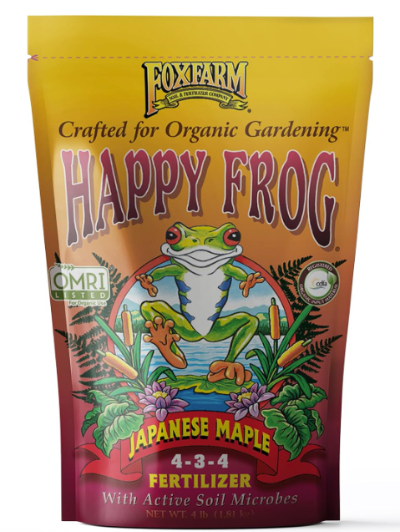
2. FoxFarm Happy Frog Japanese Maple Fertilizer – 4-3-4 Blend with Soil Microbes & Mycorrhizal Fungi (4 lb)
Best for: Organic-leaning gardeners who want a granular slow-release option with biological benefits
What Is It?
FoxFarm is a well-known name in the gardening world, and their Happy Frog line is beloved by organic gardeners. This Japanese Maple Fertilizer is a granular, dry formula with a 4-3-4 NPK ratio. What makes it stand out is the addition of soil microbes and mycorrhizal fungi.
Those aren’t just marketing buzzwords. Mycorrhizal fungi form a symbiotic relationship with tree roots, extending their reach and improving nutrient uptake significantly. Soil microbes break down organic matter into plant-available forms. Together, they turn the soil around your tree into a living, thriving ecosystem — which is exactly what trees evolved to grow in.
Key Features
- 4-3-4 NPK ratio: Balanced, gentle feeding that won’t overwhelm sensitive Japanese maples
- Slow-release granular formula: Feeds over time, reducing the risk of nutrient spikes or burns
- Mycorrhizal fungi added: Improves root function and long-term nutrient absorption
- Beneficial soil microbes: Help break down organic matter and improve soil health
- Low pH feeders support: Formulated for acid-loving plants, which is exactly what Japanese maples prefer
- 4 lb bag: A good quantity for regular use on multiple trees
Who Should Buy This?
This is a great pick for the gardener who thinks beyond just feeding the tree — you want to improve the whole growing environment. If you care about soil health, organic practices, and long-term results over quick fixes, this product is built for your mindset.
It’s also ideal for gardeners who find liquid fertilizers fussy or time-consuming. With granules, you spread once and let the soil do the work.
Real-Life Usage Insight
One of the most interesting things about FoxFarm’s approach is that the biological components genuinely make a difference over time. The first application might not produce a dramatic visible difference, but by mid-season, many growers notice stronger growth, better branching, and improved soil texture around the root zone.
For best results, work the granules lightly into the top inch of soil around the tree’s drip line rather than just scattering them on top. Watering after application helps activate the nutrients and the biological components.
Japanese maples grown in containers benefit a lot from this product because pot soil tends to deplete quickly and loses microbial activity. Reintroducing that biology makes a real difference.
Pros
- The biological components (fungi and microbes) add long-term value beyond basic nutrition
- Balanced 4-3-4 ratio is safe and appropriate for sensitive Japanese maples
- Granular format means slow, steady feeding with less risk of overdoing it
- Organic-friendly formula — feels good to use for environmentally conscious growers
- 4 lb bag offers good volume for the price
- Supports soil pH preferences of acid-loving maples
Cons
- Granules take longer to show results compared to liquid fertilizers
- The slow-release nature means it’s not ideal if your tree is showing acute deficiency symptoms right now
- The biological components require moist soil to activate properly — dry conditions reduce effectiveness
- May need supplemental iron in very alkaline soils since the formula doesn’t explicitly address iron chlorosis
Performance
Solid performer for long-term tree health. If you’re consistent with application, you’ll see cumulative improvement over the season and into the next. It’s not the product you reach for when your maple is in crisis mode, but for steady, healthy, season-long growth — it does its job well.
The mycorrhizal addition is a genuine plus. Trees fed with mycorrhizal products consistently show better root development and stress resilience, especially during hot, dry periods.
Ease of Use
Very easy. Measure out the granules based on the label’s guidance for your tree size, spread them around the drip line, and water in. No mixing, no mess beyond a little soil contact.
Value for Money
Very good. A 4 lb bag goes a long way, especially for smaller specimens or a handful of trees. The biological components add functional value that you’re not getting from a basic synthetic granule. For an organic granular fertilizer, the price point is fair.
3. Maple Tree Fertilizer – Liquid Plant Food for Vibrant Color, Stronger Roots & Healthy Growth (8 oz)

Best for: General maple tree owners who want a versatile liquid solution for all maple varieties
What Is It?
This is a liquid maple fertilizer similar in format to product #1, but positioned for a broader range of maple species rather than Japanese maples specifically. Think silver maples, red maples, sugar maples, and other common landscape varieties — this formula aims to serve them all.
The 8 oz liquid concentrate mixes with water and goes straight to the root zone. Like the Japanese maple version, it’s designed to promote strong color, healthy root systems, and consistent growth.
Key Features
- Designed for all maple varieties: Not just Japanese maples — covers the full range of common landscape trees
- Liquid concentrate formula: Fast delivery of nutrients to the root zone
- Color enhancement focus: NPK and micronutrient ratio supports vibrant seasonal color
- Root growth support: Includes nutrients that aid root system development
- Versatile use: Works for maples in the ground, in containers, and in various soil types
- Easy application: Dilute and pour — minimal effort required
Who Should Buy This?
If you have a big red maple in your front yard, or a sugar maple you’re growing from a sapling, or multiple different maple species on your property — this formula makes more sense than the Japanese maple-specific version. It’s a broader tool.
It’s also a solid pick for beginners who have maples but aren’t entirely sure of the variety. Rather than guessing and possibly applying a formula that’s too narrowly focused, this one is designed to work across the species spectrum.
Real-Life Usage Insight
Large landscape maples are usually more forgiving than Japanese maples. They’re bigger, more robust, and can handle a wider range of soil conditions. But that doesn’t mean they don’t benefit from a targeted fertilizer.
A common situation is a mature sugar maple or silver maple that’s been in the ground for years and has started to look a little dull — sparse leaf coverage, muted fall color, slow growth. A liquid fertilizer like this, applied in spring and again after the first flush of growth, can reinvigorate the tree noticeably.
Apply around the drip line — that’s the outer edge of the tree’s canopy — where the feeder roots are most active. Avoid dumping fertilizer right at the base of the trunk.
Pros
- Works across multiple maple species — flexible and practical for mixed landscapes
- Liquid format means relatively fast absorption
- Targets both color and root health, covering two of the biggest concerns for maple growers
- Simple to apply with no special equipment needed
- 8 oz size is affordable entry point to try before committing to a larger volume
- Good option for beginners who want a product made specifically for maples
Cons
- 8 oz is still a small volume, especially for large trees that need more fertilizer per application
- Not as precisely targeted as the Japanese maple version if that’s your specific tree
- Needs more frequent reapplication than granular alternatives
- Results may take a few weeks to become visually obvious — not an instant fix
Performance
Reliable performance for standard landscape maples. You’re not going to see overnight transformation, but over the course of a growing season, trees treated with this product tend to show better leaf density, richer color, and generally healthier appearance. It does what it says.
For young trees and saplings especially, giving them a nutritional boost in the early years sets up a much stronger root system that pays dividends for decades.
Ease of Use
Same as the Japanese maple version — mix and apply. Very beginner-friendly. Instructions are clear, and the liquid format makes measuring and applying straightforward.
Value for Money
Moderate. The 8 oz bottle is an affordable entry point, but for larger trees or multiple applications across a full season, you’ll likely need to buy more than one bottle. Still, it’s good value for targeted use.
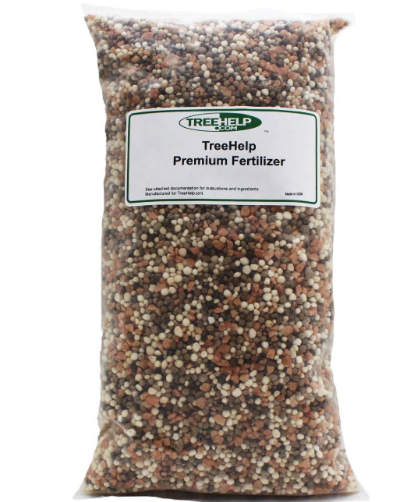
4. TreeHelp Premium Fertilizer for Maple
Best for: Gardeners dealing with nutrient-deficient or struggling maple trees who want a comprehensive fix
What Is It?
TreeHelp Premium Fertilizer positions itself as a comprehensive solution for maple trees dealing with deficiencies or stress. It’s not just about feeding — it’s about addressing the specific problems that maples frequently run into, particularly in urban and suburban soils where compaction, alkalinity, and nutrient depletion are common issues.
This product typically comes in a measured, easy-to-apply format and is designed to deliver a broad spectrum of nutrients alongside some targeted support for common maple problems.
Key Features
- Comprehensive nutrient profile: Goes beyond basic NPK to include micronutrients that maples commonly lack
- Designed for problem-solving: Addresses deficiencies, not just maintenance feeding
- Tree-specific formulation: Made for the specific physiology of maple trees
- Premium ingredient quality: Higher-end sourcing compared to basic box-store options
- Balanced feeding approach: Doesn’t push any single nutrient at the expense of others
- Suitable for stressed trees: Can be used on trees showing visible signs of nutrient issues
Who Should Buy This?
This product makes the most sense for someone whose maple tree is clearly struggling. If your leaves are yellowing between the veins (a classic sign of iron or manganese deficiency), if growth has slowed dramatically, or if your tree is recovering from drought, construction damage, or compaction — TreeHelp Premium is built for that scenario.
It’s also a good choice for gardeners who want to invest in a premium product rather than the cheapest option on the shelf. You’re paying for quality and specificity.
Real-Life Usage Insight
Urban maples often have it rough. Their roots compete with pavement, their soil is compacted, and pH tends to creep up over time, locking out micronutrients. A standard fertilizer just adds more macro nutrients to a tree that can’t even properly absorb what’s already in the soil.
TreeHelp’s formula addresses this more holistically. By including micronutrients alongside the standard N-P-K, it targets the whole picture of maple nutrition. Gardeners dealing with interveinal chlorosis (that telltale yellowing where veins stay green but the leaf tissue between them fades) often find improvement after a few weeks with a product like this.
For established trees that have been in place for a long time and have never been fertilized, this is a good reset option.
Pros
- Comprehensive micronutrient inclusion makes it more complete than basic fertilizers
- Addresses real-world soil problems that maples face, particularly in urban settings
- Premium quality formulation — not a budget product diluted with fillers
- Effective for stressed or deficient trees that need more than routine maintenance feeding
- Tree-specific formula means it’s designed with maple physiology in mind
- Good for gardeners who want to fix a problem, not just maintain the status quo
Cons
- Typically priced higher than standard alternatives — a premium product at a premium price
- If your maple is already healthy and thriving, the added micronutrients may not produce a dramatic visible difference
- May be harder to find at local stores — often purchased online
- Results depend heavily on accurate diagnosis of what’s actually wrong with your tree
Performance
Very good for its target use case. If you have a maple that’s struggling and you’ve identified some form of nutritional deficiency, TreeHelp Premium is a highly effective intervention. For routine healthy-tree maintenance, it still works well — you’re just paying for more than you strictly need.
The micronutrient component is what sets it apart. Iron, manganese, and other trace elements make a measurable difference in maple health, especially in regions with naturally alkaline soil or heavily treated municipal water.
Ease of Use
Moderate. The application is straightforward, but getting the best results requires some understanding of what your tree actually needs. If you’re applying it as a targeted fix for a diagnosed deficiency, you need to monitor the tree and adjust follow-up feeding accordingly.
That said, for a routine application, it’s not complicated.
Value for Money
Good value if you’re dealing with a struggling tree. The premium price is justified by the comprehensive formula. If you’re using it as a routine maintenance product on a healthy tree, the cost-benefit ratio drops a bit — you might be getting more than you need for that scenario.
5. Dr. Earth Organic & Natural MINI Acid Lover – Azalea, Camellia, Rhododendron & Maple Fertilizer (1 lb)
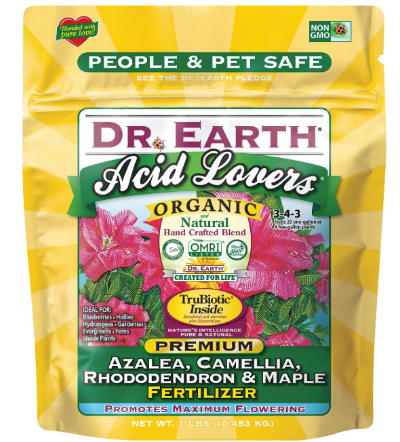
Best for: Organic gardeners with acid-loving maples who want a clean, natural fertilizer option
What Is It?
Dr. Earth is one of the most respected names in organic gardening, and this product is their compact, 1 lb “MINI” version of their acid lover formula. It’s designed for acid-loving plants — azaleas, camellias, rhododendrons, and yes, Japanese maples — that need lower soil pH and a gentler nutrient approach.
The formula is certified organic, made from natural ingredients, and includes Dr. Earth’s signature blend of beneficial soil organisms. It’s a granular product meant to be worked into the soil around the plant’s drip zone.
Key Features
- Certified organic formula: No synthetic chemicals — made from natural, non-GMO ingredients
- Designed for acid-loving plants: pH-adjusting properties help maintain the lower soil acidity that maples prefer
- Dr. Earth’s soil biology blend: Includes beneficial microbes and mycorrhizal fungi for improved root function
- Granular slow-release format: Steady feeding over weeks rather than a one-time spike
- 1 lb MINI size: Great for small gardens, individual container plants, or trying the product before buying larger quantities
- Safe for people and pets: No toxic chemicals to worry about around kids or animals
Who Should Buy This?
If you garden organically or prefer natural products over synthetic formulas, Dr. Earth is the brand to look at first. This particular product is ideal for gardeners with one or two Japanese maples, especially in containers or small beds, who want a clean, safe, organic feeding option.
The MINI 1 lb size is also perfect for apartment or patio growers who have a container maple and don’t need a massive bag of fertilizer sitting around.
Real-Life Usage Insight
Dr. Earth products have a loyal following in the organic gardening community, and for good reason. The ingredients are transparent, the formulas are thoughtfully designed, and the results are consistent — if you manage your expectations around the slower pace of organic fertilizers.
Organic fertilizers work differently from synthetic ones. The nutrients aren’t immediately plant-available — they’re released as soil microbes break down the organic matter. This means slower initial response but more sustained, balanced nutrition over time.
For Japanese maples specifically, this slower pace is actually a benefit. These trees don’t want a surge of nutrients — they want a steady, gentle supply. Dr. Earth’s approach aligns well with that preference.
Apply in early spring by working the granules into the top inch or two of soil around the root zone. Water well afterward. A mid-season follow-up application is usually beneficial.
Pros
- Certified organic — great for gardeners who avoid synthetic chemicals
- Specifically designed for acid-loving plants, making it appropriate for Japanese maples
- Includes beneficial microbes and mycorrhizal fungi for long-term soil health
- Safe around children and pets — no toxic chemical exposure risk
- Slow-release format reduces risk of over-fertilizing
- Dr. Earth is a trusted, established brand with a strong reputation in organic gardening
- MINI size is ideal for small-scale growers and container gardeners
Cons
- 1 lb is a very small amount — for more than one or two small trees, you’ll need to buy multiple bags
- Organic fertilizers work slowly — don’t expect visible results within days
- Not designed for rapid intervention if your tree is in distress — this is a maintenance product
- Slightly more expensive per pound than basic synthetic alternatives
- Results depend on healthy soil microbial activity — if your soil is heavily treated or sterile, the biological components may take time to establish
Performance
Excellent for organic maintenance feeding. The results aren’t dramatic or immediate, but over a full growing season, trees fed with Dr. Earth show consistently healthy growth, good color, and sound root development. The soil biology components build over time, making each subsequent season a little better than the last.
For container-grown Japanese maples, this product consistently delivers good results because the contained soil environment benefits greatly from the reintroduction of beneficial organisms.
Ease of Use
Easy. Scatter the granules, work them in lightly, water well. No measuring complex ratios or worrying about liquid concentrations. The MINI size is light and easy to handle.
Value for Money
Good for what it is. The 1 lb size is not a bargain in terms of raw quantity, but you’re paying for organic certification, biological components, and Dr. Earth’s quality standards. For the small-scale gardener it’s aimed at, the value is solid.
Side-by-Side Comparison
| Product | Format | NPK | Best For | Organic? | Size |
|---|---|---|---|---|---|
| Japanese Maple Fertilizer Liquid | Liquid | Undisclosed | Japanese maples specifically | Unspecified | 8 oz |
| FoxFarm Happy Frog | Granular | 4-3-4 | Organic, slow-release feeding | Yes | 4 lb |
| Maple Tree Fertilizer Liquid | Liquid | Undisclosed | All maple varieties | Unspecified | 8 oz |
| TreeHelp Premium | Granular/Tablet | Comprehensive | Struggling or deficient trees | Unspecified | Varies |
| Dr. Earth MINI Acid Lover | Granular | Undisclosed | Organic, acid-loving maples | Yes (Certified) | 1 lb |
Buying Guide: How to Pick the Right Maple Fertilizer
There’s no one-size-fits-all answer here. The best fertilizer for your maple tree depends on a few specific things about your situation. Here’s how to think through it.
Know Your Maple Species
Japanese maples are not the same as sugar maples or red maples in terms of nutrient needs. Japanese maples are more sensitive, prefer gentler formulas, and respond poorly to nitrogen overload. Full-sized landscape maples are more robust.
If you have a Japanese maple, products #1, #2, and #5 are your best starting points. If you have a general landscape maple, product #3 is worth a look, and product #4 handles problem situations across the board.
Liquid vs. Granular
Liquid fertilizers work faster. Nutrients are immediately available in the soil water and reach roots quickly. They’re great for quick intervention, targeted feeding, and small trees.
Granular fertilizers release slowly. They feed the tree over weeks or months and are more forgiving if you apply slightly more than you should. They’re better for long-term soil health and are less fussy to apply.
Your choice depends on your situation. Slow and steady? Go granular. Need results soon? Go liquid.
Organic vs. Synthetic
Organic fertilizers feed the soil ecosystem as well as the tree. They work more slowly but build better long-term soil health. They’re safer around kids, pets, and the water table.
Synthetic fertilizers deliver nutrients more directly and quickly. They can be very effective but don’t contribute to soil biology and can build up salts over time if overused.
Neither is wrong. It depends on your values and what your soil needs.
Soil pH Matters More Than People Realize
Maples, especially Japanese maples, prefer slightly acidic soil — ideally in the pH range of 5.5 to 6.5. In alkaline soil, even if you fertilize correctly, trees can’t absorb micronutrients like iron and manganese effectively.
If you suspect your soil pH is off, get a soil test before buying fertilizer. You might need a pH-adjusting product alongside or instead of a standard fertilizer.
Tree Age and Size
Young trees and saplings need gentler, more targeted nutrition. Heavy feeding can overwhelm a small root system.
Mature trees can handle more volume and benefit from broader-spectrum formulas. Established trees in healthy soil may need less frequent fertilizing than you think.
Common Mistakes to Avoid When Fertilizing Maple Trees
Even experienced gardeners make these errors. Knowing them ahead of time saves you a headache.
Fertilizing Too Late in the Season
Stop fertilizing by late summer. Applying nitrogen late pushes new soft growth that doesn’t have time to harden off before cold weather hits. That new growth gets damaged by frost, and the tree enters winter stressed.
Spring and early summer are your primary feeding windows. Mid-summer is acceptable for a lighter application if needed.
Over-Fertilizing
More is not better. This is especially true for Japanese maples. Over-fertilizing causes salt buildup in the soil, root burn, and weak, excessive leafy growth. The tree looks lush for a minute — then it crashes.
Always start with the lower end of the recommended application rate. You can build up gradually if needed.
Fertilizing a Stressed or Drought-Stressed Tree
Never fertilize a tree that’s already under severe stress from drought, disease, or pest damage. The fertilizer salts in dry soil can make root burn worse. Water the tree well first, let it stabilize, then feed.
Applying Fertilizer Against the Trunk
Feeder roots are not at the base of the trunk. They’re out at the drip line and beyond. Apply fertilizer around the outer edge of the canopy, not right at the base of the tree. Piling fertilizer against the trunk can also encourage bark rot.
Skipping a Soil Test
Many growers throw fertilizer at a tree without knowing what the soil actually lacks. A basic soil test (inexpensive and available through most county extension offices or online) tells you exactly what’s deficient and what your pH is. That information makes your fertilizing dramatically more effective.
Using the Wrong Formula for the Species
A fertilizer made for acid-loving plants like azaleas and Japanese maples is not the same as a general lawn fertilizer. Applying lawn fertilizer to your Japanese maple can push too much nitrogen and actually harm the tree. Always use a product appropriate for maples or for the specific variety you’re growing.
Who Should Buy Each Product?
Here’s a quick breakdown to help you match yourself to the right product:
Japanese Maple Fertilizer Liquid (8 oz): You have a Japanese maple — possibly in a container — and you want a targeted, species-specific liquid feed. You’re comfortable mixing and applying liquid concentrate.
FoxFarm Happy Frog Japanese Maple Fertilizer: You care about organic gardening and soil health. You want the benefits of mycorrhizal fungi and soil biology alongside standard nutrition. You prefer granular application and are patient with slower-release results.
Maple Tree Fertilizer Liquid (8 oz): You have standard landscape maples — red, silver, sugar, or other common varieties. You want a straightforward liquid product that’s easy to use and made for maples. Great beginner option.
TreeHelp Premium Fertilizer: Your maple is struggling. You’ve noticed yellowing leaves, poor growth, or stress symptoms, and you want a comprehensive formula that addresses deficiencies rather than just routine maintenance. You’re willing to invest a bit more for a quality fix.
Dr. Earth MINI Acid Lover: You’re an organic gardener with a small Japanese maple or acid-loving plant. You prioritize natural, non-toxic ingredients. You have a container maple or a small planting and don’t need large volumes.
Tips for Getting the Best Results From Any Maple Fertilizer
Getting the right product is step one. Using it correctly is step two. Here are a few practical tips that apply to any formula you choose.
Water before and after. Moist soil helps nutrients move to the root zone. Always water your tree a day before fertilizing if the soil is dry, and water again after application.
Follow the label. This sounds obvious, but many people eyeball quantities or think doubling the dose will double the results. It won’t. It’ll cause root burn and waste product.
Apply at the right time. Early spring, just as buds start swelling, is the ideal window for the first application. A second application in early summer is usually fine. Avoid fall applications.
Spread evenly around the drip line. That’s the circle on the ground directly below the outer tips of the branches. That’s where feeder roots are concentrated.
Don’t fertilize freshly transplanted trees. Give newly planted maples at least one full growing season to establish before fertilizing. Their root systems need time to settle, and fertilizer can stress rather than help.
Watch for results — and watch for problems. A healthy response looks like fresh, vigorous new growth with good color. A problematic response looks like browning leaf tips, leaf scorch, or sudden wilting. If you see those, flush the root zone with water and dial back the application next time.
Final Verdict: Which Maple Fertilizer Is Actually the Best?
After looking at all five products, here’s our honest take.
Best overall: FoxFarm Happy Frog Japanese Maple Fertilizer is our top pick for most gardeners. The 4-3-4 NPK ratio is ideal for Japanese maples, the soil biology components add real long-term value, and the 4 lb bag provides enough product for a full season without constant reordering. It works well for organic-leaning growers and conventional gardeners alike. The slow-release granular format is forgiving and practical.
Best liquid option: If you prefer liquid fertilizers for faster results or have smaller trees in containers, the Japanese Maple Fertilizer Liquid (8 oz) is a clean, targeted pick for Japanese maples, and the general Maple Tree Fertilizer Liquid is the better choice for other maple varieties.
Best for struggling trees: TreeHelp Premium Fertilizer is the one to reach for when your maple is showing real deficiency symptoms. Its comprehensive micronutrient profile addresses problems that basic fertilizers simply can’t fix.
Best organic pick: Dr. Earth MINI Acid Lover is the cleanest, most trusted organic option on this list. If you garden without synthetic chemicals and have a small Japanese maple or acid-loving plant, this is your product.
The Bottom Line
Finding the best fertilizer for maple trees doesn’t have to be complicated. Know your maple species, understand what your soil needs, decide between liquid and granular delivery, and pick the formula that matches your approach — organic or conventional.
All five products reviewed here are legitimate, solid options. None of them are gimmicks. The differences come down to format, scale, species focus, and philosophy.
Feed your maple right, time it correctly, and avoid the common mistakes we talked about — and your tree will reward you with years of healthy growth and stunning seasonal color.
That’s the whole game. Simple, really.

Hi, I’m Mary, the founder of GardenCure.com. I’m passionate about creating healthy, beautiful gardens and well-kept lawns. I share practical experience and trusted advice on garden and lawn gear that truly works. With the support of my dedicated research team, our writers produce honest, in-depth reviews using reliable, authentic sources—helping you choose the right tools with confidence for your outdoor space.