5 Best Calcium for Tomato Plants In 2026
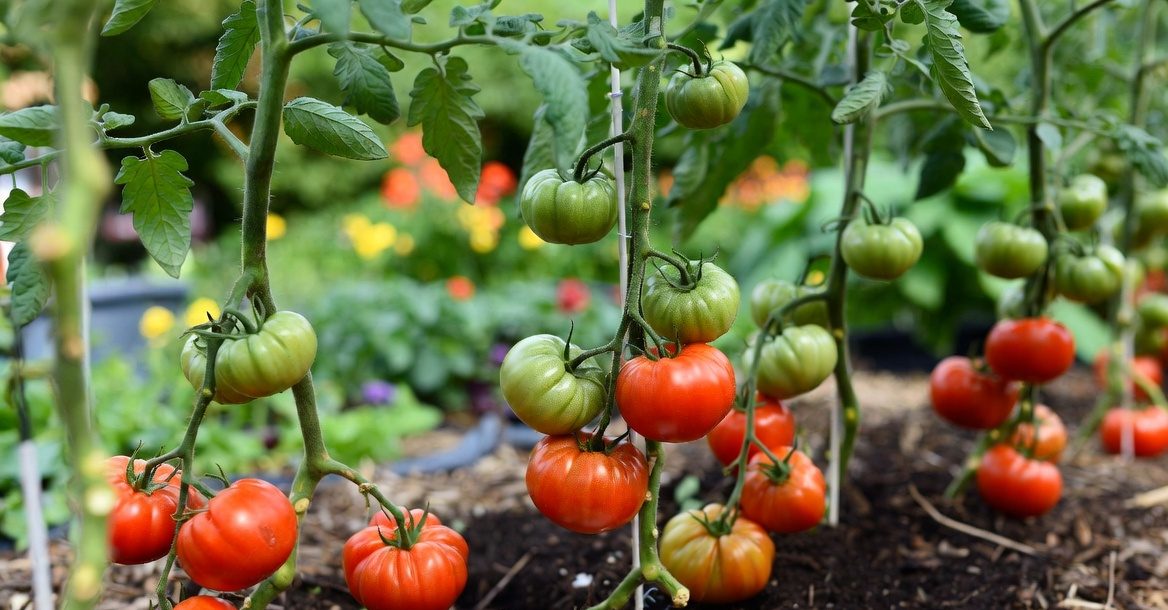
When you’re growing tomatoes in your garden, one thing stands out as a game-changer for healthy fruit production. That thing is calcium. I’ve learned this the hard way while watching otherwise perfect tomato plants produce fruit with dark, sunken spots on the bottom. That’s blossom end rot, and it’s one of the most frustrating problems any tomato grower can face.
In this article
Calcium isn’t just some nice-to-have nutrient. It’s essential for strong cell walls in tomato fruit. Without enough calcium, your plants will struggle to develop firm, healthy tomatoes. They’ll also show weak growth and poor fruit quality. The good news? There are solid solutions out there, and I’m here to walk you through them.
In this review, I’m covering five of the best calcium supplements for tomato plants. I’ll break down what makes each one special, who should use them, and how they actually perform in real growing situations. Whether you’re dealing with existing blossom end rot problems or you want to prevent them from the start, you’ll find answers here.
What Does Calcium Actually Do for Tomato Plants?
Before we jump into the products, let’s talk about why calcium matters so much. Tomatoes are calcium-hungry plants, especially when they’re producing fruit. Calcium strengthens cell walls throughout the plant. Without it, the fruit ends up with blistered, dark patches on the bottom—that’s blossom end rot again.
Your soil might actually have calcium in it already. But here’s the tricky part: calcium availability depends on water and soil conditions. If your plants aren’t getting enough water, the calcium in your soil stays locked up. The plant can’t absorb it. That’s why even gardeners with decent soil sometimes see blossom end rot pop up during dry spells.
Calcium also helps prevent cracking and splitting in fruit. It makes tomato skin tougher and better able to handle rain or heavy watering. Plus, it supports healthy root development and helps the plant resist disease pressure.
The best approach is to add a reliable calcium source that your plants can access right away. You don’t want to wait for slow soil improvements. You want results this season.
1: Calcium Nitrate 15.5-0-0 Fertilizer
Product Overview
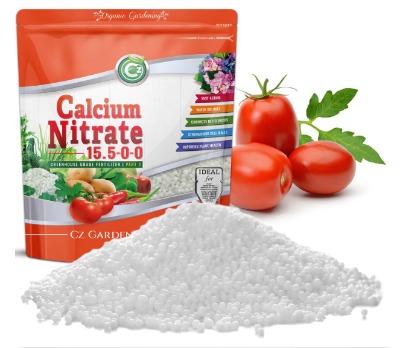
Calcium Nitrate 15.5-0-0 is a straightforward, no-frills calcium and nitrogen fertilizer made in the USA. It’s a greenhouse-grade product, which means it’s formulated to work quickly and reliably. This is a dry granule fertilizer that dissolves easily in water. It comes in a 5-pound bag, giving you plenty of material to work with throughout the growing season.
How to Use It
This product works best when you dissolve it in water and apply it to the soil around your tomato plants. You won’t use it as a dry topdress. Dissolving it first lets the calcium reach the roots quickly where it’s needed most. The nitrogen boost also helps sustain leaf growth while the calcium builds up in the fruit.
For most gardeners, a light application every two to three weeks works well. You mix it at a rate that feels manageable—usually about a tablespoon per gallon of water—and water your tomatoes as normal.
Key Features Explained
The 15.5-0-0 formula means you’re getting 15.5% nitrogen and 0% phosphorus, 0% potassium. The rest is calcium nitrate. This high nitrogen-to-calcium ratio is perfect for vegetables that need both strong foliage and calcium-rich fruit. The nitrogen keeps your tomato plants growing thick and healthy.
Being greenhouse grade means this product dissolves fast and moves into the plant system quickly. You’re not waiting weeks for results. This matters when you’re already seeing signs of blossom end rot.
The fact that it’s made in the USA appeals to gardeners who want to support domestic production. It’s also a fairly pure product without a lot of extra ingredients or fillers.
Real-Life Performance
Gardeners using this product report seeing improvements in fruit quality within a few weeks. The blossom end rot on new fruit stops appearing. Existing fruit that was already damaged won’t recover, but new tomatoes develop normally without the dark patches.
Some growers find that when they use this product regularly, they get firmer, slower-to-crack tomatoes. The fruit handles heavy rain better. The overall plant vigor improves too—stems are thicker and leaves are a deeper green.
One thing to keep in mind: this product is quite soluble, which is good for fast results but means you need to apply it regularly. You can’t just dump it on once and call it done. Consistent applications every couple weeks work best.
Pros
- Works quickly due to high solubility
- Provides both nitrogen and calcium for complete nutrition
- Made in the USA with reliable quality
- Greenhouse-grade purity without unnecessary additives
- Affordable per application
- Easy to measure and mix
- Works with both container and garden tomatoes
Cons
- Requires regular applications throughout the season
- You need to dissolve it yourself—not as convenient as a liquid product
- The nitrogen content might not be ideal for very late-season applications (excess nitrogen can delay ripening)
- Can contribute to salt buildup if overused in containers
- Not certified organic
Performance and Results
This product delivers solid, predictable results. It does exactly what it promises. Blossom end rot stops appearing on new fruit. Tomatoes develop better texture and firmness. The growth response is noticeable within three to four weeks of regular use.
If you’re comparing different calcium sources, this one stands out for its combination of nitrogen and calcium. You’re feeding the whole plant, not just addressing one problem. This makes it good for general health alongside the blossom end rot prevention.
Ease of Use
The biggest friction point is that you have to mix it yourself. You need a bucket, water, and a way to measure out the product. For some gardeners, this extra step is too much hassle. For others, it’s not a big deal at all. The mixing process only takes a minute or two, but it’s one more thing to remember to do.
Value for Money
At five pounds, you get a lot of product. One bag typically lasts an entire season for a home gardener with multiple tomato plants. The cost per application is quite low, maybe fifteen to twenty cents per plant. That’s good value for a greenhouse-grade fertilizer with reliable results.
2: Bonide Rot-Stop Tomato Blossom End Rot
Product Overview
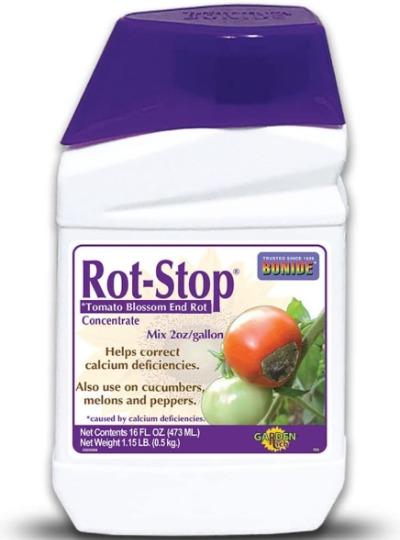
Bonide Rot-Stop is specifically designed for blossom end rot in tomatoes. This is a liquid concentrate, so it’s already ready to mix and apply. The 16-ounce bottle makes it convenient to store. The concentrate nature means a little goes a long way. You can treat a lot of tomato plants with one bottle.
This product takes a different approach from calcium nitrate. It’s targeted specifically at the blossom end rot problem rather than being a general-purpose fertilizer.
How to Use It
You mix the concentrate with water according to the label directions. Then you apply it as a foliar spray or soil drench. Foliar spraying means you spray it directly on the leaves and let them absorb the nutrients. This gets calcium into the plant system through the leaves instead of just the roots.
For most applications, you’ll dilute it and apply it every seven to ten days. The bottle comes with clear instructions, so you don’t have to guess about mixing ratios.
Key Features Explained
The concentrated liquid format means you only keep what you need and use what you buy. No dissolving dry products or waiting for things to mix. You pour, mix, and spray. That’s it.
The product is formulated to address calcium deficiency specifically. It’s not a complete fertilizer with nitrogen and potassium. It’s laser-focused on calcium. This makes it useful if your soil already has good nitrogen and potassium but you suspect calcium is the limiting factor.
The ability to apply as a foliar spray is valuable. When you spray nutrients on leaves, some absorption happens directly through the leaf surface. This gets past any soil-related problems that might be blocking calcium uptake from the roots.
Real-Life Performance
Users report that Rot-Stop works well for stopping new blossom end rot from forming. You apply it, and within a couple weeks, new fruit develops without the characteristic dark spots. The tomatoes that formed before treatment still have rot, but future fruit is clean.
Some gardeners find the foliar spray route particularly helpful. When soil conditions are less than ideal—maybe the soil is compacted or drainage is poor—the foliar application bypasses those issues and gets calcium to the plant anyway.
One thing tomato growers notice is that the product doesn’t seem to help if you have a serious soil calcium deficiency. It works best as a supplement when the problem is moderate.
Pros
- Already in liquid form—no mixing dry products
- Concentrated, so one bottle treats many plants
- Can be applied as foliar spray or soil drench
- Specifically designed for blossom end rot
- No nitrogen, so it won’t overstimulate late-season growth
- Good for container gardeners who want precise control
- Convenient 16-ounce size for home gardens
Cons
- Only addresses calcium, not other nutrients
- Needs regular applications every seven to ten days
- The concentrate is more expensive per ounce than dry products
- Foliage spraying requires a spray bottle (not included)
- Less total product value if you have many plants
- Not for gardeners who prefer dry applications
Performance and Results
This product performs well at its specific job: stopping blossom end rot from appearing on new fruit. It doesn’t cure existing rot on damaged fruit, but it prevents the problem from spreading to new tomatoes.
Results show up in about two to three weeks. You apply it regularly, and after the first couple applications, you notice new fruit developing normally. The texture improvement and better fruit firmness also become apparent.
For gardeners in dry climates or dealing with inconsistent watering, this product helps because it provides available calcium regardless of soil water movement. That’s a real advantage in tough growing conditions.
Ease of Use
This is probably the easiest product to use on this list. You open the bottle, measure out the concentrate, add water, and spray or pour. No dissolving, no dust, no waiting. The liquid format just feels more straightforward to most people.
If you prefer foliar applications, the spray bottle approach fits nicely into a regular watering routine. You can spray your tomatoes when you water, right there in the garden.
Value for Money
The 16-ounce concentrate bottle isn’t cheap per ounce, but because it’s concentrated, one bottle covers a lot of tomato plants for an entire season. For a small to medium home garden, one bottle might be all you need. The cost per plant works out to reasonable if you have several tomatoes to treat.
3: Bloom City Professional Grade Ultra Pure Cal-Mag Growing Fertilizer
Product Overview
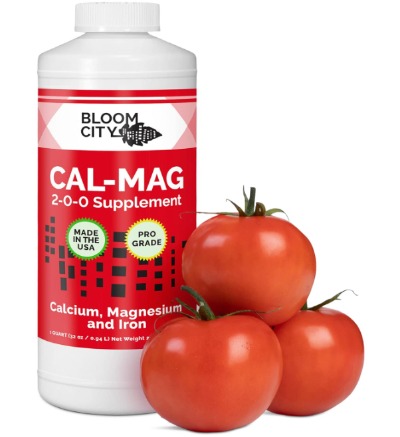
Bloom City Cal-Mag is a professional-grade calcium and magnesium fertilizer. This is a liquid product in a quart-sized bottle (32 ounces). “Professional grade” means it’s formulated to pharmaceutical or laboratory standards for purity. You’re not getting filler material or impurities.
This product is designed for serious growers and commercial operations, but home gardeners use it too. The professional-grade quality appeals to people who want maximum reliability and purity.
How to Use It
You dilute the liquid concentrate with water and apply it as a soil drench. You water your tomato plants with the diluted mixture. The typical rate is about one tablespoon per gallon, but you’ll check the label for exact directions since this can vary.
Apply it every week or two throughout the season. It’s meant to be an ongoing supplement, not a one-time fix.
Key Features Explained
The professional-grade claim is significant. This means the product meets strict purity standards. You’re not getting any weird proprietary blends or ingredients you can’t identify. Just calcium and magnesium in a form plants can access.
The ultra-pure designation means there are minimal contaminants or heavy metals. If you’re growing food and concerned about what goes into your soil, this level of purity matters. It shows the product has been tested and verified.
The inclusion of both calcium and magnesium is smart. Magnesium is often forgotten, but it’s critical for chlorophyll production and energy transfer in plants. Many soils are low in magnesium too. Addressing both prevents multiple problems at once.
Being a quart-sized bottle means you get more product than some of the others on this list. That’s genuinely useful if you have multiple tomato plants or a large garden.
Real-Life Performance
Growers using this product report excellent results. Blossom end rot stops appearing. Plants develop deeper green foliage because the magnesium is working. Overall plant vigor improves noticeably.
The professional-grade purity seems to matter. Users report consistent results from bottle to bottle. You don’t get the variation you sometimes see with lower-quality products. Each application delivers what you expect.
Some experienced growers prefer this for long-term health rather than emergency rot-stopping. They use it preventatively, starting when plants are young. This approach seems to prevent problems before they start rather than fixing them after they appear.
Pros
- Professional-grade purity and testing
- Includes both calcium and magnesium
- Larger 32-ounce bottle provides more value
- Consistent, reliable results across applications
- Works well for both prevention and correction
- No nitrogen (won’t overstimulate late-season growth)
- Excellent for quality-conscious growers
Cons
- Higher price point than some alternatives
- Requires regular weekly or biweekly applications
- Professional-grade quality might be overkill for some gardeners
- The larger bottle means you need storage space
- Liquid concentrate that you must mix yourself
- Not organic certified
Performance and Results
This product delivers excellent performance. Blossom end rot prevention is reliable. The addition of magnesium means you get healthier plants overall, not just rot prevention. Leaves stay green and vibrant. Stems are strong.
The consistency from bottle to bottle matters for planning and managing your garden. You can expect the same results each application. This reliability is worth the higher cost for many gardeners.
Ease of Use
It’s straightforward. Measure, mix, water. No spray bottles needed, no dust, just liquid and water. The concentrated format means you don’t need much product per application, so the quart bottle lasts a long time.
The main hassle is remembering to apply it regularly. You need to work it into your watering schedule. Some gardeners set a reminder on their phone. Others just plan it as part of their weekly garden routine.
Value for Money
The 32-ounce bottle is a solid amount of product. A single bottle typically covers a full season for a home gardener. The professional-grade quality and magnesium inclusion justify the higher cost. You’re paying for purity and broader nutrient coverage, not just calcium.
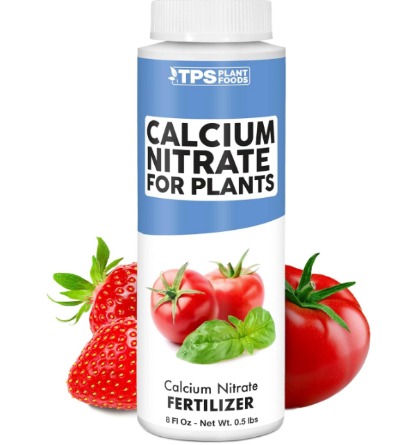
4: Calcium Nitrate Fertilizer – Liquid Fertilizer Supplement 8 oz
Product Overview
This is another calcium nitrate product, but in liquid form and a smaller size. The 8-ounce bottle is the most compact option on this list. It’s convenient for gardeners with limited storage space or just a few tomato plants.
The liquid format means you get the benefits of calcium nitrate without having to dissolve dry product yourself. You open it, dilute it, and apply it.
How to Use It
Mix it with water according to the label and apply it to the soil around your tomato plants. You’re not spraying this one on leaves—it’s a soil application. Apply it every week to two weeks throughout the growing season.
The small size is ideal for testing. If you’ve never used calcium nitrate before, eight ounces lets you try it without committing to a five-pound bag of dry product.
Key Features Explained
The liquid calcium nitrate format combines the effectiveness of calcium nitrate with the convenience of a ready-to-mix liquid. You don’t deal with dissolving dry granules in water. The product is already in solution form.
The smaller 8-ounce size is perfect for container tomatoes or a small raised bed. One bottle provides multiple applications without taking up much shelf space.
The nitrogen content (as in all calcium nitrate products) supports plant growth alongside the calcium. You’re feeding the plant comprehensively, not just addressing a single nutrient gap.
Real-Life Performance
This product works just like solid calcium nitrate—because it basically is calcium nitrate, just already in liquid form. Blossom end rot stops appearing on new fruit. Plant growth improves. Fruit quality increases.
Users appreciate the convenience factor. Not having to measure and dissolve dry product feels like a time-saver, even though the actual time difference is minimal. It’s more about the experience of use.
The small bottle lasts longer than you might expect because it’s concentrated. You’re not dumping large amounts of liquid into your garden. A little dilutes to make a lot of watering solution.
Pros
- Liquid format, no dissolving needed
- Compact 8-ounce bottle
- Perfect for trying calcium nitrate without bulk purchase
- Good for container or small-garden tomatoes
- Includes nitrogen for overall plant health
- Quick results
- Convenient ready-to-use format
Cons
- Smaller bottle means you may need to reorder midseason with many plants
- More expensive per ounce than dry calcium nitrate
- Requires regular applications every one to two weeks
- The nitrogen might not be ideal for very late-season use
- Not organic
- Limited quantity for extended seasons
Performance and Results
Performance is solid and reliable. This product does what calcium nitrate does—it stops blossom end rot and improves fruit quality. Because it’s liquid, the results might show up slightly faster than with dry product, but the difference is minimal.
The main performance advantage is consistency. You know exactly how much you’re applying each time. There’s no guessing about how well your dissolving worked. The product comes pre-mixed.
Ease of Use
This is about as easy as it gets. Open bottle, measure, add to water, apply. That’s your whole routine. No dissolving equipment needed. No dust. No waiting for things to mix.
For busy gardeners who want the benefits of calcium nitrate but without the small hassle of dissolving product, this liquid version is worth the premium.
Value for Money
The 8-ounce bottle is small but concentrated. One bottle typically provides several applications. For a gardener with just a few tomato plants, this might be all you need for the entire season. The cost per application is reasonable if you use it sparingly.
If you have many tomato plants, the small size becomes a limitation. You’ll use it up and need to reorder. For that situation, the larger dry product or the larger liquid bottles on this list make more economic sense.
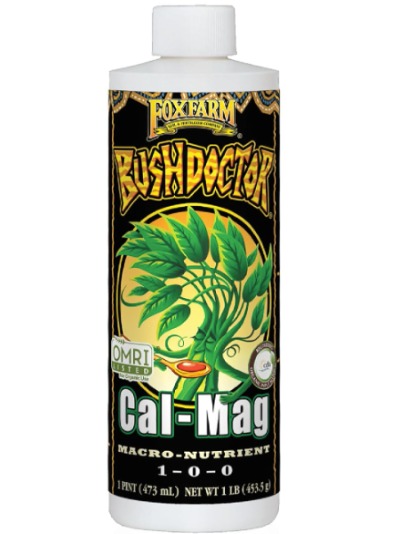
5: FoxFarm Bush Doctor Cal Mag for Plants
Product Overview
FoxFarm Bush Doctor Cal Mag is specifically designed for organic growing. It’s OMRI (Organic Materials Review Institute) listed, which means it’s approved for use in certified organic gardening. This product comes in a 1-pint bottle, which is a nice middle-ground size.
The FoxFarm brand has a strong reputation in the growing community. This product is meant to address both calcium and magnesium needs with ingredients acceptable in organic systems.
How to Use It
You dilute the concentrate with water and apply it as a soil drench around your tomato plants. The typical rate is about one tablespoon per gallon, but check your label for exact proportions.
Apply it every week or two throughout the season. Many growers using this also apply it early in the season as a preventative rather than waiting for problems to appear.
Key Features Explained
The organic certification is the biggest feature here. If you’re growing tomatoes in a certified organic garden or trying to keep everything organic, this product fits your system perfectly. Most commercial calcium supplements aren’t approved for organic use.
The combination of calcium and magnesium addresses two potential deficiencies at once. Magnesium is often overlooked, but it’s critical for plant health. This product handles both.
The 1-pint bottle is a solid size. It’s bigger than the smallest bottles on this list but smaller than the largest ones. This size works well for a medium-sized home garden.
FoxFarm products generally focus on plant health rather than just hitting specific nutrient targets. This product is formulated with that philosophy in mind.
Real-Life Performance
Organic gardeners report that this product works well. Blossom end rot stops appearing. Plants develop good vigor. The magnesium content helps with overall plant health and green foliage.
One thing users mention is that the product works best as a preventative. If you use it from the beginning of the season, you prevent most blossom end rot problems. Using it after rot appears helps for future fruit, but it’s less dramatic than starting early.
The OMRI certification means you can use it without worrying about whether it’s approved. For organic growers, that peace of mind is valuable.
Pros
- OMRI listed for organic gardening
- Includes both calcium and magnesium
- 1-pint bottle is good middle-ground size
- Works well for prevention when started early
- Reputable FoxFarm brand
- Good for growers managing organic certifications
- Reliable results
Cons
- Higher cost compared to non-organic alternatives
- Requires regular applications every one to two weeks
- Works better preventatively than as emergency treatment
- Organic ingredients may be slightly less concentrated
- Not the most budget-friendly option
- Limited availability in some areas
Performance and Results
This product performs well, especially when used preventatively. If you start using it when plants are young, you prevent most blossom end rot problems. Using it as a rescue treatment after problems appear works too, but takes longer.
The magnesium inclusion really shows up in plant vigor. Foliage stays deep green. Plants grow strong. The combination approach to calcium and magnesium prevention is more complete than single-nutrient products.
Ease of Use
Just like other liquid concentrates, the ease of use is high. Measure, dilute, apply. No mixing dry products, no special equipment needed. The routine fits easily into regular garden care.
Value for Money
The 1-pint bottle provides decent value for an organic product. One bottle treats multiple plants across several weeks. For organic gardeners, the value includes peace of mind that the product meets organic standards. You’re paying for that certification.
Non-organic gardeners might find cheaper alternatives. But if your system demands organic inputs, this product delivers solid results at a reasonable organic price point.
Side-by-Side Comparison
Format and Convenience
The liquid products (Bonide, Bloom City, the 8-ounce Calcium Nitrate, and FoxFarm) beat the dry Calcium Nitrate for pure convenience. You measure, mix, and apply. No dissolving required. If you hate dealing with dry products, the liquids are clearly superior.
Among liquids, the 8-ounce Calcium Nitrate is most convenient for small spaces. FoxFarm and Bloom City offer better value for larger gardens.
Speed of Results
All these products work reasonably fast. Liquid products show results maybe slightly faster than dry, but we’re talking days difference at most, not weeks. If you need immediate results because you’re already seeing rot, any of these work.
Cost Effectiveness
For pure cost per application, the dry Calcium Nitrate 15.5-0-0 beats everything else. Five pounds lasts an entire season for reasonable money.
The liquid Calcium Nitrate 8-ounce is next best for small gardens.
If you have many plants or need a larger quantity, Bloom City offers good professional-grade value.
FoxFarm costs more due to organic certification, but it’s the right choice if you need organic approval.
Bonide sits in the middle. It’s not the cheapest, but it’s not the most expensive either.
Nutrient Coverage
Calcium Nitrate products give you both calcium and nitrogen. Good for overall growth.
Bloom City and FoxFarm give you calcium and magnesium. Better for complete nutrient balance.
Bonide focuses only on calcium. This is good if you don’t need extra nitrogen, but it’s less complete overall.
Best for Specific Situations
Use Calcium Nitrate dry 15.5-0-0 if you have multiple plants and want the lowest cost per application. Great for budget-conscious gardeners with average-sized gardens.
Use Bonide Rot-Stop if you prefer liquid convenience and want foliar spray capability. Also good if you don’t want extra nitrogen.
Use Bloom City Cal-Mag if you want professional-grade purity and broader nutrient coverage. Best for quality-focused growers.
Use Calcium Nitrate 8-ounce liquid if you have just a few tomato plants or limited storage space. Good for testing before buying bulk product.
Use FoxFarm Cal Mag if you’re growing organically or prefer organic products. Worth the premium if certification matters for your operation.
Buying Guide for Tomato Calcium Supplements
How to Know You Need Calcium
Blossom end rot is the classic sign. Look at the bottom of your tomato. If you see dark, sunken spots that look almost like the fruit is rotting from inside, that’s blossom end rot. It’s a calcium deficiency issue.
You might also notice:
- Weak plant growth despite good feeding
- Poor fruit firmness (tomatoes feel soft and squish easily)
- Cracking or splitting in fruit, especially after rain
- Poor fruit set (flowers drop instead of developing fruit)
Soil Testing vs Trial Products
If you want to know exactly what your soil needs, get it tested. A soil test tells you calcium levels specifically. But a soil test takes time and costs money.
A faster approach is to just try a calcium supplement. If you have blossom end rot, calcium is almost definitely part of the problem. Trying a product costs less than testing and gives results faster.
Preventative vs Reactive
Smart gardeners start calcium supplementation early in the season, before problems appear. This is preventative use. You’re ensuring calcium is available throughout growth.
Reactive use means you add calcium after you see blossom end rot developing. This still works, but you lose the fruit that already has rot. Future fruit will be better, but the damage is done.
If this is your first time with a calcium product, start early next season. Add it when you plant, not when problems appear.
Container vs Garden Tomatoes
Container tomatoes benefit especially from supplemental calcium. Containers have limited soil volume. Calcium in that limited soil gets depleted faster. Consistent applications matter more.
Garden tomatoes in good soil need less frequent supplementation. But consistent applications still help quality.
Both benefit from calcium, but container gardeners especially shouldn’t skip it.
Application Frequency
Read your product label for specific recommendations. But generally:
- Liquid concentrates: every seven to ten days
- Dry products: every two to three weeks
- Preventative feeding: start early and maintain consistent schedule
- Problem correction: more frequent applications initially
Once you see improvement (no new rot appearing), you can usually back off to maintenance frequency.
Mixing and Storage
Keep liquid concentrates in cool, dark places. They last a long time but sunlight can degrade them.
Keep dry products in sealed containers in dry locations. Moisture makes them clump and degrade.
Mix only what you’ll use in a day or two. Prepared solutions start degrading pretty quickly, especially in sunlight.
Water Quality
Hard water with high mineral content can interfere with calcium absorption. If you have hard water, consider adding a small amount of liquid sulfur or using slightly acidic water.
This sounds complicated, but most gardeners don’t need to worry about it. If you have obviously hard water (buildup in pipes, white mineral deposits), that’s when it matters.
Common Mistakes to Avoid
Not Starting Early Enough
The biggest mistake is waiting until you see blossom end rot to add calcium. By then, you’ve lost fruit. Start in early season as a preventative.
Inconsistent Applications
A single application doesn’t prevent rot for the rest of the season. You need consistent applications every week or two. Skipping applications or doing them randomly doesn’t work.
Relying Only on Calcium
Blossom end rot involves calcium, but water management also matters massively. If you water inconsistently, even perfect calcium availability won’t prevent rot. Water regularly and evenly.
Overdoing Nitrogen
Some gardeners add too much nitrogen to their tomatoes trying to make them grow big. Extra nitrogen actually makes blossom end rot worse by diluting fruit calcium. Use calcium products with reasonable nitrogen, not high-nitrogen fertilizers.
Ignoring Magnesium
Some products address only calcium. Magnesium is often overlooked but equally important. Products like Bloom City and FoxFarm that include magnesium are smarter purchases than calcium-only products.
Not Following Label Directions
Every product has specific mixing ratios and application frequency. Not following these means you either underdose (no results) or overdose (potential problems). Read your label completely before starting.
Giving Up Too Soon
It takes a few weeks of consistent application to see real results. Gardeners who apply once or twice and then give up think the product doesn’t work. Give products at least three to four weeks of regular use before deciding.
Using Wrong Application Method
Some products work as soil drenches. Others work as foliage sprays. Bonide, for example, can do both. If you’re applying a soil-only product as a foliage spray, you’re not using it correctly.
Forgetting About Watering
This isn’t really about the product, but consistent watering is as important as calcium for preventing blossom end rot. A dry soil makes calcium unavailable even if you’re adding plenty of it. Water regularly.
Who Should Buy These Products?
Tomato Gardeners Dealing with Blossom End Rot
If you’re already seeing rot, buy one of these products immediately. Your plant is desperate for available calcium.
Home Gardeners Wanting Quality Tomatoes
Even without visible rot, adding calcium improves fruit firmness and quality. Better fruit is worth the small cost.
Container Tomato Growers
Container soil has limited reserves. Consistent calcium supplementation is essential for good fruit development.
Organic Growers
Buy FoxFarm Cal Mag. It’s OMRI listed and designed for organic systems.
Budget-Conscious Gardeners
Buy the 5-pound dry Calcium Nitrate. It’s the cheapest option per application.
Gardeners Who Hate Mixing
Buy one of the liquid products. You just open, pour, and apply.
Quality-Focused Growers
Buy Bloom City. Professional-grade purity ensures consistent, reliable results.
Gardeners with Limited Space
Buy the 8-ounce liquid Calcium Nitrate. It’s compact and convenient.
Multi-Plant Gardeners
Buy the larger containers (Bloom City quart or 5-pound dry Calcium Nitrate). Better value for multiple plants.
Gardeners Who Want Prevention
Any of these work for prevention. Start early in the season and apply regularly before problems appear.
Real Results You Can Expect
Using these products correctly delivers visible results. Here’s what actual improvement looks like:
Week One to Two
You apply your first few doses. Nothing visibly changes yet. Plants look the same. This is normal. Calcium movement through the plant takes time.
Week Three to Four
New fruit that’s forming now will have better calcium content. You won’t notice a dramatic change, but observant gardeners see slightly improved plant vigor. Leaves might be slightly greener.
If you’re dealing with existing blossom end rot, new fruit starts appearing without the dark spots. Fruit that already had rot stays damaged, but you know future fruit will be better.
Week Five to Six
If you’ve been consistent, you’re past the danger zone. New tomatoes are developing with good calcium content. The risk of blossom end rot for new fruit drops dramatically.
Ongoing Through Season
By mid-season and beyond, consistent application ensures all new fruit develops with adequate calcium. Your tomatoes firm up. Cracking and splitting decreases. Overall fruit quality improves noticeably.
You get bigger, firmer, better-tasting tomatoes. That’s the real benefit here.
Final Verdict: Choosing Your Best Option
All five products on this list work. They’re all legitimate solutions to calcium deficiency in tomato plants. Your choice really depends on your specific situation.
Go with Calcium Nitrate 15.5-0-0 (Dry, 5LB) if you want the best value and don’t mind measuring dry product. This is the winner for budget-conscious gardeners with multiple plants.
Go with Bonide Rot-Stop if you want convenience and the option to spray leaves. This is perfect for gardeners who like easy applications and want to address rot specifically.
Go with Bloom City Cal-Mag if you want professional-grade quality and broader nutrient coverage. This is best for serious gardeners willing to pay for premium products.
Go with Calcium Nitrate Liquid 8-ounce if you have just a few tomato plants and want to test calcium products without bulk purchase. This is ideal for small gardens or first-time users.
Go with FoxFarm Cal Mag if you’re growing organically and need OMRI certification. This is the right choice for organic systems where certification matters.
Wrapping It Up
Blossom end rot doesn’t have to ruin your tomato harvest. A reliable calcium supplement stops it dead in its tracks. These five products represent the solid options available to home gardeners right now.
The best one for you depends on your garden size, budget, and preferences. But any of them, used consistently and correctly, will improve your tomato health and fruit quality.
Start with calcium supplementation early next season. Don’t wait for problems. Apply consistently every week or two. Combine it with regular watering. That’s the recipe for perfect, rot-free tomatoes.
Your summer tomato harvest can be so much better. These products make it happen. Pick one that matches your situation, commit to the application schedule, and watch your tomatoes transform. The improvement is real and absolutely worth the small effort involved.
Happy growing. Your tomatoes will thank you for the calcium boost.

Hi, I’m Mary, the founder of GardenCure.com. I’m passionate about creating healthy, beautiful gardens and well-kept lawns. I share practical experience and trusted advice on garden and lawn gear that truly works. With the support of my dedicated research team, our writers produce honest, in-depth reviews using reliable, authentic sources—helping you choose the right tools with confidence for your outdoor space.