How Impact Sprinklers Work?
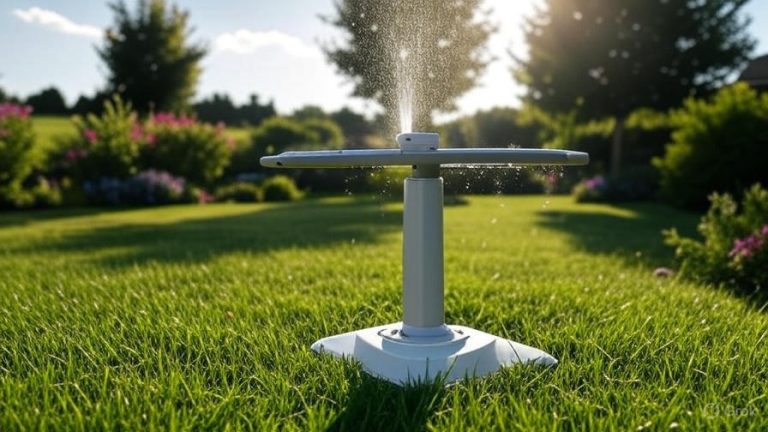
If you have ever walked past a lawn on a summer morning and heard that steady “tick-tick-tick” sound while a stream of water swings back and forth, you have heard an impact sprinkler in action. This little machine has been watering lawns, gardens, and farms for decades, and it still remains one of the most trusted tools for outdoor watering today.
In this article
In this article, we will break down exactly how impact sprinklers work, what makes them tick (literally), and why so many homeowners and farmers still rely on them instead of newer sprinkler designs. We will keep things simple, so even if you have never touched a sprinkler head in your life, you will walk away knowing exactly how these clever devices turn a plain hose into a wide, even spray of water.
What Is an Impact Sprinkler?
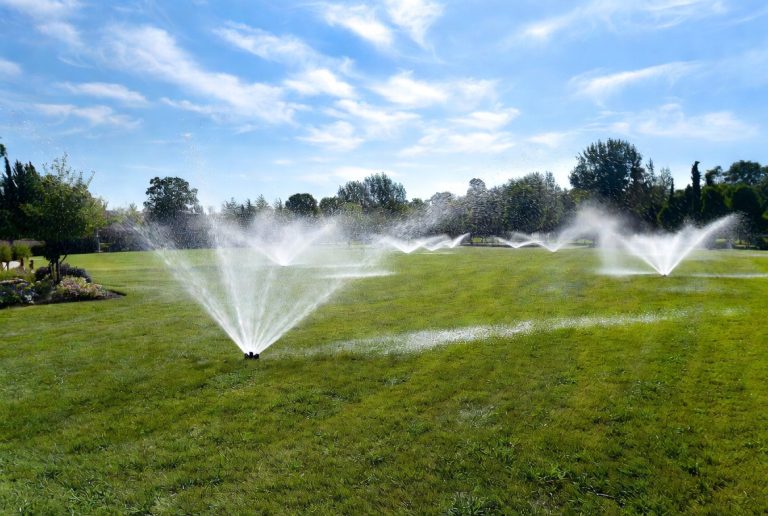
An impact sprinkler, sometimes called an impulse sprinkler, is a type of lawn sprinkler that shoots a single stream of water out in a rotating pattern. Unlike oscillating sprinklers that wave back and forth in a fan shape, or rotor sprinklers that spin smoothly using gears, an impact sprinkler moves in small, sharp jumps. Each jump is caused by a spring-loaded arm that gets hit by the water stream itself, which is where the name “impact” comes from.
You have probably seen this design used on golf courses, sports fields, farms, and plenty of backyards. It is famous for covering large areas with strong, even water pressure, which makes it a favorite among people who need to water big open spaces.
The Basic Parts of an Impact Sprinkler
Before we dive into the mechanics, let us look at the main parts that make up a typical impact sprinkler. Knowing these parts will make the “how it works” section much easier to follow.
- Base: This is the bottom part that connects to the hose or the underground pipe. It stays still while the top part spins.
- Riser: A vertical pipe that lifts the sprinkler head up so it can spray water without getting blocked by grass.
- Body: The main housing that holds all the moving parts together.
- Nozzle: The small opening where water shoots out in a stream.
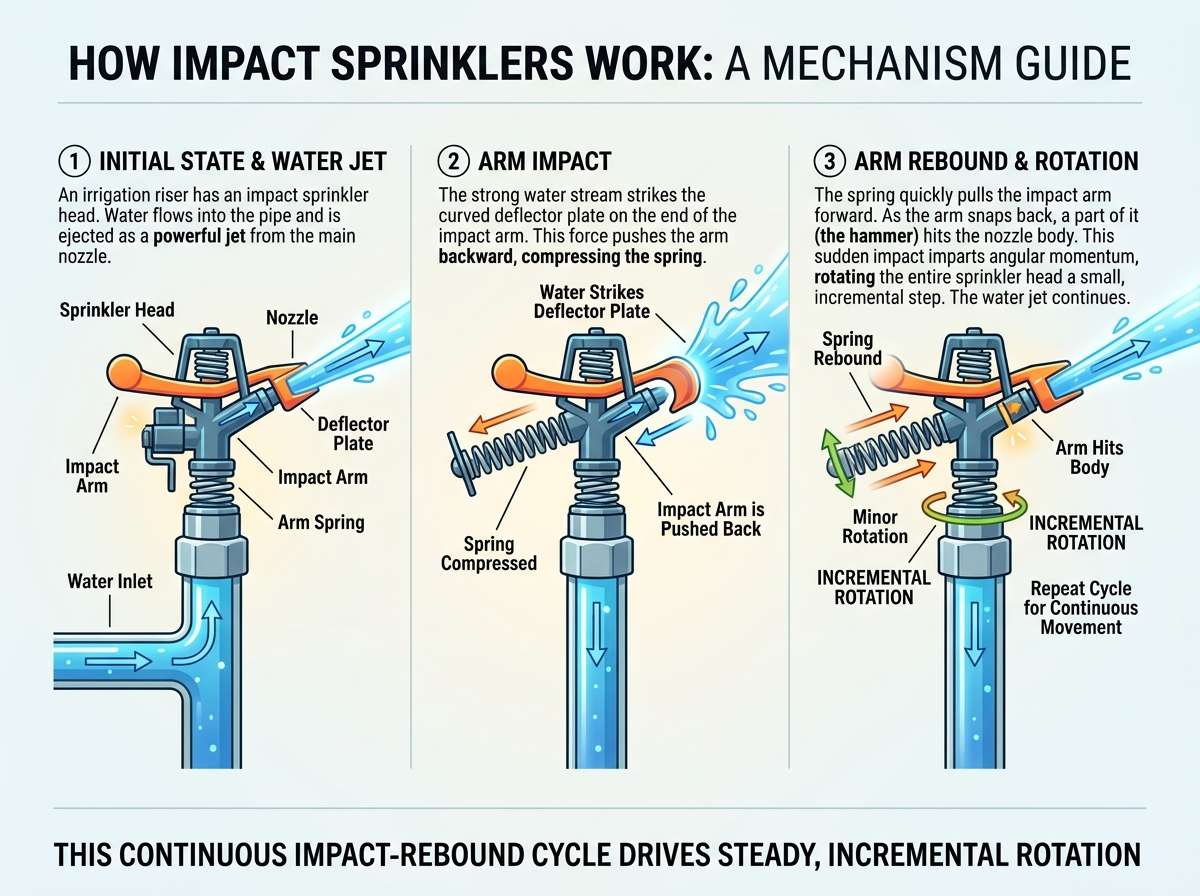
- Impact arm (also called the swing arm): A metal or plastic arm with a spring attached to it. This arm swings into the water stream and then springs back, creating the tapping motion.
- Spring: Connected to the impact arm, this small but tough spring pulls the arm back into place after each hit.
- Diffuser pin or screw: A tiny adjustable pin near the nozzle that breaks up the water stream into smaller droplets, which helps prevent damage to plants from a hard, concentrated blast.
- Range and radius adjustment screws: These let you control how far and how wide the water sprays.
Now that we know the pieces, let us walk through what happens when you turn on the water.
Step-by-Step: How Water Turns Into Motion
Here is the fun part. Impact sprinklers do not need batteries, motors, or electricity of any kind. They run purely on water pressure, and the whole system is a clever bit of old-school engineering.
Step 1: Water Enters the Base
Once you connect the sprinkler to a hose or an irrigation line and turn on the water, pressure builds up inside the base and travels up through the riser into the body of the sprinkler.
Step 2: Water Shoots Through the Nozzle
The pressurized water is forced through a narrow nozzle at the top of the sprinkler. Because the opening is small compared to the pipe behind it, the water speeds up as it exits, just like when you put your thumb over the end of a garden hose to make the water shoot further.
Step 3: The Stream Hits the Impact Arm
Right in front of the nozzle sits the impact arm, which rests in the path of the water stream. As the stream shoots out, it strikes a small curved piece on the arm called the spoon or flag. This hit pushes the arm outward, away from the water flow.
Step 4: The Spring Pulls the Arm Back
As the arm swings outward from the force of the water, it stretches a small spring that is attached to the body of the sprinkler. Once the water stream is no longer pushing the arm, the spring pulls the arm right back into place. When it snaps back, it strikes the body of the sprinkler, which creates that familiar clicking or tapping sound.
Step 5: The Whole Head Rotates a Tiny Bit
Here is the clever part: the impact arm is not just there to make noise. When it swings back into place, it also nudges the entire top part of the sprinkler to rotate slightly, usually just a few degrees at a time. This happens because the arm is connected to a ratchet-like mechanism inside the body.
Step 6: The Cycle Repeats
Once the arm resets, the water stream hits it again, and the whole process repeats. Hit, swing, spring back, tiny rotation, hit again. This happens many times per minute, so the sprinkler slowly and steadily spins in a circle (or part of a circle), spraying water across a wide area in a smooth, sweeping pattern.
That constant tick-tick-tick sound you hear is simply the arm hitting the body every time it resets. It is a small mechanical action, but it adds up to cover a huge stretch of lawn with water, all without any electric motor.
Why the Tapping Motion Matters
You might wonder why sprinkler makers did not just use a smooth motor to spin the head around. There are actually some solid reasons the impact design has stuck around for so long.
First, the tapping motion breaks up the water stream slightly with each hit, which helps spread droplets more evenly across the lawn instead of dumping all the water in one thin line. Second, because the movement is powered entirely by water pressure, there are no electrical parts to wear out, short-circuit, or need replacing. Third, this simple mechanical design is tough. Impact sprinklers can run for years in dusty, sunny, or wet conditions without breaking down, since there is very little that can go wrong compared to gear-driven or electronic sprinklers.
Adjusting the Spray Pattern
One of the best things about impact sprinklers is how easy they are to customize for different yard shapes. Here is how you can adjust them to fit your space.
Full Circle vs. Part Circle
Most impact sprinklers can be set to water in a complete 360-degree circle, or they can be limited to water only part of a circle, like a half circle or a quarter circle. This is done by adjusting two small trip stops on the sprinkler body. These stops act like tiny walls that block the rotation at certain points, forcing the sprinkler to reverse direction instead of continuing in a full loop.
This feature is handy if your sprinkler sits near a corner of the yard, a driveway, or a walkway, since you do not want to waste water spraying on pavement.
Controlling the Range
The range, or how far the water travels, is controlled mostly by water pressure and the size of the nozzle opening. Higher pressure and a wider nozzle push water further, while lower pressure or a smaller nozzle keeps the spray closer to the sprinkler. Some models also come with a range screw that partially blocks the nozzle to fine-tune the distance.
Controlling the Droplet Size
Remember that little diffuser pin we mentioned earlier? By moving it closer to or further from the nozzle opening, you can change how fine or coarse the water spray is. Pushing the pin closer breaks the stream into a light mist, which is gentler on young plants and seedlings. Pulling it back gives you a stronger, more direct stream, which is better for covering long distances quickly.
Types of Impact Sprinklers
Not all impact sprinklers look or work exactly the same. Here are a few common types you might come across:
- Pop-up impact sprinklers: These sit hidden below ground level and pop up when water pressure builds, then sink back down when the water is turned off. They are popular for underground irrigation systems because they stay out of sight and out of the way of lawnmowers.
- Above-ground impact sprinklers: These sit on a spike or stand and connect directly to a garden hose. They are portable and easy to move around, making them great for renters or people who want flexibility.
- Farm and agricultural impact sprinklers: Built tougher and larger, these are used for irrigating crops and cover much bigger areas with stronger water flow.
- Mini impact sprinklers: Smaller versions used for gardens, flower beds, or shrubs where a gentler spray is needed.
Impact Sprinklers vs. Other Sprinkler Types
To really appreciate how impact sprinklers work, it helps to compare them with other common designs.
Impact sprinklers vs. rotor sprinklers: Rotor sprinklers use an internal gear system driven by water flow to rotate smoothly and quietly. They tend to be more expensive and have more moving parts inside, which can mean more that could eventually wear out. Impact sprinklers, on the other hand, are simpler, cheaper, and often last longer because of their tough, basic design.
Impact sprinklers vs. oscillating sprinklers: Oscillating sprinklers use a row of small holes on a bar that swings back and forth, creating a fan-shaped spray. They cover rectangular areas well but usually cannot throw water as far as an impact sprinkler can.
Impact sprinklers vs. spray sprinklers: Spray sprinklers release a fixed, fan-shaped mist without any rotation, which is great for small garden beds but not efficient for large lawns. Impact sprinklers cover far more ground thanks to their rotating stream.
Benefits of Using Impact Sprinklers
There are several reasons impact sprinklers remain a go-to choice, even with newer sprinkler tech available on the market.
- Long coverage distance: They can throw water much farther than many other sprinkler types, making them ideal for large lawns, parks, and fields.
- Even water distribution: The rotating and pulsing motion spreads water more evenly than a fixed spray.
- Durability: With few electrical components, they hold up well against sun, dirt, and years of outdoor use.
- Affordability: Impact sprinklers are usually cheaper than rotor or smart sprinkler systems.
- Easy repairs: Because the mechanism is simple, replacing a spring or arm is often a quick fix rather than a costly repair.
- Low water waste on wind-heavy days: The strong, direct stream tends to hold its shape better in breezy conditions compared to fine mist sprays.
A Few Downsides to Keep in Mind
No tool is perfect, and impact sprinklers do have a few drawbacks worth knowing about.
- The clicking noise: Some people find the constant tapping sound annoying, especially if the sprinkler runs early in the morning or late at night.
- Uneven watering near the sprinkler: Because the stream needs distance to spread out, the area right around the sprinkler head sometimes gets less water than the outer edges.
- Manual adjustments: Setting the range and part-circle stops requires a bit of manual tinkering, unlike some modern smart sprinklers that can be programmed through an app.
How to Set Up an Impact Sprinkler Properly
Getting the most out of your impact sprinkler comes down to proper setup. Here are some simple tips to follow.
- Check your water pressure first. Impact sprinklers need decent pressure to work well. Too little pressure and the arm may not swing properly, leaving the sprinkler stuck spraying in one spot.
- Place it on level ground. A sprinkler sitting on a slope or uneven ground may not rotate evenly, leading to patchy watering.
- Set the trip stops for your yard shape. If your lawn is not a perfect circle, adjust the part-circle stops so you are not wasting water on the driveway or sidewalk.
- Test the range before leaving it running. Turn on the water and watch where the stream lands. Adjust the range screw and diffuser pin until the coverage looks right for your space.
- Raise the riser height if grass is tall. If your lawn grass is on the taller side, a low riser might get blocked, reducing coverage.
Maintenance Tips to Keep It Running Smoothly
Impact sprinklers are tough, but a little care goes a long way in keeping them working for years.
- Clean the nozzle regularly. Dirt, sand, and mineral deposits can clog the nozzle opening over time, weakening the spray. A quick rinse or a soft brush can clear out most blockages.
- Check the spring for wear. Over months of daily use, the spring that pulls the arm back can weaken or rust. If the arm feels loose or does not snap back sharply, it might be time for a replacement spring.
- Lubricate moving joints occasionally. A drop of silicone-based lubricant on the arm’s pivot point can keep the motion smooth and reduce squeaking.
- Store above-ground models indoors during freezing weather. Water left inside the body can freeze and crack the housing, so drain and store portable units when temperatures drop below freezing.
- Inspect the base and threads for leaks. A worn washer or loose connection at the hose fitting can waste water and reduce pressure at the nozzle.
Troubleshooting Common Problems
Even the most reliable impact sprinkler can run into hiccups. Here are a few common issues and quick fixes.
Problem: The sprinkler is not rotating. This is often caused by low water pressure, a stuck impact arm, or dirt jammed in the ratchet mechanism. Try cleaning the arm’s pivot area and confirming that your water source has enough pressure.
Problem: Water is only spraying in one direction. Check the trip stops. They might have shifted or gotten stuck, which limits the sprinkler to part-circle mode instead of full rotation.
Problem: The spray pattern looks weak or thin. This usually points to a clogged nozzle or worn-out gasket. Clean the nozzle thoroughly and check for any rubber seal that might need replacing.
Problem: The sprinkler leaks at the base. A loose connection or a worn O-ring is often the culprit. Tightening the hose connection or swapping in a fresh O-ring usually solves it.
Tips for Choosing the Right Impact Sprinkler for Your Space
Before buying a new impact sprinkler, think about a few key factors that will affect performance in your yard.
- Lawn size: Bigger yards benefit from sprinklers with a longer throw distance and adjustable range.
- Water pressure available: Homes with lower water pressure may need a sprinkler designed to work efficiently at lower PSI levels.
- Above-ground or in-ground setup: Decide early whether you want a portable model on a spike or a pop-up version built into an irrigation system.
- Material quality: Brass components tend to last longer than plastic ones, especially in areas with hard water or heavy sun exposure.
- Noise tolerance: If the clicking sound bothers you or your neighbors, look for models advertised as quieter, though some level of tapping sound is normal for this design.
Fun Facts About Impact Sprinklers
- The impact sprinkler design has stayed largely the same for many decades because the mechanism works so reliably.
- Farmers still use large-scale impact sprinklers on center-pivot irrigation systems that stretch across entire fields.
- The tapping sound is sometimes called the “sprinkler heartbeat” by longtime gardeners, since it becomes such a familiar background noise during watering season.
- Impact sprinklers can often throw water over 40 feet away, depending on pressure and nozzle size, making them one of the longest-reaching sprinkler types available for home use.
Final Thoughts
Impact sprinklers might look old-fashioned compared to sleek modern irrigation gadgets, but their simple, rugged design is exactly why they remain so popular. With nothing more than water pressure, a spring, and a swinging arm, these devices manage to water huge stretches of lawn evenly and reliably, all without needing electricity or complicated programming.
Once you understand the tick-tick-tick rhythm and know how the arm, spring, and nozzle work together, adjusting your own sprinkler for range, pattern, and droplet size becomes much easier. With a bit of regular cleaning and a quick check on the spring now and then, an impact sprinkler can keep your lawn green and healthy for a very long time, proving that sometimes the simplest tools really are the best ones for the job.

Hi, I’m Mary, the founder of GardenCure.com. I’m passionate about creating healthy, beautiful gardens and well-kept lawns. I share practical experience and trusted advice on garden and lawn gear that truly works. With the support of my dedicated research team, our writers produce honest, in-depth reviews using reliable, authentic sources—helping you choose the right tools with confidence for your outdoor space.