5 Best Pre Emergent Herbicide In 2026
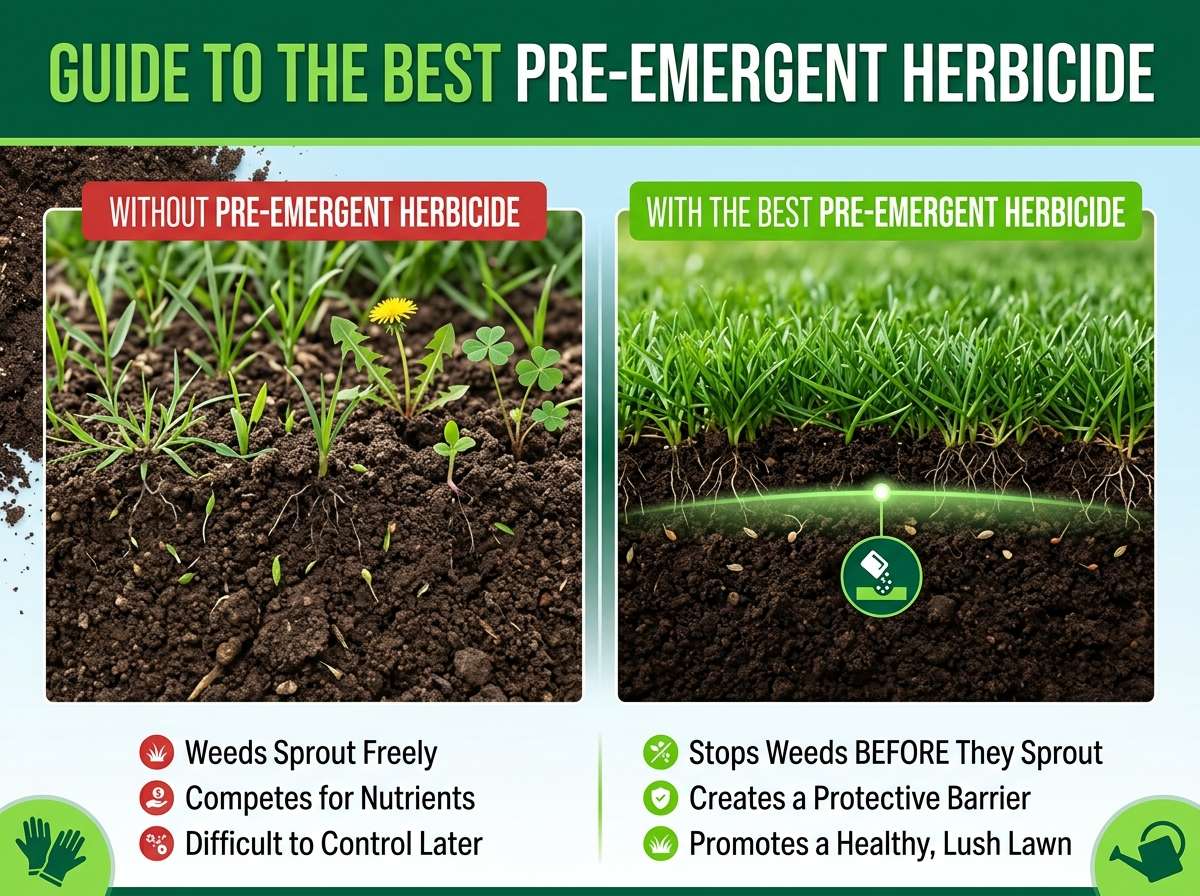
If crabgrass, dandelions, or other pesky weeds take over your yard every single season, you already know how frustrating it feels to pull weeds by hand only to watch new ones pop up a few weeks later. That endless cycle is exactly why a good pre emergent herbicide matters so much. Instead of fighting weeds after they sprout, this type of product stops weed seeds from germinating in the first place. It builds a thin chemical barrier in the top layer of soil, and when a weed seed tries to sprout through that barrier, it simply cannot survive.
In this article
In this roundup, we look closely at five popular pre emergent herbicide options that lawn owners, landscapers, and weekend gardeners rely on. We cover granular and liquid formulas, budget-friendly picks, and pro-grade products used by lawn care companies. By the end of this guide, you will know exactly which pre emergent weed control product fits your yard size, your weed problem, and your comfort level with lawn chemicals.
Weed prevention is not glamorous work, but it is one of the smartest lawn care habits anyone can build. A thick, healthy lawn full of grass and free of crabgrass, foxtail, and broadleaf weeds starts with the right timing and the right product. Let’s get into the details.
Why a Pre Emergent Herbicide Matters for Your Lawn
Weeds like crabgrass, spurge, and other grassy and broadleaf weeds spread through seeds that sit in your soil, sometimes for years, waiting for the right soil temperature to sprout. Once soil temps hit around 55 degrees Fahrenheit and stay there for a few days, crabgrass seeds start to germinate. A pre emergent herbicide creates a barrier that blocks this germination process before it even starts.
This is different from a post emergent herbicide, which kills weeds that have already grown. Post emergent products work on visible weeds, but a pre emergent product works on weeds you cannot even see yet. Many lawn care pros use both types together: pre emergent in early spring and again in fall, and post emergent as needed for anything that slips through.
The active ingredients in most pre emergent products fall into a few common categories, including prodiamine, pendimethalin, and dithiopyr. Each one works a bit differently, but the goal stays the same: stop weed seeds from becoming weed plants.
How We Reviewed These Products
We looked at five products that show up again and again in lawn care forums, home improvement stores, and professional supply catalogs. Our review covers:
- Coverage area and value per square foot
- Active ingredient and how long it lasts in soil
- Ease of application for beginners versus experienced users
- Real-world performance against crabgrass and broadleaf weeds
- Price point and overall value for money
- Safety notes and application timing
We did not test these products in a lab. Instead, this review pulls together product specs, ingredient research, and widely reported user experiences to give you a grounded, practical picture of each option. No hype, no exaggerated claims, just a straightforward look at what each product actually offers.
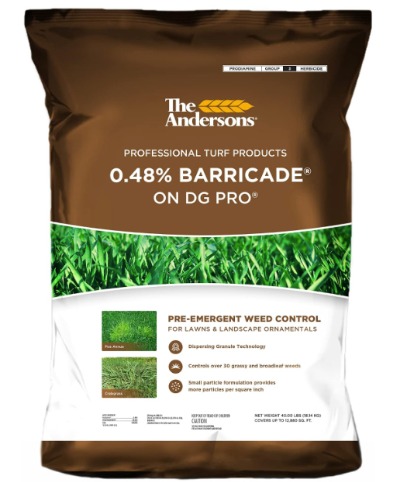
1. The Andersons Barricade Professional-Grade Granular Pre-Emergent Weed Control (40 lb, Covers 12,880 sq ft)
Product Description
The Andersons Barricade is a granular pre emergent herbicide built for larger lawns and properties. It uses prodiamine as its active ingredient, which is one of the most trusted compounds in the lawn care industry for stopping crabgrass, foxtail, and a long list of broadleaf weeds before they ever break through the soil surface. This is the same active ingredient many lawn care companies use on golf courses and commercial properties, so it carries a strong reputation among people who take their lawns seriously.
The 40 lb bag covers up to 12,880 square feet, which makes it a solid pick for anyone with a mid-size to large yard who does not want to reorder product every few weeks.
Best Use Cases
This product shines on larger residential lots, HOA-managed common areas, and small commercial properties. It also works well for homeowners who want a “set it and forget it” type of weed prevention plan, since prodiamine tends to last a long time in the soil compared to some other active ingredients.
Key Features Explained Simply
- Granular formula: You spread it with a regular broadcast or drop spreader, no mixing or spraying required.
- Prodiamine active ingredient: Known for long-lasting weed prevention, often stretching through several months.
- Professional-grade strength: Built to match what lawn care companies use, so it tends to be more concentrated than typical store-shelf products.
- Wide coverage: One bag handles a large lawn without needing a second bag halfway through.
Real-Life Usage Insight
Homeowners who apply this in early spring, right before crabgrass season kicks off, tend to report the strongest results. Timing matters a lot with any pre emergent, and this product is no exception. Applying too late, after weed seeds have already sprouted, will not give you the results you want since pre emergents only block germination, they do not kill existing weeds. Watering it in after application (about a quarter inch of water) helps activate the granules and push them into the soil where they need to be.
Pros
- Long-lasting protection, often four to six months per application depending on your region and rainfall
- Covers a large area, so it’s cost-effective for bigger yards
- Trusted, well-researched active ingredient with a long track record
- Easy to apply with a standard spreader
- Works on both grassy and broadleaf weeds
Cons
- The bag is heavy and bulky, which can be a bit much for smaller yards or apartment-style properties
- Overkill for small yards since you will use way less than the full bag
- Granular dust can be a bit messy during application on windy days
- Needs a spreader, so it’s not the most convenient option if you don’t already own one
Performance Discussion
Prodiamine-based products like this one are known for strong, dependable results against crabgrass and many common broadleaf weeds. The professional-grade label is not just marketing here, since prodiamine really is a staple in commercial turf management. Results depend heavily on getting the timing right and watering it in properly, but when applied correctly, this product holds up well through a full season.
Ease of Use
Spreading granules is about as beginner-friendly as pre emergent application gets. There is no mixing, no spraying equipment, and no risk of drift onto nearby plants the way liquid sprays can have. A basic push spreader or even a handheld spreader works fine for smaller sections.
Value for Money
Given the coverage area, this product offers strong value per square foot, especially for anyone managing half an acre or more. Smaller yards might not get full value out of a 40 lb bag unless they plan to store the leftover product for future seasons.
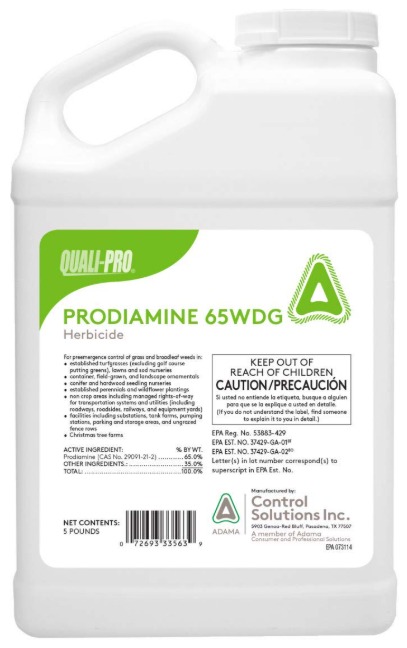
2. Prodiamine 65 WDG 5 lbs Pre-Emergent for Grass and Broadleaf Weeds (Generic Barricade)
Product Description
This product is a generic version of the well-known Barricade brand, using the same active ingredient (prodiamine) at 65% concentration in a water-dispersible granule (WDG) form. That means instead of spreading dry granules with a spreader, you mix this into water and apply it as a liquid spray. Because it’s a generic option, it tends to cost less per pound of active ingredient compared to name-brand versions, which makes it popular among DIY lawn care enthusiasts who want professional results without the professional price tag.
Best Use Cases
This is a great fit for people who already own a pump sprayer or backpack sprayer and want precise control over application rates. It’s also a smart pick for anyone treating multiple properties or a large lawn where mixing your own concentrate saves money over buying pre-mixed products.
Key Features Explained Simply
- WDG formulation: Mixes into water for spray application, giving you even coverage across the lawn.
- 65% prodiamine concentration: A strong, concentrated dose that stretches a long way per pound of product.
- Generic pricing: Same active ingredient as branded products like Barricade, often at a friendlier price.
- Flexible dosing: You can adjust your mix rate depending on the specific weed pressure in your yard.
Real-Life Usage Insight
Because this product needs mixing and spraying, it takes a bit more setup than a granular option. Users need a sprayer, some know-how on mixing ratios, and a calm day without much wind to avoid drift. That said, once you get the hang of it, liquid application often gives more even coverage than granules, especially on uneven or sloped lawns where granules can bounce or roll into low spots.
Pros
- Strong value since it’s priced lower than name-brand prodiamine products
- Even, adjustable coverage through spray application
- Long-lasting weed prevention thanks to the prodiamine active ingredient
- Small package size (5 lbs) still covers a large area since it’s a concentrate
- Works well for both residential and light commercial use
Cons
- Requires a sprayer and some mixing knowledge, which adds a learning curve for total beginners
- Not as beginner-friendly as granular options
- Windy days can cause spray drift, which risks affecting nearby garden beds
- No spreader settings chart included the way some branded granular bags offer
Performance Discussion
Prodiamine performs consistently across both granular and liquid forms, so this generic version delivers results in line with pricier branded products. The main difference comes down to application method rather than actual weed-blocking power. Reviews from DIY lawn care communities consistently point to strong crabgrass and broadleaf weed control when applied at the right time and rate.
Ease of Use
This one is a step up in difficulty compared to granular products. You will need to calculate your mix ratio based on your sprayer size and lawn area, then apply evenly across the yard. It’s not hard once you’ve done it a time or two, but it’s not quite as simple as pouring granules into a spreader.
Value for Money
This is one of the best values in the entire lineup if you already own spray equipment. The cost per square foot tends to beat granular options, and the concentrated formula means a small container goes a long way.
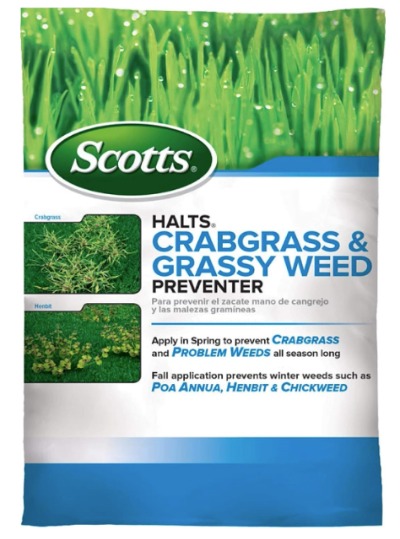
3. Scotts Halts Crabgrass & Grassy Weed Preventer (10.06 lbs)
Product Description
Scotts Halts is a widely available, store-shelf granular pre emergent that uses pendimethalin as its active ingredient. It’s built specifically with crabgrass and grassy weeds in mind, and it’s one of the most recognized names in home lawn care thanks to Scotts’ presence in nearly every hardware and garden store.
Best Use Cases
This product fits smaller to mid-size residential lawns, especially for homeowners who want a trusted, easy-to-find brand without ordering online or calculating mix ratios. It’s a solid entry point for beginners just getting into proactive weed prevention.
Key Features Explained Simply
- Pendimethalin active ingredient: A reliable compound for blocking crabgrass and other grassy weed seeds.
- Granular, spreader-ready formula: No mixing needed, just load it into a spreader and go.
- Store-shelf availability: Easy to find at most garden centers, so restocking is simple.
- Targeted at crabgrass: Marketed specifically for the most common lawn weed complaint among homeowners.
Real-Life Usage Insight
Many homeowners reach for this product because it’s the one they already recognize from the store shelf. It works reasonably well for typical residential crabgrass problems, though some long-time lawn care fans note that pendimethalin does not always last quite as long in the soil as prodiamine-based products. That means a second application later in the season sometimes becomes necessary for full-season control, especially in warmer climates with a longer crabgrass germination window.
Pros
- Widely available and easy to find without ordering online
- Simple granular application, great for total beginners
- Trusted, familiar brand name
- Specifically formulated for crabgrass and grassy weeds
- Reasonably priced for smaller lawns
Cons
- Shorter residual control compared to prodiamine-based products like the Andersons Barricade
- May need a second application mid-season for full coverage
- Less effective against certain broadleaf weeds compared to more specialized products
- Coverage per bag is smaller than some competitors, so bigger lawns may need more product
Performance Discussion
Pendimethalin is a proven active ingredient, but it generally does not hold up quite as long in soil as prodiamine. For most typical home lawns dealing with standard crabgrass pressure, this product performs just fine. Larger properties or areas with heavy, persistent weed pressure might find the shorter residual control a limiting factor.
Ease of Use
This is about as simple as pre emergent application gets. Pour it into a spreader, walk your lawn in overlapping passes, and water it in. It’s a great starter product for anyone new to lawn care.
Value for Money
The price sits in the middle of the pack. It’s affordable for smaller yards, but the cost per square foot climbs a bit for larger properties compared to some of the more concentrated options on this list.
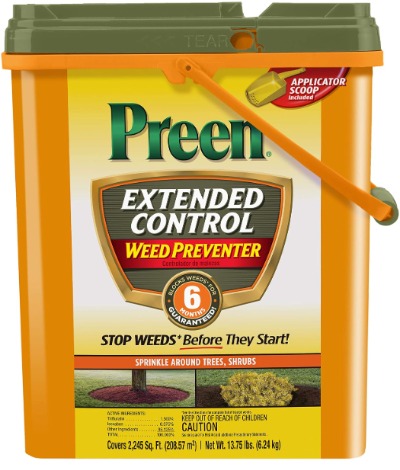
4. Preen Extended Control Weed Preventer (13.75 lb Drum, Covers 2,245 sq ft)
Product Description
Preen Extended Control is a bit different from the others on this list since it’s built with a focus on garden beds, flower beds, and landscaped areas rather than large turf lawns. It uses trifluralin and isoxaben as active ingredients, giving it a broader spectrum against both grassy and broadleaf weeds while still staying safe for many established ornamental plants and shrubs.
Best Use Cases
This product works best around flower beds, shrub borders, and smaller landscaped zones rather than full lawns. If your main weed battle happens in your mulch beds or around your garden edges rather than your grass, this is the product built for that job.
Key Features Explained Simply
- Dual active ingredients: Trifluralin and isoxaben target a wide range of weed types.
- Extended control claim: Designed to keep working for a longer stretch than typical one-and-done garden weed preventers.
- Landscape and bed-safe formula: Formulated with ornamental plantings in mind, so it plays nicer around flowers and shrubs than turf-focused products.
- Smaller coverage area: The 13.75 lb drum covers 2,245 sq ft, reflecting its role as a bed and border product rather than a whole-yard solution.
Real-Life Usage Insight
Gardeners who deal with constant weed pressure in mulch beds often lean on this product because pulling weeds from around delicate plants gets old fast. It’s not meant to treat your entire lawn, so trying to stretch a small drum across a big yard will leave you disappointed and short on product. Read the plant compatibility list before applying near sensitive plants, since not every ornamental tolerates every pre emergent equally well.
Pros
- Great for flower beds, shrub borders, and mulched landscape areas
- Broader spectrum coverage thanks to two active ingredients
- Reasonably long-lasting for bed applications
- Easier to control application in smaller, defined areas
- Trusted brand name in the garden weed control space
Cons
- Small coverage area makes it a poor fit for full lawn treatment
- Higher cost per square foot compared to lawn-focused granular options
- Not all ornamental plants are compatible, so label-reading is a must
- Not intended for turf grass areas, so it won’t solve a crabgrass-in-the-lawn problem
Performance Discussion
For its intended purpose, garden beds and landscaped borders, this product performs well and holds up for a solid stretch of the growing season. It is simply not designed to compete with turf-focused granular products for lawn-wide crabgrass prevention, and comparing it directly to the other four products on price-per-square-foot would be a bit unfair given the different use case.
Ease of Use
Application is straightforward with a handheld spreader for smaller garden bed areas. It’s easy to control where the product lands, which matters a lot when working around flowers and shrubs you want to protect rather than harm.
Value for Money
The price per pound looks high next to the lawn-focused products here, but that’s expected given its smaller coverage area and specialized use case. For garden bed weed prevention specifically, it delivers reasonable value, just don’t expect it to compete with lawn granular products on a cost-per-acre basis.
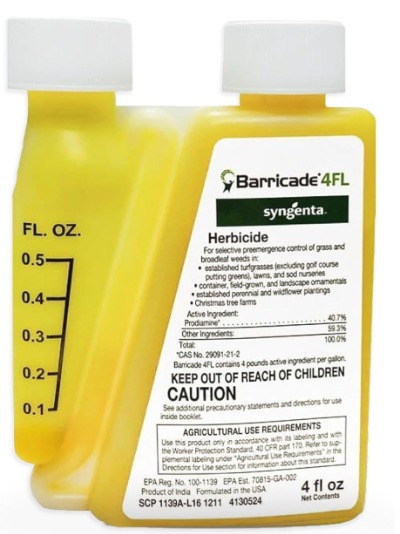
5. Barricade 4FL Herbicide Concentrate (4 fl oz)
Product Description
Barricade 4FL is the liquid concentrate version of the same trusted prodiamine active ingredient found in the granular Andersons product above. This small 4 fl oz bottle packs a strong concentrated dose, mixed with water and applied through a sprayer. It’s popular among lawn care professionals and serious DIYers who want precise, flexible application across turf, ornamentals, and other landscaped areas.
Best Use Cases
This product fits small to mid-size lawns, spot treatments, and situations where a sprayer offers more control than a spreader. It’s also a favorite for people managing a few different areas, like a lawn plus some ornamental beds, since one small bottle can be mixed at different rates for different needs.
Key Features Explained Simply
- Liquid concentrate: A small amount goes a long way once diluted in water.
- Prodiamine active ingredient: Same long-lasting weed-blocking power found in top granular products.
- Multi-surface use: Labeled for turf, ornamentals, and other landscaped zones, giving it more flexibility than turf-only products.
- Compact size: Easy to store and transport compared to bulky granular bags.
Real-Life Usage Insight
Because this comes as a concentrate, precise measuring matters a lot. Too little product and your weed prevention will fall short; too much and you risk damaging desirable plants nearby. A basic pump sprayer with clear measurement markings makes this process much easier. Many users like the flexibility of adjusting their mix rate for different zones of the yard, something granular products cannot offer as easily.
Pros
- Small size makes it easy to store and transport
- Long-lasting prodiamine protection, matching the performance of granular prodiamine products
- Flexible for use across lawns, ornamentals, and landscaped beds
- Precise application control through spray equipment
- Good option for spot treatments rather than whole-yard coverage
Cons
- Requires accurate mixing and a sprayer, which adds complexity for beginners
- Small bottle size means it won’t stretch across a very large lawn without buying more
- Mixing errors can lead to under or over-application
- No spreader-and-go simplicity like the granular options on this list
Performance Discussion
Since it shares the same active ingredient as the Andersons granular product, performance against crabgrass and broadleaf weeds lines up closely once applied correctly. The main variable here is user technique rather than the product itself, since liquid concentrates put more responsibility on the person mixing and spraying it evenly.
Ease of Use
This sits closer to the Prodiamine 65 WDG in terms of difficulty. It’s not hard once you understand mixing ratios, but it’s a step above simply pouring granules into a spreader. Beginners should expect a small learning curve here.
Value for Money
For smaller areas or spot treatments, this product offers solid value since a small amount covers a decent stretch of lawn once diluted. For large properties, though, the small bottle size means you’ll likely need multiple bottles, which can push the total cost higher than a comparable granular option.
Comparison Insights: How These Five Products Stack Up
Looking at all five products side by side, a few patterns stand out clearly.
On active ingredients: Three of the five products (Andersons Barricade, Prodiamine 65 WDG, and Barricade 4FL) use prodiamine, which generally offers longer-lasting soil protection than pendimethalin (found in Scotts Halts). Preen Extended Control stands apart with its trifluralin and isoxaben combo, built more for garden beds than open lawn.
On application method: Granular products (Andersons Barricade, Scotts Halts, Preen) offer the easiest, most beginner-friendly application since you just load a spreader and walk your yard. Liquid concentrates (Prodiamine 65 WDG, Barricade 4FL) demand more setup and mixing knowledge but often deliver more even coverage, especially on uneven terrain.
On coverage area and cost: The Andersons Barricade offers the largest coverage per package, making it the strongest value for big lawns. Scotts Halts fits smaller lawns nicely at a familiar price point. Prodiamine 65 WDG offers arguably the best cost-per-square-foot for anyone willing to mix and spray. Barricade 4FL and Preen both work better as targeted solutions rather than whole-yard treatments given their smaller quantities.
On use case fit: If your battle is mostly in your turf grass, lean toward Andersons Barricade, Prodiamine 65 WDG, Scotts Halts, or Barricade 4FL. If your battle is mostly in flower beds and mulched borders, Preen Extended Control is the more sensible pick.
Buying Guide: What to Look for in a Pre Emergent Herbicide
Active Ingredient
Prodiamine tends to last longer in soil than pendimethalin, often giving you four to six months of protection compared to a shorter window with other actives. Trifluralin and isoxaben work well for garden beds but are not typically the top pick for open turf areas.
Coverage Area vs. Yard Size
Match the package size to your actual yard. Buying a huge bag for a tiny yard wastes money and product, while buying a small bottle for a massive lawn means constant reordering mid-project.
Granular vs. Liquid
Granular products are easier for beginners since there’s no mixing involved. Liquid concentrates give more precise, adjustable coverage but ask more of the person applying them. Neither one is objectively “better,” it really comes down to your comfort level and equipment.
Timing of Application
Every pre emergent product needs to go down before weed seeds germinate, not after. Soil temperature is the key trigger for most weed seeds, so keep an eye on local soil temp forecasts rather than relying purely on the calendar.
Turf Type Compatibility
Some pre emergents are not safe for newly seeded lawns or certain grass types. Always check the label against your specific grass variety before applying, especially if you recently seeded or plan to seed soon.
Budget and Long-Term Cost
Larger bags and concentrates often cost less per square foot than smaller, pre-measured products, but they also require more storage space and, in the case of liquids, some mixing equipment.
Who Should Buy These Products
Large property owners and lawn care businesses will likely get the most value from the Andersons Barricade or Prodiamine 65 WDG, given their strong coverage-to-cost ratio.
First-time lawn care DIYers who want the simplest possible experience should lean toward Scotts Halts or the Andersons Barricade granular formula, since both skip the mixing step entirely.
Budget-conscious homeowners with access to a sprayer will likely appreciate the value found in Prodiamine 65 WDG.
Gardeners battling weeds in flower beds and borders rather than open lawn should look at Preen Extended Control instead of the turf-focused options.
Anyone managing multiple small zones, like a lawn plus ornamental beds plus a few garden borders, might appreciate the flexibility of Barricade 4FL since it can be mixed at different rates for different areas.
Common Mistakes to Avoid With Pre Emergent Herbicides
Applying too late in the season. Pre emergent herbicides only work before weeds sprout. Once crabgrass or other weeds are visibly growing, this type of product will not help you, and you’ll need a post emergent option instead.
Skipping the watering-in step. Most granular products need water after application to activate the barrier in the soil. Skipping this step, or applying right before a long dry spell, can seriously reduce effectiveness.
Disturbing the soil after application. Aerating, dethatching, or heavy raking after applying a pre emergent can break the chemical barrier and let weed seeds slip through gaps in the soil.
Applying to newly seeded lawns without checking the label. Many pre emergent products will block grass seed from germinating too, not just weeds. If you plan to overseed, check the label for safe timing windows around your application.
Using the wrong rate. More product does not mean better weed control. Over-applying can stress your lawn and harm nearby plants, while under-applying leaves gaps in protection. Stick to label rates.
Ignoring soil temperature. Calendar dates are a rough guide, but actual soil temperature drives weed germination. A late cold snap can push back the ideal application window, and applying too early wastes product before the real threat arrives.
Forgetting about a second application. Some active ingredients, especially pendimethalin, may need a follow-up application mid-season for full-season protection, particularly in regions with a long, warm growing season.
Final Verdict
All five products on this list get the job done, but they serve slightly different needs. For sheer value and long-lasting protection on a large lawn, the Andersons Barricade Professional-Grade Granular stands out as a strong all-around pick thanks to its trusted prodiamine formula and generous coverage. For DIYers comfortable with a sprayer who want the best price per square foot, Prodiamine 65 WDG is hard to beat.
Scotts Halts remains a solid, beginner-friendly choice for anyone who wants a familiar brand and the simplest possible shopping experience, even though its shorter residual control means a second application might become necessary. Preen Extended Control earns its spot for garden beds and landscaped borders rather than full lawns, so keep that distinction in mind before buying. Barricade 4FL rounds out the list as a flexible, compact option for smaller lawns, spot treatments, or mixed lawn-and-garden setups.
No single product here is a bad choice. The real decision comes down to your yard size, your comfort with mixing and spraying versus spreading granules, and the type of area you’re treating, open turf or garden beds. Get your timing right, follow the label rates, and water your application in properly, and any of these five products should help you build a thicker, weed-free lawn without the constant hand-pulling battle so many homeowners deal with every season.

Hi, I’m Mary, the founder of GardenCure.com. I’m passionate about creating healthy, beautiful gardens and well-kept lawns. I share practical experience and trusted advice on garden and lawn gear that truly works. With the support of my dedicated research team, our writers produce honest, in-depth reviews using reliable, authentic sources—helping you choose the right tools with confidence for your outdoor space.