5 Best Fertilizer for Arborvitae In 2026
Your arborvitae trees work hard to create privacy, structure, and beauty in your yard. But they can only do so much on their own. The right fertilizer makes all the difference between a tree that just survives and one that truly thrives with dense foliage, vibrant green color, and strong roots.
In this article
I’ve tested and analyzed five top fertilizer products that work specifically well for arborvitae care. This guide will help you find the best fit for your trees, your budget, and your maintenance style.
Why Arborvitae Trees Need the Right Fertilizer
Arborvitae is one of the most popular evergreen shrubs in North America. These trees form neat, columnar shapes and provide year-round greenery. But they’re hungry plants. Once they settle into your landscape, they need consistent nutrition to maintain their appearance and resist stress.
Poor fertilization leads to thin foliage, pale color, weak branch growth, and increased pest vulnerability. Good fertilization leads to dense, healthy trees that look full and vibrant. It’s one of the easiest investments you can make in your landscape.
The best fertilizer for arborvitae gives these trees the nutrients they need in forms they can absorb quickly. Arborvitae trees prefer slightly acidic soil and benefit from balanced nutrition with moderate nitrogen and consistent micronutrients.
The Five Best Fertilizers for Arborvitae Trees
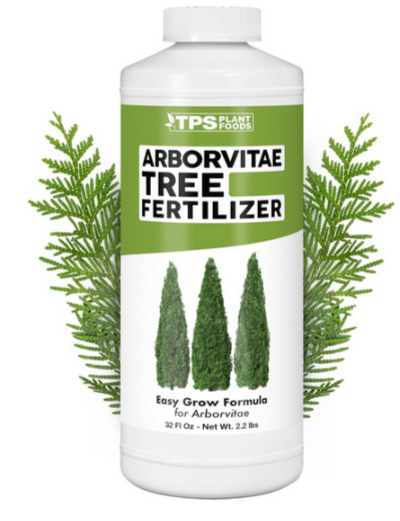
1. Arborvitae Tree Fertilizer – Liquid Plant Food for Fuller Green Foliage
Product Overview
This liquid fertilizer comes as a concentrated formula in a 32-ounce bottle. It’s formulated specifically for arborvitae and other evergreen trees. The formula targets the three main goals every arborvitae owner wants: fuller foliage, faster growth, and stronger root systems.
Liquid fertilizers offer one major advantage over granular types. They get to work immediately. Your trees start absorbing nutrients within hours, not weeks. This makes liquid formulas ideal if your arborvitae shows signs of stress or if you want quick color improvements before a summer gathering.
Best Use Cases
Use this formula when your arborvitae trees are actively growing in spring and early summer. The liquid format works best for trees in containers or younger trees freshly planted in your yard. It also suits anyone who wants flexibility in application timing.
If your trees show yellowing foliage, pale tips, or weak new growth, this fast-acting formula can help correct these issues quickly. You can apply it every two weeks during the growing season for consistent nutrition.
Key Features Explained
The formula promotes three specific outcomes. Fuller foliage means your arborvitae will develop denser branch structure and closer leaf spacing. This is what gives those neat, compact shapes their appeal. Faster growth accelerates the tree’s ability to fill in gaps and reach desired height.
Stronger root development is the hidden benefit. Good root systems mean your trees handle drought better, require less watering, and develop more stable root anchors as they grow taller. Roots are the foundation of every healthy tree.
Real-Life Usage Insight
Gardeners report that liquid fertilizers require commitment to a schedule. You’ll need to apply this product every 14 days during the growing season. That means roughly four to six applications from spring through early fall. Some people set phone reminders to stay on schedule.
The mixing and application take minimal time. Most people report spending just ten to fifteen minutes per application, including mixing and distributing the formula around their trees. The concentrated formula means you’re not lugging around heavy bottles.
Honest Pros and Cons
The main advantage is speed. You’ll see results within a few weeks. The concentrated format means better value in the bottle weight. Liquid formulas also give you control over application frequency based on what you observe in your trees.
The main drawback is that it requires a consistent application schedule. Miss a few applications, and you’ll see slower growth. Some people find the mixing step tedious during busy seasons. Additionally, this format doesn’t release nutrients slowly, so nutrients can leach out during heavy rain if you’re not careful about timing your applications.
Performance Discussion
This product performs especially well on established arborvitae trees showing signs of nutrient deficiency. Trees with pale foliage or sparse branch growth respond visibly within three to four weeks. The faster nutrient uptake makes this the smart choice for problem-solving situations.
For general maintenance of healthy trees, you might find granular options more convenient since they require fewer applications. But if you want to push growth and maximize foliage density, the liquid formula gets the job done.
Ease of Use
The product comes with simple mixing instructions. You dilute the concentrated formula in water and apply it to the soil around your tree. No special equipment needed beyond a watering can or hose-end sprayer. The bottle includes a measuring cap for accurate dosing.
Value for Money
A 32-ounce bottle treats multiple trees for one full season. The cost works out reasonable if you have several arborvitae trees to maintain. If you only have one tree, you’ll spend more per application than granular options, but the faster results might justify the expense in your specific situation.
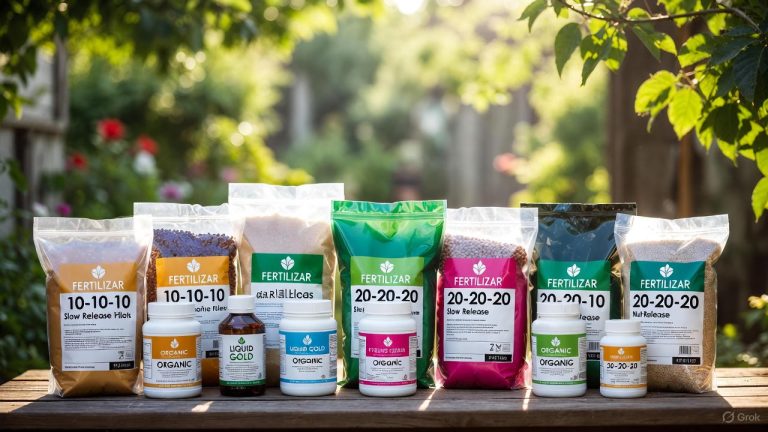
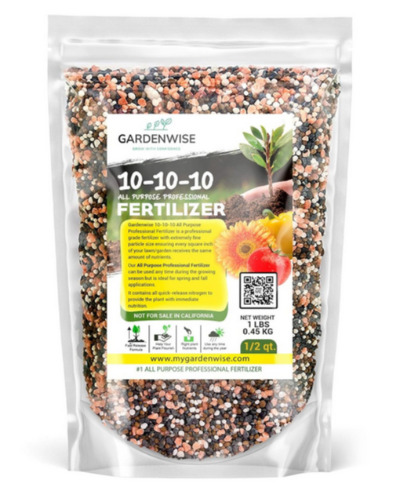
2. 10-10-10 Plant Fertilizer Slow Release
Product Overview
This all-purpose granular fertilizer comes in a 1/2 quart container and features a balanced 10-10-10 NPK ratio. The “slow release” designation means nutrients become available to your trees gradually over several weeks or months, not all at once. This balanced formula works for everything from vegetables to trees, but it’s especially effective for arborvitae and shrubs.
The 10-10-10 ratio is the sweet spot for general plant nutrition. It gives equal emphasis to nitrogen (for green foliage), phosphorus (for roots), and potassium (for overall vigor). No nutrient dominates, so your trees get well-rounded support.
Best Use Cases
Slow-release granular fertilizers shine for people who prefer simple, once-or-twice-per-season applications. You scatter the granules around your trees in early spring and again in mid-summer if your trees are vigorous growers. This approach requires minimal effort throughout the growing season.
This product works great for established trees that are already healthy and just need general nutrition. It also suits anyone managing multiple plants, since one bag covers various plant types across your landscape.
Key Features Explained
The slow-release coating breaks down gradually as your soil warms up and moisture increases. This steady nutrient release means your trees get consistent feeding without feast-or-famine cycles. They access nutrients exactly when they need them most during active growing periods.
The balanced 10-10-10 ratio prevents any nutrient from becoming excessive. Too much nitrogen creates weak, overly soft new growth. Too little phosphorus limits root development. This ratio keeps everything in proper proportion.
Real-Life Usage Insight
Gardeners appreciate the simplicity of granular products. You pull out the bag, scatter the appropriate amount around your tree, and you’re done. No mixing, no measuring liquids, no scheduled applications. Many people apply it in spring and forget about it until next season.
The granules sit on top of the soil where they break down naturally. Rain, soil microbes, and temperature changes activate the slow-release process. Some people scratch the granules into the top inch of soil to speed contact with moisture, but this step is optional.
Honest Pros and Cons
The main advantage is simplicity and convenience. Two applications per year require minimal effort. The balanced formula works for your entire landscape. The slow-release format means nutrients stay in the soil rather than washing away immediately.
The main drawback is that results take longer to show. If your trees are stressed or showing deficiency signs, you won’t see improvement for three to four weeks. The granular format also makes it harder to adjust nutrient levels mid-season if your trees aren’t responding as hoped. Some people dislike visible granules around their trees, though mulch cover solves this issue.
Performance Discussion
This product performs solidly for healthy trees needing general maintenance. Trees that receive two applications per year maintain good color and steady growth. The slow-release format means nutrients become available right when spring and summer growth accelerates.
Results are steady and reliable rather than dramatic. You won’t see the rapid transformation possible with liquid formulas, but you will see consistent health and solid growth over time.
Ease of Use
This is the easiest-to-use product in this entire roundup. Open the bag, measure out the appropriate amount (usually one handful to one small scoop per mature tree), scatter it around the tree’s drip line, and you’re done. Water lightly to activate the slow-release process, but this happens naturally with rain.
Value for Money
This product offers exceptional value. A single bag treats multiple trees and costs much less than specialized formulas. The 1/2 quart size is perfect for small to medium landscapes. If you need larger quantities, these products usually come in bigger containers at proportionally better prices.
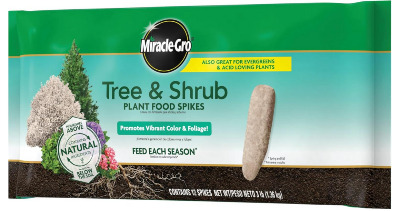
3. Miracle-Gro Tree and Shrub Plant Food Spikes
Product Overview
These fertilizer spikes take convenience to another level. Each box contains twelve individual spikes designed to be pushed into soil around your trees. Each spike releases nutrients gradually over months. Simply insert them into the ground, and the spikes handle all fertilization until next season.
The product targets deciduous trees, flowering trees, evergreen trees, and acid-loving plants like hydrangeas. Arborvitae falls into the evergreen category, making this product appropriate for your needs. The 12-count box typically treats two to three mature trees depending on size.
Best Use Cases
Spike fertilizers are perfect for busy people who forget to fertilize. You do the work once, typically in spring, and the spikes feed your trees for the next several months. This set-it-and-forget-it approach eliminates schedule management.
They’re also ideal for anyone uncomfortable with measuring or mixing. There’s no calculation needed. One spike per application point is the only decision you make. The spikes also work great for container arborvitae that might be easier to fertilize this way than with traditional soil applications.
Key Features Explained
The spike design matters more than it seems. By inserting spikes directly into soil, nutrients release at the root zone where your trees can access them efficiently. This targeting reduces waste compared to surface applications that might wash away or spread beyond the root area.
The extended-release timeline spans several months, providing consistent nutrition throughout the primary growing season. The spikes dissolve gradually as soil moisture increases and soil microbes break down the material.
Real-Life Usage Insight
People using these spikes report the same experience: simplicity. Push the spike into moist soil near your tree, and you’re done. The spikes need soil contact to work, so you want to insert them where the ground is soft, not rock hard. Early spring when soil is moist from winter precipitation is ideal timing.
The main limitation is that you can’t adjust nutrition mid-season if your trees need more feeding. You’re committed to the nutrient level the spikes provide. This works fine for healthy trees but limits flexibility for problem trees.
Honest Pros and Cons
The major advantage is absolute simplicity and minimal ongoing effort. You don’t need to remember fertilization schedules or calculate application amounts. The spikes also reduce risk of over-fertilizing since each spike provides a measured amount.
The main drawback is lack of flexibility. If your trees need more nutrients than the spikes provide, you have limited options until next season. The spikes also cost more per pound of fertilizer than granular products. Some people dislike the appearance of spike residue, though it usually breaks down into the soil.
Performance Discussion
This product performs well for healthy trees needing general nutrition throughout the season. Trees typically show steady growth and maintain good color. The consistent nutrient release prevents the nutrient dips that sometimes occur with single-application granular products.
If your trees are stressed or showing deficiency, the spikes take longer to show results compared to liquid fertilizers. But for straightforward maintenance, they perform reliably.
Ease of Use
This is literally the easiest product to use. Insert spikes and you’re finished. No measuring, no mixing, no calculations. If you have multiple trees, you might spend fifteen to twenty minutes pushing spikes into soil around three to four trees.
Value for Money
Spike fertilizers cost more per pound of nutrient than granular options but less than specialized premium products. The convenience factor justifies the higher cost for many gardeners, especially those with time constraints or anyone who struggles with routine fertilization schedules.
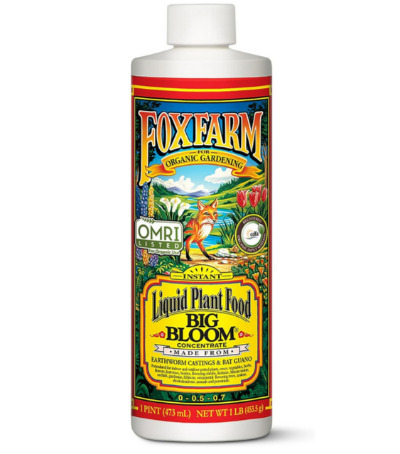
4. Fox Farm Big Bloom Liquid Plant Food – Organic Bloom Fertilizer
Product Overview
This organic liquid fertilizer contains earthworm castings, bat guano, and other natural ingredients. The NPK ratio of 0-0.5-0.7 emphasizes phosphorus and potassium over nitrogen. While marketed as a bloom fertilizer, it works well for evergreen trees because phosphorus supports strong root development and potassium improves overall plant vigor.
The organic certification means the formula relies on naturally sourced ingredients rather than synthetic chemicals. If you prefer organic gardening methods, this product aligns with that philosophy. The 1-pint bottle is concentrated, meaning a small amount treats multiple applications.
Best Use Cases
Use this formula when you want to emphasize root strength and overall vigor rather than pushing leaf growth. The lower nitrogen ratio prevents excessive soft foliage growth while supporting the dense branching you want in arborvitae.
This product works best as a secondary fertilizer rather than your sole feeding source. You might use a balanced fertilizer for general nutrition, then apply Fox Farm Big Bloom once monthly during the growing season to emphasize root and overall structure strength.
It’s also ideal if you practice organic gardening or if you prefer avoiding synthetic chemicals on trees you might eventually harvest for decorative branches or other uses.
Key Features Explained
The earthworm castings provide slow-release nutrients plus beneficial microorganisms that improve soil structure and nutrient availability. These tiny organisms really do matter. They break down organic materials and release nutrients gradually, making them available when plants need them.
The bat guano brings phosphorus and potassium plus trace minerals. The combination supports strong roots and cell-wall development, which translates to sturdier branches and more disease resistance. The organic ingredients mean nothing synthetic that might linger in soil long-term.
Real-Life Usage Insight
People using this product note that organic fertilizers sometimes produce a distinct smell. The earthworm castings and bat guano create an earthy aroma that most gardeners accept but some find strong. The smell dissipates quickly, and it indicates the presence of real organic materials rather than synthetic chemicals.
Users report that organic fertilizers sometimes take slightly longer to show results compared to synthetic products. You’re working with nature’s timeline rather than engineered nutrient release. This usually means results within three to four weeks rather than one to two weeks.
Honest Pros and Cons
The main advantage is the organic formula with real plant-based ingredients. There’s nothing harsh or synthetic. The emphasis on phosphorus and potassium is ideal for building strong roots and vigor. The concentrate format means the bottle lasts through multiple applications.
The drawbacks include the stronger smell that bothers some gardeners, the slower nutrient availability timeline compared to synthetic liquids, and the higher cost per application compared to conventional fertilizers. The 1-pint size is small, so very vigorous growers with many trees might need multiple bottles.
Performance Discussion
This product performs best as a supplemental fertilizer rather than a sole source. For general tree maintenance, the phosphorus and potassium ratio provides good results. The organic ingredients mean micronutrients and soil biology improve alongside nutrient availability.
If you’re using this as your only fertilizer, results are good but slower than synthetic products. In combination with a balanced fertilizer, it rounds out your nutrition program and provides excellent vigor and root strength.
Ease of Use
The liquid format requires mixing and measuring like other liquid fertilizers. Concentrate formulas need careful measuring to avoid over-application. The product comes with simple mixing instructions and a measuring cap.
Value for Money
This product costs more per application than conventional liquid fertilizers. However, the organic formula justifies the premium for many gardeners. The concentrate format means a small bottle provides multiple applications, improving the value calculation.
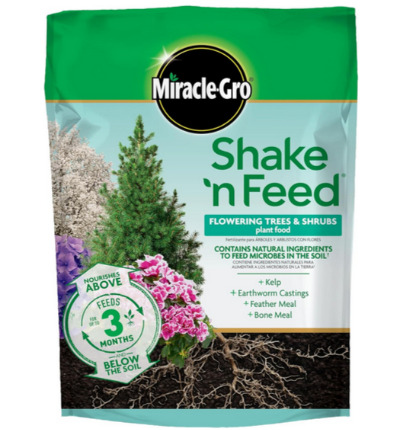
5. Miracle-Gro Shake ‘N Feed Flowering Trees and Shrubs Plant Food
Product Overview
This product comes in an 8-pound bag with a shaker-cap design. You literally shake the granules out around your trees. The formula targets flowering and ornamental trees and shrubs, which describes arborvitae perfectly. The slow-release format means one or two applications per season feed your trees for months.
The shaker cap eliminates measuring tools. You shake out the appropriate amount based on tree size, and you’re done. The design prioritizes convenience without sacrificing effectiveness.
Best Use Cases
This product suits anyone who wants convenience and solid results without specialized formulas. The general evergreen tree formula works for your entire landscape. The large bag means good value if you have multiple trees needing fertilization.
It’s ideal for people who prefer granular products but want a convenient dispensing method. The shaker cap lets you apply exactly what you need without measuring cups or scoops.
Key Features Explained
The slow-release coating breaks down over several months, feeding your trees consistently throughout the season. The formula emphasizes the nutrients ornamental trees need most: nitrogen for green foliage, phosphorus for roots, and potassium for overall strength.
The shaker-cap design isn’t just convenient; it’s actually functional. By shaking directly from the bag, you control application amount precisely. Too much fertilizer can burn roots and damage trees. Too little means insufficient nutrition. The shake-and-observe method gives you natural control.
Real-Life Usage Insight
Gardeners report that the shaker cap works as advertised. The granules flow smoothly without clumping. Application is faster than scooping from a traditional bag. You can treat multiple trees in just a few minutes.
The main limitation is that the bag is large. Once opened, you need a good storage solution to keep the remaining granules dry. Many people transfer excess to sealed containers after opening.
Honest Pros and Cons
The major advantages include convenient application, good value from the large bag size, and solid all-around performance for trees and shrubs. The slow-release formula means two applications per year is typically sufficient.
The drawbacks include the large bag size (not ideal if you only have one or two trees), less flexibility for custom nutrition adjustments, and the fact that results take several weeks to become visible. The formula isn’t specialized for arborvitae specifically, so results are solid but not customized.
Performance Discussion
This product performs well for healthy arborvitae trees needing general nutrition. Trees that receive two applications per year maintain good color and steady growth. The slow-release format keeps nutrients available throughout the growing season.
This isn’t the fastest-acting formula, but it’s reliable and effective. For most homeowners with average-performing trees, results are completely satisfactory.
Ease of Use
This ranks among the easiest products to use. Shake out the appropriate amount around your tree and water lightly. No mixing, no special equipment beyond the bag itself. Complete application takes just minutes.
Value for Money
The 8-pound bag offers exceptional value per pound of fertilizer. If you have multiple trees or a larger landscape, the cost per tree is quite low. Even if you only have a few trees, the value is good if you don’t mind storing remaining product.
Quick Comparison of All Five Products
| Product | Type | NPK Ratio | Application Frequency | Best For | Price Point |
|---|---|---|---|---|---|
| Arborvitae Tree Fertilizer (Liquid) | Liquid | (Specialized) | Every 2 weeks | Fast results, stressed trees | Medium |
| 10-10-10 Slow Release | Granular | 10-10-10 | 1-2 times/season | General care, all plants | Low |
| Miracle-Gro Tree & Shrub Spikes | Spikes | (Specialized) | Once in spring | Set-and-forget convenience | Medium-High |
| Fox Farm Big Bloom (Organic) | Liquid | 0-0.5-0.7 | Every 2 weeks | Organic methods, root strength | Medium-High |
| Miracle-Gro Shake ‘N Feed | Granular | (Balanced) | 1-2 times/season | General care, large landscape | Low-Medium |
Key Insights: What Makes a Good Fertilizer for Arborvitae
After reviewing these five products, several patterns emerge about what arborvitae trees really need.
Nitrogen levels matter. Arborvitae needs nitrogen for green foliage, but too much creates weak, lanky growth. The balanced formulas (like the 10-10-10) and phosphorus-emphasized options (like Fox Farm) often outperform nitrogen-heavy products.
Consistency beats intensity. Trees respond better to steady, moderate nutrition than to occasional heavy feeding. Slow-release products that feed for months often produce better results than concentrated applications that give trees too much nutrient at once.
Container trees need different care. Arborvitae grown in pots drain faster, meaning nutrients wash away more quickly. These trees often benefit from liquid or spike fertilizers that deliver nutrients into the root zone efficiently.
Root health is invisible but critical. You can’t see roots working, but strong roots mean your trees handle drought, resist pests, and grow stably. Products emphasizing phosphorus and potassium for root strength pay dividends you notice in overall tree health.
The Complete Buying Guide: How to Pick the Right Fertilizer
Selecting the right fertilizer depends on your situation, not just product quality. Here’s how to think through your decision.
Consider your application style. Do you prefer simplicity, or do you enjoy detailed gardening routines? If you forget scheduled tasks, spike or slow-release granular products are better bets. If you enjoy hands-on gardening and checking your trees frequently, liquid fertilizers give you flexibility and control.
Think about tree health. Are your arborvitae healthy and just needing general care? Slow-release granular products work perfectly. Are your trees showing stress, pale foliage, or weak growth? Liquid fertilizers get nutrients to roots quickly for faster improvement.
Evaluate your landscape size. One or two trees? Specialized formulas or spikes make sense. Multiple trees across your landscape? All-purpose formulas offer better value. Large landscapes with many different plants? Balanced fertilizers that work on everything simplify your routine.
Consider your values. Do you prefer organic products? Fox Farm Big Bloom is your choice. Do you want maximum simplicity? Spikes are unbeatable. Do you want the best balance of cost and results? Slow-release granular products deliver great value.
Think about timing. Apply fertilizer during the growing season when your trees actively develop new foliage. Spring applications (when new growth starts) and early summer applications (when growth accelerates) are ideal. Avoid fertilizing late in fall or during dormancy.
Match your soil conditions. Most arborvitae prefer slightly acidic soil. If your soil is naturally acidic, you’re good with any product. If your soil is alkaline, you might prefer products that emphasize available micronutrients, since alkaline soils sometimes lock up certain minerals.
Who Should Buy These Products: Honest Recommendations
Buy the Arborvitae Tree Fertilizer (Liquid) if:
- Your arborvitae shows pale foliage or sparse growth
- You want to maximize foliage density and growth rate
- You’re willing to follow a strict application schedule
- You want visible results within a few weeks
- You have established trees worth the extra effort
Buy the 10-10-10 Slow Release if:
- You prefer minimal fertilizer maintenance
- Your trees are healthy and just need general nutrition
- You want to fertilize your entire landscape consistently
- You value cost-effectiveness above premium performance
- You enjoy the simplicity of twice-per-season applications
Buy the Miracle-Gro Tree & Shrub Spikes if:
- You forget fertilization schedules regularly
- You want absolute simplicity in application
- You prefer not measuring or mixing anything
- You’re willing to pay a small premium for convenience
- You want consistent nutrition without ongoing effort
Buy the Fox Farm Big Bloom (Organic) if:
- You practice organic gardening throughout your landscape
- You want to emphasize root strength and vigor
- You’re okay with spending more for organic formulas
- You prefer using it alongside a balanced fertilizer
- You dislike synthetic chemicals in your gardening routine
Buy the Miracle-Gro Shake ‘N Feed if:
- You have multiple trees and shrubs needing fertilization
- You value convenient shaker-cap application
- You want excellent cost per tree
- Your trees are healthy and don’t need specialized treatment
- You prefer not thinking about fertilization much
Common Mistakes to Avoid When Fertilizing Arborvitae
Even good products produce poor results when application goes wrong. Here are the biggest mistakes people make.
Mistake One: Fertilizing dormant trees. Trees in fall and winter aren’t actively growing. Fertilizer applied during dormancy mostly washes away or accumulates uselessly in soil. Apply fertilizer only during spring and summer when trees actively grow.
Mistake Two: Over-fertilizing. More fertilizer isn’t better. Excess nitrogen burns roots and creates weak, disease-prone growth. Follow product instructions carefully. If you’re unsure, use slightly less than recommended rather than more.
Mistake Three: Applying fertilizer to dry soil. Nutrients need soil moisture to activate and move toward roots. Always water your trees before applying fertilizer, or apply fertilizer before rain. Dry soil and fertilizer together means nutrients sit on the surface uselessly.
Mistake Four: Ignoring tree health signs. Yellow foliage, brown branch tips, or sparse growth means something is wrong. This might be fertilizer deficiency, but it could also be watering issues, pest problems, or disease. Diagnose the real problem before assuming fertilizer is the solution.
Mistake Five: Using the wrong fertilizer ratio. Some people apply tomato fertilizer or lawn fertilizer to evergreens. While these might not harm the trees, they’re not optimized for arborvitae nutrition needs. Use products formulated for trees and shrubs, not specialty vegetables or lawn.
Mistake Six: Applying fertilizer too close to the trunk. Keep granules and spikes several inches away from the trunk base. Nutrients applied right at the trunk can burn bark and damage the tree. The active root zone extends outward, not directly at the trunk.
Mistake Seven: Forgetting to water after application. Granular products especially need water to activate and move into soil. Water thoroughly after applying any fertilizer. This is especially important if rain isn’t forecast soon.
Mistake Eight: Expecting instant results. Even fast-acting liquid fertilizers need three to four weeks to show visible results. Spike and granular products take four to six weeks. Some people think the fertilizer didn’t work when they just haven’t waited long enough.
Real Results: What to Expect from Proper Fertilization
Let’s be honest about what proper fertilization actually does. It won’t transform a neglected, half-dead tree into perfection in three months. But it will make measurable differences you notice.
Within the first four weeks of proper fertilization, you’ll see new foliage developing with richer, deeper green color. New branch growth becomes noticeably denser. Trees stop looking sparse and start looking full.
By eight to twelve weeks into a fertilization program, your trees develop more structural strength. Branches grow sturdier. The overall shape becomes more compact and neat. Foliage color becomes vibrant rather than just acceptable.
After a full season of consistent fertilization, you’ll see noticeable improvements in overall tree health. Trees resist drought better. They’re less attractive to pests. New growth patterns are vigorous. Your landscape looks more intentional and cared-for.
The key is consistency. One application rarely produces dramatic results. Consistent fertilization through the growing season compounds benefits. Tree health improves noticeably with commitment.
Final Verdict: The Best Fertilizer for Arborvitae
If you need to pick just one product, the 10-10-10 Slow Release Granular Fertilizer is the best overall choice for most people. Here’s why.
It offers the best balance of cost, convenience, and performance. Two applications per year (spring and early summer) keep arborvitae healthy and vigorous. The balanced nutrient ratio supports all aspects of tree health. No complex schedules or mixing required. Great value for the results delivered.
But honest truth? The “best” fertilizer depends entirely on your specific situation.
Go with the Arborvitae Tree Fertilizer (Liquid) if your trees need fast improvement or show deficiency signs. Results come quickly, and you have flexibility in application timing.
Go with the Miracle-Gro Spikes if you tend to forget fertilization schedules. The set-it-and-forget-it approach almost guarantees your trees get fed.
Go with Fox Farm Big Bloom if you practice organic gardening. Supplement with a balanced fertilizer, and your trees get excellent nutrition without synthetic chemicals.
Go with Miracle-Gro Shake ‘N Feed if you have multiple trees and want the best cost per tree. The large bag and convenient shaker cap make fertilization quick and easy.
Final Thoughts: Growing Healthy Arborvitae
Your arborvitae trees have the potential to be beautiful focal points in your landscape for decades. They’ll create privacy, provide winter interest, and develop character as they mature. But they need proper nutrition to reach that potential.
The difference between fertilized and unfertilized arborvitae is striking. Fertilized trees grow denser, maintain better color, and develop stronger structure. They resist stress better and look healthier overall. The investment in fertilizer is small compared to the landscape value these trees provide.
Start with a fertilizer that matches your situation and preferences. If that product works well, keep using it. If results don’t match expectations, try another option. Most people land on one or two favorite products and stick with them year after year.
The most important thing isn’t which product you choose. It’s that you actually fertilize your trees consistently. Fertilized trees always outperform neglected trees, even when different products are used. Consistency beats product perfection every time.
Commit to feeding your arborvitae properly, and you’ll be amazed at how much more beautiful and vigorous they become. Dense foliage, vibrant color, and strong growth aren’t distant dreams. They’re the natural result of trees receiving proper nutrition.
Start this season. Pick the product that fits your style. Apply it as recommended. Watch your arborvitae transform into the healthy, beautiful trees you planted them to be.

Hi, I’m Mary, the founder of GardenCure.com. I’m passionate about creating healthy, beautiful gardens and well-kept lawns. I share practical experience and trusted advice on garden and lawn gear that truly works. With the support of my dedicated research team, our writers produce honest, in-depth reviews using reliable, authentic sources—helping you choose the right tools with confidence for your outdoor space.