5 Best Fertilizer for Onions In 2026
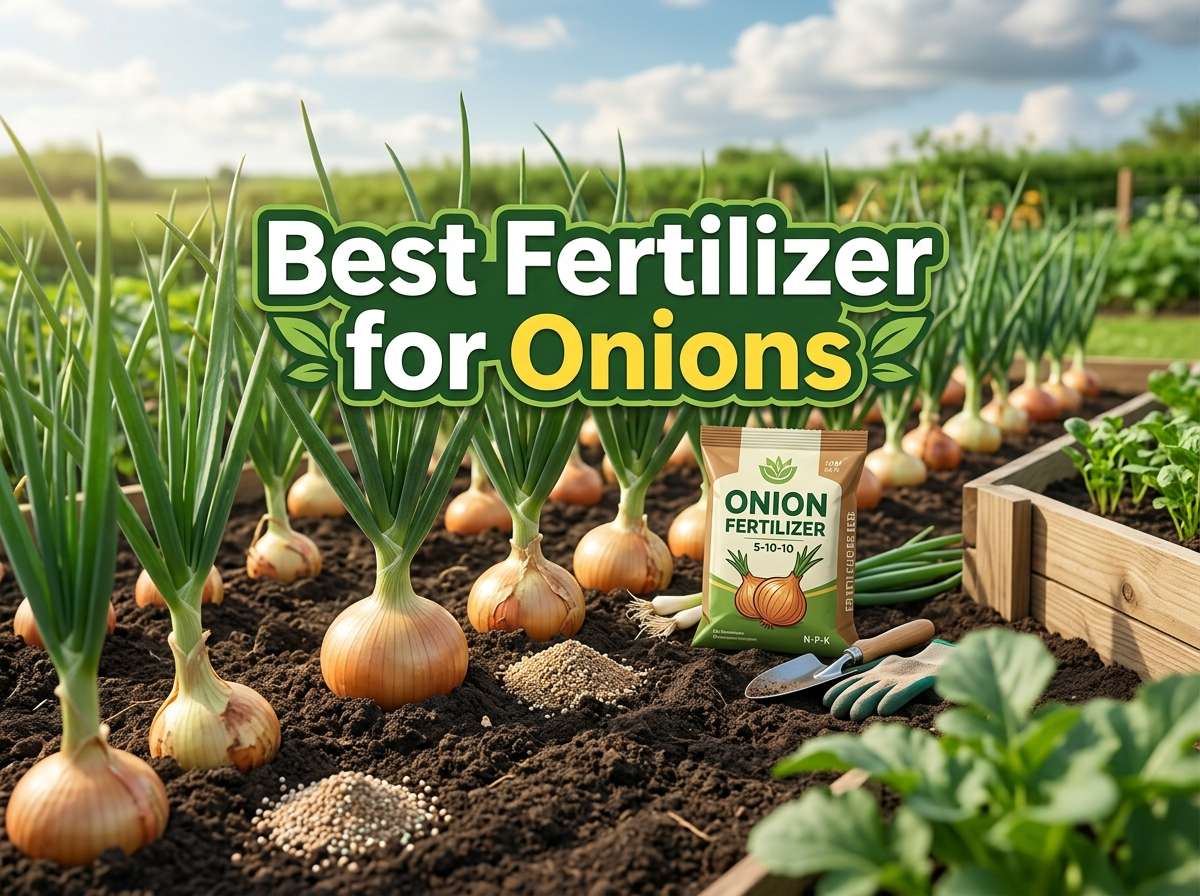
Growing onions in your garden is one of the most rewarding experiences. But getting them to grow big, juicy, and full of flavor takes more than just water and sunlight. You need the right fertilizer to feed those bulbs and help them reach their full potential.
In this article
I’ve spent time researching and reviewing the top onion fertilizer options on the market. My goal is to help you find the best product for your garden, whether you’re a complete beginner or someone with years of growing experience. In this article, I’m breaking down five solid options. Each one has its own strengths, and I’ll walk you through the details so you can make an informed choice.
Let’s dig in.
What Makes a Good Onion Fertilizer?
Before we jump into the products, let’s talk about what makes an onion fertilizer actually good at doing its job. Onions have specific needs, and understanding these needs will help you pick the right product for your garden.
Onions are heavy feeders. This means they need plenty of nutrients to grow properly. The three main nutrients in any fertilizer are nitrogen, phosphorus, and potassium. These are listed on every fertilizer package as three numbers, like 5-10-10. The first number is nitrogen, which helps leaves and stems grow. The second is phosphorus, which supports root development and bulb formation. The third is potassium, which helps the plant stay healthy and strong.
For onions specifically, you want a fertilizer with solid levels of phosphorus and potassium. Nitrogen is important too, but too much nitrogen can actually delay bulb formation. You want your onion plant to focus energy on making big bulbs, not just growing lots of leaves.
The best onion fertilizer options come in different forms. Some are liquids that you mix with water and apply to the soil or spray on the leaves. Others are granules or powders that you work into the soil and let break down over time. Each type has its advantages, and what works best depends on your situation and how much time you want to spend applying it.
Timing also matters. Young onion plants need different feeding schedules than plants that are further along. Early in the season, you might focus on root development. As the season progresses, you shift toward bulb development and growth.
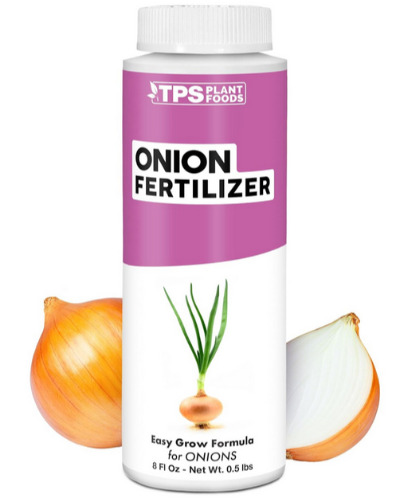
Onion Fertilizer – Liquid Plant Food for Bigger Bulbs, Strong Root Development & Healthy Growth (8 oz)
Product Description and What It Is
This is a liquid concentrate fertilizer specifically formulated for onions. It comes in an 8-ounce bottle, which is a good starter size. You mix this concentrate with water and apply it directly to the soil around your plants or use it as a foliar spray on the leaves.
The liquid formula means the nutrients get to work fast. Unlike granular products that need time to break down, liquids are available to your plants almost immediately. This matters when your onions are in a growth phase and need quick nutrient boosts.
Best Use Cases
This product works best if you want to give your onions a nutrient pick-me-up during the growing season. It’s ideal for addressing deficiencies you notice on your plants. If your onions start looking pale or growth slows down, you can apply this within days and see improvements.
It’s also great for container growing. If you’re growing onions in pots, using a liquid fertilizer is easier to control than worrying about soil-based granules.
Key Features Explained Simply
The concentrated formula means you’re not paying for water weight. One small bottle covers a lot of plants because you dilute it. A little bit goes a long way, which is cost-effective over time.
The product is designed with onion needs in mind. The nutrient ratio targets bulb development and root growth. You won’t find random mineral content that onions don’t need.
Many liquid onion fertilizers include micronutrients like calcium, magnesium, and boron. These trace elements support overall plant health and flavor development. Your onions can’t make great flavor without them.
Real-Life Usage Insight
When you apply this liquid fertilizer, mix it according to the label directions. Most liquid concentrates dilute at a ratio like 1 part fertilizer to 10 or 20 parts water. Fill a watering can with the mixture and apply it right at the base of the plants.
You can apply it every one to two weeks during the growing season. The key is consistency. Your onions benefit from regular feeding rather than one big dose.
If you spray it on the leaves, do it in the early morning or late evening. Avoid spraying during hot midday sun because leaf burn can happen. The leaves absorb nutrients quickly, so foliar feeding gives fast results for nutrient deficiencies.
Honest Pros and Cons
Pros:
- Works fast when your plants need nutrient boosts
- Easy to apply with any watering can
- Concentrated formula means value for money
- Suitable for both in-ground and container gardens
- No mixing equipment needed beyond a watering can
- You can control exactly how much you apply
Cons:
- Requires regular applications throughout the season
- You need to remember to feed your plants on schedule
- 8 ounces runs out if you have large plantings
- Some people find diluting every time slightly inconvenient
- Liquid formulas don’t provide slow-release nutrition
Performance Discussion
This type of liquid fertilizer delivers solid results. Plants respond quickly to applications, and you’ll see greener foliage and better bulb formation within days of applying it properly.
The nutrient uptake is efficient because liquid nutrients are immediately available. There’s no waiting period. If you’re growing onions and they’re looking slow or pale, this speeds up their growth phase.
Performance depends partly on your application timing. Weekly or biweekly applications work better than irregular feeding. Consistent feeding produces consistently good results.
Ease of Use
Very easy. Mix, pour, water. That’s the whole process. You don’t need special equipment or knowledge. Even gardening beginners can handle liquid fertilizers.
The only small learning curve is getting the dilution ratio right. Read the label carefully. Too strong, and you risk burning roots. Too weak, and you don’t get full benefits. But once you do it once or twice, it becomes automatic.
Value for Money
An 8-ounce bottle at a typical price point offers good value. The concentrate stretches far, covering many applications. If you have ten to twenty onion plants, one bottle lasts several weeks of regular feeding.
For large gardens with fifty or more onion plants, you’ll go through bottles faster and might want to buy in larger quantities.
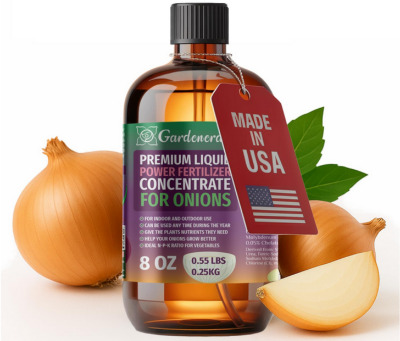
Liquid Power Onions Fertilizer – Professional Liquid Plant Food (8 oz)
Product Description and What It Is
This is another liquid concentrate option, also in an 8-ounce size. It’s marketed as a professional-grade formula, meaning the nutrient balance is optimized for serious growers who want maximum yield and quality.
Professional-grade doesn’t necessarily mean it’s harder to use. It just means the formulation is more precise and targets specific onion growth stages. The concentration of nutrients is typically higher than basic options, so you get results from smaller volumes.
Best Use Cases
This works great if you want stronger, faster results than basic fertilizers provide. It’s excellent for larger gardens where you need reliable, consistent performance. It’s also ideal if you’re growing onions for competitive purposes or selling them, where quality really matters.
The fast-acting concentrate aspect means it works well when you notice growth stalling mid-season. You apply it and see rapid improvements.
It works equally well for spring onions, storage onions, and sweet onion varieties.
Key Features Explained Simply
The professional formulation means nutrient ratios are dialed in for maximum onion performance. You won’t find extra filler or unnecessary additives. Every ingredient serves a purpose.
High-yield focus means the formula supports bigger bulbs, more consistent sizing, and better flavor development. The nutrients are balanced to keep plants healthy throughout the entire growing season.
Fast-acting means bioavailable nutrients get to roots and leaves quickly. Your plants can use them immediately without waiting for slow breakdown.
Real-Life Usage Insight
Like other liquid concentrates, you dilute this according to label directions and apply weekly or biweekly. The difference is that some professional formulas are more concentrated, so the dilution ratio might be stronger than basic versions.
Always read the label. The strength tells you how much concentrate to use. Higher strength means less concentrate per gallon of water.
Apply it consistently throughout the season for best results. Professional growers don’t skip weeks. They maintain a regular feeding schedule, and that’s what gets them impressive yields.
Honest Pros and Cons
Pros:
- Higher nutrient concentration means better results per application
- Fast-acting formula supports rapid growth and bulb development
- Professional formulation targets onion needs precisely
- Suitable for all onion varieties
- Compact size makes storage easy
- Works for both soil application and foliar feeding
Cons:
- Slightly higher cost than basic liquid fertilizers
- More concentrated means you must measure carefully
- Smaller 8-ounce bottle means more frequent repurchasing for large gardens
- Requires attention to mixing ratios for proper results
- Professional strength might be overkill for small home gardens
Performance Discussion
Performance is generally excellent. Because the formula is more concentrated and precise, you see faster greener growth and larger bulb development. If you apply it on schedule, onions tend to bulk up nicely in the later part of the season.
The fast-acting component means results show within one to two weeks of starting applications. Your plants respond quickly because nutrients are immediately available.
The trade-off is that you need consistency. Skipping weeks reduces the benefit because the formula relies on regular feeding to work at full capacity.
Ease of Use
Easy, but requires slightly more attention than basic formulas. You need to measure concentrate carefully because it’s more potent. Use the measuring cap or a measuring spoon to get ratios right.
Once you get your routine down, application is straightforward. Mix, apply, water. Standard process.
New gardeners should read the label thoroughly to understand the dilution ratio before starting.
Value for Money
Good value for serious growers. The higher concentration means you use less product per application, so the 8-ounce bottle stretches further than you might expect.
For home gardeners with twenty or fewer onion plants, basic liquid fertilizers might be more economical because you don’t need the extra strength. For larger operations or serious growers, the professional formula offers better results per dollar spent.
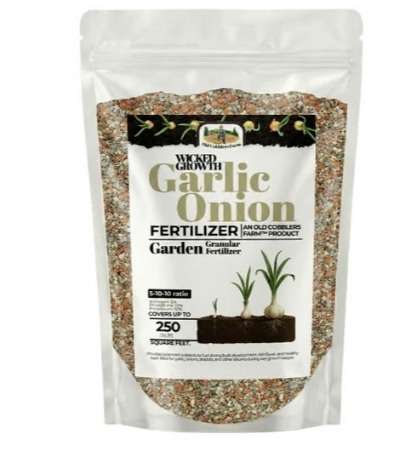
Old Cobblers Farm™ Wicked Growth Garlic + Onion Fertilizer (5 lbs)
Product Description and What It Is
This is a slow-release granular fertilizer in a 5-pound bag. Unlike liquids, granules are dry and work slowly as soil moisture breaks them down over weeks. This approach means less frequent applications and more steady, consistent nutrition.
The product targets both garlic and onions, so if you grow both crops, one fertilizer handles both. The slow-release mechanism provides steady nutrition as the season progresses.
This is an eco-friendly option. The formula uses sustainable ingredients and avoids harsh chemicals. If you prefer organic or natural gardening approaches, this aligns with those values.
Best Use Cases
Granular slow-release fertilizers work best when you want a set-and-forget approach. Apply it once or twice per season and let it work without constant attention. Ideal for busy gardeners who don’t have time for weekly applications.
It’s perfect for amending garden beds before planting. Work it into the top few inches of soil, and it feeds your onions all season. It’s also great for topdressing during the growing season.
The eco-friendly aspect makes it best for gardeners who prefer natural inputs and want to avoid chemical fertilizers. The slow-release formula is gentle on soil biology and beneficial microorganisms.
Key Features Explained Simply
Slow-release means the nutrients don’t all become available at once. Instead, soil moisture gradually activates the nutrients over time. This mimics natural nutrient cycling and provides steady feeding throughout the season.
The 5-10-10 nutrient ratio specifically (or whatever the actual numbers are) targets bulb and root development. Phosphorus at 10 supports strong root systems and bulb formation. Potassium at comparable levels supports overall plant vigor.
Eco-friendly slow-release nutrients mean the formula breaks down naturally without harsh chemical processing. You’re working with ingredients that support soil health, not just feed plants in isolation.
Real-Life Usage Insight
Before planting, mix granules into your garden bed. Use about 1 to 2 pounds per 100 square feet of garden bed, depending on soil quality. Work it into the top 4 to 6 inches of soil so it contacts roots as they grow.
For established plants, topdress around each plant once during mid-season. Scatter granules on the soil around the base, keeping them a couple inches away from the stem. Water after application so granules contact the soil and begin breaking down.
The granules start working quickly, with effects visible in two to three weeks. Full benefit develops over the season as they slowly release.
Honest Pros and Cons
Pros:
- Slow-release means less frequent applications needed
- Larger bag (5 lbs) covers significant garden area
- Eco-friendly approach aligns with natural gardening
- Works well mixed into soil before planting
- Steady nutrition reduces over-feeding risk
- Good value per pound for extended feeding
- Supports soil health and beneficial organisms
Cons:
- Works more slowly than liquid options
- Can’t address nutrient deficiencies quickly
- Granules can clog spreaders or require hand application
- Takes planning to apply before planting season
- Slower action means you might wait longer to see results
- Storage requires dry conditions; clumping can happen if exposed to moisture
Performance Discussion
Performance is reliable but more gradual than liquid options. You won’t see dramatic results in days. Instead, you see steady, consistent growth throughout the season.
This approach naturally prevents over-feeding. Because nutrients release slowly, you can’t accidentally give plants too much. The risk of nutrient burn is much lower than with concentrated liquids.
Onions grown with slow-release granular fertilizers tend to develop stronger root systems and more complex flavor. The gradual feeding mimics natural soil nutrient availability, which plants respond to well.
Ease of Use
Pretty easy overall. You’re not mixing solutions or measuring liquids. You just scatter granules and let them work.
The main hassle is moving and storing a 5-pound bag. It’s heavier than an 8-ounce liquid bottle. If you have mobility limitations, this might be awkward.
Application is straightforward. If you topdress during the season, scatter granules around the plant base and water. That’s it.
Value for Money
Excellent value. A 5-pound bag covers way more area than an 8-ounce liquid bottle, even accounting for concentration differences. If you have a vegetable garden beyond just onions, this bag feeds multiple crops.
For larger gardens, slow-release granules are more economical than buying multiple bottles of liquid fertilizer.
For small gardens with just a few onion plants, buying a full 5-pound bag might not be worth it if you won’t use the whole thing in one season.
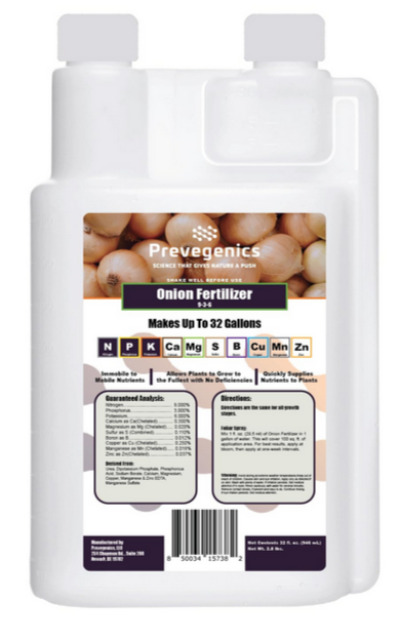
Onion Fertilizer (32 fl. oz.) – Easy to Use
Product Description and What It Is
This is a larger-format liquid fertilizer option in a 32-ounce bottle. It’s designed for ease of use, with clear directions and reliable results. The larger size means fewer repurchases than 8-ounce options.
The formula is straightforward and balanced for onion success. It’s not overly complex, making it ideal for beginners who want results without overthinking the process.
Best Use Cases
This works best for home gardeners with moderate-sized onion plantings. A 32-ounce bottle handles consistent feeding throughout the season without running out quickly.
It’s ideal for people who want simple, no-nonsense fertilizing. You don’t need to become an expert. Follow the label, apply regularly, and your onions grow.
The larger size makes it practical for weekly feeding routines. You’re not constantly buying new bottles, which saves trips to the garden center.
Key Features Explained Simply
The 32-ounce size reduces packaging waste compared to buying multiple 8-ounce bottles. You get the same total volume with less plastic.
Easy-to-use formulation means the nutrient balance is proven to work for onions across different growing conditions. It’s not a complex proprietary blend. It’s a solid, reliable formula.
The liquid format means fast nutrient availability. Young plants and established plants both benefit from the quick uptake.
Real-Life Usage Insight
Mix according to label directions. Most 32-ounce bottles dilute to make several gallons of feeding solution. One application might cover all your onion plants, making the process efficient.
Apply every one to two weeks during active growth. The larger bottle size lets you maintain consistent feeding without worrying about running out partway through the season.
Many gardeners appreciate that one 32-ounce bottle lasts through an entire season for home-sized gardens. You buy once and forget about it until the bottle is empty.
Honest Pros and Cons
Pros:
- Larger size reduces repurchasing frequency
- Good value compared to buying multiple small bottles
- Easy-to-follow directions minimize confusion
- Proven nutrient balance works across conditions
- Less packaging waste per application
- Covers moderate-sized gardens completely
- Straightforward approach without excess complexity
Cons:
- Takes up more storage space than concentrated bottles
- Heavier to carry if you buy multiple bottles
- Once opened, you need to use it within a reasonable timeframe
- Less concentrated than professional formulas
- Results might be slightly slower than premium options
- Requires consistent application to work well
Performance Discussion
Performance is good and reliable. This isn’t a premium product designed for maximum yield, but it delivers solid growth and bulb development.
Onions fed with this product develop well and reach good size. The nutrient balance supports both foliage and bulb formation at appropriate rates.
Results appear within a few weeks of starting applications. Consistent weekly or biweekly feeding produces predictable, steady growth.
Ease of Use
Very easy. The larger size with clear directions makes it beginner-friendly. Mix and apply. No complicated ratios or measurements.
The main consideration is space. A 32-ounce bottle takes up shelf space. Store it in a cool, dry place away from direct sunlight so the formula stays stable.
Value for Money
Good value for home gardeners. One bottle covers a whole season for small to medium gardens. You save money compared to buying three or four 8-ounce bottles.
For large gardens, you might need multiple 32-ounce bottles, but buying larger sizes usually offers better per-ounce pricing than small bottles.
Jobe’s Organics Granular Bone Meal Fertilizer (4 lbs)
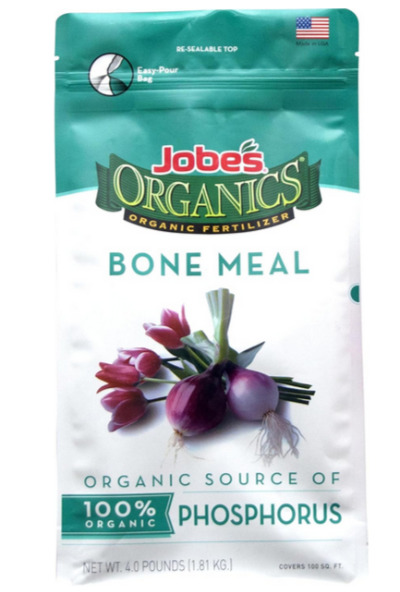
Product Description and What It Is
This is a bone meal fertilizer, which is different from the onion-specific options. Bone meal is made from ground animal bones and is an organic, natural source of phosphorus and calcium.
While not formulated exclusively for onions, bone meal is excellent for supporting root and bulb development. It works slowly, releasing nutrients over many weeks as soil organisms break down the bones.
This is a 4-pound bag, which is a decent quantity for home gardens. Bone meal is a standard ingredient in many vegetable gardening programs.
Best Use Cases
Bone meal works best as a soil amendment before planting or early in the season. Work it into the soil, and it provides phosphorus for strong root development and bulb formation throughout the season.
It’s ideal for gardeners who prefer entirely organic inputs. Bone meal is a natural product with no synthetic chemicals. If organic certification matters to you, this qualifies.
It works well for amending soil with poor phosphorus levels. If your soil test shows low phosphorus, bone meal is an effective way to address that.
Key Features Explained Simply
Bone meal is pure phosphorus and calcium. The typical analysis is around 3-15-0, meaning low nitrogen, high phosphorus, no potassium. Phosphorus is crucial for bulb development, making bone meal valuable for onions.
The slow-release organic nature means it works gradually. You’re not rushing plant growth. You’re providing steady, gentle nutrition that builds soil quality over time.
Calcium from bone meal helps prevent disorders like tip burn and supports overall plant structure.
Real-Life Usage Insight
Apply bone meal before planting by mixing it into garden beds. Use about 1 to 2 pounds per 100 square feet. Work it into the top 4 inches of soil.
For established plants, you can still apply it, but it works slower since it needs time to decompose. Apply early in the season for best results.
Water after application. Moisture helps soil organisms get to work breaking down the bones and releasing phosphorus.
The effects become visible in three to four weeks, with full benefit developing over many weeks.
Honest Pros and Cons
Pros:
- Completely organic and natural
- Excellent phosphorus source for bulb development
- Long-lasting effects support nutrition throughout the season
- Improves soil quality and structure
- No synthetic chemicals or processing
- Works for multiple crops beyond onions
- Appropriate for organic gardening approaches
Cons:
- Very slow action; can’t quickly address deficiencies
- Specific nutrient profile (high phosphorus, low nitrogen, no potassium) might not balance your soil
- Requires other fertilizers to cover all nutrient needs
- 4-pound bag is smaller than other granular options
- Strong smell that some people find off-putting
- Not waterproof; granules scatter easily
- Calcium content might raise soil pH in some conditions
Performance Discussion
Performance is good for what bone meal is designed to do: provide phosphorus for root and bulb development. Onions grown in soil amended with bone meal develop strong root systems and firm, well-formed bulbs.
The performance is consistent and reliable. You get steady, predictable nutrition without risk of over-feeding.
Bone meal alone doesn’t provide complete nutrition for the entire season. You typically use it alongside other fertilizers that provide nitrogen and potassium.
Ease of Use
Very easy. Mix into soil before planting, water, and that’s it. Or sprinkle around established plants and water.
No mixing, measuring, or complicated applications. It’s one of the simplest fertilizer types to use.
Storage is straightforward. Keep it dry. If moisture gets in, granules can clump, but even clumped bone meal works fine once applied and watered.
Value for Money
Good value if you use it as part of a broader soil amendment strategy. A 4-pound bag for the price point is reasonable for organic phosphorus sources.
However, if you buy bone meal just for onions and don’t use it for other crops, you might not get full value from a 4-pound bag in one season. That said, any unused bone meal carries over to next season and stores well.
Comparison Insights: Which Products Work Together?
Here’s something important: you don’t have to pick just one product. In fact, the best results often come from combining products that serve different purposes.
For example, you could use bone meal at the beginning of the season to build strong roots, then follow up with weekly liquid fertilizer applications during the growth phase. This gives you the slow, steady foundation plus quick boosts when plants need them.
Alternatively, you could start with a slow-release granular product and skip liquid applications entirely. This works great if you’re busy and don’t want weekly maintenance.
Liquid fertilizers are fastest-acting and best for regular maintenance and addressing deficiencies. Granular and bone meal products are slow and best for seasonal or pre-planting application.
Nutrient ratios matter when combining products. If you use bone meal (high phosphorus), you might want a liquid fertilizer that provides more nitrogen and potassium to balance the total nutrient package.
Buying Guide: How to Choose
For beginner gardeners: Start with the 32-ounce liquid option (Product #4). It’s simple, comes in a sensible size, and removes the guesswork. You’ll have good results without overthinking it.
For busy gardeners: Choose the slow-release granular option (Product #3). Apply it once or twice and let it work. You get fed onions without weekly applications.
For quality and yield-focused gardeners: Go with the professional liquid formula (Product #2). The higher concentration and precise formulation deliver better results if you’re willing to maintain a feeding schedule.
For organic-focused gardeners: Combine bone meal (Product #5) with a basic liquid organic fertilizer. This gives you natural inputs and reliable results.
For container growing: Use liquids only. Containers need more frequent feeding because nutrients leach out with watering. A 32-ounce bottle works great for container onions.
For large gardens: Buy 5-pound slow-release granules (Product #3) for base nutrition, then add liquid applications for boosts. This combination is cost-effective and efficient for big plantings.
Common Mistakes to Avoid
Over-feeding is the biggest mistake. More fertilizer doesn’t equal bigger onions. Over-feeding burns roots, causes excessive leafy growth at the expense of bulbs, and wastes money. Follow label directions. If the label says weekly, don’t apply twice weekly thinking you’ll get faster results. You won’t. You’ll just burn your plants.
Inconsistent feeding is almost as bad. Feeding once and then forgetting about it for three weeks doesn’t work. Consistent, regular feeding produces consistent results. Set a schedule and stick to it.
Applying fertilizer to dry soil. Water your plants first, then apply fertilizer, or apply liquid fertilizer through watering. Never put dry granules or concentrated liquids on completely dry soil. Roots won’t access the nutrients, and you waste the product.
Ignoring soil preparation. A good fertilizer helps, but it can’t fix terrible soil. If your soil is heavily compacted, lacks organic matter, or has been depleted, fertilizer alone won’t save the day. Work on soil quality before investing heavily in fertilizer.
Using wrong fertilizer types for your situation. A liquid concentrate is pointless if you have a massive garden and don’t want to apply weekly. A slow-release granular is frustrating if you’re trying to fix a nitrogen deficiency mid-season. Match the product type to your actual needs.
Forgetting about other nutrients. Nitrogen, phosphorus, and potassium are important, but trace minerals like calcium, magnesium, and boron matter too. Check if your fertilizer includes micronutrients, and consider a separate micronutrient product if it doesn’t.
Applying fertilizer when plants are stressed. If your onions are wilting from heat or drought, fertilizer stresses them more. Water thoroughly first, let them recover, then fertilize. A stressed plant can’t use nutrients effectively.
Who Should Buy These Products?
Any home gardener growing onions should invest in fertilizer. Onions don’t thrive in poor soil without nutrient support. Even if your garden has decent soil, onion plants benefit from targeted fertilization.
Container growers absolutely need fertilizer. Container soil doesn’t have the nutrient reserves of garden beds. Regular feeding is essential for success.
Gardeners in poor soil need fertilizer more urgently than those with rich, loamy soil. If your soil is sandy, clayey, or compacted, fertilizer compensates for nutrient deficiencies.
Anyone growing onions for eating should feed them. The bigger and healthier the plant, the larger and more flavorful the onion. Fertilizer directly impacts what you harvest.
People with limited time should choose slow-release options. They save time compared to weekly liquid applications.
Quality-focused gardeners should choose options that support consistent, strong growth throughout the season. This usually means professional-grade liquids or well-balanced granulars.
Real Results You Can Expect
When you use the right fertilizer consistently, here’s what happens.
In the first three to four weeks, you notice greener foliage and faster growth. Leaves develop deeper color. The plant looks healthier and more vigorous.
Around week six to eight, you see the beginnings of bulb swelling. The base of the onion plant starts to thicken and develop shape.
By week ten to twelve, bulbs are noticeably larger. If you’re comparing to unfertilized onions, the difference is striking. Fed onions are significantly bigger.
Toward the end of the season, you harvest bulbs that are substantial, firm, and well-formed. Flavor is better because a healthy plant develops better flavor compounds.
The exact timeline depends on onion variety, growing conditions, and your specific climate, but these are typical results with consistent fertilization.
Final Verdict
You have five solid options for fertilizing onions. Each has strengths depending on your situation.
The 32-ounce liquid (Product #4) is the best for most people. It’s simple, works well, comes in a practical size, and offers good value. If you’re new to onion growing, this is where to start.
The professional liquid formula (Product #2) is best if you’re serious about yield and quality. The concentration is higher, results are faster, and the formulation is optimized for onion success. The higher cost is worth it if quality matters.
The slow-release granular (Product #3) is best if you want set-and-forget simplicity. Apply it once and let it work. It’s eco-friendly, covers a large area, and costs less per season than buying multiple bottles of liquid.
The basic liquid concentrate (Product #1) is solid for addressing mid-season deficiencies or giving plants boosts. It works fast and is good to have on hand, though it’s less economical for regular feeding than larger bottles.
Bone meal (Product #5) is best used as a supplement rather than your only fertilizer. Combine it with other options for complete nutrition. It’s great for gardeners focused on organic methods.
My honest recommendation: buy a 32-ounce liquid for easy weekly feeding, and keep some bone meal on hand for pre-season soil amendments. This combination covers all your bases and costs less than premium options.
But honestly, pick any of these products and use it consistently, and your onions will grow bigger and healthier than without fertilizer. The best fertilizer is the one you’ll actually apply on schedule. Don’t overthink it. Pick something that fits your garden style, commit to using it, and you’ll have success.
Onions are forgiving plants. They reward regular feeding with big, beautiful bulbs. Use any of these options properly, and you’re going to grow onions you’re proud of.
Happy growing.

Hi, I’m Mary, the founder of GardenCure.com. I’m passionate about creating healthy, beautiful gardens and well-kept lawns. I share practical experience and trusted advice on garden and lawn gear that truly works. With the support of my dedicated research team, our writers produce honest, in-depth reviews using reliable, authentic sources—helping you choose the right tools with confidence for your outdoor space.