How to Fertilize Crepe Myrtle Trees?
Crepe myrtle trees are some of the most beautiful plants you can grow in your yard. They produce stunning flowers in shades of pink, purple, red, and white. The good news is that keeping these trees healthy doesn’t have to be complicated. One of the easiest ways to help them thrive is to fertilize them properly.
In this article
If you’re new to gardening or just want to learn more about caring for your crepe myrtles, this guide is for you. We’ll walk you through everything you need to know about feeding your trees so they grow strong and flower beautifully.
Why Do Crepe Myrtle Trees Need Fertilizer?
Before we talk about how to fertilize crepe myrtles, let’s cover why it matters. Your trees get nutrients from the soil, but sometimes the soil doesn’t have enough of what they need. Fertilizer fills that gap.
Crepe myrtles need three main nutrients to stay healthy. These are called nitrogen, phosphorus, and potassium. You’ll often see these written as N-P-K on fertilizer bags. Nitrogen helps leaves grow big and green. Phosphorus makes roots stronger and helps flowers bloom. Potassium helps the whole tree stay strong and fight off disease.
When your crepe myrtle trees don’t get enough nutrients, they show signs of stress. The leaves might turn yellow. Flowers might not bloom as much as you’d like. Branches might grow slowly. Fertilizing your trees solves these problems and keeps them looking their best.
When Should You Fertilize Crepe Myrtles?
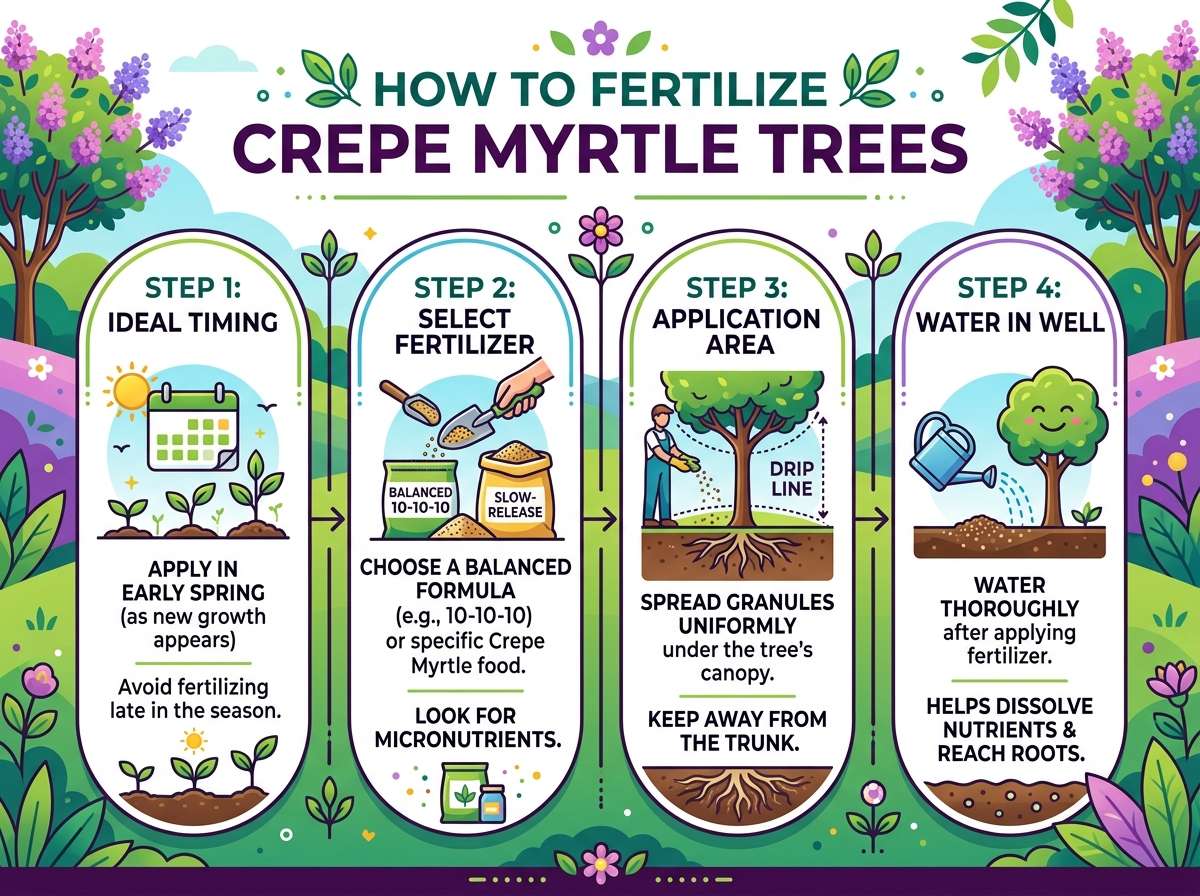
Timing is important when it comes to fertilizing crepe myrtles. You don’t want to fertilize at just any time of the year. The best time to start feeding your trees is in early spring, right when new growth begins to show. This gives your trees the nutrients they need to put out fresh leaves and branches.
You can fertilize again in the middle of the growing season. This boosts energy when your trees are working hard to make flowers and new growth. Some gardeners like to give their trees one more feeding in late summer. This helps prepare them for the colder months ahead.
Stop fertilizing crepe myrtles by late summer. You don’t want to feed them in fall or during the dormant season. New growth that appears late in the year is tender and won’t survive cold weather. Feeding too late in the season actually causes damage rather than helping your trees.
If your trees are already growing in soil that’s very rich, you might not need to fertilize every season. Check your soil if you’re not sure. A simple soil test will tell you what nutrients are present and what your trees might be missing.
Types of Fertilizer for Crepe Myrtles
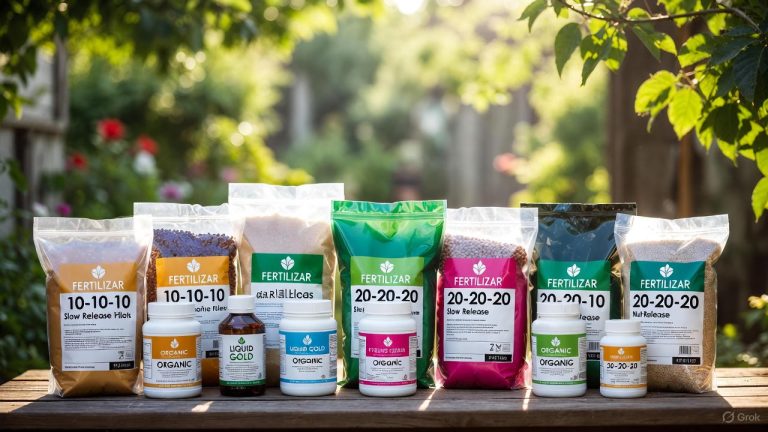
You have several choices when it comes to fertilizer products. The good news is that crepe myrtles aren’t picky. They respond well to many different types of plant food. Let’s look at the most popular options.
Granular Fertilizers
Granular fertilizers come as solid pellets or particles. You sprinkle them on the ground around your tree, then water them in. These products work slowly and release nutrients over several weeks. This slow release means you don’t have to fertilize as often.
Granular fertilizers are great for beginners because they’re simple to use. Just follow the directions on the bag. The nutrients become available to your tree gradually, which reduces the risk of burning roots or causing damage. Most gardeners use granular products because they’re affordable and effective.
Liquid Fertilizers
Liquid fertilizers mix with water and you apply them with a hose or sprayer. They work very fast because your tree absorbs the nutrients right away. If your tree needs a quick boost, liquid fertilizer is the way to go.
The downside is that liquid fertilizers wash away faster. Heavy rain or watering can move them through the soil before your tree uses them all. You’ll need to apply liquid products more often than granular types. However, they’re perfect if you notice your crepe myrtle looking tired and you want quick results.
Organic Fertilizers
Organic products come from natural sources like plant and animal materials. Compost, manure, bone meal, and fish emulsion are all organic options. These products feed your trees and improve your soil at the same time. Organic fertilizers work slowly but provide lasting benefits.
Many gardeners love organic products because they’re safe for kids and pets. They also help build soil structure over time. Your soil becomes richer and darker the more you use organic fertilizers.
Synthetic or Chemical Fertilizers
Synthetic fertilizers are made in labs from chemical compounds. They work fast and are very affordable. These products come in many formulas designed for different plants. You can find fertilizers made specifically for flowering shrubs and trees, which work great for crepe myrtles.
Synthetic fertilizers give you exact numbers for nitrogen, phosphorus, and potassium. This lets you know exactly what you’re giving your trees. They’re reliable and you get consistent results every time.
What NPK Ratio Is Best for Crepe Myrtles?
The three numbers on a fertilizer bag tell you the ratio of nitrogen to phosphorus to potassium. For example, you might see 10-10-10 or 15-5-10. These numbers matter because they affect how your tree grows.
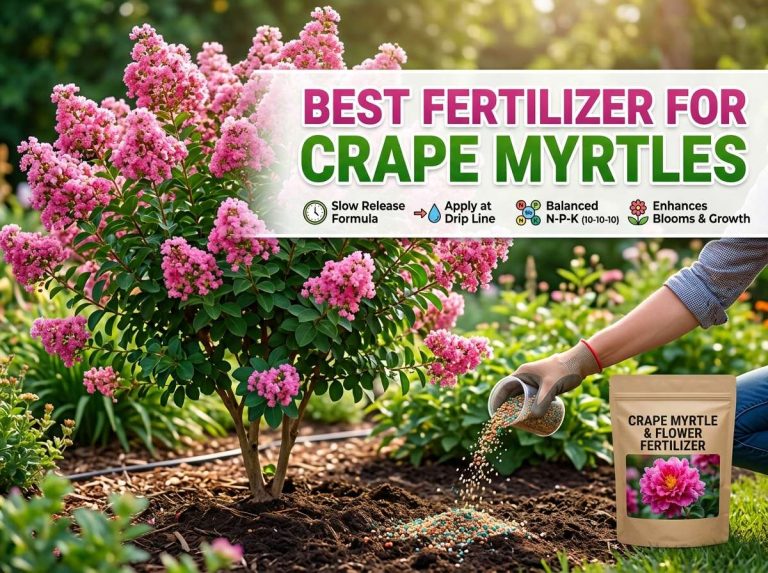
For crepe myrtles, you want a balanced fertilizer or one that’s slightly higher in phosphorus and potassium than nitrogen. A good ratio is something like 5-10-10 or 10-10-10. These balanced formulas encourage strong root growth and plenty of flowers without pushing too much leaf growth.
If you use a fertilizer that’s too high in nitrogen, your tree will grow lots of leaves but few flowers. You’ll end up with a green bush rather than a colorful blooming tree. That’s not what you want. Stick with balanced formulas or ones that favor phosphorus and potassium.
Some gardeners use special flower fertilizers with lower nitrogen and higher phosphorus. These products are labeled for blooming shrubs and trees. They work beautifully for crepe myrtles and almost always give excellent flowering results.
How Much Fertilizer Do You Need?
The amount of fertilizer your crepe myrtle needs depends on several things. The size of your tree matters. A young tree just planted last spring needs less than a large mature tree. How much nutrients are already in your soil matters too.
Always follow the directions on the fertilizer bag. These instructions tell you exactly how much product to use based on tree size. Most bags give amounts in pounds or cups per tree. Read carefully and measure accurately.
A general rule is to use about one pound of actual nitrogen per year for each inch of trunk diameter. Your tree’s trunk diameter is the width of the trunk measured near the ground. If your tree’s trunk is three inches wide, use about three pounds of nitrogen per year. You can split this into two or three applications throughout the growing season.
This might sound complicated, but the numbers on the bag help you figure it out. If you’re using a 10-10-10 fertilizer, ten pounds of product contains one pound of actual nitrogen. The math is simple once you get the hang of it.
Don’t over-fertilize your crepe myrtles. Too much fertilizer can damage roots and cause problems. More fertilizer is not better. Stick to the recommended amounts and your trees will do great.
How to Apply Fertilizer to Crepe Myrtles
The method you use to apply fertilizer depends on what type you’re using. Let’s go through the steps for each type so you know exactly what to do.
Applying Granular Fertilizer
First, water your tree well before applying granular fertilizer. A moist tree absorbs nutrients better than a dry one. Pull back any mulch around the base of your tree to expose the soil.
Sprinkle the granular product around the tree. Start a few inches away from the trunk because you don’t want fertilizer touching the bark. Spread it out to the drip line, which is where the branches end. This is where the roots spread out underground.
After you’ve sprinkled the fertilizer, water your tree again. This pushes the nutrients down into the soil where roots can reach them. Water deeply and thoroughly. You want the fertilizer to soak into the ground, not sit on the surface.
Put your mulch back in place. Make sure it’s not touching the tree trunk. A few inches of space around the trunk helps prevent disease. Good mulch keeps soil moist and warm, which helps your tree use nutrients more efficiently.
Applying Liquid Fertilizer
Mix your liquid fertilizer with water according to the package directions. Use the exact measurements given. Pour the mixture around the base of your tree, spreading it across the entire root zone.
You can apply liquid fertilizer with a watering can, a hose sprayer, or a broadcast spreader. Some people like to use a spray bottle for small trees. Soak the soil thoroughly so the nutrients reach down to the roots.
Apply liquid fertilizers in the late afternoon or early morning when temperatures are cool. This helps your tree absorb the nutrients better. Avoid applying in hot, direct sun if possible.
Applying Organic Fertilizer
Organic products like compost and aged manure can be worked right into the soil around your tree. Spread a layer around the base and water it in well. The nutrients will slowly break down and feed your tree over time.
You can also use organic liquid fertilizers like fish emulsion or liquid kelp. Mix these with water and apply like other liquid products. Organic fertilizers smell strong sometimes, but that goes away quickly.
Fertilizing Young vs. Mature Crepe Myrtles
Young trees need different care than older, established trees. A crepe myrtle that was just planted needs different fertilizing than one that’s been in your yard for ten years.
Caring for Newly Planted Trees
When you first plant a crepe myrtle, wait about six weeks before fertilizing. Let the tree settle into its new home and establish roots. After six weeks, you can start a light feeding program.
Young trees benefit from fertilizers with a bit more phosphorus. This helps develop a strong root system. Use a fertilizer like 10-20-10 or a product labeled for new plants. Feed young trees every four to six weeks during the growing season.
Be careful not to over-fertilize young trees. Their roots are still tender and sensitive. Too much fertilizer can damage them. Use half the amount you would use for a mature tree. Your young tree will grow just fine with moderate feeding.
Caring for Established Trees
Once your crepe myrtle is three or four years old, it’s considered established. These trees have deep roots and can handle regular fertilizing. Feed established trees once or twice during the growing season. Once in early spring and once in mid-season is perfect for most trees.
You can use full-strength fertilizer on established trees. Their roots are tough and can handle standard amounts. Established trees that haven’t been fertilized in years might show amazing improvement with just one season of regular feeding.
Signs Your Crepe Myrtle Needs More Nutrients
Watch your tree for signs that it needs more food. Learning to read these signals helps you keep your trees healthy and beautiful.
If your tree’s leaves turn yellow but the veins stay green, this usually means it needs iron. Iron deficiency is common in some soils. Use a product made for correcting iron deficiency, sometimes called a chelated iron treatment.
If leaves are pale or light green all over, your tree might need nitrogen. Increase your feeding schedule or use a nitrogen-rich product to fix this problem.
If your tree doesn’t produce many flowers or the flowers are small, it probably needs more phosphorus and potassium. Fertilizers made for blooming plants solve this issue quickly.
If your tree grows slowly and looks weak, it might not be getting enough nutrients overall. A balanced fertilizer program throughout the growing season helps. You might also need to check your soil and add other amendments.
Yellow leaves that fall early can mean several things. Too much water, poor drainage, or nutrient problems all cause this. Check your soil moisture first. If drainage is good and soil isn’t waterlogged, then nutrient problems might be the cause.
Common Mistakes to Avoid
Many people accidentally hurt their crepe myrtles by making fertilizing mistakes. Learn from these common problems so you don’t repeat them.
Don’t fertilize during dormancy. Crepe myrtles rest during colder months. They don’t need food when they’re sleeping. Feeding during this time wastes product and can cause problems.
Don’t put fertilizer right against the trunk. This can burn the bark and damage the tree. Always keep fertilizer a few inches away from the trunk.
Don’t use too much fertilizer. This is the most common mistake. Extra fertilizer doesn’t make trees grow faster or bloom more. It can actually damage roots and cause problems. Follow package directions carefully.
Don’t use fertilizer made for lawns or vegetables. These products often have the wrong nutrient balance for trees. Use products made for trees and shrubs.
Don’t forget to water after fertilizing. Water activates granular fertilizer and helps roots absorb nutrients. A dry tree can’t use the food you give it.
Don’t fertilize stressed trees. If your tree is sick, damaged, or under stress from bugs, hold off on fertilizing. Wait until the tree recovers. Extra nutrients won’t help a stressed tree and might make things worse.
Best Practices for Crepe Myrtle Fertilizing
Now that you know what not to do, let’s talk about the best ways to fertilize crepe myrtles successfully.
Keep good records. Note when you fertilize your trees and what product you use. Write down how your trees respond. This information helps you dial in the perfect program for your trees.
Test your soil every few years. A soil test tells you exactly what nutrients are present and what’s missing. This takes the guessing out of fertilizing. Local extension services often offer cheap soil tests.
Water your trees regularly. Good watering is just as important as fertilizing. Trees use nutrients best when they have consistent moisture. Water deeply and thoroughly.
Use mulch around your trees. A two to three inch layer of mulch keeps soil cool and moist. It also slowly breaks down and adds organic matter to your soil. Organic matter improves nutrient availability.
Prune your crepe myrtles properly. Good pruning keeps trees healthy and helps them look better. Healthy trees also use nutrients more efficiently and produce more flowers.
Mix different fertilizer types. Some seasons use granular products. Other times use liquid fertilizers or organic products. Variety keeps your soil balanced and gives your trees different nutrient sources.
Start small. If you’re new to fertilizing, begin with light feeding. One application per season is fine for young trees. You can always increase feeding if your tree needs it.
Specific Products That Work Well
While any good balanced fertilizer works, some products are especially popular with crepe myrtle growers. Espoma Organic Flower-Tone has great reviews from gardeners. It’s organic, slow-release, and full of beneficial microbes that improve soil.
Jobe’s Organics All Purpose Fertilizer works well too. It’s affordable and effective. Many garden centers carry it in regular stock.
For liquid options, fish emulsion is cheap and effective. Some gardeners swear by it. Dilute it well and apply early in the day because of the smell.
Miracle-Gro for flowers is a reliable synthetic option. It mixes with water easily and works fast. It’s been used successfully on crepe myrtles for many years.
Osmocote Smart-Release Fertilizer comes in granules that release nutrients slowly. You only need to apply it once or twice per season. It’s convenient and consistent.
Holly-tone from Espoma is designed for acid-loving plants but crepe myrtles respond beautifully to it. The nutrient balance is perfect for flowering.
Always read product labels and follow directions. Even good products cause problems if used wrong. The bag tells you everything you need to know.
Special Situations and Adjustments
Some situations require special fertilizing adjustments. Let’s look at a few common scenarios.
Container Crepe Myrtles
Trees growing in pots need more frequent fertilizing than in-ground trees. Container soil drains quickly and nutrients wash away easily. Feed container trees every two to three weeks with liquid fertilizer. You can also use slow-release granules, but apply them more often than you would for in-ground trees.
Make sure your container has drain holes. Container soil should dry slightly between waterings but not completely dry out. Good drainage and consistent moisture help your container tree thrive.
Crepe Myrtles in Poor Soil
If your soil is really poor or you’re not sure what you have, take it slow. Start with a balanced fertilizer and observe how your tree responds. You might need extra iron or sulfur treatments. A soil test shows exactly what you need.
Poor soil often benefits from adding compost. Spread two to three inches of compost around your tree and work it in gently. This improves soil structure and adds organic matter over time.
Trees That Won’t Bloom
Sometimes crepe myrtles grow great leaves but produce few flowers. This is usually a nitrogen problem. You’ve used too much nitrogen relative to phosphorus and potassium. Switch to a product with lower nitrogen and higher phosphorus. Fertilizers made for blooming plants fix this quickly.
How Climate Affects Your Fertilizing Schedule
Crepe myrtles grow in many different climates. Cooler climates require different fertilizing schedules than warmer areas.
In hot climates with long growing seasons, you might fertilize three times per season. Feed in early spring, mid-summer, and late summer. The long warm period means your tree can handle more feeding.
In cooler climates with shorter growing seasons, feed once or twice. One application in early spring might be all you need. Make your second application early enough so it doesn’t push tender growth late in the season.
In areas with cold winters, stop fertilizing by late summer no matter what. You want your tree to slow down and prepare for dormancy. Late fertilizing causes tender growth that dies back in winter.
Mulching and Its Role in Nutrition
Mulch does more than just look pretty. It plays an important role in how your tree uses nutrients. A good mulch layer keeps soil moist and cool. This helps roots absorb nutrients more efficiently.
Use mulch from natural materials like wood chips, bark, or straw. Avoid piling mulch against the trunk. Keep it a few inches away from the base. Three inches of mulch is the sweet spot. More than that can cause problems.
As mulch breaks down, it adds organic matter to your soil. This organic matter improves soil structure and nutrient availability. So mulch actually helps fertilizer work better.
Replace mulch as it breaks down. Every couple of years, add new mulch to maintain that three-inch layer. This keeps your soil healthy and your nutrients available.
Final Tips for Success
Fertilizing crepe myrtles is simple once you understand the basics. Here’s a quick recap to help you remember.
Start your fertilizing program in early spring when new growth appears. Use a balanced fertilizer or one made for flowering trees. Follow the directions on the package carefully. Water before and after applying fertilizer.
Feed your crepe myrtles once or twice during the growing season. Young trees need lighter feeding than established trees. Stop fertilizing by late summer.
Watch your trees for signs of nutrient problems. Yellow leaves, poor growth, or few flowers mean you might need to adjust your program. Small changes often produce big results.
Keep good records. Remember what you did and how your trees responded. Use this information to improve your program year after year.
Most importantly, don’t stress about getting it perfect. Crepe myrtles are forgiving plants. They’ll thrive with basic care and regular feeding. Even if you make a small mistake, your tree will usually bounce back quickly.
Conclusion
Crepe myrtles are wonderful trees that bring color and beauty to any yard. They don’t require fancy care or complicated fertilizing schedules. A simple, consistent feeding program keeps them healthy and happy.
Now you know when to fertilize, what to use, and how much to apply. You understand why different trees need different amounts. You’ve learned to spot problems and fix them quickly.
Start with one or two applications of a balanced fertilizer this growing season. Watch how your tree responds. Next season, you can adjust based on what you learn. Over time, you’ll develop a program that’s perfect for your trees and your yard.
Your crepe myrtles will reward you with stunning blooms, healthy growth, and beautiful form. These trees live for decades with good care. The fertilizing work you do now sets them up for years of beauty. Get started today and watch your crepe myrtles thrive.

Hi, I’m Mary, the founder of GardenCure.com. I’m passionate about creating healthy, beautiful gardens and well-kept lawns. I share practical experience and trusted advice on garden and lawn gear that truly works. With the support of my dedicated research team, our writers produce honest, in-depth reviews using reliable, authentic sources—helping you choose the right tools with confidence for your outdoor space.