How to Fertilize Ferns?
Ferns are wonderful indoor and outdoor plants that bring a lush, vibrant look to any space. But keeping them healthy requires more than just water and light. Fertilizing your ferns is one of the most important steps you can take to help them grow strong and maintain their beautiful green fronds. If you’ve ever looked at a struggling fern and wondered what’s wrong, the answer might be as simple as the right nutrients.
In this article
This guide walks you through everything you need to know about feeding your ferns. You’ll learn what nutrients ferns need, when to feed them, which products work best, and common mistakes to avoid. By the end, you’ll feel confident giving your ferns exactly what they need to thrive.
Why Ferns Need Fertilizer
Ferns are not heavy feeders, but they do need nutrients to stay healthy. When you grow ferns in pots or indoors, they can’t pull nutrients from natural soil the way outdoor plants do. Over time, the soil in your pots becomes depleted. That’s where fertilizer comes in.
Fertilizer gives your ferns the essential elements they need to grow new fronds, develop stronger roots, and maintain vibrant color. Without proper feeding, ferns slow down their growth and may start to yellow or brown. The fronds might look droopy or weak, and the plant loses its natural vigor.
Think of fertilizer as a supplement. Just like vitamins help us stay energized and healthy, fertilizer helps your ferns stay vibrant and full of life. The good news? Ferns don’t need a lot of fertilizer. A little bit of the right stuff goes a long way.
Understanding Fern Nutrient Needs
Before you start feeding your ferns, it helps to know what nutrients they actually need. All plants require three main nutrients, and ferns are no exception. These are called macronutrients.
Nitrogen (N) is the first macronutrient. It promotes leaf and frond growth and gives plants their rich green color. When ferns don’t get enough nitrogen, their fronds turn pale or yellow.
Phosphorus (P) is the second macronutrient. It helps plants develop strong roots and encourages flowering and fruiting. While ferns don’t flower, they still benefit from phosphorus because it strengthens their overall structure.
Potassium (K) is the third macronutrient. It improves the plant’s ability to resist stress and disease. It also helps with nutrient movement throughout the plant and strengthens cell walls.
You’ll see these nutrients listed on fertilizer labels as an NPK ratio. For example, a label might say “10-10-10” or “5-10-10”. These numbers tell you the percentage of nitrogen, phosphorus, and potassium in the fertilizer.
Ferns also benefit from micronutrients like magnesium, iron, and manganese. These are needed in smaller amounts, but they’re just as important for keeping your ferns healthy.
Best Fertilizers for Ferns
Not all fertilizers work equally well for ferns. You have several good options to pick from.
Balanced Liquid Fertilizers
Liquid fertilizers are the top choice for most fern growers. They’re easy to use, and you can adjust the strength to match your plant’s needs. Look for balanced options like 10-10-10 or 5-5-5. The balanced NPK ratio means your ferns get all three macronutrients in equal amounts.
Liquid fertilizers mix right into your watering can, and you apply them when you water. This makes feeding your ferns a simple part of your regular routine. Most liquid options are also fast-acting, so your plants start benefiting right away.
Water-Soluble Powders
Water-soluble powders work much like liquid fertilizers. You mix the powder with water and apply it to your soil. Many people like these because they’re compact to store and have a long shelf life. They’re also often cheaper than liquid options.
The main thing to watch with powders is mixing correctly. Make sure the powder dissolves completely before applying it to avoid root burn.
Slow-Release Granules
Slow-release granules work differently than liquid or powder options. You mix them into the soil or sprinkle them on top, and they break down over time. This gives your ferns steady nutrition over weeks or even months.
Slow-release options are great if you forget to feed your plants regularly. One application can feed your ferns for the entire growing season. The downside is that you can’t adjust the strength if your plant doesn’t seem to like it.
Organic Fertilizers
Organic fern fertilizer options include fish emulsion, seaweed solution, and compost tea. These products come from natural sources and release nutrients slowly into the soil. Many indoor gardeners love organic options because they’re gentle on plants and won’t burn roots if you use too much.
Fish emulsion has a strong smell, but it’s packed with nutrients ferns love. Seaweed solution contains trace minerals that help ferns handle stress. If you want a truly natural approach, compost tea or diluted compost water works well too.
Specialty Fern Fertilizers
Some companies make fertilizers specifically formulated for ferns and other foliage plants. These often have slightly higher nitrogen levels to boost leaf growth and color. If you find a product made for fern plant care, it’s a solid choice.
NPK Ratios Explained for Fern Feeding
The three numbers on a fertilizer label tell you so much about whether it’s right for your ferns. Let’s break down how to read them.
A balanced fertilizer like 10-10-10 gives equal parts of all three macronutrients. This is perfect for most ferns most of the time. Every major nutrient gets equal attention, which keeps your plant well-rounded and healthy.
A ratio like 5-10-10 has less nitrogen but more phosphorus and potassium. This type works better if your ferns already have plenty of green fronds and you want to focus on root and structural strength.
A ratio like 20-5-5 has lots of nitrogen but less phosphorus and potassium. Use this type sparingly on ferns. Too much nitrogen can make plants grow too fast and become weak.
For general fern care, stick with balanced or slightly lower nitrogen ratios. Most liquid fertilizers labeled for houseplants or foliage plants work perfectly for ferns.
When to Fertilize Your Ferns
Timing matters when you’re feeding ferns. The growing season is when ferns put out new fronds and use the most energy. During this active time, they benefit from regular feeding.
For most ferns, the growing season runs from spring through early fall. This is when you should feed your ferns regularly, usually every two to four weeks. The exact timing depends on which fertilizer you use. Always follow the label instructions, as different products have different strengths.
In winter, fern growth slows down dramatically. Many ferns go dormant or nearly dormant during cold months. Cut back your feeding during this time. Feed every six to eight weeks or even less often. Some gardeners skip feeding entirely in winter and start again when spring arrives.
The reason for this timing is simple: in winter, ferns aren’t growing much, so they don’t need much food. Feeding a dormant plant can lead to problems like nutrient buildup in the soil or root burn.
If you’re growing ferns in a warm room year-round and they keep growing, you can feed more consistently. Just watch your plant’s response and adjust as needed.
How to Apply Fertilizer to Your Ferns
Applying fertilizer the right way makes a huge difference in how well your ferns respond.
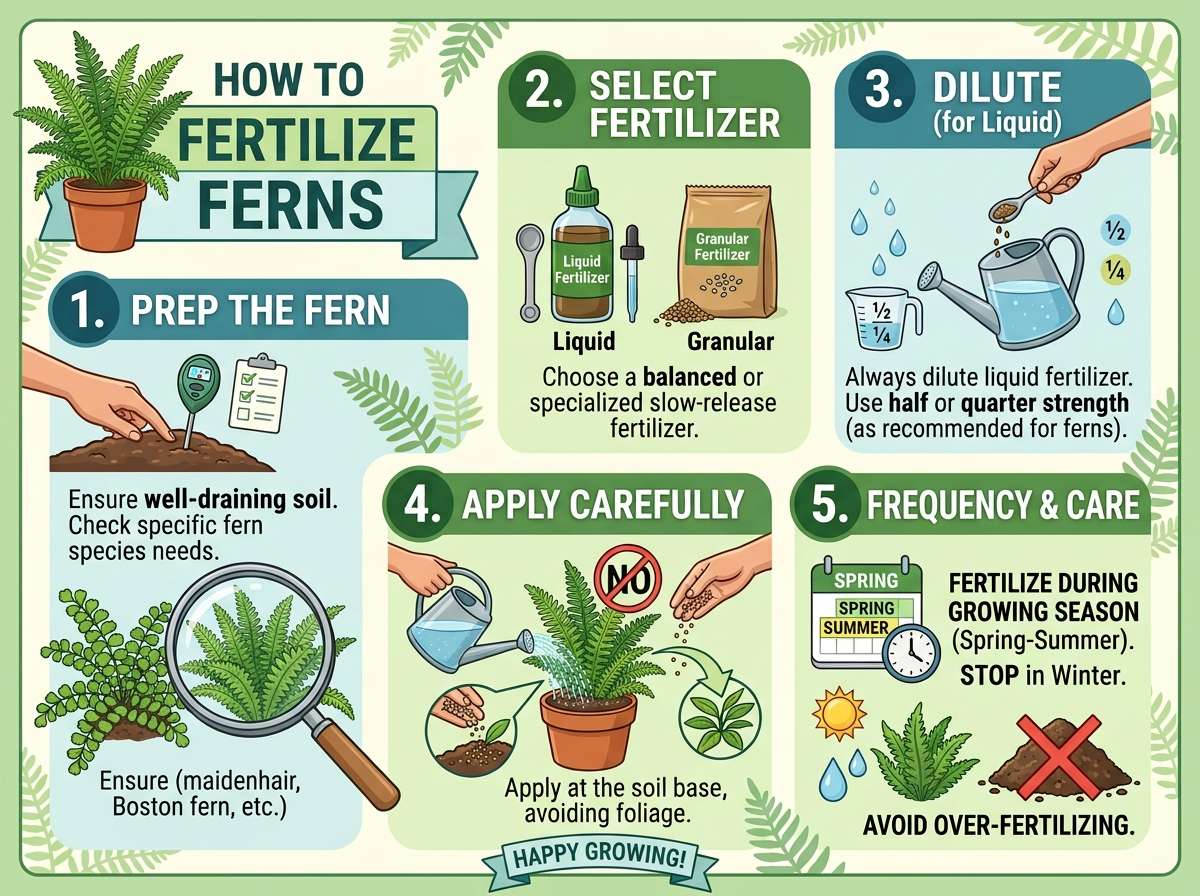
Step One: Water First
Always water your ferns with plain water before applying fertilizer. This softens the soil and makes sure the nutrients spread evenly. If you fertilize dry soil, the nutrients might not reach all the roots.
Step Two: Mix the Fertilizer
If you’re using liquid or powder fertilizer, mix it according to the label. Use the recommended amount for your pot size. When in doubt, use slightly less rather than more. You can always feed again, but you can’t take excess fertilizer out of the soil.
Step Three: Apply to the Soil
Pour the mixed fertilizer slowly around the base of your fern. Apply it to the soil, not the fronds. Water that splashes on foliage can sometimes cause spots or damage.
Step Four: Water Again
After feeding, water your fern with plain water. This helps the nutrients move through the soil and reach the roots. It also helps prevent salt buildup, which can burn roots over time.
Step Five: Space Out Applications
Don’t fertilize again until the recommended time has passed. More fertilizer doesn’t mean healthier ferns. In fact, overfeeding causes more problems than underfeeding does.
Dilution and Strength Guidelines
One of the biggest mistakes new gardeners make is using fertilizer at full strength. This can burn roots and cause real damage to your ferns.
If you’re new to fertilizing ferns, consider using half-strength fertilizer. Mix it so it’s weaker than the label recommends. This gives your ferns what they need without risk of overdoing it.
As you get more experience, you can adjust the strength based on how your plants respond. If your ferns seem to love it and grow fast, you might bump it up to three-quarter strength. If they seem to prefer gentler feeding, keep it at half strength.
Some gardeners use the method of feeding at quarter strength every time they water during growing season instead of feeding at full strength every few weeks. This keeps nutrients steady and prevents spikes that can stress the plant.
Experiment a bit and watch your ferns. They’ll tell you through their appearance whether they’re getting the right amount of food.
Common Signs Your Ferns Need More Nutrients
Your ferns communicate their nutritional needs through their appearance. Learning to read these signs helps you feed them perfectly.
Pale or yellowing fronds often mean your fern needs more nitrogen. The yellow usually starts on older fronds and moves toward new growth. If your fern’s green has faded but there’s no brown or spotting, nitrogen is likely the issue.
Slow growth is another sign. If your fern stopped putting out new fronds or the growth slowed dramatically, feeding time might have arrived. Healthy ferns produce new fronds regularly during the growing season.
Small fronds or weak new growth can indicate nutritional issues. If your fern is making new fronds but they’re tiny or don’t unfurl properly, your plant might need a feeding boost.
Stunted overall size happens when ferns don’t get enough nutrients over a long time. If your fern just isn’t reaching the size it should, nutrition could be holding it back.
Signs of Overfertilizing
Too much fertilizer causes just as many problems as too little. Knowing when you’ve overdone it helps you fix the issue before serious damage occurs.
Brown or scorched frond tips are the classic sign of overfertilizing. The brown usually appears on leaf tips first and spreads if feeding continues. This happens because excess salts in the soil damage root cells.
Wilting even when soil is moist suggests salt buildup from overfertilizing. The excess salts prevent roots from absorbing water properly, causing the plant to wilt despite plenty of moisture.
Stunted growth in the presence of lots of fertilizer is another warning sign. Sometimes too many nutrients actually slow plant growth because the plant can’t process them all.
Crusty white or brown buildup on soil surface indicates salt accumulation from overfertilizing. You might also see this on pot edges. If you see crusty buildup, it’s time to stop feeding and flush the soil.
How to Fix Overfertilizing Problems
If you think you’ve given your fern too much fertilizer, don’t panic. Several methods can help fix the problem.
The most effective fix is leaching the soil. Take your fern to a sink or shower and run water through the pot slowly for several minutes. Let water drain from the bottom completely. Do this several times over a few days. The water washes excess salts out of the soil.
You can also repot your fern into fresh soil if the problem is severe. This removes the buildup completely and gives your plant a fresh start. Gently shake old soil off the roots and plant in new potting mix.
For future prevention, stick to the fertilizer schedule and strength recommended on the label. Feed less rather than more, and remember that healthy ferns don’t need heavy feeding.
Seasonal Feeding Schedule for Ferns
Creating a simple feeding schedule keeps your ferns well-nourished without becoming overwhelming.
Spring: Start regular feeding as new growth appears. Feed every two to four weeks with a balanced houseplant fertilizer at half or full strength. Watch your ferns for signs that feeding is helping.
Summer: Keep feeding regularly, every two to four weeks. This is peak growing season for most ferns, so consistent nutrition supports lots of new frond development.
Early Fall: Continue feeding through early fall as long as new growth is active. Taper off as you notice growth slowing.
Late Fall and Winter: Reduce feeding to every six to eight weeks or stop entirely. Ferns are mostly dormant and don’t need much nutrition during cold months.
Adjust this schedule based on your specific fern species and your home environment. If you grow ferns in a warm room with bright light year-round, they might grow all year and need feeding throughout.
Special Cases: Young Ferns vs. Established Ferns
Young ferns just starting out need a bit different approach than mature, established plants.
Young ferns in their first year should get gentler feeding than established plants. Use half-strength or quarter-strength fertilizer at longer intervals, such as every six to eight weeks. The goal is supporting growth without stressing the young plant.
Once your fern reaches mature size, you can bump up to regular feeding during growing season. Established ferns handle standard-strength fertilizer well.
Old ferns that have been in the same pot for years might benefit from more frequent feeding because the soil has been depleted. However, the best solution is repotting every two to three years into fresh soil. This resets nutrient levels naturally.
Different Fern Species and Their Nutrient Needs
Most common ferns have similar basic needs, but a few species have preferences worth noting.
Boston ferns, probably the most popular houseplant ferns, do well with regular balanced feeding during growing season. They’re not too fussy about the exact ratio.
Maidenhair ferns prefer gentle feeding. Use half-strength fertilizer on these delicate-looking plants. They’re sensitive to excess salts and chemical buildup.
Asparagus ferns actually tolerate heavier feeding than true ferns. They’re vigorous growers that can handle standard-strength liquid fertilizer every two weeks during growing season.
Bird’s nest ferns benefit from slightly higher potassium levels. A ratio like 10-10-15 works well for these species if you can find it.
For any fern you grow, start with basic balanced feeding and adjust based on how the plant responds. Most ferns are pretty forgiving and do well with general houseplant fertilizers.
Fertilizing New Potting Soil Considerations
When you repot a fern into fresh potting soil, you might not need to fertilize immediately.
Quality potting mixes often contain slow-release fertilizer mixed in already. Check your potting soil bag to see if it includes nutrients. If it does, wait at least a month before feeding. The fertilizer in the soil will supply what your fern needs initially.
If your potting soil has no added fertilizer, you can start feeding after a few weeks once the fern adjusts to the new soil.
This prevents accidental overfertilizing when you pot up into fresh soil that already has nutrients plus your added fertilizer.
Organic and Natural Fertilizer Methods for Ferns
If you prefer going the organic route, ferns respond beautifully to natural feeding methods.
Fish emulsion is a popular choice. This smelly but effective fertilizer comes from fish byproducts and is rich in nitrogen and trace minerals. Use it at half strength every three to four weeks during growing season.
Seaweed or kelp fertilizer provides micronutrients and natural growth hormones. Spray it on fronds or water with it monthly for a nice nutrient boost.
Compost tea made from finished compost steeped in water feeds ferns gently. This is perfect for gardeners who want minimal chemicals.
Worm castings mixed into soil or as a top dressing feed slowly and improve soil structure. These are great for potted ferns because they also help with drainage and water retention.
All natural options are gentler and less likely to cause salt buildup problems. The tradeoff is they work more slowly than chemical fertilizers, so results take longer to appear.
Troubleshooting Fern Nutrient Problems
Even experienced gardeners sometimes have fern nutrient issues. Here’s how to solve them.
If your fern shows pale fronds despite regular watering, nitrogen is likely lacking. Boost feeding slightly or increase frequency. Move to feeding every two weeks instead of every three or four.
When fronds are curled or crinkled even after watering, check for magnesium or potassium issues. An Epsom salt solution (one teaspoon per gallon of water) supplies magnesium. Apply monthly.
If brown spots appear on fronds or tips turn brown in new growth, reduce fertilizer immediately. This points to overfertilizing or chemical damage.
Fronds that seem to stay small and never reach normal size might need more consistent feeding. Establish a regular schedule and stick to it.
When your plant stops growing even with good light and water, consider whether it needs repotting. Old soil holds few nutrients. Fresh soil plus regular feeding usually revives growth.
Maintaining Proper Fern Humidity and Nutrient Absorption
Here’s something many gardeners don’t realize: humidity and nutrients work together.
Ferns are tropical plants and prefer humid conditions. This humidity helps them absorb and use nutrients more effectively. A dry environment stresses ferns and makes them less able to use the nutrients you provide.
Keep humidity around your ferns high by misting regularly, using a pebble tray with water, or running a humidifier. This supports the plant’s overall health and helps it make the most of the fertilizer you apply.
When humidity is low, fern roots work harder to get water and nutrients. High humidity reduces that stress and allows the plant to thrive on regular feeding schedules.
Tools and Equipment You’ll Need
You don’t need special equipment to fertilize ferns, but a few simple tools make it easier.
A watering can with a spout lets you apply liquid fertilizer precisely around the soil. This prevents splashing on fronds.
A small scale or measuring spoon helps you measure fertilizer accurately. This prevents overdosing.
Labels for your fertilizer containers keep you from mixing up different products.
A notebook or phone notes app where you track feeding dates helps you stay on schedule.
That’s really it. You probably already have most of this around your home.
Creating Your Fern Feeding Plan
Now that you understand fern nutrition, creating a simple plan helps you stay consistent.
Start by writing down which ferns you have. Note how many pots and approximately how large they are.
Pick a fertilizer product. If you’re just starting, grab a balanced liquid fertilizer labeled for houseplants or foliage.
Set feeding dates on your calendar. During growing season, mark dates every two to four weeks. Skip these dates during winter.
On feeding day, water first with plain water, then apply diluted fertilizer, then water again. This routine takes about five minutes per plant.
Monitor your ferns for two to three weeks after your first feeding. Do they look more vibrant? Are new fronds appearing? Adjust from there.
The best fertilizing plan is one you’ll actually stick to. Simple and consistent beats complicated and sporadic every time.
Final Thoughts on Fern Fertilization
Fertilizing ferns doesn’t have to be complicated. These plants are forgiving and don’t need excessive feeding to thrive. The key is using a balanced approach: regular light feeding during growing season, less feeding in winter, and watching your plant for signs that nutrition is right.
Start with a basic balanced liquid fertilizer at half or quarter strength. Feed every three to four weeks during spring, summer, and early fall. Stop or reduce feeding in late fall and winter. Watch your fern’s response and adjust from there.
Remember that healthy ferns grow steadily, display vibrant green color, and develop new fronds regularly. If your fern shows these signs, your feeding routine is working. If something looks off, dial back the fertilizer and check your watering and light conditions too.
With the right nutrients, your ferns will reward you with lush growth and beautiful fronds for years to come. You’ve got this!

Hi, I’m Mary, the founder of GardenCure.com. I’m passionate about creating healthy, beautiful gardens and well-kept lawns. I share practical experience and trusted advice on garden and lawn gear that truly works. With the support of my dedicated research team, our writers produce honest, in-depth reviews using reliable, authentic sources—helping you choose the right tools with confidence for your outdoor space.