5 Best Hydroponic Growing System In 2026
If you love the idea of fresh herbs and greens on your counter but you don’t have a yard, a hydroponic growing system might be the easiest fix you’ll ever try. No soil, no bugs, no mess. You just add water, drop in a pod, and let the light do its job.
In this article
But here’s the catch. The market is packed with options, and a lot of them look the same in photos. Some are tiny countertop units for herbs. Others are tall towers built for a small forest of lettuce and greens. Price, pod count, app control, water tank size, and light quality all change the experience a lot, even if two products look nearly identical on the outside.
In this roundup, we break down five popular hydroponic growing systems that keep showing up in searches and shopping carts. We’ll walk through what each one does well, where it falls short, who it fits best, and how much value you actually get for your money. By the end, you’ll know exactly which system matches your space, your budget, and your growing goals.
Let’s get into it.
Why Hydroponic Growing Systems Are Worth a Look
Before we jump into the reviews, it helps to know why so many people are switching from dirt-based pots to water-based growing kits.
Hydroponic systems feed plants through nutrient-rich water instead of soil. Roots sit directly in the water or get misted by it, so plants can pull in food and oxygen much faster than they would through dirt. That usually means quicker growth and a cleaner setup, since there’s no soil to spill, no drainage tray to clean, and no worry about pests hiding in potting mix.
For apartment dwellers, busy parents, or anyone who has killed a basil plant more than once, these kits take a lot of the guesswork out of growing. Most come with LED grow lights built in, so you don’t need a sunny window. Many also include timers or apps that manage the light and pump schedule automatically. You basically just refill water and add nutrients every so often.
That said, not every system suits every home. Some are built for a windowsill herb garden. Others are made for growers who want a steady supply of lettuce, kale, or even small vegetables. So as you read through this list, keep your own space and goals in mind. The “best” system really depends on what you’re trying to grow and how much room you have.
Now let’s look at each product one by one.
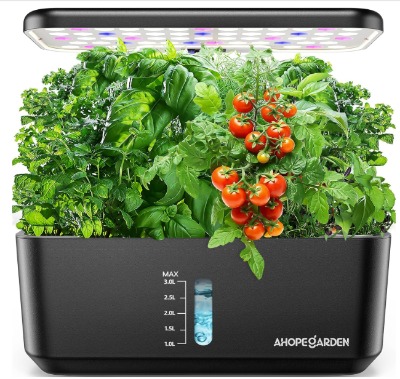
1. Ahopegarden Indoor Garden Hydroponics Growing System (10 Pods)
Product Overview
The Ahopegarden system is a countertop hydroponic kit built for beginners who want to start small. It comes with 10 pod slots, an LED grow light bar, and a water reservoir sized for herbs and leafy greens. It’s marketed as a plant germination kit, so it works well for people who want to grow herbs and small vegetables from seed right on the kitchen counter.
The design is compact and fits neatly on most kitchen counters, office desks, or dining tables. It doesn’t take up much floor space, which makes it a solid pick for smaller homes or apartments.
Best Use Cases
This kit shines for home cooks who want fresh herbs like basil, mint, parsley, or cilantro within arm’s reach of the stove. It also works for lettuce and other quick-growing greens, though the smaller tank size means it’s better suited for herbs than large leafy vegetables that need more water and nutrients over time.
If you’re new to hydroponics and just want to test the waters without spending a lot, this is a reasonable entry point.
Key Features Explained Simply
- 10 grow pods: Each pod holds a seed sponge, so you can grow up to 10 different plants at once, or mix herbs and greens together.
- Built-in LED grow light: The light sits above the pods and mimics sunlight, so your plants get what they need even in a room with no windows.
- Germination-friendly design: The kit is set up to help seeds sprout, which is great if you want to start from scratch rather than buying pre-grown seedling pods.
- Countertop size: Small footprint that fits in tight kitchen spaces.
Real-Life Usage Insight
Users who grow basic herbs report decent results within a few weeks, especially with fast-germinating herbs like basil and mint. Slower growing plants can take longer to show real progress, and results depend a lot on room temperature and how consistent the water level stays. Because the tank is on the smaller side, it needs more frequent refills than the bigger vertical systems in this list.
Pros
- Affordable entry point into hydroponic growing
- Compact and easy to place almost anywhere
- Simple pod system that’s beginner-friendly
- Good for people who want to grow from seed
Cons
- Smaller water tank means more frequent refills
- Not ideal for larger vegetables or a big harvest
- Light coverage may feel limited if you fill all 10 pods with taller plants
- Lacks smart app control found in pricier models
Performance Discussion
For herb growing, the light output and pod design do a fair job of supporting steady growth. Once plants get taller and start competing for light and space, though, the compact design can start to feel a bit cramped. This system performs best when you keep expectations realistic: a rotating supply of fresh herbs rather than a full vegetable garden.
Ease of Use
Setup is straightforward. You fill the tank, insert the pods, add nutrient solution, and plug in the light. There’s no app or smart controls to learn, which some beginners will actually prefer since it keeps things simple.
Value for Money
Given the low starting price, this is a solid choice if you just want to try hydroponic growing without a big investment. It won’t replace a full home garden, but for basic countertop herb growing, it gets the job done at a fair cost.
2. LETPOT LPH-SE Hydroponics Growing System (12 Pods, App & WiFi Controlled)
Product Overview
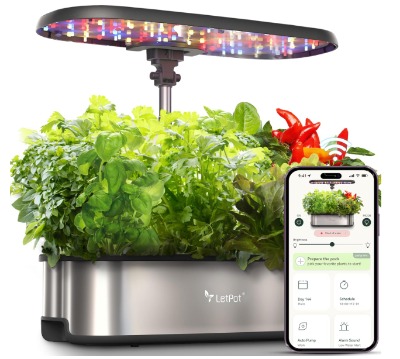
The LETPOT LPH-SE steps things up with smart features. It has 12 pods, a 24W LED grow light, a 5.5L water tank, and a pump system that keeps water circulating so roots get steady oxygen. The standout feature is app and WiFi control, which lets you manage light schedules and monitor your plants from your phone.
This is built for people who want a more automated, tech-friendly growing experience without needing to babysit the system every day.
Best Use Cases
This system works well for busy households, gift-giving, or anyone who wants a bit of smart home flair added to their kitchen. It handles a good mix of herbs and smaller leafy greens comfortably thanks to the larger water tank and steady pump circulation.
If you travel often or forget to check on plants regularly, the app reminders and automatic timer take a lot of pressure off.
Key Features Explained Simply
- App and WiFi control: You can check water levels, adjust the light schedule, and get reminders straight from your phone.
- 24W grow light: Stronger than many entry-level kits, giving plants more consistent light energy for growth.
- 5.5L water tank: Larger reservoir means fewer refills and more stable nutrient levels over time.
- Pump system: Keeps water moving so roots stay oxygenated, which usually leads to healthier, faster-growing plants.
- Automatic timer: Runs the light on a set schedule so you don’t have to turn it on and off manually.
Real-Life Usage Insight
Owners of similar app-controlled systems often mention that the automation is the biggest selling point. You get a push notification when the tank runs low, so there’s less chance of forgetting to refill and stressing your plants. The pump also helps roots grow faster since they’re getting oxygen more evenly than in a still-water setup.
Some users note that WiFi setup can take a few tries the first time, especially on older routers, but once it’s connected, it tends to run smoothly.
Pros
- Smart app control adds real convenience
- Stronger light output supports steadier growth
- Larger tank reduces how often you need to refill
- Pump system improves root health and oxygen flow
- Great gift option thanks to the tech-forward design
Cons
- Higher price than basic countertop kits
- App setup can be a small hurdle for less tech-savvy users
- Still limited to 12 pods, so it’s not built for large harvests
- Requires WiFi to unlock the full smart features
Performance Discussion
Thanks to the stronger light and active water pump, plants generally grow at a more consistent pace compared to passive, non-pumped systems. The circulation system helps prevent stagnant water, which is one of the more common issues in cheaper hydroponic kits. Overall performance leans toward reliable and low-maintenance rather than flashy.
Ease of Use
Once the app is connected, day-to-day use is very simple. Refill reminders and automatic timers cut down on manual work significantly. The learning curve is mostly in the initial setup, not the daily routine.
Value for Money
For the features you get, especially the pump system and app control, this sits in a fair mid-range price bracket. It’s a good pick if you want smart convenience without jumping to a full vertical tower system.
3. Growell 81 Pods Hydroponics Growing System Kit
Product Overview
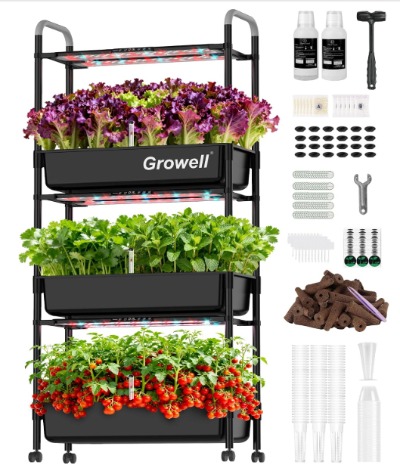
This one is built for growers who are serious about yield. The Growell 81-pod system is a vertical hydroponic tower with an independent water pump, two light modes, two timer settings, and a large 42L water tank. It’s designed to be movable and space-saving despite its large pod capacity, which makes it a strong option for anyone who wants a home-grown supply of herbs and greens on a bigger scale.
Best Use Cases
This is best suited for larger households, people who cook a lot of fresh greens, or small business owners like cafes and juice bars who want a steady in-house herb and lettuce supply. It also works well for hobbyists who’ve outgrown a small countertop kit and want to go bigger.
Because of the vertical design, it doesn’t need as much floor space as you’d expect for something with 81 pods, which is a nice touch for garages, sunrooms, or larger kitchens.
Key Features Explained Simply
- 81 pods: A large capacity that lets you grow a wide variety of herbs, lettuce, and greens all at once.
- Independent water pump: Circulates water actively through the system for steady root oxygenation and nutrient delivery.
- 2 light modes: Lets you switch light settings based on plant type or growth stage.
- 2 timer settings: Gives more control over light cycles compared to single-timer systems.
- 42L water tank: A big reservoir that supports the higher pod count without needing constant refills.
- Movable, space-saving design: Vertical build with wheels or a compact base, so it doesn’t eat up your whole room.
Real-Life Usage Insight
Growers running large multi-pod towers tend to report that the biggest advantage is simply not running out of fresh produce. With that many pods active, you can stagger plantings so something is always ready to harvest. The dual timer and light mode settings give more flexibility for growing different plant types side by side, since not every herb or green wants the exact same light schedule.
The tradeoff is that a system this size takes up more visual space in a room, even if the footprint is smaller than you’d expect. It’s also a bigger investment upfront, both in cost and in the time it takes to plant and manage 81 pods.
Pros
- High pod count means a much bigger harvest potential
- Independent pump supports strong, consistent growth
- Dual light modes and timers add real flexibility
- Large tank cuts down refill frequency
- Vertical design saves floor space relative to pod count
Cons
- Higher price point than smaller kits
- Takes longer to fully set up with 81 pods to fill
- Best for people with space for a taller unit
- Overkill for anyone who just wants a few herbs
Performance Discussion
With an active pump and a tank built to match the pod count, this system tends to support steady, even growth across all pods rather than favoring the top or bottom of the tower. The dual light modes are a nice touch for growers who want to fine-tune conditions for different plant types, something smaller single-mode kits can’t offer.
Ease of Use
The system itself isn’t hard to run day to day, since the pump and timers handle a lot of the routine work. The bigger learning curve comes from managing that many pods at once. New growers might want to start with fewer active pods and scale up as they get comfortable with the rhythm of refilling and checking on nutrient levels.
Value for Money
For anyone who actually needs high-volume growing, this is a strong value pick despite the higher price tag. You’re paying more upfront, but the cost per plant works out well once you account for the pod count and tank size.
4. LetPot LPH-Air Hydroponics Growing System (10 Pods, App & WiFi Controlled)
Product Overview
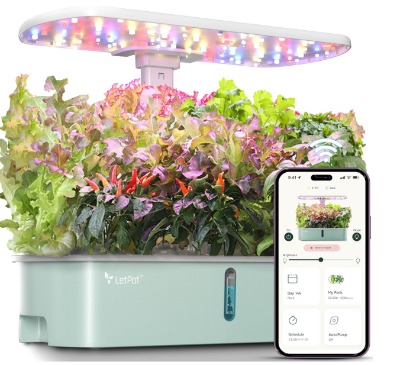
The LetPot LPH-Air is a smart 10-pod system with app and WiFi control, similar in spirit to the LPH-SE but with an adjustable 24W full-spectrum grow light. It’s marketed as a gifting-friendly option, and it fits neatly into kitchens or small spaces where you want smart features without a huge footprint.
Best Use Cases
This system fits people who want a clean, modern countertop garden with smart controls but don’t need a large pod count. It’s also a popular pick for gifts, since the design looks sleek and the setup is simple enough for someone who’s never grown hydroponically before.
Home cooks who want herbs and small vegetables on hand, without dealing with a big tower system, will likely find this a comfortable middle ground.
Key Features Explained Simply
- App and WiFi control: Manage your light schedule and get status updates from your phone, just like the LPH-SE.
- Adjustable 24W full-spectrum light: Full-spectrum light covers a wider range of light wavelengths, which tends to support more balanced plant growth. Being adjustable means you can raise or lower it as plants grow taller.
- 10 pods: A manageable count for herbs, small greens, and a few vegetables.
- Compact footprint: Sized to fit comfortably on a kitchen counter without dominating the space.
Real-Life Usage Insight
The adjustable light height is a small but genuinely useful feature. As plants grow taller, keeping the light at the right distance matters for even growth and preventing leggy stems. Growers who’ve used similar adjustable-light kits mention that this feature helps keep plants compact and healthy rather than stretching awkwardly toward the light.
Because it shares a lot of DNA with the LPH-SE, expect a similar smart experience: reminders for refills, easy scheduling, and steady growth support from the pump and light combo.
Pros
- Full-spectrum, adjustable light supports even growth
- Smart app control adds convenience and peace of mind
- Compact design works well as a gift or small-space option
- Reasonable pod count for everyday herb and veggie growing
Cons
- Smaller tank than the bigger tower-style systems
- App dependency means WiFi issues can limit smart features
- Not built for large-scale or bulk growing
- Price sits above basic non-smart kits
Performance Discussion
The full-spectrum light is a strong point here. Plants tend to grow more evenly under full-spectrum LEDs compared to lights that only cover a narrow color range. Combined with the adjustable height, this system does a good job supporting plants through their full growth cycle, from seedling to harvest.
Ease of Use
Setup mirrors the LPH-SE: connect to WiFi, set your schedule, and let the automatic timer take over. The adjustable light does require occasional manual tweaks as plants grow, but that’s a small task compared to the overall convenience the app provides.
Value for Money
This sits in a similar price range to the LPH-SE and offers strong value for anyone who wants smart features in a smaller, gift-friendly package. It’s a good middle-ground choice between the basic Ahopegarden kit and the larger Growell towers.
5. Growell 17 Pods Hydroponics Growing System Kit
Product Overview
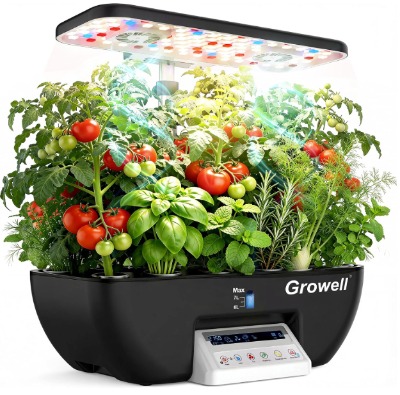
This Growell model sits between the compact countertop kits and the massive 81-pod tower. It offers 17 pods, two built-in fans for airflow and mold prevention, an LED grow light, a smart water cycle system, an auto timer, and a 10L water tank. The added fans are a standout feature not found in most of the other systems on this list.
Best Use Cases
This system is a strong fit for people who want more growing capacity than a basic countertop kit but aren’t ready to commit to a full-size tower. It also works well in more humid climates or enclosed rooms, since the fans help reduce the mold and mildew risk that can come with standing water systems.
It’s also marketed as a gardening gift, and the black or white finish options give it a cleaner, more polished look for home display.
Key Features Explained Simply
- 17 pods: A solid middle-ground capacity, big enough for variety but not overwhelming to manage.
- 2 fans for airflow: Helps keep air moving around the plants, which reduces the chance of mold, mildew, or stagnant, humid pockets forming near the roots and leaves.
- LED grow light: Standard grow light setup to support photosynthesis without needing a sunny window.
- Smart water cycle: Keeps water moving through the system so nutrients reach the roots evenly.
- Auto timer: Runs the light and water cycle on a set schedule automatically.
- 10L water tank: A generous size for a mid-capacity system, reducing how often you need to top it off.
- Color options: Available in black or white to match different kitchen or room styles.
Real-Life Usage Insight
The fan feature is genuinely useful, especially for growers in humid areas or homes without much natural airflow. Mold is one of the more common complaints with hydroponic systems that don’t have any ventilation, since standing water and warm grow lights can create the perfect conditions for it. Having built-in fans tackles that problem directly rather than leaving it up to the room’s natural airflow.
The 10L tank also strikes a nice balance. It’s large enough to avoid constant refills but still manageable to lift and clean compared to the bigger 42L tank in the 81-pod Growell model.
Pros
- Built-in fans actively reduce mold and mildew risk
- Mid-size pod count works for a wide range of household needs
- Generous 10L tank cuts down refill frequency
- Auto timer and smart water cycle reduce daily maintenance
- Clean design with color options for different home styles
Cons
- No app or WiFi control, unlike the LetPot models
- Fans add a small amount of operating noise
- Mid-size tank still smaller than the largest tower systems
- Not the cheapest option in the countertop-to-mid-size category
Performance Discussion
The combination of active airflow and a smart water cycle makes this one of the more balanced performers on this list. Plants tend to grow steadily without the mold issues that can crop up in more enclosed, poorly ventilated systems. The auto timer keeps light exposure consistent, which matters a lot for even growth across all 17 pods.
Ease of Use
Setup is simple, and the auto timer plus smart water cycle mean daily involvement is low once everything is running. Since there’s no app to configure, some users may actually find this system quicker to get started with compared to the WiFi-dependent LetPot kits.
Value for Money
Given the fan feature, larger tank, and mid-range pod count, this system offers solid value for anyone who wants more than a basic countertop kit without jumping to a large tower. It’s a practical pick for humid climates or rooms with limited airflow.
Comparison Insights: How These Five Systems Stack Up
Looking at all five side by side, a clear pattern shows up. Pod count, tank size, and smart features tend to move together with price, but not always in a straight line.
On pod count, the Ahopegarden and LetPot LPH-Air both sit at 10 pods, the LETPOT LPH-SE offers 12, the Growell 17-pod kit sits comfortably in the middle, and the Growell 81-pod tower is in a class of its own for anyone who wants serious growing volume.
On smart features, the two LetPot models clearly lead the pack with app and WiFi control, automatic reminders, and adjustable or full-spectrum lighting. The Ahopegarden and both Growell kits skip the app entirely, relying on manual controls and built-in timers instead. That’s not necessarily a downside. Plenty of growers prefer a simpler, screen-free experience.
On water tank size, there’s a big range. The Ahopegarden has the smallest reservoir, built for quick countertop herb growing. The LETPOT LPH-SE holds 5.5L, the Growell 17-pod kit holds 10L, and the Growell 81-pod tower holds a massive 42L to match its huge pod count.
On unique extras, the Growell 17-pod kit stands out with its built-in fans for airflow and mold prevention, a feature none of the other four systems include. The Growell 81-pod tower stands out for its dual light modes and dual timers, giving more control over growing conditions than any single-mode kit can offer.
Put simply: if you want the least fuss and lowest price, go smaller and simpler. If you want convenience and smart monitoring, lean toward the LetPot models. If you want volume and don’t mind a bigger investment, the 81-pod Growell tower is built for that job. And if mold or humidity is a real concern in your space, the 17-pod Growell with fans solves a problem the others don’t even address.
Buying Guide: What to Look for in a Hydroponic Growing System
Shopping for a hydroponic kit can feel overwhelming with so many specs thrown at you. Here’s what actually matters.
1. Pod Count vs. Your Space
Count your countertop or floor space before you count pods. A 10-pod kit fits nearly anywhere, but an 81-pod tower needs real dedicated space, even with a vertical design. Match pod count to both your appetite for fresh produce and the physical room you have available.
2. Water Tank Size
Bigger tanks mean fewer refills, but they also mean a heavier, bulkier unit to manage. If you’re short on time, a larger tank saves you regular maintenance trips. If counter space is tight, a smaller tank might be the more practical trade-off.
3. Light Quality
Look for full-spectrum LEDs when possible, since they support more even, balanced growth across the whole plant’s life cycle. Adjustable height is a nice bonus feature, since it lets the light grow with your plants instead of staying fixed in one position.
4. Smart Features vs. Simplicity
App and WiFi control add real convenience, especially for reminders and remote monitoring. But they also add a setup step and a dependency on your home network. If you’d rather not deal with an app at all, a manual timer-based system covers the basics just fine.
5. Airflow and Mold Prevention
This one gets overlooked a lot. Standing water and warm grow lights can create conditions where mold and mildew thrive, especially in humid climates or rooms with little natural airflow. A system with built-in fans, like the Growell 17-pod kit, actively works against that risk instead of leaving it to chance.
6. Pump vs. No Pump
An active water pump circulates nutrients and oxygen more evenly than a passive, still-water setup. If steady, faster growth matters to you, look for systems that mention an independent or built-in pump.
7. Noise Level
Pumps and fans add a small amount of ambient noise. It’s rarely loud enough to be disruptive, but if you’re placing the unit somewhere quiet, like a bedroom or a small office, it’s worth keeping in mind.
8. Budget vs. Growing Goals
A cheap countertop kit is a smart way to test whether hydroponic growing fits your lifestyle before committing to a bigger investment. If you already know you want a steady, larger harvest, spending more upfront on a bigger tank and pod count usually pays off in the long run.
Who Should Buy Which System
Not every reader needs the same setup, so here’s a quick breakdown based on different needs and lifestyles.
Total beginners on a budget should start with the Ahopegarden 10-pod kit. It’s affordable, simple, and gives you a real feel for hydroponic growing without a big commitment.
Busy people who want convenience will get the most value from the LETPOT LPH-SE or LetPot LPH-Air. The app control, reminders, and automatic timers cut down on the mental load of remembering to check water levels or adjust lighting.
People buying a gift should lean toward the LetPot LPH-Air. Its compact size, sleek design, and smart features make it an appealing present for anyone curious about home growing, even if they’ve never tried it before.
Serious home growers or small food businesses should look at the Growell 81-pod tower. The large tank, high pod count, and dual light and timer settings make it capable of supporting a real, ongoing harvest rather than just a small herb rotation.
Anyone in a humid climate or a room with poor airflow should strongly consider the Growell 17-pod kit. The built-in fans directly address one of the most common frustrations with hydroponic growing: mold and mildew buildup.
Common Mistakes to Avoid With Hydroponic Growing Systems
Even the best hydroponic system won’t perform well if a few basic habits go wrong. Here are the mistakes that trip up a lot of new growers.
Overfilling or underfilling the water tank. Too much water can drown roots that need airflow, while too little can dry them out and stunt growth. Stick to the fill lines marked on your unit.
Ignoring nutrient solution instructions. Adding too much or too little nutrient mix throws off the balance plants need. Follow the recommended dosage rather than guessing.
Placing the unit in direct, harsh sunlight. It sounds strange, but combining a strong grow light with intense direct sun can overheat the water and stress the plants. Indirect natural light paired with the grow light usually works better.
Skipping regular tank cleaning. Algae and bacteria can build up in standing water over time, especially in warmer rooms. A quick clean between planting cycles keeps the system running smoothly and keeps roots healthier.
Overcrowding the pods with fast-growing plants. Some herbs and greens grow much faster and bigger than others. Planting all fast growers together can lead to competition for light and space, so it helps to mix growth rates or spread out plantings.
Forgetting to adjust the light height. On systems with adjustable lights, leaving the light too high or too low as plants grow can lead to weak, leggy stems or light stress on the leaves. A quick check every week or two goes a long way.
Not checking the pump or fan regularly. On systems with a pump or fan, a blockage or malfunction can go unnoticed for a few days if you’re not paying attention. A quick visual check during refills helps catch problems early.
Final Verdict
All five systems in this roundup do a solid job of bringing hydroponic growing into the average home, but they serve slightly different needs.
If you want the simplest, most affordable way to dip your toes into hydroponic growing, the Ahopegarden 10-pod kit is a reasonable starting point. It won’t wow you with features, but it covers the basics well for herb lovers on a budget.
If convenience and smart monitoring matter most to you, both LetPot models, the LPH-SE and the LPH-Air, stand out for their app control, reliable timers, and steady performance. The LPH-Air’s adjustable full-spectrum light gives it a slight edge for anyone who wants their light source to grow along with their plants.
For growers who want serious volume and don’t mind the bigger investment, the Growell 81-pod tower is the clear standout. Few countertop kits can match its combination of tank size, pod count, and flexible light and timer settings.
If mold, humidity, or airflow are real concerns in your home, the Growell 17-pod kit solves a problem that none of the other systems directly address, making it a smart pick for anyone in a muggier climate or a room without much natural ventilation.
At the end of the day, the best hydroponic growing system for you comes down to your space, your budget, and how hands-on you want to be. Start small if you’re new to this, and scale up once you know hydroponic growing fits your routine. Fresh herbs and greens, grown right on your counter, are closer than you think.

Hi, I’m Mary, the founder of GardenCure.com. I’m passionate about creating healthy, beautiful gardens and well-kept lawns. I share practical experience and trusted advice on garden and lawn gear that truly works. With the support of my dedicated research team, our writers produce honest, in-depth reviews using reliable, authentic sources—helping you choose the right tools with confidence for your outdoor space.