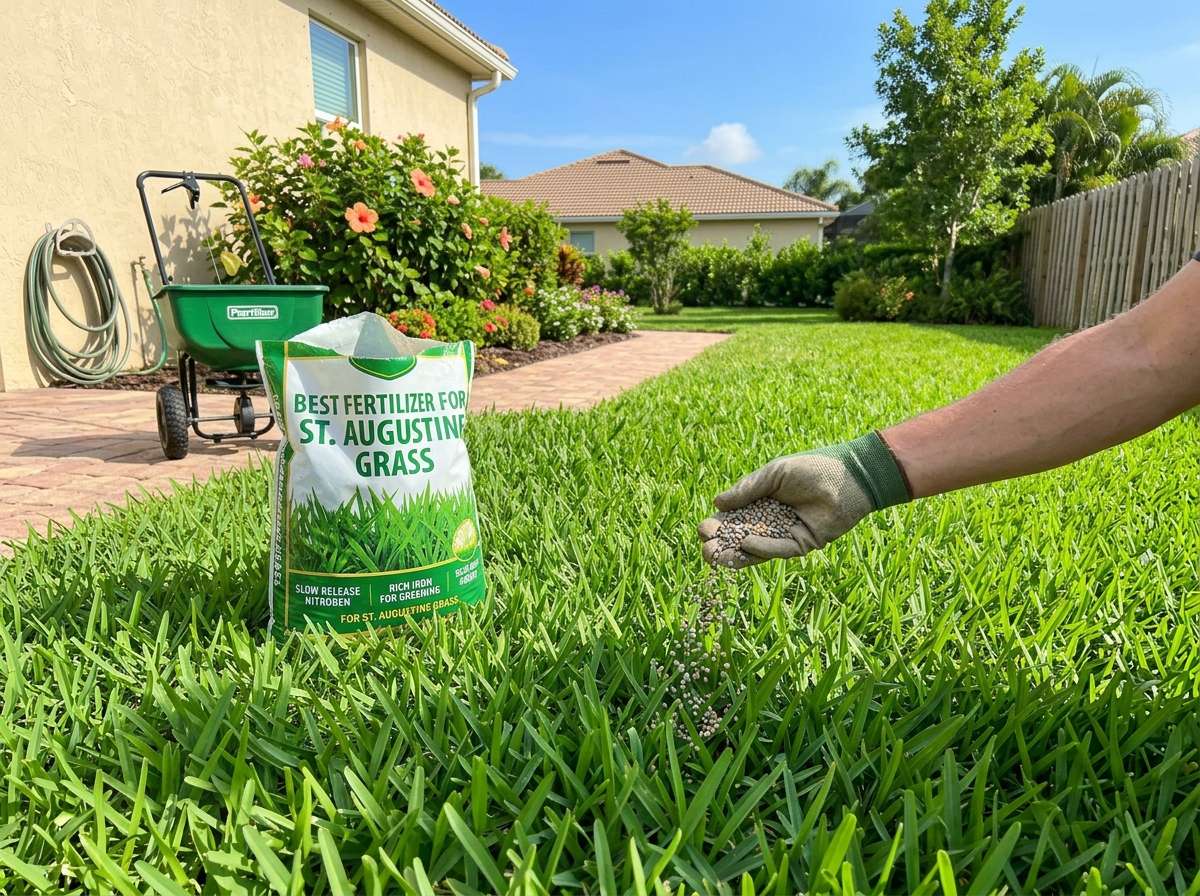
5 Best Fertilizer for St Augustine Grass In 2026
Your St. Augustine lawn can transform from dull and patchy into a lush, vibrant carpet of green with the right fertilizer. But with so many options flooding the market, finding the best fertilizer for St Augustine grass feels overwhelming. That’s where this guide comes in.
In this article
I’ve tested and researched five top-performing fertilizer products to help you make an informed decision. Whether you’re dealing with thin patches, slow growth, or just want to maintain a healthy lawn, you’ll find everything you need to know right here.
Why St. Augustine Grass Deserves Special Attention
St. Augustine grass grows differently than other grass types. This warm-season turf thrives in southern climates and needs specific nutrients to reach its full potential. Regular lawn fertilizers sometimes miss the mark because they’re formulated for cool-season grasses like fescue or bluegrass.
St. Augustine grass has higher nitrogen demands, especially during spring and summer growth periods. The grass also responds well to slow-release formulations that feed your lawn steadily rather than giving it a quick burst of nutrients that fades fast.
The best lawn fertilizers for this grass type account for its unique growth patterns. They typically contain higher nitrogen content and are balanced to support the lush green color and thick runner growth that makes St. Augustine grass so attractive.
What Makes a Great St. Augustine Grass Fertilizer
Before diving into specific products, let’s talk about what separates good fertilizers from mediocre ones.
Nitrogen Content Matters Most
St. Augustine grass loves nitrogen. This nutrient drives green color and new growth. The best fertilizers for this grass type typically contain 15-20% nitrogen. Too little, and your lawn stays pale and thin. Too much, and you risk creating weak growth that’s vulnerable to disease.
Slow Release Beats Quick Release
Quick-release fertilizers give instant results but fade fast. Your lawn might look amazing for two weeks, then gradually turn dull again. Slow-release formulas work differently. They release nutrients gradually over weeks or months, keeping your lawn consistently green without the boom-and-bust cycle.
Balance Between NPK Numbers
Fertilizer bags show three numbers representing nitrogen (N), phosphorus (P), and potassium (K). For St. Augustine grass, you want high nitrogen paired with moderate phosphorus and potassium. A good ratio might be 20-0-6 or 16-4-8. The phosphorus supports root development, while potassium builds disease resistance.
Ease of Application Counts
Will you apply this fertilizer yourself or hire a professional? Liquid concentrates need mixing and spraying. Granular products require spreading equipment. Slow-release granules sometimes come in easy-to-use shaker bags. Your comfort level with the application method directly affects whether you’ll stick to a regular feeding schedule.
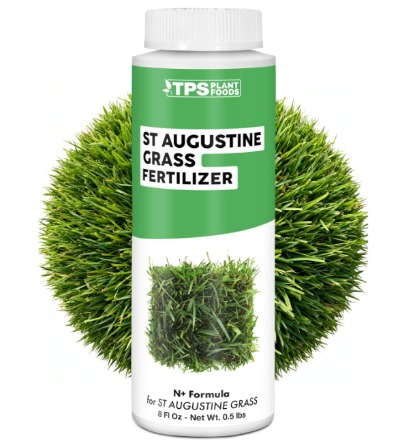
St Augustine Grass Fertilizer – Liquid Lawn Food for Thicker Growth, New Runners & Rich Green Color (8 oz)
Product Overview
This liquid fertilizer comes in an 8-ounce bottle, making it perfect for targeted applications on small lawns or problem areas. The concentrated formula gets mixed with water before application, giving you flexibility in coverage area.
The product specifically targets the needs of St. Augustine grass. It’s formulated to boost thicker growth, encourage new runners to fill in bare spots, and deliver that rich green color homeowners love.
Key Features Explained
The liquid formula concentrates active ingredients into a smaller package. Eight ounces sounds tiny, but when diluted properly, it covers a decent lawn area. This makes it ideal for small lawns, townhouses, or anyone wanting to spot-treat problem areas.
The nitrogen-rich blend directly addresses the runner growth that makes St. Augustine grass so effective at filling in gaps and creating uniform coverage. If you’ve got thin spots or bare patches, this product targets exactly that problem.
Best Use Cases
This fertilizer shines for small to medium lawns under 2,000 square feet. It works great for townhouses and condo lawns where space is limited. Homeowners with specific problem areas also love this product because they can concentrate the application exactly where needed.
Renters who can’t commit to year-long maintenance programs find the 8-ounce size perfect. You can apply it once or twice and see solid results without buying large quantities.
Real-Life Usage Insight
Users report visible color improvement within a week of application. The lawn transitions from pale green to a deeper, richer shade. Growth acceleration typically shows around day ten to fourteen, with noticeably thicker blade density.
New runners emerge fairly quickly with this formula, which is valuable for St. Augustine grass owners wanting natural gap-filling. The combination of quick color improvement and steady growth makes the liquid format feel like it’s working hard.
Pros and Cons
Strengths:
- Visible results within one to two weeks
- Perfect for small lawn areas
- Targeted application lets you focus on problem spots
- Easy to dilute and apply with a spray bottle or pump sprayer
- Small size means lower initial investment
- Liquid penetrates soil quickly
Weaknesses:
- Small 8-ounce bottle covers limited square footage
- Requires mixing and careful dilution for proper results
- Needs repeated applications for lawn-wide coverage
- Liquid products can settle or separate if stored long-term
- Weather-dependent application (rain too soon after spraying reduces effectiveness)
- More expensive per square foot than granular options
Performance Discussion
This liquid formula performs best when applied consistently every four to six weeks during growing season. A single application definitely helps, but seasonal maintenance with multiple applications gives the best results.
The formula works faster than granular products because the liquid gets absorbed immediately. You’ll see color change quicker, which is satisfying for homeowners wanting visible proof their fertilizer is working.
The runner growth acceleration is genuinely helpful for St. Augustine grass. The thick, horizontal growth habit of this grass means it naturally fills in gaps. With a runner-promoting fertilizer, this process accelerates noticeably.
Ease of Use
Applying liquid fertilizer requires a bit more effort than spreading granules. You need to dilute the concentrate according to instructions, then apply it evenly across the lawn with a sprayer. This takes about thirty minutes for an average lawn.
The process isn’t complicated, but it does require attention to detail. Mixing the wrong dilution rate could waste product or damage grass if the concentrate is too strong.
Value for Money
At 8 ounces, this bottle is an affordable entry into the world of specialized St. Augustine fertilizers. The per-application cost is reasonable, though frequent reapplications needed for whole-lawn coverage add up over time.
For small lawn areas or problem spot treatment, the value is excellent. For large lawns, you’d need multiple bottles, making granular options more economical.
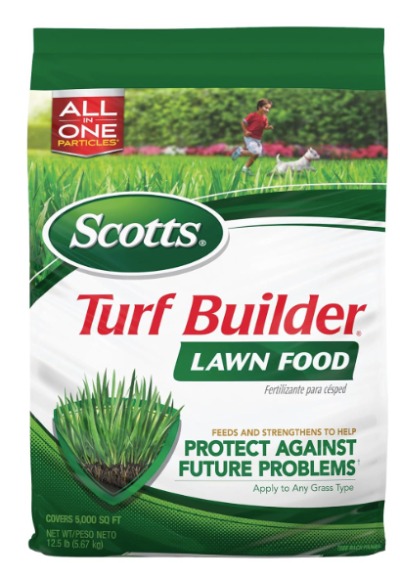
Scotts Turf Builder Lawn Food – Fertilizer for Grass, for All Grass Types (5,000 sq. ft., 12.5 lb)
Product Overview
Scotts Turf Builder is one of the most recognizable lawn fertilizer brands in America. This particular formula covers 5,000 square feet and comes in a 12.5-pound bag of slow-release granules.
The product works on all grass types, though it’s optimized well for warm-season varieties like St. Augustine. The slow-release technology means you apply it once and let it work for weeks without constant reapplication.
Key Features Explained
Scotts uses their proprietary slow-release technology that breaks down gradually as soil microbes feed on the particles. This creates a steady nutrient supply rather than a nutrient dump followed by deficiency.
The granular format requires simple broadcast spreading. Most homeowners can cover 5,000 square feet in about twenty minutes. The particles are sized for even distribution, reducing the chance of missed spots or overdosing particular areas.
The all-grass-types formula means it’s balanced for various species. While it’s not specifically formulated for St. Augustine like some competitors, it still performs well because the balanced NPK ratio works across different grass types.
Best Use Cases
This fertilizer is perfect for homeowners with medium to large lawns who want reliable, predictable performance. If you’re looking for a no-fuss option that works across your entire lawn, Scotts Turf Builder delivers.
Homeowners who prefer buying from established, trusted brands also gravitate toward Scotts. The product availability at nearly every garden center and big-box retailer makes it easy to find when you need it.
Anyone wanting a slow-release application schedule (typically three or four times yearly) rather than monthly feeding finds this product ideal.
Real-Life Usage Insight
Users consistently report that lawns fed with Scotts Turf Builder look noticeably healthier within two to three weeks. The slow-release aspect means the improvement is steady rather than dramatic, but the consistency is valued.
Many homeowners follow the Scotts seasonal feeding schedule and report excellent results. The lawn gradually thickens, color deepens, and disease pressure seems to decrease over time.
One thing users mention is that results depend on consistent application. Missing an application or delaying feeding shows in lawn quality. Regular applications are the key to getting premium results from this product.
Pros and Cons
Strengths:
- Covers 5,000 square feet in one application
- Slow-release formula means feeding every six to eight weeks instead of every three to four
- Available at virtually every garden center nationwide
- Granular format is quick and easy to apply
- Trusted brand with decades of proven performance
- Works well across different grass types
- Balanced formula supports overall lawn health
Weaknesses:
- Not specifically formulated for St. Augustine grass
- Generic formula misses some warm-season grass optimization
- Granular slow-release takes longer to show results than liquid products
- Requires mechanical spreader for best results (though hand spreading is possible)
- Phosphorus-free varieties may not be available everywhere
- Price point is moderate to higher for granular products
Performance Discussion
Scotts Turf Builder performs solidly for St. Augustine grass. It won’t give you the dramatic results of a specialized St. Augustine formula, but it absolutely keeps lawns healthy and attractive.
The slow-release nature means peak nutrient availability hits around week two to three after application. Performance remains steady through weeks four to eight, then gradually tapers. By week eight to nine, another application becomes beneficial.
For St. Augustine grass specifically, the generic formula means you might want to supplement with an iron application in mid-summer to keep that rich green color consistent. The base Scotts product is solid, but specialized products often outperform it for specific grass types.
Ease of Use
Spreading granules is genuinely simple. Set your broadcast spreader to the recommended setting, fill the hopper, and walk your lawn. The entire process takes twenty to thirty minutes for a typical residential lawn.
The only challenge is owning or accessing a spreader. If you don’t own one, rental costs from garden centers or equipment rental shops add to the total cost.
Value for Money
A 12.5-pound bag covering 5,000 square feet offers decent value per square foot. Since slow-release means you apply it less frequently than liquid options, the total annual cost is reasonable.
If you buy multiple bags for a large lawn, the per-bag cost sometimes drops slightly. Purchasing ahead of seasonal sales can bring costs down further.
For the trust factor and wide availability, the value is solid even at moderate pricing.
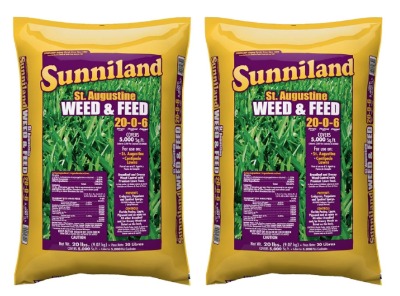
Sunniland St. Augustine Lawn Fertilizer 20-0-6 – Slow Release Nitrogen Granular Lawn Food (20 lb Bags, 2 Pack)
Product Overview
Sunniland makes a fertilizer specifically designed for St. Augustine grass. This slow-release granular formula contains 20% nitrogen with zero phosphorus and 6% potassium. The 20-0-6 ratio is absolutely ideal for St. Augustine grass needs.
You get two 20-pound bags in this package, covering 10,000 square feet total. The specialized formulation makes this one of the best fertilizers for St Augustine grass available.
Key Features Explained
The 20% nitrogen content is high, which directly feeds the specific needs of St. Augustine grass. This nutrient concentration drives the deep green color and rapid growth that make this grass type so popular in southern landscapes.
Zero phosphorus might seem odd, but it’s intentional. St. Augustine grass thrives in most soils that already have adequate phosphorus. Adding extra phosphorus encourages weeds and can create imbalances. The zero-phosphorus formula prevents this problem.
The 6% potassium supports disease resistance and winter hardiness. Even though St. Augustine is warm-season grass, fall applications help it survive occasional cold snaps.
Best Use Cases
This fertilizer is absolutely perfect for dedicated St. Augustine grass owners. If your entire lawn is St. Augustine, this specialized formula outperforms generic options.
Medium to large lawn owners love this product because two bags cover 10,000 square feet. You can apply the same formula across your entire lawn without switching products or worrying about inconsistent results.
Anyone living in St. Augustine’s native range (southern United States from Texas to Florida) finds this product works exceptionally well because it’s literally designed for the climate and grass type combination they have.
Real-Life Usage Insight
Users consistently report that Sunniland St. Augustine Fertilizer delivers exactly what they want: deep, rich green color and thick, healthy growth. The specialized formulation feels purposeful and targeted.
The slow-release nature means visible improvement takes a couple weeks, but the results last longer than quick-release options. Many users follow a quarterly feeding schedule (spring, early summer, late summer, fall) and report exceptional lawn quality.
Lawn density improvement is frequently mentioned. Users notice thicker blade coverage and faster gap-filling from the runner growth. This addresses one of the biggest frustrations with St. Augustine grass – maintaining consistent thickness.
Pros and Cons
Strengths:
- Specifically formulated for St. Augustine grass, not generic
- 20% nitrogen directly addresses St. Augustine’s needs
- Zero phosphorus prevents weed encouragement and nutrient imbalance
- Two-bag package is convenient for larger lawns
- Slow-release granular formula lasts six to eight weeks
- Proven results from dedicated St. Augustine grass owners
- Quality brand with specialized focus on southern lawn care
Weaknesses:
- Not suitable if you have mixed grass types in your lawn
- Zero phosphorus might not work well in phosphorus-depleted soils (though rare)
- Requires granule spreader for optimal application
- Higher nitrogen means more frequent mowing during peak growth
- Two-bag package is heavier (40 pounds total) and requires storage space
- Not available at every garden center (specialty retailers sometimes required)
Performance Discussion
This fertilizer performs at the top tier for St. Augustine grass. The specialized formulation means every nutrient percentage is optimized specifically for this grass type.
The 20% nitrogen is aggressive and pushes strong growth. St. Augustine grass responds enthusiastically with rapid blade development and vigorous runner growth. Your lawn gets noticeably thicker within three weeks of application.
The slow-release coating on the granules ensures nutrient availability peaks around week two to three, then releases steadily through week six to eight. This longer tail compared to some competitors means you get extended feeding benefits.
Ease of Use
Applying granules is straightforward. Use a broadcast spreader set to the recommended setting, fill the hopper, and walk your lawn in overlapping passes. The entire job takes twenty to thirty minutes for most residential lawns.
The granule size is optimal for even distribution. They don’t blow away in wind like very fine particles, but they’re small enough to settle into the turf effectively.
Value for Money
For a specialized, premium St. Augustine grass fertilizer, the value is excellent. The two-bag package encourages larger purchases, and buying bigger quantities typically brings per-unit costs down.
The slow-release nature means you apply it less frequently than liquid options, reducing annual application costs. Most users find this product delivers better overall lawn quality than generic fertilizers, justifying the price premium.
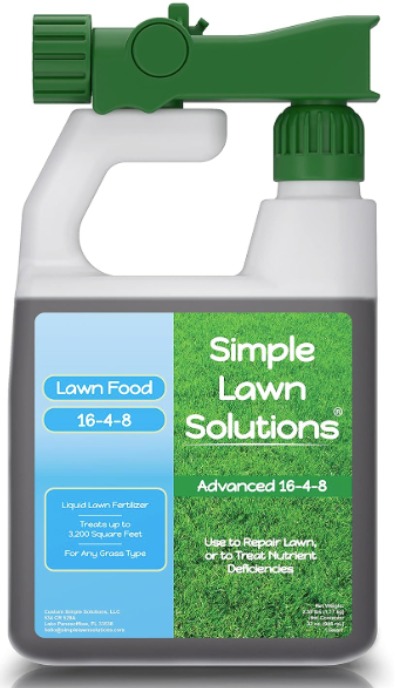
Advanced 16-4-8 Balanced NPK – Lawn Food Quality Liquid Fertilizer – Spring & Summer Concentrated Spray (32 Ounce)
Product Overview
This liquid concentrate from Simple Lawn Solutions comes in a 32-ounce bottle. The 16-4-8 NPK ratio is balanced for all grass types, making it versatile for mixed lawns.
The concentrated format means you mix it with water before application. Despite being designed for spring and summer use, the formula works well on St. Augustine grass during its active growth period.
Key Features Explained
The 16% nitrogen is solid for feeding growth without being overly aggressive. The 4% phosphorus supports root development and plant structure. The 8% potassium builds overall plant health and stress resistance.
The balanced ratio works across grass types, which helps if you have mixed turf. However, St. Augustine grass enthusiasts might find the nitrogen level slightly lower than ideal for maximum growth.
Liquid concentrate means small bottle size with big coverage potential. The 32-ounce bottle is still manageable to handle and store, but covers more square footage than smaller liquid options.
Best Use Cases
This fertilizer works great for homeowners with multiple grass types in their landscape. If you have St. Augustine in some areas and other grasses elsewhere, one product handles everything.
Small to medium lawn owners get good value from the 32-ounce bottle. It covers several applications over a season, making it economical.
Homeowners wanting liquid feeding convenience without the specialized St. Augustine formulation benefit from this product. The balanced ratio ensures reliable performance.
Real-Life Usage Insight
Users report good color improvement and decent growth acceleration. The results aren’t as dramatic as higher-nitrogen formulas, but they’re consistent and noticeable.
The liquid format means quick absorption and visible results within one to two weeks. The consistent results across different grass types means users are confident applying it across their entire lawn without worry.
Many users appreciate the concentrated format. A smaller bottle requires less storage space than multiple bags of granules.
Pros and Cons
Strengths:
- Balanced formula works across multiple grass types
- Liquid concentrate penetrates soil quickly
- 32-ounce bottle provides multiple applications
- Visible results within one to two weeks
- No spreader required for application
- Consistent performance across different lawn areas
- Relatively affordable entry into liquid feeding
Weaknesses:
- 16% nitrogen is lower than optimal for St. Augustine grass
- Not specifically formulated for warm-season grasses
- Requires dilution and spraying (more effort than granules)
- Weather-dependent application (rain within hours reduces effectiveness)
- Requires more frequent applications than slow-release options
- Storage can cause separation in some concentrate formulas
- Smaller coverage per application means more frequent feeding
Performance Discussion
This liquid fertilizer performs well as a solid, balanced option. The 16-4-8 ratio provides reliable nutrition without extreme specialty focus.
For St. Augustine grass, the results are good but not exceptional. The nitrogen level is adequate for growth and color, but not optimized for the deep, rich green that specialized formulas deliver.
The balanced phosphorus and potassium support overall plant health. If your soil is deficient in either nutrient, this formula helps address those needs better than nitrogen-only products.
Ease of Use
Applying concentrated liquid requires mixing with water according to label instructions, then spraying evenly across the lawn. The process takes about thirty minutes for an average lawn.
The product mixes relatively easily without excessive settling or separation. This makes the application process less finicky than some other concentrates.
Value for Money
The 32-ounce bottle offers decent value for the price. Multiple applications from one bottle reduce the per-application cost.
For a balanced, all-purpose lawn fertilizer, the value is reasonable. You’re not paying for specialized St. Augustine formulation, but you’re also not paying premium prices.
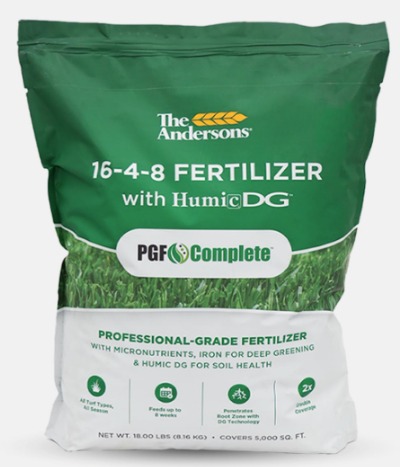
The Andersons Professional PGF Complete 16-4-8 Fertilizer with 7% Humic DG (5,000 sq ft)
Product Overview
The Andersons is a professional-grade fertilizer brand used by landscape contractors nationwide. This particular formula combines a balanced 16-4-8 NPK ratio with 7% humic content in a slow-release granular format.
The humic addition sets this product apart from basic fertilizers. Humic substances improve soil health and nutrient availability, which benefits any lawn but especially stressed turf.
Key Features Explained
The 16% nitrogen provides solid growth support without being excessive. The 4% phosphorus aids root development, crucial for healthy lawn establishment. The 8% potassium builds disease resistance.
The inclusion of humic content at 7% is the real differentiator. Humic substances improve soil structure, increase water retention, and enhance nutrient uptake. Think of humic as a soil health booster that magnifies fertilizer effectiveness.
The slow-release technology ensures consistent nutrient delivery over six to eight weeks. This reduces feeding frequency compared to quick-release options.
Best Use Cases
Landscape professionals choose this product for commercial applications, but homeowners benefit equally. If your soil is poor quality or you’re establishing new lawn areas, the humic content helps tremendously.
Homeowners with stress-challenged lawns (heavy clay, poor drainage, or weak growth) find the humic-enhanced formula delivers better results than basic fertilizers.
Anyone wanting professional-quality results without professional application can use this product. The formula that contractors trust works great for residential use too.
Real-Life Usage Insight
Users report that this fertilizer works more effectively than standard options with similar NPK ratios. The humic content seems to help grass utilize nutrients more efficiently.
Visible color improvement typically appears within two to three weeks. Growth acceleration comes steadily through week four to eight.
One thing users notice is improved soil condition over time. Regular applications with humic content seem to gradually improve soil quality, making the lawn more resilient and less dependent on frequent watering.
Pros and Cons
Strengths:
- Professional-grade quality at a reasonable price
- Humic content improves soil health and nutrient uptake
- Slow-release formula means less frequent applications
- Balanced NPK works across grass types
- Better results than standard fertilizers with similar NPK
- Covers 5,000 square feet per bag
- Proven performance from professional landscape use
Weaknesses:
- Balanced formula isn’t optimized for St. Augustine grass specifically
- 16% nitrogen is moderate for maximum St. Augustine growth
- Humic content doesn’t provide dramatic visible results
- Requires granule spreader for application
- Professional focus means availability might be limited at some retailers
- Not the cheapest option for basic fertilizer
- More benefits appear over time than immediately
Performance Discussion
This fertilizer punches above its weight. The balanced formula combined with humic enhancement delivers results beyond what the NPK numbers alone would suggest.
For St. Augustine grass, it performs very well. The nutrition level is adequate, and the humic content helps your lawn utilize it more effectively. If you’re establishing new St. Augustine areas or rehabilitating struggling lawns, this product shines.
The slow-release nature ensures consistent performance. You apply it quarterly and enjoy steady improvement rather than boom-and-bust cycles.
Ease of Use
Granule application is simple. Set your spreader, fill the hopper, and walk your lawn. The granule size is consistent and spreads evenly.
The only requirement is having access to a broadcast spreader. If you don’t own one, rental costs from local garden centers are minimal.
Value for Money
Professional-grade quality at mid-to-premium pricing represents fair value. The humic addition provides benefits beyond standard fertilizers.
If you compare cost-per-square-foot, you’ll pay slightly more than basic options. However, the enhanced results and professional quality justify the modest premium.
Comparison Chart: Finding Your Perfect Match
Nutrient Content Comparison
The products in this roundup have different nutrient profiles. Here’s how they break down:
- St Augustine Grass Fertilizer Liquid: High nitrogen (exact % varies by formulation), optimized for runners
- Scotts Turf Builder: Balanced NPK, generic for all grass types
- Sunniland 20-0-6: 20% nitrogen, zero phosphorus, specialized for St. Augustine
- Advanced 16-4-8 Liquid: 16% nitrogen, 4% phosphorus, 8% potassium
- Andersons 16-4-8: 16% nitrogen, 4% phosphorus, 8% potassium, plus 7% humic
For St. Augustine grass specifically, nitrogen levels are crucial. The Sunniland 20-0-6 formula is highest, making it best for maximum growth. The liquid options offer quick results but need frequent reapplication.
Coverage Area Comparison
Coverage varies significantly between products:
- St Augustine Liquid (8 oz): Covers roughly 2,500-5,000 sq ft depending on dilution
- Scotts Turf Builder (12.5 lb): Covers 5,000 sq ft
- Sunniland (20 lb bags, 2 pack): Covers 10,000 sq ft total
- Advanced Liquid (32 oz): Covers roughly 4,000-6,000 sq ft depending on dilution
- Andersons (5,000 sq ft coverage): Covers 5,000 sq ft
For large lawns, Sunniland’s two-bag package is most economical. For small lawns, the 8-ounce liquid option requires less product storage.
Application Frequency Comparison
How often you apply each product varies:
- St Augustine Liquid: Every 3-4 weeks for continuous feeding
- Scotts Turf Builder: Every 6-8 weeks (slow-release)
- Sunniland: Every 6-8 weeks (slow-release)
- Advanced Liquid: Every 3-4 weeks for continuous feeding
- Andersons: Every 6-8 weeks (slow-release)
If you prefer set-it-and-forget-it maintenance, granular slow-release options require fewer applications. If you want maximum growth acceleration, liquid options applied frequently work better.
Price Point Comparison
When calculated per application:
- St Augustine Liquid: Moderate cost, small package
- Scotts Turf Builder: Moderate cost, widely available
- Sunniland: Moderate to high cost, specialized formula
- Advanced Liquid: Moderate cost, balanced formula
- Andersons: Moderate to high cost, professional quality
The most expensive option overall is frequent liquid application. The most economical is granular slow-release products applied seasonally.
Complete Buying Guide for St. Augustine Grass Fertilizers
Step One: Assess Your Lawn’s Current Condition
Before buying any fertilizer, understand what your St. Augustine grass actually needs.
Does your lawn have consistent color throughout, or are there pale areas? Pale grass indicates nitrogen deficiency, making high-nitrogen products appropriate.
Is the lawn thick with good blade density, or does it look thin and sparse? Thin lawns benefit from runner-promoting fertilizers like the 8-ounce liquid option specifically designed for St. Augustine growth.
Are you establishing a new lawn, or maintaining an existing one? New lawns benefit from soil-enhancing formulas like Andersons with humic content. Maintenance feeding can use simpler formulas.
Step Two: Match Product Type to Your Comfort Level
Liquid versus granular comes down to personal preference and effort tolerance.
Liquid fertilizers require mixing and spraying. They deliver faster results and are easier to apply to small areas. However, they require more frequent application.
Granular fertilizers require a spreader, take slightly longer to show results, but provide extended feeding with less frequent application. Most people find granular spreading easier than liquid spraying once they own a spreader.
Step Three: Consider Your Lawn Size
For lawns under 2,000 square feet, the 8-ounce liquid or smaller granular bags work great. You won’t have leftover product creating storage headaches.
For lawns between 2,000 and 5,000 square feet, single bags of 5,000-square-foot coverage products work perfectly.
For lawns over 5,000 square feet, buying two or more bags becomes necessary anyway. The Sunniland two-bag package is economical for these larger lawns.
Step Four: Evaluate Your Feeding Schedule
Some people love the ritual of seasonal lawn feeding. Others forget if it’s not automatic.
If you thrive on following a precise seasonal schedule, slow-release granular products work great. Apply them on a schedule and don’t think about it for two months.
If you prefer to feed your lawn every few weeks during growing season, liquid products with frequent application work better. They keep the lawn in constant growth mode.
Step Five: Decide on Specialization Level
Do you want a fertilizer specifically formulated for St. Augustine grass, or will a general-purpose option work?
If you have a pure St. Augustine lawn and want absolute best results, specialized products like Sunniland 20-0-6 are worth the extra cost. These formulas are literally optimized for your grass type.
If you have mixed grasses or want to keep things simple, balanced all-purpose formulas like Scotts or Andersons work reliably across different grass types.
Step Six: Set Your Budget
Fertilizer costs range from budget to premium.
Budget options like basic Scotts products deliver reliable results at lower price points.
Mid-range options like Advanced liquid or Andersons professional formula offer better results at moderate pricing.
Premium options like Sunniland specialized formula cost more per square foot but deliver premium results for dedicated St. Augustine owners.
Who Should Buy Each Product
Buy the 8-ounce St. Augustine Liquid If:
- You have a small lawn under 2,000 square feet
- You want to target problem spots with concentrated treatments
- You prefer liquid application
- You want visible results within one to two weeks
- You’re new to lawn fertilizer and want to test something specific
Buy Scotts Turf Builder If:
- You want a trusted, widely available brand
- You have multiple grass types in your lawn
- You prefer not to deal with specialty products
- You want slow-release feeding every six to eight weeks
- Budget is a consideration and you want proven, basic functionality
Buy Sunniland 20-0-6 If:
- You have pure St. Augustine grass throughout your lawn
- You want maximum growth and deep green color
- You’re willing to pay for specialization
- Your lawn is medium to large
- You live in St. Augustine’s native growing region
Buy Advanced 16-4-8 Liquid If:
- You have mixed grass types
- You prefer liquid feeding
- You want balanced nutrition
- Budget is moderate
- You like having concentrated product that mixes easily
Buy Andersons Professional PGF If:
- You want professional-grade quality
- Your soil quality needs improvement
- You’re establishing new lawn or rehab struggling areas
- You want slow-release convenience
- You’re willing to pay for soil-enhancing humic content
Common Mistakes to Avoid With St. Augustine Fertilizers
Mistake One: Applying Too Much Fertilizer
More isn’t better. Excess nitrogen creates weak, disease-prone growth. Apply according to label instructions and resist the temptation to add extra.
Mistake Two: Applying on Wrong Schedule
St. Augustine grass grows most actively in warm months. Apply fertilizer during spring through early fall, not in winter dormancy. Check your local growing season.
Mistake Three: Ignoring Soil Testing
You might be fertilizing when your real problem is pH imbalance or missing micronutrients. A soil test reveals actual deficiencies and prevents wasted applications.
Mistake Four: Using Cool-Season Grass Formulas
Products optimized for northern cool-season grasses sometimes have wrong nutrient ratios for St. Augustine. Stick with warm-season grass formulas.
Mistake Five: Inconsistent Applications
Sporadic feeding creates uneven lawn quality. Pick a schedule and follow it. Consistency beats occasional heavy applications.
Mistake Six: Not Reading Product Labels
Different products have different dilution rates, application methods, and coverage areas. Reading the label prevents mistakes that waste money and time.
Mistake Seven: Applying Liquid Fertilizer Before Rain
Rain within a few hours of liquid application washes it away before absorption. Apply liquid on dry days with no rain forecast for at least 24 hours.
Mistake Eight: Mowing Too Soon After Application
Some fertilizers work better if left undisturbed. Wait at least a day or two after application before mowing. Granules especially need time to settle into the soil.
Common Questions About St. Augustine Grass Fertilizers
Q: How often should I feed St. Augustine grass?
During active growing season (spring through early fall), feed every 6-8 weeks with slow-release products or every 3-4 weeks with liquid products. Skip feeding in winter dormancy.
Q: Can I use regular lawn fertilizer on St. Augustine grass?
Yes, but specialized warm-season grass fertilizers work better. Generic products work, just don’t expect optimized results.
Q: What’s the best time of year to fertilize?
Start feeding in mid-spring when new growth appears. Continue through summer, then apply one light fall application to support winter hardiness. Skip winter feeding.
Q: Should I use slow-release or quick-release?
Slow-release products are generally better for lawn health and environment. They reduce leaching and provide steady nutrition. Quick-release works for fast results but can overwhelm soil.
Q: Do I need phosphorus in my fertilizer?
Most soils already have adequate phosphorus. Zero-phosphorus formulas prevent excess buildup that encourages weeds. Low-phosphorus formulas work fine for most lawns.
Q: Can I mix different fertilizer products?
It’s generally not necessary. Pick one product and stick with it. Mixing different formulas can create nutrient imbalances.
Q: How do I know if my lawn is over-fertilized?
Symptoms include excessive growth, weak blade structure, disease susceptibility, and that strong chemical smell. Let the soil rest for a few months without feeding.
Q: What water situation affects fertilizer performance?
Slow-release granules need moisture to activate. If your lawn is drought-stressed, fertilizer sits inert. Adequate watering activates the slow-release mechanism.
Q: Is liquid or granular better?
Neither is objectively better. Liquid gives faster results but needs frequent application. Granular offers convenience and extended feeding. Choose based on your preference.
Final Verdict: Best Overall Recommendation
The best fertilizer for St. Augustine grass depends on your specific situation, but if forced to choose one winner across all categories, Sunniland St. Augustine Lawn Fertilizer 20-0-6 comes out on top.
Why This Wins
The 20% nitrogen specifically targets St. Augustine’s growth style. The zero phosphorus prevents problems without sacrificing nutrition. The slow-release granular format provides convenience. Two bags cover reasonable lawn areas at reasonable cost.
This isn’t the cheapest option, but it delivers premium results specifically for St. Augustine grass. When you care enough to invest in your lawn, specialized formulas return better results than generic options.
Runner-Up Recommendations
If you want specialized results but prefer liquid application, the 8-ounce St Augustine Grass Fertilizer serves that niche perfectly.
If you want professional-grade quality with soil improvement, Andersons Professional PGF offers humic-enhanced feeding that builds long-term lawn health.
If you want the most convenient, trusted option from a recognizable brand, Scotts Turf Builder delivers reliable results at reasonable cost.
If you have mixed grass types, Advanced 16-4-8 Liquid provides balanced nutrition that works across different species.
Moving Forward With Your St. Augustine Lawn
Choosing the right fertilizer is just the first step. Consistent application, proper watering, and correct mowing height all contribute to lawn health.
Start with whichever product best matches your situation from this roundup. Follow the application instructions carefully and stay consistent with your schedule.
Within a few weeks, you’ll notice improvement in color, growth speed, and overall lawn health. St. Augustine grass responds enthusiastically to proper nutrition, transforming from struggling turf into a lush, attractive lawn.
The investment in quality fertilizer pays off in visible results and the satisfaction of owning the healthiest looking lawn in your neighborhood.

Hi, I’m Mary, the founder of GardenCure.com. I’m passionate about creating healthy, beautiful gardens and well-kept lawns. I share practical experience and trusted advice on garden and lawn gear that truly works. With the support of my dedicated research team, our writers produce honest, in-depth reviews using reliable, authentic sources—helping you choose the right tools with confidence for your outdoor space.